• Trade
  • Markets
  • Copy
  • Contests
  • News
  • 24/7
  • Calendar
  • Q&A
  • Chats
Trending
Screeners
SYMBOL
LAST
BID
ASK
HIGH
LOW
NET CHG.
%CHG.
SPREAD
SPX
S&P 500 Index
6870.39
6870.39
6870.39
6895.79
6858.28
+13.27
+ 0.19%
--
DJI
Dow Jones Industrial Average
47954.98
47954.98
47954.98
48133.54
47871.51
+104.05
+ 0.22%
--
IXIC
NASDAQ Composite Index
23578.12
23578.12
23578.12
23680.03
23506.00
+72.99
+ 0.31%
--
USDX
US Dollar Index
98.880
98.960
98.880
98.960
98.730
-0.070
-0.07%
--
EURUSD
Euro / US Dollar
1.16522
1.16529
1.16522
1.16717
1.16341
+0.00096
+ 0.08%
--
GBPUSD
Pound Sterling / US Dollar
1.33264
1.33273
1.33264
1.33462
1.33136
-0.00048
-0.04%
--
XAUUSD
Gold / US Dollar
4206.21
4206.62
4206.21
4218.85
4190.61
+8.30
+ 0.20%
--
WTI
Light Sweet Crude Oil
59.272
59.302
59.272
60.084
59.265
-0.537
-0.90%
--

Community Accounts

Signal Accounts
--
Profit Accounts
--
Loss Accounts
--
View More

Become a signal provider

Sell trading signals to earn additional income

View More

Guide to Copy Trading

Get started with ease and confidence

View More

Signal Accounts for Members

All Signal Accounts

Best Return
  • Best Return
  • Best P/L
  • Best MDD
Past 1W
  • Past 1W
  • Past 1M
  • Past 1Y

All Contests

  • All
  • Trump Updates
  • Recommend
  • Stocks
  • Cryptocurrencies
  • Central Banks
  • Featured News
Top News Only
Share

German Government Spokesperson: We See Russia As A Threat To Our Security

Share

Thai Army Chief Of Staff: Thailand Seeking To Cripple Cambodia's Military Capability

Share

German Government Spokesperson: We Reject Criticism Of Europe In New US National Security Strategy

Share

Ivory Coast 2025/26 Cocoa Arrivals Reached 803000 T By December 7 Versus 820000 T A Year Ago - Exporters' Estimate

Share

EU To Delay Proposals For Automotive Sector, Including Co2 Emissions, To Dec 16, Draft EU Commission Document Shows

Share

Kremlin: India Buys Energy Where It Is Profitable To And As Far As We Understand They Will Continue To Do That

Share

Turkey's Main Banking Index Up 2.5%

Share

Turkey's Main BIST-100 Index Up 1.9%

Share

Hungary's Preliminary November Budget Balance Huf -403 Billion

Share

Indian Rupee Down 0.1% At 90.07 Per USA Dollar As Of 3:30 P.M. Ist, Previous Close 89.98

Share

India's Nifty 50 Index Provisionally Ends 0.96% Lower

Share

[JPMorgan: US Stock Rally May Stagnate Following Fed Rate Cut] JPMorgan Strategists Say The Recent Rally In US Stocks May Stall As Investors Take Profits Following The Anticipated Fed Rate Cut. The Market Currently Predicts A 92% Probability Of The Fed Lowering Borrowing Costs On Wednesday. Expectations Of A Rate Cut Have Continued To Rise, Fueled By Positive Signals From Policymakers In Recent Weeks. "Investors May Be More Inclined To Lock In Gains At The End Of The Year Rather Than Increase Directional Exposure," Mislav Matejka's Team Wrote In A Report

Share

Euro Zone Sentix Investor Confidence Index (Dec)

Share

Russian Defence Ministry: Russian Forces Take Control Of Novodanylivka In Ukraine's Zaporizhzhia Region

Share

Russian Defence Ministry: Russian Forces Take Control Of Chervone In Ukraine's Donetsk Region

Share

French Finance Ministry: Government Started Process To Block Temporarily Shein Platform

Share

Finance Minister: Indonesia To Impose Coal Export Tax Of Up To 5% Next Year

Share

[Trump Considering Fired Homeland Security Secretary Noem? White House Denies] According To Reports From US Media Outlets Such As The Daily Beast And The UK's Independent, The White House Has Denied Reports That US President Trump Is Considering Firing Homeland Security Secretary Noem. White House Spokesperson Abigail Jackson Posted On Social Media On The 7th Local Time, Calling The Claims "fake News" And Stating That "Secretary Noem Has Done An Excellent Job Implementing The President's Agenda And 'making America Safe Again'."

Share

HKEX: Standard Chartered Bought Back 571604 Total Shares On Other Exchanges For Gbp9.5 Million On Dec 5

Share

Morgan Stanley Reiterates Bullish Outlook On US Stocks Due To Fed Rate Cut Expectations. Morgan Stanley Strategists Believe That The US Stock Market Faces A "bullish Outlook" Given Improved Earnings Expectations And Anticipated Fed Rate Cuts. They Expect Strong Corporate Earnings By 2026, And Anticipate The Fed Will Cut Rates Based On Lagging Or Mildly Weak Labor Markets. They Expect The US Consumer Discretionary Sector And Small-cap Stocks To Continue To Outperform

TIME
ACT
FCST
PREV
France Industrial Output MoM (SA) (Oct)

A:--

F: --

P: --
France Trade Balance (SA) (Oct)

A:--

F: --

P: --
Euro Zone Employment YoY (SA) (Q3)

A:--

F: --

P: --
Canada Part-Time Employment (SA) (Nov)

A:--

F: --

P: --

Canada Unemployment Rate (SA) (Nov)

A:--

F: --

P: --

Canada Full-time Employment (SA) (Nov)

A:--

F: --

P: --

Canada Labor Force Participation Rate (SA) (Nov)

A:--

F: --

P: --

Canada Employment (SA) (Nov)

A:--

F: --

P: --

U.S. PCE Price Index MoM (Sept)

A:--

F: --

P: --

U.S. Personal Income MoM (Sept)

A:--

F: --

P: --

U.S. Core PCE Price Index MoM (Sept)

A:--

F: --

P: --

U.S. PCE Price Index YoY (SA) (Sept)

A:--

F: --

P: --

U.S. Core PCE Price Index YoY (Sept)

A:--

F: --

P: --

U.S. Personal Outlays MoM (SA) (Sept)

A:--

F: --

P: --
U.S. 5-10 Year-Ahead Inflation Expectations (Dec)

A:--

F: --

P: --

U.S. Real Personal Consumption Expenditures MoM (Sept)

A:--

F: --

P: --
U.S. Weekly Total Rig Count

A:--

F: --

P: --

U.S. Weekly Total Oil Rig Count

A:--

F: --

P: --

U.S. Consumer Credit (SA) (Oct)

A:--

F: --

P: --
China, Mainland Foreign Exchange Reserves (Nov)

A:--

F: --

P: --

Japan Trade Balance (Oct)

A:--

F: --

P: --

Japan Nominal GDP Revised QoQ (Q3)

A:--

F: --

P: --

China, Mainland Imports YoY (CNH) (Nov)

A:--

F: --

P: --

China, Mainland Exports (Nov)

A:--

F: --

P: --

China, Mainland Imports (CNH) (Nov)

A:--

F: --

P: --

China, Mainland Trade Balance (CNH) (Nov)

A:--

F: --

P: --

China, Mainland Exports YoY (USD) (Nov)

A:--

F: --

P: --

China, Mainland Imports YoY (USD) (Nov)

A:--

F: --

P: --

Germany Industrial Output MoM (SA) (Oct)

A:--

F: --

P: --
Euro Zone Sentix Investor Confidence Index (Dec)

A:--

F: --

P: --

Canada National Economic Confidence Index

--

F: --

P: --

U.K. BRC Like-For-Like Retail Sales YoY (Nov)

--

F: --

P: --

U.K. BRC Overall Retail Sales YoY (Nov)

--

F: --

P: --

Australia Overnight (Borrowing) Key Rate

--

F: --

P: --

RBA Rate Statement
RBA Press Conference
Germany Exports MoM (SA) (Oct)

--

F: --

P: --

U.S. NFIB Small Business Optimism Index (SA) (Nov)

--

F: --

P: --

Mexico 12-Month Inflation (CPI) (Nov)

--

F: --

P: --

Mexico Core CPI YoY (Nov)

--

F: --

P: --

Mexico PPI YoY (Nov)

--

F: --

P: --

U.S. Weekly Redbook Index YoY

--

F: --

P: --

U.S. JOLTS Job Openings (SA) (Oct)

--

F: --

P: --

China, Mainland M1 Money Supply YoY (Nov)

--

F: --

P: --

China, Mainland M0 Money Supply YoY (Nov)

--

F: --

P: --

China, Mainland M2 Money Supply YoY (Nov)

--

F: --

P: --

U.S. EIA Short-Term Crude Production Forecast For The Year (Dec)

--

F: --

P: --

U.S. EIA Natural Gas Production Forecast For The Next Year (Dec)

--

F: --

P: --

U.S. EIA Short-Term Crude Production Forecast For The Next Year (Dec)

--

F: --

P: --

EIA Monthly Short-Term Energy Outlook
U.S. API Weekly Gasoline Stocks

--

F: --

P: --

U.S. API Weekly Cushing Crude Oil Stocks

--

F: --

P: --

U.S. API Weekly Crude Oil Stocks

--

F: --

P: --

U.S. API Weekly Refined Oil Stocks

--

F: --

P: --

South Korea Unemployment Rate (SA) (Nov)

--

F: --

P: --

Japan Reuters Tankan Non-Manufacturers Index (Dec)

--

F: --

P: --

Japan Reuters Tankan Manufacturers Index (Dec)

--

F: --

P: --

Japan Domestic Enterprise Commodity Price Index MoM (Nov)

--

F: --

P: --

Japan Domestic Enterprise Commodity Price Index YoY (Nov)

--

F: --

P: --

China, Mainland PPI YoY (Nov)

--

F: --

P: --

Q&A with Experts
    • All
    • Chatrooms
    • Groups
    • Friends
    Connecting
    .
    .
    .
    Type here...
    Add Symbol or Code

      No matching data

      All
      Trump Updates
      Recommend
      Stocks
      Cryptocurrencies
      Central Banks
      Featured News
      • All
      • Russia-Ukraine Conflict
      • Middle East Flashpoint
      • All
      • Russia-Ukraine Conflict
      • Middle East Flashpoint
      Search
      Products

      Charts Free Forever

      Chats Q&A with Experts
      Screeners Economic Calendar Data Tools
      Membership Features
      Data Warehouse Market Trends Institutional Data Policy Rates Macro

      Market Trends

      Market Sentiment Order Book Forex Correlations

      Top Indicators

      Charts Free Forever
      Markets

      News

      News Analysis 24/7 Columns Education
      From Institutions From Analysts
      Topics Columnists

      Latest Views

      Latest Views

      Trending Topics

      Top Columnists

      Latest Update

      Signals

      Copy Rankings Latest Signals Become a signal provider AI Rating
      Contests
      Brokers

      Overview Brokers Assessment Rankings Regulators News Claims
      Broker listing Forex Brokers Comparison Tool Live Spread Comparison Scam
      Q&A Complaint Scam Alert Videos Tips to Detect Scam
      More

      Business
      Events
      Careers About Us Advertising Help Center

      White Label

      Data API

      Web Plug-ins

      Affiliate Program

      Awards Institution Evaluation IB Seminar Salon Event Exhibition
      Vietnam Thailand Singapore Dubai
      Fans Party Investment Sharing Session
      FastBull Summit BrokersView Expo
      Recent Searches
        Top Searches
          Markets
          News
          Analysis
          User
          24/7
          Economic Calendar
          Education
          Data
          • Names
          • Latest
          • Prev

          View All

          No data

          Scan to Download

          Faster Charts, Chat Faster!

          Download App
          English
          • English
          • Español
          • العربية
          • Bahasa Indonesia
          • Bahasa Melayu
          • Tiếng Việt
          • ภาษาไทย
          • Français
          • Italiano
          • Türkçe
          • Русский язык
          • 简中
          • 繁中
          Open Account
          Search
          Products
          Charts Free Forever
          Markets
          News
          Signals

          Copy Rankings Latest Signals Become a signal provider AI Rating
          Contests
          Brokers

          Overview Brokers Assessment Rankings Regulators News Claims
          Broker listing Forex Brokers Comparison Tool Live Spread Comparison Scam
          Q&A Complaint Scam Alert Videos Tips to Detect Scam
          More

          Business
          Events
          Careers About Us Advertising Help Center

          White Label

          Data API

          Web Plug-ins

          Affiliate Program

          Awards Institution Evaluation IB Seminar Salon Event Exhibition
          Vietnam Thailand Singapore Dubai
          Fans Party Investment Sharing Session
          FastBull Summit BrokersView Expo

          China's 'Atypical' Deflation Cycle Gives Central Bank A Headache

          Thomas

          Central Bank

          Summary:

          China's economy gathers speed in Q1 but outlook is challenging. Weak domestic and external demand fuel deflationary forces. Monetary easing difficult as credit growth hits record.
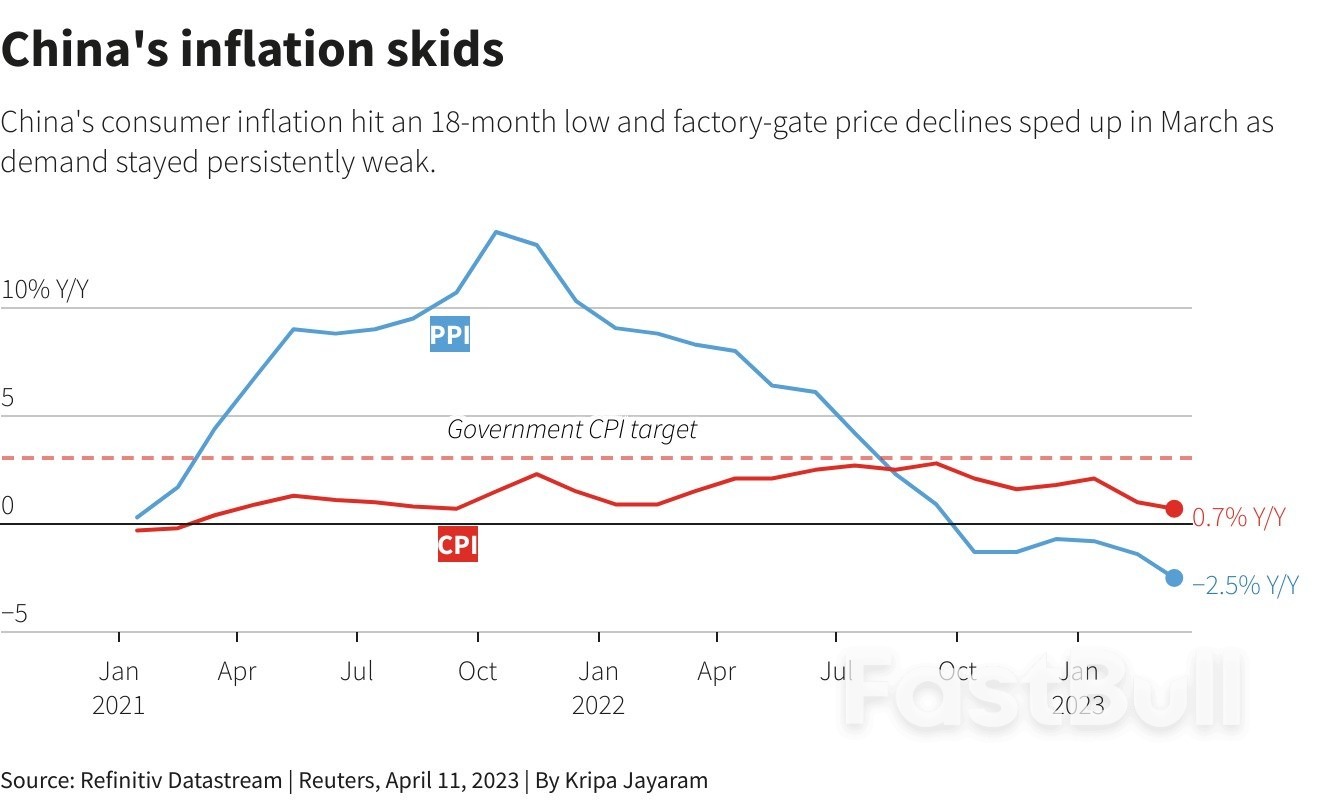
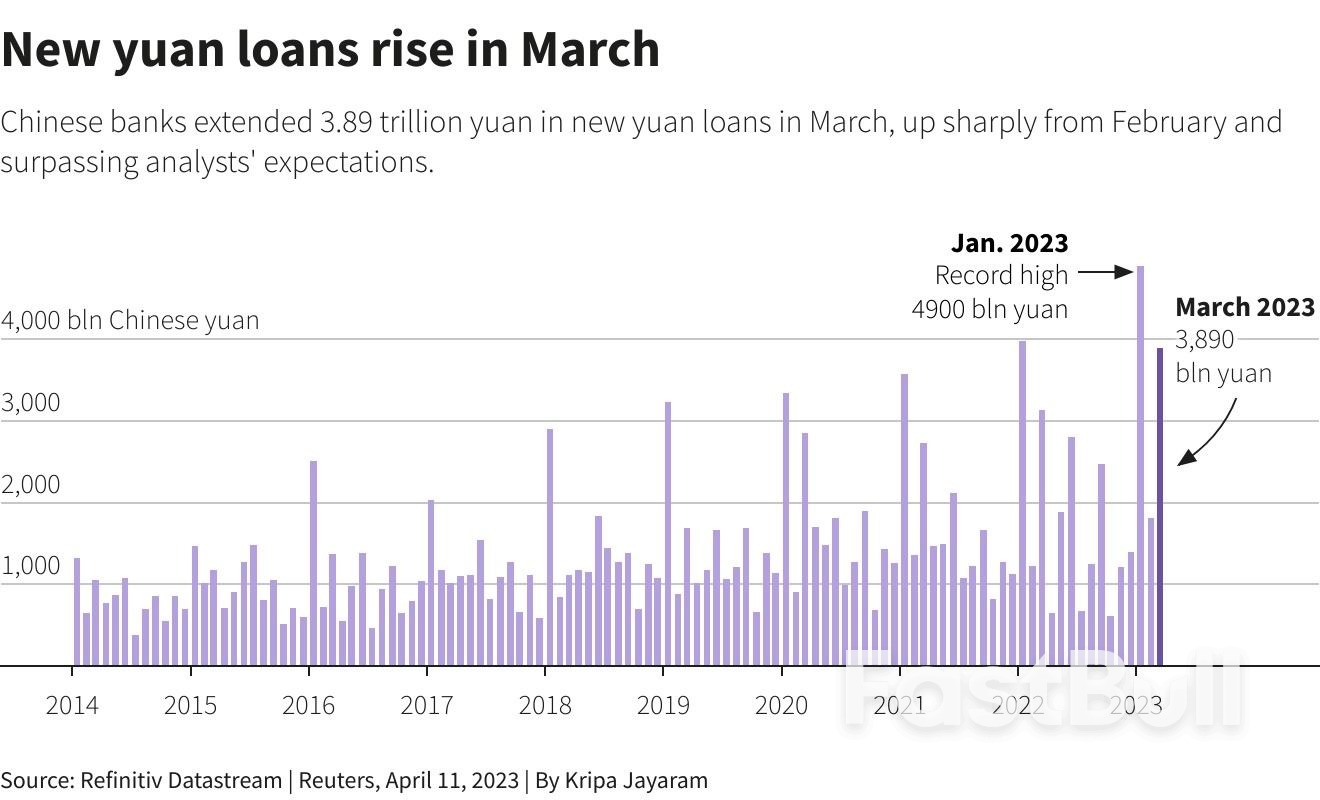
          China's central bank has plenty of reasons to loosen policy as deflationary pressures in the economy deepen, but record credit growth is likely to limit the extent of any monetary support it's able to provide.
          While the recovery from last year's pandemic slump in the world's second-largest economy gathered pace in the first quarter, the upbeat headline figures mask the underlying weakness in both household and external demand.
          "China is entering an 'atypical' deflation cycle, which means deflation amid economic recovery," said Jinyue Dong, senior economist at BBVA research.China's 'Atypical' Deflation Cycle Gives Central Bank A Headache_1
          Despite the bounce in growth, consumer price inflation is slowing sharply, and factory gate prices are in free fall, increasing pressure on the People's Bank of China (PBOC) to cut rates or release more liquidity into the financial system.
          But analysts and government think-tanks say doing so offers little benefit, because of structural restraints on demand, and fuels financing risks in an economy whose debt burden is almost three times its output. China's new bank lending hit an all-time high in the first quarter.
          The central bank cut lenders' reserve requirements ratio (RRR) for the first time this year in March. Analysts now expect any further easing to be modest in size and most don't expect any major near-term action.
          "There is still room to cut rates and RRR, but the effectiveness cannot be overestimated," said Xu Hongcai, deputy director of the economic policy commission at the state-backed China Association of Policy Science.
          "It's useless to provide more money as liquidity is sufficient but demand is not picking up – it's a structural problem."
          Household consumption growth has lagged the expansion in investment and manufacturing for decades, and there is little sign this trend - which many economists have flagged as China's key structural weakness - is about to shift sustainably.
          Retail sales did outpace industrial output in March. But analysts say that is largely due to last year's low base caused by COVID-19 curbs that hit consumers the hardest, rather than underlying household demand.
          "The 10% retail sales growth looks amazing, but it is not really so amazing because the base effect is huge," said Alicia Garcia-Herrero, chief economist for Asia-Pacific at Natixis.
          Neglected Households
          Beijing has pledged to prioritise consumer-driven growth this year, but policies so far have channelled funds into large infrastructure projects, manufacturing and other sectors the government deems as strategic.
          Bank lending in the first quarter followed a similar path.
          China's 'Atypical' Deflation Cycle Gives Central Bank A Headache_2New household loans, mainly mortgages and consumer loans, accounted for 16% of total new loans in the first quarter, despite a jump in mortgages in March, while corporate loans made up for the rest.
          Households' share is even lower than last year, when it plunged to 18% from 40% in 2021.
          "There is limited room for the PBOC to play its part in reviving household income expectations, as it may require a more holistic approach to reboot confidence in job security," said Tommy Xie, China economist at OCBC Bank.
          The labour market remains weak, with youth unemployment near record highs of 20%. Consumer confidence is off record lows, but remains below the range set over the past two decades.
          "The focus of macroeconomic policies has not yet transitioned from protecting market entities on the supply side to protecting low- and middle-income families on the demand side," said Zhang Ming, senior economist at the state-backed Chinese Academy of Social Sciences, in a recent report.
          Worryingly for PBOC, its latest survey showed that in the first three months of the year, the share of respondents saying they preferred to save was still high at 58%, albeit down 3.8 percentage points from the prior quarter.
          New household deposits were 9.9 trillion yuan ($1.4 trillion) in January-March – more than half the record 17.8 trillion yuan reported for all of last year.
          As Western economies grapple with inflation, Chinese policymakers have contrasting concerns.
          "Demand is weak and supply is excessive, that's for sure," a policy adviser said on condition of anonymity.
          "We see some deflation risks."
          ($1 = 6.8744 Chinese yuan)

          Source: Yahoo

          Risk Warnings and Disclaimers
          You understand and acknowledge that there is a high degree of risk involved in trading. Following any strategies or investment methods may lead to potential losses. The content on the site is provided by our contributors and analysts for information purposes only. You are solely responsible for determining whether any trading assets, securities, strategy, or any other product is suitable for investing based on your own investment objectives and financial situation.
          Comments
          Add to Favorites
          Share

          Rates Spark: The Yield Race to The Top Continues

          Devin

          Bond

          U.S. T-bills at the intersection of the debt ceiling-recovery Venn diagram

          U.S. T-bills find themselves at the intersection of two uncomfortable developments. First, the longer time passes without any dramatic fall in economic data, the more the fear of a credit crunch fades in investors' minds. Bank results so far this reporting season have failed to produce a recovery in the KBW U.S. regional banks stock index but the broader bank stock gauge has shown clearer signs of a rebound. This is probably too early to sound the all clear but it is also fair to say that bank fears are no longer an impediment to higher front-end rates, and 2Y yields are still around 90bp below their each March peak.
          The second development is the approaching debt ceiling showdown. There is a clear hump in the T-bill curve around the July-August maturity dates, when default risk is deemed most elevated. Information on tax receipts this week may help refine that estimate and so drive relative moves between securities. The fact is that 'X-date' is still roughly three months away, and so providing a precise estimate at this stage is challenging. The other driver is of course political developments but widespread expectation is for any solution to be found much closer to the deadline this summer.
          Once a compromise is found, and it is our expectation that one will be found, T-bills face another challenge: the Treasury ramping up issuance to re-build a cash buffer in the Treasury General Account (TGA). As of last week, its balance was $109bn, but it is likely to go up this week thanks to tax receipts, before going down into the X-date. Assuming the Treasury aims to build its balance back to $500-600bn after the debt ceiling is solved, markets face upwards of $400bn in T-bill issuance, and a commensurate drain of liquidity.

          Rates Spark: The Yield Race to The Top Continues_1Gilts pick-up to Treasuries widens

          The re-pricing higher in U.S. yields has been impressive these past two weeks and has widened the spread with euro rates, a development we think will prove short-lived once Fed cuts come into view. The sell-off in sterling bonds however has outpaced that of Treasuries, and that move accelerated with higher than expected wage growth in February. Clearly, the release, combined with core CPI failing to slow in March, increase the odds of a May hike at the Bank of England but market expectations have gone further than that. The Sonia swap curve now prices two more hikes in this cycle, more than what is priced by the dollar curve.
          This has taken 10Y gilt yields at a higher than 20bp pick-up to the Treasury curve. Understandably, the pick-up offered by GBP rates is higher at the front-end of the curve. 5Y Sonia swaps are almost 50bp higher than their Sofr equivalent which we justify by the market's greater conviction that the Fed is about to cut rates later this year. We agree that European policy rates, sterling rates included, will take longer to be cut. We find is harder to justify that longer-dated forward, for instance the 5Y GBP rate in 5Y is higher than its USD equivalent, by almost 30bp.

          Rates Spark: The Yield Race to The Top Continues_2Today's events and market view

          European data mostly consist of current account and construction output.
          Bond supply will be from Germany (10Y) and the UK (5Y).
          ECB comments will hit the wires throughout the day with speeches from Philip Lane, Klaas Knot, Pablo Hernandez De Cos, and Isabel Schnabel. Given the mood the market is in, with a re-rpciing higher in Fed odds and hotter UK CPI than expected, markets will be more sensitive to hawkish comments. Look for the bear-flattening to continue for the time being.

          Source: ING

          Risk Warnings and Disclaimers
          You understand and acknowledge that there is a high degree of risk involved in trading. Following any strategies or investment methods may lead to potential losses. The content on the site is provided by our contributors and analysts for information purposes only. You are solely responsible for determining whether any trading assets, securities, strategy, or any other product is suitable for investing based on your own investment objectives and financial situation.
          Comments
          Add to Favorites
          Share

          ECB Market Rate Bets: Still Some Unfinished Business for the Hawks

          Cohen

          Central Bank

          European Central Bank officials are still banging the inflation drum and suggesting interest rates must keep rising, but there's enough nervousness about banks or a possible policy misstep to mean they face an uphill battle convincing market.
          Having firmly scaled-back rate expectations amid last month's market turmoil, investors no longer expect borrowing costs to stay higher for longer and are cautious about pricing in a deposit rate above 4%.
          Ahead of the ECB's May 4 meeting, pricing for where rates will peak remains well below levels of just over 4% seen in early March, before the collapse of two regional U.S. lenders and the forced takeover of Credit Suisse triggered a rush into safe-haven assets.
          "What happened (with the market turmoil) is a reminder that hiking cycles usually get stopped out abruptly because of unforeseen fragilities," said BofA strategist Erjon Satko.
          As well as fretting about other potential skeletons in the banking sector's closet, investors are worried about what effect the quickest rate-hiking cycle since the adoption of the euro will have on the 20-country currency bloc's economy.
          A BoFA survey on Monday showed fragile financial markets and sticky inflation are top concerns among investors, who have lifted bond allocations to the highest since March 2009.
          The November 2023 ECB euro short-term rate (ESTR) forward rose to 3.65% on Wednesday, implying expectations for a deposit rate of around 3.75%.
          BofA said late last week it had closed its short September 2023 Euribor position, arguing it would be difficult for the market to price in a terminal rate above 3.75% without more confidence that the ECB will hike by another 50 bps in May.
          Citi meanwhile argued that the June ESTR or money market contract was less appealing from a hedging standpoint while markets were pricing a peak of 3.75%.
          Earlier this year, it took a month of hawkish rhetoric from ECB policymakers and robust February inflation data to convince markets the central bank was ready to raise rates above 4%.
          But less than two weeks of banking stress was enough for traders to lower expectations for rates to peak at 3%, back to where they stood in mid-December.
          ECB Market Rate Bets: Still Some Unfinished Business for the Hawks_1Analysts read into the ECB's March statement the chance it might alter the course of the policy if it had a solid reason to believe that financial stress might affect the impact of ECB decisions on money markets.
          A surge in trading volumes of bond futures as investors reassessed the policy outlook reflects the level of conviction about rates peaking lower, analysts said.
          In the two weeks from March 10, volumes for German Bund and Italian BTP futures were close to their highest since early 2020, JPMorgan analysts said, "suggesting a widespread adjustment of positioning at a pivotal point on monetary policy expectations".
          ECB Market Rate Bets: Still Some Unfinished Business for the Hawks_2But Bund futures volumes declined after March 15 as markets once more revised their rate expectations upwards.
          ECB Market Rate Bets: Still Some Unfinished Business for the Hawks_3Markets are also now pricing in cuts in the first half of 2024, a sign investor fear the ECB might raise rates too much, too fast and will need to reduce them quickly.
          Analysts estimate it takes around six months for any changes in monetary policy to have an impact on inflation and growth.
          In early March, most traders were positioned for a higher-for-longer rates scenario.
          ECB Market Rate Bets: Still Some Unfinished Business for the Hawks_4"We don't think rate cuts are around the corner," said Colin Graham, head of multi-asset strategies at Robeco.
          "The only risk, which is outside our central investment scenario, is that central banks have done too much tightening already, with disproportional economic damages that will become evident soon," he added.
          Commerzbank flagged a recent drop in volatility - the rate at which an asset price increases or decreases - as a further indication that markets suspect the hiking cycle is almost over, adding that volatility is correlated with the distance from the actual deposit rate to the expected terminal rate.
          This means that the smaller the gap between the current benchmark rate and the expected rate, the lower the volatility, and vice versa.

          ECB Market Rate Bets: Still Some Unfinished Business for the Hawks_5Source: Reuters

          Risk Warnings and Disclaimers
          You understand and acknowledge that there is a high degree of risk involved in trading. Following any strategies or investment methods may lead to potential losses. The content on the site is provided by our contributors and analysts for information purposes only. You are solely responsible for determining whether any trading assets, securities, strategy, or any other product is suitable for investing based on your own investment objectives and financial situation.
          Comments
          Add to Favorites
          Share

          FX Daily: Time for Some Stabilisation?

          Cohen

          Forex

          USD: A few more Fed speakers to watch

          Two weeks away from the FOMC May announcement, and markets are now fully almost fully pricing a rate hike (22bp), but the dollar is struggling to lay the basis of a sustainable recovery. We have continued to hear comments from Federal Reserve officials in the meantime, although markets are reacting in a much more contained fashion compared to the big moves seen after Chris Waller's hawkish remarks on Friday. Another arch-hawk, James Bullard, said he still favours multiple rate hikes and a higher-for-longer approach, although he will only become a voter again in 2025, so his comments tend to have less market impact. The more moderate Raphael Bostic, who returns as a voter next year, said his expectations are in line with the median dot plot projections: endorsing one last 25bp hike and then holding rates at that level for some time.
          There are only three more days for Fed speakers to steer market expectations before the quiet period: today, only Chicago Fed President Austan Goolsbee – a more dovish voice, and a voter in 2023 – is scheduled to speak. It does not look likely there will be any pushback against the market's conviction call on the May rate hike – which is simply in line with the dot plot projections – and we could see a bit of stabilisation in Fed rate expectations after the big volatility that lasted until late last week as the pre-FOMC silent period kicks off. In FX, this could translate into a quieter environment and lower volatility for USD crosses in the run-up to the FOMC announcement.
          Today's US data calendar is not very busy: MBA mortgage applications and the Fed Beige Book are the only two highlights after yesterday's housing figures for March came in mixed (housing starts were better, building permits worse than expected). The lack of clear catalysts may leave DXY hovering around the 101.50/102.00 area for now, even though the short-term balance of risks for the dollar appears slightly tilted to the downside given lingering vulnerability to a potential improvement in risk sentiment now that the May Fed hike is fully priced in.

          EUR: No fresh drivers for a big move

          EUR/USD is struggling to find clear direction this week, probably lacking a big fresh driver to stage a sustained rally beyond 1.1000 whilst staying supported thanks to a softish dollar environment. There are some data releases worth monitoring in the eurozone this week, but the euro has not shown great reactiveness. Yesterday's ZEW surveys in Germany were mixed, with expectations dropping sharply but the current situation index recovering much more than expected. This morning, we'll see March's final CPI figures for the euro area as well as current account figures.
          The European Central Bank will hold a "non-policy" meeting today (so, no statement or press conference), but some information about policy discussion being held could transpire via media outlets. There is also a long list of ECB speakers: Chief Economist Philip Lane, hawks Klass Knot and Isabel Schnabel as well as dove Pablo Hernández de Cos.
          Markets are pricing in 30bp of tightening in May, and a total of 82bp by October, which sets the bar quite high for a hawkish surprise: essentially, ECB members would need to open the door to another 50bp hike. The proximity to the May meeting suggests a more cautious approach to communication, and if anything merely reinforces the existing hawkish rhetoric which implicitly embeds 25bp rate increases. Ultimately, the euro may not be impacted by the ECB story today and EUR/USD should keep following risk sentiment and USD dynamics. The trading range for the pair may narrow further around 1.09/1.10 in the coming days.

          GBP: Inflation resilience adds pressure to the BoE

          UK data has continued to point to resilience in inflation and markets are increasingly inclined to bet on Bank of England tightening. Yesterday's surprise pickup in wages was followed by above-expectations inflation figures this morning. The March report showed headline inflation decelerating from 10.4% to 10.1% versus an expected 9.8% reading, with the core rate holding steady at 6.2%.
          In light of this data, a 25bp rate hike by the Bank of England looks more likely. The lack of evidence of desirable descending paths in inflation and wages will make a hold a harder sell even though we doubt (and we think MPC members do too) that the resilience in inflation will last. Markets are pricing in 23bp of tightening in May, and 60bp in total before reaching the peak. We don't think the BoE will hike beyond May, which should limit GBP appreciation in the crosses further down the road. But for now, we could see EUR/GBP press again towards the 0.8800 level on BoE hawkish bets.

          CEE: Zloty is the focus of attention

          Today's calendar in the region offers only the PPI in the Czech Republic, which has been falling since the middle of last year and surprised to the downside in February and March. This could bring a bit of a cool down this time on the hawkish statements from the Czech National Bank and the paying flow in the rates market. In the FX market, the situation remains unchanged from last week. At the beginning of the week, we expected the rally to stop or at least slow down. This happened only in the case of the Czech koruna, where profit-taking sent EUR/CZK above 23.40 again. On the other hand, the Hungarian forint continues to rally and is within reach of 370 EUR/HUF. We previously mentioned this level as a low point that the forint could reach in the first half of the year. We continue to believe that positioning will be the main issue for further forint gains, but it seems that the situation may not be as dramatic as we previously thought.
          Overall, however, we see 370 EUR/HUF as a key threshold that, as in the case of the Czech koruna, could trigger profit-taking after a month-long rally. Thus, from this perspective, the Polish zloty remains the most interesting, as it is not burdened by heavy long positioning, and we think the market would like to see the zloty rally. Thus, if the global conditions remain positive in the coming days, the zloty has an open door to new gains most of all within the CEE region. Already yesterday the zloty tested the 4.620 level, the strongest since the middle of last year, and we can expect to see another attempt today.

          Source: ING

          Risk Warnings and Disclaimers
          You understand and acknowledge that there is a high degree of risk involved in trading. Following any strategies or investment methods may lead to potential losses. The content on the site is provided by our contributors and analysts for information purposes only. You are solely responsible for determining whether any trading assets, securities, strategy, or any other product is suitable for investing based on your own investment objectives and financial situation.
          Comments
          Add to Favorites
          Share

          Markets Lack Direction as UK CPI Data Looms; Sterling's Path Hinges on Inflation Numbers

          Samantha Luan

          Forex

          The markets have been somewhat directionless this week, with most major currencies remaining within last week's trading ranges against one another, excluding a few Yen pairs. U.S. stock indexes are consolidating in tight ranges with minor pullbacks, while the 10-year yield struggles below a short-term resistance level. Gold prices are recovering weakly, and oil prices are slightly retreating from last week's highs.
          Today's UK CPI data will be a key market focus. Sterling gained ground yesterday due to robust job data and strong wage growth, but buying pressure has not followed through. In a recent Reuters poll, 33 out of 61 economists predicted a 25 bps BoE rate hike to 4.50% at the May 11 meeting, while 28 expected rates to remain unchanged. The decision will depend on clear evidence of slowing inflation. Today's crucial data includes the expected drop in CPI from 10.4% yoy to 9.8% yoy in March and a decline in core CPI from 6.2% to 6.0% yoy.
          Technically, GBP/USD is visibly losing upside momentum as observed in D MACD. A downside surprise in today's UK CPI could trigger a selloff below 1.2343, potentially prompting a deeper pullback to the 55 D EMA (now at 1.2243). On the other hand, a bounce from the current level could pave the way for a break through 1.2545 resistance, resuming the overall uptrend from 1.0351.
          Markets Lack Direction as UK CPI Data Looms; Sterling's Path Hinges on Inflation Numbers_1In Asia, at the time of writing, Nikkei is down -0.37%. Hong Kong HSI is down -0.49%. China Shanghai SSE is down -0.21%. Singapore Strait Times is up 0.17%. Japan 10-year JGB yield is down -0.0001 at 0.476. Overnight, DOW dropped -0.03%. S&P 500 rose 0.09%. NASDAQ dropped -0.04%. 10-year yield dropped -0.019 to 3.572.

          ECB Lane signals another hike in May, emphasizes data dependence

          ECB Chief Economist Philip Lane has indicated in a Bloomberg TV interview that another rate hike in May is appropriate, given the current economic landscape. He stated, "As of now, two weeks away, I think the baseline is that we should increase interest rates in May but what we do in terms of scale, I'm not going to set a default number."
          However, Lane emphasized the importance of waiting for more data before making a final decision. He highlighted the central bank's reliance on data, saying, "We are now in an intense phase of data dependence. I'm very much in wait-and-see mode."
          He also discussed the ECB's deposit rate, which is currently at 3%, and suggested that it would likely remain at its peak for a prolonged period if inflation returns to 2% and the eurozone avoids a recession, as officials predict. "It would be appropriate to keep rates at the plateau level for a while before returning back to normal," Lane added.

          Australia's Westpac Leading Index signals below-trend growth, RBA expected to hike rates in May

          Australia Westpac-Melbourne Institute Leading Index rose slightly from -0.79% to -0.75% in March, marking the eighth consecutive negative reading. This indicates below-trend growth throughout 2023. Westpac forecasts a modest 1% growth for Australia in 2023, while IMF recently revised its growth forecast for the country from 1.9% to 1.6%. RBA also predicts just 1.6% growth in 2023.
          Westpac anticipates a further 25bps increase in the cash rate to 3.85% at RBA's May 2 meeting. The April RBA minutes revealed additional concerns about the inflation outlook, including rising demand due to increased immigration, pressures in the housing market, and risks associated with growing wage growth, particularly in the public sector. The March quarter inflation report, scheduled for release on April 26, will be a crucial data point for the central bank's decision-making process.

          Looking ahead

          UK CPI is the major focus in European session while RPI and PPI will also be released. Eurozone will also publish March CPI final. Later in the day, Canada will release housing starts, IPPI and RMPI. Fed will publish Beige Book economic report.

          GBP/JPY Daily Outlook

          Intraday bias in GBP/JPY remains on the upside for the moment. Current rally is part of the whole rise from 155.33. Next target is 169.26 resistance first. However, considering bearish divergence condition 4 H MACD. Break of 165.38 minor support will argue that a short-term top was already formed. Intraday bias will be turned back to the downside for 162.75 support instead.Markets Lack Direction as UK CPI Data Looms; Sterling's Path Hinges on Inflation Numbers_2
          In the bigger picture, as long as 38.2% retracement of 123.94 (2020 low) to 172.11 (2022 high) at 153.70 holds, medium term bullishness is retained. That is, larger up trend from 123.94 (2020 low) is still in progress. Break of 172.11 high to resume such up trend is expected at a later stage.

          Markets Lack Direction as UK CPI Data Looms; Sterling's Path Hinges on Inflation Numbers_3Source: ActionForex.Com

          Risk Warnings and Disclaimers
          You understand and acknowledge that there is a high degree of risk involved in trading. Following any strategies or investment methods may lead to potential losses. The content on the site is provided by our contributors and analysts for information purposes only. You are solely responsible for determining whether any trading assets, securities, strategy, or any other product is suitable for investing based on your own investment objectives and financial situation.
          Comments
          Add to Favorites
          Share

          Hefty Shortages to Help Buoy Aluminium Prices This Year

          Owen Li

          Commodity

          Supply disruptions in top producer China due to problems with hydro power mean hefty shortages of aluminium this year, which are likely to offset slow demand growth and help bolster prices.
          Smelter shutdowns in Europe due to high energy prices over the past couple of years and consumers there shunning Russian metal after Moscow invaded Ukraine last year make the problem particularly acute in the region.
          Despite expectations of tight supplies, aluminium prices on the London Metal Exchange (LME) have come under pressure due to interest rate hikes in the United States and sluggish demand in top consumer China.
          At $2,400 a tonne, they have dropped 10% since mid-January.
          Hefty Shortages to Help Buoy Aluminium Prices This Year_1However, in recent weeks deficits have emerged, as seen in sliding inventories of aluminium used in the transport, construction and packaging industries.
          In warehouses monitored by the Shanghai Futures Exchanges, aluminium stocks at 274,347 tonnes have dropped 12% over the last month. In LME approved warehouses, stocks have fallen 5% since mid-February.
          Hefty Shortages to Help Buoy Aluminium Prices This Year_2Chinese production should rise, but at a slower pace than previously forecast due to power rationing and disruptions in provinces such as Yunnan where aluminium is mostly smelted using hydro electricity.
          "China's smelters remain under pressure because of hydro power shortages. At the same time, demand should pick up, so exports will likely remain capped," said Bank of America analyst Michael Widmer. "We expect rising deficits going forward."
          Widmer expects an aluminium market deficit of 1.53 million tonnes this year and a shortage of 1.93 million tonnes next.
          Hefty Shortages to Help Buoy Aluminium Prices This Year_3Meanwhile, in Europe lower power prices have helped to reduce production costs, but smelter restarts are limited.
          A scramble for supplies has since mid-January fuelled a 20% jump in the duty-paid aluminium premiums buyers in Europe pay in the physical market - above the LME price - to $330 a tonne.
          Hefty Shortages to Help Buoy Aluminium Prices This Year_4"Physical premiums managed to hold up in Europe where supply constraints remain following the large smelter cuts last year and Russian metal being diverted to Asia," Macquarie analysts said in a note.
          "Given more Russian metal is expected to flow to China, there should be fundamental support for physical premiums."
          Macquarie forecasts an aluminium market deficit of 670,000 tonnes this year and global consumption at 70.8 million tonnes.

          Source: Reuters

          Risk Warnings and Disclaimers
          You understand and acknowledge that there is a high degree of risk involved in trading. Following any strategies or investment methods may lead to potential losses. The content on the site is provided by our contributors and analysts for information purposes only. You are solely responsible for determining whether any trading assets, securities, strategy, or any other product is suitable for investing based on your own investment objectives and financial situation.
          Comments
          Add to Favorites
          Share

          Crop Watch: Producers Ease Planting Amid Cold Spell; Soil Conditions Good

          Devin

          Commodity

          U.S. farmers got a good head start on corn and soybean planting last week amid unseasonably warm weather, but cooler temperatures along with some rains have slowed efforts this week.
          So far, the Crop Watch producers are on pace to plant their corn and soybeans at a faster rate than last year, and many hope to resume next week after pausing or reducing activity this week.
          Crop Watch follows 11 corn and 11 soybean fields across nine U.S. states, including two each in Iowa and Illinois. This is the sixth consecutive year for the project, which gathers weekly updates, photos and crop ratings from each location throughout the growing season. Weekly reports will start after the subject fields have emerged.
          As of Tuesday, four Crop Watch fields had been planted and a fifth, the Indiana soybeans, was in progress. Corn fields in Kansas, western Iowa and western Illinois were planted on April 12, and the southeastern Illinois soybeans were finished on Monday.
          Last year, only four of the 22 fields were planted in April, though nine were planted between May 7 and May 11 as weather improved. Progress was quick in 2021 with 13 of 22 fields planted in April and six completed in the first week of May.
          At least six more fields could be planted before May begins, but those would likely be started mid-next week at the earliest.

          Crop Watch: Producers Ease Planting Amid Cold Spell; Soil Conditions Good_1Conditions

          Weather forecasts as of Tuesday show that the U.S. Corn Belt is likely to be cooler than average for at least the next two weeks, though some Crop Watch producers from Nebraska to Ohio hope to be moving again in a week.
          Cool temperatures, especially if accompanied by rain, can be harmful for newly seeded, un-emerged corn, causing hesitation among many growers. That is less of a concern with soybeans, but soybeans generally have a wider planting window versus corn.
          Most of the Crop Watchers in the core Corn Belt say soil conditions are good or even excellent for planting because of the optimal amount of moisture, though the ground remains too cold in some areas. Heavy snow piles have nearly melted in South Dakota, and the producer says the ground is in ideal shape for now.
          The Western Iowa grower says planting conditions could be the best he has ever seen, but the lack of subsoil moisture is a potential concern for later. Very dry conditions are still worrying for the producer in Nebraska, where drought clipped crop yields in 2022.
          In North Dakota, last week's snow is melting, but any kind of field work might be two weeks away at the earliest. However, the producer is not yet worried and targets mid-May for corn planting and late May or early June for soybeans. He says others in the area have not yet discussed changing their acreage mix.
          The Kansas producer notes that winter wheat yields in his area could be at best 50% of normal after severe drought this season. The Crop Watch corn field caught 1.2 inches (30.5 mm) of rain two days after planting, an amount that has been rarely seen since last summer.

          U.S. progress

          On Monday, the U.S. Department of Agriculture's statistics service estimated U.S. corn planting at 8% complete, up from 3% the prior week and ahead of the five-year average of 5%. Analysts were expecting 10%, with estimates ranging from 6% to 17%.
          Since 1980, U.S. corn planting progress has matched or exceeded 10% by April 16 only five times, most recently in 2016. The date's fastest is 19% in 2012.
          Soybeans were 4% planted as of April 16, ahead of the trade guess of 2% and the average of 1%. That is the earliest date for which U.S. soybean planting data has been reported, implying a record or near-record pace for now. The five-year average soy planting pace by April 30 is 11%.
          Some notable corn planting progress by state as of Sunday include Illinois at 10%, Iowa 7%, Kansas 17% and Missouri 30%. Those compare with respective five-year averages of 3%, 1%, 10% and 8%.
          Fast soybean planting was supported by southern states including Arkansas at 19% seeded as of Sunday, Louisiana 30% and Mississippi 23%. The respective averages for the date are 8%, 16% and 14%.
          Although this week's planting progress is likely to be slower than last week, it is too early to assume planting will be delayed since some producers remain optimistic on returning to fields next week.
          The five-year average corn planting is 11% for April 23 and 26% for April 30. The slowest April 30 corn pace in recent years was 13% in 2022. The April 23 soy average is 4%.

          Source: ZAWYA

          Risk Warnings and Disclaimers
          You understand and acknowledge that there is a high degree of risk involved in trading. Following any strategies or investment methods may lead to potential losses. The content on the site is provided by our contributors and analysts for information purposes only. You are solely responsible for determining whether any trading assets, securities, strategy, or any other product is suitable for investing based on your own investment objectives and financial situation.
          Comments
          Add to Favorites
          Share
          FastBull
          Copyright © 2025 FastBull Ltd

          728 RM B 7/F GEE LOK IND BLDG NO 34 HUNG TO RD KWUN TONG KLN HONG KONG

          TelegramInstagramTwitterfacebooklinkedin
          App Store Google Play Google Play
          Products
          Charts

          Chats

          Q&A with Experts
          Screeners
          Economic Calendar
          Data
          Tools
          Membership
          Features
          Function
          Markets
          Copy Trading
          Latest Signals
          Contests
          News
          Analysis
          24/7
          Columns
          Education
          Company
          Careers
          About Us
          Contact Us
          Advertising
          Help Center
          Feedback
          User Agreement
          Privacy Policy
          Business

          White Label

          Data API

          Web Plug-ins

          Poster Maker

          Affiliate Program

          Risk Disclosure

          The risk of loss in trading financial instruments such as stocks, FX, commodities, futures, bonds, ETFs and crypto can be substantial. You may sustain a total loss of the funds that you deposit with your broker. Therefore, you should carefully consider whether such trading is suitable for you in light of your circumstances and financial resources.

          No decision to invest should be made without thoroughly conducting due diligence by yourself or consulting with your financial advisors. Our web content might not suit you since we don't know your financial conditions and investment needs. Our financial information might have latency or contain inaccuracy, so you should be fully responsible for any of your trading and investment decisions. The company will not be responsible for your capital loss.

          Without getting permission from the website, you are not allowed to copy the website's graphics, texts, or trademarks. Intellectual property rights in the content or data incorporated into this website belong to its providers and exchange merchants.

          Not Logged In

          Log in to access more features

          FastBull Membership

          Not yet

          Purchase

          Become a signal provider
          Help Center
          Customer Service
          Dark Mode
          Price Up/Down Colors

          Log In

          Sign Up

          Position
          Layout
          Fullscreen
          Default to Chart
          The chart page opens by default when you visit fastbull.com