Markets
News
Analysis
User
24/7
Economic Calendar
Education
Data
- Names
- Latest
- Prev




Signal Accounts for Members
All Signal Accounts
All Contests


U.S. Weekly Total Rig CountA:--
F: --
P: --
U.S. Weekly Total Oil Rig CountA:--
F: --
P: --
Japanese Prime Minister Sanae Takaichi delivers a speech
Germany Ifo Business Expectations Index (SA) (Jan)A:--
F: --
P: --
Germany IFO Business Climate Index (SA) (Jan)A:--
F: --
P: --
Germany Ifo Current Business Situation Index (SA) (Jan)A:--
F: --
P: --
Brazil Current Account (Dec)A:--
F: --
P: --
Mexico Unemployment Rate (Not SA) (Dec)A:--
F: --
P: --
Canada National Economic Confidence IndexA:--
F: --
P: --
U.S. Non-Defense Capital Durable Goods Orders MoM (Excl. Aircraft) (Nov)A:--
F: --
U.S. Durable Goods Orders MoM (Excl. Defense) (SA) (Nov)A:--
F: --
U.S. Durable Goods Orders MoM (Excl.Transport) (Nov)A:--
F: --
P: --
U.S. Durable Goods Orders MoM (Nov)A:--
F: --
U.S. Chicago Fed National Activity Index (Nov)A:--
F: --
U.S. Dallas Fed New Orders Index (Jan)A:--
F: --
P: --
U.S. Dallas Fed General Business Activity Index (Jan)A:--
F: --
U.S. 2-Year Note Auction Avg. YieldA:--
F: --
P: --
U.K. BRC Shop Price Index YoY (Jan)A:--
F: --
P: --
China, Mainland Industrial Profit YoY (YTD) (Dec)A:--
F: --
P: --
Germany 2-Year Schatz Auction Avg. YieldA:--
F: --
P: --
Mexico Trade Balance (Dec)A:--
F: --
P: --
U.S. Weekly Redbook Index YoYA:--
F: --
P: --
U.S. S&P/CS 20-City Home Price Index YoY (Not SA) (Nov)A:--
F: --
P: --
U.S. S&P/CS 20-City Home Price Index MoM (SA) (Nov)A:--
F: --
U.S. FHFA House Price Index MoM (Nov)A:--
F: --
P: --
U.S. FHFA House Price Index (Nov)A:--
F: --
P: --
U.S. FHFA House Price Index YoY (Nov)A:--
F: --
U.S. S&P/CS 10-City Home Price Index YoY (Nov)A:--
F: --
P: --
U.S. S&P/CS 10-City Home Price Index MoM (Not SA) (Nov)A:--
F: --
P: --
U.S. S&P/CS 20-City Home Price Index (Not SA) (Nov)A:--
F: --
P: --
U.S. S&P/CS 20-City Home Price Index MoM (Not SA) (Nov)A:--
F: --
P: --
U.S. Richmond Fed Manufacturing Composite Index (Jan)--
F: --
P: --
U.S. Conference Board Present Situation Index (Jan)--
F: --
P: --
U.S. Conference Board Consumer Expectations Index (Jan)--
F: --
P: --
U.S. Richmond Fed Manufacturing Shipments Index (Jan)--
F: --
P: --
U.S. Richmond Fed Services Revenue Index (Jan)--
F: --
P: --
U.S. Conference Board Consumer Confidence Index (Jan)--
F: --
P: --
U.S. 5-Year Note Auction Avg. Yield--
F: --
P: --
U.S. API Weekly Refined Oil Stocks--
F: --
P: --
U.S. API Weekly Crude Oil Stocks--
F: --
P: --
U.S. API Weekly Gasoline Stocks--
F: --
P: --
U.S. API Weekly Cushing Crude Oil Stocks--
F: --
P: --
Australia RBA Trimmed Mean CPI YoY (Q4)--
F: --
P: --
Australia CPI YoY (Q4)--
F: --
P: --
Australia CPI QoQ (Q4)--
F: --
P: --
Germany GfK Consumer Confidence Index (SA) (Feb)--
F: --
P: --
Germany 10-Year Bund Auction Avg. Yield--
F: --
P: --
India Industrial Production Index YoY (Dec)--
F: --
P: --
India Manufacturing Output MoM (Dec)--
F: --
P: --
U.S. MBA Mortgage Application Activity Index WoW--
F: --
P: --
Canada Overnight Target Rate--
F: --
P: --
BOC Monetary Policy Report
U.S. EIA Weekly Crude Stocks Change--
F: --
P: --


No matching data
Latest Views
Latest Views
Trending Topics
Top Columnists
Latest Update
White Label
Data API
Web Plug-ins
Affiliate Program
View All

No data
Australia’s financial watchdog has secured a court victory against financial services company BPS Financial Pty Ltd (BPS), with the Federal Court ordering the company to pay 14 million Australian dollars ($9.3 million) in penalties over the promotion and operation of its Qoin Wallet product.
The ruling follows years of legal action brought by the Australian Securities and Investments Commission (ASIC), which accused BPS of running an unlicensed financial services business while making misleading claims about its crypto-linked payment product.
In a Tuesday press release, the regulator said BPS promoted the Qoin Wallet as a non-cash payment facility tied to its Qoin digital token. However, the court found that between January 2020 and mid-2023, the company issued the product and provided financial advice without holding an Australian Financial Services Licence, breaching the Corporations Act.
“Given the nature of these products, providers must have the appropriate licenses and authorisations, and investors must be able to make decisions based on clear and correct statements, especially as crypto products can be highly volatile, inherently risky and complex,” ASIC Chair Joe Longo said.
Related: Australia’s search ID goes into force, Ireland lobbies to ban anonymity
BPS Financial hit with fines, restrictions
The penalty handed down includes $1.3 million for unlicensed conduct and $8 million for misleading and deceptive representations. In her judgment, Judge Downes described BPS’s actions as “serious and unlawful misconduct,” noting the involvement of senior management and the company’s inadequate compliance systems.
Beyond the financial penalty, the court imposed a series of restrictions on BPS. The company has been barred from operating a financial services business without a licence for the next 10 years. BPS has also been ordered to publish court-mandated publicity notices on the Qoin Wallet app and website and to cover most of ASIC’s legal costs.
In 2022, ASIC launched civil penalty proceedings against BPS Financial over alleged misleading claims and unlicensed conduct linked to its Qoin token.
In earlier judgments handed down in 2024 and upheld on appeal in 2025, the court found BPS engaged in misleading and deceptive conduct by making false statements about the Qoin Wallet. These included claims that the product was officially approved or registered, that Qoin tokens could be readily exchanged for fiat currency or other crypto-assets, and that the token was widely accepted by merchants.
Related: Binance Australia brings fiat back after being debanked for 2 years
ASIC eases licensing rules for stablecoins
In December, ASIC finalized new exemptions to simplify the distribution of stablecoins and wrapped tokens, removing the need for intermediaries to hold separate Australian Financial Services licenses.
The measures allow firms to use “omnibus accounts” with appropriate record-keeping, extending earlier relief and reducing compliance costs for businesses operating in the digital asset and payments sectors.
In a Tuesday report titled “Key issues outlook 2026,” ASIC’s Longo flagged retail exposure to opaque private credit, operational failures in superannuation, high-risk investment sales that threaten retirement savings, AI-related consumer harm and regulatory gaps in digital assets and fintech as key risk areas for the year ahead.
Magazine: Bitget’s Gracy Chen is looking for ‘entrepreneurs, not wantrepreneurs’
Tether, the company behind the world’s largest stablecoin USDT, has disclosed a substantial expansion of its gold holdings, underscoring a growing shift toward hard‑asset backing amid uncertainty across crypto and traditional financial markets.
Tether Expands Gold‑Backed Stablecoin Reserves
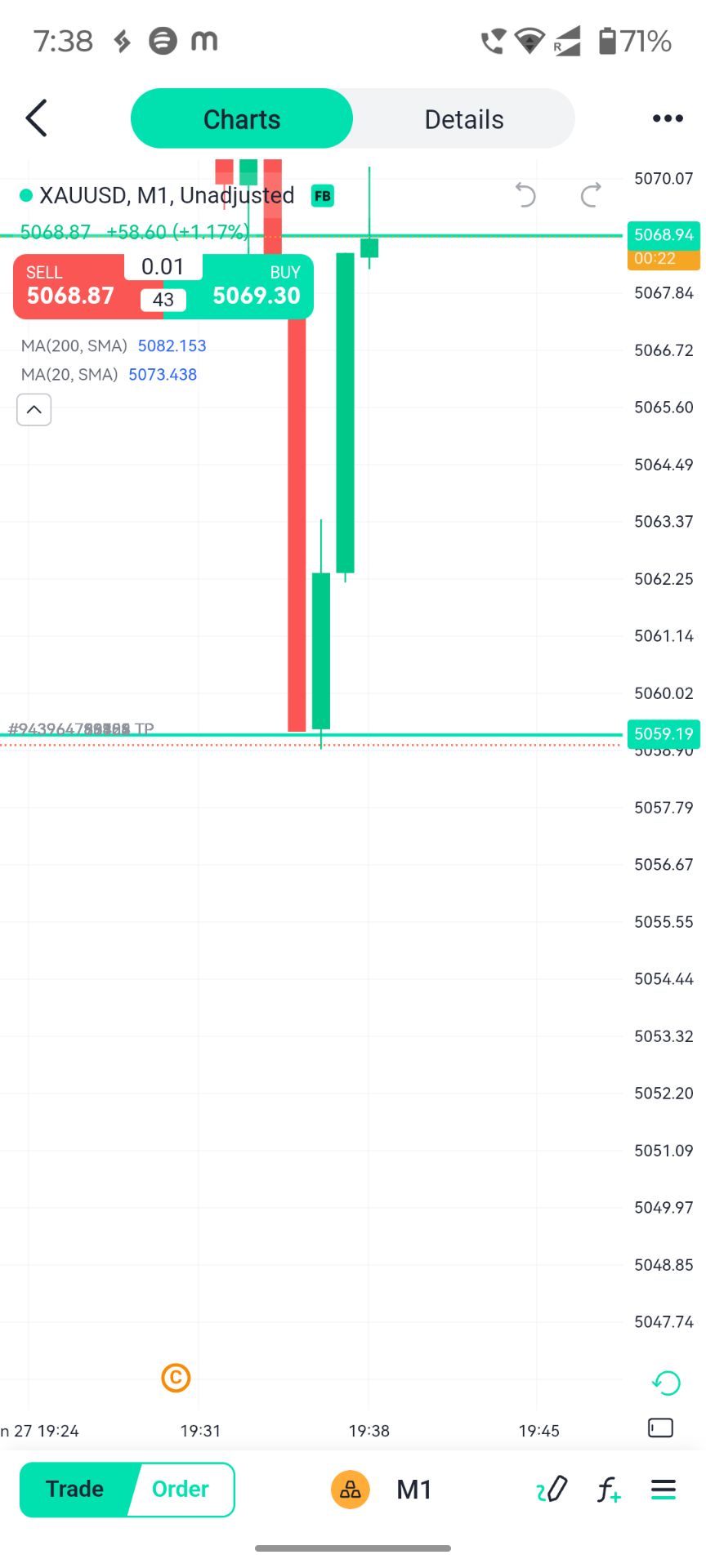
Gold crossed the $5,000 per ounce threshold for the first time on Monday, a milestone that market observers had not previously seen. Prices briefly climbed to around $5,110 per ounce as safe‑haven demand accelerated.
Tether revealed that it significantly increased its gold exposure during the fourth quarter of 2025. The company disclosed that gold‑backed stablecoins (XAU₮) experienced rapid growth throughout the year, with total market capitalization rising from roughly $1.3 billion to more than $4 billion.
According to Tether’s attestation report, this expansion was fueled by record‑high gold prices, rising geopolitical fragmentation, and growing demand from both institutional investors and crypto‑native users for fully on‑chain safe‑haven assets.
Within the gold‑backed stablecoin sector, Tether Gold emerged as the dominant issuer, accounting for approximately 60% of the total supply in circulation.
By the end of the fourth quarter, total physical gold reserves stood at 520,089.350 fine troy ounces. Each token is backed on a one‑to‑one basis by a fine troy ounce of physical gold. At current prices, the total market value of these holdings reached approximately $2.25 billion.
Crypto Giant Ranks Among Top 30 Global Gold Holders
Tether confirmed that all gold reserves are securely stored in Switzerland and comply fully with the London Good Delivery standards established by the London Bullion Market Association, a key benchmark for institutional gold custody.
The scale of Tether’s accumulation has also positioned the company among major global gold holders. Based on data from the International Monetary Fund and a Jefferies report published in late 2025, Tether now ranks within the top 30 gold holders worldwide.
Its holdings surpass those of several countries, including Greece, Qatar, and Australia. During the fourth quarter of 2025 alone, Tether Gold Investments added roughly 27 metric tons of gold to its exposure.
Paolo Ardoino, Tether’s CEO, said the company’s growing role in gold markets carries significant responsibility. He emphasized that Tether Gold is designed to bring clarity and verifiability at a time when confidence in traditional monetary systems is being tested.
Ardoino noted that each XAU₮ token represents vaulted physical gold that can be independently verified on‑chain, adding that the product’s rapid growth reflects rising expectations for tokenized assets to meet the same standards as sovereign and institutional reserves.
Featured image from OpenArt, chart from TradingView.com
This week is packed with major U.S. economic and political events, and crypto investors are watching closely. From the Federal Reserve’s rate decision to inflation data, and together they could influence how Bitcoin and altcoins may react next.
Lets see what are the key U.S event to watch this week,.
28 Jan : FOMC interest-rate decision, Powell’s Speech
On January 28, the Federal Reserve will announce its interest rate decision, followed by Jerome Powell’s press conference. According to the CME FedWatch Tool, there is a 97% chance the Fed will keep rates unchanged at current levels.
While no rate change is expected, crypto traders will closely listen to Powell’s tone. Any hint of future rate cuts could boost Bitcoin and altcoins, as lower rates typically increase appetite for risk assets.
29 Jan: Jobs Data and Crypto Market Structure Bill in Focus
January 29 brings Initial Jobless Claims data. Forecasts suggest claims could rise to around 202,000 from last week’s 200,000. A rising number may signal a cooling labor market, which often strengthens the case for future rate cuts, something crypto markets usually welcome.
The same day, the Senate Agriculture Committee is set to review a bipartisan crypto market structure bill.
Eleanor Terrett@EleanorTerrettJan 26, 2026🚨JUST IN: The @SenateAg Committee has rescheduled its crypto market structure markup for 10:30 a.m. Thursday. pic.twitter.com/xjBLGqGVfM
If passed, the bill could improve regulatory clarity and significantly reduce market manipulation. For long-term crypto holders, this could be a major confidence boost.
Jan 30: US PPI Inflation Data
On January 30, U.S. Producer Price Index (PPI) data will be released, along with the government shutdown deadline. With PPI expected to remain steady at 3%, markets will be looking for signs that inflation is truly under control.
If inflation stays calm and political risks ease, crypto markets could respond positively. But any surprises could quickly shift sentiment, making this a crucial week for digital assets.
31 Jan: Government Shutdown Fears
On January 31, concerns around a possible U.S. government shutdown intensified. Prediction markets briefly showed shutdown odds rising toward 80% after Senate Democrats signaled resistance to a 1.2 trillion funding bill tied to Homeland Security spending.
While markets still expect the U.S. government to stay open, this uncertainty creates short-term risk across financial markets.
More than half of the top US banks have either started offering or announced plans to offer Bitcoin-related services such as trading or custody, says Bitcoin financial services firm River.
In an X post on Monday, River shared a list of the top 25 institutions operating in the US, saying, “60% of the top US banks are into Bitcoin.”
On Saturday, crypto exchange Coinbase CEO Brian Armstrong said that a key takeaway from his time at the Davos World Economic Forum in Switzerland, which was held from Jan. 19 until Jan. 23, was that banking CEOs are becoming friendlier toward crypto.
Out of the unnamed banking CEOs he met, Armstrong said, “most of them are actually very pro crypto and are leaning into it as an opportunity, some aren't quite there yet. One CEO of a top 10 global bank told me crypto is their number one priority, and they view it as existential.”
Some US banks were previously accused of being anti-crypto and allegedly complicit in actions like the so called in Operation Chokepoint 2.0, a government effort to debank crypto companies.
Three out of the Big Four are on the list
The latest addition to River’s list, Swiss banking giant UBS, which also operates in the US, is reportedly exploring opening up Bitcoin (BTC) and Ether (ETH) trading to its wealthiest clients, Bloomberg reported on Friday.
Among the “Big Four” US banks, JPMorgan Chase has announced it’s considering adding crypto trading, Wells Fargo offers services like Bitcoin-backed loans to institutional clients, and Citigroup is exploring institutional crypto custody services.
Combined, these three banks hold over $7.3 trillion in assets, according to Forbes.
However, banks are still not fully on board with all aspects of crypto. They have been some of the loudest critics of yield-bearing stablecoins, fearing they could pose significant risks to the financial system.
Related: Saylor pitches Bitcoin-backed banking system to nation-states
Ten big banks still on the sidelines
Bank of America, the other member of the Big Four group of US financial institutions, and the second-largest US bank overall, has yet to announce any plans for Bitcoin services, according to River.
Forbes estimates its assets are over $2.67 trillion. While the next two largest banks on the Forbes list have yet to reveal any interest in Bitcoin services, Capital One has $694 billion in assets, and Trust Bank holds $536 billion.
Magazine: 6 reasons Jack Dorsey is definitely Satoshi… and 5 reasons he’s not
Bitcoin’s network hashrate fell to its lowest level in seven months over the weekend as a powerful winter storm swept across the United States, forcing miners to scale back operations amid surging energy demand and widespread power disruptions.
Key Takeaways:
According the massive storm system impacted more than three dozen US states, bringing heavy snow, ice and freezing temperatures that left around one million customers without power.
The extreme conditions placed additional strain on regional electricity grids, prompting some Bitcoin miners to curtail activity to help stabilize supply.Bitcoin Hashrate Slides More Than 40% Over Weekend Before Rebounding
Data from shows that Bitcoin’s hashrate began sliding on Friday before plunging sharply over the weekend.
By Sunday, the network’s computing power had dropped to roughly 663 exahashes per second (EH/s), representing a decline of more than 40% in just two days.
The hashrate has since rebounded, climbing back to around 854 EH/s as of Monday.
Oregon-based miner Abundant Mines said the scale of the disruption was significant.
“Approximately 40% of global Bitcoin mining capacity has gone offline in the past 24 hours due to extreme winter weather,” the company said, adding that many operators voluntarily reduced output as energy demand spiked.
The firm described this responsiveness as a structural advantage of Bitcoin mining, noting that operations can shut down quickly during grid stress and restart once conditions normalize. https://twitter.com/AbundantMines/status/2015565916344639732?s=20
The US accounts for the largest share of global Bitcoin mining activity.
Estimates from the Hashrate Index suggest the country contributes nearly 38% of the network’s total hashrate, while a 2024 report from the Energy Information Administration identified at least 137 crypto-mining facilities nationwide.
Industry advocates argue that miners play an increasingly important role in grid stability by acting as flexible energy consumers.Bitcoin Miners Help Stabilize Texas Power Grid During Winter Storm
Mining operations can absorb excess electricity generated by wind or solar installations and rapidly power down during periods of peak demand.
Bitcoin ESG researcher Daniel Batten said on X that demand response programs involving miners helped stabilize the Texas grid during the storm.
Bitcoin mining (demand response) and batteries worked together to stabilize Texas' grid in the face of recent extreme weather — Daniel Batten (@DSBatten)
The weather event also weighed on Bitcoin production. CryptoQuant analyst Julio Moreno said daily output dropped sharply at several major US mining firms.
According to a recent analysis by independent researcher Daniel Batten, Bitcoin mining can strengthen electrical grids and lower consumer electricity costs rather than strain power systems.
His research challenges common claims that mining destabilizes grids or drives up energy prices, drawing on peer-reviewed studies and operational data to argue that the industry’s flexible power usage can provide measurable system benefits.
The cryptocurrency market rebounded on Monday from a muted session the day prior, helped by Bitcoin's climb, even as equities linked to the sector were mixed. Strategy (MSTR), GameStop (GME), and Fold Holdings (FLD) were three of the most popular "crypto proxy" stocks today.
GameStop
On Monday, GameStop (GME) closed up 4.44% and extended gains after-hours as “The Big Short” investor Michael Burry revealed he was buying into the videogame retailer and backed CEO Ryan Cohen, who, along with another board member, bought more than 500,000 shares, according to an SEC filing.
Separately, Cohen has been in focus after GameStop outlined a performance-based stock option award for him. On Stocktwits, retail sentiment around GME remained in ‘extremely bullish’ territory, accompanied by ‘extremely high’ chatter levels over the past day.
Fold Holdings
Fold Holdings (FLD) closed at $1.99, up 4.74%, and then traded for about $2.09 in after-hours, a gain of about 5%. As Bitcoin remained strong and the market mood improved, traders sought bigger gains in smaller crypto-related stocks, which pushed prices higher. On Stocktwits, retail sentiment around FLD dropped from ‘neutral’ to ‘bearish’ territory, as chatter levels around it remained at ‘high’ levels over the past day.
Strategy
Strategy (MSTR) ended the day down 1.55% at $160.58, but it went up slightly after hours to about $161.04. However, on Monday's trading session, MSTR fell after the announcement of more equity sales related to its Bitcoin accumulation strategy. This likely added to the market's ongoing push-pull, as investors want Bitcoin exposure but also consider the "flywheel" effect of capital markets and the risk of dilution.
Moreover, the company sold about 1.57 million Class A shares between January 20 and January 25, generating a net profit of about $257 million. It also reported about $7 million in income from its STRC preferred stock. The company's strategy involved purchasing an additional 2,932 Bitcoin at an average price of $90,061. This transaction increased the firm's total Bitcoin holdings to 712,647 BTC. The company still had about $8.17 billion available under its at-the-market common stock program as of January 25. On Stocktwits, retail sentiment around MSTR remained in the ‘bearish’ territory, accompanied by a ‘low’ chatter level over the past day.
ALTS, CLSK, KULR BKKT In Negative Territory
The common thread running through today's best-performing crypto-linked stocks was a slight gain in the underlying asset class, as the total crypto market capitalization increased by around 1.5% in the last 24 hours.
Despite better conditions in the overall digital-asset market, numerous crypto-linked equities remained under pressure. CleanSpark (CLSK), ALT5 Sigma (ALTS), Bakkt Holdings (BKKT), and KULR Technology Group (KULR) all traded in negative territory.
GameFi tokens are showing early signs of revival, with Axie Infinity emerging as one of the stronger performers. After spending months under sustained bearish pressure, the AXS price has decisively reversed course, supported by both technical momentum and recent changes to the project’s token economics.
The rally gained traction after Axie Infinity introduced bAXS, effectively locking a portion of the circulating supply while simultaneously halting SLP reward emissions—two moves that significantly reduced short-term selling pressure and token inflation. As a result, AXS has surged more than 270% since the start of the year, marking one of its strongest recoveries in recent quarters.
The latest rebound suggests that bullish control remains intact, even as the price approaches a historically important resistance zone. With momentum indicators still elevated and buyers defending higher levels, attention now turns to whether AXS can extend its move further. Can the token rally another 20% and reclaim the $3 mark before the monthly close, or is consolidation more likely near current levels?
Axie Infinity Price Analysis for this Week
The AXS price recorded a sharp upswing in the first week of the year, driven by a sudden and sustained surge in trading volume. Since that breakout, bullish momentum has remained firmly in control, allowing the rally to extend and hold higher levels. However, despite the strength of the move, AXS has yet to secure a decisive breakout above the $2.80–$2.92 resistance zone. This region, previously a supply area, has now emerged as a critical threshold that must be cleared to validate further upside continuation.
On the daily chart, Axie Infinity shows a strong bullish reversal supported by a sharp expansion in volume. The rally pushed prices back above key mid-range levels, while OBV surged to new highs, confirming aggressive participation rather than a low-liquidity move. However, the pace of the OBV rise suggests urgency, which often precedes short-term cooling. Meanwhile, +DI has moved decisively above −DI, validating bullish dominance, but the narrowing gap hints at early momentum stabilization. Overall, indicators support strength, though confirmation above resistance remains critical.
Will the AXS Price Reach $3 in January 2026?
Based on the daily chart structure, Axie Infinity price has a realistic chance of testing the $2.95–$3.00 zone before the January close, but only if buyers secure a daily close above $2.80–$2.92. A successful breakout and acceptance above this range could open the door for a measured move toward $3.10, where selling pressure is likely to re-emerge.
On the downside, failure to clear resistance may lead to consolidation between $2.40 and $2.60, a range that still preserves the broader bullish structure. Overall, the trend remains constructive, but upside extension depends on confirmation, not momentum alone.
FAQs
What is driving Axie Infinity price growth right now?AXS is rising due to bAXS locking supply, halted SLP emissions reducing inflation, and strong bullish volume confirming renewed buyer interest.
How high can Axie Infinity price go in the near term?If AXS breaks above $3, the next upside zone sits near $3.10–$3.30, while failure to break out could keep price range-bound short term.
Is Axie Infinity still a strong GameFi investment?AXS shows improving fundamentals and technical strength, but like all GameFi tokens, it remains volatile and best suited for risk-aware investors.
White Label
Data API
Web Plug-ins
Poster Maker
Affiliate Program
The risk of loss in trading financial instruments such as stocks, FX, commodities, futures, bonds, ETFs and crypto can be substantial. You may sustain a total loss of the funds that you deposit with your broker. Therefore, you should carefully consider whether such trading is suitable for you in light of your circumstances and financial resources.
No decision to invest should be made without thoroughly conducting due diligence by yourself or consulting with your financial advisors. Our web content might not suit you since we don't know your financial conditions and investment needs. Our financial information might have latency or contain inaccuracy, so you should be fully responsible for any of your trading and investment decisions. The company will not be responsible for your capital loss.
Without getting permission from the website, you are not allowed to copy the website's graphics, texts, or trademarks. Intellectual property rights in the content or data incorporated into this website belong to its providers and exchange merchants.
Not Logged In
Log in to access more features
Log In
Sign Up