• Trade
  • Markets
  • Copy
  • Contests
  • News
  • 24/7
  • Calendar
  • Q&A
  • Chats
Trending
Screeners
SYMBOL
LAST
BID
ASK
HIGH
LOW
NET CHG.
%CHG.
SPREAD
SPX
S&P 500 Index
6806.08
6806.08
6806.08
6861.30
6801.50
-21.33
-0.31%
--
DJI
Dow Jones Industrial Average
48296.78
48296.78
48296.78
48679.14
48285.67
-161.26
-0.33%
--
IXIC
NASDAQ Composite Index
23056.55
23056.55
23056.55
23345.56
23012.00
-138.61
-0.60%
--
USDX
US Dollar Index
97.990
98.070
97.990
98.070
97.740
+0.040
+ 0.04%
--
EURUSD
Euro / US Dollar
1.17413
1.17422
1.17413
1.17686
1.17262
+0.00019
+ 0.02%
--
GBPUSD
Pound Sterling / US Dollar
1.33629
1.33636
1.33629
1.34014
1.33546
-0.00078
-0.06%
--
XAUUSD
Gold / US Dollar
4300.53
4300.94
4300.53
4350.16
4285.08
+1.14
+ 0.03%
--
WTI
Light Sweet Crude Oil
56.318
56.348
56.318
57.601
56.233
-0.915
-1.60%
--

Community Accounts

Signal Accounts
--
Profit Accounts
--
Loss Accounts
--
View More

Become a signal provider

Sell trading signals to earn additional income

View More

Guide to Copy Trading

Get started with ease and confidence

View More

Signal Accounts for Members

All Signal Accounts

Best Return
  • Best Return
  • Best P/L
  • Best MDD
Past 1W
  • Past 1W
  • Past 1M
  • Past 1Y

All Contests

  • All
  • Trump Updates
  • Recommend
  • Stocks
  • Cryptocurrencies
  • Central Banks
  • Featured News
Top News Only
Share

USA State Department: Rubio Signs Status Of Forces Agreement With Paraguayan Foreign Minister

Share

New York Fed Accepts $2.601 Billion Of $2.601 Billion Submitted To Reverse Repo Facility On Dec 15

Share

Turkey: Shoots Down A Drone In The Black Sea Using F-16 Fighter Jets

Share

Goldman Sachs Says They Believe That The Copper Price Is Vulnerable To An Ai-Linked Price Correction

Share

Goldman Sachs Upgrades 2026 Copper Price Forecast To $11400 From $10,650

Share

Attempts By Ukrainian Troops To Advance From The South-West To Outskirts Of Kupiansk Are Being Thwarted

Share

Russian Troops Control All Of Kupiansk - IFX Cites Russian Military

Share

On Monday (December 15), The South Korean Won Ultimately Rose 0.60% Against The US Dollar, Closing At 1468.91 Won. The Won Was On An Upward Trend Throughout The Day, Rising Significantly At 17:00 Beijing Time And Reaching A Daily High Of 1463.04 Won At 17:36

Share

Health Ministry: Israeli Forces Kill Palestinian Teen In West Bank

Share

New York Federal Reserve President Williams: Over Time, The Size Of Reserves Could Grow From $2.9 Trillion

Share

New York Fed President Williams: AI Valuations Are High, But There Is A Real Driving Factor

Share

New York Federal Reserve President Williams: The Job Market Is In Very Good Shape

Share

New York Fed President Williams: 'Very Supportive' Of USA Central Bank's Decision To Cut Interest Rates Last Week

Share

New York Fed President Williams: 'Too Early To Say' What Central Bank Should Do At January Meeting

Share

New York Fed President Williams: Strong Markets Part Of Reason Why Economy Will Grow Robustly In 2026

Share

New York Fed President Williams: What Constitutes Ample Reserves Will Change Over Time

Share

New York Fed President Williams: Market Valuations 'Elevated,' But There Are Reasons For Pricing

Share

New York Fed President Williams: Ample Reserves System Working Very Well

Share

New York Fed President Williams: Some Signs That Parts Of Underlying Economy Not As Strong As GDP Data Suggests

Share

New York Fed President Williams: Expects Coming Job Data Will Show Gradual Cooling

TIME
ACT
FCST
PREV
Japan Tankan Small Manufacturing Outlook Index (Q4)

A:--

F: --

P: --

Japan Tankan Large Non-Manufacturing Outlook Index (Q4)

A:--

F: --

P: --

Japan Tankan Large Manufacturing Outlook Index (Q4)

A:--

F: --

P: --

Japan Tankan Small Manufacturing Diffusion Index (Q4)

A:--

F: --

P: --

Japan Tankan Large-Enterprise Capital Expenditure YoY (Q4)

A:--

F: --

P: --

U.K. Rightmove House Price Index YoY (Dec)

A:--

F: --

P: --

China, Mainland Industrial Output YoY (YTD) (Nov)

A:--

F: --

P: --

China, Mainland Urban Area Unemployment Rate (Nov)

A:--

F: --

P: --

Saudi Arabia CPI YoY (Nov)

A:--

F: --

P: --

Euro Zone Industrial Output YoY (Oct)

A:--

F: --

P: --

Euro Zone Industrial Output MoM (Oct)

A:--

F: --

P: --

Canada Existing Home Sales MoM (Nov)

A:--

F: --

P: --

Canada National Economic Confidence Index

A:--

F: --

P: --

Canada New Housing Starts (Nov)

A:--

F: --

P: --
U.S. NY Fed Manufacturing Employment Index (Dec)

A:--

F: --

P: --

U.S. NY Fed Manufacturing Index (Dec)

A:--

F: --

P: --

Canada Core CPI YoY (Nov)

A:--

F: --

P: --

Canada Manufacturing Unfilled Orders MoM (Oct)

A:--

F: --

P: --

U.S. NY Fed Manufacturing Prices Received Index (Dec)

A:--

F: --

P: --

U.S. NY Fed Manufacturing New Orders Index (Dec)

A:--

F: --

P: --

Canada Manufacturing New Orders MoM (Oct)

A:--

F: --

P: --

Canada Core CPI MoM (Nov)

A:--

F: --

P: --

Canada Trimmed CPI YoY (SA) (Nov)

A:--

F: --

P: --

Canada Manufacturing Inventory MoM (Oct)

A:--

F: --

P: --

Canada CPI YoY (Nov)

A:--

F: --

P: --

Canada CPI MoM (Nov)

A:--

F: --

P: --

Canada CPI YoY (SA) (Nov)

A:--

F: --

P: --

Canada Core CPI MoM (SA) (Nov)

A:--

F: --

P: --

Canada CPI MoM (SA) (Nov)

A:--

F: --

P: --

Federal Reserve Board Governor Milan delivered a speech
U.S. NAHB Housing Market Index (Dec)

A:--

F: --

P: --

Australia Composite PMI Prelim (Dec)

--

F: --

P: --

Australia Services PMI Prelim (Dec)

--

F: --

P: --

Australia Manufacturing PMI Prelim (Dec)

--

F: --

P: --

Japan Manufacturing PMI Prelim (SA) (Dec)

--

F: --

P: --

U.K. 3-Month ILO Employment Change (Oct)

--

F: --

P: --

U.K. Unemployment Claimant Count (Nov)

--

F: --

P: --

U.K. Unemployment Rate (Nov)

--

F: --

P: --

U.K. 3-Month ILO Unemployment Rate (Oct)

--

F: --

P: --

U.K. Average Weekly Earnings (3-Month Average, Including Bonuses) YoY (Oct)

--

F: --

P: --

U.K. Average Weekly Earnings (3-Month Average, Excluding Bonuses) YoY (Oct)

--

F: --

P: --

France Services PMI Prelim (Dec)

--

F: --

P: --

France Composite PMI Prelim (SA) (Dec)

--

F: --

P: --

France Manufacturing PMI Prelim (Dec)

--

F: --

P: --

Germany Services PMI Prelim (SA) (Dec)

--

F: --

P: --

Germany Manufacturing PMI Prelim (SA) (Dec)

--

F: --

P: --

Germany Composite PMI Prelim (SA) (Dec)

--

F: --

P: --

Euro Zone Composite PMI Prelim (SA) (Dec)

--

F: --

P: --

Euro Zone Services PMI Prelim (SA) (Dec)

--

F: --

P: --

Euro Zone Manufacturing PMI Prelim (SA) (Dec)

--

F: --

P: --

U.K. Services PMI Prelim (Dec)

--

F: --

P: --

U.K. Manufacturing PMI Prelim (Dec)

--

F: --

P: --

U.K. Composite PMI Prelim (Dec)

--

F: --

P: --

Euro Zone ZEW Economic Sentiment Index (Dec)

--

F: --

P: --

Germany ZEW Current Conditions Index (Dec)

--

F: --

P: --

Germany ZEW Economic Sentiment Index (Dec)

--

F: --

P: --

Euro Zone Trade Balance (Not SA) (Oct)

--

F: --

P: --

Euro Zone ZEW Current Conditions Index (Dec)

--

F: --

P: --

Euro Zone Trade Balance (SA) (Oct)

--

F: --

P: --

Euro Zone Total Reserve Assets (Nov)

--

F: --

P: --

U.K. Inflation Rate Expectations

--

F: --

P: --

Q&A with Experts
    • All
    • Chatrooms
    • Groups
    • Friends
    Connecting
    .
    .
    .
    Type here...
    Add Symbol or Code

      No matching data

      All
      Trump Updates
      Recommend
      Stocks
      Cryptocurrencies
      Central Banks
      Featured News
      • All
      • Russia-Ukraine Conflict
      • Middle East Flashpoint
      • All
      • Russia-Ukraine Conflict
      • Middle East Flashpoint
      Search
      Products

      Charts Free Forever

      Chats Q&A with Experts
      Screeners Economic Calendar Data Tools
      Membership Features
      Data Warehouse Market Trends Institutional Data Policy Rates Macro

      Market Trends

      Market Sentiment Order Book Forex Correlations

      Top Indicators

      Charts Free Forever
      Markets

      News

      News Analysis 24/7 Columns Education
      From Institutions From Analysts
      Topics Columnists

      Latest Views

      Latest Views

      Trending Topics

      Top Columnists

      Latest Update

      Signals

      Copy Rankings Latest Signals Become a signal provider AI Rating
      Contests
      Brokers

      Overview Brokers Assessment Rankings Regulators News Claims
      Broker listing Forex Brokers Comparison Tool Live Spread Comparison Scam
      Q&A Complaint Scam Alert Videos Tips to Detect Scam
      More

      Business
      Events
      Careers About Us Advertising Help Center

      White Label

      Data API

      Web Plug-ins

      Affiliate Program

      Awards Institution Evaluation IB Seminar Salon Event Exhibition
      Vietnam Thailand Singapore Dubai
      Fans Party Investment Sharing Session
      FastBull Summit BrokersView Expo
      Recent Searches
        Top Searches
          Markets
          News
          Analysis
          User
          24/7
          Economic Calendar
          Education
          Data
          • Names
          • Latest
          • Prev

          View All

          No data

          Scan to Download

          Faster Charts, Chat Faster!

          Download App
          English
          • English
          • Español
          • العربية
          • Bahasa Indonesia
          • Bahasa Melayu
          • Tiếng Việt
          • ภาษาไทย
          • Français
          • Italiano
          • Türkçe
          • Русский язык
          • 简中
          • 繁中
          Open Account
          Search
          Products
          Charts Free Forever
          Markets
          News
          Signals

          Copy Rankings Latest Signals Become a signal provider AI Rating
          Contests
          Brokers

          Overview Brokers Assessment Rankings Regulators News Claims
          Broker listing Forex Brokers Comparison Tool Live Spread Comparison Scam
          Q&A Complaint Scam Alert Videos Tips to Detect Scam
          More

          Business
          Events
          Careers About Us Advertising Help Center

          White Label

          Data API

          Web Plug-ins

          Affiliate Program

          Awards Institution Evaluation IB Seminar Salon Event Exhibition
          Vietnam Thailand Singapore Dubai
          Fans Party Investment Sharing Session
          FastBull Summit BrokersView Expo

          A Farewell to Tough 2021, Can Hong Kong Stocks Return to Glory in 2022? (I)

          Summary:

          As we look ahead to 2022, HKEx will continue its "China-based" strategy. In the latter 30 years, Hong Kong stocks will further embrace the Mainland, maintaining a continuous reform and parallel Mainland approach. Short-term market distress is temporary, long-term structural change is the big trend.

          In 2020, the Hang Seng Index experienced a "roller coaster" market due to the outbreak of the Coronavirus outbreak, with a plunge in the first quarter followed by a rebound and a final cumulative decline of only about 3% for the year.
          In 2021, Hong Kong stocks "dived" under the double pressure of China's policy and the external environment, reaching the lowest level with a cumulative deep drop of about 27%, experiencing a technical performance market with a disastrous return.

          1. Clichéd "Hong Kong Stock A-shareization"

          Since the 1990s, the Hong Kong stock market has gradually begun to attract mainland companies and is now deeply connected to the mainland economy and financial markets. Mainland listed companies now account for 50% of the total number of listed companies in Hong Kong, 80% of the market capitalization and 90% of the turnover.
          In recent years, Chinese institutions have frequently planted flags in Hong Kong, coupled with the gradual improvement of the interoperability mechanism, the influence of mainland capital in Hong Kong is increasing, and the " A-shareization" of Hong Kong stocks has become a cliché from potential concerns. Every year the market is filled with the voice of "Chinese capital to seize the pricing power of Hong Kong stocks."
          Hong Kong stocks, which once followed the trend of U.S. stocks for a long time, are now increasingly influenced by the mainland China market. The performance of Hong Kong and U.S. stocks has also diverged severely in the past year: the S&P 500 Index jumped about 30% for the year, but the Hang Seng Technology Index fell nearly 30%. However, the performance of Hong Kong stocks in 2021 cannot be fully explained by market factors.
          The tightening of regulatory policies in several industries in the Mainland, the stormy real estate market, and the repeated global multiple factors of the Coronavirus epidemic have amplified the pessimistic sentiment in the market, and investors are as scared as a bird in a panic.
          In the post-epidemic era, the direction of China's economy will directly affect the performance of Hong Kong stocks.

          2. " Internal & External Troubles", Hong Kong Stock Bears Dive

          The Hong Kong stock market has "opened for business" in 2021. With the multiple benefits of the mainland capital influx, IPO boom, and international investor participation, the average daily turnover of Hong Kong stocks in January and February reached HK$245.7 billion and HK$233.9 billion, respectively, the first time in the history of Hong Kong stocks in a single month the average daily turnover exceeded the HK$200 billion mark. The HSI soared 14.51% in a month and a half, once on February 17, the second day of Hong Kong stock trading after entering the Lunar New Year, it surged to a high of 31084.94 points closing price for the year.
          However, the bubble fleetingly, Hong Kong stocks quickly retraced after the New Year's ascension. By March 25, the HSI fell by a cumulative 10.53% in just about a month. In the second quarter shock market, the HSI only barely maintained a cumulative gain of 6% in the year's first half. In the second half of the year, Hong Kong stocks Waterloo fell, experienced several short dives after a slight rebound, and then dive.
          2.1 "Internal Worries" - Policy
          Frequent industrial regulatory policies in the Mainland have led to high volatility in the HSI this year.
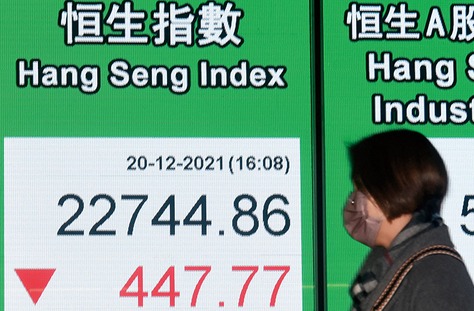
          Hong Kong stocks peaked in 2021 on February 17, and the year's lowest point was on December 20. During this period, the HSI accumulated a decline of 27.32%, of which the second half of the year fell more than 21%; to complete the year, the HSI accumulated a decrease of 14.08%, of which the second half of the year fell more than nearly 19%. Real estate and information technology sector weighting of more than 40% of the HSCCEI, the year's high and low between the cumulative decline of more than 34%, the annual cumulative decline of about 23%.
          According to statistics, in the second half of 2021, there were seven times (10 consecutive trading days) that the HSI fell by more than 5% in accumulation. Among which, at the end of July, due to the new regulation of "double deductions" in education and training, the Chinese education stocks listed in the U.S. and Hong Kong plummeted in a "washout" style, triggering a collective plunge in many sectors such as the new Internet economy industry in Hong Kong stocks. The HSI fell by nearly 10% in 3 days.
          2.2 "External Problems" - Sanctions
          On December 15, the Financial Times quoted sources saying that the U.S. government imposed abusive sanctions on some Chinese biotech companies. The Hang Seng Hong Kong-listed biotech index, which had poorly fallen throughout the year, fell nearly 6% again on the same day. 2021, following education, e-commerce, gaming, real estate, and gaming, the last betting track for overseas Chinese stocks was also extinguished.
          Risk Warnings and Disclaimers
          You understand and acknowledge that there is a high degree of risk involved in trading. Following any strategies or investment methods may lead to potential losses. The content on the site is provided by our contributors and analysts for information purposes only. You are solely responsible for determining whether any trading assets, securities, strategy, or any other product is suitable for investing based on your own investment objectives and financial situation.
          Comments
          Add to Favorites
          Share

          JPMorgan Chase Private Bank's market outlook for 2022

          As the crisis is about to pass, the focus of policy makers has changed, the financial situation of households and businesses has stabilized, and the pace of technological innovation has continued to accelerate. Compared with the slow growth of the global economy and weak productivity in the past decade, the post-epidemic era may mean a more vigorous economic environment. For investors, especially those who are still maintaining their portfolio allocations during the last economic cycle, these changes will have a crucial impact.
          There is no doubt that many factors are fermenting together. In the United States, the Fed’s monetary policy in response to inflationary pressures and a weak job market will also affect the performance of the financial market. In addition, China's ongoing economic transformation may bring downside risks in the short term. In the long run, the global economy needs to adjust and prepare for the deceleration of the structural growth of the world's second largest economy. From a global perspective, the spread of the virus may continue to have a major impact on the economy.
          Based on the interaction between the global economy and financial markets, we have found that a goal-oriented risky asset portfolio returns ideally. Corporate earnings growth may push the stock markets of developed countries to new highs; and strong economic growth, coupled with the emergence of benign inflation, may have an adverse impact on the bond market. Taking into account the potential uncertainty of the market, although we are generally optimistic about the future prospects, we still pay attention to the balanced allocation of the investment portfolio.
          The road to recovery in the post-epidemic era is still tortuous
          As the global economy continues to recover from the new crown epidemic, most risk assets will perform well in 2021. However, in recent months, investors have paid particular attention to the potential risks that may arise from economic growth and market returns. Inflation issues have made the central bank’s policy considerations more complicated. Supply shortages continue to affect economic output. Coupled with the recurrence of the new crown epidemic, consumers, companies and investors are generally worried.
          But in the long run, compared with the slow growth of the global economy and weak productivity in the past decade, especially for developed countries, the post-epidemic era may mean a more vigorous economic environment. For investors, especially those who maintained their portfolio allocations during the last economic cycle, these changes will have a crucial impact.
          Macro View
          1,The foundation to make the economic cycle full of vitality
          With the gradual passing of the epidemic crisis, the focus of attention of policy makers has changed, the financial situation of households and businesses has stabilized, and the pace of development of technological innovation has continued to accelerate. All these changes have laid a solid foundation for stronger growth of the global economy in the next ten years.
          2,Policy makers regard sustained economic growth as their top priority
          The governments of the United States and European countries avoid austerity policies as much as possible, mainly because these measures have led to weak economic recovery after the global financial crisis. The U.S. Congress and the White House have spent more than $4 trillion in response to the new crown epidemic. As of this writing, Congress is discussing the possibility of an additional trillion dollars in fiscal spending in the next 10 years. In Europe, the EU Recovery Fund will continue to provide financial support for the next ten years. Both the Fed and the European Central Bank are committed to maintaining a steady rise in inflation by promoting the recovery of the job market. At the same time, China’s policymakers are shifting the focus of the economy from real estate investment to consumer spending and high-end manufacturing, realizing a comprehensive economic transformation. Transformation will face various challenges, and it will also bring certain potential downside risks to global growth.,
          3,The increase in household consumption has benefited businesses
          In many advanced economies, household net worth is at a record high and excess savings have increased. A strong labor market and increased debt-raising capacity will continue to drive consumption growth in the next few years. The growth momentum of the US real estate industry is particularly prominent. Corporate profits and profit margins have grown at a healthy rate that has never been seen before, and debt servicing costs have also been at historically low levels. In the supply chain, strong demand needs to be met, and inventory needs to be rebuilt urgently. The company's current profitability will drive future investments and expenditures.
          4,Technological innovation is the top priority
          The three major trends of digital transformation, medical innovation and sustainable development will continue to promote R&D and investment to create more value. Digital transformation will only continue to accelerate. Medical innovation will continue to seek breakthroughs and explore solutions under the epidemic. More frequent and more destructive natural disasters have all revealed the importance of paying attention to sustainable investment.
          Although the valuations of companies in the above three areas have risen significantly, long-term investors can still explore many investment opportunities in the market. In our investment portfolio, we focus on innovative technologies such as semiconductors, artificial intelligence, network security, and cloud technology that enable change, while at the same time we distribute different geographies and investment styles to balance risk exposure.
          Focus of attention
          1,Treat with caution
          Although the current cycle clearly shows the potential for vigorous economic growth, the current environment is also "turbulent." We believe that the economy will continue to expand in 2022, but the degree of expansion may depend on the monetary policies adopted by various countries in response to inflation, the success of Chinese policymakers in achieving economic transformation, and the speed at which the global epidemic evolves into a local epidemic.
          2,The central bank may succumb to inflationary pressures
          Where will the global monetary policy go? From Brazil to New Zealand, many central banks have raised interest rates to fight inflation, but the Fed and the European Central Bank are still standing still. If the increase in inflation is more moderate (in line with our basic view), the Fed and the European Central Bank may be able to suspend interest rate hikes, and the labor market will take this opportunity to further return to pre-epidemic levels.
          However, if inflation remains high and the labor market is weaker than traditional indicators originally expected, the Fed may adopt more aggressive measures. Although the early start of a new round of interest rate hikes may lead to market turbulence, it should be noted that the global market has long expected short-term interest rates to rise. Patience may bring surprises.,
          3,China’s policy makers need to take care of multiple parties
          Policymakers will try to avoid the excessive negative impact of economic transformation on growth, but this is not easy. In the past year, policy makers have taken many actions to strengthen supervision of multiple industries, and investors have also been negatively affected by these policy actions. The market value of China's Internet stocks has shrunk by almost half, and the real estate industry has been deleveraging, leading to a decline in industry growth and severe market volatility. Looking ahead, we believe that global economic growth will be sufficient to offset the adverse effects of China's economic weakness. However, China's simultaneous adoption of a wide range of macro-prudential strategies and strengthening of industrial supervision have indeed increased downside risks.
          4,From a global epidemic to a local epidemic
          Although the development path of the new crown epidemic is difficult to predict, investors can now face the uncertainty of the epidemic more calmly. The bad news is that the new crown epidemic may evolve into a long-term endemic epidemic. But the good news is that vaccination, immunity gained from previous infections, and the emergence of new therapies all reduce the risk of epidemic spread. Although some industries are still vulnerable to the impact of the increase in new coronavirus cases, we expect the impact of the epidemic on the global economy and financial markets to continue to weaken.
          Conclusion
          When considering the interaction between the economy and the market, we find that a portfolio of risky assets that matches the investment objectives can bring ideal returns. We believe that stocks are more attractive than bonds, and bonds are better than cash. The growth of corporate earnings may push the stock markets of developed markets to new highs, and the sustained high growth and high inflation economic environment will have an adverse impact on the bond market. However, in view of the potential "turbulence", we will focus on maintaining our overall optimistic portfolio allocation balance.
          Some specific risks may cause recent market volatility, but we believe that the current economic cycle has a healthy and strong driving force. The focus of policy makers, the financial strength of enterprises, excess household savings, and continuous technological innovation may bring investors many dynamic investment opportunities. Compared with the 2010s, these investment opportunities have a wider scope. Investors can consult their own investment advisers to build a suitable investment portfolio that can effectively avoid shocks. However, we believe that it is now a good time to focus on capturing the upward wave, and investors should focus on the expected returns from long-term growth.

          Source: JPMorgan Chase

          Risk Warnings and Disclaimers
          You understand and acknowledge that there is a high degree of risk involved in trading. Following any strategies or investment methods may lead to potential losses. The content on the site is provided by our contributors and analysts for information purposes only. You are solely responsible for determining whether any trading assets, securities, strategy, or any other product is suitable for investing based on your own investment objectives and financial situation.
          Comments
          Add to Favorites
          Share

          China's Macroeconomic Review and Outlook

          China's GDP growth rate was 6.1% in 2019. Influenced by the COVID-19's great impact, China’s 2020 GDP growth plummeted to 2.3%. In the first three quarters of 2021, China's GDP growth rate was 18.3%, 7.9% and 4.9%, respectively, and China's GDP growth rate was expected to rebound to about 8.0% in 2021. This implied a two-year average GDP growth rate of about 5.2% in 2020 and 2021, which was still significantly lower than the growth rate in 2019.
          In terms of the contribution of the triad of consumption, investment and net exports to economic growth, in the first quarter of 2021, the contribution of the triad to economic growth is 11.6, 4.5 and 2.2 percentage points respectively, while by the third quarter of 2021, the above indicators fell back to 3.8, 0.0 and 1.1 percentage points respectively. It is easy to see that in 2021, the contribution of consumption and investment to economic growth declined significantly, while the contribution of net exports to economic growth showed a strong resilience.
          Before the outbreak of the epidemic, the year-on-year growth rate of total retail sales of consumer goods fluctuated roughly between 7-9%. In 2021, however, the indicator fell back from 33.8% in January-February to 3.9% in November. It is easy to see that the current consumption growth rate is significantly weaker than the level before the outbreak. One of the reasons is that the epidemic has so far still rebounded sporadically in various places, resulting in a still tense situation of epidemic prevention and control, which has affected the consumption growth rate of related industries; second, the epidemic has caused a significant negative impact on the income level of people in the service industry and other industries, and the decline in income growth will naturally affect the consumption growth rate; third, the current consumer expectations are weak in the short term.
          The cumulative year-on-year growth rate of fixed asset investment in 2021 was high at the previous stage and low at the latter, slipping from 35.0% in January-February to 5.2% in November. Among the three major fixed asset investments, the cumulative year-on-year growth rate of infrastructure investment declined the fastest (from 36.6% to -0.2% over the same period), followed by real estate investment (from 36.8% to 6.3% over the same period), and manufacturing investment performed relatively more robustly (from 37.3% to 13.7% over the same period).
          The most important reason for the significant decline in the growth rate of infrastructure investment is the high pressure of local government debt in most areas, the pressure of debt service is huge, there is not enough financial resources for infrastructure investment. Currently, local party and government officials are directly responsible for preventing and resolving regional financial risks, which makes local governments less motivated to raise debt. Recently, the Ministry of Finance stated that the hidden debts of local governments should be resolved by the local governments themselves. This means that unless the central fiscal expansion is increased, local governments do not have enough capacity to promote a new round of infrastructure construction.
          The reason for the rapid decline in real estate investment growth mainly stems from a series of new regulatory policies implemented since the second half of 2020, such as the three red lines on the balance sheet, commercial bank loan concentration management, and centralized urban land bidding and auctioning. The implementation of these policies has made financing for real estate development companies difficult. Some real estate developers with adventurous operations even face the risk of debt default due to broken capital chains (For example, Evergrande Group).
          Among the three major investments, the growth rate of manufacturing investment has maintained the strongest resilience. However, the leading indicators on manufacturing investment are currently mixed. On the one hand, the manufacturing purchasing managers' index experienced seven consecutive months of decline between April and October 2021, falling from 51.9 to 49.2, though it rebounded to 50.1 in November, returning above the threshold. On the other hand, the year-on-year growth rate of industrial value added of industrial enterprises above the scale rebounded for two consecutive months in October and November (3.5% and 3.8%, respectively) after a continuous decline from March to September 2021 (from 52.3% to 3.1%).
          China's export growth performed astonishingly in 2021. Even leaving aside the superb 60.6% growth in January-February, the average monthly growth rate of China's exports from March to November remained at 27.2% year-on-year. The goods trade surplus of US$84.5 billion in October 2021 was also a record high. The strong contribution of net exports to China's growth was an important support for the country's ability to reach 8% economic growth in 2021. The reason why China's exports continue to be strong is that the global epidemic has boosted Chinese exports in specific sectors (e.g. medical substances and equipment, laptops, telecommuting equipment, etc.), the contrast between the raging global epidemic and China's excellent prevention and control has led to a short-term rise in the position of Chinese companies in the global chain instead of a fall, and the rise in import demand due to the fall back of the epidemic in developed countries. However, China's export growth rate cannot always stay above 20% growth rate. For example, the new export orders index in the PMI has been below the threshold for seven consecutive months between May and November 2021, which implies that external import demand may weaken in the future.
          China's inflation in 2021 shows a low CPI growth rate and a rapid increase in PPI growth rate. From January to November 2021, the CPI growth rate rose from -0.3% to 2.3%, while the PPI growth rate climbed from 0.3% to 12.9%. The main reason for the low CPI growth rate is the low food prices, especially pork prices. However, pork prices and food price growth have bottomed out since October 2021. The PPI growth rate has climbed all the way up mainly due to the rapid rise in global commodity prices after the COVID-19 epidemic. However, compared with the peak of 13.5% in October, the PPI growth rate started to fall back in November.
          After the outbreak of the epidemic, China's urban survey unemployment rate once rose to 6.2% in February 2020. From January to November 2021, the indicator declined from 5.4% to 5.0%, indicating a stable labor market operation. However, it is worth noting that the survey unemployment rate for young people aged 16-24 rose from 12.7% to 14.3% within the same period, implying some structural unemployment pressure in the Chinese labor market.
          The Central Economic Work Conference held in early December 2021 pointed out that China's economic development is currently facing the triple pressure of demand contraction, supply shock and weakening expectations. Therefore, the economic work in 2022 should be "stable in progress", and all regions and departments should take up the responsibility of macroeconomic stability, and all parties should actively launch policies that are conducive to economic stability, with policies that are appropriately forward-looking.
          Based on the above statements, I believe that macroeconomic policies in 2022 will be more expansionary compared to those in 2021.
          In terms of fiscal policy, the central fiscal deficit to GDP ratio is expected to remain in the 2.8%-3.0% range, and the scale of local debt issuance is expected to rise significantly (the actual issuance scale of local debt may reach about 4.5 trillion yuan in 2022), and fiscal policy will be required to be front-loaded (concentrated on the first half of the year). At present, from the central to the local level, they are emphasizing that the economic growth rate in the first half of 2022 should be stabilized and try not to be lower than the growth rate in the 4th quarter of 2021, which means that fiscal spending will be advanced and significantly powered in the first half of 2022.
          In terms of monetary policy, there had been two rate cuts in the second half of 2021 and the LPR rate was cut by 5 basis points on December 20. Further rate cuts (around 2 times) and interest rate cuts (20-40 basis points) are expected in 2022 (especially in the first half of 2022), and structural monetary policy operations are also expected to make further efforts. Considering that this Central Economic Work Conference particularly emphasized the coordination and linkage between fiscal and monetary policies, the concentration of monetary policy in the first half of 2022 will also help reduce the financing costs on the fiscal side
          In addition to macro policies, the regulation and control policies for the real estate market will also be adjusted to a certain extent, as the Central Economic Work Conference, while mentioning adherence to "Housing Without Speculation", also proposed to "promote the virtuous cycle and healthy development of the real estate industry". The toughest time for the real estate market may have passed, but attention should still be paid to the risk of concentrated default by real estate developers and local financing platforms in 2022.
          Considering the above policy adjustments, my forecast is that China's GDP growth is expected to reach 5.3-5.5% throughout the year 2022, with quarterly economic growth remaining low at the previous stage and high at the latter. The annual CPI growth rate will reach 2-3% and PPI growth rate will fall back to 6% or below. The urban survey unemployment rate is stable at 5% or below. This means that China's economy will continue to maintain stable and rapid growth and will continue to make important contributions to the global economic recovery in the post-epidemic era.

          Source: Financial View, Author: Zhang Ming

          Risk Warnings and Disclaimers
          You understand and acknowledge that there is a high degree of risk involved in trading. Following any strategies or investment methods may lead to potential losses. The content on the site is provided by our contributors and analysts for information purposes only. You are solely responsible for determining whether any trading assets, securities, strategy, or any other product is suitable for investing based on your own investment objectives and financial situation.
          Comments
          Add to Favorites
          Share

          Education, Employment, Ethics: The Challenge Ahead To America For 2022

          As 2022 begins, the return to normal that so many of us thought was on the horizon is still not here. Covid continues to disrupt our very existence. And yet the effectiveness of vaccinations, targeted government support for America's education and healthcare systems, and passage of legislation to address the challenge of infrastructure and broadband access show how to forge solutions to the critical issues that will affect our lives in 2022 and beyond.
          Here are five concerns that must also be addressed. They will require innovation, leadership, effective collaboration, and a long-term commitment to reform. 

          1.Education

          When Covid originally shut America's schools and colleges, many believed that remote learning was a practical and effective solution. Once the doors were opened and students returned to classes, at all levels, learning would simply return. This was not and is not the case. Colleges are suffering severe enrollment decline. Students are lagging further behind academically than initially thought, especially the most vulnerable. Mental-health issues are interfering with students’ ability to succeed in schools and colleges. And severe teacher shortages along with retention issues are interfering with a return to normalcy. 
          At both the school and college level, we must provide resources to give students access to guidance and support along with high-quality mental-health services. Some student support services at the college and even high-school level can be provided via paid internships, augmented by resources provided to high-quality not-for-profit organizations that are co-located in school and college buildings. Such services can also be supported via technology solutions available to students online. Longer school days and years to address academic-achievement issues can also be delivered by expanded partnerships with not-for-profit organizations. Academic challenges will require a commitment to high-quality blended learning options, at all levels, utilizing remote learning to augment, not replace in-person education. 
          Enrollment decline at the college level can be addressed by full integration of high-school and college education. Innovative reform programs like P-Tech should be expanded to provide a clear pathway from school to college. The dramatic teacher-recruitment issue can be addressed by attracting nontraditional populations into the profession. Retention can be addressed via an added focus on professional development and support as well as base-level financial support. A high-level national task force needs to be convened to address this challenge.

          2.Employment

          Employers across the country are unable to find enough qualified workers to fill their ranks. The demands in the workforce have put a premium on those with the right education and skill levels. As educational achievement levels continue to dip and mental health problems persist, this problem if not addressed will only get worse. 
          Covid intensified a skills crisis that was building because of technology-driven changes in the workplace. More customized work-related education and skills can be achieved through a close partnership between the private sector and schools and colleges. We shouldn’t wait for students to complete a degree—or, worse, fail to complete—but begin while students are still in school. Employers can also partner with colleges to increase skill levels of those already in the workplace. These nontraditional students will also help address college-enrollment decline. A shared financial commitment in this area, augmented by philanthropic support from foundations, can put in place a clear pathway from school, to college, to career.

          3.Diversity, Equity, and Inclusion

          The horrific tragedy of George Floyd put a focus on policing. While reforms there are still an urgent priority, the larger issue of the need to embrace diversity and equity in all areas of endeavor must not be obscured or politicized. America's education systems must be made more diverse at all levels, including the racial makeup of faculty. Diversity and equity in corporations large and small must be made a high priority as well. We need to provide opportunity for growth and expansion of minority-owned businesses disproportionately affected by Covid. 
          Responding to the Floyd tragedy, institutions across all sectors of the economy have begun making commitments to diversity, equity, and inclusion. Corporations have pledged to hire employees of color, most in entry-level positions, in the coming years. Many institutions have implemented diversity-training programs. Others have pledged to bring more minority businesses into their supply chains. These are welcome steps, but the next involves metrics for performance along with accountability and transparency. Those can be provided, again, via collaboration with civil society, not-for-profit organizations given access to data for performance. The public can then be provided with such data, and high-performing institutions across sectors can be recognized and rewarded for their excellence, while those lagging behind can be provided a roadmap for improvement. Diversity and equity need also to be part of all education experiences. Pledges are one thing, but results are what will give us confidence in a truly equitable future.

          4.Corporate Social Responsibility

          It is becoming clear that some in the corporate world who had access to Covid relief funds were either ineligible for them or spent them inappropriately. Perceptions of unethical and inappropriate behavior in the corporate world were already damaged by the failures of companies like Facebook, which has allowed lies to spread on social media. The problems extend across many areas of business. Some in pharma failed to allow affordable access to medication, for instance. Many businesses and their leaders have clearly distinguished themselves, but public attitudes are often most influenced by the behavior of the laggards.
          A partnership between Duke University and the U.S. Chamber of Commerce Foundation recently launched an online certificate program to provide corporate leaders the ability to learn the most effective ways for businesses to meld business practice with societal improvement. As visiting professor of the practice at Duke, I led this executive-education program, where dozens of corporate leaders over a week’s time learned from the best practitioners how to raise the bar for performance. Most importantly, the participants learned how to deliver specific metrics for performance embedded into their business practices. This program can be expanded across the U.S. and be a model for other universities in collaboration with businesses and business associations. A commitment to societal improvement is not a “nice to have” or a set of pledges, but a vitally important set of business practices delivering societal improvement and bottom-line results.

          5.Civil Society

          Not-for-profit organizations play an important role in ensuring economic success and social stability. This sector, especially those engaged in knitting together America's fragile social safety net, is vital to an economic turnaround. When government funding addresses those in need, in large measure it is not-for-profit organizations under government contracts that actually provide the services. Covid has affected their ability to recruit and retain workers, and many have not seen funding increases to match the growing demand for services.
          It is not uncommon for a not-for-profit multiservice agency to obtain over 90% of its funding from government contracts coming from multiple agencies, each with separate financial and operational reporting requirements. It is also common for such contracts to refuse to cover a host of bottom-line costs incurred by such agencies, including occupancy and healthcare for employees, to name just two. As costs and need for service increase, contracts seldom stretch to cover them. Now is an opportunity to reimagine the contracts processes for not-for-profit providers of the vital social safety net. A single contract with common metrics for performance and financial reporting makes sense, as does the ability of the contract to cover all program related costs. Private funders should be encouraged to join in as well. Covid may go away, but the needs created by the pandemic will continue for years to come.
          These five issues are not the end of the list of concerns we need to worry about as 2022 begins. We need to make America's civil society more civil and do what we can to bring the nation together by valuing civic education. We need to recognize the frontline workers and scientists who helped us address the challenge of a pandemic by not only honoring them, but honoring their work by valuing common sense healthcare solutions like vaccination and masking. We need to recognize the vital areas of endeavor like the arts and culture that have been so significantly affected by the pandemic as well. 
          But, as we bring in the New Year, we can effectively address the challenges of education, employment, diversity, corporate social responsibility, and civil society in a concerted and effective way. If we do, we can ensure a brighter future for all Americans.

          Source: Stanley Litow, Education, Employment, Ethics: The Challenge Ahead for 2022, Barron's

          Risk Warnings and Disclaimers
          You understand and acknowledge that there is a high degree of risk involved in trading. Following any strategies or investment methods may lead to potential losses. The content on the site is provided by our contributors and analysts for information purposes only. You are solely responsible for determining whether any trading assets, securities, strategy, or any other product is suitable for investing based on your own investment objectives and financial situation.
          Comments
          Add to Favorites
          Share

          Markets and the economy brace as the Federal Reserve's first rate hike could come in two months

          Thomas
          Markets and the economy brace as the Federal Reserve’ s first rate hike could come in two monthsThe Federal Reserve in a little over two months is expected to enact its first rate increase in three years.As officials prep for a return to more conventional monetary policy, Wall Street is watching closely.
          The Fed is responding to inflation pressures that are running — by some measures — at the fastest rate in nearly 40 years.
          If everything goes according to plan, the Federal Reserve in a little over two months will enact its first rate increase in three years, a move policymakers deem necessary and that markets and the economy are grudgingly coming to accept.
          The Fed last raised rates in late 2018, part of a “normalization” process that happened in the waning period of the longest-lasting economic expansion in U.S. history.
          Just seven months later, the central bank retreated as the expansion looked increasingly fragile. Eight months after that initial cut in July 2019, the Fed was forced to roll back its benchmark borrowing rate all the way to zero as the nation confronted a pandemic that threw the global economy into a sudden and shocking tailspin.
          So as officials prep for a return to more conventional monetary policy, Wall Street is watching closely. The first trading day of the new year indicated the market is willing to keep pushing higher, in the midst of the gyrations that have greeted the Fed since it indicated a policy pivot a month ago.
          “When you look back historically on the Fed, it’s usually multiple tightenings before you get in trouble with the economy and the markets,” said Jim Paulsen, chief investment strategist at the Leuthold Group.
          Paulsen expects the market to take the initial hike – likely to be enacted at the March 15-16 meeting – without too much fanfare, as it’s been well telegraphed and will still only bring the benchmark overnight rate up to a range of 0.25%-0.5%.
          “We’ve developed this attitude on the Fed based on the last couple decades where the economy was growing at 2% per annum,” Paulsen said. “In a 2% stall-speed economy world, if the Fed even thinks about tightening it’s damaging. But we don’t live in that world anymore.”
          Fed officials at their December meeting penciled in two additional 25-basis-point hikes before the end of the year. A basis point is equal to one one-hundredth of 1 percentage point.
          Current pricing in the fed funds futures market points to about a 60% likelihood of a hike in March, and a 61% probability that the rate-setting Federal Open Market Committee will add two more by the end of 2022, according to the CME’s FedWatch Tool.
          Those subsequent hikes are where the Fed could see some blowback.
          The Fed is hiking rates in response to inflation pressures that are running by some measures at the fastest rate in nearly 40 years. Chairman Jerome Powell and most other policymakers spent much of 2021 insisting that prices would ease soon, but conceded toward the end of the year that the trend was no longer “transitory.”

          Engineering a landing

          Whether the Fed can orchestrate an “orderly coming down” will determine how markets react to the rate hikes, said Mohamed El-Erian, chief economic advisor at Allianz and chair of Gramercy Fund Management.
          In that scenario, “the Fed gets it just right and demand eases a little bit and the supply side responds. That is sort of the Goldilocks adjustment,” he said Monday on CNBC’s “Squawk Box.”
          However, he said the danger is that inflation persists and rises even more than the Fed anticipates, prompting a more aggressive response.
          “The pain is already there, so they are having to play massive catch-up, and the question is at what point do they lose their nerve,” El-Erian added.
          Market veterans are watching bond yields, which are expected to indicate advanced clues about the Fed’s intentions. Yields have stayed largely in check despite expectations for rate hikes, but Paulsen said he expects to see a reaction that ultimately could take the benchmark 10-year Treasury to around 2% this year.
          At the same time, El-Erian said he expects the economy to do fairly well in 2022 even if the market hits some headwinds. Likewise, Paulsen said the economy is strong enough to withstand rate hikes, which will boost borrowing rates across a wide swath of consumer products. However, he said he figures a correction will come in the second half of the year as rate increases continue.
          But Lisa Shalett, chief investment officer at Morgan Stanley Wealth Management, said she thinks market turbulence would be more pronounced even as the economy grows.
          Markets are coming off a prolonged period of “a long decline in real interest rates, which allowed stocks to break free from economic fundamentals and their price/earnings multiples to expand,” Shalett said in a report for clients.
          “Now, the period of declining fed funds rates which began in early 2019 is ending, which should allow real rates to rise from historic negative lows. This shift is likely to unleash volatility and prompt changes in market leadership,” she added.
          Investors will get a closer look at the Fed’s thinking later this week, when minutes of the December FOMC meeting are released Wednesday. Of particular interest for the market will be discussions not only about the pace of rate hikes and the decision to taper asset purchases, but also when the central bank will start reducing its balance sheet.
          Even as the Fed intends to halt the purchases in the spring, it will continue to reinvest the proceeds of its current holdings, which will maintain the balance sheet around its current $8.8 trillion level.
          Citigroup economist Andrew Hollenhorst expects balance sheet reduction to start in the first quarter of 2023.

          Source: CNBC news

          Risk Warnings and Disclaimers
          You understand and acknowledge that there is a high degree of risk involved in trading. Following any strategies or investment methods may lead to potential losses. The content on the site is provided by our contributors and analysts for information purposes only. You are solely responsible for determining whether any trading assets, securities, strategy, or any other product is suitable for investing based on your own investment objectives and financial situation.
          Comments
          Add to Favorites
          Share

          Bullish Oil market With Cautious In 2022

          There is no doubt that 2021 was a bullish year for the oil market, with Goldman Sachs, the flag bearer for commodities, giving a target price of $100 for crude oil. With global central banks generally tightening policy in 2022, the momentum driving the oil price is fading from the perspective of market liquidity, but this does not mean that there will be a sharp decline, as supply and demand factors still dominate.

          Global Economy Continue To Recover

          In World Economic Outlook, October 2021, the IMF lowered its global economy projection by 0.1% to 5.9% in 2021 and kept the growth forecast unchanged at 4.9% in 2022.
          The IMF believes that the COVID-19 is the biggest obstacle on the road to full recovery. The global economy will continue to recover, but the recovery momentum is weakening due to the repeated drag of the pandemic and the downside risks are increasing. At the same time, the resurgence of COVID-19 in multi-point has affected countries and regions in the key links of the global supply chain, disrupting supply chains for longer than expected, which in turn caused the surge of inflation in many countries.
          The future of COVID-19 remained unclear, and the unknown duration of supply chain tensions have led to great uncertainty about the outlook for inflation. Under such circumstances, global central banks are walking on thin ice, not only controlling inflation and excess financial risk but also need to continually support the recovery. The IMF warned that central banks needed to be prepared for the risk of higher inflation expectations, communicate clearly with markets and act quickly.
          Currently, the Fed has shifted to a hawkish stance, accelerating the pace taper bond-buying program, which is expected to be completed by March 2022 and prepare for an earlier rate hike later. In addition to the Fed, the BOC and the BOE are also in a state of marginal tightening, with the market are expecting rate hikes in 2022. The BOJ's monetary policy has remained broadly accommodative, and the reason for this difference may be mainly due to Japan's long deflationary environment. There is little inflationary pressure in China, and stable growth has become the primary goal of China's monetary policy. The PBOC lowered the reserve requirement ratio (RRR) at the end of 2021, and the orientation of prudent monetary policy remains unchanged.
          Theoretically, the credit expansion of central banks’ monetary policies and the real sector will both have an impact on the global liquidity environment. However, as the economy recovers further in 2022, controlling inflation will become an important task for most governments, and orderly tightening liquidity is the general trend. While the liquidity inflection point doesn't mean the oil market is headed for a sharp drop, the surge of oil driving by funds is fading and isn't enough to sustain the bull market of oil.

          The end of undersupply is oversupply

          In terms of supply and demand, in addition to the pandemic still plaguing the market, the energy transition under the "dual carbon" background will become an important factor affecting the market in 2021. The European energy crisis in 2021 is a typical challenge caused by a supply shortage in the process of energy transformation. The shortage of natural gas supply and the surge of price indirectly pushed up the oil price.
          With the further development of energy transformation in the future, this mismatch between supply and demand may still occur frequently in the process of converting traditional fossil energy to green energy, which may lead to significant fluctuations in energy prices. According to the EIA's forecast, global oil demand growth in 2022 is expected to be 3.55 million b/d, up 200,000 b/d from the previous forecast, indicating that the recovery of oil market demand this year is still guaranteed. The IEA expects global oil demand growth to reach 3.3% in 2022, with an increase of 3 - 4 million b/d, and the overall demand return to pre-pandemic levels in 2019.
          At the latest monthly meeting, OPEC decided to maintain its plan to raise output by 400,000 b/d in January 2022, after the U.S. and other countries released a total of 66 million barrels of strategic petroleum reserves. Currently, OPEC still has 3.4 million b/d of production cuts to resume in 2022. When the agreement expires at the end of April 2022, the OPEC+ crude oil production benchmark will increase by 1.63 million b/d from the current level, meaning that OPEC+ have room to increase production by 5 million barrel in 2022. And non-OPEC countries will also add about 2 million barrels supply. OPEC+ had previously forecast a global oil glut of 3 million b/d in the first quarter of 2022, reversing the supply-demand pattern in the crude oil market.
          However, the problem of underinvestment on the supply-side due to the pandemic remains, and even though oil prices surged to a record high in nearly seven-year in 2021, the supply-side production was restrained. There is plenty of room for Iran to increase its oil production in the coming years, but the uncertainty surrounding the nuclear deal makes it hard to bet on Iran.

          Summary

          Under the impact of CVOID-19 and the background of "dual carbon", the energy market will be in a state of constantly changing, and it is difficult to form a trend in the supply and demand structure of the oil market, which brings great challenges to the judgment of the oil price. In the future, it is not ruled out that the supply will continue to oversupply, but many uncontrollable factors will often lead to some unexpected performance of oil prices, and significant fluctuations of oil prices in the future may be the norm.
          From the perspective of macroeconomic and the fundamental of supply and demand, we should be cautiously optimistic about the oil market in 2022, and it is difficult to copy the great bull market as in 2021. It is conservatively estimated that the center of oil price in 2022 will move down from the second half of 2021. Taking WTI as an example, the annual average price is roughly between $60 and $70 per barrel. The overall fluctuation range is between $50 and $80 per barrel.
          Risk Warnings and Disclaimers
          You understand and acknowledge that there is a high degree of risk involved in trading. Following any strategies or investment methods may lead to potential losses. The content on the site is provided by our contributors and analysts for information purposes only. You are solely responsible for determining whether any trading assets, securities, strategy, or any other product is suitable for investing based on your own investment objectives and financial situation.
          Comments
          Add to Favorites
          Share

          How Every Market Performed in 2021

          After the roller coaster of volatility in 2020, the majority of asset classes in 2021 saw positive returns as the world reopened for business.
          The Federal Reserve’s accommodative monetary policy, supply chain struggles, and high demand for fuels and raw materials for the clean energy transition largely shaped the markets.
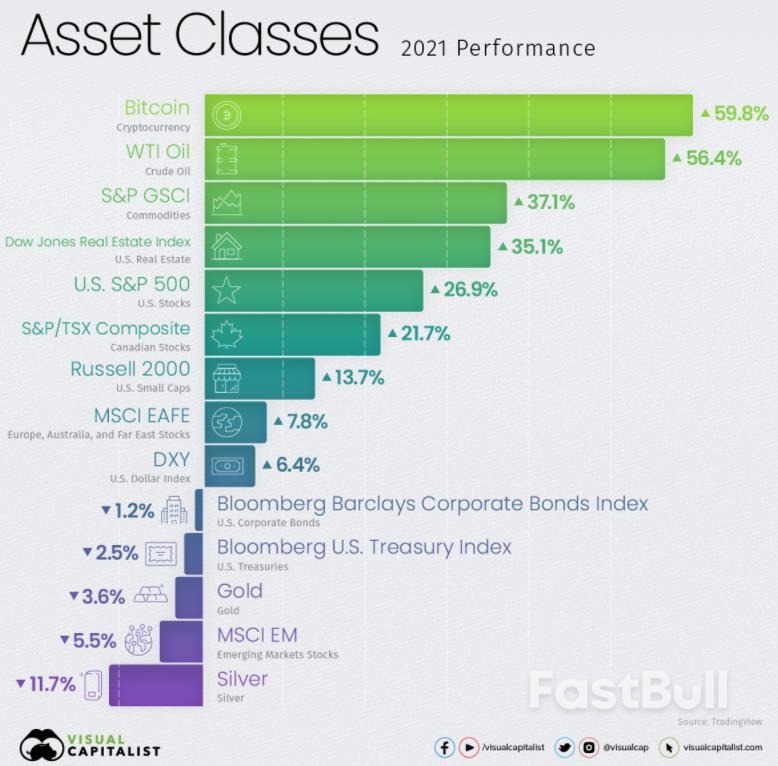
          Alongside the rise in inflation, commodities and cryptocurrency outperformed as broad equity indices saw double-digit returns, with the S&P 500 rising by 26.9% in 2021.

          Markets Roundup for 2021

          Speculation and the energy fuels for the world’s reopening were two of the main themes for markets in 2021, reflected in Bitcoin (59.8%) and crude oil (56.4%) being the top two performing assets in that time frame.
          The S&P GSCI commodity index (37.1%) was another top performer, as agricultural and livestock food prices rose alongside the Dow Jones Real Estate Index (35.1%).
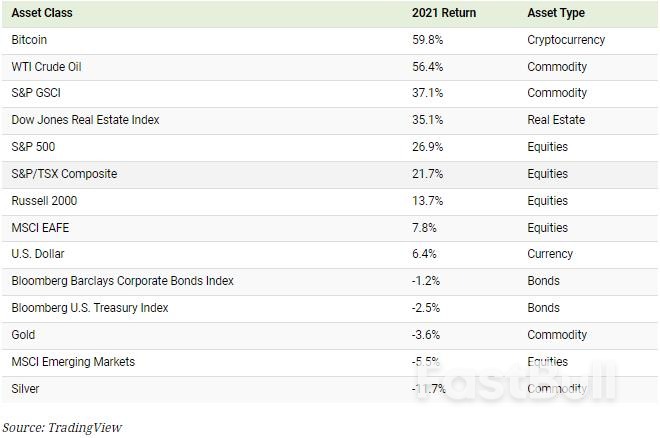
          Despite most physical and digital commodities seeing price gains, precious metals such as gold (-3.6%) and silver (-11.7%) struggled to hold onto their value, while industrial and battery metals like lithium (477.4%) and cobalt (207.7%) surged.
          Large cap equity indices like the S&P 500 (26.9%) almost doubled the returns of small caps (Russell 2000, 13.7%), with emerging markets failing to keep up as they fell 5.5%.

          How the S&P 500 Sectors Performed

          After last year’s poor performance as the worst-performing S&P 500 sector, energy (47.7%) was 2021’s best performing sector alongside the rise in crude oil and other energy commodities.
          Two other negative performers last year, real estate (42.5%) and financials (32.6%), also turned it around and were among the top performing sectors this year.
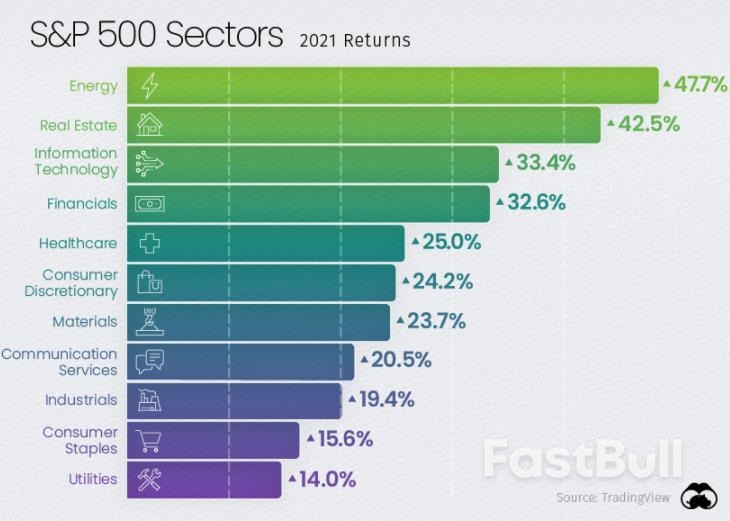
          Despite many value equities performing well, growth equities still managed to keep a strong pace. Information technology (33.4%) continued to provide strong returns with Microsoft (51.2%) outperforming many of the other tech giants.
          As Amazon (2.38%) and Netflix lagged behind (11.4%), Apple (33.8%) capped off its strong 2021 returns by becoming the first U.S. company to reach a $3T market cap at the start of 2022.

          Foreign Exchange and Currency Returns in 2021

          While the U.S. dollar struggled last year with most currencies outperforming it, 2021 saw the dollar index rise by 6.4%, outperforming most other currencies.
          The Chinese yuan (2.7%) and Canadian dollar (0.7%) were the only major currencies that managed positive returns against the U.S. dollar, while the Australian dollar (-5.7%), Euro (-7.0%), and Japanese Yen (-10.2%) were among the worst performers.
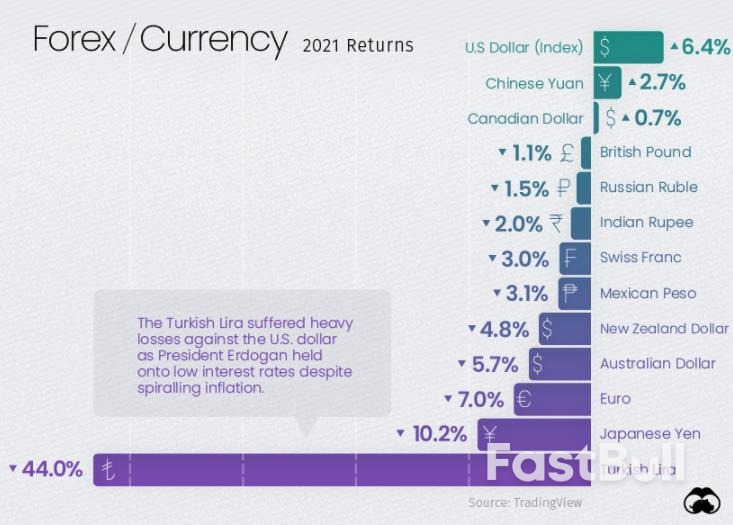
          The Turkish lira was the standout loser in foreign exchange, and the turmoil was punctuated by turnover in the country’s finance minister position. While most other emerging economies raised interest rates to fight against inflation, Turkey has continued cutting rates and looks set to default on its $446 million of external debt.

          The Winners and Losers of 2021

          As the COVID-19 pandemic defined many of the winners and losers in 2020, the gradual reopening of international travel and business shaped the over and underperformers of 2021.
          Cryptocurrencies had a standout year beyond Bitcoin (59.8%), which was greatly outpaced by many other cryptocurrencies and smart contract platforms like Ethereum (398.3%), Solana (11,177.8%), Avalanche (3,334.8%), and Luna (12,967.3%).
          While Tesla (49.8%) had another strong year, Lucid and Ford Motors greatly outperformed Elon Musk’s company and the rest of the auto industry with their EV efforts. Demand was so great that Ford had to halt reservations for its F-150 Lightning pickup trucks at the end of 2021.
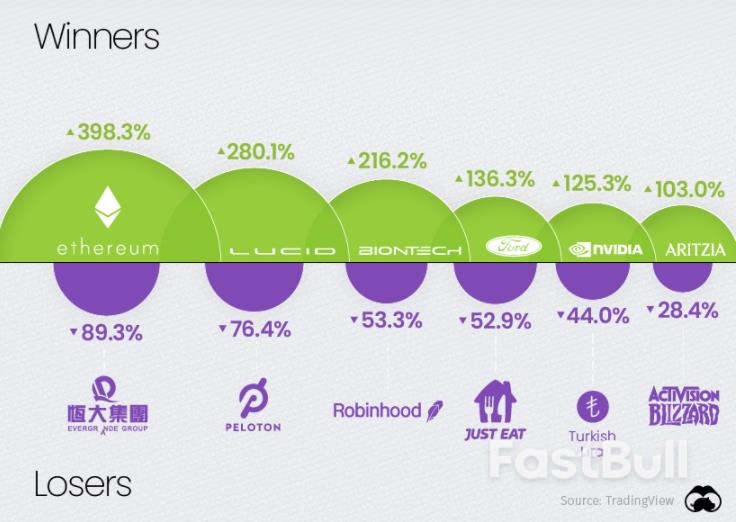
          The pain of Evergrande Group (89.3%) shareholders is set to end soon, with the company starting 2022 by halting shares in Hong Kong as its $300 billion in liabilities remain in limbo.
          Peloton (-76.4%) was another big loser in 2021 as it gave back nearly all of its gains from last year, proving lockdown speculation fueled most of its former valuation. Just Eat (-52.9%) was similarly hit hard as restaurants reopened in 2021.
          Robinhood’s (53.3%) weak performance since its IPO puts a bow on 2021’s retail “stonk” frenzy kicked off by the Wall Street Bets subreddit.
          With 2021 being a breakout year for retail traders and investors online, we’ll see if 2022 remains risk-on as the Fed begins tapering, or if markets are due for a change in direction.

          Source: visualcapitalist.com, Author:Niccolo Conte

          Risk Warnings and Disclaimers
          You understand and acknowledge that there is a high degree of risk involved in trading. Following any strategies or investment methods may lead to potential losses. The content on the site is provided by our contributors and analysts for information purposes only. You are solely responsible for determining whether any trading assets, securities, strategy, or any other product is suitable for investing based on your own investment objectives and financial situation.
          Comments
          Add to Favorites
          Share
          FastBull
          Copyright © 2025 FastBull Ltd

          728 RM B 7/F GEE LOK IND BLDG NO 34 HUNG TO RD KWUN TONG KLN HONG KONG

          TelegramInstagramTwitterfacebooklinkedin
          App Store Google Play Google Play
          Products
          Charts

          Chats

          Q&A with Experts
          Screeners
          Economic Calendar
          Data
          Tools
          Membership
          Features
          Function
          Markets
          Copy Trading
          Latest Signals
          Contests
          News
          Analysis
          24/7
          Columns
          Education
          Company
          Careers
          About Us
          Contact Us
          Advertising
          Help Center
          Feedback
          User Agreement
          Privacy Policy
          Business

          White Label

          Data API

          Web Plug-ins

          Poster Maker

          Affiliate Program

          Risk Disclosure

          The risk of loss in trading financial instruments such as stocks, FX, commodities, futures, bonds, ETFs and crypto can be substantial. You may sustain a total loss of the funds that you deposit with your broker. Therefore, you should carefully consider whether such trading is suitable for you in light of your circumstances and financial resources.

          No decision to invest should be made without thoroughly conducting due diligence by yourself or consulting with your financial advisors. Our web content might not suit you since we don't know your financial conditions and investment needs. Our financial information might have latency or contain inaccuracy, so you should be fully responsible for any of your trading and investment decisions. The company will not be responsible for your capital loss.

          Without getting permission from the website, you are not allowed to copy the website's graphics, texts, or trademarks. Intellectual property rights in the content or data incorporated into this website belong to its providers and exchange merchants.

          Not Logged In

          Log in to access more features

          FastBull Membership

          Not yet

          Purchase

          Become a signal provider
          Help Center
          Customer Service
          Dark Mode
          Price Up/Down Colors

          Log In

          Sign Up

          Position
          Layout
          Fullscreen
          Default to Chart
          The chart page opens by default when you visit fastbull.com