Markets
News
Analysis
User
24/7
Economic Calendar
Education
Data
- Names
- Latest
- Prev


Signal Accounts for Members
All Signal Accounts
All Contests


France 10-Year OAT Auction Avg. YieldA:--
F: --
P: --
Euro Zone Retail Sales MoM (Oct)A:--
F: --
P: --
Euro Zone Retail Sales YoY (Oct)A:--
F: --
P: --
Brazil GDP YoY (Q3)A:--
F: --
P: --
U.S. Challenger Job Cuts (Nov)A:--
F: --
P: --
U.S. Challenger Job Cuts MoM (Nov)A:--
F: --
P: --
U.S. Challenger Job Cuts YoY (Nov)A:--
F: --
P: --
U.S. Initial Jobless Claims 4-Week Avg. (SA)A:--
F: --
P: --
U.S. Weekly Initial Jobless Claims (SA)A:--
F: --
P: --
U.S. Weekly Continued Jobless Claims (SA)A:--
F: --
P: --
Canada Ivey PMI (SA) (Nov)A:--
F: --
P: --
Canada Ivey PMI (Not SA) (Nov)A:--
F: --
P: --
U.S. Non-Defense Capital Durable Goods Orders Revised MoM (Excl. Aircraft) (SA) (Sept)A:--
F: --
U.S. Factory Orders MoM (Excl. Transport) (Sept)A:--
F: --
P: --
U.S. Factory Orders MoM (Sept)A:--
F: --
P: --
U.S. Factory Orders MoM (Excl. Defense) (Sept)A:--
F: --
P: --
U.S. EIA Weekly Natural Gas Stocks ChangeA:--
F: --
P: --
Saudi Arabia Crude Oil ProductionA:--
F: --
P: --
U.S. Weekly Treasuries Held by Foreign Central BanksA:--
F: --
P: --
Japan Foreign Exchange Reserves (Nov)A:--
F: --
P: --
India Repo RateA:--
F: --
P: --
India Benchmark Interest RateA:--
F: --
P: --
India Reverse Repo RateA:--
F: --
P: --
India Cash Reserve RatioA:--
F: --
P: --
Japan Leading Indicators Prelim (Oct)A:--
F: --
P: --
U.K. Halifax House Price Index YoY (SA) (Nov)A:--
F: --
P: --
U.K. Halifax House Price Index MoM (SA) (Nov)A:--
F: --
P: --
France Current Account (Not SA) (Oct)--
F: --
P: --
France Trade Balance (SA) (Oct)A:--
F: --
P: --
France Industrial Output MoM (SA) (Oct)A:--
F: --
P: --
Italy Retail Sales MoM (SA) (Oct)--
F: --
P: --
Euro Zone Employment YoY (SA) (Q3)--
F: --
P: --
Euro Zone GDP Final YoY (Q3)--
F: --
P: --
Euro Zone GDP Final QoQ (Q3)--
F: --
P: --
Euro Zone Employment Final QoQ (SA) (Q3)--
F: --
P: --
Euro Zone Employment Final (SA) (Q3)--
F: --
Brazil PPI MoM (Oct)--
F: --
P: --
Mexico Consumer Confidence Index (Nov)--
F: --
P: --
Canada Unemployment Rate (SA) (Nov)--
F: --
P: --
Canada Labor Force Participation Rate (SA) (Nov)--
F: --
P: --
Canada Employment (SA) (Nov)--
F: --
P: --
Canada Part-Time Employment (SA) (Nov)--
F: --
P: --
Canada Full-time Employment (SA) (Nov)--
F: --
P: --
U.S. Personal Income MoM (Sept)--
F: --
P: --
U.S. Dallas Fed PCE Price Index YoY (Sept)--
F: --
P: --
U.S. PCE Price Index YoY (SA) (Sept)--
F: --
P: --
U.S. PCE Price Index MoM (Sept)--
F: --
P: --
U.S. Personal Outlays MoM (SA) (Sept)--
F: --
P: --
U.S. Core PCE Price Index MoM (Sept)--
F: --
P: --
U.S. UMich 5-Year-Ahead Inflation Expectations Prelim YoY (Dec)--
F: --
P: --
U.S. Core PCE Price Index YoY (Sept)--
F: --
P: --
U.S. Real Personal Consumption Expenditures MoM (Sept)--
F: --
P: --
U.S. 5-10 Year-Ahead Inflation Expectations (Dec)--
F: --
P: --
U.S. UMich Current Economic Conditions Index Prelim (Dec)--
F: --
P: --
U.S. UMich Consumer Sentiment Index Prelim (Dec)--
F: --
P: --
U.S. UMich 1-Year-Ahead Inflation Expectations Prelim (Dec)--
F: --
P: --
U.S. UMich Consumer Expectations Index Prelim (Dec)--
F: --
P: --
U.S. Weekly Total Rig Count--
F: --
P: --


No matching data
Latest Views
Latest Views
Trending Topics
Top Columnists
Latest Update
White Label
Data API
Web Plug-ins
Affiliate Program
View All

No data
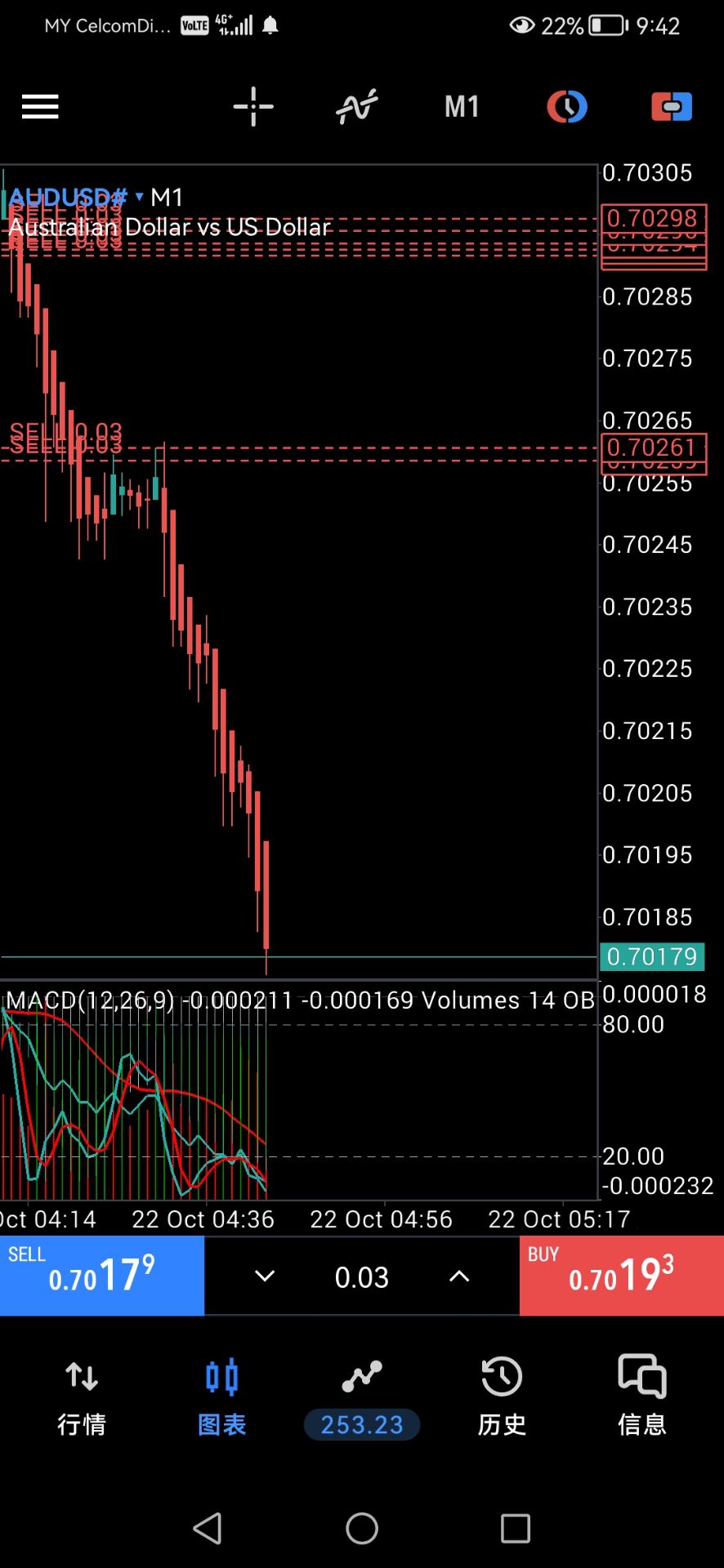
AUD/USD falls to a two-year low amid a hawkish Federal Reserve and domestic economic concerns highlighted in the Reserve Bank of Australia's December meeting minutes.


The Korean stock market is expected to continue wallowing in the doldrums until the end of the year due to political and economic uncertainties both at home and abroad.
In contrast to major stock markets like those in the United States, which have shown upward trends, key indicators in the domestic market — including monthly index performance and consecutive months of decline — are expected to reach their worst levels in over two decades.
This has dampened expectations of a so-called “Santa rally,” a phenomenon where stock prices typically experience a bullish trend at the end of the year, which had been more common in the past.
Experts noted that the depreciating Korean won against the U.S. dollar and elevated interest rates continue to be significant burdens on the domestic stock market. They cautioned that the outlook for next year also remains bleak.
However, as most of the negative factors have already been priced in, experts suggested that increasing the proportion of domestic stocks in portfolios is a better strategy than liquidating holdings, pointing to potential bargain hunting opportunities.
According to the Korea Exchange, Monday, the benchmark KOSPI is expected to end with negative monthly returns for nine out of the 12 months this year, excluding February, March and June.
With just four trading days remaining in the year, and the market closing on Dec. 31 for the annual break, the chances of a rebound this month seem slim, largely due to the continued impact of the weak won against the U.S. dollar.
This performance is even worse than during the 1997 Asian financial crisis, when Korea sought a $58 billion bailout from the International Monetary Fund. At that time, the KOSPI posted negative returns for eight months. During the 2008 global financial crisis, the index experienced negative returns for seven months.
If the KOSPI fails to rebound this month, it will mark nine months of negative returns for the first time since the collapse of the dot-com bubble 24 years ago.
“With key monetary policy events in major countries having concluded, there are no indicators or drivers for a rebound, making it difficult to anticipate a year-end rally,” KB Securities analyst Kim Ji-won said.
The underperformance of the domestic stock market is particularly pronounced when compared to the U.S. and Japan.
As of Friday, the KOSPI has fallen 9.42 percent this year, while the Nasdaq in New York surged 30.4 percent. The S&P 500 and the Dow Jones Industrial Average have also risen 24.3 percent and 13.7 percent, respectively.
Japan’s Nikkei index climbed 15.7 percent during the same period.

U.S. President-elect Donald Trump arrives to speak at Turning Point's annual AmericaFest 2024 in Arizona, Sunday. AFP-Yonhap
Analysts underscored that an upward trend in the domestic stock market cannot be guaranteed even in the first quarter of next year. Factors such as the inauguration of Donald Trump as U.S. president in January, his anticipated high-tariff policies, and ongoing domestic political uncertainties surrounding the impeachment crisis of President Yoon Suk Yeol are expected to weigh on the Korean financial markets.
"The Korean stock market is currently in a phase burdened by high interest rates, high exchange rates, political and policy uncertainties in the U.S. and a slump in the semiconductor industry,” NH Investment & Securities analyst Kim Young-hwan said.
SK Securities analyst Jo Joon-ki noted that for the KOSPI to maintain a consistent upward trend, a prolonged period of declining interest rates and a strengthening won are essential.
But he added that the current market conditions present bargain hunting opportunities.
“Given the much more favorable risk-reward ratio, this is a good time to increase positions rather than sell off and flee, especially for investors with a longer investment horizon,” he said.
On Monday, the KOSPI closed up 37.86 points, or 1.57 percent, from the previous session, finishing at 2,442.01.
(Dec 23): Chinese automakers captured their smallest share of Europe’s electric-vehicle (EV) market in eight months, after new tariffs added as much as 35% to the cost of importing cars to the region.
Manufacturers such as BYD Co and SAIC Motor Corp’s MG accounted for 7.4% of EV registrations across the European Union (EU) in November, down from 8.2% in October, according to automotive researcher Dataforce. That’s the lowest level since March.
The EU imposed the added tariffs at the end of October, after an investigation found that state aid had provided China’s EV industry with an unfair advantage. Months of talks failed to resolve the trade dispute, leading Brussels to tack the new fees onto an existing 10% import duty.
While all EVs produced in China are subject to the tariffs, including ones made by Western brands like BMW AG and Tesla Inc, the amounts vary depending on how much support an automaker received and whether it cooperated with the EU’s probe.
MG’s state-owned parent SAIC was hit hardest, with tariffs that now total 45%. Long the top-selling Chinese carmaker in Europe, the once-British sports car brand has faltered recently, logging a 58% drop in registrations last month from a year earlier, based on data provided by Jato Dynamics, another research firm.

Amid MG’s retreat, BYD has pressed ahead, with registrations across Europe more than doubling in November to 4,796 vehicles.
“BYD is taking over the market while MG is taking major setbacks,” said Julian Litzinger, an analyst with Dataforce. BYD’s growth is healthy, he added, with nearly 80% of its registrations attributed to private and fleet customers.
Chinese carmakers, eager to expand to major global markets, have hit resistance in Europe after being effectively shut out from the US.
Lower battery costs have given Chinese firms a price advantage, but the issue has stirred protectionist impulses as officials in the US and EU work to shield local automakers. The industry, which employs hundreds of thousands of workers in Germany, France and Italy, is struggling with the transition away from combustion-powered cars.
While the EU tariffs have blunted China’s push in the region, their introduction generally led to a smaller-than-expected setback, Litzinger said.

In Germany and France, however, EV registrations by Chinese manufacturers more than halved in November from a year earlier, he said. By contrast, Chinese EV makers posted a 17% year-on-year gain in the UK, which isn’t a member of the EU and hasn’t adopted the tariffs.
The shift towards EVs, once seen as inevitable, has slowed in 2024 in many global markets and become more unpredictable, leading automakers to reassess their strategies from model lineups to plant locations and even corporate structures.
Chinese automakers are taking steps to localise production in Europe, but those efforts will take time to mature.
Globally, car companies are looking for ways to share costs as they try to keep up on expensive technological change. Last week, it emerged that struggling Nissan Motor Co was exploring a tie-up with fellow Japanese manufacturer Honda Motor Co, partly to strengthen their ability to compete in EVs.
PUTRAJAYA (Dec 23): The rebate for the installation of solar systems, up to RM4,000, under the Solar for Rakyat Incentive Scheme (SolaRIS), will be extended until April 30, 2025, the Ministry of Energy Transition and Water Transformation (Petra) announced in a statement on Monday.
This extension is subject to the terms and conditions specified in the SolaRIS eligibility criteria.
PETRA also added that details regarding the SolaRIS programme can be found on the Tenaga Nasional Bhd (TNB) website at www.tnb.com.my.
In the statement, Petra also announced improvements to the guidelines for the implementation of the rooftop solar system installation programme under the Net Energy Metering (NEM) programme.
The improvements will allow existing users to increase the capacity of their solar systems and transition to the current NEM programme in line with the latest terms and guidelines.
According to Petra the NEM programme will now also be open to agricultural electricity users, allowing them to benefit from the installation of photovoltaic (PV) solar systems and support initiatives aimed at enhancing national food security.
Additionally, Petra revealed that the quota for the NEM Rakyat category will be increased by 150 megawatts (MW) to a total of 600MW. This increase will enable more domestic users to utillise rooftop space for the installation of PV solar systems.
Moreover, the quota for the NEM NOVA category, which caters to commercial and industrial users, will be increased by 300MW to a total of 1,700MW.
This expansion aims to support corporate entities in fulfilling their Environmental, Social, and Governance (ESG) commitments, as well as benefit agricultural users.
Petra confirmed that all quotas under the NEM programme are now open for applications from interested consumers until June 30, 2025, or until the quotas are fully allocated, whichever occurs first.
The updated guidelines for both the NEM Rakyat and NEM NOVA programmes can be accessed on the Energy Commission’s website at www.st.gov.my, while additional details on the NEM programme are available on the Sustainable Energy Development Authority (SEDA) website at www.seda.gov.my
Petra also said that the improvements to the NEM programme implementation and the extension of the SolaRIS scheme will take effect from Jan 1, 2025.
The ministry reaffirmed its commitment to the nationwide implementation of renewable energy initiatives, including the rooftop solar installation programme, to support the country’s energy transition.
The goal is to achieve a 70% share of renewable energy capacity in the national electricity supply by 2050.
Finance Minister Choi Sang-mok said Monday that Korea's economic growth is likely to fall below 2 percent next year, citing various downside risks, including the recent domestic political turmoil.
The Bank of Korea and other institutions had earlier projected growth of approximately 2 percent for Asia's fourth-largest economy in 2025, reflecting a slower-than-expected recovery in domestic demand amid heightened uncertainties at home and abroad.
"Given the significant downside risks, next year's growth forecast is likely to be revised downward, potentially dipping slightly below the country's potential growth rate," Choi said during a press briefing.
The minister highlighted weakened consumer sentiment following the "unfortunate incident," referring to President Yoon Suk Yeol's brief imposition of martial law earlier this month, which was overturned by the National Assembly.
"While this is not a crisis-level outlook, the expansion of uncertainties poses challenges," Choi added.
To address such challenges, the government plans to front-load 431.1 trillion won ($300.2 billion), or 75 percent of the 2025 fiscal budget of 574.8 trillion won, during the first half of the year.
Choi said the focus will be on stabilizing livelihoods and supporting socially vulnerable populations, particularly self-employed businesses mostly affected by the prolonged domestic slump.
"I have instructed for a fundamental shift in our approach to ensure that the budget can be utilized as early as Jan. 1," Choi said, emphasizing the importance of timely and efficient resource allocation.
Choi, who doubles as deputy prime minister for economic affairs, reiterated the government's commitment to maintaining credibility among foreign investors.
"Amid uncertainties in the global trade environment, especially with the inauguration of the Donald Trump administration, our focus will be on responding proactively while enhancing Korea's industrial competitiveness over the long term," Choi stated. (Yonhap)
(Dec 23): Bitcoin marked its first weekly decline since Donald Trump’s election victory as the US Federal Reserve’s (Fed) cautious policy outlook tempered optimism over the president-elect’s embrace of the crypto sector.
The largest digital asset was down more than 7% for the seven-day period through 9.27am on Monday in Singapore, the biggest such drop since September. A wider crypto market gauge, encompassing smaller tokens such as Ether and meme-crowd favorite Dogecoin, suffered a sharper decline of about 10%.
The Fed on Wednesday delivered a third straight interest-rate cut while signalling a slower pace of monetary easing next year to keep inflation in check, sending global stocks into a tailspin. The hawkish pivot also damped the speculative spirits unleashed in the crypto market by Trump’s pledge of friendly regulations and his backing for a national bitcoin stockpile. A record outflow from US exchange traded funds investing directly in bitcoin last week will weigh on prices in the near term, said Sean McNulty, the director of trading at liquidity provider Arbelos Markets.
“We should hold the US$90,000 (RM404,280) level for bitcoin into year end, but if we break below that, it could trigger further liquidations,” McNulty said, adding that “meaningful downside hedging” was seen in the options market last week, with large buyers for January, February and March puts in US$75,000 to US$80,000 strikes.
The original cryptocurrency changed hands at about US$94,344, nearly US$14,000 below the record high set on Dec 17. The token is up nearly 37% since the presidential election on Nov 5.

Choppy price action in the near term ahead of a “bullish trajectory” into the first quarter of 2025 is still the “most likely scenario”, David Lawant, the head of research at crypto prime broker FalconX, wrote in a note.
Lawant said a “low-liquidity environment may bring more volatility as we enter into the final days of the year, especially because on Dec 27 crypto is likely going to see the biggest options expiry event of its history”.
All eyes are on whether leveraged bitcoin proxy MicroStrategy Inc, the former dot-com-era software maker, continues its weekly buys of the largest cryptocurrency into the US on Monday and hits the next price trigger, traders said.
White Label
Data API
Web Plug-ins
Poster Maker
Affiliate Program
The risk of loss in trading financial instruments such as stocks, FX, commodities, futures, bonds, ETFs and crypto can be substantial. You may sustain a total loss of the funds that you deposit with your broker. Therefore, you should carefully consider whether such trading is suitable for you in light of your circumstances and financial resources.
No decision to invest should be made without thoroughly conducting due diligence by yourself or consulting with your financial advisors. Our web content might not suit you since we don't know your financial conditions and investment needs. Our financial information might have latency or contain inaccuracy, so you should be fully responsible for any of your trading and investment decisions. The company will not be responsible for your capital loss.
Without getting permission from the website, you are not allowed to copy the website's graphics, texts, or trademarks. Intellectual property rights in the content or data incorporated into this website belong to its providers and exchange merchants.
Not Logged In
Log in to access more features

FastBull Membership
Not yet
Purchase
Log In
Sign Up