


- XAUUSD
- XAGUSD
- WTI
- USDX


Markets
Analysis
User
24/7
Economic Calendar
Education
Data
- Names
- Latest
- Prev









Cryptoсurrencies are known for their volatility. While that may put some traders off, it creates many potentially lucrative opportunities for those with significant experience who can react quickly.
Cryptoсurrencies are known for their volatility. While that may put some traders off, it creates many potentially lucrative opportunities for those with significant experience who can react quickly. In this article, we’ll explore five of the most popular crypto scalping strategies and help you learn how to scalp crypto with a simple framework.
As in any other financial market, cryptocurrency scalping refers to a type of trading where traders aim to take advantage of short-term market movements. This approach involves entering and exiting trades within minutes or even seconds, aiming to capitalise on small price fluctuations.
Scalpers typically use high leverage and execute many trades to accumulate small returns over time. The objective is to make seemingly insignificant gains that add up rather than seeking larger, less frequent returns. Scalping is particularly popular in crypto trading, as digital assets are inherently volatile and experience extreme daily price changes.
How easy is scalping in the cryptocurrency market? Compared to longer-term trading styles like swing or position trading, scalping requires more discipline, stronger risk management skills, and a solid understanding of market mechanics. As such, scalping is a more advanced technique and can be considered more complex than other styles. However, through practice, crypto scalping can become accessible.
While crypto markets are open 24/7, volumes often pick up during regular trading hours for other markets. Generally, London and New York sessions, particularly their overlaps, are the most active, with plenty of volume and volatility for scalpers to take advantage of.
In terms of the best timeframe for scalping in crypto, scalping is usually done on the 1-, 2-, or 3-minute charts. 5-minute and 15-minute charts are often used to help set a directional bias.
Crypto scalping has some unique features that differentiate it from scalping in traditional financial markets like forex or stocks. They make crypto scalping both challenging and potentially rewarding, especially for traders who can navigate the fast-paced and unpredictable nature of the cryptocurrency markets.
Let’s dive into particular strategies.
1. Range Trading
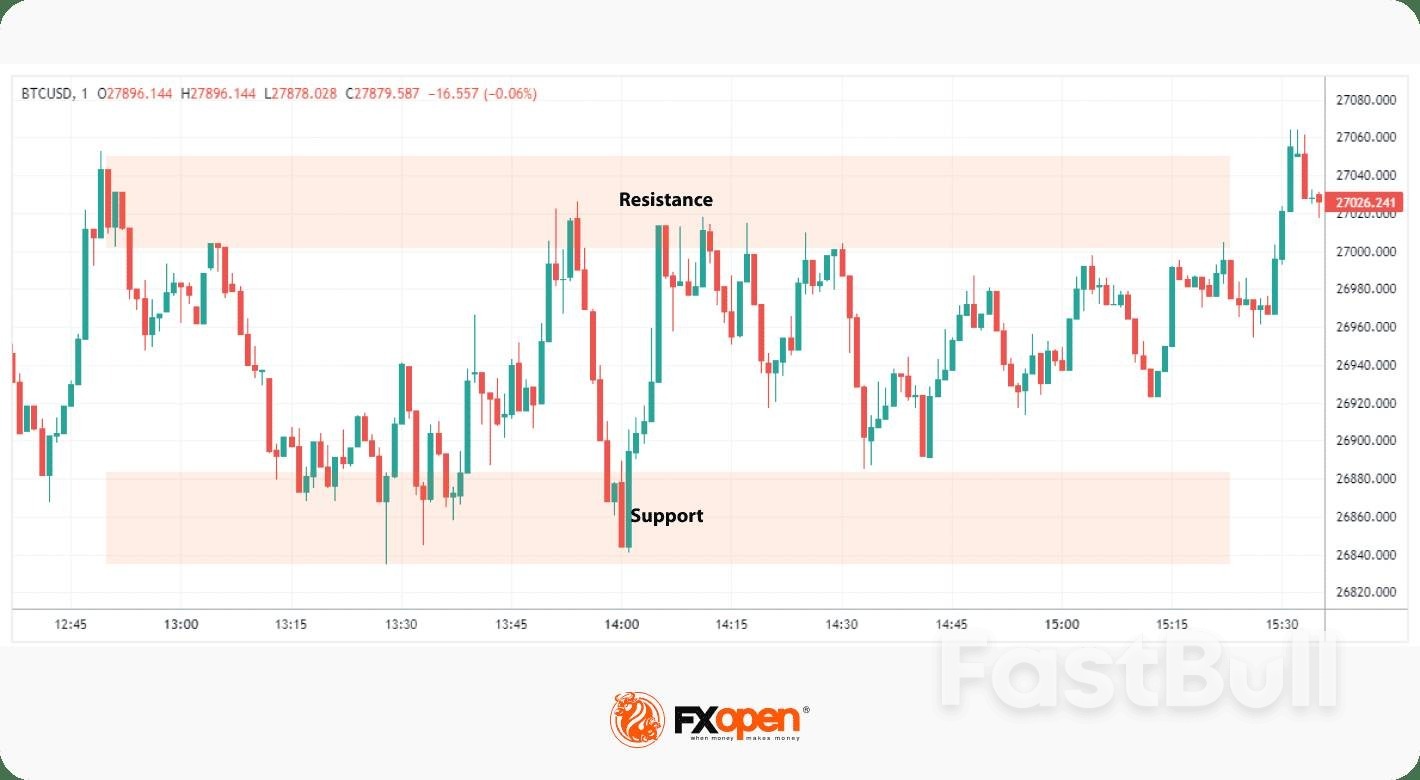
Range trading is a popular scalping strategy for cryptocurrencies. It involves identifying a specific consolidation range within which an asset is likely to fluctuate. Scalpers aim to buy at the lower end of the range (support) and sell at the upper bound (resistance).To get started with range trading, traders first need to identify a ranging market on a low timeframe, like the 1- or 5-minute charts. Then, they determine support and resistance levels near the strong highs and lows of the range. These levels then serve as entry and exit points, with a trader entering at support looking to exit at resistance and vice versa.
Some will look for reversal candlestick patterns, like hammers or shooting stars, at support or resistance, respectively, before entering with a market order. Others will simply set limit orders at their chosen entry point.Stop losses are typically placed beyond the range’s high or low, depending on the direction of trade. Scalpers usually use a 1:1 risk/reward ratio or don’t place stop-loss orders, but the latter is a risky approach.
2. Breakout Trading
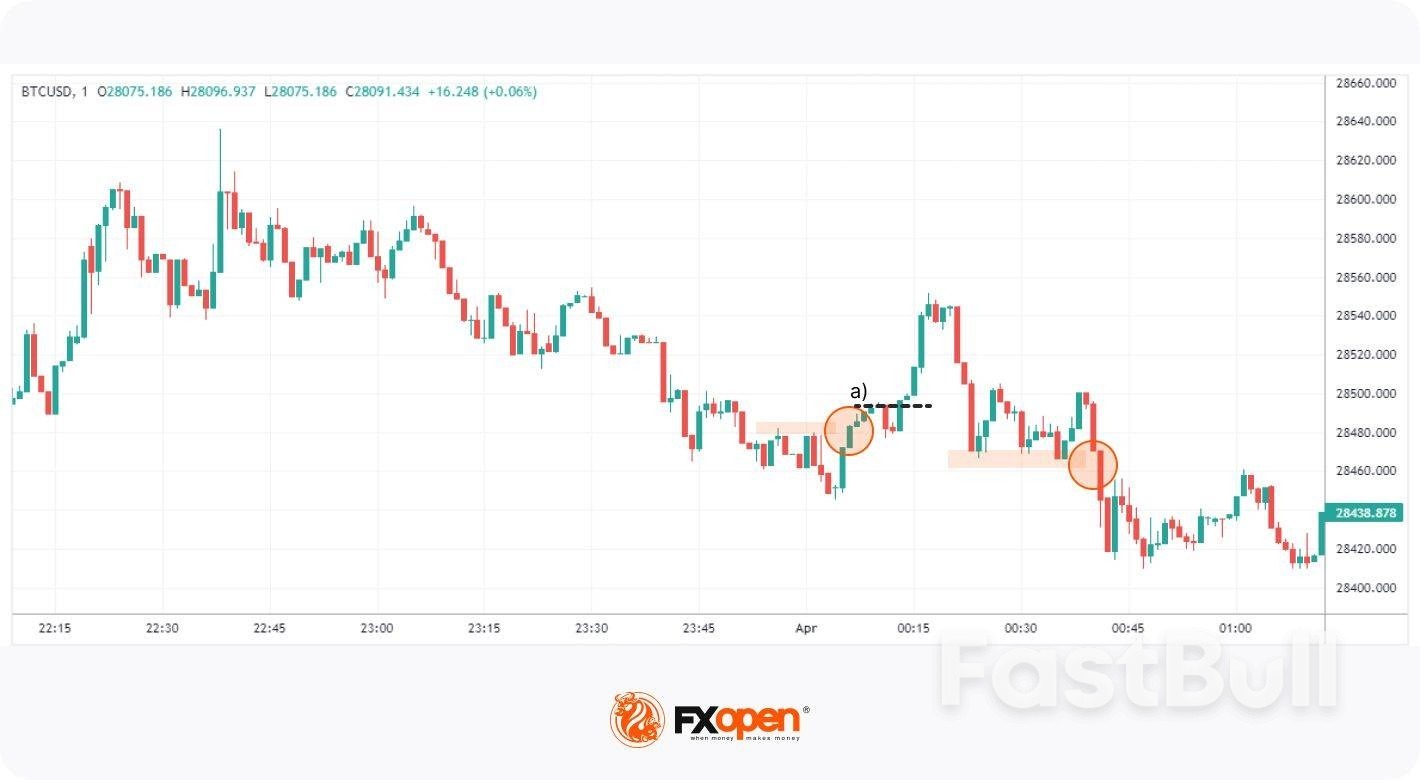
Breakouts occur when a level of support/resistance is broken through, often indicating the start or continuation of a trend. There are several ways you can take advantage of breakouts, but it’s not uncommon for a false breakout to occur. We can use a pullback filter to validate a trade.To start, we need to identify a support or resistance level. The easiest way is to look for relatively equal highs or lows forming, like in the chart above. When the level is broken with a strong impulsive move, we can enter on the close of the breakout candle. However, if the move isn’t particularly strong, like at a), then we could wait for a pullback. We can place a stop order to enter as the pullback itself breaks out, as marked by the dotted lines.
Profits might be taken at an opposing support or resistance level. However, some scalpers may prefer to attempt to ride the trend and trail their stop loss above or below swing points as the trend progresses. Similarly, stop losses can be placed above or below the nearest swing points.
3. Chart Patterns
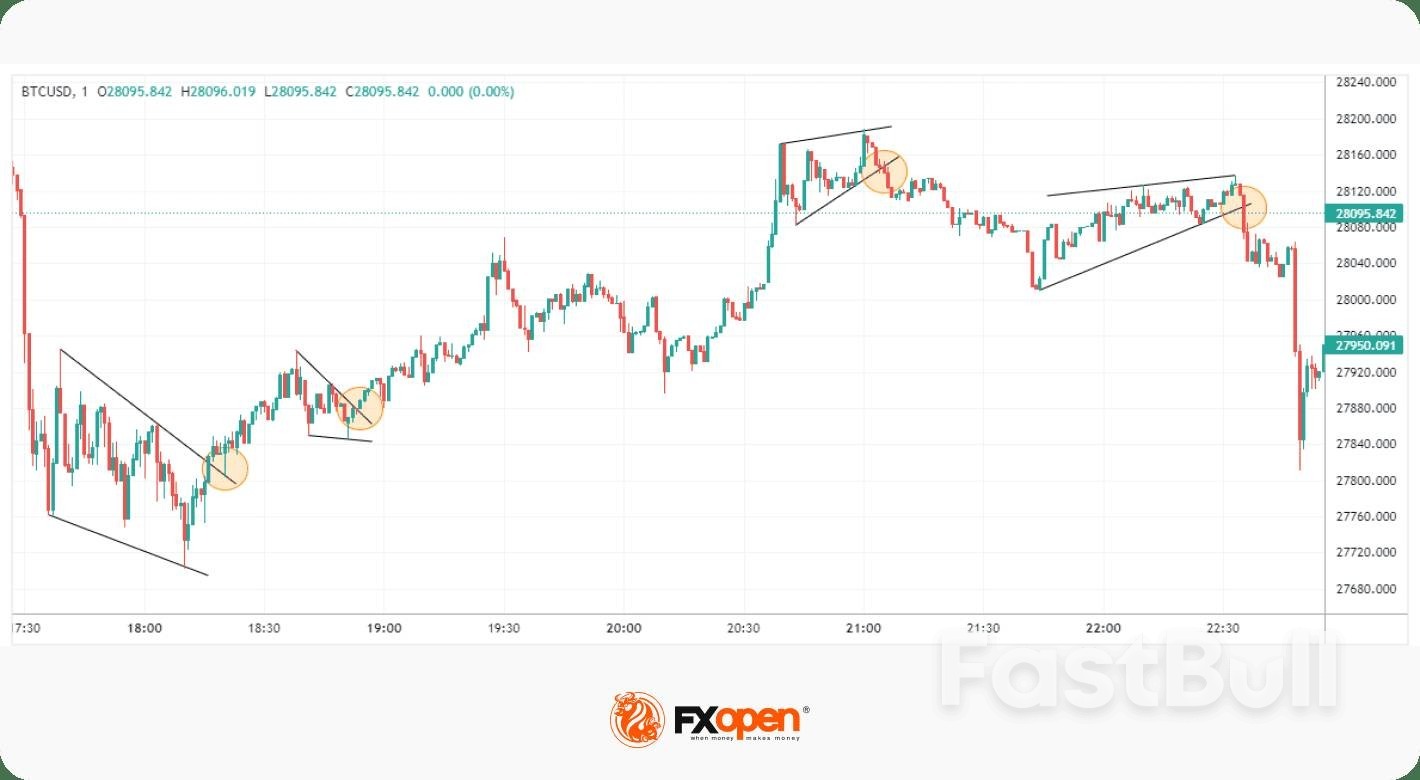
Chart patterns can be a powerful tool for scalping, helping traders to identify potential trend continuations and reversals. While there are many different chart patterns out there, it’s best to stick to just one or two to avoid confusion, at least until you master their use. We’ll use rising and falling wedges in this example, as they often lead to strong moves.There are two ways to enter: either on the breakout or on the retest of the broken trendline. As you can see in the example, entering retests might be a more accurate method, but it’ll mean you miss out on some trades. Conversely, entering on the breakout is riskier, as it could just as easily be a false breakout.
Your profit target and stop loss will depend on the pattern you’re using. Given that wedges typically prompt a prolonged trend, you could look for significant areas of support/resistance to start taking profits. For a more conservative approach, you might take profit at a distance equal to the height of the wedge placed from the breakout point. Stop losses might be calculated in accordance with the 1:2 risk/reward ratio.
4. Using the Relative Strength Index and Bollinger Bands
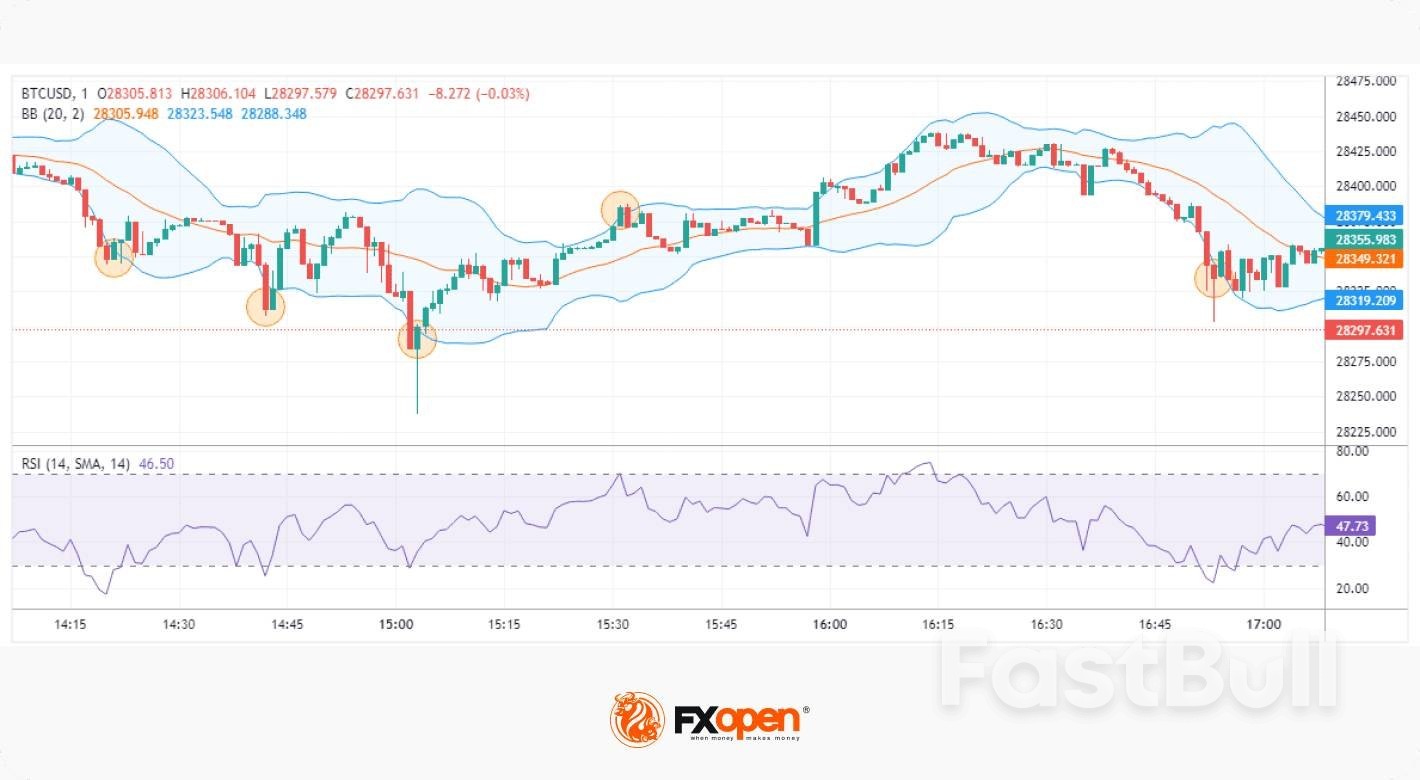
Some scalpers rely heavily on technical indicators to help them determine entries and exits. One popular combination is the relative strength index (RSI) and Bollinger Bands.
When the RSI crosses 70, indicating overbought conditions, or below 30, showing the asset is oversold, traders can look to confirm a reversal entry with Bollinger Bands. If an asset is overbought and crosses above the upper band, a short position can be considered. If the asset is oversold and the price breaches the lower band, a long position could be entered.
As for exit conditions, some scalpers may prefer to take profits at the midpoint of the Bollinger Bands or the opposing band. Others take profit when RSI crosses above or below 50, depending on the direction of trade. In terms of stop losses, traders place them above or below a nearby area of support or resistance. Alternatively, they consider the take-profit target and place the stop loss, considering their risk aversion.
5. Bid-Ask Spread
The bid-ask spread refers to the gap between the maximum price a buyer can offer (bid) and the minimum price a seller can accept (ask) for a specific asset. Scalpers can take advantage of the bid-ask spread to potentially generate returns. This strategy can be particularly effective in less liquid cryptocurrencies where spreads are naturally wider.
When spreads are wide, traders place buy orders and sell orders simultaneously. They buy at the lowest possible bid price and sell at the highest possible ask price. Traders using this strategy typically place limit orders rather than market orders. Limit orders allow them to specify the price at which they want to buy or sell, increasing the chance of capturing the spread. Since the return per trade is usually small, traders must execute many trades to achieve significant returns. This necessitates careful risk management to ensure that small losses don’t outweigh the small gains.
Now, it’s time to create your own scalping trading strategy for crypto. While your strategy will ultimately be unique to you and your preferences, you can try these steps to begin developing your own system.
Scalp trading in the cryptocurrency market has its advantages and disadvantages.
Pros:
Cons:
Crypto scalping can be a rewarding trading approach for those who can navigate its fast-paced and volatile nature. However, it’s crucial to remember that effective scalping requires more than just a good strategy. Traders must be disciplined, agile, and ready to react quickly to market changes. They should also have a deep understanding of the specific market conditions and tools available in the cryptocurrency space, including the use of automated bots and advanced charting software. Risk management is equally important, as the high leverage and frequent trades characteristic of scalping can lead to significant losses if not carefully controlled.
FAQ
What Is Scalping in Crypto?
Scalping in crypto is a fast-paced trading strategy focused on making numerous trades throughout the day to capture small returns from minor price fluctuations. Scalpers hold positions for very short periods, sometimes just seconds or minutes, aiming to build up small gains that accumulate over time rather than seeking large returns from long-term positions.
How Can You Scalp Crypto?
Scalping crypto involves selecting a cryptocurrency with significant volatility and liquidity. Traders analyse short-term market trends using technical indicators to identify optimal entry and exit points. They often place limit orders to ensure trades are executed at specific price levels, aiming for small, frequent returns. Risk management is crucial, so traders use stop-loss orders to protect against unexpected price movements, while continuously monitoring the market to react quickly to changes.
What Coin Is Best for Scalping?
The best crypto to scalp typically has several key characteristics that make it suitable for quick, frequent trades. High liquidity is crucial, as it helps traders to enter and exit positions at the desired prices. A coin with a narrow bid-ask spread is also ideal, as it reduces the cost of each trade. Additionally, the coin should exhibit consistent price volatility, offering frequent small price movements that scalpers can capitalise on.

728 RM B 7/F GEE LOK IND BLDG NO 34 HUNG TO RD KWUN TONG KLN HONG KONG





The risk of loss in trading financial instruments such as stocks, FX, commodities, futures, bonds, ETFs and crypto can be substantial. You may sustain a total loss of the funds that you deposit with your broker. Therefore, you should carefully consider whether such trading is suitable for you in light of your circumstances and financial resources.
No decision to invest should be made without thoroughly conducting due diligence by yourself or consulting with your financial advisors. Our web content might not suit you since we don't know your financial conditions and investment needs. Our financial information might have latency or contain inaccuracy, so you should be fully responsible for any of your trading and investment decisions. The company will not be responsible for your capital loss.
Without getting permission from the website, you are not allowed to copy the website's graphics, texts, or trademarks. Intellectual property rights in the content or data incorporated into this website belong to its providers and exchange merchants.
Not Logged In
Log in to access more features


Log In
Sign Up


