• Trade
  • Markets
  • Copy
  • Contests
  • 24/7
  • Calendar
  • Q&A
  • Chats
Screeners
SYMBOL
LAST
BID
ASK
HIGH
LOW
NET CHG.
%CHG.
SPREAD
SPX
S&P 500 Index
6782.82
6782.82
6782.82
6793.15
6740.48
+165.97
+ 2.51%
--
DJI
Dow Jones Industrial Average
47909.91
47909.91
47909.91
48017.09
46978.17
+1325.46
+ 2.85%
--
IXIC
NASDAQ Composite Index
22634.99
22634.99
22634.99
22821.21
22501.28
+617.15
+ 2.80%
--
USDX
US Dollar Index
98.830
98.830
98.910
98.920
98.810
-0.050
-0.05%
--
EURUSD
Euro / US Dollar
1.16623
1.16623
1.16630
1.16672
1.16485
+0.00003
0.00%
--
GBPUSD
Pound Sterling / US Dollar
1.33905
1.33905
1.33917
1.34029
1.33810
-0.00032
-0.02%
--
XAUUSD
Gold / US Dollar
4724.76
4724.76
4725.14
4733.08
4698.43
+5.23
+ 0.11%
--
WTI
Light Sweet Crude Oil
91.182
91.182
91.217
92.921
90.995
-0.036
-0.04%
--

Community Accounts

Signal Accounts
--
Profit Accounts
--
Loss Accounts
--
View More

Become a signal provider

Sell trading signals to earn additional income

View More

Guide to Copy Trading

Get started with ease and confidence

View More

Signal Accounts for Members

All Signal Accounts

Best Return
  • Best Return
  • Best P/L
  • Best MDD
Past 1W
  • Past 1W
  • Past 1M
  • Past 1Y

All Contests

  • All
  • Trump Updates
  • Recommend
  • Stocks
  • Cryptocurrencies
  • Central Banks
  • Featured News
Top News Only
Share

The Main Liquefied Petroleum Gas (LPG) Contract Fell 4.00% Intraday, Currently Trading At 5790.00 Yuan/ton

Share

Hong Kong-listed Auto Stocks Continued Their Upward Trend, With Geely Automobile And Chery Automobile Rising By More Than 4%, NIO-SW Rising By More Than 3%, And Leapmotor And Others Following Suit

Share

The SC Crude Oil Futures Contract Fell 4.00% Intraday, Currently Trading At 637.50 Yuan Per Barrel

Share

The PTA Main Contract Fell 2.00% During The Day, Currently Trading At 6442.00 Yuan/ton

Share

Former Honduran President Hernández: The U.S. Court Of Appeals Has Overturned His Guilty Verdict And Ordered The Judge To Drop The Charges Against Him

Share

U.S. Republican Senator Lindsey Graham: President Trump Understands What Past Leaders Have Overlooked: Iran Must Never Have Nuclear Weapons

Share

The Main Contract For Bottled Chip Chips Fell 2.00% During The Day, Currently Trading At 7992 Yuan/ton

Share

Hong Kong-listed Large-model Stocks Staged A Rally, With Zhipu Surging More Than 8% To Hit A New All-time High And MINIMAX Climbing Over 4%

Share

Hong Kong-listed AI Application Stocks Rallied, With Zhipu Rising Over 5%, RoboSense Rising Nearly 5%, And MINIMAX-W And Youjia Innovation Following Suit

Share

Strait Of Hormuz Closes Again; Iran: No Talks Yet Between Iran And The U.S., Yet Three Ceasefire Terms Have Already Been Violated

Share

Thai Foreign Ministry Confirms Deaths Of Crew Members In Straits Attack

Share

The Main Methanol Futures Contract Fell 4.00% Intraday, Currently Trading At 3179.00 Yuan/ton

Share

China And Russia Hold Consultations On United Nations And Security Council Affairs

Share

According To AFP, Nearly 200 People Were Arrested After A Gunfight Outside The Israeli Consulate In Istanbul

Share

The Main Polyvinyl Chloride (PVC) Contract Fell By 2.00% During The Day, And Is Currently Trading At 5148.00 Yuan/ton

Share

The Main Ethylene Glycol Contract Fell By 200.00 Yuan During The Day, And Is Currently Trading At 5157.00 Yuan/ton, A Drop Of 3.73%

Share

Hong Kong-listed Innovative Drug Stocks Rallied, With Ascletis Pharma Rising Over 3%, Hansoh Pharmaceutical Rising Over 2%, And WuXi AppTec And Sihuan Pharmaceutical Following Suit

Share

The Decline Of The Shenzhen Component Index Widened To 1% At The Opening

Share

The Main Contract Of CSI 500 Index Futures (IC) Fell By 1.00% During The Day, And Is Currently Trading At 7728.2 Points

Share

The ChiNext Index Fell More Than 1% In Early Trading, With AI Applications And BC Batteries Among The Biggest Losers

TIME
ACT
FCST
PREV
U.S. API Weekly Gasoline Stocks

A:--

F: --

P: --

U.S. API Weekly Crude Oil Stocks

A:--

F: --

P: --

U.S. API Weekly Refined Oil Stocks

A:--

F: --

P: --

Japan Wages MoM (Feb)

A:--

F: --

P: --

Japan Trade Balance (Feb)

A:--

F: --

P: --

India Cash Reserve Ratio

A:--

F: --

P: --

India Benchmark Interest Rate

A:--

F: --

P: --

India Reverse Repo Rate

A:--

F: --

P: --

U.K. Halifax House Price Index YoY (SA) (Mar)

A:--

F: --

P: --
U.K. Halifax House Price Index MoM (SA) (Mar)

A:--

F: --

P: --

France Trade Balance (SA) (Feb)

A:--

F: --

P: --
Germany Construction PMI (SA) (Mar)

A:--

F: --

P: --

U.K. Markit/CIPS Construction PMI (Mar)

A:--

F: --

P: --

Euro Zone PPI YoY (Feb)

A:--

F: --

P: --
Euro Zone Retail Sales MoM (Feb)

A:--

F: --

P: --
Euro Zone PPI MoM (Feb)

A:--

F: --

P: --
Euro Zone Retail Sales YoY (Feb)

A:--

F: --

P: --
Germany 10-Year Bund Auction Avg. Yield

A:--

F: --

P: --

U.S. MBA Mortgage Application Activity Index WoW

A:--

F: --

P: --

Mexico Consumer Confidence Index (Mar)

A:--

F: --

P: --

U.S. EIA Weekly Crude Stocks Change

A:--

F: --

P: --

U.S. EIA Weekly Heating Oil Stock Changes

A:--

F: --

P: --

U.S. EIA Weekly Gasoline Stocks Change

A:--

F: --

P: --

U.S. EIA Weekly Crude Demand Projected by Production

A:--

F: --

P: --

U.S. EIA Weekly Cushing, Oklahoma Crude Oil Stocks Change

A:--

F: --

P: --

U.S. EIA Weekly Crude Oil Imports Changes

A:--

F: --

P: --

U.S. Refinitiv/Ipsos Primary Consumer Sentiment Index (PCSI) (Apr)

A:--

F: --

P: --

U.S. 10-Year Note Auction Avg. Yield

A:--

F: --

P: --

FOMC Meeting Minutes
U.K. 3-Month RICS House Price Balance (Mar)

A:--

F: --

P: --
Japan Household Consumer Confidence Index (Mar)

--

F: --

P: --

Germany Industrial Output MoM (SA) (Feb)

--

F: --

P: --

Germany Exports MoM (SA) (Feb)

--

F: --

P: --
Italy 12-Month BOT Auction Avg. Yield

--

F: --

P: --

U.K. Refinitiv/Ipsos Primary Consumer Sentiment Index (PCSI) (Apr)

--

F: --

P: --

Brazil Retail Sales MoM (Feb)

--

F: --

P: --

Mexico CPI YoY (Mar)

--

F: --

P: --

U.S. Weekly Continued Jobless Claims (SA)

--

F: --

P: --

U.S. Personal Outlays MoM (SA) (Feb)

--

F: --

P: --

U.S. Initial Jobless Claims 4-Week Avg. (SA)

--

F: --

P: --

U.S. Real Personal Consumption Expenditures MoM (Feb)

--

F: --

P: --

U.S. Personal Income MoM (Feb)

--

F: --

P: --

U.S. PCE Price Index MoM (Feb)

--

F: --

P: --

U.S. PCE Price Index YoY (SA) (Feb)

--

F: --

P: --

U.S. Core PCE Price Index MoM (Feb)

--

F: --

P: --

U.S. Real Personal Consumption Expenditures Final QoQ (Q4)

--

F: --

P: --

U.S. Core PCE Price Index YoY (Feb)

--

F: --

P: --

U.S. Weekly Initial Jobless Claims (SA)

--

F: --

P: --

U.S. Wholesale Inventory MoM (SA) (Feb)

--

F: --

P: --

U.S. Wholesale Sales MoM (SA) (Feb)

--

F: --

P: --

U.S. Dallas Fed PCE Price Index YoY (Feb)

--

F: --

P: --

U.S. EIA Weekly Natural Gas Stocks Change

--

F: --

P: --

China, Mainland M1 Money Supply YoY (Mar)

--

F: --

P: --

China, Mainland M0 Money Supply YoY (Mar)

--

F: --

P: --

China, Mainland M2 Money Supply YoY (Mar)

--

F: --

P: --

U.S. 30-Year Bond Auction Avg. Yield

--

F: --

P: --

U.S. Weekly Treasuries Held by Foreign Central Banks

--

F: --

P: --

Japan Domestic Enterprise Commodity Price Index MoM (Mar)

--

F: --

P: --

Japan PPI MoM (Mar)

--

F: --

P: --

Japan Domestic Enterprise Commodity Price Index YoY (Mar)

--

F: --

P: --

Q&A with Experts
    • All
    • Chatrooms
    • Groups
    • Friends
    Faburama Bojang flag
    木木
    你准备在什么价格买入?
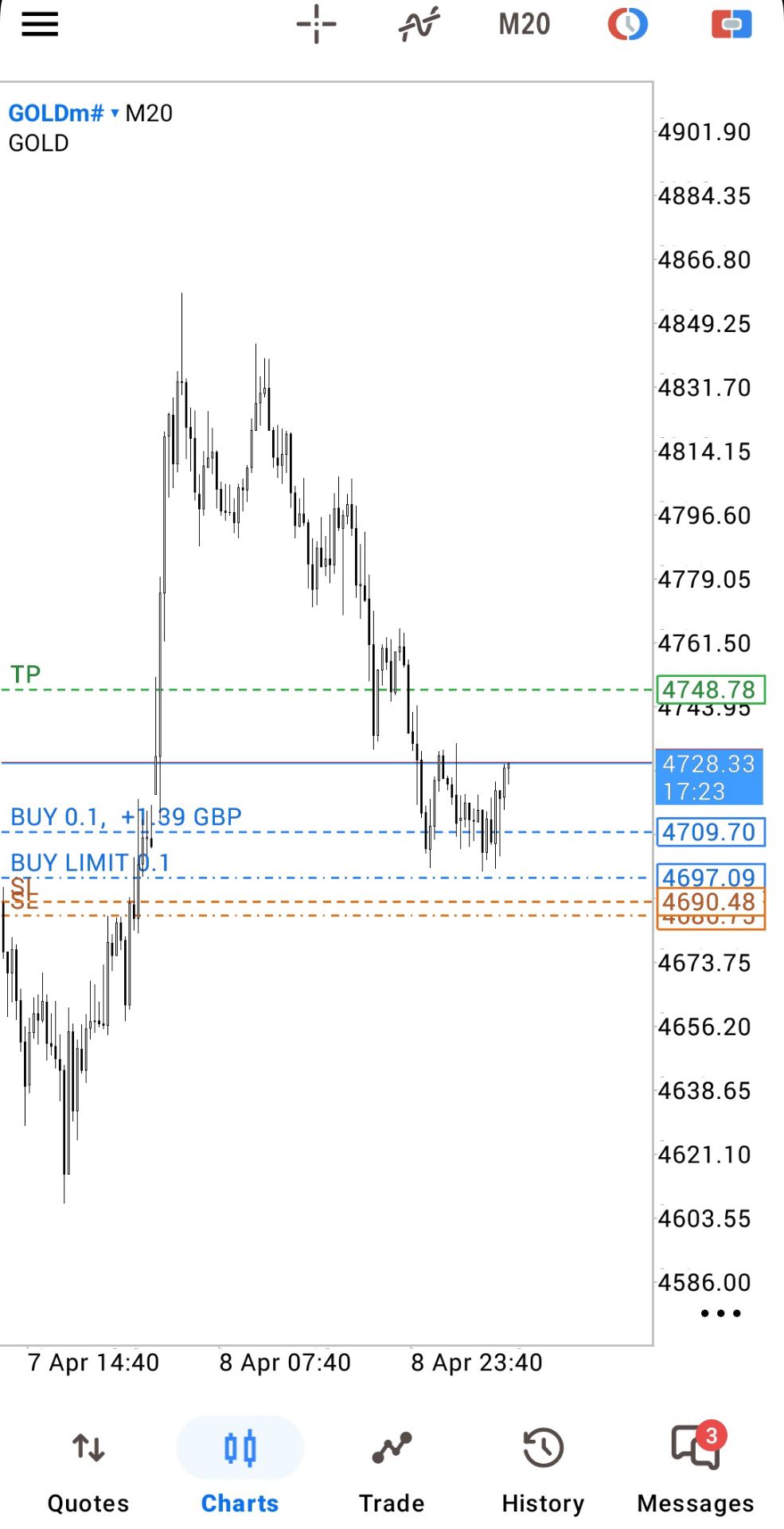
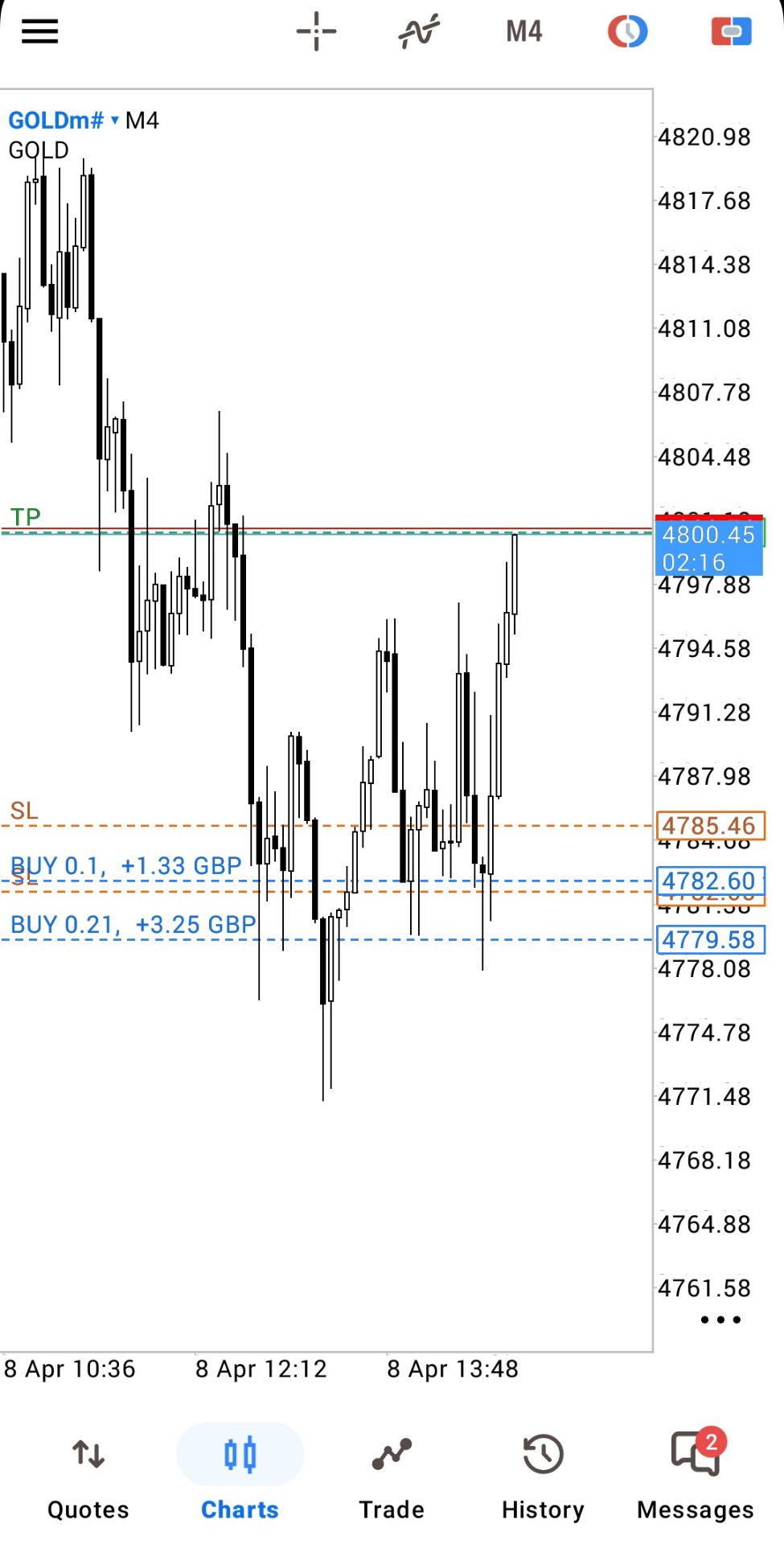
    @木木 I am buying it already. I bought at 4700, my TP will be at 4800
    木木
    是个不错的价格
    Faburama Bojang flag
    木木
    是个不错的价格
    @木木 Yeah it is, you can buy at 4725, TP 4750 or 4775 or 4800, SL 4715
    Nawhdir Øt flag
    Nawhdir Øt flag
    sial sudah tak bisa beli lagi
    "木木" recalled a message
    木木
    你买的价格也非常的好
    Nawhdir Øt flag
    4697 didint visiting by market 🤦🏻‍♂️ syit
    Faburama Bojang flag
    Nawhdir Øt
    @Nawhdir Øt Nice entry
    Yong Tariq flag
    Did it again 😹
    木木
    哈哈哈欢迎
    木木
    我比你更早一点
    srinivas flag
    it is a clear buy from 4713, it wil go to 4769
    Yong Tariq flag
    How many people are entering the market at that OB
    Nawhdir Øt flag
    TP aku cukup di 4748,78
    木木
    Nawhdir Øt
    TP aku cukup di 4748,78
    @Nawhdir Øt 我记得你说昨天达成任务了
    木木
    应该没有记错吧 ,今天你都是买的多单?
    Nawhdir Øt flag
    木木
    @Nawhdir Øt 我记得你说昨天达成任务了
    @木木ya anda benar. Kemarin sore
    Nawhdir Øt flag
    Nawhdir Øt flag
    @木木☝here yesterday
    Type here...
    Add Symbol or Code

      No matching data

      All
      Trump Updates
      Recommend
      Stocks
      Cryptocurrencies
      Central Banks
      Featured News
      • All
      • Russia-Ukraine Conflict
      • Middle East Flashpoint
      • All
      • Russia-Ukraine Conflict
      • Middle East Flashpoint

      Search
      Products

      Charts Free Forever

      Chats Q&A with Experts
      Screeners Economic Calendar Data Tools
      Membership Features
      Data Warehouse Market Trends Institutional Data Policy Rates Macro

      Market Trends

      Market Sentiment Order Book Forex Correlations

      Top Indicators

      Charts Free Forever
      Markets

      News

      24/7 Analysis Education

      Latest Views

      Latest Update

      Signals

      Copy Rankings Latest Signals Become a signal provider AI Rating
      Contests
      Brokers

      Overview Brokers Assessment Rankings Regulators News Claims
      Broker listing Forex Brokers Comparison Tool Live Spread Comparison Scam
      Q&A Complaint Scam Alert Videos Tips to Detect Scam
      More

      Business
      Events
      Careers About Us Advertising Help Center

      White Label

      Broker API

      Data API

      Web Plug-ins

      Affiliate Program

      Awards Institution Evaluation IB Seminar Salon Event Exhibition
      Vietnam Thailand Singapore Dubai
      Fans Party Investment Sharing Session
      FastBull Summit BrokersView Expo
      Recent Searches
        Top Searches
          Markets
          Analysis
          User
          24/7
          Economic Calendar
          Education
          Data
          • Names
          • Latest
          • Prev

          View All

          No data

          Scan to Download

          Faster Charts, Chat Faster!

          Download App
          English
          • English
          • Español
          • العربية
          • Bahasa Indonesia
          • Bahasa Melayu
          • Tiếng Việt
          • ภาษาไทย
          • Français
          • Italiano
          • Türkçe
          • Русский язык
          • 简中
          • 繁中
          Open Account
          Search
          Products
          Charts Free Forever
          Markets
          News
          Signals

          Copy Rankings Latest Signals Become a signal provider AI Rating
          Contests
          Brokers

          Overview Brokers Assessment Rankings Regulators News Claims
          Broker listing Forex Brokers Comparison Tool Live Spread Comparison Scam
          Q&A Complaint Scam Alert Videos Tips to Detect Scam
          More

          Business
          Events
          Careers About Us Advertising Help Center

          White Label

          Broker API

          Data API

          Web Plug-ins

          Affiliate Program

          Awards Institution Evaluation IB Seminar Salon Event Exhibition
          Vietnam Thailand Singapore Dubai
          Fans Party Investment Sharing Session
          FastBull Summit BrokersView Expo

          What Is a Pyramiding Strategy, and How Does It Work in Trading?

          FXOpen

          Cryptocurrency

          Stocks

          Forex

          Summary:

          Pyramiding is a trading strategy where traders gradually increase their position size as the market moves in their favour. Instead of committing full capital upfront, they add to winning positions at key levels. This article explains how pyramiding works, common strategies, potential risks, and key considerations for traders looking to add it to their trading approach.

          What Is Pyramiding?

          Pyramiding is a strategy where traders gradually add to an effective position instead of going all in from the start. It’s used in trending markets, where traders look to take advantage of sustained price movements by expanding their exposure as the trend develops. The key difference between pyramiding and simply increasing position size at the outset is that pyramiding limits initial risk. Instead of committing full capital upfront, traders build up their position only when the market moves in their favour.
          Applying a pyramid to a position is particularly common in markets with strong momentum. A trader, for example, might start with one unit of an asset and, if the price moves favourably, add another half-unit at a predefined level. If the trend continues, they might add another quarter-unit. This gradual scaling means more capital is committed only when conditions confirm the trend.
          The logic behind pyramiding in trading is straightforward: when the market is moving in the right direction, the strategy compounds potential returns without significantly increasing initial risk. It also allows traders to adjust their exposure based on market conditions rather than relying on a single entry.However, pyramiding only works well when executed with clear rules on when to add positions, how much to increase by, and where to adjust risk parameters. Without a structured approach, adding to positions can lead to overexposure, especially if the market reverses. Understanding how to manage this risk is essential, which is why different pyramiding methods exist—each with its own risk-reward profile.

          Is Pyramiding the Same as a Forex Pyramid Scheme?

          No, pyramiding is a legitimate trading strategy, while a forex trading pyramid scheme is a fraudulent investment model. Pyramiding involves adding to winning trades in a structured manner, whereas pyramid schemes rely on recruiting new investors, often with unrealistic return promises and no genuine market activity.

          Common Types of the Pyramiding Strategy

          Traders use different types of pyramiding strategies depending on their risk tolerance, market conditions, and trading style. The core idea remains the same—adding to a position as the market moves favourably—but the way additional positions are sized can significantly impact potential risk and returns.

          Fixed-Percentage Pyramiding

          With this approach, traders add a set percentage of their initial position each time they scale in. For example, if the first position is 1 lot, the next might be 50% of it (0.5 lots), and the next 50% of it (0.25 lots). This method reduces sequential risk exposure with each additional entry, preventing the position from growing too aggressively. It is popular in markets where trends can extend for long periods but aren’t always smooth.

          Fixed-Size Pyramiding

          Here, traders add the same amount to their position at each entry point. If they start with 1 lot, they continue adding 1 lot at each predetermined level. This method increases exposure more quickly than fixed-percentage pyramiding and is commonly used by traders confident in strong, sustained trends. However, it also carries more risk—if the trend reverses, a larger position is at stake.

          Scaled Pyramiding

          In this strategy, the size of each additional position decreases as the trade progresses. A trader might start with 1 lot, then add 0.75 lots, then 0.5 lots, and so on. The idea is to lock in potential returns while still participating in the trend, limiting risk as the position grows. This approach is useful when traders want to take advantage of strong momentum but remain cautious about overexposure.

          Aggressive Pyramiding

          Aggressive traders may add increasingly larger positions as the trade moves in their favour. For example, starting with 1 lot, then adding 1.5 lots, then 2 lots. This approach amplifies potential returns quickly but also significantly increases risk. If the market reverses, the largest position is the most vulnerable.

          How Pyramiding Works in Practice

          Pyramiding isn’t just about adding to a trade—it requires a structured approach. Traders who use this strategy typically follow a clear set of conditions to determine when and how to scale into a position. These conditions revolve around trend identification, entry levels, risk control, and adjustments based on price action.

          1. Identifying a Strong Trend

          Pyramiding is used in clear trends, where the price moves consistently in one direction without frequent reversals. Traders often use moving averages, trendlines, or higher highs and higher lows to confirm momentum before considering additional positions. A market that chops sideways or lacks volume makes pyramiding riskier, as price movements can be inconsistent.

          2. Setting Initial Risk and Position Size

          Before adding to a position, traders determine how much of their total risk they’re willing to allocate. Many use a percentage of their account size to calculate exposure, so they don’t take on too much risk too soon. For example, a trader might start with 1% of their capital at risk and adjust as the trade progresses.

          3. Choosing Levels to Add Positions

          Entries are usually added at logical technical levels, such as:
          Breakouts of key resistance levels (for long positions) or support levels (for short positions).Fibonacci retracements, where price temporarily pulls back before continuing in the trend direction.Pullbacks to moving averages, such as the 50-day or 200-day moving average.

          4. Adjusting Stop Losses and Managing Risk

          As new positions are added, traders adjust stop-loss levels to protect against reversals. Some move stops to breakeven once the trade gains momentum, while others trail stops behind higher lows (in an uptrend) or lower highs (in a downtrend).

          Example of a Pyramid in Action

          A trader enters a forex trade with 1 lot after a breakout. As the price moves 2% higher, they add 0.5 lots at the next resistance break. After another upward movement, they add 0.25 lots. Their stop loss is adjusted upwards each time, reducing risk. If the price reverses, they lock in potential returns rather than losing their initial position.

          Challenges of Pyramiding and How to Deal With Them

          Using pyramiding as a trading strategy can be an effective way to scale into trades, but it introduces unique risks that require careful management. While adding to a strong trend can potentially boost returns, it also increases exposure, magnifies losses in reversals, and requires disciplined execution.

          1. Increased Exposure in Volatile Markets

          One of the biggest risks of pyramid trading is overexposure. As a position grows, so does the potential downside. A sharp market reversal can wipe out potential accumulated gains or lead to a larger-than-expected drawdown. This is particularly challenging in high-volatility conditions, where price swings can occur more often.
          Traders who use pyramiding are mindful of position sizing. Instead of doubling exposure with each entry, some reduce position sizes incrementally, so that later additions carry less weight. This prevents a single-price move from turning a strong trade into a major loss.

          2. Liquidity and Slippage Issues

          Adding to a position in low-liquidity conditions can result in slippage, where orders get filled at worse prices than expected. This often happens in after-hours stock trading, near the end of trading sessions, or during high-impact news events when order book depth is thin.In fast-moving markets, slippage can cause later pyramid entries to execute at increasingly unfavourable levels. This not only raises the average entry price but also increases the risk if the trend fails. Traders focused on managing execution risk often monitor liquidity before scaling in to check if market conditions allow them to place trades efficiently.

          3. Overleveraging and Margin Pressure

          Leverage amplifies both potential returns and losses. In pyramid trading, each new entry raises margin requirements. If a leveraged position expands too aggressively, a sudden price move against it can trigger margin calls or forced liquidations before the trade has a chance to recover.Managing leverage effectively means maintaining a controlled risk-per-trade allocation rather than committing too much capital to additional entries. Many traders assess account exposure relative to market conditions and adjust position growth accordingly.

          4. False Trends and Market Reversals

          Not all breakouts sustain momentum. An asset might briefly break through resistance, triggering pyramiding entries, only to reverse sharply. If a trader misreads the strength of a trend, they could end up adding to a losing position rather than a winning one.A structured approach to trend confirmation can help avoid premature entries. Instead of reacting to every breakout, traders often rely on higher timeframe trends, price structure, and volume confirmation to assess whether momentum is sustainable.

          5. Poor Stop-Loss Placement

          One of the most common mistakes is failing to adjust stop losses properly. If stop losses are too tight, the trader might exit too early. If they’re too loose, losses can escalate quickly.A common adjustment is trailing stop-losses that move in line with price swings, locking in potential returns while allowing for continued trend movement. Some traders move stops to breakeven after the second entry, while others adjust based on key technical levels.

          6. Psychological Pressure

          Scaling into a position changes the psychological dynamics of trading. A growing trade size can lead to emotional decision-making, such as exiting too soon out of fear of losing accumulated potential returns or overtrading in an attempt to maximise potential gains.Having a structured plan before entering a pyramiding trade can help mitigate these pressures. Clear predefined entry, stop, and exit strategies ensure that decisions are made based on analysis rather than emotion.

          The Bottom Line

          Pyramiding allows traders to take advantage of strong trends by gradually increasing position size while managing risk. When used with a structured approach, it can potentially enhance returns. However, overleveraging is very common, and discipline and risk control are essential when using this approach.

          Source:FXOpen

          Risk Warnings and Disclaimers
          You understand and acknowledge that there is a high degree of risk involved in trading. Following any strategies or investment methods may lead to potential losses. The content on the site is provided by our contributors and analysts for information purposes only. You are solely responsible for determining whether any trading assets, securities, strategy, or any other product is suitable for investing based on your own investment objectives and financial situation.
          Add to Favorites
          Share
          FastBull
          Copyright © 2026 FastBull Ltd

          728 RM B 7/F GEE LOK IND BLDG NO 34 HUNG TO RD KWUN TONG KLN HONG KONG

          TelegramInstagramTwitterfacebooklinkedin
          App Store Google Play Google Play
          Products
          Charts

          Chats

          Q&A with Experts
          Screeners
          Economic Calendar
          Data
          Tools
          Membership
          Features
          Function
          Markets
          Copy Trading
          Latest Signals
          Contests
          24/7
          Analysis
          Education
          Company
          Careers
          About Us
          Contact Us
          Advertising
          Help Center
          Feedback
          User Agreement
          Privacy Policy
          Personal Information Protection Statement
          Business

          White Label

          Broker API

          Data API

          Web Plug-ins

          Poster Maker

          Affiliate Program

          Risk Disclosure

          The risk of loss in trading financial instruments such as stocks, FX, commodities, futures, bonds, ETFs and crypto can be substantial. You may sustain a total loss of the funds that you deposit with your broker. Therefore, you should carefully consider whether such trading is suitable for you in light of your circumstances and financial resources.

          No decision to invest should be made without thoroughly conducting due diligence by yourself or consulting with your financial advisors. Our web content might not suit you since we don't know your financial conditions and investment needs. Our financial information might have latency or contain inaccuracy, so you should be fully responsible for any of your trading and investment decisions. The company will not be responsible for your capital loss.

          Without getting permission from the website, you are not allowed to copy the website's graphics, texts, or trademarks. Intellectual property rights in the content or data incorporated into this website belong to its providers and exchange merchants.

          Not Logged In

          Log in to access more features

          Connect Broker
          Become a signal provider
          Help Center
          Customer Service
          Dark Mode
          Price Up/Down Colors

          Log In

          Sign Up

          Position
          Layout
          Fullscreen
          Default to Chart
          The chart page opens by default when you visit fastbull.com