• Trade
  • Markets
  • Copy
  • Contests
  • News
  • 24/7
  • Calendar
  • Q&A
  • Chats
Trending
Screeners
SYMBOL
LAST
BID
ASK
HIGH
LOW
NET CHG.
%CHG.
SPREAD
SPX
S&P 500 Index
6832.93
6832.93
6832.93
6878.28
6827.18
-37.47
-0.55%
--
DJI
Dow Jones Industrial Average
47654.13
47654.13
47654.13
47971.51
47611.93
-300.85
-0.63%
--
IXIC
NASDAQ Composite Index
23478.73
23478.73
23478.73
23698.93
23455.05
-99.39
-0.42%
--
USDX
US Dollar Index
99.000
99.080
99.000
99.160
98.730
+0.050
+ 0.05%
--
EURUSD
Euro / US Dollar
1.16394
1.16401
1.16394
1.16717
1.16162
-0.00032
-0.03%
--
GBPUSD
Pound Sterling / US Dollar
1.33256
1.33263
1.33256
1.33462
1.33053
-0.00056
-0.04%
--
XAUUSD
Gold / US Dollar
4186.35
4186.76
4186.35
4218.85
4175.92
-11.56
-0.28%
--
WTI
Light Sweet Crude Oil
58.557
58.587
58.557
60.084
58.495
-1.252
-2.09%
--

Community Accounts

Signal Accounts
--
Profit Accounts
--
Loss Accounts
--
View More

Become a signal provider

Sell trading signals to earn additional income

View More

Guide to Copy Trading

Get started with ease and confidence

View More

Signal Accounts for Members

All Signal Accounts

Best Return
  • Best Return
  • Best P/L
  • Best MDD
Past 1W
  • Past 1W
  • Past 1M
  • Past 1Y

All Contests

  • All
  • Trump Updates
  • Recommend
  • Stocks
  • Cryptocurrencies
  • Central Banks
  • Featured News
Top News Only
Share

U.S. Senate Democratic Member And Antitrust Activist Warren Stated That Paramount Skydance's Hostile Takeover Offer Triggered A "Level 5 Antitrust Alert."

Share

Benin Government: Coup Plotters Kidnapped Two Senior Military Officials Who Were Later Freed

Share

Canada: G7 Finance Ministers Discussed Export Controls And Critical Minerals In Call

Share

Benin Government: Nigeria Carried Out Air Strikes To Help Thwart Coup Bid

Share

Fitch: Expects General Government (Gg) Deficit To Fall Modestly In Canada And But Rise Modestly In USA In 2026

Share

An Important Point Of Consensus Was Concern Regarding Application Of Non-Market Policies, Including Export Controls, To Critical Minerals Supply Chains

Share

Fitch: Despite Full-Year Impact Of Tariffs, We Expect USA Fiscal Deficit To Widen In 2026 Due To Additional Tax Cuts Under One Big Beautiful Bill Act

Share

Private Equity Firm Cinven Has Signed A £190 Million Deal To Acquire A Majority Stake In UK Advisory Firm Flint Global

Share

Bank Of England's Taylor Expects Inflation To Fall To Target 'In The Near Term'

Share

Ukraine President Zelenskiy: He Will Travel To Italy On Tuesday

Share

China Is Not Interested In Forcing Russia To End Its War In Ukraine

Share

ICE Certified Arabica Stocks Decreased By 5144 As Of December 08, 2025

Share

UK Government: Leaders All Agreed That "Now Is A Critical Moment And That We Must Continue To Ramp Up Support To Ukraine And Economic Pressure On Putin"

Share

UK Government: After Meeting With The Leaders Of France, Germany And Ukraine, UK Prime Minister Convened A Call With Other European Allies To Update Them On The Latest Situation

Share

Am Best: US Incurred Asbestos Losses Rise Again In 2024 To $1.5 Billion

Share

Readout Of UK Prime Minister's Engagements With Counterparts From France, Germany And European Partners: Discussed Positive Progress Made To Use Immobilised Russian Sovereign Assets To Support Ukraine's Reconstruction

Share

New York Fed Accepts $1.703 Billion Of $1.703 Billion Submitted To Reverse Repo Facility On Dec 08

Share

Ukraine President Zelenskiy: Coalition Of Willing Meeting To Take Place This Week

Share

Ukraine President Zelenskiy: Ukraine Lacks $800 Million For USA Weapons Purchase Programme This Year

Share

Zimbabwe's President Removes Winston Chitando As Mines Minister, Replaces Him With Polite Kambamura

TIME
ACT
FCST
PREV
France Trade Balance (SA) (Oct)

A:--

F: --

P: --
Euro Zone Employment YoY (SA) (Q3)

A:--

F: --

P: --
Canada Part-Time Employment (SA) (Nov)

A:--

F: --

P: --

Canada Unemployment Rate (SA) (Nov)

A:--

F: --

P: --

Canada Full-time Employment (SA) (Nov)

A:--

F: --

P: --

Canada Labor Force Participation Rate (SA) (Nov)

A:--

F: --

P: --

Canada Employment (SA) (Nov)

A:--

F: --

P: --

U.S. PCE Price Index MoM (Sept)

A:--

F: --

P: --

U.S. Personal Income MoM (Sept)

A:--

F: --

P: --

U.S. Core PCE Price Index MoM (Sept)

A:--

F: --

P: --

U.S. PCE Price Index YoY (SA) (Sept)

A:--

F: --

P: --

U.S. Core PCE Price Index YoY (Sept)

A:--

F: --

P: --

U.S. Personal Outlays MoM (SA) (Sept)

A:--

F: --

P: --
U.S. 5-10 Year-Ahead Inflation Expectations (Dec)

A:--

F: --

P: --

U.S. Real Personal Consumption Expenditures MoM (Sept)

A:--

F: --

P: --
U.S. Weekly Total Rig Count

A:--

F: --

P: --

U.S. Weekly Total Oil Rig Count

A:--

F: --

P: --

U.S. Consumer Credit (SA) (Oct)

A:--

F: --

P: --
China, Mainland Foreign Exchange Reserves (Nov)

A:--

F: --

P: --

Japan Trade Balance (Oct)

A:--

F: --

P: --

Japan Nominal GDP Revised QoQ (Q3)

A:--

F: --

P: --

China, Mainland Imports YoY (CNH) (Nov)

A:--

F: --

P: --

China, Mainland Exports (Nov)

A:--

F: --

P: --

China, Mainland Imports (CNH) (Nov)

A:--

F: --

P: --

China, Mainland Trade Balance (CNH) (Nov)

A:--

F: --

P: --

China, Mainland Exports YoY (USD) (Nov)

A:--

F: --

P: --

China, Mainland Imports YoY (USD) (Nov)

A:--

F: --

P: --

Germany Industrial Output MoM (SA) (Oct)

A:--

F: --

P: --
Euro Zone Sentix Investor Confidence Index (Dec)

A:--

F: --

P: --

Canada National Economic Confidence Index

A:--

F: --

P: --

U.K. BRC Like-For-Like Retail Sales YoY (Nov)

--

F: --

P: --

U.K. BRC Overall Retail Sales YoY (Nov)

--

F: --

P: --

Australia Overnight (Borrowing) Key Rate

--

F: --

P: --

RBA Rate Statement
RBA Press Conference
Germany Exports MoM (SA) (Oct)

--

F: --

P: --

U.S. NFIB Small Business Optimism Index (SA) (Nov)

--

F: --

P: --

Mexico 12-Month Inflation (CPI) (Nov)

--

F: --

P: --

Mexico Core CPI YoY (Nov)

--

F: --

P: --

Mexico PPI YoY (Nov)

--

F: --

P: --

U.S. Weekly Redbook Index YoY

--

F: --

P: --

U.S. JOLTS Job Openings (SA) (Oct)

--

F: --

P: --

China, Mainland M1 Money Supply YoY (Nov)

--

F: --

P: --

China, Mainland M0 Money Supply YoY (Nov)

--

F: --

P: --

China, Mainland M2 Money Supply YoY (Nov)

--

F: --

P: --

U.S. EIA Short-Term Crude Production Forecast For The Year (Dec)

--

F: --

P: --

U.S. EIA Natural Gas Production Forecast For The Next Year (Dec)

--

F: --

P: --

U.S. EIA Short-Term Crude Production Forecast For The Next Year (Dec)

--

F: --

P: --

EIA Monthly Short-Term Energy Outlook
U.S. API Weekly Gasoline Stocks

--

F: --

P: --

U.S. API Weekly Cushing Crude Oil Stocks

--

F: --

P: --

U.S. API Weekly Crude Oil Stocks

--

F: --

P: --

U.S. API Weekly Refined Oil Stocks

--

F: --

P: --

South Korea Unemployment Rate (SA) (Nov)

--

F: --

P: --

Japan Reuters Tankan Non-Manufacturers Index (Dec)

--

F: --

P: --

Japan Reuters Tankan Manufacturers Index (Dec)

--

F: --

P: --

Japan Domestic Enterprise Commodity Price Index MoM (Nov)

--

F: --

P: --

Japan Domestic Enterprise Commodity Price Index YoY (Nov)

--

F: --

P: --

China, Mainland PPI YoY (Nov)

--

F: --

P: --

China, Mainland CPI MoM (Nov)

--

F: --

P: --

Italy Industrial Output YoY (SA) (Oct)

--

F: --

P: --

Q&A with Experts
    • All
    • Chatrooms
    • Groups
    • Friends
    Connecting
    .
    .
    .
    Type here...
    Add Symbol or Code

      No matching data

      All
      Trump Updates
      Recommend
      Stocks
      Cryptocurrencies
      Central Banks
      Featured News
      • All
      • Russia-Ukraine Conflict
      • Middle East Flashpoint
      • All
      • Russia-Ukraine Conflict
      • Middle East Flashpoint
      Search
      Products

      Charts Free Forever

      Chats Q&A with Experts
      Screeners Economic Calendar Data Tools
      Membership Features
      Data Warehouse Market Trends Institutional Data Policy Rates Macro

      Market Trends

      Market Sentiment Order Book Forex Correlations

      Top Indicators

      Charts Free Forever
      Markets

      News

      News Analysis 24/7 Columns Education
      From Institutions From Analysts
      Topics Columnists

      Latest Views

      Latest Views

      Trending Topics

      Top Columnists

      Latest Update

      Signals

      Copy Rankings Latest Signals Become a signal provider AI Rating
      Contests
      Brokers

      Overview Brokers Assessment Rankings Regulators News Claims
      Broker listing Forex Brokers Comparison Tool Live Spread Comparison Scam
      Q&A Complaint Scam Alert Videos Tips to Detect Scam
      More

      Business
      Events
      Careers About Us Advertising Help Center

      White Label

      Data API

      Web Plug-ins

      Affiliate Program

      Awards Institution Evaluation IB Seminar Salon Event Exhibition
      Vietnam Thailand Singapore Dubai
      Fans Party Investment Sharing Session
      FastBull Summit BrokersView Expo
      Recent Searches
        Top Searches
          Markets
          News
          Analysis
          User
          24/7
          Economic Calendar
          Education
          Data
          • Names
          • Latest
          • Prev

          View All

          No data

          Scan to Download

          Faster Charts, Chat Faster!

          Download App
          English
          • English
          • Español
          • العربية
          • Bahasa Indonesia
          • Bahasa Melayu
          • Tiếng Việt
          • ภาษาไทย
          • Français
          • Italiano
          • Türkçe
          • Русский язык
          • 简中
          • 繁中
          Open Account
          Search
          Products
          Charts Free Forever
          Markets
          News
          Signals

          Copy Rankings Latest Signals Become a signal provider AI Rating
          Contests
          Brokers

          Overview Brokers Assessment Rankings Regulators News Claims
          Broker listing Forex Brokers Comparison Tool Live Spread Comparison Scam
          Q&A Complaint Scam Alert Videos Tips to Detect Scam
          More

          Business
          Events
          Careers About Us Advertising Help Center

          White Label

          Data API

          Web Plug-ins

          Affiliate Program

          Awards Institution Evaluation IB Seminar Salon Event Exhibition
          Vietnam Thailand Singapore Dubai
          Fans Party Investment Sharing Session
          FastBull Summit BrokersView Expo

          Switzerland Shows The Many Faces of Inflation

          Damon
          Summary:

          While the prosperous nation of 9 million people has seemingly low inflation, monetary policy mistakes have eroded purchasing power and clouded its economic future.
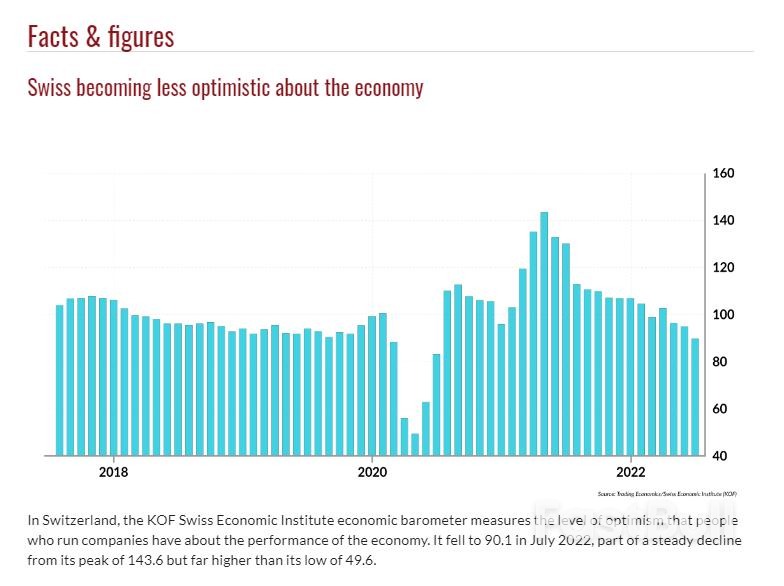
          Switzerland has a reputation for responsible fiscal and monetary policies. The reported inflation rate of 3.4 percent in June 2022 seems to corroborate this image, especially when compared with 8.6 percent in the eurozone and 9.1 percent in the United States. The problem with this picture is: It is wrong.
          The Swiss reality is, instead, marked by an ultra-lax monetary policy and a decrease in purchasing power since 2015. The Swiss situation serves as a case study for the many faces of inflation, a multifaceted phenomenon barely captured by inflation rates.
          Inflation denotes an increase in the money supply not supported by an increase in the production of goods and services. Increasing money supply without real collateral just makes the bank's balance sheets unjustifiably larger. This leads to a loss of purchasing power.
          This loss, however, does not occur uniformly throughout the economy. Prices of some goods may increase faster than others, leading to a greater disparity in the relative prices of goods. Also, the increase of prices is just one manifestation of the loss of purchasing power, alongside skyrocketing valuations of real estate or exchange-traded securities and negative interest rates.
          In other words, looking at the consumer price index as a proxy for inflation does not convey the entire picture. Inflation, the bloating of the money supply, shows itself in different ways in different sectors of the economy.

          Switzerland's bubble

          In a bid to consciously weaken the Swiss franc, the Swiss Central Bank engaged in a prolonged phase of easy monetary policy. In January 2010, the Swiss Monetary Base Aggregate was about 87,000 million francs. By January 2020, it was around 589,000 million, peaking at approximately 757,000 in April 2022, with only a slight decline since then. In 12 years, the monetary base expanded 8.7 times.
          This unprecedented bloat was initially championed on so-called technical grounds. The central bank, seen as committed to price stability, wanted to fight impending deflation. (One might ask, why? Deflation, the gain in purchasing power, can be economically viable. But this is a question for a different paper.) Increasingly, the bank's true aims became clearer. Weakening the Swiss franc was a political move by a politically motivated central bank aiming at helping exporters through devaluation. Since the onset of this policy in 2010, its balance sheet expanded at unprecedented rates. As it proved unsustainable, the central bank decided to change its modus operandi by introducing a negative policy short-term interest rate. In the beginning of 2015, this rate went from 0.25 percent to -0.75 percent. Since then, it has stayed negative. Even after a very modest hike in June 2022, it still is -0.25 percent.Switzerland Shows The Many Faces of Inflation_1

          Failed goals

          Neither of the intended goals was realized. The Swiss franc appreciated against the euro, breaking parity in 2022, and since then becoming slightly more valuable than the European currency. The central bankers wanted to keep the Swiss currency at what they called the “fair” exchange rate of 1.20 franc per euro. Central bankers also failed regarding their other goal. Between 2010 and 2020, the yearly inflation rate measured by the consumer price index was six times negative – in other words, deflationary. In the other six years, it remained below 1 percent, and therefore below the policy band of 1-2 percent.
          Central bankers enlarging the currency supply neither maintained the Swiss franc in its “fair” exchange rate vis-a-vis the euro nor achieved their goal of fighting deflation. But this is only half the story of the Swiss failure. The other half is marked by the sectors in which a tremendous loss of purchasing power occurred – due to the machinations of the central bank.

          Collateral damage

          Alongside the inflation of the Swiss money supply, the country's residential house price index went from about 130 points in 2010 to 190 in 2021. This represents an increase of over 46 percent or about 4 percent per year. This is much more than the development of wages, which are, on average, corrected by the consumer price index. The result is that housing prices climbed in real terms. With them, rents and other real estate-related prices made life less affordable, especially for the middle class.
          Then, the Swiss Market Index went from around 6,500 points at the beginning of 2010 to about 12,900 at the end of 2021; even after all the turmoil of this year, it is still over 11,100 points. At its highest point, the market for exchange-traded shares almost doubled. It still trades about 70 percent higher than in 2010. In the same period, the Swiss economy grew by some 20 percent. Again, this difference is a sign that the increased monetary base did not enter the real economy, as was hoped for, but remained in financial markets, causing asset price inflation.
          A third way in which the central bank's inflationary policy diffused was via the pension system. One of the main reasons for the Swiss being relatively well-off is the mandatory but defined-contribution system of retirement provision. Currently, the whole system has around 1.3 trillion francs under management. The negative interest rate cut away some of these assets. First, the negative rates were applied to the pension scheme's liquidity. Second, it lowered the bond market into negative territory as well as reduced the returns of the pension funds. Third, it led many funds to seek risks that were not appropriately remunerated by premiums. Negative interest rates chipped away at least 50 billion francs of the plan contributions.

          Scenarios

          The Swiss case shows how a bloated money supply leads to the loss of purchasing power. This loss cannot only be thought of in terms of the consumer price index because money diffuses differently in various sectors of the economy. In the Swiss case, the ultra-lax monetary policy led to an unprecedented high in the cost of real estate, to asset price inflation and to the deterioration of pension funds. On the other hand, this inflationary policy did not achieve either of its stated goals – devaluing the franc and preventing bouts of deflation.

          How can this continue to develop? There are three main scenarios.

          In the best case, Switzerland is hit by a hard but short recession that corrects the prices in real estate and financial markets, forcing the central bank to hike rates to around 2 percent and reduce its balance sheet. This is the best case also because it could stop the overheated Swiss labor market and could trigger an increase in economic productivity.
          In the most likely case, the excessively loose monetary policy will turn into just a lax one. Rates will be adjusted to a low positive level, between 0.5 and 0.75 percent, and asset prices as well as real estate will continue to increase. Ironically, the strong Swiss franc absorbs some of the inflationary pressure coming from Europe and the U. S. In this case, Switzerland will continue its path of sluggish growth, an accelerated labor market and balance-sheet increases.
          In the worst case – in addition to other maladjustments of the Swiss economy to the ultra-expansive monetary policy – inflation also makes itself noticeable in the consumer price index. This is likely to happen if the labor market accelerates even more and wage raises of around 2-5 percent are negotiated. In this case, the central bank will not be able to cope with price increases. Since the increase happens without a similar hike in productivity, this scenario is likely to lead to stagflation.
          The case of Switzerland shows how multifaceted the loss of purchasing power of money is. It also showcases how dangerous it is to follow an excessively easy monetary policy, even if the consumer price index does not show inflationary tendencies. They are there but disguised in other forms.
          The picture of responsible Swiss monetary policy is a mirage. It can only be maintained because of the nation's low-key reputation and because its nefarious results pass undetected. The reason for the seemingly low inflation rate in Switzerland is the failure of central bankers to devaluate the Swiss franc.
          Note also that the current drivers of inflation – in Switzerland and elsewhere – are all failures of policy: lax monetary policy, severe Covid-19 lockdowns and the rising supply and demand that followed, exploding energy prices due to political myopia and ideology, deglobalization because of protectionism and mercantilism, and war. The massive loss of purchasing power taking place now can be traced exclusively to too much central planning.

          Source: gisreportsonline

          Risk Warnings and Disclaimers
          You understand and acknowledge that there is a high degree of risk involved in trading. Following any strategies or investment methods may lead to potential losses. The content on the site is provided by our contributors and analysts for information purposes only. You are solely responsible for determining whether any trading assets, securities, strategy, or any other product is suitable for investing based on your own investment objectives and financial situation.
          Comments
          Add to Favorites
          Share

          "The Sterling Crisis" Is No Longer Worry

          Devin
          While decades of fears of another "sterling crisis" have been false alarms, with a fourth British prime minister in six years in power, fears are harder to dispel this time around.
          In an interview last month, Bank of England Governor Bailey dismissed the notion that a UK currency or balance of payments crisis was brewing, blaming the dollar for the pound's 20% slump against the dollar over the past year, to its lowest level since the mid-1980s Overall strength. "In my opinion, this is not a crisis at all," he said.
          But since then, a rare simultaneous drop in sterling and gilt prices has set off a wake-up call: Beyond the dollar's popularity or the volatile ups and downs of the currency market, there's something more amiss.

          "The Sterling Crisis" Is No Longer Worry_1Crit: Sterling and British government bonds are sold at the moment

          Bond yields have climbed sharply in the face of a toxic mix of soaring inflation and inflation expectations in Britain and the prospect of a recession as foreign investors appear to be faltering. British government borrowing will surge again under the new Prime Minister Truss. In addition, Truss appeared intent on cutting taxes and said it would spend an extra £100bn to ease winter energy price pressures.
          Overseas financiers appear to be deliberately avoiding British assets amid uncertainty about post-Brexit trade policy.
          Deutsche Bank said in a striking research note this week that the risk of a balance of payments crisis in the UK is growing as government bond risk premiums rise and borrowing costs rise, and foreign investors cannot be taken for granted. confidence.

          "The Sterling Crisis" Is No Longer Worry_2UK twin deficits are rare in Europe

          In addition, the report argues that a trade-weighted index of sterling, which has fallen 7% since January, may need to fall another 15% to bring the country's record current account deficit of more than 8% of national output back to its 10-year average.
          "If investor confidence erodes further, this dynamic could become a self-fulfilling balance of payments crisis, with foreigners refusing to fund Britain's external deficit."
          The term "sterling crisis" resonates strongly with many in the UK, reminiscent of some of the darkest moments in British economic history after World War II - when the country struggled to maintain the confidence of foreign investors for its long-term balance of payments deficit financing.

          "The Sterling Crisis" Is No Longer Worry_3Sterling and the "kindness of strangers"

          Since these cyclical crises (1967, 1976 and 1992) tended to occur during periods of fixed or semi-fixed exchange rates, the solution usually meant a sharp currency devaluation to make UK assets cheap enough and attract foreign capital back.
          Conditional bailout loans from the International Monetary Fund (IMF) were at least needed in the first two crises to help stabilize the situation and prop up the pound back to a new exchange rate level that would allow governments to trade in bond markets at affordable rates Borrow again.
          But the pound has floated freely since it exited the European Exchange Rate Mechanism in 1992, and with the Bank of England printing money and buying bonds to support government borrowing over the past 15 years, the classic sterling crisis and the idea of a foreign funding crunch dissipated.
          Of course, the pound has also plunged at times - but the absence of inflation over the past 20 years has allowed the Bank of England to buy government bonds when the government needs to borrow urgently, while the lower exchange rate quickly attracts foreign capital back, rebalances and boosts exports.

          Summer 1976

          Times have changed. Now, factors such as inflation soaring again, rising interest rates and aggressive bond sales by the Bank of England to shrink its balance sheet have all changed the equation, while trade and current account deficits have widened and demand for overseas funds has grown high.
          Deutsche Bank is concerned that the current sterling crisis has many similarities to the 1976 sterling crisis, when an energy shock, aggressive fiscal spending and a weak sterling all contributed to the crisis, leaving the UK with a painful International Monetary Fund bailout. Deutsche Bank also said the new chancellor must convince investors that she can find the right balance, as "expansionary, poorly targeted fiscal policy widens twin deficits and worsens inflation expectations".

          "The Sterling Crisis" Is No Longer Worry_4GBP and UK two-year/10-year bond yield spreads

          "The Sterling Crisis" Is No Longer Worry_5UK Two-Year Yield Premia

          (The red line is the US/UK two-year bond yield spread, the green line is the UK/German two-year bond yield spread, and the blue line is the UK/Japan two-year bond yield spread )

          The BoE could opt to buy bonds again if overseas funding dries up, but that would affect its anti-inflation plans and could further raise inflation expectations and borrowing costs.
          Foreign funds believe that the pound may already appear relatively cheap on a fair value model, but they have yet to find a solution to several domestic problems.
          Cesar Perez Ruiz, chief investment officer at Pictet Wealth Management, said he remains "very negative" on gilts and the pound despite attractive valuations. "A lot of people see the UK as an emerging market," he said. "In this case, the victim is often the exchange rate."
          Nomura strategist Jordan Rochester also believes that continuing to bet against the pound is the best strategy because, unlike the pandemic aid package two years ago, the government's £100bn spending plan to limit household energy bills will keep Britain's balance of payments balanced. and the terms of trade have deteriorated further, while the cost of debt has soared.
          For HSBC strategist Dominic Bunning, there are still downside risks to the pound, aside from a brief rally.
          "The UK may have a new prime minister, but the economy and the exchange rate face the same old challenges: weak growth and high inflation, widening external imbalances and reliance on foreign capital inflows."

          Source: Reuters

          Risk Warnings and Disclaimers
          You understand and acknowledge that there is a high degree of risk involved in trading. Following any strategies or investment methods may lead to potential losses. The content on the site is provided by our contributors and analysts for information purposes only. You are solely responsible for determining whether any trading assets, securities, strategy, or any other product is suitable for investing based on your own investment objectives and financial situation.
          Comments
          Add to Favorites
          Share

          Fed's Barkin Warns Rates Must Stay High Until Inflation Eases

          Jason
          The U.S. Federal Reserve must lift interest rates to a level that restrains economic activity and keep them there until policymakers are "convinced" that inflation is subsiding, Richmond Fed President Thomas Barkin told the Financial Times on Tuesday.
          In order to restore price stability, the U.S. central bank will need to tighten its monetary policy further so that real interest rates, which are adjusted for inflation, sit above zero, Barkin said in an interview with the paper.
          "You do have to move to a level where inflation expectations come down in order to have enough restriction on the economy to bring inflation down," the FT quoted Barkin as saying.
          "The destination is real rates in positive territory and my intent would be to maintain them there until such time as we really are convinced that we put inflation to bed," Barkin added.
          Barkin's comments come ahead of the Fed's meeting this month to decide whether it will implement a third 75 basis point hike or slow down the pace of tightening with a 50-basis point rise.
          He told the FT that he has not decided on the size of the next rate increase he will back, but highlighted the resilience of the U.S. economy.
          "The economy is still moving forward [and] its momentum hasn't been halted," Barkin said, noting that the labor market is still "very tight".
          "I have a bias in general towards moving more quickly, rather than more slowly, as long as you don't inadvertently break something along the way," Barkin told the paper.
          Last month, Barkin said he wants to raise interest rates further to bring inflation under control, and will watch U.S. economic data to decide how big a rate hike to support at the Fed's next meeting in September.
          Some Fed officials have said that the U.S. central bank's benchmark overnight interest rate would not just keep rising but remain at a high level until inflation returned to the Fed's 2% target.
          Barkin is not a voting member at the policy-setting Federal Open Market Committee (FOMC) this year.

          Source: Reuters

          Risk Warnings and Disclaimers
          You understand and acknowledge that there is a high degree of risk involved in trading. Following any strategies or investment methods may lead to potential losses. The content on the site is provided by our contributors and analysts for information purposes only. You are solely responsible for determining whether any trading assets, securities, strategy, or any other product is suitable for investing based on your own investment objectives and financial situation.
          Comments
          Add to Favorites
          Share

          Korea's Current Account Surplus Plunges as Goods Balance Turns Red Amid Soaring Import Bills

          Damon
          Korea posted a current account surplus for the third straight month in July, but the surplus plunged as the goods balance turned red for the first time in about 10 years due to fast-rising import costs of energy and other commodities, central bank data showed Wednesday.
          The country's current account surplus came to $1.09 billion in July, compared with a surplus of $5.61 billion posted a month earlier, according to the preliminary data from the Bank of Korea (BOK).
          The July surplus was also much smaller than the same month a year earlier when the country logged a surplus of $7.71 billion, the data showed.
          In the January-July period, the country's cumulative surplus nearly halved to $25.87 billion from a surplus of $49.46 billion tallied the same period a year earlier.
          The sharp decline came as the country's import bills mounted at a faster pace than overseas shipments driven by high energy and commodity prices amid the global supply chain disruptions exasperated by the ongoing war in Ukraine.
          The country imported $60.23 billion worth of goods in July, up 21.2 percent from a year earlier, while exports grew 6.9 percent on-year to $59.05 billion, the data showed.
          Of inbound shipments, raw material purchases jumped 35.5 percent over the same period, with imports of coal and crude oil surging 110 percent and 99.3 percent, respectively.
          As a result, the goods balance that tracks imports and exports posted a deficit of $1.18 billion in July. This marked the first time since April 2012 that the country saw the goods balance turn red.
          The service account, which includes outlays by South Koreans on overseas trips and transport earnings, posted a surplus of $340 million in July, compared with a deficit of $490 million the previous month.
          The turnaround stemmed in part from high freight rates despite a continued deficit from travel bolstered by eased anti-pandemic restrictions.
          The primary income account, which tracks wages of foreign workers and dividend payments overseas, logged a surplus of $2.27 billion in July, down from the previous year's surplus of $2.84 billion, the data showed.

          Source: Yonhap

          Risk Warnings and Disclaimers
          You understand and acknowledge that there is a high degree of risk involved in trading. Following any strategies or investment methods may lead to potential losses. The content on the site is provided by our contributors and analysts for information purposes only. You are solely responsible for determining whether any trading assets, securities, strategy, or any other product is suitable for investing based on your own investment objectives and financial situation.
          Comments
          Add to Favorites
          Share

          Yen Heads for Worst Year on Record as It Sinks Deeper Against the Dollar

          Jason
          The yen has slumped to a level that leaves it on track for its worst year on record, prompting the strongest warnings so far from senior Japanese government officials as they seek to stem the slide.
          The currency fell as much 1 per cent to 144.19 per dollar on Wednesday in a third day of declines as a new wave of dollar strength ripped through Asia, putting pressure on a range of foreign exchange levels.
          In his strongest remarks yet, chief Cabinet secretary Hirokazu Matsuno said he was concerned about the recent rapid, one-sided moves and that Japan would need to take action if they carried on.
          "The government will continue to watch forex market moves with a high sense of urgency and take necessary responses if this sort of move continues," he said.
          Finance minister Shunichi Suzuki said he was watching the yen's weakness with great interest, Kyodo News reported separately.
          Despite the salvo of warnings, the comments proved insufficient to contain the yen's continued slide.
          The currency has slumped 20 per cent this year, and edged past its previous worst annual drawdown in 1979.
          The renewed sell-off in Treasuries this month has widened the yield gap between the US and Japan, driving up the dollar and pushing the yen to a 24-year low.
          The Japanese currency wasn't the only one in the firing line on Wednesday, with the greenback stronger against all Group-of-10 peer currencies, as well as Asian counterparts from the yuan to the won.
          The Bloomberg Dollar Spot Index extended a record high for the gauge.
          The dollar-yen's surge past the 144 level for the first time since 1998 will mount pressure on Bank of Japan Governor Haruhiko Kuroda's defiance of a global shift towards rate increases, and the strength of Prime Minister Fumio Kishida's support for his stance.
          "The MoF [Ministry of Finance] and the BoJ [Bank of Japan] probably believe the current phase is clearly the dollar's strength, and not the yen's issue," said Mari Iwashita, chief market economist at Daiwa Securities.
          "That means there, unfortunately, is no sense of urgency about intervention or the need for the BoJ to tweak policy."
          In June, Japanese officials said they would take action, if necessary, without specifying what that would be, after a three-party meeting held between the Ministry of Finance, the central bank and the Financial Services Agency.
          Japan last intervened to prop up the currency in 1998, at around the same time much of Asia was being buffeted by a regional financial crisis.
          Yen Heads for Worst Year on Record as It Sinks Deeper Against the Dollar_1Mr Kuroda has repeatedly said that foreign exchange policy is the remit of the finance ministry, not the BoJ, while standing his ground on keeping rock-bottom interest rates to support the economy and generate a more stable form of inflation.
          He has insisted that a policy tweak to turn the currency tide would be largely futile anyway.
          "I think Kuroda is right in that a small rate hike by the BoJ won't stop the trend," said Harumi Taguchi, principal economist at S&P Global Market Intelligence.
          Beyond offering more help against rising prices driven by the yen, the options are also limited for the government, she said.
          "Japan can only intervene unilaterally in foreign exchange, which won't reverse the trend beyond a one-off shock."
          In the bond market on Wednesday, the BoJ said it would boost scheduled debt purchases as the intensifying Treasuries sell-off also put upward pressure on yields.
          The move came as Japan's benchmark 10-year yield approached the 0.25 per cent upper limit of the BoJ's tolerated trading band.
          In the options market, bets on further yen weakness are growing. One-year risk-reversals for the dollar-yen — a gauge of expected direction for the currency pair over that time frame — have hit the highest since 2015, according to data compiled by Bloomberg.
          "So long as US bond yields are rising, which they are right now, and if the BoJ is trying to maintain this 25 basis points target on the 10-year JGB, the yen's going to keep going down," Chris Wood, global head of equity strategy at Jefferies, said on Bloomberg TV.
          "The fundamental cause of the collapse of the yen this year is the stubborn commitment by the BoJ governor to this yield-curve control policy," he said.

          Source: The National News

          Risk Warnings and Disclaimers
          You understand and acknowledge that there is a high degree of risk involved in trading. Following any strategies or investment methods may lead to potential losses. The content on the site is provided by our contributors and analysts for information purposes only. You are solely responsible for determining whether any trading assets, securities, strategy, or any other product is suitable for investing based on your own investment objectives and financial situation.
          Comments
          Add to Favorites
          Share

          UK Energy Chiefs Urge Liz Truss to Put Her Faith in Gas

          Damon
          UK energy chiefs have urged newly elected British Prime Minister Liz Truss to get foursquare behind oil and gas to ensure the country can contend with straitening international supplies and soaring prices.
          The clarion call will alarm environmentalists and directly controverts the International Energy Agency's 2021 determination that exploitation and development of new oil and gasfields must end.
          A report by Offshore Energies UK on energy security suggests that the war in Ukraine and its accompanying global energy crisis have rendered the agency's stance obsolete, demonstrating how dependent Britain is on fossil fuels to meet its energy needs.
          The report said that even sticking to the net-zero road map, oil and gas will remain the most widely used fuels for at least another decade.
          If this finding is accepted, then at a time of international supply crisis, it suggests the solution is to boost domestic oil and gas production — an ambition that will require serious investment and the creation of conditions in the UK that bring it about, the report said.
          Demonstrating the magnitude of the task, in 2021, UK oil and gas production was only enough to meet 53 per cent of its needs, with gas at 38 per cent and oil at 82 per cent. The inadequacy is the fulfilment of a wider trend in which domestic production has fallen by two thirds in 20 years.
          However the trend isn't inexorable, and in the first half of this year, the industry has increased gas production by 26 per cent, the report said.
          Whether oil and gas bigwigs are the best gatekeepers of the UK's energy transition will divide opinion, but there is little debate over the extent of the supply-side crisis, which in July drove UK inflation to a 40-year-high of 10.1 per cent.
          In 2022 to date, gas prices have averaged at 200p/th, with winter prices already trading at a whopping 700 p/th. On Monday, the European TTF benchmark stood at 2019 p/th.UK Energy Chiefs Urge Liz Truss to Put Her Faith in Gas_1
          And while Ms Truss is widely predicted to freeze consumer prices at their current level, this level has still risen 80 per cent this year.
          In recognition of the deleterious paradigm, Offshore Energies UK has formulated a series practical measures it believes will help alleviate the crisis.

          Offshore Energy UK's crisis road map

          Reliable, responsible partners

          Support UK oil and gas, which is reliable and produced cleanly, and announce the Climate Compatibility Checkpoint in Autumn 2022 to enable new licences to be awarded as soon as possible

          Support consumers

          Speed up electrification across society — in areas such as transport and heating — in step with offshore wind expansion, and split the market into two price bands: one reflecting the lower cost of electricity produced by renewables, and the other the cost of power produced by oil and gas.

          Reduce reliance on imports

          Boost existing supplies of UK gas by updating gas quality standards, confirm the 2022 licensing round and speed up approvals, committing to ending the windfall tax by 2025.

          Use UK gas to fuel clean energy

          Recognise the importance of gas as a transition fuel in the new Energy Act while slashing times for offshore wind projects and accelerating UK hydrogen production with clarity on investment models and regulations

          Competing visions for UK energy

          Commenting on the report, acting Offshore Energies UK chief Mike Tholen said: "Having a sustainable, secure, and affordable supply of energy has never been more important, and the UK's offshore energy sector continues to step up and play a vital role in ensuring this."
          The diagnosis is incontestable but the prescription is debatable, especially the concept of transition fuels, which have been widely criticised by environmentalists.
          A report by green financial analyst firm TransitionZero in May suggested using gas as a transition fuel was economically illiterate and only served to delay the transition to renewable energy, the costs of which have plummeted by 99 per cent since 2010.
          "Despite some regional variation, our analysis shows a clear deflationary trend in the cost of switching from coal to clean electricity," TransitionZero co-founder Matt Gray said at the time.
          "Independent of Russia's invasion of Ukraine, this trend will accelerate, presenting governments with an economic opportunity to protect electricity consumers from continued fossil fuel volatility."
          And on Wednesday, the Climate Change Committee and the National Infrastructure Commission wrote to Ms Truss to cast further doubt on the suitability of gas for the task at hand, setting out the positive case for action on energy efficiency, low-carbon heat and renewables in the face of the current cost-of-living crisis.
          "The UK is facing a set of grim records: high energy prices, extreme summer temperatures, a historic drought and surging inflation," the letter from the two committees stated.
          "These are indicative of the long-term challenges of climate change, and the immediate economic challenges which could see up to three quarters of UK households threatened by fuel poverty.
          "Addressing our dependency on fossil energy offers us the best way out of these crises. Decisive government action in the near term can deliver lasting benefits to the UK's climate and energy security.
          "In addition to any new package of support for consumers this winter, we urge you to follow the principles laid out in the British Energy Security Strategy and the Net Zero Strategy.
          "The best policies for the consumer are those that support lasting energy security and a low carbon, low-cost energy system. The independent analysis of our respective organisations is that this will deliver a long-term return on investment and set the UK on a path to prosperity.
          "The UK cannot address this crisis solely by increasing its production of natural gas. Greater domestic production of fossil fuels may improve energy security, particularly this winter. But our gas reserves — offshore or from shale — are too small to impact meaningfully the prices faced by UK consumers."

          Gaseous boost to UK economy

          While the oil and gas industry will always find it hard to win the environmental argument, regardless of the sheep's clothes in which the argument is packaged, one area where it is on far stronger ground is the economy.
          The industry supports 214,000 jobs across the UK and since 1970 has contributed £400bn to the UK Treasury in taxes.
          Offshore Energies UK sees this contribution as inviolable, hence why transitioning the offshore sector is integral to its model. Scratch oil and gas production and a seismic economic black hole would be left behind.
          "Not only has our sector been working hard to provide energy security to the country, but it also continues to bring a wide array of economic benefits, contributing more than £13.8bn in oil and gas production taxes from April this year to next May," said Mr Tholen.
          "Committed as it is to the energy transition and delivering net zero, the sector has cut emissions, which are one fifth down from 2018 and is showing how its vital skills and expertise can drive the low-carbon energy and emissions solutions needed for the future.
          "We're seeing that in action in the North Sea, through the start-up of power generation at Seagreen and the beginning of construction of the Dogger Bank project — two of the world's largest offshore wind farms which are both being led by companies with an oil and gas production heritage."
          Given the low tax, market-based economy enshrined by Ms Truss, it is likely Offshore Energies UK's low-tax, high-investment vision of the energy market will be one that curries favour.

          Source: thenationalnews

          Risk Warnings and Disclaimers
          You understand and acknowledge that there is a high degree of risk involved in trading. Following any strategies or investment methods may lead to potential losses. The content on the site is provided by our contributors and analysts for information purposes only. You are solely responsible for determining whether any trading assets, securities, strategy, or any other product is suitable for investing based on your own investment objectives and financial situation.
          Comments
          Add to Favorites
          Share

          China Trade Disappoints, As Bank of Canada Looks to Another Rate Hike

          Owen Li
          European markets managed to eke out a positive finish yesterday in a day that saw UK and US bond yields surge, with the UK 10 year rising to its highest level since 2011 and closing the gap with its US counterpart to the narrowest since April 2016.
          The sell-off in UK gilts appears to have been predicated on the premise of billions of pounds of fiscal support that is expected to be announced tomorrow by new Prime Minister Liz Truss as she attempts to keep a lid on surging energy costs, for UK businesses and consumers, which are driving inflation through the roof.
          The fear is that while these measures are likely to keep a lid on inflation now, the trade-off is a higher level of headline inflation over a longer period of time, which is likely to mean higher rates for longer. Ultimately there are no easy solutions with any action taken this week needing to be weighed up against the costs of doing nothing, and the long-term damage to the economy of not acting.
          US markets had a slightly different day of it yesterday, closing lower after a strong ISM services survey for August which served to heighten the prospect that the Federal Reserve could go for another 75bps rate hike when it meets in two weeks' time. It's somewhat surprising that markets are still under-pricing the probability of the Fed doing this given recent pronouncements from various Fed members about front-loading.
          Last night's weak US close looks set to translate into a lower European open, although today's weak Asia session has also played a part after some disappointing China trade data.
          It's becoming increasingly difficult to feel optimistic about the outlook for the Chinese economy as we head into the winter months. With 21.5m people already locked down in Chengdu, and new restrictions being imposed in places like Guiyang, in Guizhou province, as well as Shenzhen, it's hard to see a scenario for a significant economic pickup much before next year.
          This morning's latest trade numbers for August merely serve to underscore how weak domestic demand still is, and how far away that end of year GDP target of 5.5% is. The target may well have been downgraded to an aspiration only last month, but its further away than ever after today's data and we could be lucky to see half that number at this rate. Imports data has been weak for several months already, rising 2.3% in July, up from 1% in June. Today's August numbers suggest a continued lack of confidence in the part of the Chinese consumer as well as a lack of demand, slowing to a weaker 0.3%, well below expectations of 1.1%.
          Exports have been slightly more resilient recovering to 18% in July, and beating expectations after a weak Q2, helping to push the trade surplus ever higher. These also disappointed in August, coming in at 7.1%, well below expectations of 13%
          On the data front today, the latest EU Q2 GDP is expected to be confirmed at 0.6%, while we also have another central bank rate decision.
          The Bank of Canada shocked the market in July by taking the unexpected move of hiking rates by 100bps from 1.5% to 2.5%, as well as saying that there was more to come.
          There is already increasing evidence that wages are starting to rise in response to this recent inflation surge. The Canadian Federation of Independent Business last month said that several members of their organisation were planning on raising wages significantly in response to worker shortages.
          BOC governor Tiff Macklem also indicated that more rate increases are coming, and with the Federal Reserve set to lay down another marker in two weeks' time we can expect to see another 75bps move by the Canadian central bank later today.
          Wages are already rising at an average of 5.4% against a headline CPI rate of 7.6%, although that is down on the recent peak of 8.1%.
          It's also worth keeping an eye on the Japanese yen after the declines seen in the past few days. There has been some chatter about the prospect of some form of co-ordinated intervention to stem the bleeding so to speak.
          The Bank of Japan will certainly be concerned; however, they really shouldn't be too surprised given that it is their policies that are causing this meltdown. Their current monetary policy stance is very deliberately at the opposite end of what every other central bank is doing. If they want to stop the slide in the yen, the answer is quite simple and can be summed up in one word, pivot.
          EUR/USD – another marginal new low at 0.9864 keeps up the pressure for a move towards 0.9620. In the absence of a move through the recent peaks at the 1.0120 area, the risk remains for lower levels as we head towards the 0.9000 area.
          GBP/USD – ran out of steam at the 1.1600 area yesterday, but while above the March 2020 lows at the 1.1410/15 area, there is potential for a short squeeze towards resistance at the 1.1750/60 area.
          EUR/GBP – fell back to the 0.8560/70 area having failed to move above the 0.8680 area at the start of the week. We need to see a sustained break below 0.8560 to retarget the 0.8480 area.
          USD/JPY – having broken above 140.00 last week the US dollar has made rapid gains as it looks to head towards the 145.00 area, breaking above 141, 142 and 143 in quick succession. While above the 140.00 level the next significant resistance is at the 1998 highs at 147.70.

          Source: CMC

          Risk Warnings and Disclaimers
          You understand and acknowledge that there is a high degree of risk involved in trading. Following any strategies or investment methods may lead to potential losses. The content on the site is provided by our contributors and analysts for information purposes only. You are solely responsible for determining whether any trading assets, securities, strategy, or any other product is suitable for investing based on your own investment objectives and financial situation.
          Comments
          Add to Favorites
          Share
          FastBull
          Copyright © 2025 FastBull Ltd

          728 RM B 7/F GEE LOK IND BLDG NO 34 HUNG TO RD KWUN TONG KLN HONG KONG

          TelegramInstagramTwitterfacebooklinkedin
          App Store Google Play Google Play
          Products
          Charts

          Chats

          Q&A with Experts
          Screeners
          Economic Calendar
          Data
          Tools
          Membership
          Features
          Function
          Markets
          Copy Trading
          Latest Signals
          Contests
          News
          Analysis
          24/7
          Columns
          Education
          Company
          Careers
          About Us
          Contact Us
          Advertising
          Help Center
          Feedback
          User Agreement
          Privacy Policy
          Business

          White Label

          Data API

          Web Plug-ins

          Poster Maker

          Affiliate Program

          Risk Disclosure

          The risk of loss in trading financial instruments such as stocks, FX, commodities, futures, bonds, ETFs and crypto can be substantial. You may sustain a total loss of the funds that you deposit with your broker. Therefore, you should carefully consider whether such trading is suitable for you in light of your circumstances and financial resources.

          No decision to invest should be made without thoroughly conducting due diligence by yourself or consulting with your financial advisors. Our web content might not suit you since we don't know your financial conditions and investment needs. Our financial information might have latency or contain inaccuracy, so you should be fully responsible for any of your trading and investment decisions. The company will not be responsible for your capital loss.

          Without getting permission from the website, you are not allowed to copy the website's graphics, texts, or trademarks. Intellectual property rights in the content or data incorporated into this website belong to its providers and exchange merchants.

          Not Logged In

          Log in to access more features

          FastBull Membership

          Not yet

          Purchase

          Become a signal provider
          Help Center
          Customer Service
          Dark Mode
          Price Up/Down Colors

          Log In

          Sign Up

          Position
          Layout
          Fullscreen
          Default to Chart
          The chart page opens by default when you visit fastbull.com