


- XAUUSD
- XAGUSD
- WTI
- USDX



Markets
Analysis
User
24/7
Economic Calendar
Education
Data
- Names
- Latest
- Prev











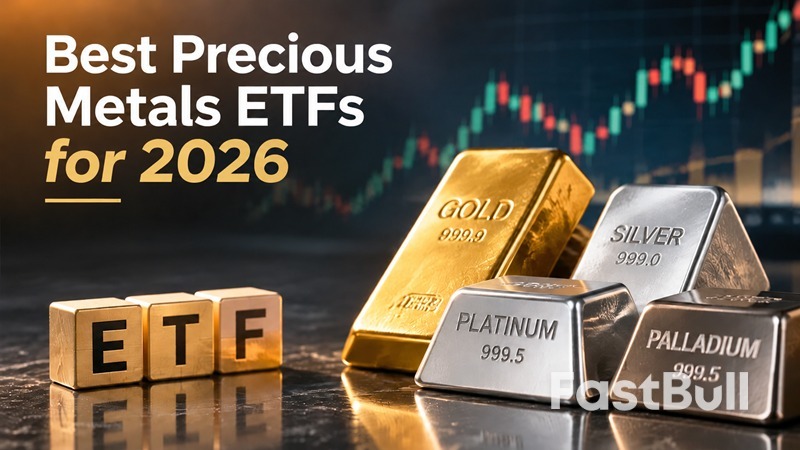
Compare the best precious metals ETFs for 2026, including gold, silver, platinum, palladium, multi-metal, income, and leveraged funds.
Precious metals ETFs and exchange-traded products (ETPs) let investors gain exposure to gold, silver, platinum, and palladium without buying or storing bullion. The right fund depends on the metal, fund structure, fees, liquidity, and whether you want direct price exposure, income, or leveraged trading.
These funds offer different ways to access the precious metals market. The list includes physically backed products and futures-based exposure, so the best choice depends on what you want the investment to do.
| ETF | Exposure | Structure | Expense Ratio |
|---|---|---|---|
| GLDM | Gold | Physical | 0.10% |
| IAU | Gold | Physical | 0.25% |
| GLD | Gold | Physical | 0.40% |
| OUNZ | Gold | Physical; delivery option | 0.25% |
| SIVR | Silver | Physical | 0.30%* |
| SLV | Silver | Physical | 0.50% |
| PPLT | Platinum | Physical | 0.60% |
| PLTM | Platinum | Physical | 0.50% |
| PALL | Palladium | Physical | 0.60% |
| GLTR | Gold, silver, platinum, palladium | Physical basket | 0.60% |
| DBP | Gold, silver, platinum futures | Futures-based | 0.76% total* |
*SIVR's current 0.30% fee reflects a voluntary waiver scheduled through February 28, 2027; the sponsor may revert to 0.45%. DBP has a 0.75% management fee, 0.76% total expense ratio, and 0.70% net expense ratio under the current waiver. Fees can change, so check the latest prospectus before investing.
Gold ETFs are among the most widely used precious metals products. GLDM charges 0.10%, making it a low-cost option for long-term gold exposure. IAU charges 0.25%, while GLD charges 0.40% and is known for its large asset base and trading liquidity. OUNZ also charges 0.25% and gives investors an option to take physical delivery of gold, subject to the fund's procedures and costs.
All four provide physical gold exposure, so the main differences are fees, liquidity, and redemption features. Investors who trade frequently may put more weight on spreads and volume, while long-term holders may focus more on ongoing costs.
SIVR and SLV both hold physical silver. SIVR currently has a 0.30% fee after a voluntary waiver, compared with 0.50% for SLV. SLV has a larger asset base and generally higher trading activity, while SIVR offers a lower stated annual fee.
Silver has both investment and industrial demand, including uses in solar panels, electronics, and manufacturing. That mix can make silver more sensitive to changes in economic activity than gold.
PPLT and PLTM provide physical platinum exposure and charge 0.60% and 0.50%, respectively. PALL holds physical palladium and charges 0.60%. Platinum and palladium are used in catalytic converters and other industrial applications, so their prices can respond sharply to automotive demand, mine supply, substitution between metals, and emissions rules.
These funds are more specialized than large gold ETFs and can experience larger price swings. They may be useful when an investor specifically wants exposure to platinum or palladium rather than broad precious metals exposure.
GLTR holds physical gold, silver, platinum, and palladium in the proportions used by the trust. It gives investors exposure to four precious metals through one product, although the metals are not equally weighted.
DBP uses futures contracts rather than holding a physical basket. Its current holdings include gold, silver, and platinum futures. Futures pricing and contract rolls can cause returns to differ from spot metal prices. GLTR is the more direct multi-metal physical option, while DBP is a derivatives-based strategy.
Precious metals ETFs can deliver very different returns even when they track similar markets. The table below uses trailing total returns as of November 16, 2026. Three-year and five-year figures are annualized.
| ETF | 1-Year | 3-Year Annualized | 5-Year Annualized |
|---|---|---|---|
| GLD | -6.13% | 24.32% | 15.34% |
| GLDM | -5.86% | 24.67% | 15.66% |
| IAU | -6.03% | 24.48% | 15.49% |
| OUNZ | -5.98% | 24.48% | 15.50% |
| SLV | -7.77% | 24.89% | 13.05% |
| SIVR | -7.55% | 25.16% | 13.25% |
Source data as of November 16, 2026. Total returns include distributions. Past performance does not predict future results. Performance data can change daily.
Gold is influenced by real interest rates, the U.S. dollar, central-bank purchases, and safe-haven demand. Silver also responds to industrial use, so manufacturing and solar demand can amplify price swings. Platinum and palladium depend more heavily on automotive demand, mine production, substitution, and industrial supply chains.
The recent figures also show why investors should not treat all precious metals as interchangeable. Gold and silver can have similar long-term drivers but very different short-term performance, while platinum and palladium can move according to more specialized industrial conditions.
The term "precious metals ETF" covers products with different holdings and structures. Check the prospectus rather than assuming every fund owns bullion.
Physical products hold bullion in custody and are designed to track the metal's market price, less expenses. Futures-based products hold commodity contracts instead. Their performance can be affected by the futures curve and the cost of replacing expiring contracts.
When futures prices are higher than spot prices, known as contango, rolling contracts can create a drag on returns. In backwardation, the effect can be positive. This is why a futures-based product can diverge from the spot price even when it targets the same metal.
Mining ETFs such as VanEck Gold Miners ETF (GDX) own shares of mining companies, not bullion. Their returns depend on metal prices as well as production costs, wages, debt, management, and broader equity-market conditions.
Mining stocks can outperform bullion when metal prices rise and profit margins expand, but they can also fall while gold rises if operating costs increase or company-specific problems emerge. Some mining companies pay dividends, so mining ETFs may distribute income, but those payments are not guaranteed.
Single-metal funds concentrate on one market, making it easier to target gold, silver, platinum, or palladium. Multi-metal funds such as GLTR spread exposure across several metals, although their allocations may be uneven.
Copper is sometimes included in broader metals searches, but it is an industrial metal rather than a precious metal. Copper ETFs should therefore be evaluated separately from precious metals ETFs.
After deciding which metal or strategy you want, compare the fund's cost, liquidity, holdings, and tax structure. Two funds tracking the same metal can produce different investor outcomes because of these factors.
The expense ratio is the annual operating cost expressed as a percentage of assets. A lower fee can help when funds offer similar exposure, but it is not the only cost.
Compare assets under management, average trading volume, and bid-ask spreads. Larger funds often trade more actively, but the spread on the actual trade matters more than AUM alone. A low-cost fund with a wide spread may not be cheaper to trade than a higher-cost fund with deeper liquidity.
Review the prospectus to confirm whether the fund holds physical metal, futures, options, or mining shares. Compare its returns with the correct benchmark over matching periods; spot prices, futures indexes, and mining-stock indexes are not interchangeable.
Tax treatment also depends on structure. Some physically backed precious-metals trusts may be subject to collectibles tax rules, while certain futures-based products can have different tax reporting requirements. Investors should review the fund's tax documents and consult a tax professional about their circumstances.
Most bullion-backed products do not generate operating income, but other funds use mining shares or options to pursue distributions. Leveraged and inverse funds are designed for a different purpose: short-term exposure to daily price movements.
Gold, silver, platinum, and palladium do not pay interest or dividends, so physical-metal trusts generally do not provide regular income. Mining ETFs may distribute dividends received from portfolio companies.
There are also income-focused products such as the NEOS Gold High Income ETF (IAUI), which uses a call-option strategy on gold ETPs to pursue monthly income. Its distributions can include option premiums, dividends, capital gains, interest, or return of capital, so a high distribution rate should not be treated as the same thing as a guaranteed investment yield.
ProShares Ultra Gold (UGL) and Ultra Silver (AGQ) target 2x the daily performance of their respective gold and silver benchmarks. ProShares UltraShort Gold (GLL) and UltraShort Silver (ZSL) target -2x daily performance.
These products use derivatives and reset their exposure daily. Compounding means returns over weeks or months can differ significantly from two times—or negative two times—the metal's cumulative return. They are generally trading tools rather than simple long-term substitutes for physical-metal ETFs.
Precious metals ETFs offer different ways to access commodity markets. Compare the metal, underlying structure, costs, liquidity, historical performance, and tax treatment before choosing a fund. The most suitable option depends on whether you want direct bullion exposure, diversification, income, or short-term trading leverage.

728 RM B 7/F GEE LOK IND BLDG NO 34 HUNG TO RD KWUN TONG KLN HONG KONG


The risk of loss in trading financial instruments such as stocks, FX, commodities, futures, bonds, ETFs and crypto can be substantial. You may sustain a total loss of the funds that you deposit with your broker. Therefore, you should carefully consider whether such trading is suitable for you in light of your circumstances and financial resources.
No decision to invest should be made without thoroughly conducting due diligence by yourself or consulting with your financial advisors. Our web content might not suit you since we don't know your financial conditions and investment needs. Our financial information might have latency or contain inaccuracy, so you should be fully responsible for any of your trading and investment decisions. The company will not be responsible for your capital loss.
Without getting permission from the website, you are not allowed to copy the website's graphics, texts, or trademarks. Intellectual property rights in the content or data incorporated into this website belong to its providers and exchange merchants.
Not Logged In
Log in to access more features


Log In
Sign Up


