


- XAUUSD
- XAGUSD
- WTI
- USDX



Markets
Analysis
User
24/7
Economic Calendar
Education
Data
- Names
- Latest
- Prev









Is XRP a stablecoin? No. Discover why XRP's price changes, how it differs from stablecoins, and how Ripple's RLUSD fits into the picture.
XRP is not a stablecoin. Unlike stablecoins designed to maintain a fixed value against a currency or asset, XRP trades at a market-driven price that can rise or fall. It is the native asset of the XRP Ledger and can be used for payments and as a bridge between currencies. Ripple’s RLUSD is a separate, U.S. dollar-pegged stablecoin.
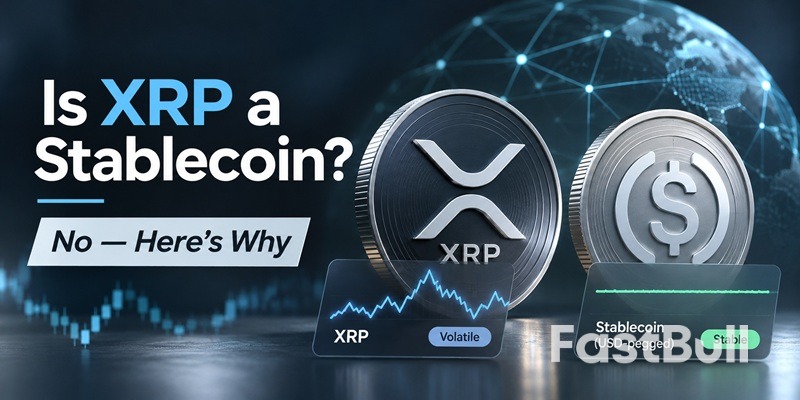
No, XRP is not a stablecoin. It is a cryptocurrency whose market price changes based on supply, demand, and broader market conditions.
A stablecoin is designed to maintain a relatively steady value by referencing an asset such as the U.S. dollar. XRP has no dollar peg and no mechanism that promises a fixed one-to-one value. Its price is determined by market trading, so it can move up or down as demand and market conditions change.
In short, XRP is a cryptocurrency with payment and network utility, not a dollar-pegged stablecoin. The distinction matters: using XRP to transfer value does not mean its value stays constant while it is being transferred.
XRP is the native digital asset of the XRP Ledger (XRPL), an open-source, decentralized blockchain. The ledger supports payments and other tokenized assets, while XRP is used within the network for transaction costs and can help connect different currencies. Learn more in the XRP overview from the XRP Ledger.
XRP also plays a role in the XRPL’s decentralized exchange. When a cross-currency payment needs to convert one asset into another, the network can use XRP as an intermediary if that route offers a more efficient path. This makes XRP a potential bridge asset; it does not make XRP a stable store of value.
The XRP Ledger requires a small amount of XRP to be destroyed when a transaction is processed. This transaction cost helps protect the network against spam. XRP therefore has a functional role in the ledger beyond being an asset that people can buy, sell, or hold.
One use case for XRP is moving value between accounts or currencies. A direct XRP payment can transfer XRP from one XRPL account to another. For cross-currency payments, the ledger can find a path between the sender’s asset and the recipient’s asset, including a route through XRP when that is beneficial. The XRPL documentation on cross-currency payments explains how these payment paths work.
For example, a payment could convert one currency into XRP and then into another currency, rather than relying on a direct trading pair. Whether this route is available depends on liquidity and the payment path. Not every cross-border payment uses XRP, and the network’s ability to support a payment does not guarantee that a particular business or payment provider will use XRP.
XRP’s price fluctuates because it trades in an open market rather than following a fixed dollar peg. Like other crypto assets, its price can respond to changes in buying and selling activity, investor expectations, market sentiment, and broader financial conditions.
When demand rises faster than available supply, buyers may be willing to pay more for XRP. When demand weakens or holders sell, the price can fall. Trading volume, market liquidity, and large transactions can also affect how sharply the price moves, particularly during periods of uncertainty.
Investor sentiment can change quickly in the crypto market. News about adoption, technology, exchange access, or major market participants may influence expectations about XRP’s future use and demand. These expectations can affect its market price even when the underlying network continues to operate normally.
Regulatory developments can also influence XRP’s price. Changes in legal interpretations, government policies, or rules affecting crypto exchanges and payment services may alter how investors view the asset and where it can be traded or used.
Broader movements in Bitcoin and the wider crypto market can influence XRP as well, although its price does not necessarily move in line with other digital assets. A public SEC-filed disclosure on XRP-related market risks also describes factors that may contribute to price volatility.
Because these factors can change, XRP should not be treated as a cash equivalent or a stablecoin. Anyone who needs a value designed to track the U.S. dollar should understand the difference between holding XRP and holding a dollar-pegged stablecoin.
RLUSD is a U.S. dollar-pegged stablecoin issued by Standard Custody & Trust Company, a Ripple subsidiary. Unlike XRP, RLUSD is designed to maintain a value of $1 per token. It is backed by reserve assets, including U.S. dollar deposits, cash equivalents, and short-term U.S. Treasury securities.
RLUSD is available on both the XRP Ledger and Ethereum. Its purpose is to provide a more stable digital asset for payments, transfers, and on-chain transactions. This makes RLUSD fundamentally different from XRP, which has a market-driven price.
RLUSD is designed to maintain its dollar peg through reserve backing and a redemption mechanism. Each token is intended to be backed on a one-to-one basis by U.S. dollar reserves and equivalent assets.
Reserve transparency and redemption arrangements help support confidence in its value. However, a dollar peg does not eliminate every risk. Market conditions, liquidity issues, or problems with the issuer or reserves could affect a stablecoin's price.
Although both assets are associated with Ripple's ecosystem, XRP and RLUSD serve different purposes.
| Feature | XRP | RLUSD |
|---|---|---|
| Asset Type | Cryptocurrency | Stablecoin |
| Price | Market-driven | Designed to maintain $1 |
| Dollar Peg | No | Yes |
| Reserve Backing | No | Yes |
| Main Purpose | Payments and bridge asset | Stable-value payments |
| Price Volatility | Higher | Designed to be lower |
Yes. XRP and RLUSD can coexist and serve complementary purposes on the XRP Ledger. XRP can function as a bridge asset for transferring value between different currencies, while RLUSD provides a dollar-pegged option for users who want to avoid XRP's price volatility.
Having both assets on the same network gives users and developers more options for payments, liquidity, and digital asset transactions.
The choice between XRP and stablecoins depends on what you want to achieve. Neither asset is universally better; they serve different financial needs.
XRP may be useful when transferring value across currencies, accessing liquidity, or using the XRP Ledger's payment infrastructure. Its role as a bridge asset can help facilitate cross-currency transactions.
However, users should consider its price volatility. The value of XRP can change between the time a payment is initiated and completed, which may affect the final amount received.
Stablecoins may be more suitable when you want to hold a digital asset designed to track the U.S. dollar. They can help reduce exposure to the price swings commonly seen in cryptocurrencies such as XRP.
For dollar-denominated payments, transfers, or short-term value storage, a stablecoin such as RLUSD may be a more appropriate option. However, stablecoins still carry issuer, reserve, liquidity, and depegging risks.
No. XRP is not backed by U.S. dollar reserves and does not have a fixed exchange rate against the dollar. Its price is determined by market supply and demand.
XRP itself is not designed to become a stablecoin. Its role as the native asset of the XRP Ledger is different from that of a dollar-pegged token. A separate stablecoin, such as RLUSD, can operate on the same network without changing XRP's underlying nature.
Yes. The XRP Ledger supports issued tokens, including stablecoins. RLUSD is one example, allowing users to access dollar-pegged digital assets within the XRPL ecosystem.
Conclusion: XRP is not a stablecoin. It is a market-driven cryptocurrency designed to support payments and transactions on the XRP Ledger. RLUSD serves a different purpose by providing a dollar-pegged digital asset. Understanding this distinction helps users choose the right asset for their needs.

728 RM B 7/F GEE LOK IND BLDG NO 34 HUNG TO RD KWUN TONG KLN HONG KONG


The risk of loss in trading financial instruments such as stocks, FX, commodities, futures, bonds, ETFs and crypto can be substantial. You may sustain a total loss of the funds that you deposit with your broker. Therefore, you should carefully consider whether such trading is suitable for you in light of your circumstances and financial resources.
No decision to invest should be made without thoroughly conducting due diligence by yourself or consulting with your financial advisors. Our web content might not suit you since we don't know your financial conditions and investment needs. Our financial information might have latency or contain inaccuracy, so you should be fully responsible for any of your trading and investment decisions. The company will not be responsible for your capital loss.
Without getting permission from the website, you are not allowed to copy the website's graphics, texts, or trademarks. Intellectual property rights in the content or data incorporated into this website belong to its providers and exchange merchants.
Not Logged In
Log in to access more features


Log In
Sign Up


