• Trade
  • Markets
  • Copy
  • Contests
  • News
  • 24/7
  • Calendar
  • Q&A
  • Chats
Trending
Screeners
SYMBOL
LAST
BID
ASK
HIGH
LOW
NET CHG.
%CHG.
SPREAD
SPX
S&P 500 Index
6870.39
6870.39
6870.39
6895.79
6858.28
+13.27
+ 0.19%
--
DJI
Dow Jones Industrial Average
47954.98
47954.98
47954.98
48133.54
47871.51
+104.05
+ 0.22%
--
IXIC
NASDAQ Composite Index
23578.12
23578.12
23578.12
23680.03
23506.00
+72.99
+ 0.31%
--
USDX
US Dollar Index
98.900
98.980
98.900
98.960
98.730
-0.050
-0.05%
--
EURUSD
Euro / US Dollar
1.16488
1.16496
1.16488
1.16717
1.16341
+0.00062
+ 0.05%
--
GBPUSD
Pound Sterling / US Dollar
1.33226
1.33236
1.33226
1.33462
1.33151
-0.00086
-0.06%
--
XAUUSD
Gold / US Dollar
4205.30
4205.64
4205.30
4218.85
4190.61
+7.39
+ 0.18%
--
WTI
Light Sweet Crude Oil
59.837
59.867
59.837
60.084
59.752
+0.028
+ 0.05%
--

Community Accounts

Signal Accounts
--
Profit Accounts
--
Loss Accounts
--
View More

Become a signal provider

Sell trading signals to earn additional income

View More

Guide to Copy Trading

Get started with ease and confidence

View More

Signal Accounts for Members

All Signal Accounts

Best Return
  • Best Return
  • Best P/L
  • Best MDD
Past 1W
  • Past 1W
  • Past 1M
  • Past 1Y

All Contests

  • All
  • Trump Updates
  • Recommend
  • Stocks
  • Cryptocurrencies
  • Central Banks
  • Featured News
Top News Only
Share

Swiss Six Exchange: Several Derivatives From UBS Are Under Mistrade Investigation

Share

Hsi Down 319 Pts, Hsti Closes Flat At 5662, Ccb Down Over 4%, Ping An, Hansoh Pharma, Global New Mat Hit New Highs, Market Turnover Rises

Share

It Was Gazprom's First Such LNG Delivery Since Sanctions Introduced In January, Lseg Data Shows

Share

United Arab Emirates Energy Minister: We Are Working To Open Opportunities For Ai Firms To Improve Efficiency Of Electricity Andwater Grids, We Already Saved 30% Of Energy Consumption By Using Ai

Share

Switzerland's Consumer Confidence Index Fell To 34 In November, Compared With A Previous Reading Of -36.9

Share

Shares In Italy's Fincantieri Up 3.2% In Early Trade

Share

India's Nifty Smallcap 100 Index Falls 2.75%

Share

Britain's FTSE 100 Up 0.17%, France's CAC 40 Down 0.07%

Share

Europe's STOXX Index Up 0.04%, Euro Zone Blue Chips Index Up 0.02%

Share

United Arab Emirates Energy Minister: Natural Gas Is Important And We Intend To Not Only Satisfy Our Local Demand, But Also Grow Our Export Of LNG

Share

Yomiuri: Mitsubishi Ufj Bank Chief Hanzawa Likely To Become MUFG President

Share

Benin's International Bonds Slip After Attempted Coup, 2052 Maturity Down By 1.5 Euro Cents, Tradeweb Data

Share

China Vice Commerce Minister, On Nexperia: Root Cause Of Chaos In The Global Semiconductor Supply Chain Lies In The Netherlands

Share

United Arab Emirates Energy Minister: We Should Not Be Worrying About When Demand For Fossil Fuels Will Peak

Share

China Vice Commerce Minister: Urges Germany And EU Auto Association To Push EU Commission To Resolve EV Anti-Subsidy Case

Share

China Vice Commerce Minister Held Video Conferences With The President Of The German Association Of The Automotive Industry And The President Of The European Automobile Manufacturers Association, Respectively, To Exchange Views On Cooperation In The Automotive Industry And Supply Chain Between China And Germany And Between China And Europe

Share

China Vice Commerce Minister: Welcomes Eu Automakers To Continue To Invest In China

Share

China Says It Is Ready To Improve US Ties While Safeguarding Sovereignty

Share

The Chinese Foreign Ministry Stated That Japanese Prime Minister Takaichi And The Right-wing Forces Behind Him Continue To Misjudge The Situation, Refuse To Repent, Turn A Deaf Ear To Criticism Both Domestically And Internationally, Downplay Their Interference In Other Countries' Internal Affairs And Threats Of Force, Distort The Truth, Disregard Right And Wrong, And Show No Basic Respect For International Law And The Fundamental Norms Of International Relations. They Attempt To Revive Japanese Militarism By Instigating Conflict And Confrontation, Thus Breaking Through The Post-war International Order. Neighboring Asian Countries And The International Community Should Remain Highly Vigilant

Share

Indonesia Government Proposes Additional 11.5 Trillion Rupiah State Injection In 2025 For Housing, Transportation Sectors

TIME
ACT
FCST
PREV
Italy Retail Sales MoM (SA) (Oct)

A:--

F: --

P: --

Euro Zone Employment YoY (SA) (Q3)

A:--

F: --

P: --

Euro Zone GDP Final YoY (Q3)

A:--

F: --

P: --

Euro Zone GDP Final QoQ (Q3)

A:--

F: --

P: --

Euro Zone Employment Final QoQ (SA) (Q3)

A:--

F: --

P: --

Euro Zone Employment Final (SA) (Q3)

A:--

F: --

P: --
Brazil PPI MoM (Oct)

A:--

F: --

P: --

Mexico Consumer Confidence Index (Nov)

A:--

F: --

P: --

Canada Unemployment Rate (SA) (Nov)

A:--

F: --

P: --

Canada Labor Force Participation Rate (SA) (Nov)

A:--

F: --

P: --

Canada Employment (SA) (Nov)

A:--

F: --

P: --

Canada Part-Time Employment (SA) (Nov)

A:--

F: --

P: --

Canada Full-time Employment (SA) (Nov)

A:--

F: --

P: --

U.S. Personal Income MoM (Sept)

A:--

F: --

P: --

U.S. PCE Price Index YoY (SA) (Sept)

A:--

F: --

P: --

U.S. PCE Price Index MoM (Sept)

A:--

F: --

P: --

U.S. Personal Outlays MoM (SA) (Sept)

A:--

F: --

P: --

U.S. Core PCE Price Index MoM (Sept)

A:--

F: --

P: --

U.S. Core PCE Price Index YoY (Sept)

A:--

F: --

P: --

U.S. UMich 5-Year-Ahead Inflation Expectations Prelim YoY (Dec)

A:--

F: --

P: --

U.S. Real Personal Consumption Expenditures MoM (Sept)

A:--

F: --

P: --

U.S. 5-10 Year-Ahead Inflation Expectations (Dec)

A:--

F: --

P: --

U.S. UMich Current Economic Conditions Index Prelim (Dec)

A:--

F: --

P: --

U.S. UMich Consumer Sentiment Index Prelim (Dec)

A:--

F: --

P: --

U.S. UMich 1-Year-Ahead Inflation Expectations Prelim (Dec)

A:--

F: --

P: --

U.S. UMich Consumer Expectations Index Prelim (Dec)

A:--

F: --

P: --

U.S. Weekly Total Rig Count

A:--

F: --

P: --

U.S. Weekly Total Oil Rig Count

A:--

F: --

P: --

U.S. Unit Labor Cost Prelim (SA) (Q3)

--

F: --

P: --

U.S. Consumer Credit (SA) (Oct)

A:--

F: --

P: --

RBA Rate Statement
RBA Press Conference
EIA Monthly Short-Term Energy Outlook
BOE Gov Bailey Speaks
ECB President Lagarde Speaks
BOC Monetary Policy Report
U.S. Refinitiv/Ipsos Primary Consumer Sentiment Index (PCSI) (Dec)

--

F: --

P: --

Russia CPI YoY (Nov)

--

F: --

P: --

U.S. Federal Funds Rate Projections-Longer Run (Q4)

--

F: --

P: --

U.S. Federal Funds Rate Projections-2nd Year (Q4)

--

F: --

P: --

U.S. Budget Balance (Nov)

--

F: --

P: --

U.S. Target Federal Funds Rate Lower Limit (Overnight Reverse Repo Rate)

--

F: --

P: --

U.S. Federal Funds Rate Projections-Current (Q4)

--

F: --

P: --

U.S. Interest Rate On Reserve Balances

--

F: --

P: --

U.S. Target Federal Funds Rate Upper Limit (Excess Reserves Ratio)

--

F: --

P: --

U.S. Federal Funds Rate Projections-1st Year (Q4)

--

F: --

P: --

U.S. Federal Funds Rate Projections-3rd Year (Q4)

--

F: --

P: --

U.S. Federal Funds Rate Target

--

F: --

P: --

FOMC Statement
FOMC Press Conference
Brazil Selic Interest Rate

--

F: --

P: --

U.K. 3-Month RICS House Price Balance (Nov)

--

F: --

P: --

Australia Employment (Nov)

--

F: --

P: --

Australia Full-time Employment (SA) (Nov)

--

F: --

P: --

Australia Labor Force Participation Rate (SA) (Nov)

--

F: --

P: --

Australia Unemployment Rate (SA) (Nov)

--

F: --

P: --

Turkey Retail Sales YoY (Oct)

--

F: --

P: --

Italy Quarterly Unemployment Rate (SA) (Q3)

--

F: --

P: --

IEA Oil Market Report
South Africa Gold Production YoY (Oct)

--

F: --

P: --

South Africa Mining Output YoY (Oct)

--

F: --

P: --

Q&A with Experts
    • All
    • Chatrooms
    • Groups
    • Friends
    Connecting
    .
    .
    .
    Type here...
    Add Symbol or Code

      No matching data

      All
      Trump Updates
      Recommend
      Stocks
      Cryptocurrencies
      Central Banks
      Featured News
      • All
      • Russia-Ukraine Conflict
      • Middle East Flashpoint
      • All
      • Russia-Ukraine Conflict
      • Middle East Flashpoint
      Search
      Products

      Charts Free Forever

      Chats Q&A with Experts
      Screeners Economic Calendar Data Tools
      Membership Features
      Data Warehouse Market Trends Institutional Data Policy Rates Macro

      Market Trends

      Market Sentiment Order Book Forex Correlations

      Top Indicators

      Charts Free Forever
      Markets

      News

      News Analysis 24/7 Columns Education
      From Institutions From Analysts
      Topics Columnists

      Latest Views

      Latest Views

      Trending Topics

      Top Columnists

      Latest Update

      Signals

      Copy Rankings Latest Signals Become a signal provider AI Rating
      Contests
      Brokers

      Overview Brokers Assessment Rankings Regulators News Claims
      Broker listing Forex Brokers Comparison Tool Live Spread Comparison Scam
      Q&A Complaint Scam Alert Videos Tips to Detect Scam
      More

      Business
      Events
      Careers About Us Advertising Help Center

      White Label

      Data API

      Web Plug-ins

      Affiliate Program

      Awards Institution Evaluation IB Seminar Salon Event Exhibition
      Vietnam Thailand Singapore Dubai
      Fans Party Investment Sharing Session
      FastBull Summit BrokersView Expo
      Recent Searches
        Top Searches
          Markets
          News
          Analysis
          User
          24/7
          Economic Calendar
          Education
          Data
          • Names
          • Latest
          • Prev

          View All

          No data

          Scan to Download

          Faster Charts, Chat Faster!

          Download App
          English
          • English
          • Español
          • العربية
          • Bahasa Indonesia
          • Bahasa Melayu
          • Tiếng Việt
          • ภาษาไทย
          • Français
          • Italiano
          • Türkçe
          • Русский язык
          • 简中
          • 繁中
          Open Account
          Search
          Products
          Charts Free Forever
          Markets
          News
          Signals

          Copy Rankings Latest Signals Become a signal provider AI Rating
          Contests
          Brokers

          Overview Brokers Assessment Rankings Regulators News Claims
          Broker listing Forex Brokers Comparison Tool Live Spread Comparison Scam
          Q&A Complaint Scam Alert Videos Tips to Detect Scam
          More

          Business
          Events
          Careers About Us Advertising Help Center

          White Label

          Data API

          Web Plug-ins

          Affiliate Program

          Awards Institution Evaluation IB Seminar Salon Event Exhibition
          Vietnam Thailand Singapore Dubai
          Fans Party Investment Sharing Session
          FastBull Summit BrokersView Expo

          How the U.S. fell behind in lithium, the ‘white gold’ of electric vehicles

          Summary:

          The United States has a lithium supply problem. But today, the U.S. is far behind, with only 1% of global lithium being mined and processed in the U.S., according to the U.S. Geological Survey.

          The United States has a lithium supply problem. Nearly every major automaker has announced a transition to electric vehicles, Tesla delivered almost one million cars in 2021, and a handful of new electric vehicle companies like Rivian and Lucid are rolling new models off the line.
          In order to power all of these EVs, we will need batteries — lots of them.
          Electric vehicle growth will be responsible for more than 90% of demand for lithium by 2030, according to Benchmark Mineral Intelligence. But lithium is also in our phones, computers, ceramics, lubricants, pharmaceuticals, and is essential for solar and wind energy storage.
          “It’s like the blood in your body,” said Lithium Americas CEO Jon Evans, “It’s the chemistry behind how lithium-ion batteries work. It remains the common denominator in all the battery technologies, even that we’re looking at now for next generation batteries. So, it’s truly a critical element.”
          This vital mineral in rechargeable batteries has earned the name “white gold” and the rush is on.
          The price of lithium is soaring, up 280% since Jan. 2021, and establishing a domestic supply of lithium has become the modern-day version of oil security. But today, the U.S. is far behind, with only 1% of global lithium being mined and processed in the U.S., according to the U.S. Geological Survey.
          More than 80% of the world’s raw lithium is mined in Australia, Chile, and China. And China controls more than half of the world’s lithium processing and refining and has three-fourths of the lithium-ion battery mega factories in the world, according to the International Energy Agency.
          But until the 1990s, the U.S. was the leader in lithium production.
          “The lithium industry started in the U.S. and had a good run for 50 years,” said Erick Neuman, the international business manager for with Swenson Technology. “We do have a lot. The challenge is, can we produce what we need at an economical and competitive price? That’s hard.”
          Lithium is not a scarce element. The U.S. holds almost 8 million metric tons in reserve, ranking it among the top five countries in the world, according to the USGS.
          But there is only one operating lithium mine in the U.S., Albemarle’s Silver Peak in Nevada.
          Last June, the administration released a blueprint for jumpstarting domestic lithium production and refining as well as battery manufacturing, and set a national EV sales goal of 50% by 2030.
          There are several domestic lithium projects in the works in Nevada, North Carolina, California and Arkansas, among other places.
          Controlled Thermal Resources is developing a lithium project at the Salton Sea in California, which will extract lithium out of brine pumped up via geothermal energy plants in the area. The Salton Sea was once a hot tourist destination, but has become one of the worst environmental and public health crises in modern history as drier conditions caused a lot of the lake to dry up. The state of California is trying to transform the area, calling it “Lithium Valley” and it hopes to generate the revenue needed to revive the area.
          Last summer, GM announced a multi-million-dollar investment in Controlled Thermal Resources, and has secured first rights to purchase the domestically produced lithium for its EVs.
          Piedmont Lithium wants to revive an old lithium mining area in North Carolina, near Charlotte. Piedmont signed a deal in 2020 to supply Tesla with lithium sourced from its deposits there, but the project has hit delays due to permitting.
          Lithium Americas plans an open-pit mine at Thacker Pass, which is located within an extinct supervolcano about 200 miles north of Reno, Nevada, and is one of the largest lithium reserves in the U.S. The site will handle both the mining and the refinement of the lithium and it is in the final permitting phase.
          But no one wants a mine in their backyard, and Thacker Pass and other projects have been stalled by lawsuits and opposition from environmentalists, permitting delays, and opposition from Native American tribes in the area.

          Source: CNBC.

          Risk Warnings and Disclaimers
          You understand and acknowledge that there is a high degree of risk involved in trading. Following any strategies or investment methods may lead to potential losses. The content on the site is provided by our contributors and analysts for information purposes only. You are solely responsible for determining whether any trading assets, securities, strategy, or any other product is suitable for investing based on your own investment objectives and financial situation.
          Comments
          Add to Favorites
          Share

          Australia is the biggest beneficiary of China's infrastructure-driven steel price rise

          China's iron ore imports may reach 90 million tons in January, which would represent a 5 percent month-on-month increase, driven by stronger infrastructure investment, and Australia is likely to account for 60 percent of those imports, becoming the biggest beneficiary, industry insiders said on Sunday.
          Domestic steel prices have gradually rebounded over the past two months, with the main contract for rebar futures up nearly 10 percent, driven by plans to increase infrastructure spending. That reflects rising steel demand in China and signals more iron ore imports.
          While commodity prices generally reached low ebb at the end of the year, the market for iron ore was an outlier - prices bottomed out and started a slow rebound starting in November.
          As of Friday, the Platts iron ore price index was $126.24 per ton, an increase of $39.01 per ton or 44.75 percent from the low point in November 2021.
          Industry analysts said that rising iron ore prices reflect an expected pick-up in China's infrastructure investment this year, especially as local government bond funds have become an important source of financing for infrastructure investment.
          Recently, the Ministry of Finance announced a quota of 1.46 trillion yuan ($229.8 billion) for new special-purpose debts in 2022 in advance.
          The early release of the new quota will allow "moderately advanced infrastructure investment" to obtain financial support, which will effectively play the role of infrastructure in underpinning the economy, according to the Beijing Lange Steel Information Research Center.
          "The resumption of production in steel mills has driven the release of demand for raw materials… since December 2021... with the completion of production reduction work in many places, the trend of resumption of production in steel mills has emerged," Wang Guoqing, research director at the Beijing Lange Steel Information Research Center, told the Global Times on Sunday.
          Other overlapping factors, including heavy rains in Brazil affecting Vale, one of the world's biggest iron ore miners, and the potential pandemic fallout in Western Australia on iron ore production, may also support iron ore prices, Wang said.
          The steel price is about 4,600 yuan per ton on Sunday, and it may even hit a record high for winter storage, according to media reports.
          While rising demand is expected to optimize iron ore imports in January, elevated prices won't last long, since the shipping and arrival volumes of imported iron ore remain fairly high, Wang said.
          Expected production suspension amid the upcoming Winter Olympic Games will also curb demand. According to the Beijing Lange Steel Information Research Center, the implementation of staggered production measures to limit output by 30 percent in Beijing-Tianjin-Hebei and surrounding areas will be significantly strengthened.

          Source: Global Times.

          Risk Warnings and Disclaimers
          You understand and acknowledge that there is a high degree of risk involved in trading. Following any strategies or investment methods may lead to potential losses. The content on the site is provided by our contributors and analysts for information purposes only. You are solely responsible for determining whether any trading assets, securities, strategy, or any other product is suitable for investing based on your own investment objectives and financial situation.
          Comments
          Add to Favorites
          Share

          A Rate Hike By Fed In March May Be Inevitable

          In 2021, U.S. inflation is moving at an alarming rate. In February 2021, the Labor Department reported CPI growth of just 1.7% year over year. Since then, year-on-year growth has taken off like a helicopter: 2.6 % in March, 4.2% in April, 4.9% in May, 5.3% in June to 6.25 in October, and 6.8% in November.
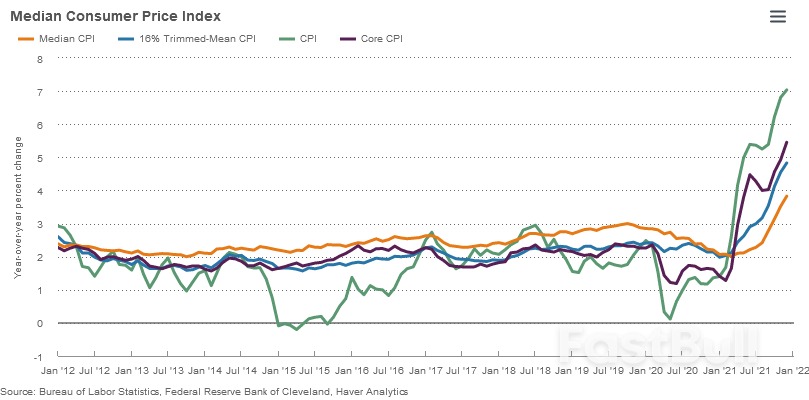
          However, the U.S. CPI rose 7% in December from a year earlier, the biggest increase in nearly 40 years. Core CPI rose 5.5% year on year, the biggest increase in 30 years. However, CPI growth slowed somewhat (0.5% m/m) due to lower energy prices, a sharp slowdown from October (0.9%) and November (0.8%), but still above the July-September average (0.4%) and appears to be peaking. But core CPI growth (0.5% in December) showed signs of continuing to pick up from September (0.2%) and October (0.4%).
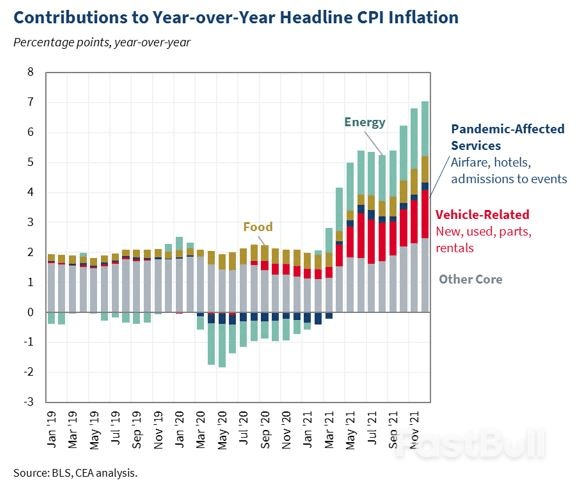
          Higher prices for energy and car-related goods were the main factors driving up U.S. inflation. Compared with the same period last year, about half of the overall inflation was due to higher prices related to energy and cars. The main reason for the CPI increase was rising housing and used car prices. Energy prices, the main driver of inflation through much of 2021, fell in November. This is also an important reason why CPI growth slowed down in December.A Rate Hike By Fed In March May Be Inevitable_1
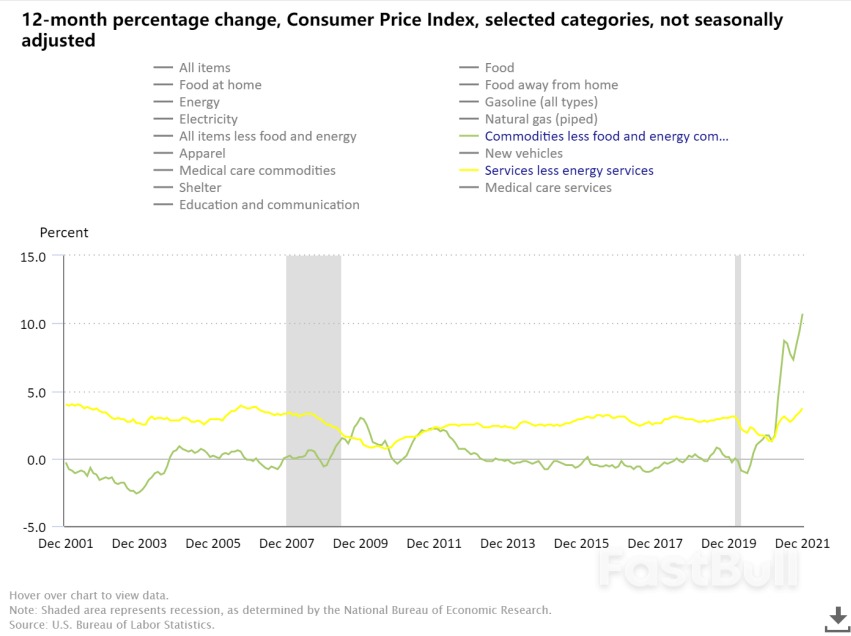
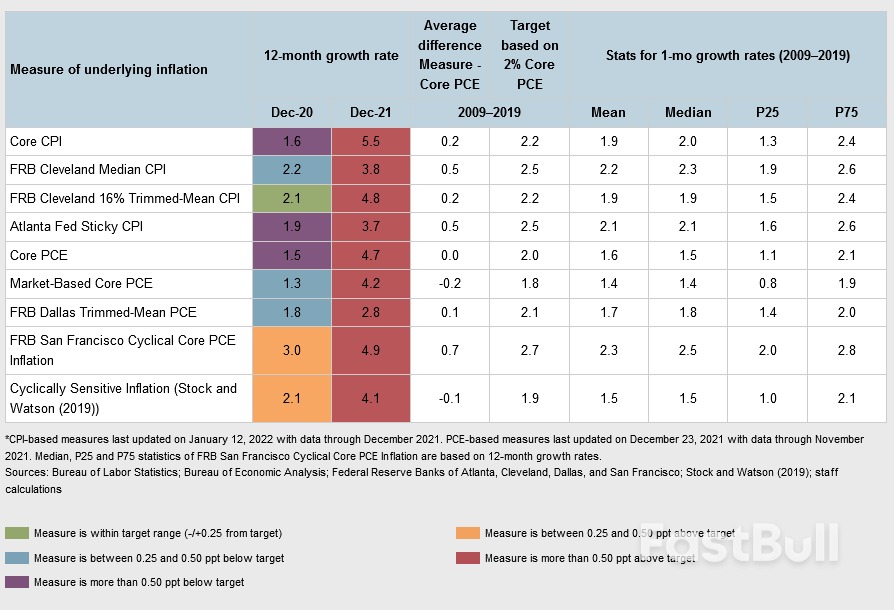
          But it is questionable whether inflation will ever return to the Fed's target again, even if it slows, peaks, or even declines from that peak. After all, the core CPI showed signs of continuing to rise in December. Among them, the core commodity price rise is the main driving force; At the same time, core services prices also showed signs of rising, leading to signs of continued growth in core CPI.A Rate Hike By Fed In March May Be Inevitable_2
          The increase in core commodity prices was mainly influenced by increased demand for durable goods and supply bottlenecks during the pandemic. Due to the restrictions caused by the COVID-19, people's consumption has shifted from service-based consumption to commodity consumption, and supply bottlenecks have emerged, resulting in a situation that demand exceeds supply. In addition, the COVID-19 has led to recruitment difficulties in the labor market and increased labor costs for enterprises. These factors are ultimately passed on to consumers through higher prices.
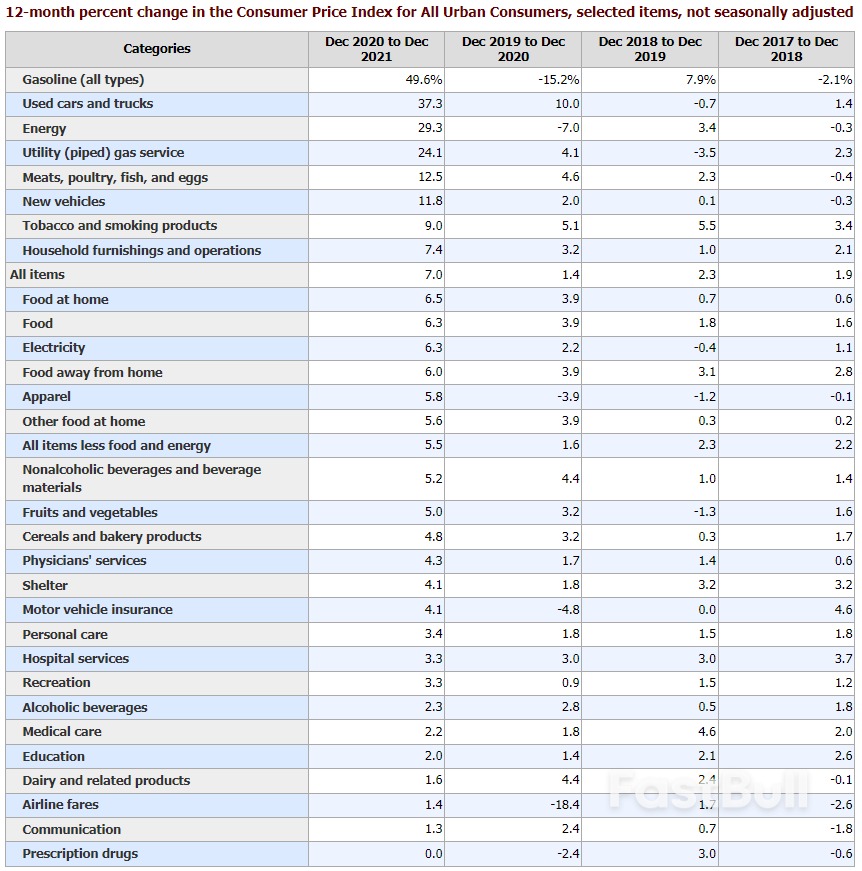
          Used and new car prices, a major source of inflation pressure on core goods, continued to climb in December. Among them, new car prices increased 1.0% month-on-month (11.8% year-on-year), although the month-on-month growth seems to be on the downward trend. Used-car prices resumed growth after falling in the third quarter of last year and have remained hot, posting a 3.5% month-on-month increase in December (37.3% year-on-year). Despite supply chain bottlenecks, the rebound in recent months also appears to be related to natural disasters. IDA, for example, destroyed about 200,000 vehicles. So, if the impact of future disasters subsides, used-car price pressures should ease. But that is not enough as semiconductor shortages, supply-chain problems and new car production need to be resolved before commodity price inflation peaks. It may seem like it takes a lot of things to work together, but it really boils down to effective global containment. With Omicron now emerging and raging in the U.S. and Europe, U.S. inflation may be on the verge of peaking, but its uncertainty is also high.A Rate Hike By Fed In March May Be Inevitable_3
          In addition, core inflation will also be affected by price fluctuations in services. As the COVID-19 continues, the service sector is deeply affected. When the COVID-19 hits, restrictions cause prices for services such as airfares and hotels to fall, depressing prices for core services (and core CPI). As the COVID-19 improved and the economy reopened, prices of all services affected by the COVID-19 quickly rebounded, pushing up core inflation.
          Overall, air and hotel prices in December were still recovering from the third wave of Delta, but the impact of Omicron was already visible. Hotel prices rose 1.3% month-on-month, down from 3.2% in November. Airfares also slipped to 2.7% from 4.7% month-on-month growth in November. Prices for such services are likely to continue to be dragged down by Omicron over the next 1-2 months. But the latest reports suggest that Omicron cases have peaked in South Africa, are about to peak in the UK and U.S., and are mild, so the economic impact may not be as great as Delta's. As the impact of the fourth wave fades, service sector prices related to the pandemic are likely to rebound and still have a lot of room to recover compared to trend lines.
          At the same time, inflationary pressures are showing signs of expanding beyond pandemic-related industries. According to alternative measures constructed by the Atlanta Fed, the median and truncated CPI, which strip out volatile components, both rose sharply to 3.8% and 4.8% in December from a year earlier, well above the Fed's 2% inflation target.A Rate Hike By Fed In March May Be Inevitable_4A Rate Hike By Fed In March May Be Inevitable_5
          Among them, housing inflation is not encouraging. November's rent-to-owner equivalent rent was still the biggest increase in five years. Year-over-year gains climbed to 3.3% and 3.8%. These two items account for 40% of the weight of the core CPI. If they continue to rise, there is a high probability that the core CPI will rise. In addition, the two signs of higher can also be seen from the growth of housing prices. Generally, house price growth is 1-2 years ahead of tenant rent inflation and owner's equivalent rent inflation. The Case-Shiller National Home price index rebounded from mid-2020 and peaked in September last year, while rent-to-owner equivalent started to rebound in mid-to-late last year. If this lead is maintained, housing inflation is expected to remain firm until the end of 2022. In other words, core CPI may continue to move higher in the future.
          Overall, it remains unclear whether core inflation will continue to move higher. First, core goods inflation remains high, and prices of durable goods such as new and used cars remain firm. Given that the December inflation report doesn't provide much information on this front, it remains to be seen that consumer spending will shift from goods to services, supply chain problems will ease, and core goods prices are expected to peak and start falling in the coming months.
          Even if all of these assumptions are fulfilled, however, rising prices for core services are likely to keep inflation from falling back to the Fed's target, which is likely to be fueled by a shift in consumer spending away from goods and towards services.
          In addition, service prices are sensitive to tight conditions in the Labour market. The labor market is already very close to full employment, according to the December non-farm payroll, and wage growth is strong, which could trigger a wage-price spiral.
          At his December conference, Powell said the turning point for him was the employment cost index released on the eve of the FOMC meeting in November, which is a better indicator of real labor costs than the non-farm payroll hourly wages. That suggests Fed officials are worried about a wage-price spiral. If the ECI for the fourth quarter, to be published on November 28th, shows again strong wage growth, the Fed may well choose to raise rates for the first time in March.
          Moreover, the attitude of Fed officials is clear. Fed Governor Laine Brainard said tackling inflation and bringing it back to 2% while sustaining an inclusive recovery is the Fed's most urgent priority. She also suggested the Fed could start raising rates as early as March.
          Mr. Bullard, who had predicted three rate increases this year, said four times might be needed this year amid stubbornly high inflation.
          Cleveland Fed President Loretta Mester also said the Fed should shrink its balance sheet as quickly as possible without disrupting financial markets. And reiterated his support for a rate rise as soon as possible.
          At this point, the Fed’s interest rate hike in March will be imperative.
          Risk Warnings and Disclaimers
          You understand and acknowledge that there is a high degree of risk involved in trading. Following any strategies or investment methods may lead to potential losses. The content on the site is provided by our contributors and analysts for information purposes only. You are solely responsible for determining whether any trading assets, securities, strategy, or any other product is suitable for investing based on your own investment objectives and financial situation.
          Comments
          Add to Favorites
          Share

          Third-country investors eyeing opportunities, joining the China-Pakistan Economic Corridor

          As the China-Pakistan Economic Corridor (CPEC), a flagship project under the China-proposed Belt and Road Initiative (BRI), has created new opportunities for economic growth and stability via a number of projects that are in full swing across the South Asian country, many third-country investors are also showing interest in the project.
          Saudi Arabia, United Arab Emirates (UAE) and Germany are among those that have taken moves on the cooperation with Pakistan via the flagship project. As China extends a welcoming attitude toward the investment, it is believed that the CPEC will continue to attract more third-country investors, industry observers told the Global Times.
          Brothers Gas, a UAE-based leading liquid gas service provider, will make investment worth $15 million in the CPEC Faisalabad Special Economic Zone, Abdul Razak Dawood, advisor to Pakistani Prime Minister for Commerce and Investment, said in a tweet posted in December.
          "The first of the three-phase investment will include the installation of an Aerosol Propellant Gas (APG) plant. The local manufacturing capacity will help reduce Pakistan's reliance on imported APG," Dawood said.
          "The actualization of foreign investments is a showing of a conducive business environment which is supported by friendly government policies," Dawood noted.
          For Saudi Arabia, its intention to invest in CPEC projects started as early as 2019 when the Middle Eastern country announced plans to set up a $10 billion oil refinery in Pakistan's deep-water port of Gwadar.
          After conducting a feasibility study, Aramco, the Saudi energy giant, said it would not be feasible to establish the refinery at Gwadar, according to media reports. There were even speculations that the oil refinery may be shifted from Gwadar to a petrochemical chemical complex somewhere in Balochistan or near Karachi.
          "There is no mentionable progress from Aramco as to when and where the deep conversion refinery with the capacity to refine 250,000 barrels per day of crude oil will be set up," Tabish Gauhar, the special assistant to Pakistan's prime minister on power and petroleum, told media in June, according to a report by IANS.
          In a recent response sent to the Global Times, Aramco said that it "continues to evaluate attractive investment opportunities in the downstream energy sector of Pakistan, including those associated with the CPEC. Updates on any business milestones will be made as and when appropriate."
          "Currently, progress of the petrochemical complex under CPEC is slow due to pandemic and a dip in oil prices that took a heavy toll on Saudi economy," Yasir Habib Khan, founder and president of the Institute of International Relations and Media Research in Pakistan, told the Global Times in a recent interview.
          Saudi Arabia and UAE investments are driven by two major motives, according to Khan. "First it aims to help Pakistan to stabilize its economy. Second purpose is to have upper hand in geo-political chessboard particularly against Iran by investing and giving bailout packages to Pakistan."
          In December, Pakistan received a $3 billion loan from Saudi Arabia, as part of an economic support package, with the South Asian country facing growing economic challenges, Reuters reported.
          In addition to the two Middle Eastern nations, Pakistan is also becoming increasingly attractive to other foreign investors.
          Indonesian Ambassador to Pakistan Adam Tugio said in December that a number of Indonesian companies were keen to invest in Special Economic Zones being established under the umbrella of the CPEC. He said that CPEC projects will emerge as a game changer for the entire region facilitating connectivity across Central Asia and western China.
          In September, a gloves joint venture between Germany and Pakistan was inaugurated in Allama Iqbal Special Economic Zone near Sahianwala.
          "Since the CPEC welcomes foreign investment and Pakistan's ranking in World Bank indicator 2021 has improved from 130 to 72, placing Pakistan at second position in South Asian countries in terms of ease of starting a business, many foreign countries are showing interest to invest in the CPEC," Khan said.
          The CPEC has brought Pakistan direct investment totaling $25.4 billion over the past eight years, Ning Jizhe, deputy head of the National Development and Reform Commission, China's top economic planner, said during remarks at the 10th Joint Cooperation Committee meeting of the CPEC in September 2021.
          Ning said that the ministry would focus on the corridor's construction, with measures to improve the utilization rate of existing infrastructure and enhance bilateral cooperation in technology, agriculture, among other sectors.

          Source: Global Times.

          Risk Warnings and Disclaimers
          You understand and acknowledge that there is a high degree of risk involved in trading. Following any strategies or investment methods may lead to potential losses. The content on the site is provided by our contributors and analysts for information purposes only. You are solely responsible for determining whether any trading assets, securities, strategy, or any other product is suitable for investing based on your own investment objectives and financial situation.
          Comments
          Add to Favorites
          Share

          RMB appreciation has come to an end as China cuts interest rates?

          Half a month after 2022, as the Fed’s interest rate hike is expected to intensify, PBOC made the long-awaited interest rate cut after two comprehensive RRR cuts in July and December last year.
          On January 17, PBOC announced that in order to maintain a reasonable and sufficient liquidity in the banking system, it launched RMB 700 billion of medium-term loan facility (MLF) and RMB 100 billion of open market reverse repurchase on the same day. The winning rates of MLF operation and open market reverse repurchase operation were 2.85% and 2.1% respectively, both of which dropped by 10 basis points.

          Why did China cut interest rates?

          In fact, since December last year, as Chinese economy facing downward pressure and “stable growth” is expected to continue, the market has begun to discuss whether the Chinese central bank “cut interest rates”.
          The reduction in policy rates is often a key factor in prompting a rebound in loan demand, playing a larger role in maintaining a reasonable abundance of liquidity in the banking system and guiding actual loan rates downward. Therefore, after PBOC’s reduction of MLF and reverse repo rates, the market has already bet that the 5-year loan market rate (LPR), which has been unchanged for two years, will be reduced next with a high probability. The 5-year LPR reduction will have a greater coverage on reducing the overall social financing cost, which will be conducive to supporting the reasonable housing demand of residents and reducing the mortgage burden, as well as reducing the financing cost of enterprises and stabilizing market confidence and will have a positive spillover effect on residents’ consumption.
          According to the latest Chinese economic data, the real GDP in 2021 increased by 8.1% year-on-year, and the growth rate in Q4 was only 4.0%. Due to the tight downward trend of China’s real estate, the sharp rise of raw material prices, and repeated epidemic situation, Chinese economy is under significant downward pressure.
          The highlight of China’s economic achievement in 2021 is trade, benefiting from the global supply and demand mismatch, China’s export growth in 2021 exceeded the sum of the past 9 years, but it is uncertain whether the high growth trend of trade in 2021 will continue in 2022. Chinese Vice Minister of Commerce Ren Hongbin said, under the impact of the pandemic, the fragile recovery of the world economy, China’s weak growth in foreign demand, lack of chips, lack of containers, lack of labor and freight, raw material costs, energy and resource prices, the rise of the RMB exchange rate and other “four rise” problems directly aggravate the burden of enterprises. Meanwhile, it is difficult to sustain the stage factors such as the return of orders and price increase that support the high growth of foreign trade in 2022. With the influence of the super-high base in 2021, it is more difficult to stabilize foreign trade next year.
          In 2021, PBOC raised the foreign exchange reserve ratio twice and lowered the RMB reserve ratio twice, but they failed to stop the excessive appreciation of RMB. If we want to stabilize exports, cutting interest rates to reduce the RMB exchange rate is required to make it happen. Previously, PBOC has always stressed the need to strengthen the management of foreign exchange expectations and maintain the normalization of “two-way” fluctuations of RMB. Perhaps this interest rate cut is to strengthen market expectations, clarify the intention of PBOC to actively regulate liquidity, and adopt a loose monetary policy, so that enterprises and markets can regain confidence and provide support for sustained economic growth.

          When will the appreciation of the RMB stop?

          In the past year, RMB has made great strides, far stronger than other major international currencies, mainly due to China’s huge demand for export settlement and rapid economic recovery. After the pandemic, the economic cycles of China, Europe, America and other economies have been obviously misplaced, while China’s economy has taken the lead in completing the stage of rapid recovery, and “steady growth” has become the next top priority, which is why China has chosen to cut interest rates in a unique way under the background of tight global monetary policy.
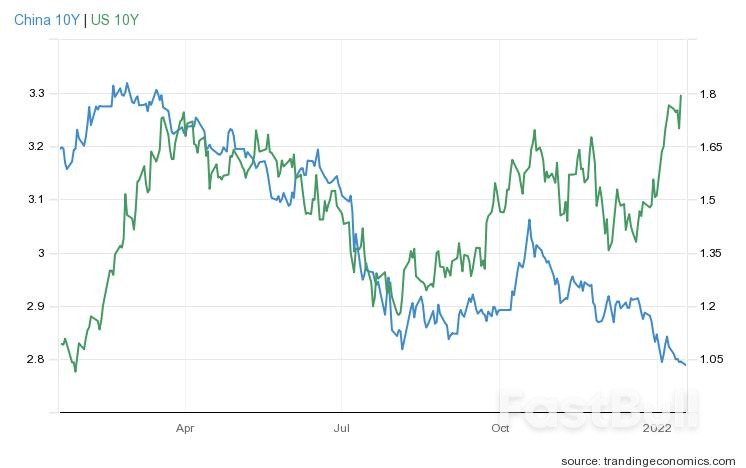
          In terms of foreign exchange market, the exchange rate of RMB against USD still depends on the economic fundamentals and policy differences between China and the US, especially the spread and trade surplus between them. This year, the Fed will accelerate its policy tightening, the schedule for reduction could be implemented before the end of 2021, or even interest rates will be raised as early as March, and the possible attempts of interest rate during the year have increased from 0 times to 4 times. Tightening in the US and easing in China. The interest rate differential between China and the US is narrowing because of the divergence in monetary policy between the two countries, which will inevitably put some depreciation pressure on the RMB exchange rate.
          RMB appreciation has come to an end as China cuts interest rates?_1
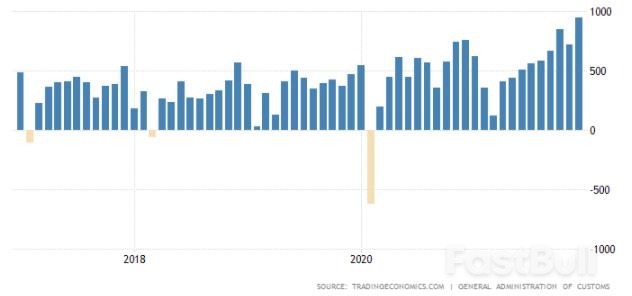
          In terms of trade, China has witnessed a bumper harvest in 2021, in which the global trade surplus in the whole year and December of 2021 expanded to USD 676.4 billion and USD 94.46 billion respectively, both of which reached record highs. China’s exports have also maintained double-digit growth for 15 consecutive months, of which China’s trade surplus with the US was USD 39.23 billion in December 2021 and USD 396.58 billion in 2021, an increase of 25% over 2020.RMB appreciation has come to an end as China cuts interest rates?_2
          Nowadays, Omicron is raging all over the world, and China’s trade surplus advantage may continue for some period of time, which will limit the depreciation of RMB.

          Conclusion

          Recently, after the market has fully digested the expected interest rate hike, USD has been rarely weakened while RMB exchange rate has been lingering between 6.30-6.40, with a strong tendency to appreciate again.
          Compared with the time cycle of the previous rounds of the pandemic, the impact of the current round of the pandemic would at least subside by the end of Q1. Before that, the push of the rate cut on the depreciation of the RMB may be limited, and the possibility and magnitude of the two-way fluctuation of the RMB exchange rate would increase.
          Risk Warnings and Disclaimers
          You understand and acknowledge that there is a high degree of risk involved in trading. Following any strategies or investment methods may lead to potential losses. The content on the site is provided by our contributors and analysts for information purposes only. You are solely responsible for determining whether any trading assets, securities, strategy, or any other product is suitable for investing based on your own investment objectives and financial situation.
          Comments
          Add to Favorites
          Share

          Chinese yuan could come under more pressure after surprise rate cut

          China’s central bank unexpectedly cut loan rates on Monday — a move that will likely put more downward pressure on the Chinese currency, one analyst said.
          “What has happened this morning won’t help the [Chinese yuan’s] case. And should contribute to further downward pressure on CNY,” Gareth Berry, Macquarie Group’s foreign exchange strategist, told CNBC on Monday, adding that it could push up the range toward 6.55 yuan per dollar.
          The Chinese yuan is currently trading at about 6.34 to the dollar on Monday.
          In an attempt to boost the economy, the Chinese central bank said it will cut the interest rate on 700 billion yuan ($110 billion) worth of one-year medium-term lending facility (MLF) loans to 2.85% — 10 basis points lower, according to Reuters.
          This was the first time People’s Bank of China cut the MLF rate since April 2020.
          While the rate cut was in line with market expectation, it also shows Chinese policymakers are concerned about economic growth, said Zhiwei Zhang, chief economist at Pinpoint Asset Management, in a note.
          “Economic growth is clearly under pressure, recent omicron outbreaks in China exacerbated the downside risk. The lower inflation opened policy room. We think China is at the early stage of a rate cut cycle,” he said.
          The central bank also cut the seven-day reverse repurchase rate, another lending measure. The PBOC also injected another 200 billion yuan of medium-term cash into the financial system.
          Zhang predicted there will be more cuts in the reserve requirement ratio and interest rate in the first half of the year. The reserve requirement is the amount of money banks must hold as reserves with the central bank.
          “The omicron outbreak has become the top risk in China,” he said.
          “We think risk to Q1 GDP growth has shifted to the downside. The rate cut itself is a small step in the right direction,” he added, referring to Monday’s policy loan rate cut — ”but the economic outlook largely depends on how effectively the outbreaks can be contained.”
          On Monday, China reported that its economy grew by 8.1% year-on-year in 2021, according to official data from the National Bureau of Statistics. GDP in the fourth quarter rose 4% from a year ago, faster than analysts expected.
          China’s zero-Covid policy, aimed at limiting the virus outbreak, prompted renewed travel restrictions within the country including the lockdown of Xi’an city in late December.
          The larger than expected 10 basis points MLF rate cut rate seems to suggest China is concerned about its economic slowdown, Johanna Chua, head of Asia economics and strategy at Citi Global Markets Asia, told CNBC’s “Street Signs Asia” on Monday.
          “Which really suggests, I think, policymakers now are much more concerned about growth and we should see concerted action going forward.”
          She said the country is not likely to abandon its zero-Covid policy anytime soon.

          Source: CNBC news

          Risk Warnings and Disclaimers
          You understand and acknowledge that there is a high degree of risk involved in trading. Following any strategies or investment methods may lead to potential losses. The content on the site is provided by our contributors and analysts for information purposes only. You are solely responsible for determining whether any trading assets, securities, strategy, or any other product is suitable for investing based on your own investment objectives and financial situation.
          Comments
          Add to Favorites
          Share

          Bank of Korea: Monetary Policy Decision (January 14, 2022)

          The Monetary Policy Board of the Bank of Korea decided today to raise the Base Rate by 25 basis points, from 1.00% to 1.25%.
          Currently available information suggests that the global economy has continued to recover despite the spread of a new coronavirus variant, as economic activity has not contracted significantly, supported by accelerated vaccinations.
          In global financial markets, government bond yields and stock prices in major countries have rebounded after having declined, affected by developments related to COVID-19 and changes in expectations about monetary policy in major countries.
          Looking ahead, the Board sees global economic growth and global financial markets as likely to be affected largely by COVID-19 developments and the status of vaccine distribution, as well as by global inflation movements and monetary policy changes in major countries.
          The Korean economy has continued to recover despite the resurgence of COVID-19. Although the improvement in private consumption has moderated owing to the tightening of domestic COVID-19 restrictions, exports have sustained their buoyancy thanks to robust global demand.
          Facilities investment has somewhat slowed due to global supply constraints. Labor market conditions have continued to improve, with a sustained trend of increase in the number of persons employed.
          Going forward, the economy is likely to sustain its sound growth, as the recovery of private consumption is forecast to pick up again while exports are expected to continue their solid trend of increase. GDP growth this year is projected to be around 3%, consistent with the forecast in November.
          Consumer price inflation has risen to the upper-3% level due to the ongoing sharp rise in the prices of petroleum products and agricultural, livestock, and fisheries products, as well as the accelerating increase in the prices of non-petroleum industrial products and personal services.
          Core inflation (excluding changes in food and energy prices from the CPI) has run at the lower-2% level and the inflation expectations of the general public have run at the mid- to upper-2% level.
          Looking ahead, it is forecast that consumer price inflation will continue to run in the 3% range for a considerable time, exceeding the path projected in November, and above the mid-2% level for the year overall. Core inflation is forecast to run considerably above 2% this year.
          In domestic financial markets, long-term market interest rates fell due to concerns over the resurgence of COVID-19 but have rebounded affected by the rise in US Treasury yields.
          The Korean won to US dollar exchange rate rose considerably, due mainly to the prospect of accelerating monetary policy normalization by the US Federal Reserve, but then decreased. Stock prices have fallen slightly.
          The amount of increase in household loans has lessened, and the increase in housing prices has somewhat moderated in all parts of the country.
          The Board will continue to conduct monetary policy in order to sustain the recovery of economic growth and stabilize consumer price inflation at the target level over a medium-term horizon, while paying attention to financial stability.
          The Board will appropriately adjust the degree of monetary policy accommodation as the Korean economy is expected to continue its sound growth and inflation to run above the target level for a considerable time, despite underlying uncertainties over the virus.
          In this process the Board will judge when to further adjust the degree of accommodation while thoroughly assessing developments related to COVID-19, changes in the pace of growth and inflation, the risk of a buildup of financial imbalances, the effects of the Base Rate raise, and monetary policy changes in major countries.

          Source: Bank of Korea.

          Risk Warnings and Disclaimers
          You understand and acknowledge that there is a high degree of risk involved in trading. Following any strategies or investment methods may lead to potential losses. The content on the site is provided by our contributors and analysts for information purposes only. You are solely responsible for determining whether any trading assets, securities, strategy, or any other product is suitable for investing based on your own investment objectives and financial situation.
          Comments
          Add to Favorites
          Share
          FastBull
          Copyright © 2025 FastBull Ltd

          728 RM B 7/F GEE LOK IND BLDG NO 34 HUNG TO RD KWUN TONG KLN HONG KONG

          TelegramInstagramTwitterfacebooklinkedin
          App Store Google Play Google Play
          Products
          Charts

          Chats

          Q&A with Experts
          Screeners
          Economic Calendar
          Data
          Tools
          Membership
          Features
          Function
          Markets
          Copy Trading
          Latest Signals
          Contests
          News
          Analysis
          24/7
          Columns
          Education
          Company
          Careers
          About Us
          Contact Us
          Advertising
          Help Center
          Feedback
          User Agreement
          Privacy Policy
          Business

          White Label

          Data API

          Web Plug-ins

          Poster Maker

          Affiliate Program

          Risk Disclosure

          The risk of loss in trading financial instruments such as stocks, FX, commodities, futures, bonds, ETFs and crypto can be substantial. You may sustain a total loss of the funds that you deposit with your broker. Therefore, you should carefully consider whether such trading is suitable for you in light of your circumstances and financial resources.

          No decision to invest should be made without thoroughly conducting due diligence by yourself or consulting with your financial advisors. Our web content might not suit you since we don't know your financial conditions and investment needs. Our financial information might have latency or contain inaccuracy, so you should be fully responsible for any of your trading and investment decisions. The company will not be responsible for your capital loss.

          Without getting permission from the website, you are not allowed to copy the website's graphics, texts, or trademarks. Intellectual property rights in the content or data incorporated into this website belong to its providers and exchange merchants.

          Not Logged In

          Log in to access more features

          FastBull Membership

          Not yet

          Purchase

          Become a signal provider
          Help Center
          Customer Service
          Dark Mode
          Price Up/Down Colors

          Log In

          Sign Up

          Position
          Layout
          Fullscreen
          Default to Chart
          The chart page opens by default when you visit fastbull.com