


- XAUUSD
- XAGUSD
- WTI
- USDX



Markets
Analysis
User
24/7
Economic Calendar
Education
Data
- Names
- Latest
- Prev









How does a trade replication engine work? Explore trade copying, signal processing, order execution, risk controls, latency, and common challenges.
A trade replication engine automatically copies trading activity from a master account to multiple follower accounts. But how does a trade replication engine work behind the scenes? This article explains how trading signals are detected, processed, and executed, along with the technology, risk controls, and potential challenges involved in trade replication.
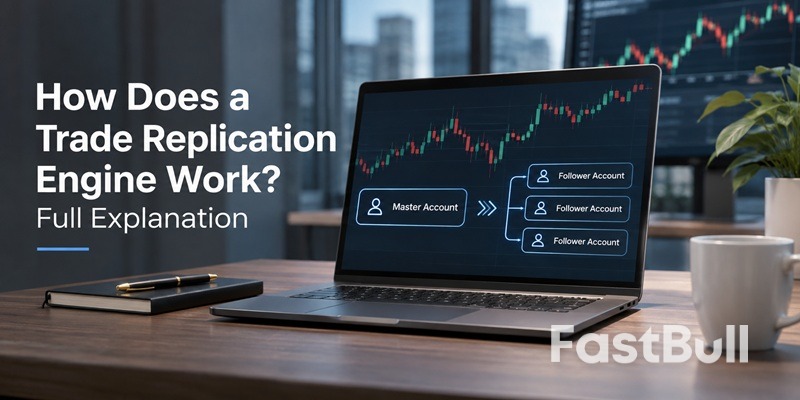
A trade replication engine is an automated system that monitors trading activity in a master account and reproduces corresponding trades across one or more connected follower accounts.
Instead of manually placing identical orders in multiple accounts, traders can use a replication engine to distribute trading actions automatically. Depending on the system, these actions may include opening positions, modifying stop-loss and take-profit levels, adjusting existing orders, and closing trades.
A typical trade replication system involves three elements:
Trade replication engines are commonly used in forex, futures, and other markets where compatible trading platforms or broker connections support automated order execution.
However, replication does not guarantee identical trading results. Differences in execution speed, liquidity, account settings, and broker pricing can produce variations between master and follower accounts.
A trade replication engine works by capturing trading events from a master account, converting them into executable instructions, applying account-specific rules, and submitting corresponding orders to follower accounts.
The complete process typically involves five steps.
The replication process begins when the master account executes a trade or generates another supported trading event.
The engine monitors the master account through a broker API, trading platform integration, or another supported connection. Depending on the architecture, it may receive real-time event notifications or periodically check for changes.
When a new trading event is detected, the engine captures relevant information, such as:
For example, if the master account opens a 1-lot EUR/USD buy position, the system identifies the trading event and prepares the information for replication.
After receiving the trading event, the replication engine determines how the trade should be reproduced in each follower account.
The system may need to translate trading symbols, check instrument compatibility, and calculate the appropriate position size.
Common position-sizing methods include:
For example, suppose the master account opens a 1-lot position. A follower account configured with a 0.5 lot multiplier would receive an instruction to open 0.5 lots, subject to broker restrictions and other settings.
This processing stage allows different accounts to follow the same trading strategy without necessarily using identical position sizes.
Before submitting an order, the engine evaluates the trade against the risk management rules configured for each follower account.
These controls help prevent trades from exceeding predefined account limits or violating execution requirements.
Depending on the software, risk management settings may include:
For instance, if a replicated order exceeds a follower account's configured position-size limit, the engine may reject, skip, or adjust the instruction depending on its supported risk rules.
Risk controls reduce certain operational risks but cannot eliminate trading losses or guarantee that replicated positions perform as expected.
Once the trading instructions pass the applicable checks, the replication engine sends orders to the connected follower accounts.
Order transmission generally occurs through broker APIs, trading platform interfaces, or supported execution gateways.
Each follower account receives an instruction based on its own configuration. The receiving broker then processes the order according to current market conditions and account permissions.
Although orders may be transmitted within milliseconds in some systems, execution times vary depending on network latency, infrastructure, broker response times, and market liquidity.
Consequently, follower accounts may receive different execution prices even when they replicate the same master trade.
Submitting an order does not necessarily mean it has been successfully executed. The replication engine must also process the execution response from each follower account.
Possible outcomes include successful execution, partial fills, rejected orders, or execution failures.
Once the results are received, the system records the corresponding order information and updates its view of follower positions.
When supported, the engine also monitors subsequent changes to the master position, including:
Position reconciliation helps the engine identify differences between intended and actual follower positions. However, synchronization capabilities vary between systems, and not every discrepancy can be resolved automatically.
A trade replication engine relies on several technical components to transmit trading instructions and manage execution across connected accounts.
The signal detection component identifies relevant trading events from the master account, while the processing component converts those events into instructions suitable for follower accounts.
Some systems use event-driven processing, responding when a trading platform reports a new event. Others use polling, repeatedly checking the account for trading updates.
Event-driven architectures can reduce detection delays, while polling frequency influences how quickly a system discovers new trades.
Broker API integration enables the replication engine to exchange trading information with supported brokers and trading platforms.
Through these connections, the system can retrieve account information, submit orders, receive execution results, and monitor position changes.
Cross-broker replication may require additional processing because brokers can use different instrument symbols, contract specifications, minimum trade sizes, and execution rules.
Therefore, API compatibility alone does not guarantee that trades can be copied identically between different brokers.
The order execution component converts processed trading instructions into actual orders for follower accounts.
It works alongside the risk management component, which determines whether the instructions meet predefined trading conditions.
A reliable execution system should also track order status, identify failed requests, and avoid unintended duplicate orders when recovering from connection interruptions.
Together, these components determine how accurately and consistently a replication engine can translate master-account activity into follower-account positions.
Trade replication speed depends on how quickly the engine detects trading events, processes instructions, and submits orders to follower accounts. Although some systems can transmit instructions within milliseconds, actual execution times vary across brokers, platforms, and market conditions.
Latency refers to the time delay between a trading event and its corresponding action in a follower account. Slippage occurs when an order executes at a price different from the expected price.
Several factors can influence replication performance:
For example, if the master account buys EUR/USD at 1.08500 but a follower account executes at 1.08505, the follower experiences a five-pipette price difference.
Even small differences can affect trading performance, particularly for strategies that rely on frequent execution or narrow profit targets.
Trade replication can fail because of connectivity problems, broker restrictions, insufficient margin, invalid order parameters, or temporary platform outages.
Common failure scenarios include:
Some replication systems address these problems through execution logging, connection monitoring, controlled retry mechanisms, and position reconciliation.
However, retrying orders without verifying their execution status can introduce duplicate positions. Reliable systems must distinguish between failed orders and orders that were executed but not immediately confirmed.
Replicated trades are not guaranteed to execute at the same price because each follower order is processed independently.
Consider a master account that opens a buy position at 1.10000. By the time the follower order reaches its broker, the available price may have changed to 1.10003.
Different spreads, liquidity conditions, execution methods, and order transmission delays can all contribute to pricing differences.
As a result, trade replication aims to reproduce trading instructions and position changes rather than guarantee identical execution prices or financial outcomes.
A trade replication engine and a trade copier are closely related, but the terms emphasize different aspects of automated trade copying.
A trade replication engine generally refers to the underlying technology that detects trading events, processes instructions, manages account-specific rules, and coordinates order execution.
A trade copier usually refers to a software application or service that traders use to copy positions between accounts. Many trade copiers rely on a replication engine to perform their core operations.
| Feature | Trade Replication Engine | Trade Copier |
|---|---|---|
| Primary Role | Processes and coordinates trade replication | Provides automated trade-copying functionality |
| Main Focus | Signal processing, execution, synchronization, and risk controls | Copying trades between connected accounts |
| Integration | May connect to multiple brokers, APIs, and execution systems | Depends on supported platforms and brokers |
| Customization | May support configurable execution logic and account-specific rules | Typically provides user-facing copying and risk settings |
| Typical Users | Software developers, trading technology providers, and trading operations | Individual traders, account managers, and trading teams |
These categories are not mutually exclusive. A trade copier may include a sophisticated replication engine, while a replication engine may operate as part of a broader trading platform without being marketed as a standalone copier.
Yes. Some trade replication engines support cross-broker copying through compatible APIs or trading platform integrations. However, differences in instrument specifications, trading permissions, execution rules, and contract sizes may require additional configuration.
Yes. A replication engine can distribute trading instructions from one master account to multiple follower accounts. Each follower may use different position-sizing rules, symbol filters, and risk limits, depending on the system's capabilities.
Not exactly. Trade replication describes the technology or process of reproducing trades across accounts. Copy trading generally describes a trading arrangement in which investors follow another trader's activity. Copy trading platforms may use trade replication technology to execute copied trades.
The main risks include execution delays, slippage, connectivity failures, incorrect position sizing, and mismatched account positions. Replication also reproduces exposure to the underlying trading strategy, meaning follower accounts can experience substantial losses even when the technology operates correctly.
Understanding how a trade replication engine works helps explain the technology behind automated trade copying. By combining signal detection, order processing, risk controls, and position synchronization, these systems can coordinate trading across multiple accounts. However, execution differences, technical failures, and market risks mean replicated trades cannot guarantee identical results.

728 RM B 7/F GEE LOK IND BLDG NO 34 HUNG TO RD KWUN TONG KLN HONG KONG


The risk of loss in trading financial instruments such as stocks, FX, commodities, futures, bonds, ETFs and crypto can be substantial. You may sustain a total loss of the funds that you deposit with your broker. Therefore, you should carefully consider whether such trading is suitable for you in light of your circumstances and financial resources.
No decision to invest should be made without thoroughly conducting due diligence by yourself or consulting with your financial advisors. Our web content might not suit you since we don't know your financial conditions and investment needs. Our financial information might have latency or contain inaccuracy, so you should be fully responsible for any of your trading and investment decisions. The company will not be responsible for your capital loss.
Without getting permission from the website, you are not allowed to copy the website's graphics, texts, or trademarks. Intellectual property rights in the content or data incorporated into this website belong to its providers and exchange merchants.
Not Logged In
Log in to access more features


Log In
Sign Up


