• Trade
  • Markets
  • Copy
  • Contests
  • 24/7
  • Calendar
  • Q&A
  • Chats
Screeners
SYMBOL
LAST
BID
ASK
HIGH
LOW
NET CHG.
%CHG.
SPREAD
SOURCE
SPX
S&P 500 Index
7472.78
7472.78
7472.78
7530.01
7460.01
-27.79
-0.37%
--
--
DJI
Dow Jones Industrial Average
51712.70
51712.70
51712.70
51887.85
51555.19
+147.99
+ 0.29%
--
--
IXIC
NASDAQ Composite Index
26166.59
26166.59
26166.59
26561.12
26125.48
-351.34
-1.32%
--
--
USDX
US Dollar Index
100.800
100.800
100.880
100.830
100.720
+0.070
+ 0.07%
--
--
EURUSD
Euro / US Dollar
1.14232
1.14232
1.14239
1.14317
1.14184
-0.00046
-0.04%
--
--
GBPUSD
Pound Sterling / US Dollar
1.32357
1.32357
1.32366
1.32549
1.32335
-0.00138
-0.10%
--
--
XAUUSD
Gold / US Dollar
4124.70
4124.70
4125.15
4198.46
4114.64
-66.86
-1.60%
--
--
WTI
Light Sweet Crude Oil
73.404
73.404
73.434
74.249
73.379
-0.458
-0.62%
--
--

Community Accounts

Signal Accounts
--
Profit Accounts
--
Loss Accounts
--
View More

Become a signal provider

Sell trading signals to earn additional income

View More

Guide to Copy Trading

Get started with ease and confidence

View More

Signal Accounts for Members

All Signal Accounts

Best Return
  • Best Return
  • Best P/L
  • Best MDD
Past 1W
  • Past 1W
  • Past 1M
  • Past 1Y

All Contests

  • All
  • Recommend
  • Stocks
  • Cryptocurrencies
  • Central Banks
  • Trump Updates
  • Featured News
Top News Only
Share

South Korea's Minister Of Trade, Industry And Energy: Positive Consensus Reached With EU On Duty-Free Steel Import Quotas

Share

UK Considers Mandating Social Media Platforms To Prioritize Reliable News

Share

Singapore's May CPI Annual Rate Was 1.8%, Versus An Expected 2.00% And A Previous Reading Of 1.80%

Share

India's Preliminary Services PMI For June Came In At 57.3, Below The Expected 58.8 And Down From The Previous Reading Of 59.8

Share

India's Preliminary Composite PMI For June Came In At 57.4, Below The Expected 59 And The Previous Reading Of 59.3

Share

India's Preliminary Manufacturing PMI For June Came In At 54.5, Below The Expected 56.2 And Down From The Previous Reading Of 55.0

Share

The Yield On Japan's Two-year Government Bonds Rose 1.0 Basis Point To 1.415%

Share

The Yield On Japan's 20-year Government Bonds Fell 1.5 Basis Points To 3.565%

Share

A Weekend Shooting In Chicago Left Multiple People Dead And Injured, And Trump Seized The Opportunity To Once Again Advocate For Federal Troop Deployment

Share

Deutsche Bank: If The Federal Reserve Raises Interest Rates, Gold Prices Could Fall To $3,800 Per Ounce

Share

Deutsche Bank: Gold Prices Are Expected To Reach $4,300/oz In The Third Quarter And $4,800/oz In The Fourth Quarter

Share

Malaysia's Trade Minister: Malaysia Faces A Potential 10% Tariff Risk After July 24 Due To Allegations Of Forced Labor

Share

Progress In Middle East Peace Efforts Signals A Resumption Of Supply, Pushing Aluminum Prices To A Three-month Low

Share

The Thai Baht Fell To 33.095 Against The US Dollar, Its Lowest Level Since May 20, 2025

Share

The Shanghai Silver 2608 Contract Weakened Significantly During The Session, With The Decline Widening To 5.18%, And The Price Dropping To 15,137 Yuan/kg. The Trading Volume Exceeded 129 Billion Yuan; The Open Interest Increased By Nearly 5,300 Lots During The Day, And The Market Volatility Increased

Share

The Australian Dollar Fell To Its Lowest Level Since April 8 Against The US Dollar (AUD/USD), Currently Trading At 0.6970, Down 0.44% On The Day

Share

Spot Silver Fell 3% On The Day, Currently Trading At $63.14 Per Ounce

Share

Analyst: Oil's Dominant Influence On The Global Economy And Geopolitics Is Becoming A Thing Of The Past

Share

The Main Palladium Futures Contract Fell 2.00% During The Day, Currently Trading At 296.25 Yuan/gram

Share

Governor Of Iran's Central Bank: No Obligation To Purchase Agricultural Products From The U.S

TIME
ACT
FCST
PREV
IMPACT
South Korea PPI MoM (May)

A:--

F: --

P: --
XAUUSD
  • XAUUSD
  • XAGUSD
  • WTI
  • USDX
U.K. GfK Consumer Confidence Index (Jun)

A:--

F: --

P: --

GBPUSD
  • GBPUSD
  • XAUUSD
  • XAGUSD
  • WTI
Japan National Core CPI YoY (May)

A:--

F: --

P: --

USDJPY
  • USDJPY
  • XAUUSD
  • XAGUSD
  • WTI
Japan National CPI MoM (Not SA) (May)

A:--

F: --

P: --

USDJPY
  • USDJPY
  • XAUUSD
  • XAGUSD
  • WTI
Japan National CPI YoY (May)

A:--

F: --

P: --

USDJPY
  • USDJPY
  • XAUUSD
  • XAGUSD
  • WTI
Japan National CPI MoM (May)

A:--

F: --

P: --

USDJPY
  • USDJPY
  • XAUUSD
  • XAGUSD
  • WTI
Japan CPI MoM (May)

A:--

F: --

P: --

USDJPY
  • USDJPY
  • XAUUSD
  • XAGUSD
  • WTI
  • USDX
U.K. Retail Sales YoY (SA) (May)

A:--

F: --

P: --
GBPUSD
  • GBPUSD
  • XAUUSD
  • XAGUSD
  • WTI
  • USDX
Germany PPI MoM (May)

A:--

F: --

P: --

EURUSD
  • EURUSD
  • XAUUSD
  • XAGUSD
  • WTI
  • USDX
Germany PPI YoY (May)

A:--

F: --

P: --

EURUSD
  • EURUSD
  • XAUUSD
  • XAGUSD
  • WTI
  • USDX
U.K. Core Retail Sales YoY (SA) (May)

A:--

F: --

P: --

GBPUSD
  • GBPUSD
  • XAUUSD
  • XAGUSD
  • WTI
  • USDX
U.K. Retail Sales MoM (SA) (May)

A:--

F: --

P: --

GBPUSD
  • GBPUSD
  • XAUUSD
  • XAGUSD
  • WTI
  • USDX
Turkey Capacity Utilization (Jun)

A:--

F: --

P: --

XAUUSD
  • XAUUSD
  • XAGUSD
  • WTI
  • USDX
Russia Key Rate

A:--

F: --

P: --

WTI
  • WTI
  • XAUUSD
  • XAGUSD
  • USDX
Canada Core Retail Sales MoM (SA) (Apr)

A:--

F: --

P: --
USDCAD
  • USDCAD
  • XAUUSD
  • XAGUSD
  • WTI
  • USDX
Canada Retail Sales MoM (SA) (Apr)

A:--

F: --

P: --

USDCAD
  • USDCAD
  • XAUUSD
  • XAGUSD
  • WTI
  • USDX
ECB Chief Economist Lane Speaks
Argentina Retail Sales YoY (Apr)

A:--

F: --

P: --

XAUUSD
  • XAUUSD
  • XAGUSD
  • WTI
  • USDX
China, Mainland 1-Year Loan Prime Rate (LPR)

A:--

F: --

P: --

XAUUSD
  • XAUUSD
  • XAGUSD
  • WTI
  • USDX
China, Mainland 5-Year Loan Prime Rate

A:--

F: --

P: --

XAUUSD
  • XAUUSD
  • XAGUSD
  • WTI
  • USDX
Turkey Consumer Confidence Index (Jun)

A:--

F: --

P: --

XAUUSD
  • XAUUSD
  • XAGUSD
  • WTI
  • USDX
Canada National Economic Confidence Index

A:--

F: --

P: --

USDCAD
  • USDCAD
  • XAUUSD
  • XAGUSD
  • WTI
  • USDX
Canada Trimmed CPI YoY (SA) (May)

A:--

F: --

P: --

WTI
  • WTI
  • XAUUSD
  • XAGUSD
  • USDX
Canada Core CPI YoY (May)

A:--

F: --

P: --

WTI
  • WTI
  • XAUUSD
  • XAGUSD
  • USDX
Canada CPI MoM (May)

A:--

F: --

P: --

WTI
  • WTI
  • XAUUSD
  • XAGUSD
  • USDX
Canada CPI YoY (May)

A:--

F: --

P: --

WTI
  • WTI
  • XAUUSD
  • XAGUSD
  • USDX
Canada Core CPI MoM (May)

A:--

F: --

P: --

WTI
  • WTI
  • XAUUSD
  • XAGUSD
  • USDX
ECB President Lagarde Speaks
FOMC Member Waller Speaks
Argentina Unemployment Rate (Q1)

A:--

F: --

P: --

XAUUSD
  • XAUUSD
  • XAGUSD
  • WTI
  • USDX
ECB Chief Economist Lane Speaks
Germany 2-Year Schatz Auction Avg. Yield

--

F: --

P: --

U.K. CBI Industrial Prices Expectations (Jun)

--

F: --

P: --

U.K. CBI Industrial Trends - Orders (Jun)

--

F: --

P: --

Mexico Retail Sales MoM (Apr)

--

F: --

P: --

Mexico Economic Activity Index YoY (Apr)

--

F: --

P: --

U.S. Weekly Redbook Index YoY

--

F: --

P: --

BOC Gov Macklem Speaks
U.S. Richmond Fed Manufacturing Composite Index (Jun)

--

F: --

P: --

U.S. Richmond Fed Services Revenue Index (Jun)

--

F: --

P: --

U.S. Richmond Fed Manufacturing Shipments Index (Jun)

--

F: --

P: --

U.S. 2-Year Note Auction Avg. Yield

--

F: --

P: --

Argentina GDP YoY (Constant Prices) (Q1)

--

F: --

P: --

U.S. API Weekly Cushing Crude Oil Stocks

--

F: --

P: --

U.S. API Weekly Crude Oil Stocks

--

F: --

P: --

U.S. API Weekly Refined Oil Stocks

--

F: --

P: --

U.S. API Weekly Gasoline Stocks

--

F: --

P: --

Australia RBA Trimmed Mean CPI YoY

--

F: --

P: --

Germany Ifo Current Business Situation Index (SA) (Jun)

--

F: --

P: --

Germany IFO Business Climate Index (SA) (Jun)

--

F: --

P: --

Germany Ifo Business Expectations Index (SA) (Jun)

--

F: --

P: --

U.S. MBA Mortgage Application Activity Index WoW

--

F: --

P: --

U.S. Current Account (Q1)

--

F: --

P: --

U.S. New Home Sales Annualized MoM (May)

--

F: --

P: --

U.S. Annual Total New Home Sales (May)

--

F: --

P: --

U.S. EIA Weekly Heating Oil Stock Changes

--

F: --

P: --

U.S. EIA Weekly Crude Oil Imports Changes

--

F: --

P: --

U.S. EIA Weekly Gasoline Stocks Change

--

F: --

P: --

U.S. EIA Weekly Crude Demand Projected by Production

--

F: --

P: --

U.S. EIA Weekly Cushing, Oklahoma Crude Oil Stocks Change

--

F: --

P: --

U.S. EIA Weekly Crude Stocks Change

--

F: --

P: --

Q&A with Experts
    • All
    • Chatrooms
    • Groups
    • Friends
    SlowBear ⛅ flag
    77
    能下的去吗?
    @77Well gold is going down more and more
    77 flag
    SlowBear ⛅
    @77Well gold is going down more and more
    @SlowBear ⛅ 是的,我也持有卖方订单
    SlowBear ⛅ flag
    77
    @SlowBear ⛅ 是的,我也持有卖方订单
    @77That is how it should be today and the rest of the week
    77 flag
    SlowBear ⛅
    @77That is how it should be today and the rest of the week
    @SlowBear ⛅
    SlowBear ⛅ flag
    77
    @SlowBear ⛅
    @77Cheers to us
    77 flag
    SlowBear ⛅
    @77Cheers to us
    @SlowBear ⛅ 你的目标是哪里?
    SlowBear ⛅ flag
    77
    @SlowBear ⛅ 你的目标是哪里?
    @77For now, i set my target ar 4050 and i will shift it later to 4000
    77 flag
    SlowBear ⛅
    @77For now, i set my target ar 4050 and i will shift it later to 4000
    @SlowBear ⛅ okay
    SlowBear ⛅ flag
    77
    @SlowBear ⛅ okay
    @77What about you? do you have any target in mind?
    77 flag
    SlowBear ⛅
    @77What about you? do you have any target in mind?
    @SlowBear ⛅ 可能会在4085离场
    4820381 flag
    SlowBear ⛅ flag
    77
    @SlowBear ⛅ 可能会在4085离场
    @77 i think that is a good trget right there my friend
    SlowBear ⛅ flag
    77
    @SlowBear ⛅ 可能会在4085离场
    @77Today is gonna be a good day i can feel it haha
    SlowBear ⛅ flag
    4820381
    @4820381Hello friend how are you doing today?
    77 flag
    SlowBear ⛅
    @77Today is gonna be a good day i can feel it haha
    @SlowBear ⛅ 是的,嘿嘿
    SlowBear ⛅ flag
    77
    @SlowBear ⛅ 是的,嘿嘿
    @77So aside gold do you have any other instrument you are trading today?
    77 flag
    SlowBear ⛅
    @77So aside gold do you have any other instrument you are trading today?
    @SlowBear ⛅ 没有了
    SlowBear ⛅ flag
    77
    @SlowBear ⛅ 没有了
    @77Oh well that is fair, i am selling silver as well
    sonam flag
    Gold Sell Now
    BENFX
    sonam
    Gold Sell Now
    @sonamare you sure
    Type here...
    Add Symbol or Code

      No matching data

      All
      Recommend
      Stocks
      Cryptocurrencies
      Central Banks
      Trump Updates
      Featured News
      • All
      • Russia-Ukraine Conflict
      • Middle East Flashpoint
      • All
      • Russia-Ukraine Conflict
      • Middle East Flashpoint
      Search
      Products

      Charts Free Forever

      Chats Q&A with Experts
      Screeners Economic Calendar Data Tools
      Membership Features
      Data Warehouse Market Trends Institutional Data Policy Rates Macro

      Market Trends

      Market Sentiment Order Book Forex Correlations

      Top Indicators

      Charts Free Forever
      Markets

      News

      24/7 Analysis Education

      Latest Views

      Latest Update

      Signals

      Copy Rankings Latest Signals Become a signal provider AI Rating
      Contests
      Brokers

      Overview Brokers Assessment Rankings Regulators News Claims
      Broker listing Forex Brokers Comparison Tool Live Spread Comparison Scam
      Q&A Complaint Scam Alert Videos Tips to Detect Scam
      More

      Business
      Events
      Careers About Us Advertising Help Center

      White Label

      Broker API

      Data API

      Web Plug-ins

      Affiliate Program

      Awards Institution Evaluation IB Seminar Salon Event Exhibition
      Vietnam Thailand Singapore Dubai
      Fans Party Investment Sharing Session
      FastBull Summit BrokersView Expo
      Recent Searches
        Top Searches
          Markets
          Analysis
          User
          24/7
          Economic Calendar
          Education
          Data
          • Names
          • Latest
          • Prev

          View All

          No data

          Scan to Download

          Faster Charts, Chat Faster!

          Download
          English
          • English
          • Español
          • العربية
          • Bahasa Indonesia
          • Bahasa Melayu
          • Tiếng Việt
          • ภาษาไทย
          • Français
          • Italiano
          • Türkçe
          • Русский язык
          • 简中
          • 繁中
          Open Account
          Search
          Products
          Charts Free Forever
          Markets
          News
          Signals

          Copy Rankings Latest Signals Become a signal provider AI Rating
          Contests
          Brokers

          Overview Brokers Assessment Rankings Regulators News Claims
          Broker listing Forex Brokers Comparison Tool Live Spread Comparison Scam
          Q&A Complaint Scam Alert Videos Tips to Detect Scam
          More

          Business
          Events
          Careers About Us Advertising Help Center

          White Label

          Broker API

          Data API

          Web Plug-ins

          Affiliate Program

          Awards Institution Evaluation IB Seminar Salon Event Exhibition
          Vietnam Thailand Singapore Dubai
          Fans Party Investment Sharing Session
          FastBull Summit BrokersView Expo

          How crypto exchanges handle liquidity crises after major hacks

          Cointelegraph
          1inch / Tether
          -0.08%
          AAVE / Tether
          -0.68%
          Fusionist / Tether
          -0.70%
          Alchemy Pay / Tether
          -2.05%

          Understanding liquidity crises

          A liquidity crisis occurs when an organization lacks sufficient liquid assets, such as cash or assets readily convertible to cash, to meet its short-term financial obligations.

          Major hacks in the cryptocurrency exchange sector can trigger liquidity crises in several ways. The immediate depletion of assets, especially from compromised hot wallets, can severely impact an exchange’s ability to process withdrawals and maintain normal operations.

          Beyond the direct financial loss, panic-driven user withdrawals can escalate a crisis. Once news of a hack spreads, customers may rush to withdraw their assets, fearing further losses. This sudden spike in withdrawal requests puts immense pressure on an exchange’s remaining liquid reserves, making it even harder to maintain solvency.

          Additionally, the broader market confidence in the exchange can deteriorate, leading to a decline in trading activity, reduced investor interest and further capital flight.

          Without quick and strategic intervention, such liquidity shocks can spiral into insolvency, forcing the exchange to suspend operations or seek external financial assistance.
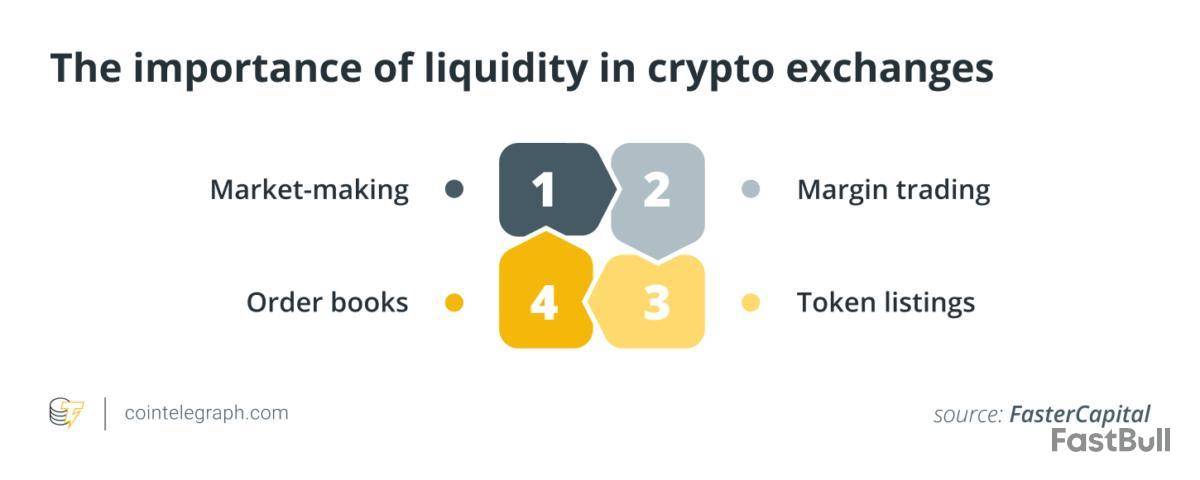
          The importance of liquidity in crypto exchanges

          Immediate response actions to protect user funds after a hack

          When a hack is detected, exchanges must act swiftly to contain the damage and protect user funds. The first steps include:

          • Freezing asset movements: Exchanges suspend withdrawals and deposits to prevent further losses. In 2019, Binance halted all transactions for a week to conduct a security review, while KuCoin immediately froze funds and transferred assets from compromised wallets.
          • Transparent communication: Quick and clear messaging helps maintain user trust and prevent panic. In a 2025 Bybit hack, the CEO addressed the community within 30 minutes and held a livestream within an hour. Binance, during its 2019 hack, tweeted “Funds are #SAFU” to reassure users.
          • Industry coordination: Competitor exchanges help by blacklisting hacker addresses, making it harder for stolen funds to be moved or laundered. This was seen in Bybit’s 2025 hack when major platforms blocked suspicious transactions.
          • Security investigations: Exchanges mobilize internal forensics teams to identify the breach, whether it’s a hot wallet compromise, leaked API keys or a smart contract exploit. Logs are analyzed, vulnerabilities patched and affected systems secured.
          • Ensuring user confidence: While technical details aren’t always immediately disclosed, exchanges assure users that a thorough security check is underway.

          ​Did you know? The first 24 hours after discovering a cyberattack are often called the “golden hours.” Actions taken during this critical period can significantly impact the extent of damage and the success of recovery.

          Containment and damage assessment after a crypto hack

          Once the immediate threat is neutralized, exchanges focus on identifying the breach and securing assets. This phase involves determining exactly what happened, how the attack was executed and the extent of the financial loss.

          Identifying the cause

          A forensic investigation is launched to uncover the technical root of the hack. The 2016 Bitfinex breach was traced to a multisignature wallet vulnerability, while Bybit’s 2025 cold wallet exploit revealed new attack vectors in multisig security. Exchanges analyze logs and system activity to pinpoint weaknesses, whether from leaked private keys, software bugs or exploited smart contracts.

          Quantifying financial impact

          Exchanges must quickly calculate how much was stolen and which assets were affected. Blockchain analytics firms assist in tracking stolen funds, as seen in KuCoin’s 2020 hack when investigators identified hacker wallets within hours and disclosed them publicly. Knowing the exact financial damage helps exchanges determine their next steps in liquidity management and user compensation.

          Securing remaining funds

          To prevent further losses, exchanges transfer unaffected assets into new wallets, often switching hot wallets and reinforcing cold storage security. When KuCoin suffered a breach, it abandoned compromised wallets and moved all funds to new secure wallets, ensuring ongoing security. Some exchanges may also halt trading temporarily to prevent market manipulation.

          Full damage assessment

          With the breach contained, exchanges audit affected user accounts, currencies and potential personal data leaks. Many bring in external cybersecurity firms for deeper forensic analysis. This investigation, typically completed within one to two days, sets the foundation for the exchange’s recovery and compensation plan.
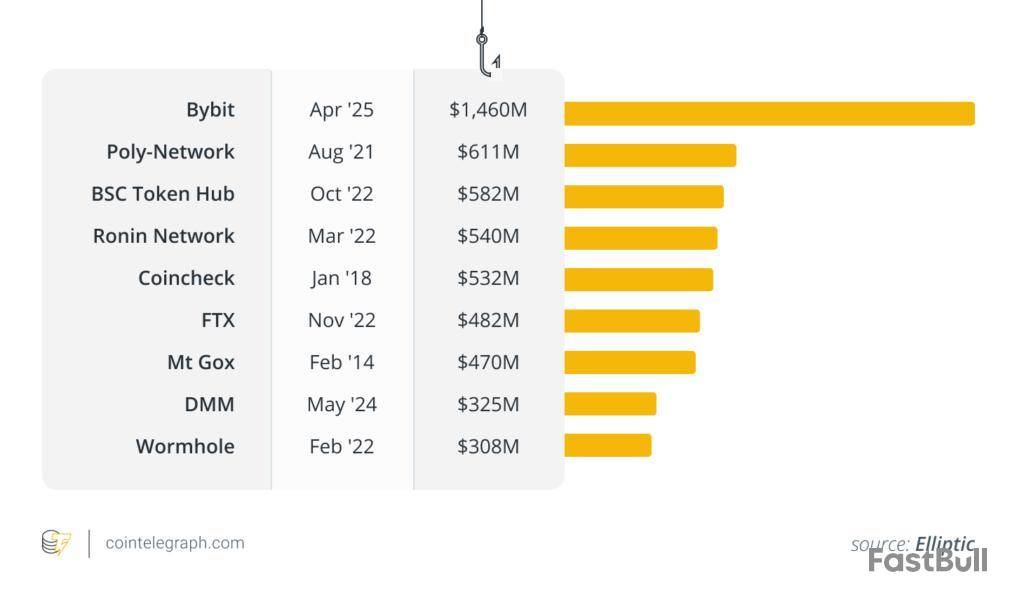
          Largest crypto heists of all time

          Did you know? ​Bybit’s February 2025 hack was the largest crypto heist in history, with hackers stealing about $1.5 billion worth of Ethereum during a routine transfer from an offline “cold” wallet to a “warm” wallet.

          Liquidity management and fund recovery strategies after exchange hacks

          As briefly explored earlier, hacks often lead to an immediate liquidity crisis for an exchange. Customers who hear about a breach may rush to withdraw funds when the exchange has a sudden hole in its balance sheet. Managing solvency and liquidity is a critical step.

          Insurance and emergency reserves

          Well-prepared exchanges tap into insurance funds or emergency reserves set aside for such events.

          Binance provides a textbook example: After $40 million in Bitcoin was stolen in its 2019 hack, Binance announced it would use its reserves to cover the incident in full, assuring that “no user funds will be affected.”​

          Binance’s Secure Asset Fund for Users (SAFU) — an insurance pool funded by trading fees — absorbed the loss and users were fully reimbursed. This proactive planning kept Binance solvent and preserved user confidence.

          Not all exchanges have large insurance funds, so other liquidity strategies come into play.

          Corporate capital, loans and investors

          One approach is to use corporate capital or seek emergency financing. For instance, in response to the Bybit hack, the exchange demonstrated a commitment to transparency and customer protection. It initiated efforts to trace the stolen funds, with reports indicating that 77% of the stolen assets remain traceable on the blockchain.

          Bybit's approach to managing the aftermath of the hack mirrors strategies employed by other exchanges facing security challenges. For example, after a $530 million hack in 2018, Japan’s Coincheck famously used its own capital to reimburse customers to the tune of 46.3 billion yen (about $422 million)​. This was a massive outlay, but it prevented a loss of customer funds and helped Coincheck avoid bankruptcy.

          In South Korea, Bithumb’s $30 million hack in 2018 was similarly met with a promise to “pay back victims using its own reserves,” which experts praised as the right move​.

          In cases where internal funds aren’t enough, exchanges have turned to external loans or investors to shore up liquidity. A notable case was Liquid Global’s hack in 2021. The Japanese exchange lost around $90 million, raising fears of insolvency. To respond, Liquid secured a $120 million loan from FTX a week later​.

          This emergency credit provided the liquidity to cover user withdrawals and stabilize operations (FTX went on to acquire Liquid later). Such industry partnerships can act as a backstop in crises, with a bigger exchange or investor acting as a lender of last resort to prevent a domino effect in the market.

          Suspension of activity

          Exchanges may also temporarily suspend certain services to manage liquidity. It’s common to keep trading open (to avoid wider market panic) but pause withdrawals until a recovery plan is set. This was seen in the Binance case, where trading continued during the week withdrawals were frozen​.

          Bybit’s 2025 hack response was unusual in that it kept withdrawals and services running uninterrupted​, which was possible only because Bybit could immediately guarantee 1:1 reserves for all customers​. In most scenarios, some freeze is necessary to prevent a “run on the bank” scenario while the exchange evaluates its financial standing.

          Assurances

          Finally, communication plays a big role in liquidity management. Exchange executives must convince users and stakeholders that the platform remains solvent. This often involves publishing proof of reserves or making public statements of assurance. Bybit’s leadership, for instance, emphasized that “all client assets are backed one-to-one” despite the $1.5 billion theft​, effectively saying they could absorb the hit.

          Similarly, Bitfinex in 2016 chose to “generalize” losses across users, implementing a 36% haircut on all accounts but crucially accompanying that with BFX tokens as IOUs to compensate users over time.

          That difficult decision kept Bitfinex afloat when a total immediate payout was impossible. Within eight months, Bitfinex had redeemed all the tokens at full value​, demonstrating a full recovery and restoration of liquidity.

          Fund recovery and user compensation post-exchange hacks

          After stabilizing operations and finances, attention turns to recovering the stolen assets and compensating affected users.

          Technically, cryptocurrency theft doesn’t always mean the funds are gone forever. The open ledger of blockchain can help track and sometimes reclaim assets. Exchanges often collaborate with blockchain analytics firms and law enforcement to trace stolen funds.

          In many instances, the hacker’s addresses are flagged within hours. For example, within 18 minutes of Bybit confirming its hack, investigators had identified the hacker’s wallet and were tracking movements​. Similarly, KuCoin quickly published the wallet addresses the thief used​, enabling a global effort to monitor and freeze the funds.

          Cooperation with other industry players is vital in fund recovery. Because hackers typically try to launder funds through other exchanges or swap services, exchanges worldwide form a defensive alliance. As mentioned, major platforms may blacklist addresses linked to hacks, effectively freezing the stolen assets in place if the hacker attempts to cash out on a compliant exchange​.

          In the KuCoin 2020 hack (~$285 million stolen), this collaboration paid off: Tether blacklisted about $22 million USDT belonging to the hacker, and numerous crypto projects like Ocean Protocol, Aave and others either disabled or upgraded their contracts to render the thief’s tokens unusable​.

          Through these collective actions, an estimated 84% of KuCoin’s stolen funds were eventually recovered​. KuCoin’s insurance fund covered the remaining gap, so users were fully compensated​.

          In some extraordinary cases, negotiation with the attackers can lead to fund returns. Crypto history has seen “white hat” hackers who return money for a bounty or even outright negotiations where a portion is returned to avoid prosecution. The Poly Network hack of 2021 is a striking example (though it was a DeFi platform, not a centralized exchange): A hacker exploited $610 million due to a code flaw, then communicated with Poly Network and returned nearly all funds after being offered a reward and a security adviser position​.

          While exchanges typically involve law enforcement rather than pay ransoms, they have also offered bug bounties for information leading to recovery. For instance, Bitfinex offered rewards to hackers or informants after its 2016 hack. Years later, the US DOJ seized a significant portion (94,000 BTC) of the Bitfinex stolen funds in 2022​, which are now pending return through legal processes.

          User compensation is the flip side of fund recovery. If users lose assets, how and when will they be made whole? The ideal scenario is immediate full reimbursement, as done by Binance, Coincheck, Upbit, Bithumb, KuCoin and others discussed earlier.

          In cases where not all funds can be recovered or instantly repaid, exchanges have innovated, like when Bitfinex issued BFX tokens (essentially debt tokens) to customers equal to their loss, which were tradable and later redeemable.

          Did you know? Mt. Gox, unfortunately, exemplified the worst case: it went into bankruptcy, and users have waited years for partial refunds through legal bankruptcy proceedings. (Mt. Gox’s trustee is still distributing the recovered coins as of Feb.2025, illustrating the slow path of legal compensation.)

          Regulatory and compliance actions following a major exchange hack

          Major hacks invariably draw the attention of regulators and law enforcement, adding another dimension to crisis response.

          Exchanges must navigate legal obligations to report hacks and often solicit help from authorities to investigate. In many jurisdictions, a hack triggers an automatic review by financial regulators. For example, following the $530 million Coincheck hack in Japan, the Financial Services Agency (FSA) immediately issued an administrative order requiring Coincheck to improve operations and protect clients​.

          The FSA even raided Coincheck’s offices a week later to ensure evidence was preserved and that the exchange was taking proper steps​. This level of direct regulatory action underscores how serious such incidents are viewed in regulated markets.

          Working with regulators can also help an exchange in crisis. Officials may allow an exchange to continue operating under supervision if they believe the team is acting in good faith to resolve the issue (Coincheck was allowed to keep running while it formulated a compensation plan under FSA oversight​).

          However, if negligence is suspected, regulators can suspend licenses or even force operations to halt to protect consumers. In South Korea, after incidents like the Bithumb hack, government agencies like KISA (Korea Internet and Security Agency) got involved to investigate security lapses​. Exchanges are generally expected to report breaches promptly under cybersecurity and financial regulations, and failure to do so can result in penalties.

          Law enforcement plays an important role, especially for international hacks. Exchanges often coordinate with police, cybercrime units, and agencies like the FBI or Interpol.

          Bybit’s 2025 hack, for example, saw the exchange collaborating with regulators and law enforcement to address the hack, setting an example of public-private partnership in cyber investigations​. Such cooperation can facilitate freezing assets across borders and increase the chances of catching the perpetrators. It also helps exchanges demonstrate compliance and due diligence, which may be critical for maintaining their operating licenses.

          High-profile hacks often become catalysts for regulatory change. After the Mt. Gox collapse in 2014, Japan was among the first countries to introduce a licensing regime for crypto exchanges. By 2017, exchanges in Japan had to register with the FSA and meet minimum standards for security, asset segregation and audits​. The Coincheck hack then prompted the FSA to tighten those rules further (and led to the formation of a self-regulatory body to oversee exchanges)​.

          Regulators in other countries also pay attention: A massive hack might lead to new guidance on how much of an exchange’s funds must be kept in cold storage, requirements for proof-of-reserves or mandatory insurance coverage.

          In the US, while there isn’t a federal exchange license yet, a hack affecting US customers could invite SEC or CFTC scrutiny, and certainly, state regulators would ask questions if the exchange was under their jurisdiction.

          How crypto exchanges strengthen security after hacks

          Surviving a hack forces exchanges to overhaul security, improve risk management and adopt best practices to prevent future breaches.

          Key improvements include:

          • Cold storage and multisig wallets: Exchanges now store most funds in cold wallets with multisignature access, reducing reliance on vulnerable hot wallets. After its hack, Coincheck adopted a stricter cold-wallet-plus-multisig system.
          • Infrastructure upgrades: Exchanges like KuCoin, after its 2020 breach, upgraded firewalls, intrusion detection and key management protocols to enhance security.
          • Stronger internal security controls: The Binance 2019 hack exposed weaknesses in API keys and 2FA, prompting the industry to adopt hardware security keys, AI-powered fraud detection and stricter withdrawal monitoring. Many exchanges now require dual authorization for large transactions.
          • Crisis response improvements: Exchanges now operate Security Operations Centers (SOCs) for 24/7 monitoring and conduct regular security audits. Bug bounty programs have become standard, incentivizing ethical hackers to find vulnerabilities before attackers do.
          • Industry-wide resilience: Lessons from major hacks have led to proof-of-reserves (PoR) audits, stricter KYC/AML policies and inter-exchange blacklists to prevent stolen funds from being laundered. Binance’s SAFU fund set a precedent for user protection reserves.
          • Stronger regulatory frameworks: Hacks like Mt. Gox and Coincheck led Japan and other countries to enforce exchange licensing laws, security compliance checks and transaction monitoring.

          While hacks remain a threat, past incidents have driven major improvements in crisis management and user protection, strengthening trust in the crypto ecosystem.

          Risk Warnings and Disclaimers
          You understand and acknowledge that there is a high degree of risk involved in trading. Following any strategies or investment methods may lead to potential losses. The content on the site is provided by our contributors and analysts for information purposes only. You are solely responsible for determining whether any trading assets, securities, strategy, or any other product is suitable for investing based on your own investment objectives and financial situation.
          Add to Favorites
          Share
          FastBull
          Copyright © 2026 FastBull Ltd

          728 RM B 7/F GEE LOK IND BLDG NO 34 HUNG TO RD KWUN TONG KLN HONG KONG

          TelegramInstagramTwitterfacebooklinkedin
          App Store Google Play Android Windows
          Products
          Charts

          Chats

          Q&A with Experts
          Screeners
          Economic Calendar
          Data
          Tools
          Membership
          Features
          Function
          Markets
          Copy Trading
          Latest Signals
          Contests
          24/7
          Analysis
          Education
          Company
          Careers
          About Us
          Contact Us
          Advertising
          Download FastBull
          Help Center
          Feedback
          User Agreement
          Privacy Policy
          Personal Information Protection Statement
          Business

          White Label

          Broker API

          Data API

          Web Plug-ins

          Poster Maker

          Affiliate Program

          Risk Disclosure

          The risk of loss in trading financial instruments such as stocks, FX, commodities, futures, bonds, ETFs and crypto can be substantial. You may sustain a total loss of the funds that you deposit with your broker. Therefore, you should carefully consider whether such trading is suitable for you in light of your circumstances and financial resources.

          No decision to invest should be made without thoroughly conducting due diligence by yourself or consulting with your financial advisors. Our web content might not suit you since we don't know your financial conditions and investment needs. Our financial information might have latency or contain inaccuracy, so you should be fully responsible for any of your trading and investment decisions. The company will not be responsible for your capital loss.

          Without getting permission from the website, you are not allowed to copy the website's graphics, texts, or trademarks. Intellectual property rights in the content or data incorporated into this website belong to its providers and exchange merchants.

          Not Logged In

          Log in to access more features

          Connect Broker
          Become a signal provider
          Help Center
          Customer Service
          Dark Mode
          Price Up/Down Colors

          Log In

          Sign Up

          Position
          Layout
          Fullscreen
          Default to Chart
          The chart page opens by default when you visit fastbull.com