

Markets
News
Analysis
User
24/7
Economic Calendar
Education
Data
- Names
- Latest
- Prev



Signal Accounts for Members
All Signal Accounts
All Contests
 U.K. Trade Balance Non-EU (SA) (Oct)
A:--
F: --
P: --
U.K. Trade Balance (Oct)A:--
F: --
P: --
U.K. Services Index MoMA:--
F: --
P: --
U.K. Construction Output MoM (SA) (Oct)A:--
F: --
P: --
U.K. Industrial Output YoY (Oct)A:--
F: --
P: --
U.K. Trade Balance (SA) (Oct)A:--
F: --
P: --
U.K. Trade Balance EU (SA) (Oct)A:--
F: --
P: --
U.K. Manufacturing Output YoY (Oct)A:--
F: --
P: --
U.K. GDP MoM (Oct)A:--
F: --
P: --
U.K. GDP YoY (SA) (Oct)A:--
F: --
P: --
U.K. Industrial Output MoM (Oct)A:--
F: --
P: --
U.K. Construction Output YoY (Oct)A:--
F: --
P: --
 France HICP Final MoM (Nov)
A:--
F: --
P: --
 China, Mainland Outstanding Loans Growth YoY (Nov)
A:--
F: --
P: --
China, Mainland M2 Money Supply YoY (Nov)A:--
F: --
P: --
China, Mainland M0 Money Supply YoY (Nov)A:--
F: --
P: --
China, Mainland M1 Money Supply YoY (Nov)A:--
F: --
P: --
 India CPI YoY (Nov)
A:--
F: --
P: --
India Deposit Gowth YoYA:--
F: --
P: --
 Brazil Services Growth YoY (Oct)
A:--
F: --
P: --
 Mexico Industrial Output YoY (Oct)
A:--
F: --
P: --
 Russia Trade Balance (Oct)
A:--
F: --
P: --
 Philadelphia Fed President Henry Paulson delivers a speech
 Canada Building Permits MoM (SA) (Oct)
A:--
F: --
P: --
Canada Wholesale Sales YoY (Oct)A:--
F: --
P: --
Canada Wholesale Inventory MoM (Oct)A:--
F: --
P: --
Canada Wholesale Inventory YoY (Oct)A:--
F: --
P: --
Canada Wholesale Sales MoM (SA) (Oct)A:--
F: --
P: --
 Germany Current Account (Not SA) (Oct)
A:--
F: --
P: --
U.S. Weekly Total Rig CountA:--
F: --
P: --
U.S. Weekly Total Oil Rig CountA:--
F: --
P: --
 Japan Tankan Large Non-Manufacturing Diffusion Index (Q4)
--
F: --
P: --
Japan Tankan Small Manufacturing Outlook Index (Q4)--
F: --
P: --
Japan Tankan Large Non-Manufacturing Outlook Index (Q4)--
F: --
P: --
Japan Tankan Large Manufacturing Outlook Index (Q4)--
F: --
P: --
Japan Tankan Small Manufacturing Diffusion Index (Q4)--
F: --
P: --
Japan Tankan Large Manufacturing Diffusion Index (Q4)--
F: --
P: --
Japan Tankan Large-Enterprise Capital Expenditure YoY (Q4)--
F: --
P: --
U.K. Rightmove House Price Index YoY (Dec)--
F: --
P: --
China, Mainland Industrial Output YoY (YTD) (Nov)--
F: --
P: --
China, Mainland Urban Area Unemployment Rate (Nov)--
F: --
P: --
 Saudi Arabia CPI YoY (Nov)
--
F: --
P: --
 Euro Zone Industrial Output YoY (Oct)
--
F: --
P: --
Euro Zone Industrial Output MoM (Oct)--
F: --
P: --
Canada Existing Home Sales MoM (Nov)--
F: --
P: --
Euro Zone Total Reserve Assets (Nov)--
F: --
P: --
U.K. Inflation Rate Expectations--
F: --
P: --
Canada National Economic Confidence Index--
F: --
P: --
Canada New Housing Starts (Nov)--
F: --
P: --
U.S. NY Fed Manufacturing Employment Index (Dec)--
F: --
P: --
U.S. NY Fed Manufacturing Index (Dec)--
F: --
P: --
Canada Core CPI YoY (Nov)--
F: --
P: --
Canada Manufacturing Unfilled Orders MoM (Oct)--
F: --
P: --
Canada Manufacturing New Orders MoM (Oct)--
F: --
P: --
Canada Core CPI MoM (Nov)--
F: --
P: --
Canada Manufacturing Inventory MoM (Oct)--
F: --
P: --
Canada CPI YoY (Nov)--
F: --
P: --
Canada CPI MoM (Nov)--
F: --
P: --
Canada CPI YoY (SA) (Nov)--
F: --
P: --
Canada Core CPI MoM (SA) (Nov)--
F: --
P: --


No matching data

Latest Views
Latest Views
Trending Topics
Top Columnists
Latest Update
White Label
Data API
Web Plug-ins
Affiliate Program
View All
No data
With notable market closures in observance of Good Friday and Easter Monday, the expiries board is rather light today and even more so at the start of next week. There is just one minor one for EUR/USD at 1.1390 that could keep a lid on price action, considering the much thinner liquidity conditions. That said, there could be exacerbated price moves during this period amid the lesser interest and heavily reduced market flows. So, I wouldn't put too much emphasis on the expiries above.
In any case, trading sentiment as a whole continues to ride on the broader market mood and anticipation of headline risks. On the latter, it's still all about Trump's tariffs and trade - especially concerning US and China. So, that's the bigger consideration.
For more information on how to use this data, you may refer to this post here.
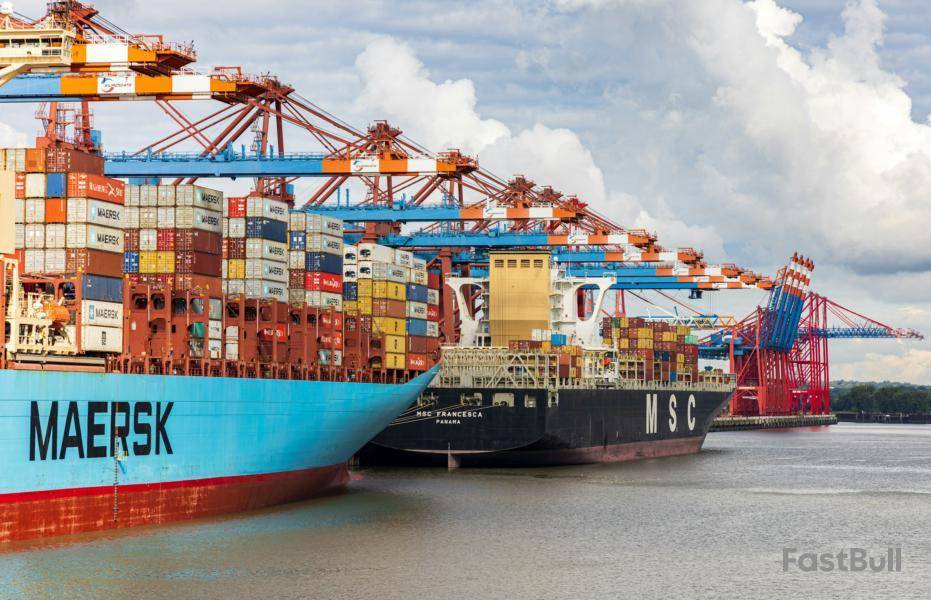
The International Monetary Fund (IMF) will lower its global growth predictions due to rising trade tensions and market volatility, but no global recession is likely, Managing Director Kristalina Georgieva said on Thursday.
Georgieva spoke at the IMF headquarters in Washington ahead of next week’s IMF and World Bank spring meetings, emphasising the economic cost of what she described as a global trade system reboot.
The unpredictable shifts in trade policies
According to Reuters, the IMF chief portrayed a picture of a global economy roiled by unanticipated adjustments in trade policy.
“Disruptions entail costs,” Georgieva said in prepared remarks, indicating that the IMF’s updated outlook will show “notable markdowns” in growth, as well as higher inflation in some regions.
She quoted The Wizard of Oz, saying, “We’re not in Kansas anymore,” emphasising the unprecedented amount of uncertainty.
She warned that the volatility had already triggered stress signals in financial markets, citing recent changes in the US Treasury yield curve.
Tariff hikes, global fallout
According to Georgieva, recent tariffs imposed by the United States, as well as retaliatory measures taken by China and the European Union, have increased global economic tension.
These steps have raised US effective tariff rates to levels not seen in decades, provoking countermeasures that are now affecting economies around the world.
“As the giants face off, smaller countries are caught in the cross currents,” according to Georgieva.
Because the United States, the European Union, and China are the world’s top three importers, their tensions have far-reaching consequences for smaller and emerging economies, particularly those already vulnerable to tightening financial circumstances.
Short-term pain and long-term risks
While some large economies may get a brief boost from domestic investment in reaction to tariffs, Georgieva cautioned that the advantages are slow to emerge and unevenly distributed.
Long-term protectionism, on the other hand, will almost certainly harm productivity and creativity.
“Protectionism erodes productivity over the long run, especially in smaller economies,” Georgieva said.
She claimed that by protecting industries from foreign competition, governments risk impeding innovation and entrepreneurship.
Georgieva also urged governments to remain committed to economic and financial reforms, citing the need for credible and nimble monetary policy, effective financial oversight, and the safeguarding of aid flows to low-income countries.
She also emphasised the need for exchange rate flexibility for emerging nations, claiming that it would assist them in navigating recurring global shocks.
Georgieva issued a clear call to diplomacy, encouraging the world’s leading economies to return to the negotiating table and establish a trade agreement that promotes openness while reversing the growth of tariffs and nontariff barriers.
“We need a more resilient world economy, not a drift to division,” she responded. “All countries, large and small alike, can and should play their part to strengthen the global economy in an era of more frequent and severe shocks.”

The European Central Bank on Thursday reduced its key interest rate by 25 basis points, citing easing inflation and mounting risks to economic growth from trade tensions and business pessimism.
The move was in line with most expectations.
It marks the seventh rate cut over the past year as the ECB attempts to support the eurozone economy amid an increasingly fragile global backdrop.
The move lowers the ECB’s deposit rate to 2.25%, the lowest since early 2023.
It also reflects growing concerns within the bank over waning business confidence and the economic fallout from tariffs imposed by the United States.
“The euro area economy has been building up some resilience against global shocks, but the outlook for growth has deteriorated owing to rising trade tensions,” the central bank said in its monetary policy statement.
‘Increased uncertainty is likely to reduce confidence among households and firms’
In a notable change in language, the ECB dropped its earlier assessment that interest rates were “meaningfully less restrictive” and acknowledged that a combination of factors could now weigh more heavily on the eurozone’s economic outlook.
“Increased uncertainty is likely to reduce confidence among households and firms, and the adverse and volatile market response to the trade tensions is likely to have a tightening impact on financing conditions. These factors may further weigh on the economic outlook for the euro area,” it said.
The shift reflects the central bank’s view that current interest rate levels are now at the upper end of what it considers “neutral” — a rate neither stimulating nor constraining growth.
While this neutral range is loosely placed between 1.75% and 2.25%, policymakers have stressed that it is not a fixed benchmark.
ECB refrains from providing clear guidance while markets price in two more cuts
Despite the rate cut, the ECB offered no clear guidance on the path ahead.
Instead, it reaffirmed that future decisions would be made on a meeting-by-meeting basis, depending on economic data.
Financial markets are pricing in at least two more rate cuts in 2025, and some analysts see room for a third, particularly if US tariffs and global financial volatility further weigh on the eurozone economy.
President Christine Lagarde is expected to emphasize these risks during her press conference.
She has previously estimated that trade tensions and the resulting confidence shock could trim as much as half a percentage point from eurozone growth — a significant hit for a region already growing at modest rates.
Lagarde is also likely to note the easing of inflationary pressures since the ECB’s last meeting in March.
A stronger euro, falling energy prices, and a slowing growth outlook have all contributed to a reduced inflation threat.
She may also point out that Chinese exports could further depress global prices if US tariffs force Beijing to redirect goods to Europe and other markets.
Euro retreats from highs but holds gains
Following the ECB’s announcement, the euro edged lower toward $1.13, slipping from recent highs last seen in early 2022.
Still, the currency remains up roughly 5% against the dollar so far in April, buoyed by shifting investor sentiment and growing expectations of increased defence spending in countries like Germany.
The ECB’s next steps will be closely watched as policymakers navigate a delicate balance between stabilizing inflation and shielding the economy from external shocks.
The European Central Bank cut interest rates by 25 basis points Thursday but it has little influence on European government bonds and the euro at present, Ballinger Group analyst Kyle Chapman says in a note. Yields are beholden to President Trump's ever-changing trade policy, he says. The euro also left rate differentials behind after Trump starting making trade threats. "Even if rate differentials become dominant again, there is little that the ECB can say to change the market's mind about the growth outlook." The euro fell slightly and European bond yields eased after the decision. The euro falls 0.4% to $1.1355. The 10-year German Bund yield falls 1 basis point to 2.493%, according to Tradeweb. (renae.dyer@wsj.com)
The Euro weakened to approach $1.13, slightly retreating from January-2022 highs, after the ECB lowered borrowing costs for a sixth straight time as expected.
The central bank cut the key deposit rate by 25bps to 2.25%, the lowest level since early 2023, and dropped a reference to 'restrictive' policy.
Still, the euro has gained roughly 5% against the greenback so far in April, as investors reassess the dollar’s role in the global financial system and increasingly view the common currency as a viable alternative.
In addition, expectations of higher defense spending, particularly in Germany, have added upward momentum to the euro.


The US dollar rose against its major trading partners early Thursday ahead of the release of weekly jobless claims, home building data for March and the Philadelphia Federal Reserve's manufacturing reading for April, all at 8:30 am ET.
Weekly natural gas stocks inventories are due at 10:30 am ET, followed by an update to the Atlanta Fed's gross domestic product growth Nowcast estimate for Q1 around midday.
Fed Governor Michael Barr is due to speak at 11:45 am ET.
A quick summary of foreign exchange activity heading into Thursday:
fell to 1.1358 from 1.1390 at the Wednesday US close and 1.1362 at the same time Wednesday morning. The European Central Bank is expected to announce a 25 basis point rate reduction in its post-meeting statement at 8:15 am ET. There are no Eurozone data on Thursday's schedule.
fell to 1.3229 from 1.3240 at the Wednesday US close and 1.3266 at the same time Wednesday morning. There are no UK data on Thursday's schedule. The next Bank of England meeting is scheduled for May 8.
rose to 142.5221 from 142.0755 at the Wednesday US close but was below a level of 142.7491 at the same time Wednesday morning. The Japanese trade surplus narrowed in March according to data released overnight. The next Bank of Japan meeting is scheduled for April 30-May 1.
rose to 1.3890 from 1.3860 at the Wednesday US close but was below a level of 1.3917 at the same time Wednesday morning. The Bank of Canada held interest rates steady on Wednesday, as expected, saying that the monetary policy cannot offset tariff impacts, so the focus needs to be on price stability. The next Bank of Canada meeting is scheduled for June 4. Data on Canadian securities purchases in February are due to be released at 8:30 am ET.
ING expects a 25bps rate cut by the European Central Bank on Thursday.
Consensus is unanimous and markets are fully pricing in the move, so the impact on the euro may prove limited, wrote the bank in a note to clients.
ING doesn't expect much in terms of guidance by the ECB, which could echo Wednesday's Bank of Canada communication: openly acknowledge policymakers are as confused as markets on the tariff impact, and the BoC isn't able to offer any forward-looking view at this stage.
In the current state of things, the foreign exchange market isn't looking much at short-term rate differentials. If it did, should be trading well below 1.10, stated the bank.
While the bank can't exclude the possibility that markets can take the opportunity of an ECB cut to take profit in crowded EUR longs, the news from the United States is still hitting the US dollar, and the highly liquid euro remains in a prime position to benefit from the rotation.
ING retains a tactical target at 1.15 in , with risks of even larger gains. By the end of the quarter, the bank estimates selling pressure on USD to have moderated and it targets 1.14, followed by a US dollar recovery in Q3.
The main event in the Central and Eastern European region on Thursday is the Central Bank of Turkey (CBT) meeting, added ING. This will be the first regular meeting since the March sell-off in the lira (TRY) market.
In the interim meeting in March, the CBT not only raised the upper band of the interest rate corridor (O/N lending rate) to 46% but also turned it into the effective policy rate by tightening TRY liquidity, while keeping the policy rate (one-week repo rate) flat at 42.5%. These developments suggest that the CBT is likely to remain mute on Thursday, according to the bank.
Benign March inflation data, with an improvement in the underlying trend, will also lead the CBT to keep the policy rate unchanged rather than hike it. However, the CBT's daily balance sheet has, in recent days, shown a continuation of the pressure on the net foreign exchange position.
As a consequence, ING doesn't rule out a further adjustment in the upper band. Overall, market expectations show unchanged rates, but the market would probably not be completely surprised if there is some rate tightening on Thursday.
remains basically unchanged at 38.000 since the spike in mid-March. In recent days, however, the bank has started to see the CBT again, allowing the TRY to weaken slightly, but at a slower pace than before, leaving a still fat carry on the table.
ING still likes the TRY as a carry trade and it is the March move in the currency that gives the CBT the resolve to maintain only slow TRY depreciation and not allow additional inflationary pressures, keeping the currency attractive to investors and pushing against the outflows the bank has seen since the March move.
728 RM B 7/F GEE LOK IND BLDG NO 34 HUNG TO RD KWUN TONG KLN HONG KONG


White Label
Data API
Web Plug-ins
Poster Maker
Affiliate Program
The risk of loss in trading financial instruments such as stocks, FX, commodities, futures, bonds, ETFs and crypto can be substantial. You may sustain a total loss of the funds that you deposit with your broker. Therefore, you should carefully consider whether such trading is suitable for you in light of your circumstances and financial resources.
No decision to invest should be made without thoroughly conducting due diligence by yourself or consulting with your financial advisors. Our web content might not suit you since we don't know your financial conditions and investment needs. Our financial information might have latency or contain inaccuracy, so you should be fully responsible for any of your trading and investment decisions. The company will not be responsible for your capital loss.
Without getting permission from the website, you are not allowed to copy the website's graphics, texts, or trademarks. Intellectual property rights in the content or data incorporated into this website belong to its providers and exchange merchants.
Not Logged In
Log in to access more features

FastBull Membership
Not yet
Purchase


Log In
Sign Up


