• Trade
  • Markets
  • Copy
  • Contests
  • News
  • 24/7
  • Calendar
  • Q&A
  • Chats
Trending
Screeners
SYMBOL
LAST
BID
ASK
HIGH
LOW
NET CHG.
%CHG.
SPREAD
SPX
S&P 500 Index
6857.13
6857.13
6857.13
6865.94
6827.13
+7.41
+ 0.11%
--
DJI
Dow Jones Industrial Average
47850.93
47850.93
47850.93
48049.72
47692.96
-31.96
-0.07%
--
IXIC
NASDAQ Composite Index
23505.13
23505.13
23505.13
23528.53
23372.33
+51.04
+ 0.22%
--
USDX
US Dollar Index
98.850
98.930
98.850
98.980
98.840
-0.130
-0.13%
--
EURUSD
Euro / US Dollar
1.16573
1.16580
1.16573
1.16590
1.16408
+0.00128
+ 0.11%
--
GBPUSD
Pound Sterling / US Dollar
1.33448
1.33457
1.33448
1.33472
1.33165
+0.00177
+ 0.13%
--
XAUUSD
Gold / US Dollar
4223.92
4224.33
4223.92
4229.22
4194.54
+16.75
+ 0.40%
--
WTI
Light Sweet Crude Oil
59.302
59.339
59.302
59.469
59.187
-0.081
-0.14%
--

Community Accounts

Signal Accounts
--
Profit Accounts
--
Loss Accounts
--
View More

Become a signal provider

Sell trading signals to earn additional income

View More

Guide to Copy Trading

Get started with ease and confidence

View More

Signal Accounts for Members

All Signal Accounts

Best Return
  • Best Return
  • Best P/L
  • Best MDD
Past 1W
  • Past 1W
  • Past 1M
  • Past 1Y

All Contests

  • All
  • Trump Updates
  • Recommend
  • Stocks
  • Cryptocurrencies
  • Central Banks
  • Featured News
Top News Only
Share

Iw Institute: German Economy Faces Tepid Growth In 2026 Due To Global Trade Slowdown

Share

Stats Office - Seychelles November Inflation At 0.02% Year-On-Year

Share

[Market Update] Spot Silver Prices Rose 2.00% Intraday, Currently Trading At $58.27 Per Ounce

Share

S.Africa's Gross Reserves At $72.068 Billion At End November - Central Bank

Share

[Market Update] Spot Silver Broke Through $58/ounce, Up 1.56% On The Day

Share

Dollar/Yen Down 0.33% To 154.61

Share

Kremlin Says No Plans For Putin-Trump Call For Now

Share

Kremlin Says Moscow Is Waiting For USA Reaction After Putin-Witkoff Meeting

Share

Cctv - China, France: Say Both Sides Support All Efforts For A Ceasefire, Restore Peace According To Intl Law

Share

[Chinese Ambassador To The US Xie Feng Hopes Chinese And American Business Communities Will Focus On Three Lists] On December 4, Chinese Ambassador To The US Xie Feng Delivered A Speech At The China-US Economic And Trade Cooperation Forum Jointly Hosted By The China Council For The Promotion Of International Trade And The Meridian International Center. Xie Feng Said That In November 2026, China Will Host The APEC Leaders' Informal Meeting For The Third Time In Shenzhen, Guangdong Province. In December 2026, The United States Will Also Host The G20 Meeting. Regarding How Chinese And American Business Communities Can Seize These Opportunities, He Suggested Focusing On Three Lists: First, Continue To Expand The Dialogue List; Second, Continuously Lengthen The Cooperation List; And Third, Constantly Reduce The Problem List

Share

India's Nifty Financial Services Index Extends Gains, Last Up 0.75%

Share

Eni : Jp Morgan Cuts To Underweight From Overweight

Share

Cctv - China, France: Signed Protocol On Sanitary, Phytosanitary Requirements For Export Of French Alfalfa Grass

Share

India's NIFTY IT Index Last Up 1.3%

Share

India's Nifty 50 Index Rises 0.35%

Share

Israel Sets 2026 Defence Budget At $34 Billion

Share

Russia Says Azov Sea's Port Of Temryuk Damaged In Ukrainian Attack

Share

Israel's Defense Budget For 2026 Will Be 112 Billion Israeli Shekels - Defense Minister Office

Share

One India Rate Panel Member Ram Singh Was Of View That Stance Should Be Changed To 'Accommodative' From 'Neutral' - Monetary Policy Committee Statement

Share

Reserve Bank Of India Chief: Will Continue To Meet Productive Needs Of Economy In Proactive Manner

TIME
ACT
FCST
PREV
Turkey Trade Balance

A:--

F: --

P: --

Germany Construction PMI (SA) (Nov)

A:--

F: --

P: --

Euro Zone IHS Markit Construction PMI (Nov)

A:--

F: --

P: --

Italy IHS Markit Construction PMI (Nov)

A:--

F: --

P: --

U.K. Markit/CIPS Construction PMI (Nov)

A:--

F: --

P: --

France 10-Year OAT Auction Avg. Yield

A:--

F: --

P: --

Euro Zone Retail Sales MoM (Oct)

A:--

F: --

P: --

Euro Zone Retail Sales YoY (Oct)

A:--

F: --

P: --

Brazil GDP YoY (Q3)

A:--

F: --

P: --

U.S. Challenger Job Cuts (Nov)

A:--

F: --

P: --

U.S. Challenger Job Cuts MoM (Nov)

A:--

F: --

P: --

U.S. Challenger Job Cuts YoY (Nov)

A:--

F: --

P: --

U.S. Initial Jobless Claims 4-Week Avg. (SA)

A:--

F: --

P: --

U.S. Weekly Initial Jobless Claims (SA)

A:--

F: --

P: --

U.S. Weekly Continued Jobless Claims (SA)

A:--

F: --

P: --

Canada Ivey PMI (SA) (Nov)

A:--

F: --

P: --

Canada Ivey PMI (Not SA) (Nov)

A:--

F: --

P: --

U.S. Non-Defense Capital Durable Goods Orders Revised MoM (Excl. Aircraft) (SA) (Sept)

A:--

F: --

P: --
U.S. Factory Orders MoM (Excl. Transport) (Sept)

A:--

F: --

P: --

U.S. Factory Orders MoM (Sept)

A:--

F: --

P: --

U.S. Factory Orders MoM (Excl. Defense) (Sept)

A:--

F: --

P: --

U.S. EIA Weekly Natural Gas Stocks Change

A:--

F: --

P: --

Saudi Arabia Crude Oil Production

A:--

F: --

P: --

U.S. Weekly Treasuries Held by Foreign Central Banks

A:--

F: --

P: --

Japan Foreign Exchange Reserves (Nov)

A:--

F: --

P: --

India Repo Rate

A:--

F: --

P: --

India Benchmark Interest Rate

A:--

F: --

P: --

India Reverse Repo Rate

A:--

F: --

P: --

India Cash Reserve Ratio

A:--

F: --

P: --

Japan Leading Indicators Prelim (Oct)

A:--

F: --

P: --

U.K. Halifax House Price Index YoY (SA) (Nov)

--

F: --

P: --

U.K. Halifax House Price Index MoM (SA) (Nov)

--

F: --

P: --

France Current Account (Not SA) (Oct)

--

F: --

P: --

France Trade Balance (SA) (Oct)

--

F: --

P: --

France Industrial Output MoM (SA) (Oct)

--

F: --

P: --

Italy Retail Sales MoM (SA) (Oct)

--

F: --

P: --

Euro Zone Employment YoY (SA) (Q3)

--

F: --

P: --

Euro Zone GDP Final YoY (Q3)

--

F: --

P: --

Euro Zone GDP Final QoQ (Q3)

--

F: --

P: --

Euro Zone Employment Final QoQ (SA) (Q3)

--

F: --

P: --

Euro Zone Employment Final (SA) (Q3)

--

F: --

P: --
Brazil PPI MoM (Oct)

--

F: --

P: --

Mexico Consumer Confidence Index (Nov)

--

F: --

P: --

Canada Unemployment Rate (SA) (Nov)

--

F: --

P: --

Canada Labor Force Participation Rate (SA) (Nov)

--

F: --

P: --

Canada Employment (SA) (Nov)

--

F: --

P: --

Canada Part-Time Employment (SA) (Nov)

--

F: --

P: --

Canada Full-time Employment (SA) (Nov)

--

F: --

P: --

U.S. Dallas Fed PCE Price Index YoY (Sept)

--

F: --

P: --

U.S. PCE Price Index YoY (SA) (Sept)

--

F: --

P: --

U.S. PCE Price Index MoM (Sept)

--

F: --

P: --

U.S. Personal Outlays MoM (SA) (Sept)

--

F: --

P: --

U.S. Core PCE Price Index MoM (Sept)

--

F: --

P: --

U.S. UMich 5-Year-Ahead Inflation Expectations Prelim YoY (Dec)

--

F: --

P: --

U.S. Core PCE Price Index YoY (Sept)

--

F: --

P: --

U.S. 5-10 Year-Ahead Inflation Expectations (Dec)

--

F: --

P: --

U.S. UMich Current Economic Conditions Index Prelim (Dec)

--

F: --

P: --

U.S. UMich Consumer Sentiment Index Prelim (Dec)

--

F: --

P: --

U.S. UMich 1-Year-Ahead Inflation Expectations Prelim (Dec)

--

F: --

P: --

U.S. UMich Consumer Expectations Index Prelim (Dec)

--

F: --

P: --

Q&A with Experts
    • All
    • Chatrooms
    • Groups
    • Friends
    Connecting
    .
    .
    .
    Type here...
    Add Symbol or Code

      No matching data

      All
      Trump Updates
      Recommend
      Stocks
      Cryptocurrencies
      Central Banks
      Featured News
      • All
      • Russia-Ukraine Conflict
      • Middle East Flashpoint
      • All
      • Russia-Ukraine Conflict
      • Middle East Flashpoint
      Search
      Products

      Charts Free Forever

      Chats Q&A with Experts
      Screeners Economic Calendar Data Tools
      Membership Features
      Data Warehouse Market Trends Institutional Data Policy Rates Macro

      Market Trends

      Market Sentiment Order Book Forex Correlations

      Top Indicators

      Charts Free Forever
      Markets

      News

      News Analysis 24/7 Columns Education
      From Institutions From Analysts
      Topics Columnists

      Latest Views

      Latest Views

      Trending Topics

      Top Columnists

      Latest Update

      Signals

      Copy Rankings Latest Signals Become a signal provider AI Rating
      Contests
      Brokers

      Overview Brokers Assessment Rankings Regulators News Claims
      Broker listing Forex Brokers Comparison Tool Live Spread Comparison Scam
      Q&A Complaint Scam Alert Videos Tips to Detect Scam
      More

      Business
      Events
      Careers About Us Advertising Help Center

      White Label

      Data API

      Web Plug-ins

      Affiliate Program

      Awards Institution Evaluation IB Seminar Salon Event Exhibition
      Vietnam Thailand Singapore Dubai
      Fans Party Investment Sharing Session
      FastBull Summit BrokersView Expo
      Recent Searches
        Top Searches
          Markets
          News
          Analysis
          User
          24/7
          Economic Calendar
          Education
          Data
          • Names
          • Latest
          • Prev

          View All

          No data

          Scan to Download

          Faster Charts, Chat Faster!

          Download App
          English
          • English
          • Español
          • العربية
          • Bahasa Indonesia
          • Bahasa Melayu
          • Tiếng Việt
          • ภาษาไทย
          • Français
          • Italiano
          • Türkçe
          • Русский язык
          • 简中
          • 繁中
          Open Account
          Search
          Products
          Charts Free Forever
          Markets
          News
          Signals

          Copy Rankings Latest Signals Become a signal provider AI Rating
          Contests
          Brokers

          Overview Brokers Assessment Rankings Regulators News Claims
          Broker listing Forex Brokers Comparison Tool Live Spread Comparison Scam
          Q&A Complaint Scam Alert Videos Tips to Detect Scam
          More

          Business
          Events
          Careers About Us Advertising Help Center

          White Label

          Data API

          Web Plug-ins

          Affiliate Program

          Awards Institution Evaluation IB Seminar Salon Event Exhibition
          Vietnam Thailand Singapore Dubai
          Fans Party Investment Sharing Session
          FastBull Summit BrokersView Expo

          FastBull FREE Bar Replay Backtesting: The Ultimate Strategy Training Tool for Traders

          FastBull Featured
          Summary:

          In today’s fast-moving financial markets, the ability to test strategies in advance and sharpen trading skills often determines a trader’s long-term success. To help traders optimize strategies efficiently and with minimal risk, FastBull introduces Bar Replay, a professional backtesting and training tool that combines historical market data, multi-asset coverage, economic calendar events, and simulated trading.

          FastBull FREE Bar Replay Backtesting: The Ultimate Strategy Training Tool for Traders_1

          In today’s fast-moving financial markets, the ability to test strategies in advance and sharpen trading skills often determines a trader’s long-term success. To help traders optimize strategies efficiently and with minimal risk, FastBull introduces Bar Replay, a FREE professional backtesting and training tool that combines historical market data, multi-asset coverage, economic calendar events, and simulated trading.

          This article provides a comprehensive overview of FastBull Bar Replay, its training modes, use cases, and the key benefits for traders.

          What is FastBull Bar Replay?

          FastBull Bar Replay is a trading practice and strategy validation tool built on historical market data. It allows traders to:

          ● Replay historical market candles as if trading live

          ● Open, modify, and close trades in a simulated replay account

          ● Test strategies, patterns, and scenarios in a risk-free environment

          Key benefits include:

          ● Realistic market simulation: Make trading decisions as if the market were live

          ● Zero-risk environment: All trades are executed in a replay account, leaving real funds unaffected

          ● Robust strategy testing: Perfect for strategy validation, pattern training, and extreme market scenarios

          ● Efficient practice: Adjust replay speed to save time while maximizing learning

          This makes FastBull Bar Replay a core tool for daily practice and strategy optimization.

          1. Training Modes: Flexible Access to Historical Data

          FastBull offers three candle selection modes to accommodate different training needs.
          FastBull FREE Bar Replay Backtesting: The Ultimate Strategy Training Tool for Traders_2

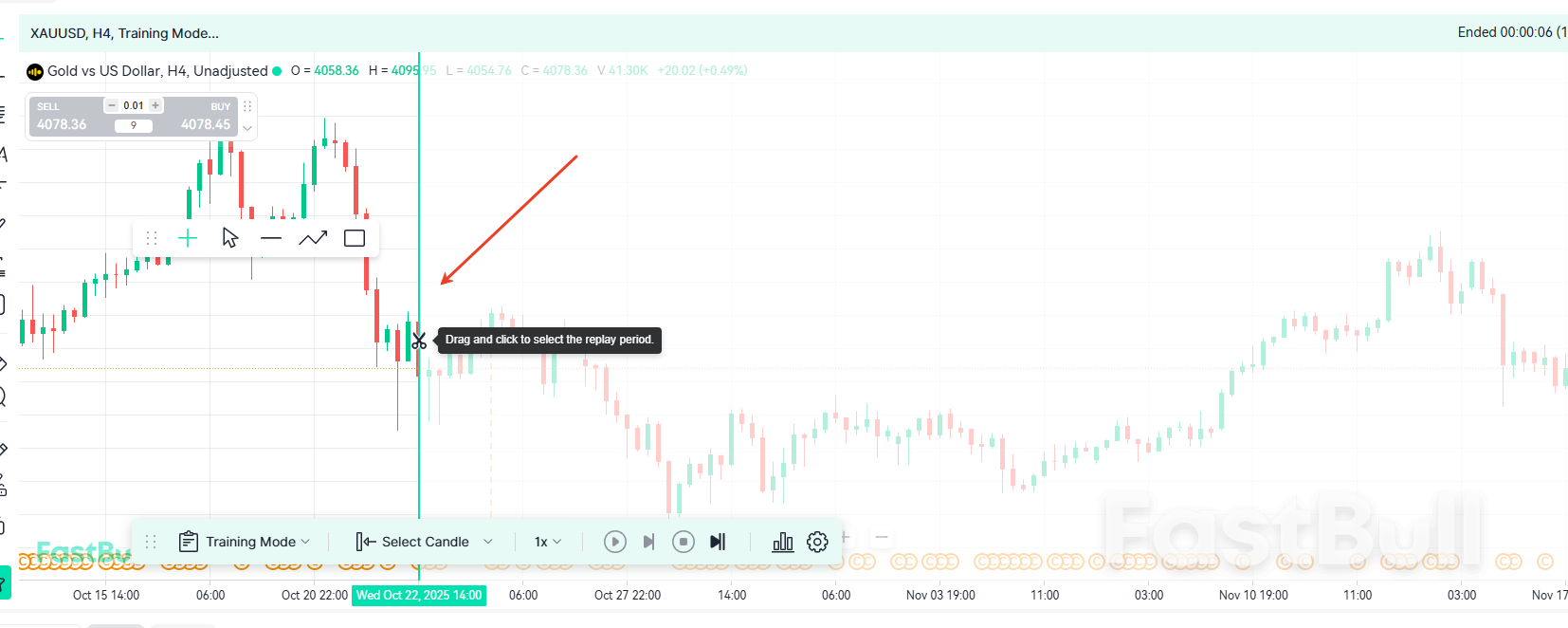
          Scissors Mode: Replay from the Latest Data Backwards

          ● Manually drag candles to any past point

          ● Precisely locate target periods using date prompts

          ● Simulate “blind testing” for enhanced decision-making and real-time reaction

          Ideal for chart-reading practice.
          FastBull FREE Bar Replay Backtesting: The Ultimate Strategy Training Tool for Traders_3

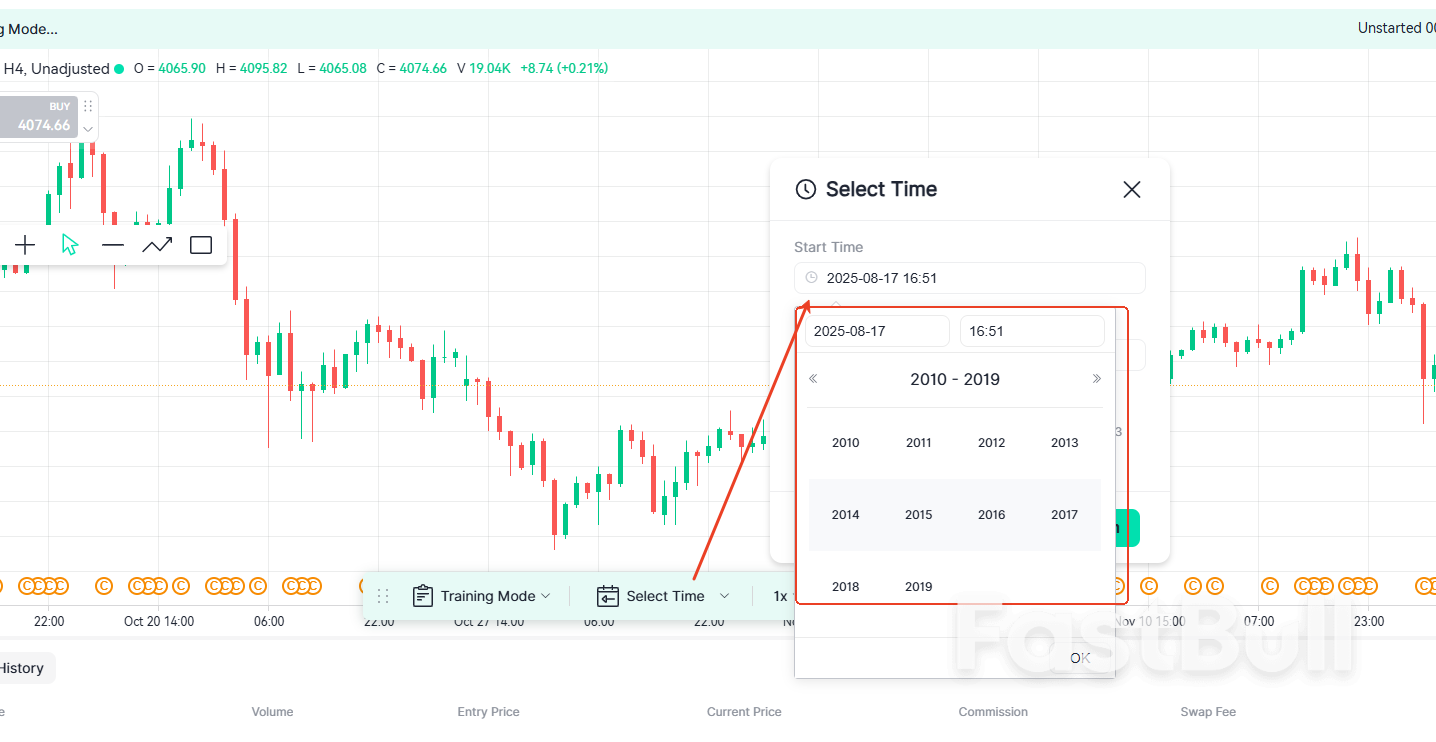
          Time Filter Mode: Select Any Timeframe

          ● Supports all timeframes from minutes to long-term periods

          ● Minute charts allow scalpers to train high-frequency strategies

          ● Daily and longer timeframes allow multi-year backtesting for trend and swing strategies

          ● No need to worry about exact years—simply select the period and timeframe you want to practice

          Suitable for all trading styles.
          FastBull FREE Bar Replay Backtesting: The Ultimate Strategy Training Tool for Traders_4

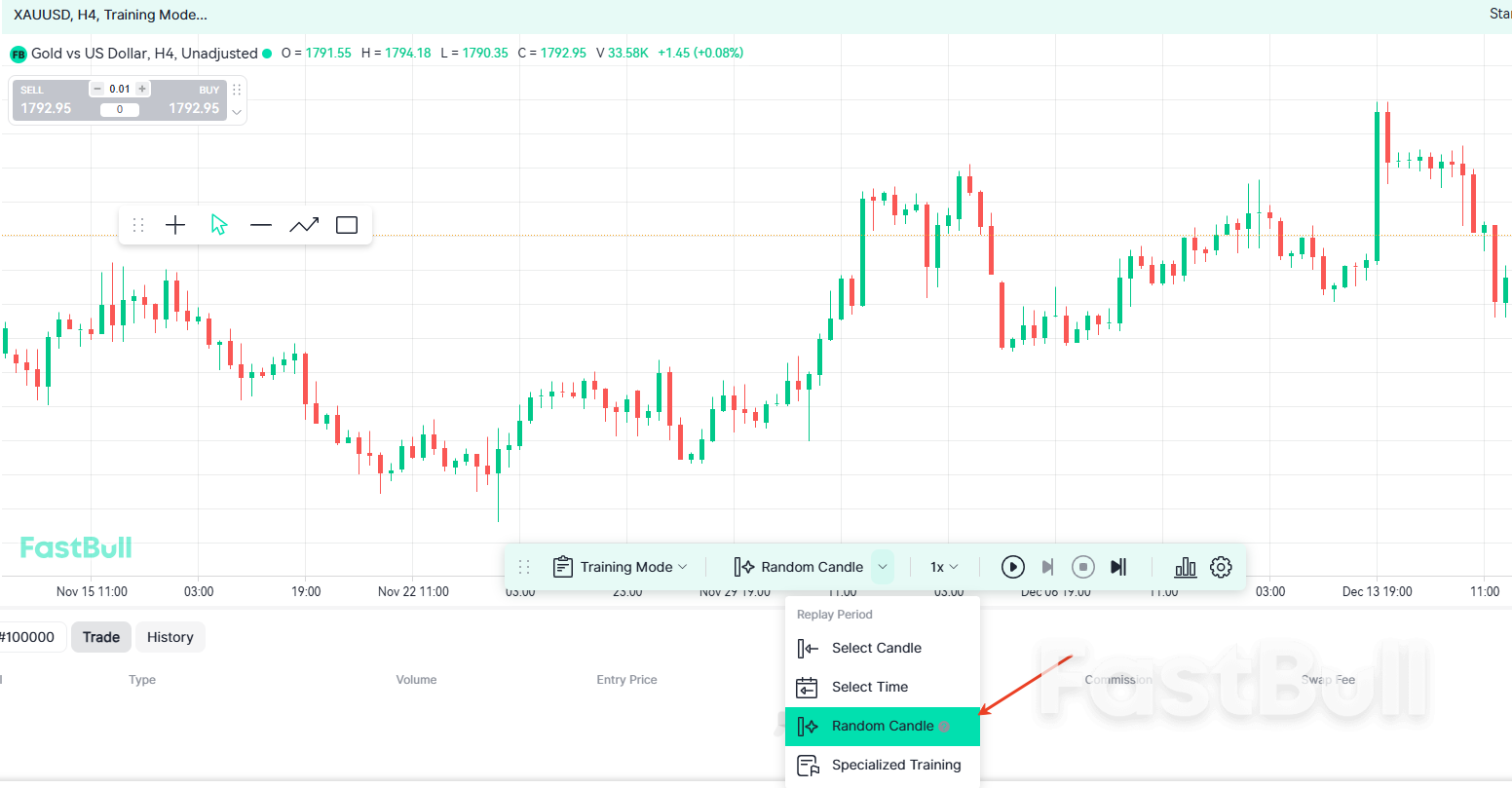
          Random Candle Mode: Automatic Selection

          ● The system randomly selects a segment of historical data

          ● Eliminates the bias of knowing future price movements

          ● Strengthens real-time decision-making and trading intuition

          A standard method used by professional traders for long-term practice.

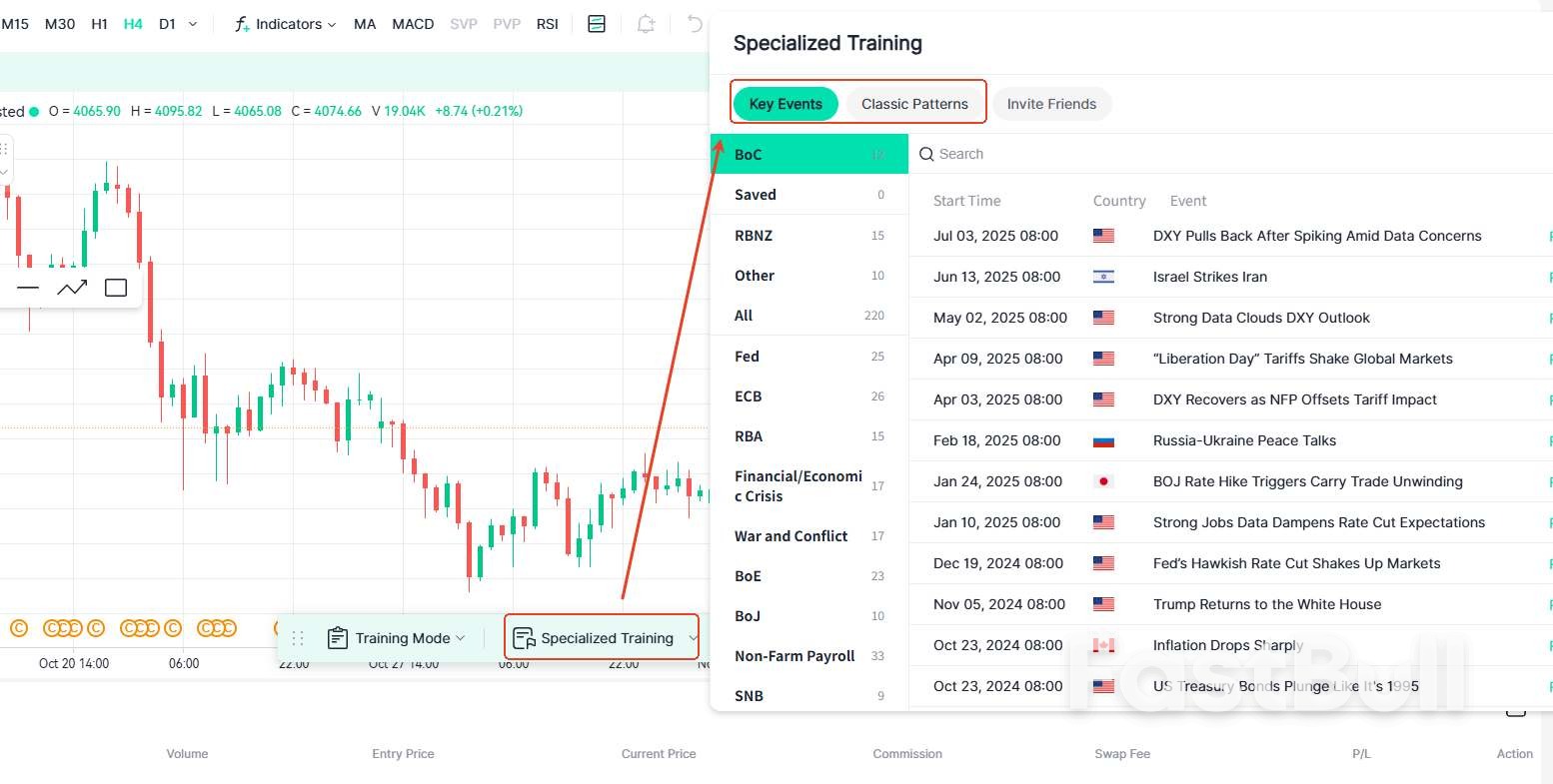
          2. Specialized Training: Deep Replay Based on Events and Patterns

          Another highlight of FastBull Bar Replay is specialized training, enabling traders to repeatedly practice specific scenarios.
          FastBull FREE Bar Replay Backtesting: The Ultimate Strategy Training Tool for Traders_5

          Event-Driven Replay

          Traders can focus on historical market events, such as:

          ● Central bank interest rate decisions

          ● Key economic releases like NFP, CPI, and GDP

          ● News events causing significant market volatility

          This allows traders to experience how the market reacts at the moment of these events and improve event-driven trading skills.

          Crisis Scenario Training

          Replay historical periods of major financial crises, including:

          ● Global financial crises

          ● Debt crises

          ● Liquidity crises

          ● Market turmoil in specific countries or regions

          This helps evaluate how strategies perform under extreme conditions.

          Geopolitical & Conflict Scenarios

          Replay markets during times of international conflict or political risk to understand:

          ● Price structures during high volatility

          ● Market risk-off behavior

          ● Strategy applicability in turbulent environments

          Chart Pattern-Based Replay

          ● Filter and practice across M1 to MN timeframes

          ● Built-in support for 10+ common chart patterns

          ● Automatically mark patterns on charts to improve training efficiency. Please remember to apply the indicator “All Chart Pattern” first

          Ideal for traders focusing on technical analysis.

          3. Test Mode: Complete Period Strategy Validation

          For full-cycle strategy testing, FastBull offers a professional Test Mode:

          ● Choose Bar Replay periods ranging from weeks to months or years

          ● System automatically selects corresponding historical data

          ● Hide asset names and specific events to avoid bias

          ● Validate a wide range of strategies: trend-following, range-bound, pattern-based, and breakout strategies

          Perfect for systematic strategy stress testing for intermediate and advanced traders.

          4. Multi-Asset Coverage: Trade Across All Markets

          FastBull Bar Replay supports all major financial markets, including:

          ● Forex

          ● Commodities (gold, oil, etc.)

          ● Stocks (US, Hong Kong, A-shares, Taiwan, Vietnam, etc.)

          ● Global indices

          ● Futures

          ● Cryptocurrencies

          No matter which asset class you trade, FastBull provides comprehensive historical data.

          5. Simulated Trading Environment: Experience Realistic Trades
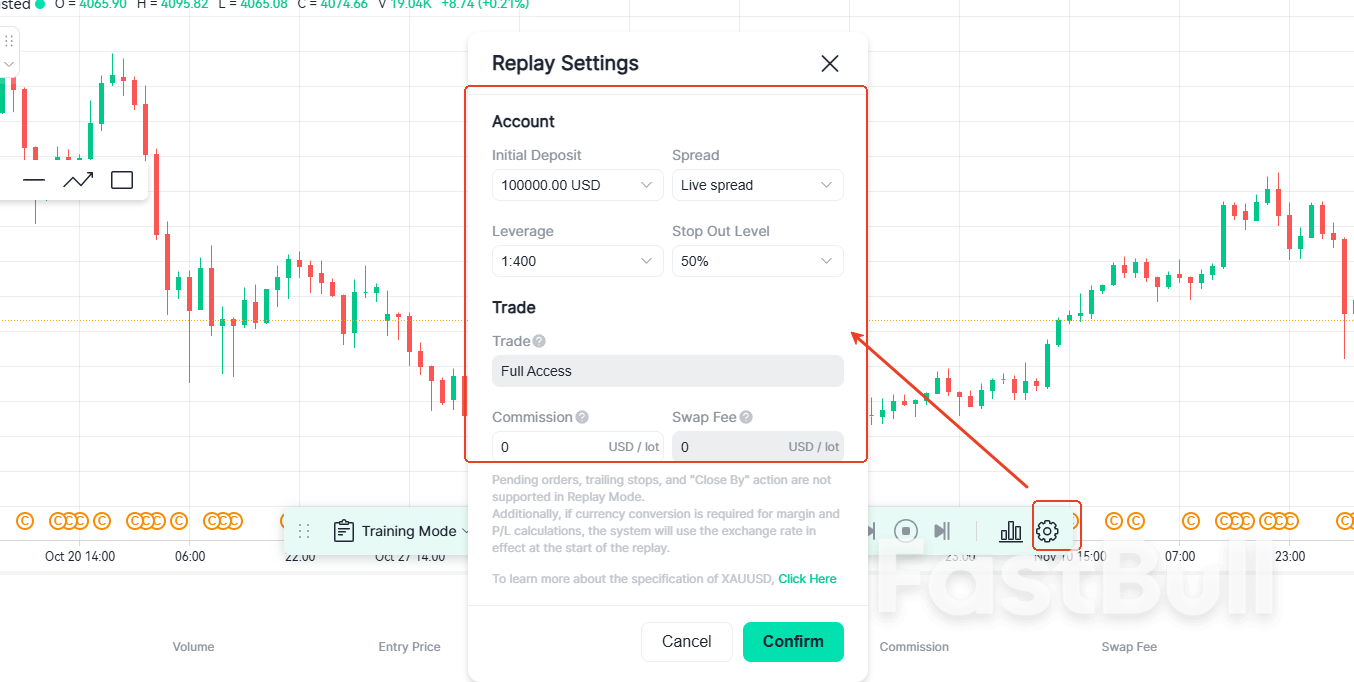
          FastBull FREE Bar Replay Backtesting: The Ultimate Strategy Training Tool for Traders_6

          FastBull Bar Replay goes beyond simple chart replay by offering a near-real trading environment.

          Traders can customize:

          ● Initial account balance

          ● Leverage

          ● Spread

          ● Margin call/balance parameters

          ● Trading Commission

          Trades are executed logically as market orders in the replay account.

          The system tracks each trade’s P&L, position changes, and overall performance, providing detailed feedback for strategy evaluation.

          6. Professional Efficiency Tools: Faster and Smarter Replay
          FastBull FREE Bar Replay Backtesting: The Ultimate Strategy Training Tool for Traders_7

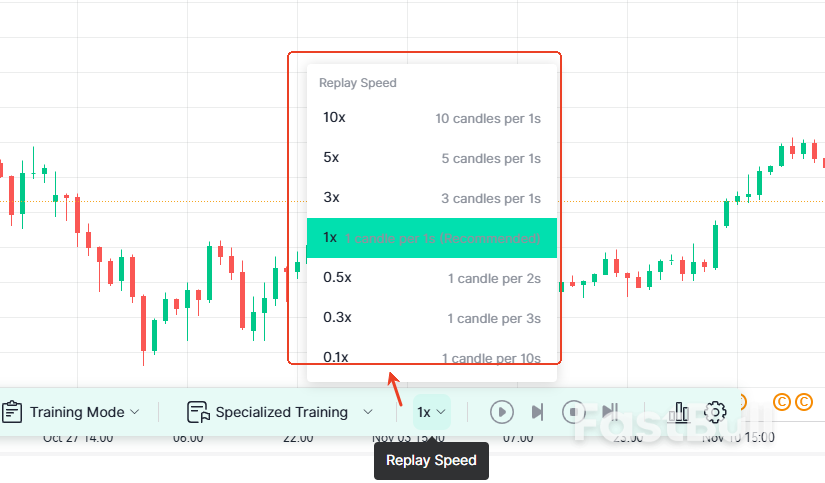
          To maximize training efficiency, FastBull includes advanced replay tools:

          1. Adjustable Replay Speeds

          ● Slow: Analyze critical reversals, candlestick patterns, and breakout details

          ● Fast: Speed through trending periods to save time

          2. Forward Fast-Advance

          Skip periods of low activity to focus on strategy trigger points and increase training density.

          3. Economic Calendar Integration
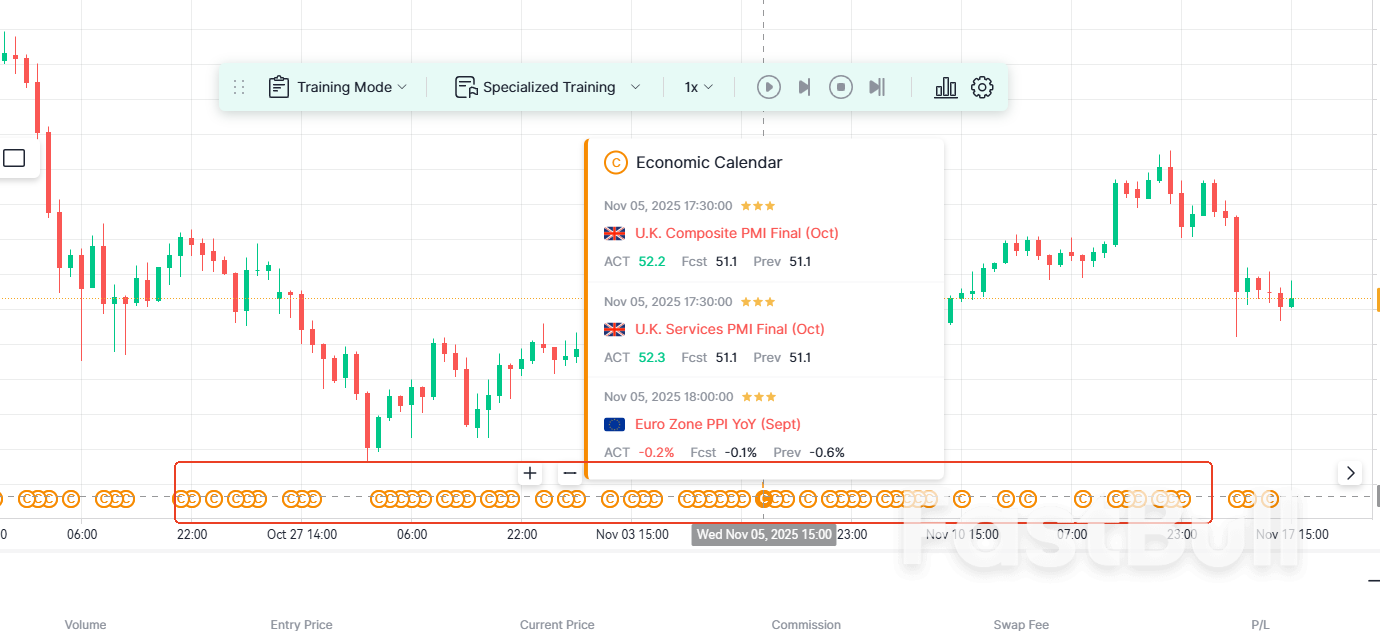
          FastBull FREE Bar Replay Backtesting: The Ultimate Strategy Training Tool for Traders_8

          4. Smooth, Lightweight Interface

          No lag or delays, perfect for long practice sessions.

          5. Multi-Timeframe Replay

          Simultaneously view multiple timeframes from M1 to MN to understand market structure more efficiently.

          Key Benefits of Using FastBull Bar Replay

          1. Sharpen Trading Skills and Market Intuition

          Continuous replay allows traders to accumulate significant “real market experience” in a short time, building more consistent decision-making.

          2. Test Strategies in a Risk-Free Environment

          All practice is conducted in a simulated account, allowing traders to adjust and refine strategies without risking real funds.

          3.Understand Strategy Performance Across Different Market Conditions

          Test strategies under:

          ● Extreme market conditions

          ● High-volatility periods

          ● Ranging markets

          ● Trending markets

          Avoid strategies that only perform well under specific conditions.

          4. Suitable for All Trading Styles

          Supports:

          ● Scalping

          ● Intraday trading

          ● Swing trading

          ● Trend-following

          ● Event-driven trading

          ● Pattern-based trading

          Every trader can find the training mode that fits their style.

          5. Accelerate Learning

          In live markets, one daily candle forms in a day.In FastBull Bar Replay, multiple days or even weeks can be practiced in minutes, dramatically speeding up learning.

          6. Improve Strategy Stability and Reduce Emotional Impact

          Repeated testing clarifies:

          ● Which conditions suit your strategy

          ● When strategies are prone to losses

          ● How to adjust stops and targets

          ● How to avoid emotional decisions

          A key factor for achieving long-term trading consistency.

          Conclusion

          FastBull Bar Replay is an essential tool for every trader. Stable trading comes from:

          ● Extensive replay practice

          ● Systematic training

          ● Rigorous strategy validation

          ● ​Deep understanding of market structure

          FastBull Bar Replay is designed precisely for this purpose.Whether you are a beginner, an advanced trader, or a professional strategy developer, FastBull provides a highly efficient, safe, and professional training environment, accelerating growth and improving long-term stability.

          Risk Warnings and Disclaimers
          You understand and acknowledge that there is a high degree of risk involved in trading. Following any strategies or investment methods may lead to potential losses. The content on the site is provided by our contributors and analysts for information purposes only. You are solely responsible for determining whether any trading assets, securities, strategy, or any other product is suitable for investing based on your own investment objectives and financial situation.
          Add to Favorites
          Share

          Angola At 50: Resources, Unrest And A Political Crossroads

          Justin

          Forex

          Political

          Economic

          A woman stands in a neighborhood in Cabinda, the Angolan exclave that accounts for roughly half the country’s crude oil output. © Getty Images

          As Angola marks half a century of independence, the occasion exposes both the opportunities and the paradoxes of post-colonial Africa. On the one hand, it is a country rich in valuable and strategic resources including a vibrant, young population and extensive mineral and hydrocarbon deposits. On the other, there is persistent, widespread poverty and a perpetual political situation some describe as "liberation without democracy."

          On November 11, 1975, Angola was formally declared an independent nation. For Portugal, still reeling from the political upheaval of its 1974 Carnation Revolution, decolonization became the European nation's most urgent priority. Yet in former colony Angola, the question over who was or would be the legitimate representative of the people was far from settled. The Popular Movement for the Liberation of Angola (MPLA), the National Union for the Total Independence of Angola (UNITA) and the National Front for the Liberal of Angola, each based in different regions, all proclaimed independence simultaneously.

          The result was the devastating Angolan civil war (intermittently between 1975-2002), which was one of the Cold War's most prominent proxy conflicts. The war ended definitively with the death of the controversial and charismatic leader of UNITA, Jonas Malheiro Savimbi, in 2002. In the years that followed, a combination of demilitarization and the ruling MPLA's integration of and cooperation with UNITA elites created the conditions for peace.

          2002: End of Angola's civil war

          2004: China's EXIM Bank pledges $2 billion in oil-backed loans for reconstruction

          2004: China's Sinopec begins acquiring stakes in Angola's offshore oil blocks

          2015: China's Sinochem signs a 10-year oil supply deal with Angola's Sonangol

          2018: TotalEnergies launches the $16 billion Kaombo project, Angola's largest deepwater offshore oil development to date

          2023: Lobito Corridor rail export project launched, linking Angola, Zambia and the DRC, backed by the U.S. and EU

          2023: Angola leaves OPEC due to its inability to meet production quotas

          2024: Rio Tinto signs a mining investment contract securing 35 years of exploration and production rights

          July 2025: ExxonMobil, Azule Energy and Sonagol E&P extend production sharing contract until 2037

          September 2025: Angola's National Oil, Gas & Biofuels Agency, Sonangol, Shell and Chevron sign a new exploration and production deal

          November 2025: Shell signs exploration agreement with the Ministry of Mineral Resources

          November 2025: India expresses interest in future oil cooperation with Angola

          November 2025: Angola and Botswana mining ministers discuss efforts to gain control over diamond producer De Beers

          The late Angolese President Jose Eduardo dos Santos, who ruled for 38 years (1979-2017) becoming one of Africa's "presidents for life," oversaw this transition. Yet, despite his role in securing stabilization, which earned him the epithet of "the architect of peace," his legacy was tainted by decades of corruption and the failure to transform Angola's oil-fueled boom into broad prosperity. By the time he left office in 2017, he was deeply unpopular.

          His successor Joao Lourenco was elected president in August of the same year and remains in office. He faced the challenge of renewing the still dominant but fatigued MPLA within a system of competitive authoritarianism – where political competition exists but the playing field remains tilted in the ruling party's favor. His promises to clamp down on corruption were received with enthusiasm, as was his decision to remove those closer to Dos Santos from positions of influence, even from within the MPLA political bureau.

          This momentum, however, soon dissipated. The MPLA is still in power, but its political dominance is eroding, particularly among urban youth. At the same time, the Angolan economy remains hostage to excessive oil dependency and public officials using state resources to maintain patronage networks.

          Popular unrest in Angola met with crackdowns

          The recent protests, which started in Angola's capital Luanda and have spread to other cities, have resulted in at least 30 deaths, hundreds of injuries and 1,500 arrests. Sparked by the government's decision to gradually remove fuel subsidies, the demonstrations mirror a broader pattern of civic unrest observed in sub-Saharan Africa in recent years, as seen in Sudan (leading to the fall of Omar al-Bashir), Nigeria, Mozambique, Zambia and Kenya.

          At roughly $0.33 per liter, Angola's fuel prices are among the lowest on the continent. However, it has become evident that maintaining artificially low prices is unsustainable, as the government grapples with deteriorating public finances, rising debt and volatile commodity markets. In Angola, fuel subsidies cost nearly $3 billion in 2023 alone. The war in Ukraine has further strained oil-producing countries such as Nigeria and Angola, which, despite their crude oil wealth, import refined petroleum at high global market prices due to a lack of domestic processing and refining capacity.

          The exclave of Cabinda is home to roughly half of Angola's oil production and has been the site of recent domestic clashes. © GIS

          The withdrawal of subsidies directly affects urban populations who rely on public transportation (namely the system of collective taxis via minibus known as candonga) and pushes up the costs of food production, transport and storage. Households that spend the bulk of their disposable income on food and transport are then under even greater pressure.

          The most recent subsidy cut translated into a 33 percent increase in fuel prices. This, combined with the September minimum wage increase to 100,000 kwanzas (around $110) per month after it was already lifted to 70,000 kwanzas in 2024, is expected to fuel further inflationary pressures.

          The protests and ensuing crackdowns exposed how police resort to excessive force and arbitrary arrests, and how authorities swiftly label protests as rebellions. These actions in part characterize competitive-authoritarian regimes. Demonstrations in Angola, as in other parts of Africa, reflect the growing frustration of a largely young population. Sixty-three percent of Angolans are under 24. Many see no economic prospects, with unemployment among those aged 15-24 estimated at over 50 percent. For them, the liberation credentials of the MPLA are no longer legitimate.

          Angola's deferred promises have consequences

          The Lourenco administration has unleashed some important measures, such as judicial reforms or the more symbolic Stolen Asset Recovery Initiative, which both appear to have yielded some results. The government has also somewhat reduced corruption. In 2014 Angola ranked 161st out of 180 countries on Transparency International's Corruption Perceptions Index; a decade later it had climbed to the 121st spot. Another important step was the 2018 private investment law, which made both international and domestic investment easier by simplifying procedures, eliminating local partnership requirements in several sectors and removing the minimum investment threshold for accessing tax incentives.

          These changes, while positive, are proving too little, too late, as Angolans continue to face the double pressure of political authoritarianism and material scarcity. Structural obstacles continue to constrain economic growth: heavy dependency on oil (crude still accounts for 95 percent of exports and 60 percent of budget revenues), infrastructure gaps, excessive bureaucracy and an incipient private sector.

          The fluctuation of oil prices on global markets is a challenge for the government: If Brent crude prices fall below the $70 per barrel benchmark used in the national budget, government activities must be restricted. Lower prices also impact offshore operations, many of which may cease to be profitable. Meanwhile, the era of easy financing has ended, as the oil-backed loan model that long defined Angola's economic relationship with China appears exhausted.

          As a result, the removal of subsidies has become an imperative, necessary to prop up government finances and allow continued public services. However, the cuts will have political consequences, likely to shape the preelectoral period and further damage the prospects for the MPLA in the 2027 presidential and general elections.

          Like ZANU-PF in Zimbabwe or FRELIMO in Mozambique, the MPLA became the dominant party in post-independence Angola. Despite Jose Eduardo dos Santos eventually coming to the end of his leadership era in 2017, the regime continues to operate within a framework of competitive authoritarianism. But the MPLA's growing unease with facing the electorate is evident, for example, in the repeated postponement of municipal elections. As seen in other African countries, the greatest challenge to these hegemonic, post-independence parties that control state resources and the security apparatus comes from an urban, connected and increasingly discontent youth.

          Source: GIS

          To stay updated on all economic events of today, please check out our Economic calendar
          Risk Warnings and Disclaimers
          You understand and acknowledge that there is a high degree of risk involved in trading. Following any strategies or investment methods may lead to potential losses. The content on the site is provided by our contributors and analysts for information purposes only. You are solely responsible for determining whether any trading assets, securities, strategy, or any other product is suitable for investing based on your own investment objectives and financial situation.
          Add to Favorites
          Share

          Bitcoin Drops Below $92,000 as Four-Year Cycle Fears and Liquidations Spark Caution Across Crypto Markets

          Gerik

          Economic

          Cryptocurrency

          Bitcoin’s Decline Deepens as Historical Patterns Resurface

          Bitcoin’s sharp slide continued Monday, with the world’s largest cryptocurrency falling below the $92,000 mark, a more than 5% daily loss that pushed total declines since October’s all-time high above $126,000 to over 26%. The market drop comes amid rising investor anxiety that the current sell-off may not be merely a technical correction but part of the larger four-year cycle pattern that has historically led to prolonged downturns.
          According to Bernstein analysts led by Gautam Chhugani, this wave of selling coincides with a historically significant timeframe. Bitcoin tends to peak between 400 and 600 days following its halving events the latest of which occurred in April 2024. This window, they argue, is fueling a “self-fulfilling prophecy” where historical expectations alone contribute to selling pressure.

          Liquidations and Profit-Taking Accelerate Momentum Shift

          The collapse of nearly $19 billion in leveraged positions last month acted as the initial catalyst for this downturn. That liquidation event, followed by profit-taking from long-term holders, stripped the market of bullish momentum. Analysts at 10X Research point to a notable stall in buyer interest beginning around October 10, which left the market vulnerable to a correction, especially as macro conditions turned less favorable.
          Adding to the technical risk is the psychological importance of the $93,000 level. A recent note from 10X warns that breaking below this threshold which has now occurred may trigger an “accelerated liquidation cascade,” as risk management algorithms and margin calls kick in.

          Institutional Support and Policy Clarity Offer Medium-Term Optimism

          Despite the volatility, some analysts see a foundation of long-term support emerging. ETF adoption has gained pace, reflecting what Bernstein calls a “higher quality and consistent ownership” profile for Bitcoin. Furthermore, the Trump administration’s vocal support for crypto, including the proposed Clarity Act in Congress, provides a potentially more stable regulatory backdrop a stark contrast to the fragmented U.S. approach seen in earlier cycles.
          Chhugani emphasizes that this downturn doesn’t resemble the euphoric tops seen in past cycles. Instead, he views it as part of a “structural multi-year trend” driven by institutional adoption and market maturation, albeit punctuated by intermittent volatility.

          MicroStrategy Buys the Dip, Reinforcing Confidence

          Michael Saylor’s Strategy Inc. added to its Bitcoin reserves once again, purchasing 8,178 tokens at an average price of $102,171 each totaling $835 million. This accumulation during a sharp drawdown signals continued high-conviction buying from corporate entities despite market instability.
          MicroStrategy now plays a dual role: not just as a bellwether for institutional sentiment, but also as a support mechanism for Bitcoin's floor during high-volatility episodes. However, with the firm itself deep in unrealized losses on recent purchases, its continued buying could either reassure the market or raise questions about sustainability.

          Hawkish Fed Adds to Fragility as Traders Eye $80K Support

          Adding further stress to the market is the Federal Reserve’s increasingly hawkish posture. The recent pause in rate cut expectations has tilted the macro environment away from high-risk assets. With inflation still above the Fed’s 2% target and delayed labor market data clouding policy clarity, crypto assets especially Bitcoin have become more sensitive to shifts in rate outlooks.
          The ~$80,000 range, which acted as an immediate post-election support level, is now being watched as the next potential bottom. Chhugani of Bernstein believes that should Bitcoin consolidate near this level, it may offer an attractive entry point for new long-term investors. However, the path there is expected to be volatile.

          Four-Year Cycle Meets Structural Transition

          Bitcoin's current downturn sits at the intersection of historical cycle expectations and a transforming market structure. While some indicators suggest the recent weakness is part of a broader correction aligned with halving-cycle timing, others highlight that institutional involvement and policy support could limit downside severity.
          Whether Bitcoin stabilizes near $80,000 or faces a deeper flush will depend on multiple factors: macroeconomic data, Fed signals, and the pace of institutional inflows. For now, the market remains in a cautious phase one that may redefine the contours of the next leg in Bitcoin’s evolution.

          Source: Bloomberg

          To stay updated on all economic events of today, please check out our Economic calendar
          Risk Warnings and Disclaimers
          You understand and acknowledge that there is a high degree of risk involved in trading. Following any strategies or investment methods may lead to potential losses. The content on the site is provided by our contributors and analysts for information purposes only. You are solely responsible for determining whether any trading assets, securities, strategy, or any other product is suitable for investing based on your own investment objectives and financial situation.
          Add to Favorites
          Share

          Oil Prices Dip Below $64 as Market Weighs Surplus Outlook Against Russian Sanctions and Geopolitical Risks

          Gerik

          Economic

          Commodity

          Global Surplus Expectations Dominate Short-Term Price Pressure

          Crude benchmarks continued to slide on Tuesday, with Brent falling below $64 per barrel and West Texas Intermediate (WTI) trading near $59. This dip reflects growing market expectations of a significant supply glut through 2026. The International Energy Agency (IEA) has projected a record global surplus, citing the resurgence of idle production capacity from OPEC+ and ramped-up supply from outside the bloc, including the U.S. and Canada.
          The bearish sentiment is further driven by evidence that oil flows are becoming more robust, not more restricted. According to Saul Kavonic, senior energy analyst at MST Marquee, the market is currently balancing two narratives: the structural surplus emerging from higher supply and the geopolitical risks that could disrupt near-term distribution.
          “If enforcement of sanctions proves lax, conflict levels don’t escalate, and OPEC maintains current output discipline, the market should continue to soften,” Kavonic said.

          Russia’s Crude Faces Collapse Just Ahead of U.S. Sanctions

          Adding to the complexity, U.S. sanctions targeting Russia’s state-controlled energy giants Rosneft PJSC and Lukoil PJSC are set to take effect this week. In anticipation, prices for Russia’s flagship Urals crude have fallen to their lowest levels in over two years. Although the sanctions are aimed at curbing Moscow’s revenue streams, traders remain skeptical of how strictly they will be enforced.
          The sanctions come at a time when Russian supply had already begun rerouting toward non-Western markets, partially mitigating Western influence. However, any additional constraints or logistical bottlenecks could tighten supply in the short term, supporting prices particularly if paired with rising tensions in other producer regions.

          North American Supply Expands with Trans Mountain Pipeline

          Meanwhile, Canadian oil sands production is surging, aided by the recent expansion of the Trans Mountain pipeline. This infrastructure development has improved export capacity to Asian markets, allowing Canadian output which hit a record high in June to bypass some of the traditional U.S. bottlenecks. The Bank of Montreal projects Canadian output could climb to 6 million barrels per day by 2030, adding long-term pressure to global balances.
          This supply growth is contributing to the IEA’s surplus forecast and signals that non-OPEC producers are playing a more influential role in shaping the medium-term price floor.

          Geopolitical Flashpoints Offer Price Support Amid Broader Weakness

          Despite bearish fundamentals, several geopolitical flashpoints continue to support a fragile floor for oil prices. Conflict in Sudan has disrupted export flows, and Iran’s seizure of a tanker near the Strait of Hormuz last week underscores the region’s fragility. Additionally, the U.S. has escalated pressure on Venezuela, including threats to designate a Maduro-linked cartel as a terrorist organization, and hinted at broader military action in Latin America.
          These developments, while not yet disruptive enough to offset the global surplus narrative, add uncertainty to short-term supply chains particularly through critical chokepoints like Hormuz.

          Saudi-U.S. Strategic Engagement Could Shape Oil Diplomacy

          On the diplomatic front, Saudi Crown Prince Mohammed bin Salman is set to meet U.S. President Donald Trump in Washington. Their discussion is expected to cover both arms sales including F-35 fighter jets and broader energy coordination. This meeting signals continued alignment between the world’s largest energy producer and consumer, potentially shaping OPEC+ strategy and market messaging.
          The White House emphasized Saudi Arabia’s status as a “great ally,” suggesting Washington is looking to deepen cooperation as it expands its energy influence and manages multiple regional tensions.

          Surplus Dominates, But Geopolitical Risk Limits Downside

          Oil markets remain in a delicate balance, with structural oversupply anchoring prices lower while geopolitical risk provides intermittent support. The effectiveness of upcoming U.S. sanctions on Russian oil, the scale of Canada’s supply expansion, and the outcome of U.S.-Saudi talks could each tilt sentiment in the weeks ahead.
          However, unless new disruptions arise or OPEC+ shifts course, the market appears headed toward a looser supply-demand balance, keeping downward pressure on prices through early 2026. Traders will remain closely attuned to both diplomatic developments and hard data on supply flows to determine whether the current dip is part of a broader correction or the beginning of renewed volatility.

          Source: Bloomberg

          To stay updated on all economic events of today, please check out our Economic calendar
          Risk Warnings and Disclaimers
          You understand and acknowledge that there is a high degree of risk involved in trading. Following any strategies or investment methods may lead to potential losses. The content on the site is provided by our contributors and analysts for information purposes only. You are solely responsible for determining whether any trading assets, securities, strategy, or any other product is suitable for investing based on your own investment objectives and financial situation.
          Add to Favorites
          Share

          Asian Markets Plunge as Nvidia Jitters, Bitcoin Slide, and Japan’s Fiscal Risks Shake Investor Confidence

          Gerik

          Economic

          Stocks

          Broad Tech Sell-Off Drives Asia into the Red

          Markets across the Asia-Pacific region fell sharply on Tuesday, mirroring a global retreat from high-growth technology stocks. Japan’s Nikkei 225 dropped 3% to 48,835.20, while South Korea’s Kospi sank 3.1% to 3,960.82 their worst single-day performances in weeks. Taiwan’s Taiex also plunged 2.3%, underlining how deeply Asian markets are tethered to the fortunes of the global semiconductor sector.
          Leading the declines were chipmakers and AI-adjacent firms. In Japan, Tokyo Electron slid 5.4%, and Advantest fell 4.6%. South Korea’s SK Hynix tumbled 5.7%, while Samsung Electronics lost 2.9%. Taiwan Semiconductor Manufacturing Company (TSMC), the world’s largest contract chipmaker, fell 2.4%.
          The trigger for the rout was U.S. tech weakness overnight, particularly in AI-driven stocks like Nvidia, which dropped 1.8% ahead of its third-quarter earnings report. Investors are anxious that valuations have become overly stretched after months of relentless gains, and any sign of softening demand or cautious forward guidance could spark further de-risking.

          Bitcoin Decline Adds to Speculative Asset Pressure

          The retreat from risk extended beyond equities. Bitcoin slid another 2% early Tuesday to $90,110, dragging down crypto-linked equities. Coinbase Global fell 7.1%, while Robinhood Markets declined 5.3%, reflecting growing fragility in speculative markets. This underscores how closely correlated digital assets remain with high-beta tech sentiment a dynamic that compounds selling when risk appetite weakens.
          With many momentum trades under pressure, market participants are reassessing the sustainability of recent gains across equities and crypto. A widespread repricing appears underway as investors brace for multiple macro catalysts in the days ahead.

          Nvidia Earnings and U.S. Jobs Data Loom Large

          Markets are on edge ahead of Nvidia’s earnings due Wednesday and delayed U.S. employment data set to be released Thursday. Both are expected to play a crucial role in determining near-term risk sentiment. Nvidia, a key AI bellwether, must live up to high expectations following a 40% year-to-date rally. Any hint of slowing demand or softer forward guidance could trigger further liquidation.
          Meanwhile, the postponed September U.S. jobs report delayed due to the prolonged government shutdown may influence the Federal Reserve’s policy trajectory. A strong report would likely reinforce the case for the Fed to pause on rate cuts in December, while weak data could spark concerns about the health of the labor market and the broader economy.

          Japan’s Fiscal Outlook and Bond Market Turbulence Add to Uncertainty

          Another layer of risk emerged from Japan, where 30-year government bond yields surged to 3.31%, the highest since 1999. The spike follows Prime Minister Sanae Takaichi’s plans to increase fiscal spending and delay fiscal consolidation, fueling fears of a deteriorating debt profile. The yen hovered above 155 to the U.S. dollar, nearing multi-decade lows, while it touched its weakest point against the euro since the single currency’s inception in 1999.
          The combination of rising yields and a weakening currency suggests investors are beginning to reprice Japan’s macroeconomic risk, particularly amid geopolitical tensions with China and uncertainty over the Bank of Japan’s next policy steps. Elevated long-term borrowing costs could challenge government stimulus plans and weigh on future growth expectations.

          Alphabet Bucks the Trend as Berkshire Stakes Its Claim

          Despite the broader sell-off, not all U.S. tech names fared poorly. Alphabet (GOOGL) rose 3.1% after Berkshire Hathaway revealed a $4.34 billion stake in Google’s parent company. The endorsement by Warren Buffett’s firm known for its value-driven approach served as a rare bright spot in an otherwise gloomy tech session.
          The move suggests some investors are selectively adding to long-term holdings where valuations appear more reasonable, even as they exit more speculative corners of the market like AI chip stocks and crypto-linked firms.

          Macro Risks, Valuation Concerns Converge to Shake Global Confidence

          Tuesday’s slump in Asian markets reflects a confluence of short-term market anxieties and deeper structural concerns. With Nvidia’s earnings and U.S. labor data imminent, investors are recalibrating their exposure to tech and speculative assets. Rising bond yields in Japan, a weakening yen, and China’s diplomatic tensions with Tokyo add to the caution.
          In this environment, volatility may remain elevated until clarity emerges on corporate earnings and central bank direction. For now, the sell-off reflects not just overvaluation in pockets of the market, but growing uncertainty over whether the pillars supporting 2025’s rally AI enthusiasm, dovish Fed expectations, and fiscal stimulus can endure the coming tests.

          Source: AP

          To stay updated on all economic events of today, please check out our Economic calendar
          Risk Warnings and Disclaimers
          You understand and acknowledge that there is a high degree of risk involved in trading. Following any strategies or investment methods may lead to potential losses. The content on the site is provided by our contributors and analysts for information purposes only. You are solely responsible for determining whether any trading assets, securities, strategy, or any other product is suitable for investing based on your own investment objectives and financial situation.
          Add to Favorites
          Share

          Takaichi’s Taiwan Remarks Ignite Diplomatic Storm as China Unleashes Economic Pressure

          Gerik

          Economic

          A Diplomatic Gamble: Takaichi’s Taiwan Shift Draws Immediate Repercussions

          Barely a month into her tenure, Japanese Prime Minister Sanae Takaichi is confronting her first geopolitical crisis after breaking decades of strategic ambiguity regarding Taiwan. By explicitly linking a Taiwan Strait crisis to Japanese troop involvement, Takaichi not only startled Beijing but also opened the door to retaliatory measures with serious economic ramifications.
          China’s response was swift and coordinated. Foreign Ministry spokeswoman Mao Ning issued a rare public demand for Japan to retract its remarks, warning Tokyo to “stop playing with fire” and uphold past commitments. The tone signals that Beijing considers Takaichi’s statement a significant deviation from historical Japanese caution on cross-strait issues.
          Economic Leverage in Focus: China Targets Japan’s Vulnerabilities
          While diplomatic ties have seen previous periods of frost most notably after Japan’s nationalization of the Senkaku/Diaoyu islands in 2012 the current context is more economically fraught. China remains Japan’s largest trading partner, and recent stabilization in bilateral ties had contributed to regional market confidence.
          That détente is now at risk. Analysts fear China may weaponize trade tools such as restrictions on rare earth exports to pressure Japan. Japan’s auto industry, particularly its electrified vehicle segment, is highly exposed to disruptions in rare-earth supplies. Bloomberg Intelligence’s Tatsuo Yoshida warns that any embargo could create significant manufacturing bottlenecks, although short-term impacts may be cushioned by inventory stockpiling.
          This concern is heightened by Takaichi’s explicit stance on defense policy and her historical ties to Taiwan, including a visit to President Lai Ching-te prior to assuming office. Her comments viewed in Beijing as ideologically driven rather than strategically calculated have been framed by state media as signaling a shift toward “new militarism.”

          Domestic Strength Meets External Isolation: Political Costs and Calculations

          Despite international backlash, Takaichi enjoys domestic political momentum. Her approval rating stands above 80%, and her nationalist base may rally around perceived strength in the face of Chinese coercion. Former diplomat Kunihiko Miyake argues that Beijing’s pressure may inadvertently consolidate her domestic support, at least in the short term.
          However, this political capital comes with constraints. Walking back her remarks would undermine the image that won her the premiership, but maintaining a hardline risks economic isolation at a time of domestic fragility. Japan’s GDP contracted in Q3, and further pressure on exports or supply chains could undermine recovery efforts, especially as global trade remains under stress.

          China’s Calculated Escalation: Pressure Without Provocation

          While Beijing has warned citizens against studying in or traveling to Japan, and Premier Li Qiang reportedly has no plans to meet Takaichi at the upcoming G-20 Summit, China appears to be pursuing a measured escalation. Warnings have so far been limited to diplomatic statements and travel advisories rather than full-scale economic sanctions.
          Experts like Rui Aoyama of Waseda University suggest that while Beijing wants to punish Tokyo economically, it is unlikely to sever ties entirely. Memories of the 2012 backlash including violent protests and a sharp drop in Japanese exports remain instructive. With China’s own economy under strain, particularly amid youth unemployment and sluggish consumer demand, Beijing is likely to avoid inflaming nationalist sentiments too far.
          Nonetheless, Beijing holds structural economic leverage. Rare earths, semiconductors, and market access to its massive consumer base give China tools to pressure Tokyo in targeted ways. The threat is less about volume and more about precision disrupting Japan’s most vulnerable sectors while avoiding broad-based decoupling.

          Strategic Implications: Takaichi Redefines Japan’s Security Posture

          Takaichi’s remarks also signal a departure from the strategic ambiguity carefully preserved by previous Japanese leaders. For decades, Tokyo has declined to define what constitutes a “survival-threatening situation” the threshold that could trigger collective self-defense under Japanese law. By suggesting that a Taiwan contingency could meet that threshold, Takaichi effectively challenges not just China’s red lines but also Japan’s longstanding defense doctrine.
          This shift aligns Japan more closely with the United States’ position, especially after similar ambiguity-breaking comments from former U.S. President Joe Biden. Notably, President Trump, during his recent Asia visit, reaffirmed U.S. support for Japan in strong terms, stating, “Anything you want, any favors you need… we will be there.”

          A Prolonged Freeze or a Calculated Reset?

          The Takaichi-Xi standoff is likely to enter a phase of prolonged diplomatic freeze, marked by symbolic rebukes and quiet economic retaliation. While full-scale sanctions or public protests remain unlikely for now, the risk of targeted disruptions in key industries particularly autos and tech cannot be dismissed.
          As the crisis unfolds, the cost of Takaichi’s bluntness may rise. Yet retreating could cost her political credibility. The longer Beijing sustains pressure without overt escalation, the more it chips away at Japan’s growth outlook and forces Tokyo to reconsider the price of security clarity. In the evolving Indo-Pacific chessboard, Takaichi’s move may redefine the rules but it will not come without sacrifice.

          Source: Bloomberg

          To stay updated on all economic events of today, please check out our Economic calendar
          Risk Warnings and Disclaimers
          You understand and acknowledge that there is a high degree of risk involved in trading. Following any strategies or investment methods may lead to potential losses. The content on the site is provided by our contributors and analysts for information purposes only. You are solely responsible for determining whether any trading assets, securities, strategy, or any other product is suitable for investing based on your own investment objectives and financial situation.
          Add to Favorites
          Share

          Bitcoin Slides Below $90,000 as Extreme Fear Grips Traders Betting on $80,000 Breakdown

          Gerik

          Economic

          Cryptocurrency

          Bearish Sentiment Tightens Grip as Bitcoin Plunges

          Bitcoin's rapid descent continued Tuesday, breaking below the $90,000 threshold during Asian trading hours. The move erased all year-to-date gains and triggered a surge in hedging activity, with traders now preparing for further downside toward $85,000 and even $80,000. According to options market data from Deribit, over $740 million in contracts have been bought that bet on continued declines through late November significantly outweighing bullish bets.
          This imbalance reveals a dramatic shift in trader conviction. The same investors who aggressively accumulated Bitcoin just weeks ago are now scrambling to hedge or exit their positions. Chris Newhouse, head of research at Ergonia, notes that there’s a visible collapse in conviction-based spot demand, particularly from buyers who are now “underwater” after entering during the recent highs.

          Digital Asset Treasuries Add to Market Stress

          The selloff is especially painful for corporate digital-asset treasuries companies that heavily stockpiled Bitcoin earlier this year to bet on its appreciation. While high-profile buyers like Michael Saylor’s Strategy Inc. continue to double down (most recently acquiring $835 million worth), other firms face mounting pressure to offload holdings to shore up their balance sheets.
          This dynamic has created a psychological overhang. Markets are now characterized by participants who are reluctant to buy more due to prior losses, but equally unwilling to crystallize those losses by selling. This leads to a liquidity freeze and exacerbates negative momentum.

          Volatility Spike Reflects Breakdown in Risk Appetite

          CoinMarketCap’s sentiment index, which tracks momentum, volatility, and derivatives behavior, has dipped into the “extreme fear” zone a level often associated with capitulation or the early stages of a rebound. However, in this case, external risk factors are amplifying the internal damage.
          The broader macro backdrop is weighing heavily on crypto. With the Federal Reserve still undecided about a December rate cut, risk assets across the board have been on the defensive. A more hawkish tone from Fed officials and the looming release of Nvidia’s earnings a bellwether for speculative tech sentiment are adding to crypto’s vulnerability.
          Kaiko analyst Adam McCarthy emphasized that both Fed rate uncertainty and the threat of an AI market correction are fueling “a sustained downtrend” in crypto markets. The relationship is not necessarily causal, but strongly correlated, as investor appetite for high-risk assets weakens under tighter liquidity conditions.

          Altcoins Crumble, Ether Drops Over 20%

          Ethereum’s Ether token has suffered heavily in this drawdown, dropping to $2,946 a more than 20% decline since early October. Greg Magadini of Amberdata attributes this to the heavy exposure of Ether within corporate treasuries, many of which are now under significant stress.
          Smaller tokens have not been spared either. A $19 billion liquidation wave that began in early October has severely reduced open interest across the board. Solana, in particular, has seen its futures positioning fall by over 50%, according to Coinglass. This drop in speculative leverage has contributed to declining liquidity, further deepening price volatility.

          Risk-Off Mood Dominates Despite Structural Stability

          While the rapid selloff may suggest systemic risk, Thomas Perfumo, global economist at Kraken, argues that the decline is being driven by macroeconomic fears, not structural weaknesses in the crypto ecosystem. In other words, the market remains intact, but sentiment is temporarily broken.
          The cascade of selling, margin calls, and waning confidence in bullish narratives has ushered in a “risk-off” phase that may persist through the end of the year especially if Nvidia's earnings or upcoming Fed guidance disappoints.
          Bitcoin’s fall below $90,000 is more than just a technical event it reflects a convergence of fading investor confidence, external macro risk, and mounting pressure on leveraged corporate holders. As bearish bets pile up and sentiment metrics flash warning signs, the crypto market faces the potential for deeper corrections. Whether this marks the beginning of a broader collapse or sets the stage for recovery will hinge on incoming data and central bank signals in the coming weeks. For now, fear not fundamentals is in the driver’s seat.

          Source: Bloomberg

          To stay updated on all economic events of today, please check out our Economic calendar
          Risk Warnings and Disclaimers
          You understand and acknowledge that there is a high degree of risk involved in trading. Following any strategies or investment methods may lead to potential losses. The content on the site is provided by our contributors and analysts for information purposes only. You are solely responsible for determining whether any trading assets, securities, strategy, or any other product is suitable for investing based on your own investment objectives and financial situation.
          Add to Favorites
          Share
          FastBull
          Copyright © 2025 FastBull Ltd

          728 RM B 7/F GEE LOK IND BLDG NO 34 HUNG TO RD KWUN TONG KLN HONG KONG

          TelegramInstagramTwitterfacebooklinkedin
          App Store Google Play Google Play
          Products
          Charts

          Chats

          Q&A with Experts
          Screeners
          Economic Calendar
          Data
          Tools
          Membership
          Features
          Function
          Markets
          Copy Trading
          Latest Signals
          Contests
          News
          Analysis
          24/7
          Columns
          Education
          Company
          Careers
          About Us
          Contact Us
          Advertising
          Help Center
          Feedback
          User Agreement
          Privacy Policy
          Business

          White Label

          Data API

          Web Plug-ins

          Poster Maker

          Affiliate Program

          Risk Disclosure

          The risk of loss in trading financial instruments such as stocks, FX, commodities, futures, bonds, ETFs and crypto can be substantial. You may sustain a total loss of the funds that you deposit with your broker. Therefore, you should carefully consider whether such trading is suitable for you in light of your circumstances and financial resources.

          No decision to invest should be made without thoroughly conducting due diligence by yourself or consulting with your financial advisors. Our web content might not suit you since we don't know your financial conditions and investment needs. Our financial information might have latency or contain inaccuracy, so you should be fully responsible for any of your trading and investment decisions. The company will not be responsible for your capital loss.

          Without getting permission from the website, you are not allowed to copy the website's graphics, texts, or trademarks. Intellectual property rights in the content or data incorporated into this website belong to its providers and exchange merchants.

          Not Logged In

          Log in to access more features

          FastBull Membership

          Not yet

          Purchase

          Become a signal provider
          Help Center
          Customer Service
          Dark Mode
          Price Up/Down Colors

          Log In

          Sign Up

          Position
          Layout
          Fullscreen
          Default to Chart
          The chart page opens by default when you visit fastbull.com