• Trade
  • Markets
  • Copy
  • Contests
  • News
  • 24/7
  • Calendar
  • Q&A
  • Chats
Trending
Screeners
SYMBOL
LAST
BID
ASK
HIGH
LOW
NET CHG.
%CHG.
SPREAD
SPX
S&P 500 Index
6857.13
6857.13
6857.13
6865.94
6827.13
+7.41
+ 0.11%
--
DJI
Dow Jones Industrial Average
47850.93
47850.93
47850.93
48049.72
47692.96
-31.96
-0.07%
--
IXIC
NASDAQ Composite Index
23505.13
23505.13
23505.13
23528.53
23372.33
+51.04
+ 0.22%
--
USDX
US Dollar Index
98.880
98.960
98.880
98.980
98.740
-0.100
-0.10%
--
EURUSD
Euro / US Dollar
1.16543
1.16550
1.16543
1.16715
1.16408
+0.00098
+ 0.08%
--
GBPUSD
Pound Sterling / US Dollar
1.33476
1.33486
1.33476
1.33622
1.33165
+0.00205
+ 0.15%
--
XAUUSD
Gold / US Dollar
4223.90
4224.33
4223.90
4230.62
4194.54
+16.73
+ 0.40%
--
WTI
Light Sweet Crude Oil
59.495
59.525
59.495
59.543
59.187
+0.112
+ 0.19%
--

Community Accounts

Signal Accounts
--
Profit Accounts
--
Loss Accounts
--
View More

Become a signal provider

Sell trading signals to earn additional income

View More

Guide to Copy Trading

Get started with ease and confidence

View More

Signal Accounts for Members

All Signal Accounts

Best Return
  • Best Return
  • Best P/L
  • Best MDD
Past 1W
  • Past 1W
  • Past 1M
  • Past 1Y

All Contests

  • All
  • Trump Updates
  • Recommend
  • Stocks
  • Cryptocurrencies
  • Central Banks
  • Featured News
Top News Only
Share

Stats Office - Mauritius Inflation Rate At 4.0% Year-On-Year In November

Share

Kremlin - Russia, India Sign Comprehensive Joint Statement

Share

Swiss Government: Exemption Is Appropriate Given That Reinsurance Business Is Conducted Between Insurance Companies, Protection Of Clients Not Affected

Share

Morgan Stanley Expects Fed To Cut Rates By 25 Bps Each In January And April 2026 Taking Terminal Target Range To 3.0%-3.25%

Share

Azerbaijan's Socar Says Socar And Ucc Holding Sign Memorandum Of Understanding On Fuel Supply To Damascus International Airport

Share

Fca: Measures Include Review Of Credit Union Regulations & Launch Of Mutual Societies Development Unit By Fca

Share

Morgan Stanley Expects US Fed To Cut Interest Rates By 25 Bps In December 2025 Versus Prior Forecast Of No Rate Cut

Share

Russian Defence Ministry Says Russian Forces Capture Bezimenne In Ukraine's Donetsk Region

Share

Bank Of England: Regulators Announce Plans To Support Growth Of Mutuals Sector

Share

[US Government Concealed Records Of Attacks On Venezuelan Ships? US Watchdog: Lawsuit Filed] On December 4th Local Time, The Organization "US Watch" Announced That It Has Filed A Lawsuit Against The US Department Of Defense And The Department Of Justice, Alleging That The Two Departments "illegally Concealed Records Regarding US Government Attacks On Venezuelan Ships." US Watch Stated That The Lawsuit Targets Four Unanswered Requests. These Requests, Based On The Freedom Of Information Act, Aim To Obtain Records From The US Department Of Defense And The Department Of Justice Regarding The US Military Attacks On Ships On September 2nd And 15th. The US Government Claims These Ships Were "involved In Drug Trafficking" But Has Provided No Evidence. Furthermore, The Lawsuit Documents Released By The Organization Mention That Experts Say That If Survivors Of The Initial Attacks Were Killed As Reported, This Could Constitute A War Crime

Share

Standard Chartered Bought Back Total 573082 Shares On Other Exchanges For Gbp9.5 Million On Dec 4 - HKEX

Share

Russian President Putin: Russia Is Ready To Provide Uninterrupted Fuel Supplies To India

Share

French President Macron: Unity Between Europe And The US On Ukraine Is Essential, There Is No Distrust

Share

Russian President Putin: Numerous Agreements Signed Today Aimed To Strengthening Cooperation With India

Share

Russian President Putin: Talks With Indian Colleagues And Meeting With Prime Minister Modi Were Useful

Share

India Prime Minister Modi: Trying For Early Conclusion Of FTA With Eurasian Economic Union

Share

India Prime Minister Modi: India-Russia Agreed On Economic Cooperation Program To Expand Trade Till 2030

Share

India Government: Indian Firms Sign Deal With Russia's Uralchem To Set Up Urea Plant In Russia

Share

UN FAO Forecasts Global Cereal Production In 2025 At 3.003 Billion Metric Tons Versus 2.990 Billion Tons Estimated Last Month

Share

Cores - Spain October Crude Oil Imports Rise 14.8% Year-On-Year To 5.7 Million Tonnes

TIME
ACT
FCST
PREV
France 10-Year OAT Auction Avg. Yield

A:--

F: --

P: --

Euro Zone Retail Sales YoY (Oct)

A:--

F: --

P: --

Brazil GDP YoY (Q3)

A:--

F: --

P: --

U.S. Challenger Job Cuts (Nov)

A:--

F: --

P: --

U.S. Challenger Job Cuts MoM (Nov)

A:--

F: --

P: --

U.S. Challenger Job Cuts YoY (Nov)

A:--

F: --

P: --

U.S. Initial Jobless Claims 4-Week Avg. (SA)

A:--

F: --

P: --

U.S. Weekly Initial Jobless Claims (SA)

A:--

F: --

P: --

U.S. Weekly Continued Jobless Claims (SA)

A:--

F: --

P: --

Canada Ivey PMI (SA) (Nov)

A:--

F: --

P: --

Canada Ivey PMI (Not SA) (Nov)

A:--

F: --

P: --

U.S. Non-Defense Capital Durable Goods Orders Revised MoM (Excl. Aircraft) (SA) (Sept)

A:--

F: --

P: --
U.S. Factory Orders MoM (Excl. Transport) (Sept)

A:--

F: --

P: --

U.S. Factory Orders MoM (Sept)

A:--

F: --

P: --

U.S. Factory Orders MoM (Excl. Defense) (Sept)

A:--

F: --

P: --

U.S. EIA Weekly Natural Gas Stocks Change

A:--

F: --

P: --

Saudi Arabia Crude Oil Production

A:--

F: --

P: --

U.S. Weekly Treasuries Held by Foreign Central Banks

A:--

F: --

P: --

Japan Foreign Exchange Reserves (Nov)

A:--

F: --

P: --

India Repo Rate

A:--

F: --

P: --

India Benchmark Interest Rate

A:--

F: --

P: --

India Reverse Repo Rate

A:--

F: --

P: --

India Cash Reserve Ratio

A:--

F: --

P: --

Japan Leading Indicators Prelim (Oct)

A:--

F: --

P: --

U.K. Halifax House Price Index YoY (SA) (Nov)

A:--

F: --

P: --

U.K. Halifax House Price Index MoM (SA) (Nov)

A:--

F: --

P: --

France Current Account (Not SA) (Oct)

A:--

F: --

P: --

France Trade Balance (SA) (Oct)

A:--

F: --

P: --

France Industrial Output MoM (SA) (Oct)

A:--

F: --

P: --

Italy Retail Sales MoM (SA) (Oct)

A:--

F: --

P: --

Euro Zone Employment YoY (SA) (Q3)

--

F: --

P: --

Euro Zone GDP Final YoY (Q3)

--

F: --

P: --

Euro Zone GDP Final QoQ (Q3)

--

F: --

P: --

Euro Zone Employment Final QoQ (SA) (Q3)

--

F: --

P: --

Euro Zone Employment Final (SA) (Q3)

--

F: --

P: --
Brazil PPI MoM (Oct)

--

F: --

P: --

Mexico Consumer Confidence Index (Nov)

--

F: --

P: --

Canada Unemployment Rate (SA) (Nov)

--

F: --

P: --

Canada Labor Force Participation Rate (SA) (Nov)

--

F: --

P: --

Canada Employment (SA) (Nov)

--

F: --

P: --

Canada Part-Time Employment (SA) (Nov)

--

F: --

P: --

Canada Full-time Employment (SA) (Nov)

--

F: --

P: --

U.S. Personal Income MoM (Sept)

--

F: --

P: --

U.S. Dallas Fed PCE Price Index YoY (Sept)

--

F: --

P: --

U.S. PCE Price Index YoY (SA) (Sept)

--

F: --

P: --

U.S. PCE Price Index MoM (Sept)

--

F: --

P: --

U.S. Personal Outlays MoM (SA) (Sept)

--

F: --

P: --

U.S. Core PCE Price Index MoM (Sept)

--

F: --

P: --

U.S. UMich 5-Year-Ahead Inflation Expectations Prelim YoY (Dec)

--

F: --

P: --

U.S. Core PCE Price Index YoY (Sept)

--

F: --

P: --

U.S. Real Personal Consumption Expenditures MoM (Sept)

--

F: --

P: --

U.S. 5-10 Year-Ahead Inflation Expectations (Dec)

--

F: --

P: --

U.S. UMich Current Economic Conditions Index Prelim (Dec)

--

F: --

P: --

U.S. UMich Consumer Sentiment Index Prelim (Dec)

--

F: --

P: --

U.S. UMich 1-Year-Ahead Inflation Expectations Prelim (Dec)

--

F: --

P: --

U.S. UMich Consumer Expectations Index Prelim (Dec)

--

F: --

P: --

U.S. Weekly Total Rig Count

--

F: --

P: --

U.S. Weekly Total Oil Rig Count

--

F: --

P: --

U.S. Consumer Credit (SA) (Oct)

--

F: --

P: --

China, Mainland Foreign Exchange Reserves (Nov)

--

F: --

P: --

Q&A with Experts
    • All
    • Chatrooms
    • Groups
    • Friends
    Connecting
    .
    .
    .
    Type here...
    Add Symbol or Code

      No matching data

      All
      Trump Updates
      Recommend
      Stocks
      Cryptocurrencies
      Central Banks
      Featured News
      • All
      • Russia-Ukraine Conflict
      • Middle East Flashpoint
      • All
      • Russia-Ukraine Conflict
      • Middle East Flashpoint
      Search
      Products

      Charts Free Forever

      Chats Q&A with Experts
      Screeners Economic Calendar Data Tools
      Membership Features
      Data Warehouse Market Trends Institutional Data Policy Rates Macro

      Market Trends

      Market Sentiment Order Book Forex Correlations

      Top Indicators

      Charts Free Forever
      Markets

      News

      News Analysis 24/7 Columns Education
      From Institutions From Analysts
      Topics Columnists

      Latest Views

      Latest Views

      Trending Topics

      Top Columnists

      Latest Update

      Signals

      Copy Rankings Latest Signals Become a signal provider AI Rating
      Contests
      Brokers

      Overview Brokers Assessment Rankings Regulators News Claims
      Broker listing Forex Brokers Comparison Tool Live Spread Comparison Scam
      Q&A Complaint Scam Alert Videos Tips to Detect Scam
      More

      Business
      Events
      Careers About Us Advertising Help Center

      White Label

      Data API

      Web Plug-ins

      Affiliate Program

      Awards Institution Evaluation IB Seminar Salon Event Exhibition
      Vietnam Thailand Singapore Dubai
      Fans Party Investment Sharing Session
      FastBull Summit BrokersView Expo
      Recent Searches
        Top Searches
          Markets
          News
          Analysis
          User
          24/7
          Economic Calendar
          Education
          Data
          • Names
          • Latest
          • Prev

          View All

          No data

          Scan to Download

          Faster Charts, Chat Faster!

          Download App
          English
          • English
          • Español
          • العربية
          • Bahasa Indonesia
          • Bahasa Melayu
          • Tiếng Việt
          • ภาษาไทย
          • Français
          • Italiano
          • Türkçe
          • Русский язык
          • 简中
          • 繁中
          Open Account
          Search
          Products
          Charts Free Forever
          Markets
          News
          Signals

          Copy Rankings Latest Signals Become a signal provider AI Rating
          Contests
          Brokers

          Overview Brokers Assessment Rankings Regulators News Claims
          Broker listing Forex Brokers Comparison Tool Live Spread Comparison Scam
          Q&A Complaint Scam Alert Videos Tips to Detect Scam
          More

          Business
          Events
          Careers About Us Advertising Help Center

          White Label

          Data API

          Web Plug-ins

          Affiliate Program

          Awards Institution Evaluation IB Seminar Salon Event Exhibition
          Vietnam Thailand Singapore Dubai
          Fans Party Investment Sharing Session
          FastBull Summit BrokersView Expo

          Exclusive Interview with Contest Winners! 2025 FastBull CFD Short-Term Trading Contest

          FastBull Events
          Summary:

          The markets closed, the charts told their stories, and the champions have emerged - the 2025 FastBull CFD Trading Contest has officially wrapped up. After two weeks of fast-paced action and high-stakes strategies, 7,199 traders from around the world put their skills to the test in one of the most dynamic short-term trading contests of the year.

          Exclusive Interview with Contest Winners! 2025 FastBull CFD Short-Term Trading Contest_1
          The markets closed, the charts told their stories, and the champions have emerged - the 2025 FastBull CFD Trading Contest has officially wrapped up. After two weeks of fast-paced action and high-stakes strategies, 7,199 traders from around the world put their skills to the test in one of the most dynamic short-term trading contests of the year.
          Powered by FastBull and co-hosted by BeeMarkets, the competition offered traders a virtual $100,000 account and 400:1 leverage to showcase not just their market savvy, but also their risk management, discipline, and decision-making under pressure. The top 10 performers walked away with fully funded real trading accounts, with the champion earning a $5,000 prize.
          But behind every rank is a story worth telling. To give our community a deeper look into what it takes to rise to the top, FastBull is proud to present exclusive interviews with all ten top traders. These interviews offer a window into the mindset, methods, and moments that defined their path to the leaderboard.
          Watch the full interview videos with the Top 10 Winners:
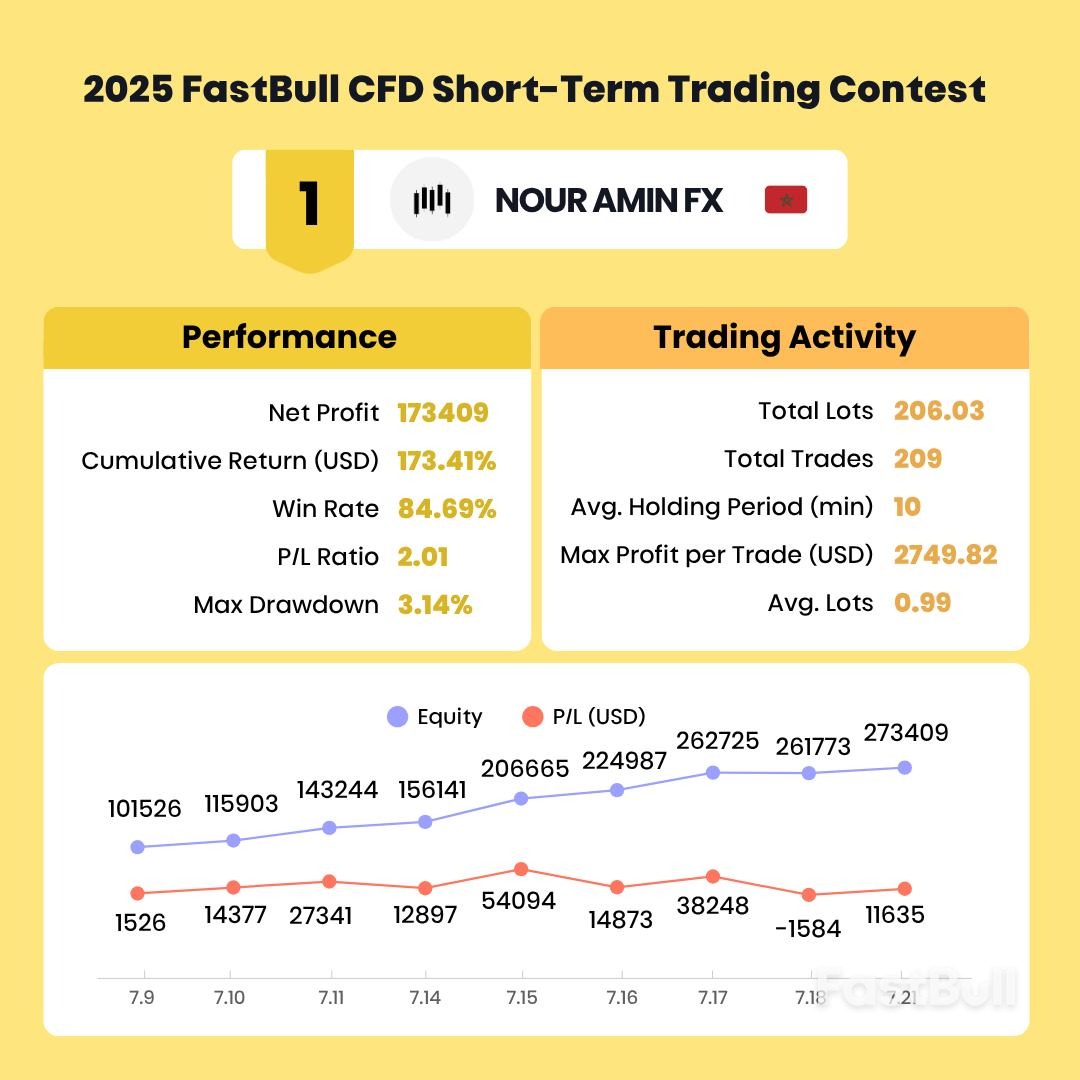
          1st: NOUR AMIN FX winning $5,000
          Exclusive Interview with Contest Winners! 2025 FastBull CFD Short-Term Trading Contest_2
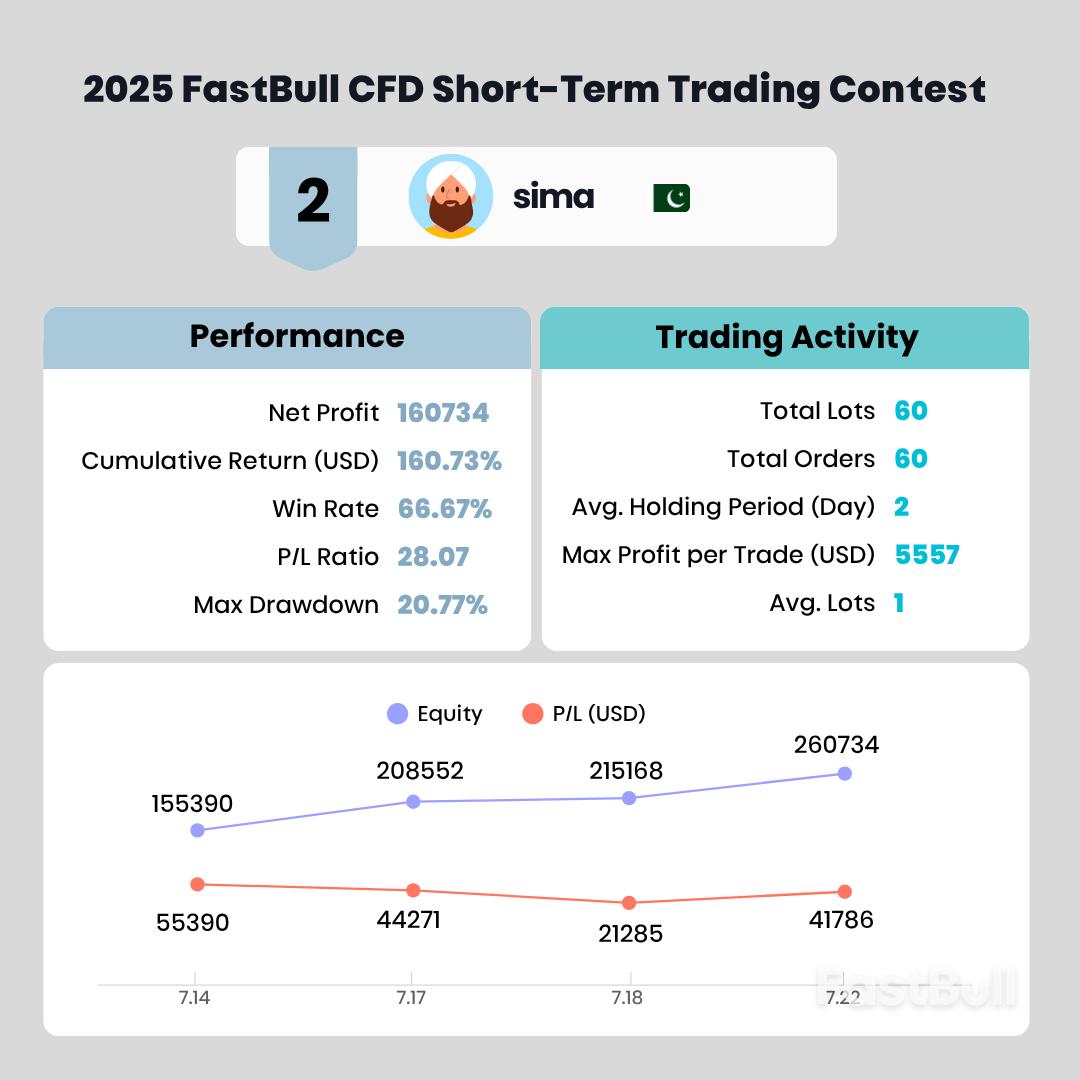
          2nd: sima winning $4,000
          Exclusive Interview with Contest Winners! 2025 FastBull CFD Short-Term Trading Contest_3
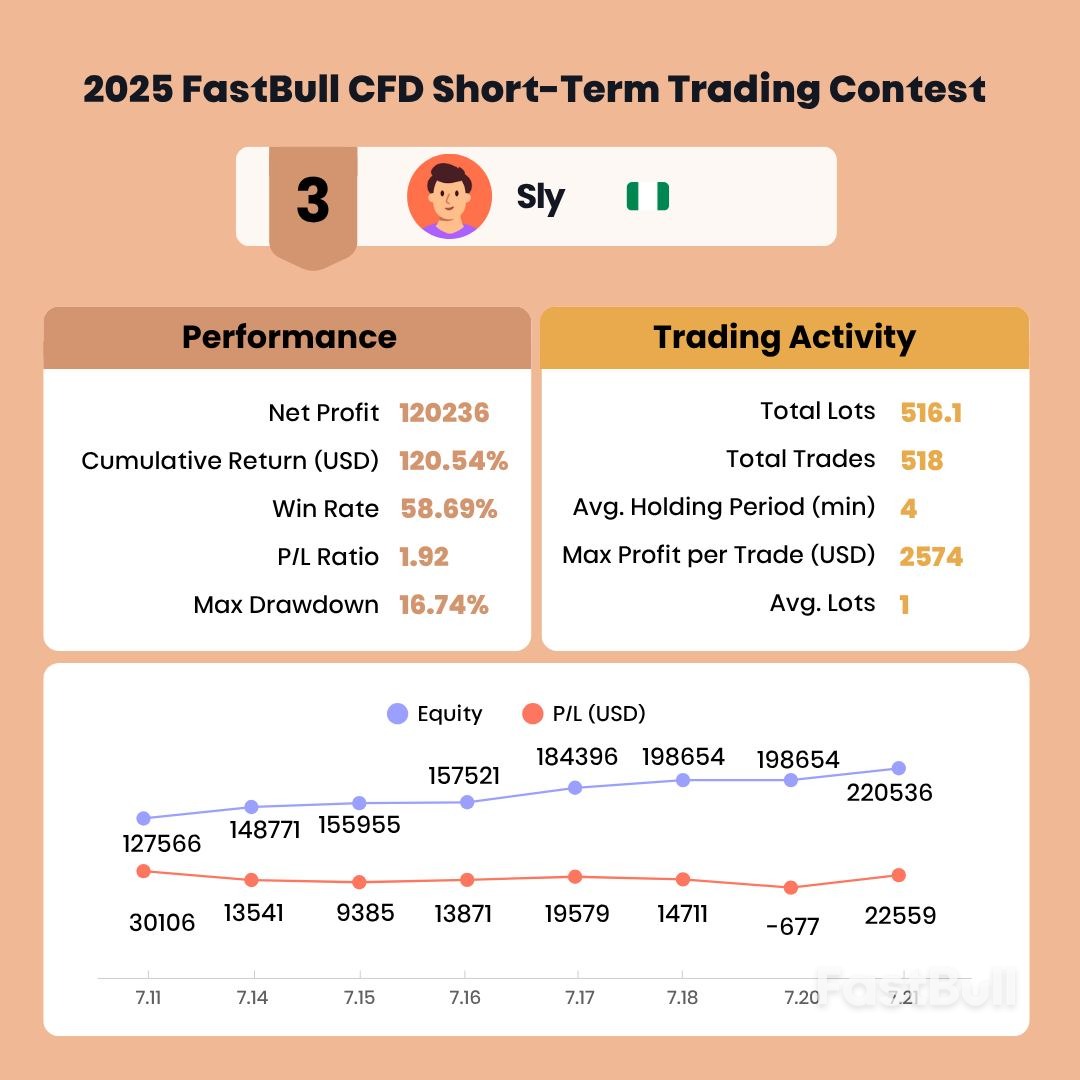
          3rd: Sly winning $3,000
          Exclusive Interview with Contest Winners! 2025 FastBull CFD Short-Term Trading Contest_4
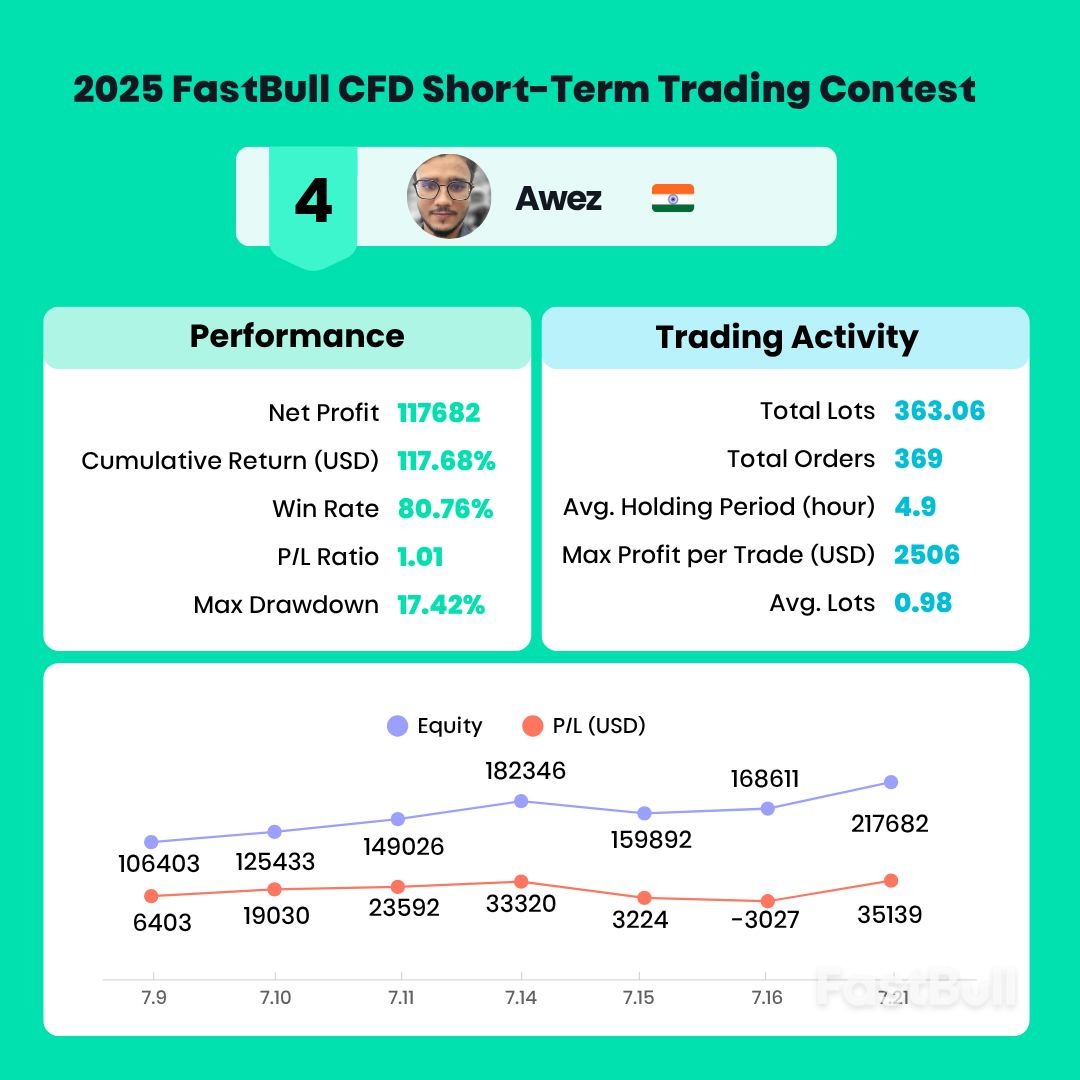
          4th: Awez winning $2,500
          Exclusive Interview with Contest Winners! 2025 FastBull CFD Short-Term Trading Contest_5
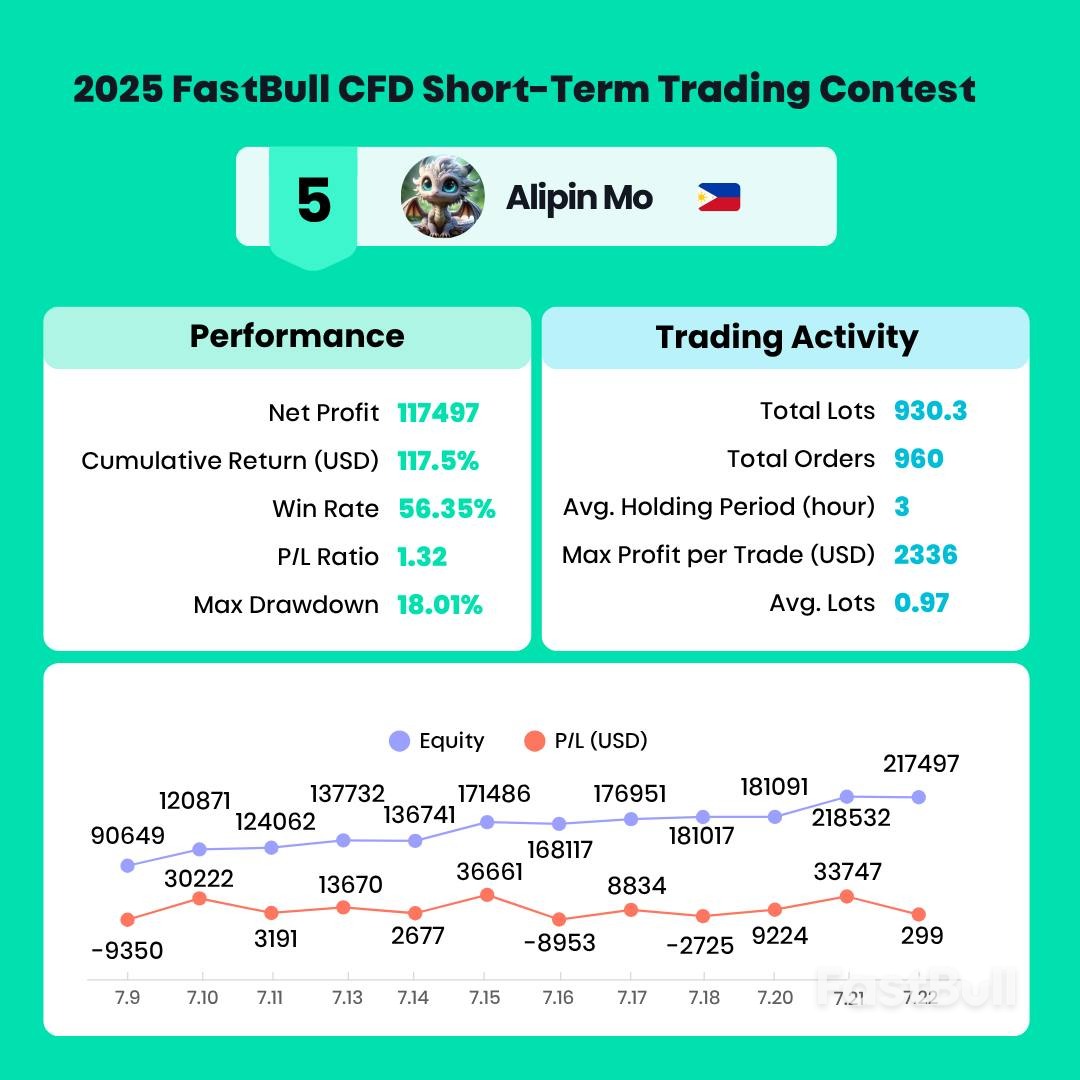
          5th: Alipin Mo winning $2,000
          Exclusive Interview with Contest Winners! 2025 FastBull CFD Short-Term Trading Contest_6
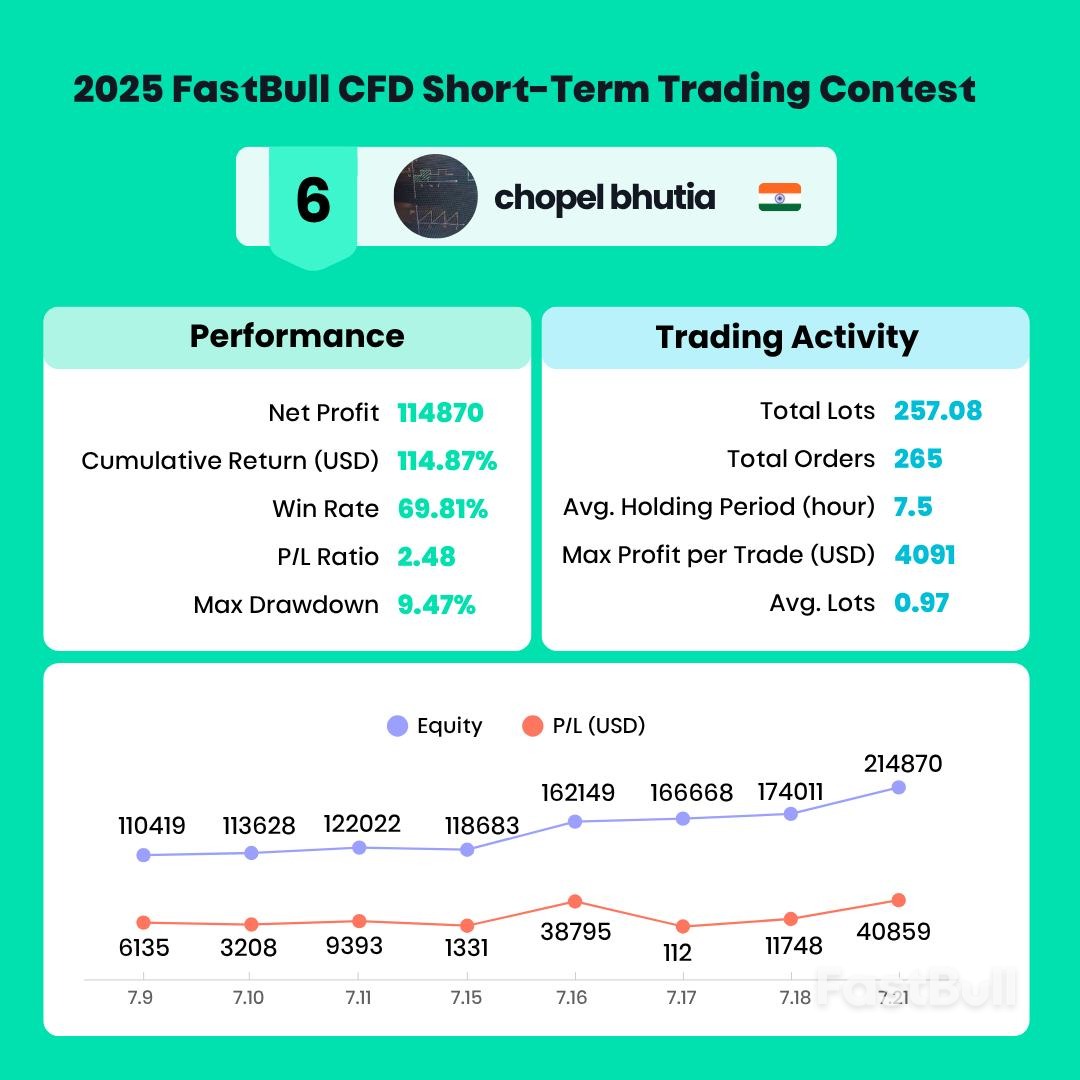
          6th: chopel bhutia winning $1,500
          Exclusive Interview with Contest Winners! 2025 FastBull CFD Short-Term Trading Contest_7
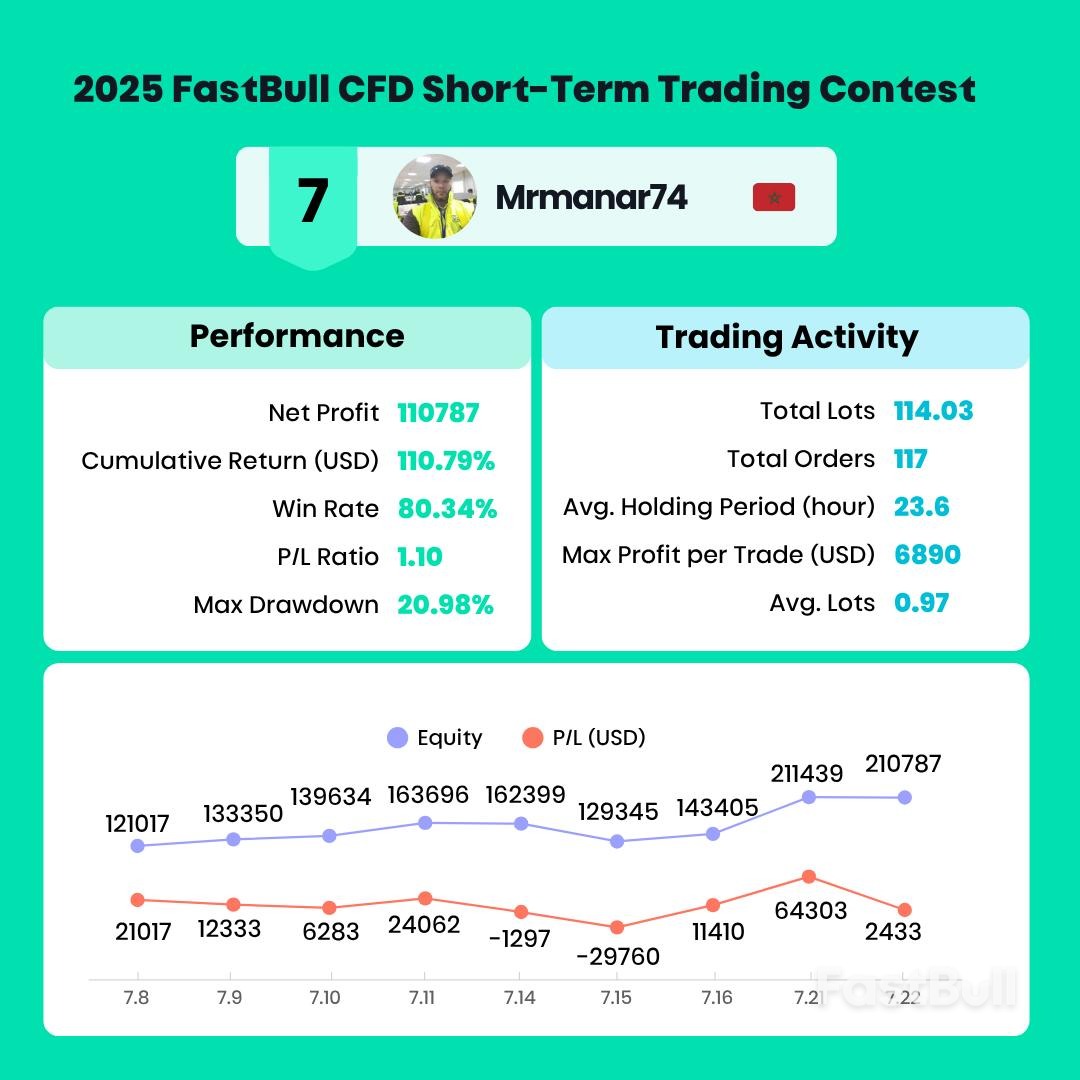
          7th:Mrmanar 74 winning $1,000
          Exclusive Interview with Contest Winners! 2025 FastBull CFD Short-Term Trading Contest_8
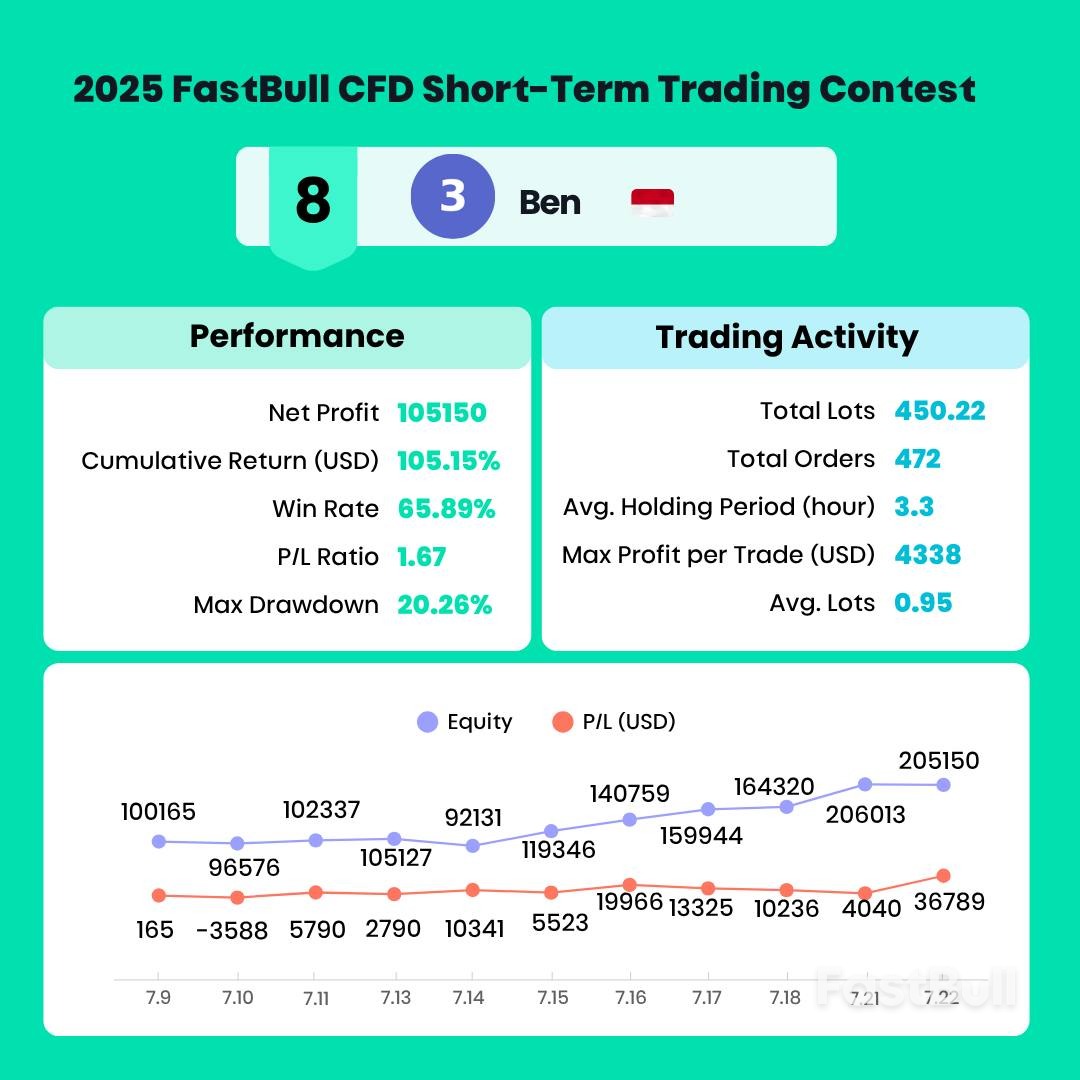
          8th: Ben winning $600
          Exclusive Interview with Contest Winners! 2025 FastBull CFD Short-Term Trading Contest_9
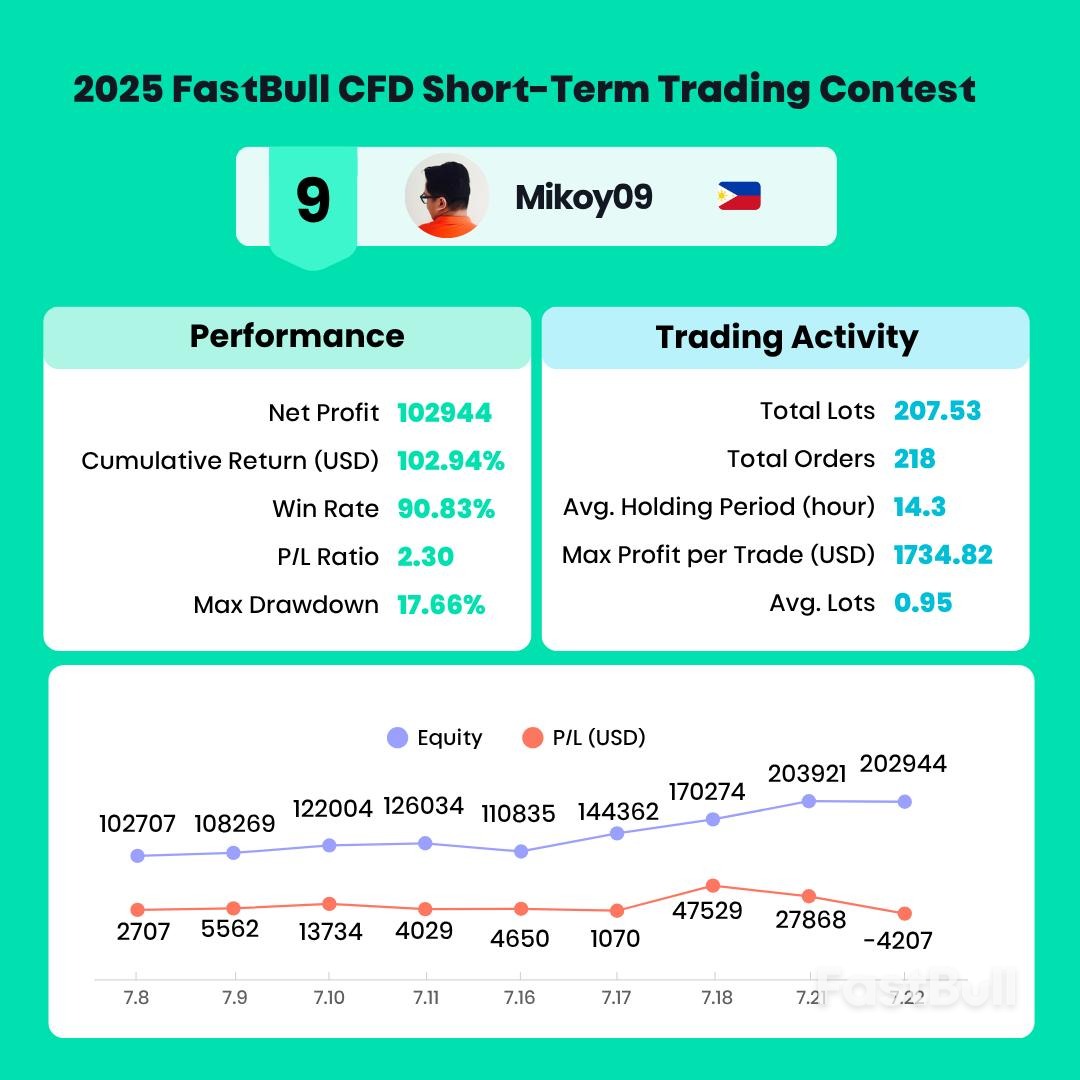
          9th: Mikoy09 winning $300
          Exclusive Interview with Contest Winners! 2025 FastBull CFD Short-Term Trading Contest_10
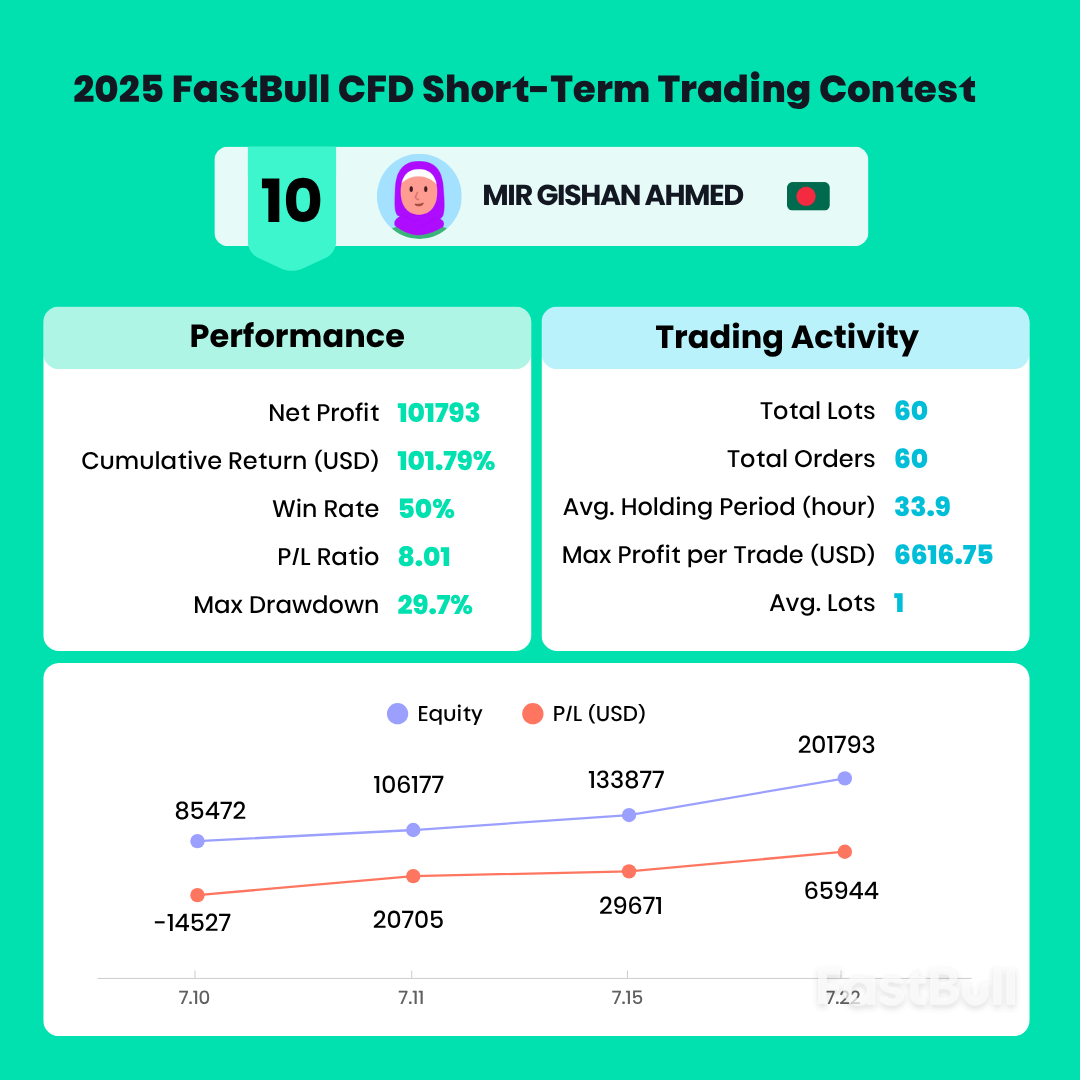
          10th:MIR GISHAN AHMED
          No Interview
          Exclusive Interview with Contest Winners! 2025 FastBull CFD Short-Term Trading Contest_11
          These ten traders didn't just outperform - they inspired. Their insights, shared through our exclusive video series, will offer valuable perspectives for aspiring traders looking to understand what separates the best from the rest.
          See you in the next FastBull Trading Contest - where the charts are clean, the stakes are high, and the next legend could be you.
          Learn more about the winners
          Risk Warnings and Disclaimers
          You understand and acknowledge that there is a high degree of risk involved in trading. Following any strategies or investment methods may lead to potential losses. The content on the site is provided by our contributors and analysts for information purposes only. You are solely responsible for determining whether any trading assets, securities, strategy, or any other product is suitable for investing based on your own investment objectives and financial situation.
          Add to Favorites
          Share

          Japan Pushes Back on U.S. Investment Terms, Seeks Clarity on Auto Tariff Cuts and “Stacking” Clause

          Gerik

          Economic

          Japan’s Investment in U.S. Tied to National Interest

          Japan’s Chief Trade Negotiator Ryosei Akazawa emphasized that Tokyo's promised $550 billion investment in the U.S. a key feature of last month’s trade agreement must deliver strategic value to Japan as well. In contrast to U.S. President Donald Trump’s framing of the package as a "signing bonus" for the U.S., Akazawa described the funds as part of a bilateral effort to strengthen economic security, particularly through supply chain cooperation.
          Akazawa stated, “We can’t cooperate on anything that does not benefit Japan.” While he acknowledged that the investments would be made within the United States, he also stressed that Tokyo must see returns such as enhanced control over critical supply chains or technological collaboration in order to justify the capital outflows.

          Dispute Over Interpretation and Oversight

          Akazawa also noted that President Trump’s preferences would influence the allocation of investment due to the location of the projects on U.S. soil. While Tokyo is willing to work collaboratively, Japan rejects any unilateral framing of the investment package as solely under Washington’s control.
          In parallel, Akazawa is expected to advocate for immediate implementation of the promised tariff cut on Japanese automobiles, currently burdened by a combined 27.5% levy a blend of the longstanding 2.5% rate and the recent 25% surcharge.

          “Stacking” Clause Raises Concerns

          A further complication has arisen around the issue of tariff “stacking.” A U.S. executive order issued on July 31 includes a clause ensuring non-cumulative tariffs for the European Union, meaning goods will not face double taxation across different trade instruments. However, Japan was not granted the same clarity, raising fears that its exports might face overlapping duties, despite the new deal.
          Akazawa told reporters: “It’s different from what we’ve heard from the U.S. side. We’ll request that the agreed-upon content be implemented.”
          This points to a broader concern among Japanese officials that ambiguous or asymmetrical terms could weaken the deal’s intended benefits, especially in high-stakes sectors like automobiles and electronics.

          A Delicate Balance of Strategic Interests

          As Akazawa embarks on his first post-deal diplomatic mission to Washington, the visit highlights Tokyo’s determination to ensure fair treatment and uphold reciprocity in its trade and investment dealings with the U.S. While both sides see strategic value in closer cooperation, the execution of the agreement particularly in areas like tariffs, investment discretion, and supply chain resilience remains a sensitive balancing act.
          Whether Japan can secure the tariff relief and procedural clarity it seeks will serve as a critical test of not just this bilateral deal but also Tokyo’s broader approach to economic diplomacy in an era of transactional trade policy.

          Source: Reuters

          To stay updated on all economic events of today, please check out our Economic calendar
          Risk Warnings and Disclaimers
          You understand and acknowledge that there is a high degree of risk involved in trading. Following any strategies or investment methods may lead to potential losses. The content on the site is provided by our contributors and analysts for information purposes only. You are solely responsible for determining whether any trading assets, securities, strategy, or any other product is suitable for investing based on your own investment objectives and financial situation.
          Add to Favorites
          Share

          Indonesia Shifts Shrimp Export Focus to China Amid U.S. Tariff Fallout

          Gerik

          Economic

          U.S. Tariffs Disrupt Indonesia’s Shrimp Industry

          Indonesia’s shrimp sector, a vital part of the country’s aquaculture industry, has been shaken by the implementation of a 19% U.S. tariff, announced in July 2025. While lower than the initially proposed 32%, the tariff still represents a significant blow to exporters, who relied heavily on U.S. demand. In 2024, the U.S. accounted for 60% of Indonesia’s $1.68 billion shrimp exports.
          At Ujung Kulon Sukses Makmur Abadi, a major shrimp farm on the southwestern tip of Java island, expansion plans have come to a halt. Owner Denny Leonardo, who had intended to build 100 new ponds, was forced to scale back. "Everyone is eagerly looking for new opportunities to reduce dependence on the U.S.," he said.

          Export Outlook Weakens, Jobs at Risk

          According to Andi Tamsil, head of Indonesia’s shrimp farmers’ association, the 19% tariff could result in a 30% drop in total shrimp exports in 2025 compared to last year. This contraction places an estimated one million jobs at risk, from pond operators to seafood processors.
          While Ecuador — the world's top farmed shrimp producer — faces only a 15% U.S. tariff, Indonesia’s new rate puts its exporters at a competitive disadvantage. U.S. buyers are still hesitant to place orders despite July's revised deal, deepening uncertainty.

          Strategic Pivot to China and Other Markets

          In response, Indonesia is aggressively courting new buyers in China, which remains the world’s largest shrimp importer. Historically, China only imported 2% of Indonesia’s shrimp exports, but that is now expected to grow.
          Delegations led by industry figures like Tamsil have begun visiting major Chinese cities like Guangzhou, meeting with importers, restaurants, and e-commerce platforms to drum up demand. Tamsil believes Indonesia could realistically target 20% of China's 1 million-tonne import market.
          Budhi Wibowo, head of the seafood exporters’ association, also sees diversification opportunities in the Middle East, South Korea, Taiwan, and the European Union, especially with Indonesia on the verge of finalizing a free trade agreement with Brussels.

          A Slower Path to Growth

          Despite the turmoil, farmers like Leonardo remain cautiously optimistic. While he believes demand and supply will rebalance, he admits that the aggressive growth he envisioned for his business is no longer feasible in the near term.
          His sentiment reflects a broader outlook among Indonesian producers — survival is likely, but expansion will require strategic realignment, greater market outreach, and a reduction in overreliance on the U.S. market.
          The case of Indonesia’s shrimp industry underscores a key lesson from recent global trade frictions: economic diversification is not a luxury — it’s a necessity.

          Source: Reuters

          To stay updated on all economic events of today, please check out our Economic calendar
          Risk Warnings and Disclaimers
          You understand and acknowledge that there is a high degree of risk involved in trading. Following any strategies or investment methods may lead to potential losses. The content on the site is provided by our contributors and analysts for information purposes only. You are solely responsible for determining whether any trading assets, securities, strategy, or any other product is suitable for investing based on your own investment objectives and financial situation.
          Add to Favorites
          Share

          Asian Markets Edge Higher Despite Wall Street Losses Amid Tariff and Rate Cut Speculation

          Gerik

          Economic

          Stocks

          Asian Equities Resilient as Investors Digest U.S. Economic Concerns

          Markets across Asia saw modest gains on Wednesday, suggesting regional optimism even as Wall Street grappled with a second day of losses. The movement came amid weaker-than-expected U.S. service sector data and lingering fears over the economic fallout from President Donald Trump's tariffs.
          Japan’s Nikkei 225 climbed 0.6% to 40,777.45, supported by anticipation ahead of earnings from major exporters like Toyota, Honda, and Sony. Australia's S&P/ASX 200 also rose 0.6%, while Hong Kong’s Hang Seng edged up 0.2% and Shanghai's Composite Index advanced 0.3%. South Korea’s Kospi, however, declined by 0.3%, with tech and export-sensitive stocks under pressure.

          Wall Street Losses Highlight Tariff Risks and Rate Cut Hopes

          On Tuesday, the S&P 500 fell 0.5%, closing at 6,299.19. The Dow Jones Industrial Average dipped 0.1%, while the Nasdaq slid 0.7%, as investors reacted to disappointing U.S. services activity data. The ISM Services Index stalled, suggesting that tariffs may be curbing demand in key sectors like transportation and retail.
          While such economic signals raise alarms about growth, they simultaneously boost expectations that the Federal Reserve may cut interest rates at its September meeting. Fed rate cut expectations gained further traction following last Friday’s weaker-than-expected jobs report, which sharply pulled down Treasury yields and reinforced fears of a slowing economy.

          Profit Season Under Scrutiny

          With U.S. equities having surged to record highs since April, market observers are now questioning whether valuations are too rich relative to economic fundamentals. This places heavy pressure on corporate earnings to justify lofty stock prices. Strong results from select firms have helped limit downside, but the broader market remains volatile and highly sensitive to macroeconomic news.
          Investors are also watching whether interest rates will drop fast enough to support stock prices, especially in an environment where rising input costs exacerbated by tariffs threaten profit margins. While lower rates would boost equities by making them look more attractive versus bonds, they also risk fueling inflation, which could complicate the Fed’s policy path.

          Bond and Currency Markets Reflect Uncertainty

          The 10-year U.S. Treasury yield continued to fall, dipping to 4.19%, well below the 4.39% level seen before last week’s jobs report. This ongoing decline reflects growing investor concern about economic deceleration, and potentially a deeper rate cut than previously expected.
          In the currency market, the U.S. dollar weakened slightly, falling to 147.34 yen, while the euro inched up to $1.1583. These muted movements reflect investor caution ahead of key monetary and trade policy announcements from the U.S.

          Energy Prices Tick Higher

          Oil prices rose modestly, with U.S. crude gaining 41 cents to $65.57 per barrel, and Brent crude adding 42 cents to $68.06. The rebound was likely driven by speculation that a Fed rate cut could bolster economic activity and energy demand in the medium term.
          Markets will remain volatile as investors await further clarity on Federal Reserve policy, especially amid reports that President Trump is close to nominating a new Fed Governor. Meanwhile, uncertainty over tariffs, including potential escalations with China, Japan, and South Korea, adds a geopolitical layer of risk.
          While Asian equities have shown resilience, their performance is tightly tied to U.S. economic sentiment, Fed decisions, and the trajectory of global trade flows in the months ahead.

          Source: AP

          To stay updated on all economic events of today, please check out our Economic calendar
          Risk Warnings and Disclaimers
          You understand and acknowledge that there is a high degree of risk involved in trading. Following any strategies or investment methods may lead to potential losses. The content on the site is provided by our contributors and analysts for information purposes only. You are solely responsible for determining whether any trading assets, securities, strategy, or any other product is suitable for investing based on your own investment objectives and financial situation.
          Add to Favorites
          Share

          South Korea Seeks Clarity on U.S. Auto Tariff Cut as 15% Levy Looms

          Gerik

          Economic

          Auto Industry Caught in Diplomatic Delay

          South Korea’s Industry Minister Kim Jung-kwan announced on Wednesday that the timeline for the U.S. to cut its 25% tariff on South Korean car imports remains undecided, despite assurances in a recent trade agreement with Washington. President Donald Trump had stated that the U.S. would impose a 15% tariff on most South Korean imports, including autos, as part of a broader trade deal that aims to stabilize relations with one of its key Asian allies.
          With the 15% tariff set to take effect on Thursday, South Korean automakers like Hyundai Motor and Kia are lobbying for a swift implementation of the auto-specific tariff reduction. They argue that delays in tariff cuts will leave them at a disadvantage compared to Japanese and European competitors, whose products may face fewer barriers under other bilateral deals.

          Japan Also Presses Washington for Action

          South Korea is not alone in its concerns. Japan’s lead trade negotiator, Ryosei Akazawa, also revealed plans to visit Washington this week to push for President Trump to sign an executive order that would activate a reduction in U.S. tariffs on Japanese cars and auto parts. Like Seoul, Tokyo is urging clarity and swift enforcement of what was already agreed in principle during recent rounds of trade talks.
          Beyond autos, Minister Kim also noted that South Korea and the U.S. will continue negotiations around digital platform regulation, particularly concerning U.S. tech firms operating in the Korean market. While this issue wasn’t included in the most recent trade agreement, U.S. lawmakers and businesses have raised concerns about being treated unfairly under Seoul’s evolving tech legislation.
          Kim emphasized that no concessions were made regarding agricultural market access, including beef, rice, and fruit, which remain sensitive topics in Korean domestic politics. However, cooperation will increase in the area of quarantine procedures for fruit and vegetables, which the U.S. views as a non-tariff barrier due to their slow processing times.

          Pressure to Reform Quarantine Standards

          At a separate parliamentary session, Finance Minister Koo Yun-cheol acknowledged that the U.S. has formally requested South Korea streamline its fruit and vegetable quarantine process using more “rational and scientific” methods. This request is part of a broader push by the U.S. to eliminate non-tariff trade obstacles, especially those hindering American agricultural exports.
          Although the U.S.-South Korea trade agreement signaled progress in mending bilateral ties, the lack of clarity on tariff cut implementation timelines for cars and unresolved issues in agriculture and tech regulation suggest that much of the deal remains in negotiation. For now, South Korean manufacturers and exporters must brace for the 15% blanket tariff starting Thursday, while still awaiting confirmation on when promised relief for key sectors will arrive.

          Source: Reuters

          To stay updated on all economic events of today, please check out our Economic calendar
          Risk Warnings and Disclaimers
          You understand and acknowledge that there is a high degree of risk involved in trading. Following any strategies or investment methods may lead to potential losses. The content on the site is provided by our contributors and analysts for information purposes only. You are solely responsible for determining whether any trading assets, securities, strategy, or any other product is suitable for investing based on your own investment objectives and financial situation.
          Add to Favorites
          Share

          China’s Export Growth Faces Setback in July Amid Renewed U.S. Tariff Threats

          Gerik

          Economic

          Outlook Darkens as Tariff Deadline Nears

          China’s export sector, long the engine of its economic expansion, is now showing signs of strain. According to a Reuters poll of 34 economists, outbound shipments in July likely grew by just 5.4% year-over-year, a modest slowdown from June’s 5.8% increase. Meanwhile, imports are expected to have fallen by 1.0%, a reversal from the prior month’s 1.1% rise, indicating continuing weak domestic demand, particularly from a crisis-hit property sector and cautious consumers.
          This slowdown occurs against the backdrop of heightened geopolitical uncertainty. President Donald Trump has set an August 12 deadline for reaching a final tariff deal with Beijing. Without resolution, tariffs on Chinese goods could snap back to triple-digit levels, threatening what analysts describe as a de facto trade embargo between the world’s two largest economies.

          Trade Deal Hopes Offer Only Tentative Relief

          Trump signaled on Tuesday that the U.S. and China were “close to a deal,” with a potential summit with President Xi Jinping planned before year-end. Yet, despite earlier framework agreements in May and June focused on reducing non-tariff barriers in key areas like rare earths and tech licensing there is little certainty that a comprehensive agreement will materialize.
          If talks fail, global supply chains face renewed disruption. The mere possibility of such disruption is already enough to delay export orders, discourage investment, and dampen forward-looking indicators in China’s manufacturing sector.

          Trade Surplus Shrinks as Deflationary Risks Mount

          China’s trade surplus is projected to narrow to $105 billion in July, from $114.77 billion in June. Coinciding U.S. data revealed that the American trade deficit with China fell to its lowest in over two decades, suggesting weakening bilateral trade ties even before any new tariffs are imposed.
          China's domestic demand remains fragile, as the country grapples with a persistent property market downturn and growing signs of deflation, pushing the government to reconsider its long-term economic strategy. Leading policy advisers in Beijing are now urging a shift toward household consumption as the key growth pillar in the upcoming Five-Year Plan. This shift is deemed essential, as external trade becomes an increasingly unstable driver.

          Deflation, Employment and the Reform Conundrum

          Beyond trade, China’s deflationary pressure is becoming a broader macroeconomic challenge. The central government has pledged to clamp down on destructive price-cutting by Chinese firms particularly in tech and manufacturing that is exacerbating downward price trends. However, the root issue is structural: a demand-side weakness that’s harder to reverse than previous supply-side reforms from a decade ago.
          Economists argue that the current downturn threatens job creation, a key pillar of social stability in China. This makes it imperative for Beijing to balance reform goals with immediate economic support, particularly for consumers and the service sector.

          Global Pressures Persist

          Even if a deal is reached with the U.S., China’s broader trade environment remains hostile. The European Union continues to accuse Beijing of market distortion through underpriced exports, especially in renewable energy, steel, and electronics. Meanwhile, Trump’s administration is cracking down on circumvention tactics, including rerouting Chinese exports through third countries.
          Export growth, therefore, is projected to slow sharply in the second half of 2025, reflecting not only tariff risks but deteriorating diplomatic relations and external scrutiny of China’s industrial policy.
          As the August 12 deadline approaches, China’s export momentum appears to be cooling, caught in a bind between Trump’s unpredictable trade policy and a sluggish domestic economy. The prospects of a trade agreement offer some hope, but even success may be short-lived given the entrenched geopolitical rivalry and structural headwinds facing China’s economy. A genuine pivot toward domestic consumption and deeper reform may be Beijing’s only sustainable path forward.

          Source: Reuters

          To stay updated on all economic events of today, please check out our Economic calendar
          Risk Warnings and Disclaimers
          You understand and acknowledge that there is a high degree of risk involved in trading. Following any strategies or investment methods may lead to potential losses. The content on the site is provided by our contributors and analysts for information purposes only. You are solely responsible for determining whether any trading assets, securities, strategy, or any other product is suitable for investing based on your own investment objectives and financial situation.
          Add to Favorites
          Share

          Dollar Stalls as Markets Await Fed Governor Nomination Amid Stagflation Concerns

          Gerik

          Economic

          Forex

          Dollar Movement Muted Despite Rising Uncertainty

          On Wednesday, the U.S. dollar showed little direction as traders exercised restraint ahead of President Donald Trump’s imminent decision on who will fill a key vacancy on the Federal Reserve Board of Governors. While Trump also confirmed a shortlist of four candidates to potentially replace current Fed Chair Jerome Powell when his term ends in May 2026, the lack of clarity and potential politicization of the Fed left markets hesitant.
          The dollar index hovered at 98.76, still below Friday’s peak of 100.25 and showing no meaningful recovery after a sharp fall following a disappointing U.S. jobs report last week. Against the yen, the dollar was steady at 147.54, and the euro edged up to $1.5760. The British pound was last trading at $1.3304.

          Tariff-Driven Stagflation Fears Complicate Policy Outlook

          Economic data released on Tuesday offered stagflation-like signals, adding complexity to the Federal Reserve’s upcoming decisions. The U.S. services sector stagnated in July, while input costs rose at their fastest pace in three years, suggesting that Trump’s aggressive tariff policies are beginning to exert inflationary pressure without stimulating activity. This puts the Fed in a difficult position as it tries to balance price stability against a weakening economic backdrop.
          Ray Attrill, head of FX research at NAB, noted that markets may overestimate the certainty of a rate cut in September. While futures still imply a 94% probability of such a move, Attrill highlighted that Tuesday’s ISM report suggests caution, as rising costs might conflict with easing expectations.

          Market Attention Turns to Trump’s Fed Pick

          The potential market-moving event now lies in Trump’s announcement expected by the end of the week on who will replace the departing Fed governor. The choice could signal how independent the central bank will remain under Trump’s influence, especially given the accusations of partisanship in Fed appointments.
          Analysts expect increased volatility if the nominee is perceived to lack credibility or central banking expertise. The appointment could influence expectations not just for the September decision, but for the longer-term path of U.S. monetary policy especially as Trump continues to pressure the Fed to support economic growth amid his tariff wars.

          AUD, NZD Edge Higher Despite Domestic Headwinds

          Outside the U.S., the Australian dollar rose 0.15% to $0.6479, and the New Zealand dollar gained 0.23% to $0.5914. New Zealand reported a slight uptick in its jobless rate, reinforcing expectations that the Reserve Bank of New Zealand will follow through with a 25 basis-point rate cut in August. Despite soft labor conditions, the Kiwi held steady, supported by dovish central bank sentiment.
          The dollar’s subdued behavior reflects an ongoing pause in directional conviction among traders. With economic indicators flashing mixed signals and a politically sensitive Fed nomination on the horizon, markets are in limbo, waiting for clearer policy direction. A poorly received pick for the Fed board or stronger stagflationary data could rekindle dollar volatility, while a credible nominee and stabilizing data might restore calm to FX markets in the days ahead.

          Source: Reuters

          To stay updated on all economic events of today, please check out our Economic calendar
          Risk Warnings and Disclaimers
          You understand and acknowledge that there is a high degree of risk involved in trading. Following any strategies or investment methods may lead to potential losses. The content on the site is provided by our contributors and analysts for information purposes only. You are solely responsible for determining whether any trading assets, securities, strategy, or any other product is suitable for investing based on your own investment objectives and financial situation.
          Add to Favorites
          Share
          FastBull
          Copyright © 2025 FastBull Ltd

          728 RM B 7/F GEE LOK IND BLDG NO 34 HUNG TO RD KWUN TONG KLN HONG KONG

          TelegramInstagramTwitterfacebooklinkedin
          App Store Google Play Google Play
          Products
          Charts

          Chats

          Q&A with Experts
          Screeners
          Economic Calendar
          Data
          Tools
          Membership
          Features
          Function
          Markets
          Copy Trading
          Latest Signals
          Contests
          News
          Analysis
          24/7
          Columns
          Education
          Company
          Careers
          About Us
          Contact Us
          Advertising
          Help Center
          Feedback
          User Agreement
          Privacy Policy
          Business

          White Label

          Data API

          Web Plug-ins

          Poster Maker

          Affiliate Program

          Risk Disclosure

          The risk of loss in trading financial instruments such as stocks, FX, commodities, futures, bonds, ETFs and crypto can be substantial. You may sustain a total loss of the funds that you deposit with your broker. Therefore, you should carefully consider whether such trading is suitable for you in light of your circumstances and financial resources.

          No decision to invest should be made without thoroughly conducting due diligence by yourself or consulting with your financial advisors. Our web content might not suit you since we don't know your financial conditions and investment needs. Our financial information might have latency or contain inaccuracy, so you should be fully responsible for any of your trading and investment decisions. The company will not be responsible for your capital loss.

          Without getting permission from the website, you are not allowed to copy the website's graphics, texts, or trademarks. Intellectual property rights in the content or data incorporated into this website belong to its providers and exchange merchants.

          Not Logged In

          Log in to access more features

          FastBull Membership

          Not yet

          Purchase

          Become a signal provider
          Help Center
          Customer Service
          Dark Mode
          Price Up/Down Colors

          Log In

          Sign Up

          Position
          Layout
          Fullscreen
          Default to Chart
          The chart page opens by default when you visit fastbull.com