Markets
News
Analysis
User
24/7
Economic Calendar
Education
Data
- Names
- Latest
- Prev




Signal Accounts for Members
All Signal Accounts
All Contests


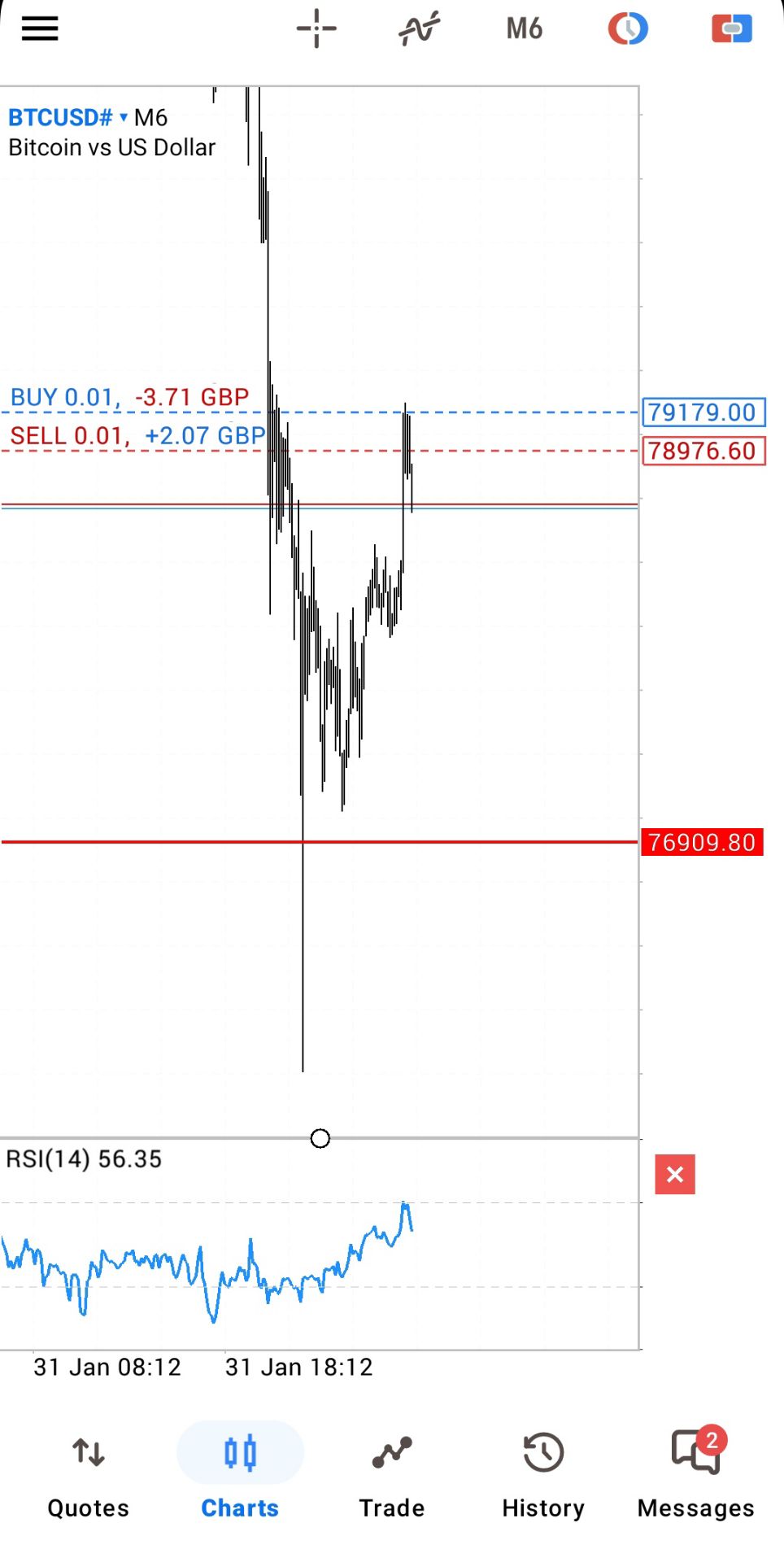
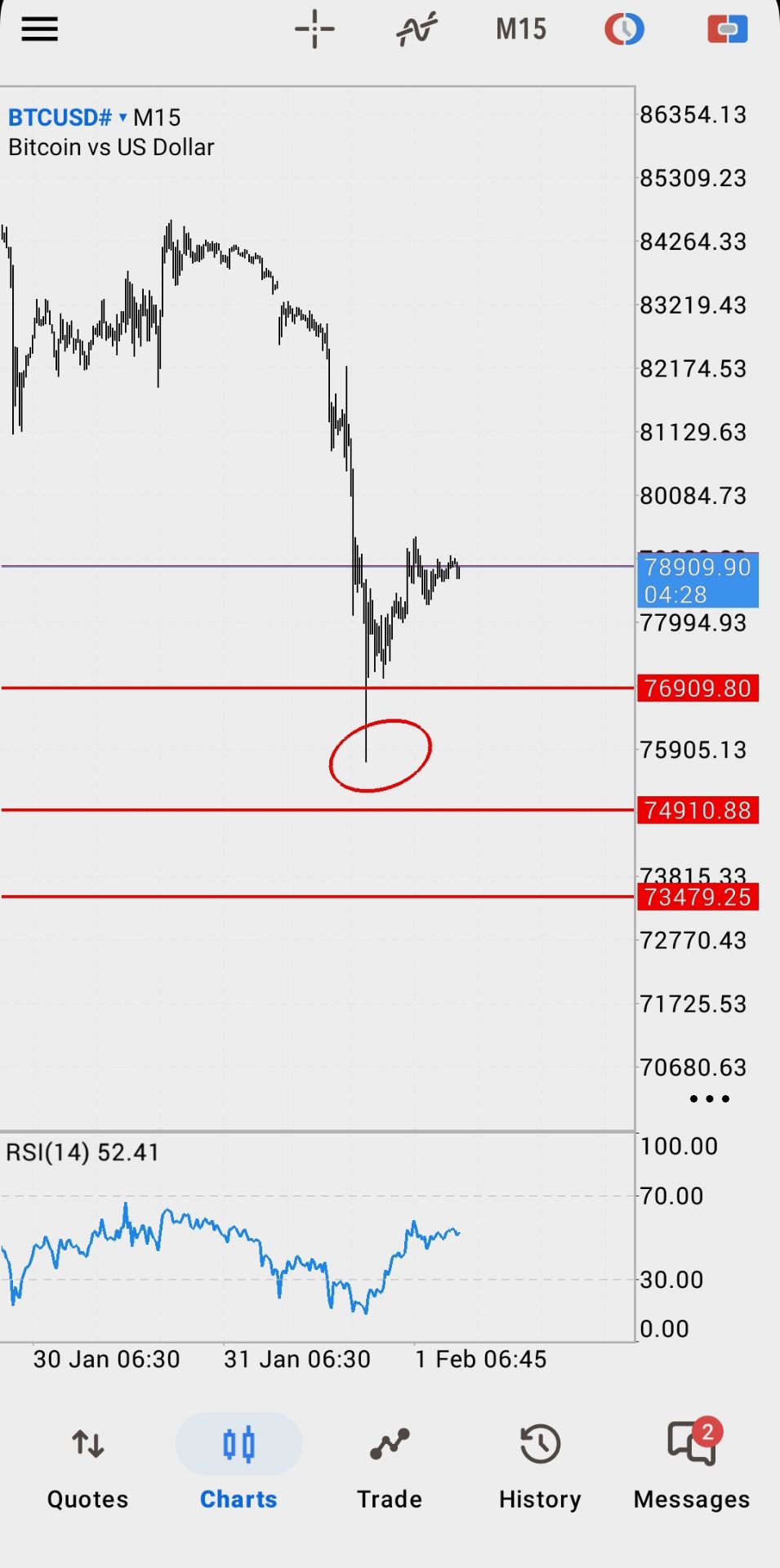
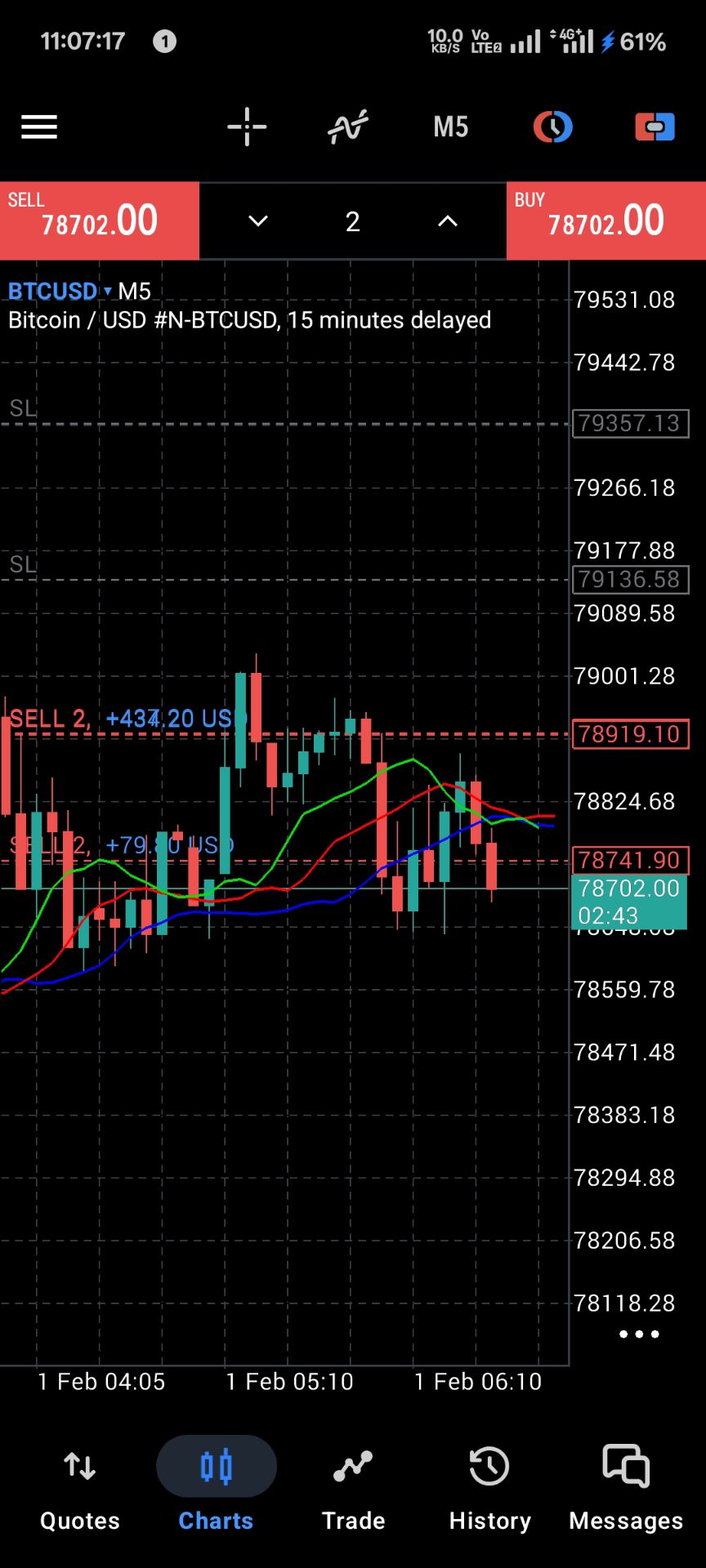
[Bitcoin Briefly Drops Below $78,000] February 1st, According To Htx Market Data, Bitcoin Briefly Dropped Below $78,000, And Is Now Trading At $78,184, With A 24-Hour Decrease Of 6.52%
India Budget: Targets 3.16 Trillion Rupees Dividend From Reserve Bank Of India, Financial Institutions
India Budget: Government To Switch Bonds Worth 2.5 Trillion Rupees For Fy26 (Adds Dropped Words)

U.K. M4 Money Supply (SA) (Dec)A:--
F: --
Italy Unemployment Rate (SA) (Dec)A:--
F: --
P: --
Euro Zone Unemployment Rate (Dec)A:--
F: --
P: --
Euro Zone GDP Prelim QoQ (SA) (Q4)A:--
F: --
P: --
Euro Zone GDP Prelim YoY (SA) (Q4)A:--
F: --
P: --
Italy PPI YoY (Dec)A:--
F: --
P: --
Mexico GDP Prelim YoY (Q4)A:--
F: --
P: --
Brazil Unemployment Rate (Dec)A:--
F: --
P: --
South Africa Trade Balance (Dec)A:--
F: --
P: --
India Deposit Gowth YoYA:--
F: --
P: --
Germany CPI Prelim YoY (Jan)A:--
F: --
P: --
Germany CPI Prelim MoM (Jan)A:--
F: --
P: --
Germany HICP Prelim YoY (Jan)A:--
F: --
P: --
Germany HICP Prelim MoM (Jan)A:--
F: --
P: --
U.S. Core PPI YoY (Dec)A:--
F: --
U.S. Core PPI MoM (SA) (Dec)A:--
F: --
P: --
U.S. PPI YoY (Dec)A:--
F: --
P: --
U.S. PPI MoM (SA) (Dec)A:--
F: --
P: --
Canada GDP MoM (SA) (Nov)A:--
F: --
P: --
Canada GDP YoY (Nov)A:--
F: --
P: --
U.S. PPI MoM Final (Excl. Food, Energy and Trade) (SA) (Dec)A:--
F: --
P: --
U.S. PPI YoY (Excl. Food, Energy & Trade) (Dec)A:--
F: --
P: --
U.S. Chicago PMI (Jan)A:--
F: --
Canada Federal Government Budget Balance (Nov)A:--
F: --
P: --
U.S. Weekly Total Oil Rig CountA:--
F: --
P: --
U.S. Weekly Total Rig CountA:--
F: --
P: --
China, Mainland NBS Manufacturing PMI (Jan)A:--
F: --
P: --
China, Mainland NBS Non-manufacturing PMI (Jan)A:--
F: --
P: --
China, Mainland Composite PMI (Jan)A:--
F: --
P: --
South Korea Trade Balance Prelim (Jan)A:--
F: --
Japan Manufacturing PMI Final (Jan)--
F: --
P: --
South Korea IHS Markit Manufacturing PMI (SA) (Jan)--
F: --
P: --
Indonesia IHS Markit Manufacturing PMI (Jan)--
F: --
P: --
China, Mainland Caixin Manufacturing PMI (SA) (Jan)--
F: --
P: --
Indonesia Trade Balance (Dec)--
F: --
P: --
Indonesia Inflation Rate YoY (Jan)--
F: --
P: --
Indonesia Core Inflation YoY (Jan)--
F: --
P: --
India HSBC Manufacturing PMI Final (Jan)--
F: --
P: --
Australia Commodity Price YoY (Jan)--
F: --
P: --
Russia IHS Markit Manufacturing PMI (Jan)--
F: --
P: --
Turkey Manufacturing PMI (Jan)--
F: --
P: --
U.K. Nationwide House Price Index MoM (Jan)--
F: --
P: --
U.K. Nationwide House Price Index YoY (Jan)--
F: --
P: --
Germany Actual Retail Sales MoM (Dec)--
F: --
Italy Manufacturing PMI (SA) (Jan)--
F: --
P: --
South Africa Manufacturing PMI (Jan)--
F: --
P: --
Euro Zone Manufacturing PMI Final (Jan)--
F: --
P: --
U.K. Manufacturing PMI Final (Jan)--
F: --
P: --
Brazil IHS Markit Manufacturing PMI (Jan)--
F: --
P: --
Canada National Economic Confidence Index--
F: --
P: --
Canada Manufacturing PMI (SA) (Jan)--
F: --
P: --
U.S. IHS Markit Manufacturing PMI Final (Jan)--
F: --
P: --
U.S. ISM Output Index (Jan)--
F: --
P: --
U.S. ISM Inventories Index (Jan)--
F: --
P: --
U.S. ISM Manufacturing Employment Index (Jan)--
F: --
P: --
U.S. ISM Manufacturing New Orders Index (Jan)--
F: --
P: --
U.S. ISM Manufacturing PMI (Jan)--
F: --
P: --
South Korea CPI YoY (Jan)--
F: --
P: --
Japan Monetary Base YoY (SA) (Jan)--
F: --
P: --
Australia Building Permits MoM (SA) (Dec)--
F: --
P: --


No matching data
Latest Views
Latest Views
Trending Topics
Top Columnists
Latest Update
White Label
Data API
Web Plug-ins
Affiliate Program
View All

No data
By Sabrina Escobar
Wealthier shoppers, and the retailers that cater to them, stand to be the main winners as President Donald Trump's new tax bill jolts the economy with bigger refunds for people across the economic spectrum.
The One Big Beautiful Bill Act, signed into law in July, includes several provisions that will lead to heftier payments, including an increase to the SALT deduction cap, no tax on overtime and tips, and additional deductions for seniors. It adds up to a potentially considerable boost for consumer demand.
The Treasury Department estimates that tax refunds will increase by an average of $1,000 per household in 2026. A group of analysts at BofA Securities estimate that a combination of those larger checks and smaller tax payments could leave consumers with an extra $135 billion around tax season.
That works out to about 0.4% to 0.5% of gross domestic product. Refunds alone should increase by about $100 billion.
"We see a growing set of potential tailwinds for the consumer, including higher expected tax refunds, which leaves us incrementally more constructive on the outlook for the year," wrote Ashley Owens, an analyst at KeyBanc Capital Markets who covers softlines retail.
While households across the income spectrum are expected to benefit, the spoils won't be shared equally, experts say. Higher- and middle-income families will get a disproportionate share of the pie. BofA economists note that many of the bill's measures are deductions, making them more valuable for households with more taxable income that pay higher tax rates on that income.
Meanwhile, lower-income households typically have tax bills that are already very low, leaving less wiggle room to reduce what they owe through deductions, the BofA analysts note. Plus, some of the benefits accrued by lower-income households — particularly no tax on tips or overtime work — may eventually be offset by reductions in welfare, such as Medicaid and SNAP benefits.
These dynamics could reinforce the so-called K-shaped economy, writes Tobin Marcus, an analyst at Wolfe Research. The phrase describes how higher-income households seem to be thriving — fueling growth at the top of the K — while lower and middle-income consumers are hurting, pulling them into the lower end of the K.
The distribution has several important implications on how the stimulus will trickle its way through the economy.
BofA economists forecast that only about half of the tax-season consumer stimulus will actually get spent in the near term, given that higher-income households are less likely to spend windfall cash and more likely to invest it.
Whatever wealthier consumers do spend tends to be directed toward discretionary areas rather than staples, notes a team of Bernstein analysts led by Zhihan Ma. That presents an opportunity for brands whose customer bases skew toward middle- and high-income clients, such as Tapestry, TJX, and On Holdings, as well as Costco Wholesale and Walmart's Sam's Club, they added. Walmart's recent inroads among higher-income households means the company's main brand could also benefit from the extra cash, the analysts wrote.
That said, lower-income households will still get a share of the extra refund money, albeit a smaller slice. Bernstein says the off-price chains Ross Stores and Burlington Stores, a Barron's stock pick, stand to benefit from that more modest surge in spending power. Evercore ISI's Greg Melich favors Five Below.
The bill may be big, but for retailers, the beauty will remain strictly in the eye of the high-end beholder.
Write to Sabrina Escobar at sabrina.escobar@barrons.com
This content was created by Barron's, which is operated by Dow Jones & Co. Barron's is published independently from Dow Jones Newswires and The Wall Street Journal.
The end of the earnings season is always a good time to take a step back and see who shined (and who not so much). Let’s take a look at how discount retailer stocks fared in Q3, starting with Ross Stores .
Discount retailers understand that many shoppers love a good deal, and they focus on providing excellent value to shoppers by selling general merchandise at major discounts. They can do this because of unique purchasing, procurement, and pricing strategies that involve scouring the market for trendy goods or buying excess inventory from manufacturers and other retailers. They then turn around and sell these snacks, paper towels, toys, clothes, and myriad other products at highly enticing prices. Despite the unique draw and lure of discounts, these discount retailers must also contend with the secular headwinds of online shopping and challenged retail foot traffic in places like suburban strip malls.
The 5 discount retailer stocks we track reported a strong Q3. As a group, revenues beat analysts’ consensus estimates by 1.9% while next quarter’s revenue guidance was 3.4% below.
Luckily, discount retailer stocks have performed well with share prices up 10.7% on average since the latest earnings results.
Selling excess inventory or overstocked items from other retailers, Ross Stores is an off-price concept that sells apparel and other goods at prices much lower than department stores.
Ross Stores reported revenues of $5.60 billion, up 10.4% year on year. This print exceeded analysts’ expectations by 2.6%. Overall, it was a very strong quarter for the company with an impressive beat of analysts’ EBITDA estimates and a solid beat of analysts’ revenue estimates.
Interestingly, the stock is up 19.8% since reporting and currently trades at $192.31.
Often facilitating a treasure hunt shopping experience, Five Below is an American discount retailer that sells a variety of products from mobile phone cases to candy to sports equipment for largely $5 or less.
Five Below reported revenues of $1.04 billion, up 23.1% year on year, outperforming analysts’ expectations by 6.3%. The business had a stunning quarter with EPS guidance for next quarter exceeding analysts’ expectations and a beat of analysts’ EPS estimates.
Five Below achieved the biggest analyst estimates beat and fastest revenue growth among its peers. The market seems happy with the results as the stock is up 19.1% since reporting. It currently trades at $195.96.
Often located in suburban or semi-rural shopping centers, Ollie’s Bargain Outlet is a discount retailer that acquires excess inventory then sells at meaningful discounts.
Ollie's reported revenues of $613.6 million, up 18.6% year on year, in line with analysts’ expectations. It was a mixed quarter as it posted a narrow beat of analysts’ EBITDA estimates but revenue in line with analysts’ estimates.
As expected, the stock is down 1.5% since the results and currently trades at $116.97.
Read our full analysis of Ollie’s results here.
Founded in 1972 as a discount coat and outerwear retailer, Burlington Stores is now an off-price retailer that has broadened into general apparel, footwear, and home goods.
Burlington reported revenues of $2.71 billion, up 7.1% year on year. This number met analysts’ expectations. Zooming out, it was a satisfactory quarter as it also produced an impressive beat of analysts’ EBITDA estimates but revenue guidance for next quarter slightly missing analysts’ expectations.
Burlington had the weakest performance against analyst estimates and slowest revenue growth among its peers. The stock is up 9.2% since reporting and currently trades at $310.75.
Read our full, actionable report on Burlington here, it’s free.
Initially based on a strategy of buying excess inventory from manufacturers or other retailers, TJX is an off-price retailer that sells brand-name apparel and other goods at prices much lower than department stores.
TJX reported revenues of $15.12 billion, up 7.5% year on year. This print topped analysts’ expectations by 1.5%. Overall, it was a strong quarter as it also recorded a solid beat of analysts’ EBITDA estimates and an impressive beat of analysts’ gross margin estimates.
The stock is up 7.1% since reporting and currently trades at $155.85.
Read our full, actionable report on TJX here, it’s free.
The past six months have been a windfall for Ross Stores’s shareholders. The company’s stock price has jumped 41.7%, hitting $189.86 per share. This was partly thanks to its solid quarterly results, and the run-up might have investors contemplating their next move.
Following the strength, is ROST a buy right now? Or is the market overestimating its value? Find out in our full research report, it’s free.
Why Does ROST Stock Spark Debate?
Selling excess inventory or overstocked items from other retailers, Ross Stores is an off-price concept that sells apparel and other goods at prices much lower than department stores.
Two Things to Like:
1. Store Growth Signals an Offensive Strategy
A retailer’s store count influences how much it can sell and how quickly revenue can grow.
Ross Stores operated 2,273 locations in the latest quarter. It has opened new stores at a rapid clip over the last two years, averaging 4% annual growth, much faster than the broader consumer retail sector.
When a retailer opens new stores, it usually means it’s investing for growth because demand is greater than supply, especially in areas where consumers may not have a store within reasonable driving distance.
2. Surging Same-Store Sales Show Increasing Demand
Same-store sales show the change in sales for a retailer's e-commerce platform and brick-and-mortar shops that have existed for at least a year. This is a key performance indicator because it measures organic growth.
Ross Stores’s demand has been spectacular for a retailer over the last two years. On average, the company has increased its same-store sales by an impressive 3.4% per year.
One Reason to be Careful:
Long-Term Revenue Growth Disappoints
A company’s long-term performance is an indicator of its overall quality. Any business can put up a good quarter or two, but the best consistently grow over the long haul. Regrettably, Ross Stores’s sales grew at a tepid 6% compounded annual growth rate over the last three years. This wasn’t a great result compared to the rest of the consumer retail sector, but there are still things to like about Ross Stores.
Final Judgment
Ross Stores’s merits more than compensate for its flaws, and with the recent surge, the stock trades at 27.5× forward P/E (or $189.86 per share). Is now the right time to buy? See for yourself in our comprehensive research report, it’s free.
What a fantastic six months it’s been for Ross Stores. Shares of the company have skyrocketed 44.1%, hitting $193.13. This was partly thanks to its solid quarterly results, and the performance may have investors wondering how to approach the situation.
Is now still a good time to buy ROST? Or is this a case of a company fueled by heightened investor enthusiasm? Find out in our full research report, it’s free.
Why Does ROST Stock Spark Debate?
Selling excess inventory or overstocked items from other retailers, Ross Stores is an off-price concept that sells apparel and other goods at prices much lower than department stores.
Two Things to Like:
1. Store Growth Signals an Offensive Strategy
The number of stores a retailer operates is a critical driver of how quickly company-level sales can grow.
Ross Stores operated 2,273 locations in the latest quarter. It has opened new stores at a rapid clip over the last two years, averaging 4% annual growth, much faster than the broader consumer retail sector.
When a retailer opens new stores, it usually means it’s investing for growth because demand is greater than supply, especially in areas where consumers may not have a store within reasonable driving distance.
2. Surging Same-Store Sales Show Increasing Demand
Same-store sales show the change in sales for a retailer's e-commerce platform and brick-and-mortar shops that have existed for at least a year. This is a key performance indicator because it measures organic growth.
Ross Stores’s demand has been spectacular for a retailer over the last two years. On average, the company has increased its same-store sales by an impressive 3.4% per year.
One Reason to be Careful:
Long-Term Revenue Growth Disappoints
A company’s long-term sales performance can indicate its overall quality. Even a bad business can shine for one or two quarters, but a top-tier one grows for years. Over the last three years, Ross Stores grew its sales at a tepid 6% compounded annual growth rate. This wasn’t a great result compared to the rest of the consumer retail sector, but there are still things to like about Ross Stores.
Final Judgment
White Label
Data API
Web Plug-ins
Poster Maker
Affiliate Program
The risk of loss in trading financial instruments such as stocks, FX, commodities, futures, bonds, ETFs and crypto can be substantial. You may sustain a total loss of the funds that you deposit with your broker. Therefore, you should carefully consider whether such trading is suitable for you in light of your circumstances and financial resources.
No decision to invest should be made without thoroughly conducting due diligence by yourself or consulting with your financial advisors. Our web content might not suit you since we don't know your financial conditions and investment needs. Our financial information might have latency or contain inaccuracy, so you should be fully responsible for any of your trading and investment decisions. The company will not be responsible for your capital loss.
Without getting permission from the website, you are not allowed to copy the website's graphics, texts, or trademarks. Intellectual property rights in the content or data incorporated into this website belong to its providers and exchange merchants.
Not Logged In
Log in to access more features
Log In
Sign Up