




























Investing.com -- Wall Street slid on Friday, weighed down by material and technology stocks and hotter-than-expected producer inflation data. The big news of the day was President Donald Trump’s nomination of former Federal Reserve governor Kevin Warsh as the new central bank chair.
At 12:17 ET (17:17 GMT), the benchmark S&P 500 index dropped 0.8% to 6,914.65 points, the tech-heavy NASDAQ Composite slipped 0.9% to 23,461.77 points, and the blue-chip Dow Jones Industrial Average fell 1.1% to 48,543.33 points.
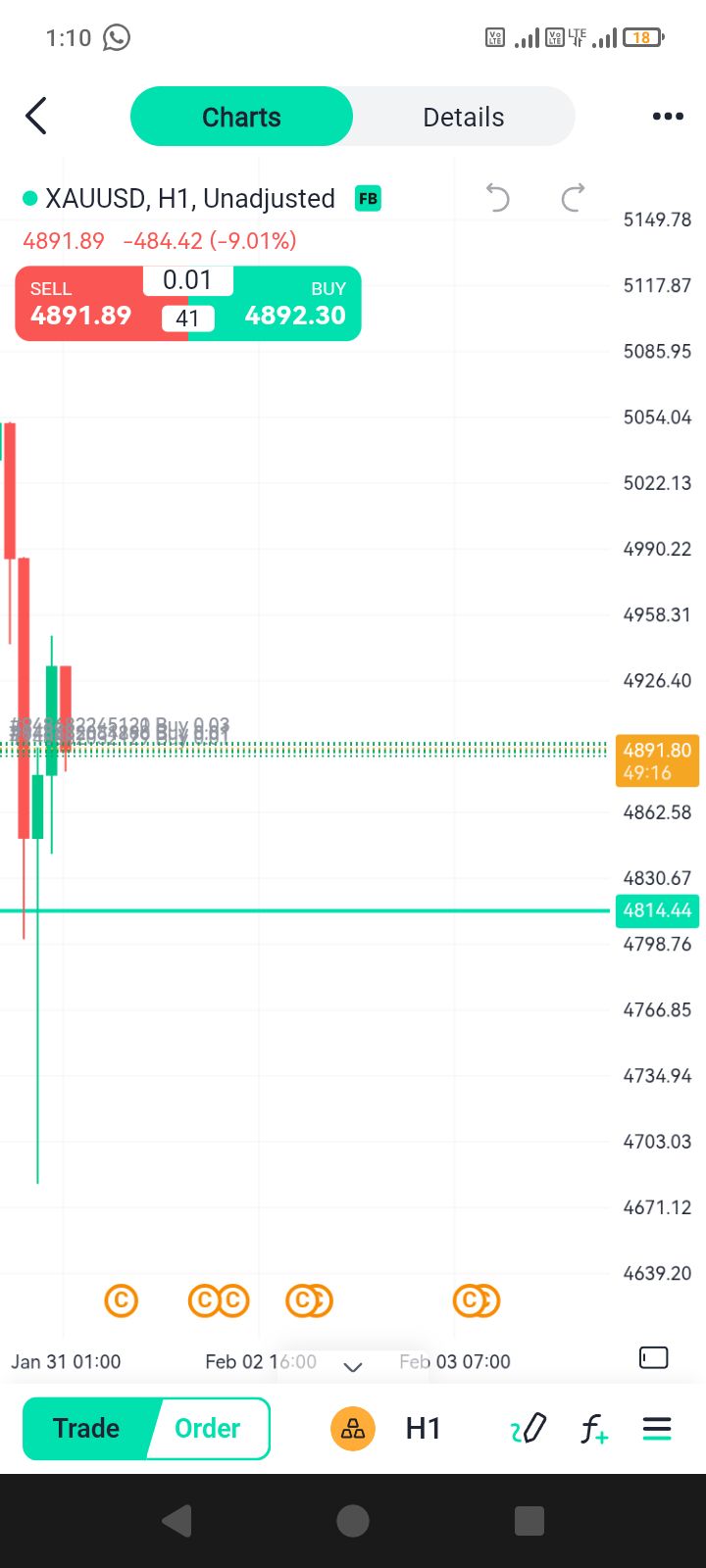
Also contributing to volatility was a slump in precious metals, as profit-taking intensified after a massive runup that took gold and silver to record highs.
Access premium Wall Street analysis, advanced financial tools with InvestingPro
Warsh nominated for Fed chair role
"(Warsh) will go down as one of the GREAT Fed Chairmen, maybe the best," Trump said on his Truth Social service in announcing his pick.
Warsh had been considered one of the frontrunners for the job. His nomination comes at a time when Trump is at odds with current Fed Chair Jerome Powell over the state of interest rates.
Trump has long ridiculed Powell for not lowering rates and has threatened to fire him. His administration has opened an investigation into the central bank chief, an action that Powell in an extraordinary move said was because of the Fed not taking rate decisions based on the president’s preference.
"Market moves are relatively muted considering the magnitude of the change. That’s largely because Warsh was both an unsurprising pick and someone who is already a known figure in Fed circles," Steve Sosnick, chief strategist at Interactive Brokers, told Investing.com.
Warsh served as a Fed Governor from 2006 to 2011. He lost out to Powell for the Fed chair role in 2017. Recently, Warsh has largely aligned himself with Trump’s calls for lower rates in the past year, but was a long-time critic of the ultra-loose monetary policy pursued by the Fed since the financial crisis, including the central bank’s expanded balance sheet.
"Stocks may be a bit disappointed in that he is not particularly dovish – odd considering that the president seemed to really want someone who would share his desire for lower rates," Sosnick added.
Warsh’s nomination will likely ease concerns about the independence of the Fed in light of his history and past hawkishness.
Elsewhere, Trump publicly endorsed a bipartisan spending deal negotiated by Senate Republicans and Democrats that would avert a looming government shutdown, posting support on Truth Social and urging cooperation.
The compromise would fund most federal agencies while leaving contentious immigration issues for further negotiation.
Reports said Democrat and Republican leaders had also agreed to the deal, although it remained unclear when Congress will vote on the matter. Lawmakers have until midnight, Friday, to release more spending for the federal government.
Hot December producer inflation
Traders also received some economic data before the opening bell that further reinforced the Fed’s decision earlier this week to hold interest rates steady.
The core December producer price index (PPI) came in 0.7% higher on a M/M basis, and 3.3% higher on a Y/Y basis. Both figures were well above the consensus estimates.
The delayed PPI data suggested that inflation was still very much a sticky problem.
"PPI data was hot. The three month and six month moving averages hottest since 2022," Diane Swonk, chief economist at KPMG U.S., said.
"The components that feed into the Federal Reserve’s target measure of inflation, the PCE index were not as bad but underscore why the Fed needs to pause and see what shows up. It is the reason that Chair Powell was cautious on not declaring victory over inflation yet," she added.
Apple’s iPhone sales surge
In the corporate sector, investors received more earnings from the likes of Exxon Mobil (NYSE:XOM), Chevron (NYSE:CVX), American Express (NYSE:AXP), and Verizon (NYSE:VZ).
After the close Thursday, Apple (NASDAQ:AAPL) comfortably beat profit and revenue expectations for the holiday quarter, its fiscal first quarter, enjoying its best quarterly iPhone sales growth performance in over four years.
iPhone sales jumped 23.3% year-on-year to $85.27 billion, marking the biggest increase since the fourth quarter of 2021.
The tech giant also forecast higher-than-expected revenue growth of up to 16% for the March quarter, powered by strong demand for its iPhones and a sharp rebound in China and accelerating demand in India.
Still, Apple’s shares slipped over 1% lower as sales in other parts of the company were less positive.
Verizon (NYSE:VZ) stock jumped after the telecoms giant reported fourth-quarter earnings and revenue that exceeded expectations, while providing an upbeat outlook for 2026 that signals the beginning of a strategic turnaround.
Chevron (NYSE:CVX) stock rose after its oil major’s fourth-quarter profits fell but came in ahead of estimates as it focused on cutting costs and making its operations more efficient to contend with lower crude prices throughout 2025.
In other moves, SanDisk (NASDAQ:SNDK) shares surged after the storage-chip maker delivered a significant profit beat and raised guidance, as demand for data-center and AI-related memory products outpaced forecasts.
Gold falls sharply lower
Gold prices plunged, as Warsh’s nomination quelled central bank independence concerns. Those worries had added to gold’s lure as a safe haven, contributing to the yellow metal’s recent massive runup.
After nearing $5,600/oz early on Wednesday, profit-buyers finally stepped in to lock some profits, halting Spot gold’s eight-day win streak.
Spot gold was last down 8.7% to $4,910.21/oz, while Gold Futures for April fell 7.9% to $4,934.50/oz.
Other precious metals also cooled on Friday after logging wild swings this week. Spot silver slid 20.9% to $90.69/oz, tumbling from a Thursday record high, while spot platinum slid 18.1% to $2,143.45/oz.
Oil prices fell, halting a three-day rally, though they were on track for hefty weekly gains as traders focused on potential U.S. military action against Iran.
Brent Oil Futures were last down 0.8% to $69.07 a barrel, and Crude Oil WTI Futures were lower by 0.6% to $65.04 a barrel.
Both benchmarks were set to gain over 7% this week.
The Organization of Petroleum Exporting Countries and allies, known as OPEC+, is set to meet on Sunday, with recent reports indicating that the cartel is likely to keep its output unchanged.
Ambar Warrick, Ayushman Ojha, and Peter Nurse contributed to this report


