


- XAUUSD
- XAGUSD
- WTI
- USDX



Markets
Analysis
User
24/7
Economic Calendar
Education
Data
- Names
- Latest
- Prev









Get the latest bond market news, including U.S. Treasury yield movements, Federal Reserve policy, inflation trends, and global bond market developments. Discover what these changes mean for investors.
Bond market news in November 2026 is being shaped by rising U.S. Treasury yields, persistent inflation, and a more hawkish outlook for Federal Reserve policy. These forces are affecting government and corporate bonds, while investors reassess interest-rate risk, borrowing costs, and the outlook for fixed-income markets.
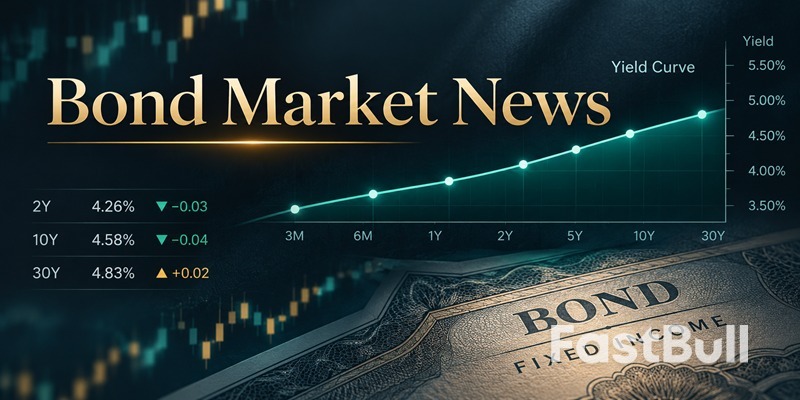
Market data in this article are current through November 13, 2026, unless otherwise stated. The article was reviewed on November 16, 2026.
U.S. Treasury yields climbed sharply during the week ending November 13. The 2-year yield rose 37 basis points, while the 10-year and 30-year yields gained 29 and 21 basis points, respectively. The move kept attention on inflation and the possibility of further Fed tightening.
U.S. Treasury data show that the 2-year yield stood at 4.88% on November 13, the 10-year yield at 5.15%, and the 30-year yield at 5.47%. The 2-year yield rose the most over the week, reflecting a sharp repricing of near-term interest-rate expectations.
| Treasury Maturity | Yield (Nov. 13) | Weekly Change |
|---|---|---|
| 2-Year Treasury | 4.88% | +37 basis points |
| 10-Year Treasury | 5.15% | +29 basis points |
| 30-Year Treasury | 5.47% | +21 basis points |
Source: U.S. Treasury daily yield curve data. Weekly changes compare November 13 with November 6, 2026.
The spread between the 10-year and 2-year Treasury yields narrowed to 27 basis points from 35 basis points a week earlier. This shows that short-term yields rose faster than long-term yields, a sign that changing expectations for Fed policy were a major driver of the move.
Higher Treasury yields raise the baseline cost of borrowing for companies issuing debt. Businesses with weaker credit ratings may face additional pressure because investors can demand wider credit spreads to compensate for default risk.
Demand for some high-quality corporate debt has remained strong. The Federal Reserve's November 2026 Financial Stability Report said bond issuance by the largest investment-grade firms operating data centers exceeded $150 billion year to date and attracted strong investor demand.
This suggests that higher rates have not closed corporate bond markets. Instead, access to financing increasingly depends on both benchmark Treasury yields and the financial strength of each issuer.
Global bond fund flows turned negative in the week to November 11. Reuters, citing LSEG Lipper data, reported net outflows of $507.89 million, ending a seven-week streak of inflows. Government bond funds lost $488.8 million, while dollar-denominated global bond funds saw $1.72 billion in outflows. Corporate bond funds, by contrast, attracted $2.07 billion.
The contrast points to selective positioning rather than a broad exit from fixed income. Investors were reducing exposure to some government and dollar-denominated funds while continuing to add corporate debt, reflecting different views on yields, credit risk, and income opportunities.
Source: Reuters report on global bond fund flows.
Recent bond market volatility reflects a combination of inflation data, central bank guidance, Treasury borrowing needs, and global risk sentiment. These factors influence both the expected path of interest rates and the compensation investors demand for holding bonds.
Federal Reserve policy has become a central focus after October inflation came in stronger than investors had hoped. Governor Christopher Waller said before the release that a 50-basis-point increase should be considered if core CPI rose around 0.3% or more. The October reading was 0.3%, meeting that condition. Dallas Fed President Lorie Logan also called for at least two more quarter-point increases and said the Fed may need to move more quickly this winter.
These comments strengthened expectations for another rate increase at the December 8–9 FOMC meeting. Markets were pricing in a quarter-point hike, although officials differed on the pace. The key question is whether inflation will keep policy restrictive for longer.
The Bureau of Labor Statistics reported that the Consumer Price Index rose 0.4% in October, while core CPI, which excludes food and energy, increased 0.3% for the third consecutive month. BLS could not publish a 12-month CPI change for October because October 2025 survey data were unavailable following a lapse in appropriations.
Persistent inflation can push yields higher because investors seek compensation for lost purchasing power. Strong economic data can reinforce expectations of further rate increases, while weaker growth may increase demand for safer government bonds.
Treasury supply matters too. If investors cannot absorb new government debt at current prices, bond prices may fall and yields rise. Strong auction demand can have the opposite effect.
Source: U.S. Bureau of Labor Statistics October 2026 CPI report.
Geopolitical tensions, energy prices, and foreign central bank decisions can all affect bond demand. Higher oil prices may lift inflation expectations and yields, while geopolitical uncertainty can drive investors toward safer assets such as U.S. Treasuries. These forces can push bond yields in opposite directions.
Bond market movements influence more than fixed-income portfolios. They can affect mortgage rates, corporate financing costs, stock valuations, and the returns available from savings products.
Bond prices and yields generally move in opposite directions. When market rates rise, new bonds offer higher yields, making older bonds with lower coupons less attractive and pushing their market prices down.
For example, a 3% coupon bond may lose market value when comparable new bonds offer 5%. The effect is usually greater for long-term bonds, making duration an important measure of interest-rate sensitivity.
Higher Treasury yields can raise borrowing costs. The 10-year yield is an important reference point for mortgage rates, although mortgage-backed securities and lender margins also matter.
Companies may pay more to issue or refinance debt. Higher yields can also make bonds more competitive with stocks and reduce the present value of future corporate earnings.
Whether bonds are attractive now depends on an investor's time horizon, income needs, and expectations for interest rates. Higher yields can improve the income available from new bonds, but investors still need to consider price volatility, inflation, and credit risk.
Higher yields can let investors lock in more income through high-quality bonds. If rates later fall, those bonds may also gain value as their fixed coupons become more competitive.
Investors seeking predictable cash flows may consider Treasuries held to maturity, provided they do not need to sell early. Short-term bonds are generally less rate-sensitive; long-term bonds can offer higher yields but usually fluctuate more.
High yields do not mean bonds are risk-free. If inflation stays elevated or rates rise, prices can fall. Corporate and high-yield bonds also carry default risk, particularly when issuers have weak balance sheets.
Individual bonds have stated maturity dates, while bond funds do not have a fixed maturity for shareholders. Fund prices can keep fluctuating as holdings change. The choice depends on the investor's need for a defined horizon, diversification, or ongoing income.
The bond market outlook will depend on inflation data, Fed decisions, and Treasury auction demand. Investors should watch these indicators rather than rely on a single forecast.
Minutes from the October 27–28 FOMC meeting are due November 18, followed by the next policy meeting on December 8–9. Investors will look for clues about inflation, growth, and the need for further rate increases.
October import and export price data are due November 17, while November CPI is scheduled for December 10. Both releases may influence inflation expectations.
The Treasury has scheduled a $16 billion 20-year bond auction for November 18 and a $19 billion reopening of 10-year TIPS for November 19. Demand at these auctions may influence yields.
Bid-to-cover ratios and accepted yields help gauge auction demand. The yield curve also matters: a widening gap between short- and long-term yields can reflect changing growth or inflation expectations, while a flattening curve may signal tighter conditions or concern about future growth.
Rising yields and falling prices do not by themselves indicate a collapse. More serious warning signs would include persistent liquidity problems, deteriorating credit conditions, or a sustained loss of investor confidence.
U.S. Treasuries are generally defensive assets, but they can still lose value when rates rise. Corporate and high-yield bonds may also fall during stock market sell-offs as credit risk increases.
Bond performance in 2026 depends on inflation, Fed policy, growth, and demand. Higher starting yields offer income potential, but further rate increases could cause losses. Credit quality, maturity, and investment horizon all matter.

728 RM B 7/F GEE LOK IND BLDG NO 34 HUNG TO RD KWUN TONG KLN HONG KONG


The risk of loss in trading financial instruments such as stocks, FX, commodities, futures, bonds, ETFs and crypto can be substantial. You may sustain a total loss of the funds that you deposit with your broker. Therefore, you should carefully consider whether such trading is suitable for you in light of your circumstances and financial resources.
No decision to invest should be made without thoroughly conducting due diligence by yourself or consulting with your financial advisors. Our web content might not suit you since we don't know your financial conditions and investment needs. Our financial information might have latency or contain inaccuracy, so you should be fully responsible for any of your trading and investment decisions. The company will not be responsible for your capital loss.
Without getting permission from the website, you are not allowed to copy the website's graphics, texts, or trademarks. Intellectual property rights in the content or data incorporated into this website belong to its providers and exchange merchants.
Not Logged In
Log in to access more features


Log In
Sign Up


