Markets
News
Analysis
User
24/7
Economic Calendar
Education
Data
- Names
- Latest
- Prev


Signal Accounts for Members
All Signal Accounts
All Contests


U.S. 5-Year Note Auction Avg. YieldA:--
F: --
P: --
U.S. API Weekly Cushing Crude Oil StocksA:--
F: --
P: --
U.S. API Weekly Crude Oil StocksA:--
F: --
P: --
U.S. API Weekly Refined Oil StocksA:--
F: --
P: --
U.S. API Weekly Gasoline StocksA:--
F: --
P: --
Mexico Unemployment Rate (Not SA) (Nov)A:--
F: --
P: --
U.S. MBA Mortgage Application Activity Index WoWA:--
F: --
P: --
U.S. Weekly Continued Jobless Claims (SA)A:--
F: --
U.S. Weekly Initial Jobless Claims (SA)A:--
F: --
P: --
U.S. Initial Jobless Claims 4-Week Avg. (SA)A:--
F: --
P: --
Japan Construction Orders YoY (Nov)A:--
F: --
P: --
Japan New Housing Starts YoY (Nov)A:--
F: --
P: --
Turkey Capacity Utilization (Dec)A:--
F: --
P: --
Japan Tokyo CPI YoY (Excl. Food & Energy) (Dec)A:--
F: --
P: --
Japan Unemployment Rate (Nov)A:--
F: --
P: --
Japan Tokyo Core CPI YoY (Dec)A:--
F: --
P: --
Japan Tokyo CPI YoY (Dec)A:--
F: --
P: --
Japan Jobs to Applicants Ratio (Nov)A:--
F: --
P: --
Japan Tokyo CPI MoM (Dec)A:--
F: --
P: --
Japan Tokyo CPI MoM (Excl. Food & Energy) (Dec)A:--
F: --
P: --
Japan Industrial Inventory MoM (Nov)A:--
F: --
P: --
Japan Retail Sales (Nov)A:--
F: --
P: --
Japan Industrial Output Prelim MoM (Nov)A:--
F: --
P: --
Japan Large-Scale Retail Sales YoY (Nov)A:--
F: --
P: --
Japan Industrial Output Prelim YoY (Nov)A:--
F: --
P: --
Japan Retail Sales MoM (SA) (Nov)A:--
F: --
P: --
Japan Retail Sales YoY (Nov)A:--
F: --
P: --
Russia Retail Sales YoY (Nov)A:--
F: --
P: --
Russia Unemployment Rate (Nov)A:--
F: --
P: --
Argentina Retail Sales YoY (Oct)A:--
F: --
P: --
U.S. Weekly Treasuries Held by Foreign Central Banks--
F: --
P: --
China, Mainland Industrial Profit YoY (YTD) (Nov)--
F: --
P: --
Russia IHS Markit Manufacturing PMI (Dec)--
F: --
P: --
India Manufacturing Output MoM (Nov)--
F: --
P: --
India Industrial Production Index YoY (Nov)--
F: --
P: --
France Unemployment Class-A (Nov)--
F: --
P: --
Euro Zone Total Reserve Assets (Nov)--
F: --
P: --
Canada National Economic Confidence Index--
F: --
P: --
U.S. Pending Home Sales Index (Nov)--
F: --
P: --
U.S. Pending Home Sales Index MoM (SA) (Nov)--
F: --
P: --
U.S. Pending Home Sales Index YoY (Nov)--
F: --
P: --
U.S. EIA Weekly Crude Oil Imports Changes--
F: --
P: --
U.S. EIA Weekly Cushing, Oklahoma Crude Oil Stocks Change--
F: --
P: --
U.S. EIA Weekly Crude Demand Projected by Production--
F: --
P: --
U.S. EIA Weekly Gasoline Stocks Change--
F: --
P: --
U.S. Dallas Fed General Business Activity Index (Dec)--
F: --
P: --
U.S. EIA Weekly Heating Oil Stock Changes--
F: --
P: --
U.S. EIA Weekly Crude Stocks Change--
F: --
P: --
U.S. Dallas Fed New Orders Index (Dec)--
F: --
P: --
Russia CPI YoY (Dec)--
F: --
P: --
U.S. EIA Weekly Natural Gas Stocks Change--
F: --
P: --
Brazil CAGED Net Payroll Jobs (Nov)--
F: --
P: --
South Korea Industrial Output MoM (SA) (Nov)--
F: --
P: --
South Korea Retail Sales MoM (Nov)--
F: --
P: --
South Korea Services Output MoM (Nov)--
F: --
P: --
Russia IHS Markit Services PMI (Dec)--
F: --
P: --
Turkey Economic Sentiment Indicator (Dec)--
F: --
P: --
Brazil Unemployment Rate (Nov)--
F: --
P: --
U.S. Weekly Redbook Index YoY--
F: --
P: --
U.S. FHFA House Price Index MoM (Oct)--
F: --
P: --


No matching data
Latest Views
Latest Views
Trending Topics
Top Columnists
Latest Update
White Label
Data API
Web Plug-ins
Affiliate Program
View All

No data
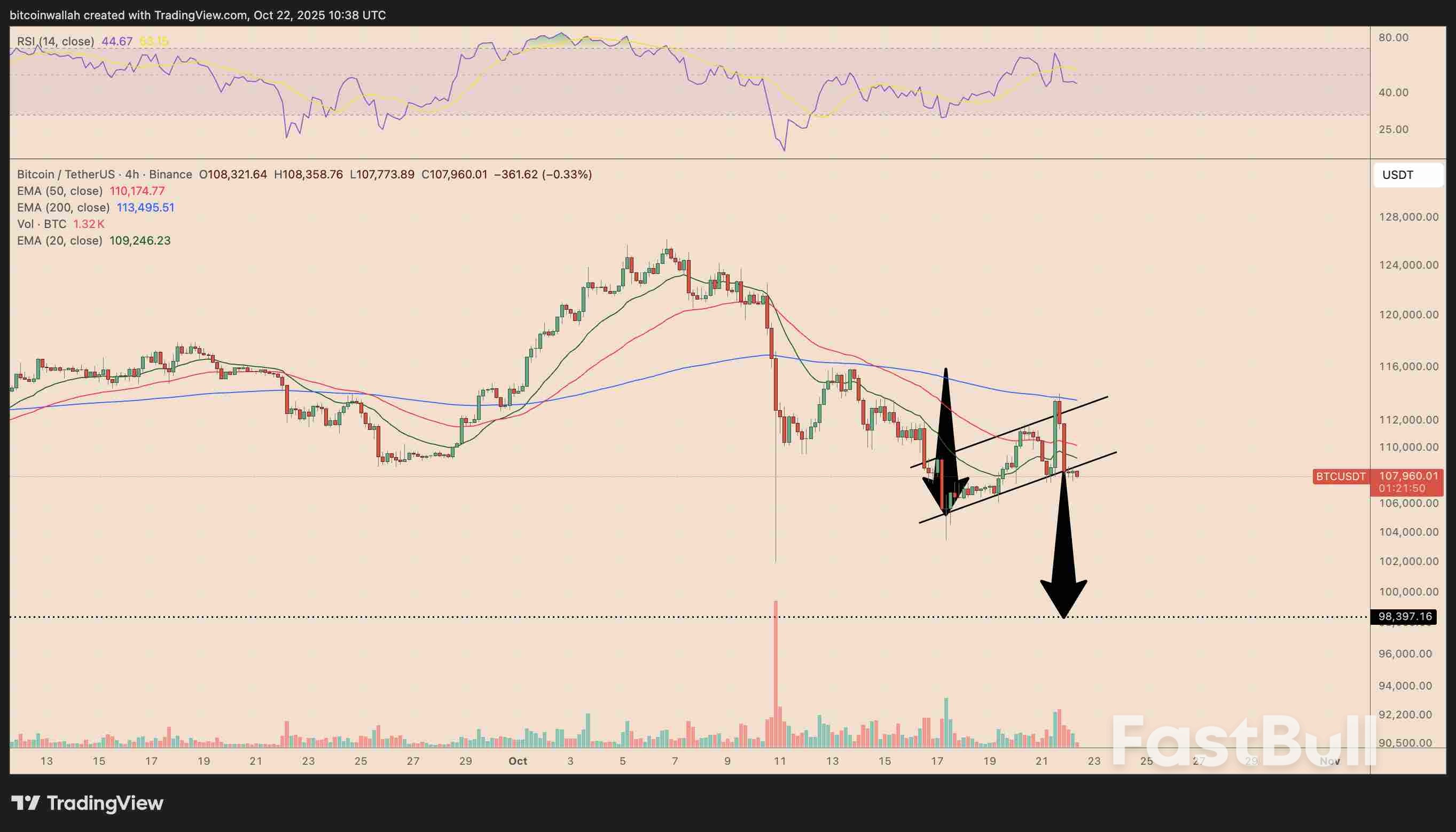
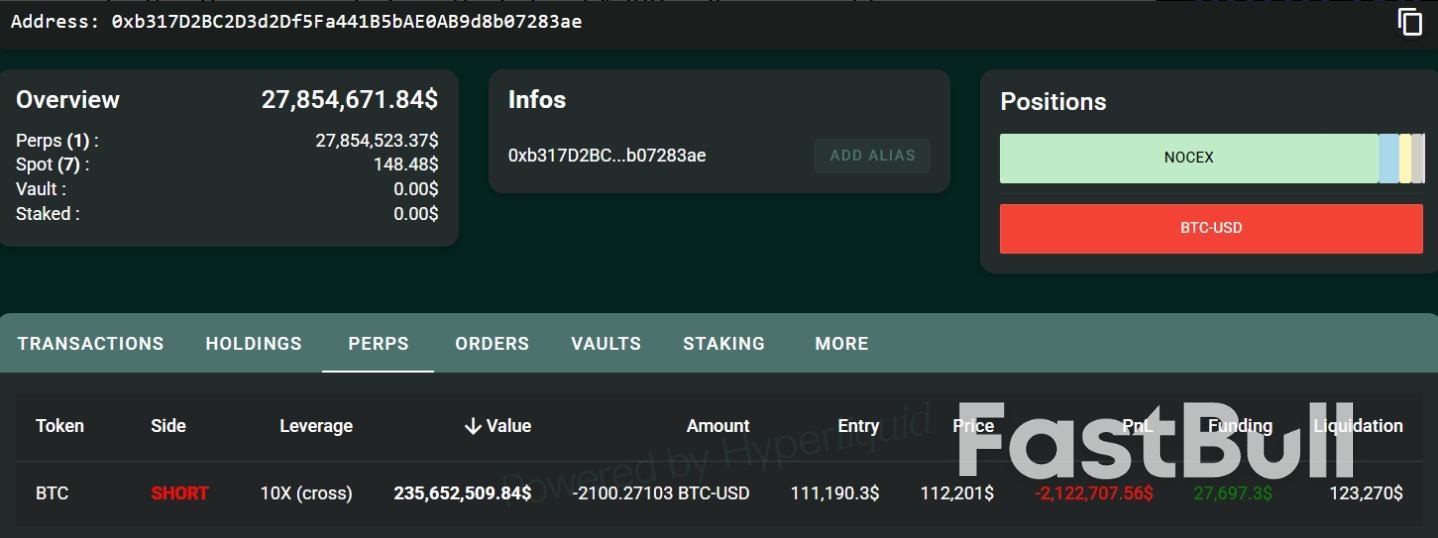
A mysterious whale moved $588 million in Bitcoin to exchanges, sparking fresh fears of a deeper BTC price drop that could test $100,000 support


The Bank of England is "closely monitoring" standards in leveraged finance markets and watching out for signs of forced selling by investors after the high-profile collapse of two US companies, according to an executive at the bank.
Officials want to see what the fallout from Tricolor Holdings and First Brands Group says about "underwriting standards in practice, where the risk has been distributed within the financial system, the ability of those who ultimately hold the risk to be able to withstand this shock and behaviorally what might they do in response," Martin Arrowsmith, co-head of the central bank's Market Based Finance Division, said at a conference Wednesday.
The collapse of two large constituents in credit markets has set firms looking at their books for distress, and the likes of JPMorgan Chase & Co.'s Jamie Dimon suggesting there are "cockroaches" triggering losses in corporate lending.
Bank of England Governor Andrew Bailey stoked the debate on the systemic threat posed by private credit, stressing in comments Tuesday to a Parliament committee the critical role ratings companies will play in thwarting a sequel to the great financial crisis.
While Arrowsmith said he wasn't concerned about any individual credit outside of the UK, he is interested in how banks and investors such as managers of collateralized loan obligations behaved in response to problems.
"For instance, the actions of some of the CLOs to sell out of the exposure, while sensible individually, if it was a more widespread issue and there's lots of quasi forced selling, what does that mean for the functioning of some of these markets in stress," he said at the Association for Financial Markets in Europe's High Yield and Private Credit Conference.
He said that the Bank of England, along with other policymakers, has been watching and calling out some of the "looseness" in markets for a while, and has been talking about issues in the so-called broadly syndicated lending space for at least a decade.


China convened an unusually large meeting with foreign businesses in an effort to reassure them that its new rare earth export controls aren’t meant to restrict normal trade — evidence policymakers are trying to calm a backlash over the move.Vice Commerce Minister Ling Ji told representatives from more than 170 foreign companies and business chambers on Monday that Beijing’s export curbs are a “responsible act” intended to protect world peace and stability, according to a ministry statement that didn’t identify the firms.“China will continue to approve legitimate transactions according to law, and work to maintain the stability of global supply chains,” Ling said at the roundtable in Beijing.
Ling’s comments sought to add clarity to how China will implement its export policies after authorities outlined tighter controls on shipments of rare earths and other critical materials. The announcement this month contributed to rising tensions between China and the US, threatening a trade truce that’s set to run out on Nov. 10 unless extended.
China unveiled the export controls after Washington broadened some tech curbs and proposed levies on Chinese ships entering US ports. In response to China’s restrictions, Trump said he would impose an additional 100% tariff on Chinese goods as well as export curbs on “any and all critical software” beginning Nov. 1.China’s broad new controls jolted governments around the world and set off a race to secure alternative supplies. On Monday, US President Donald Trump signed a landmark pact with visiting Australian Prime Minister Anthony Albanese to boost America’s access to rare earths and other critical minerals.
At the same time, Trump declared “full steam ahead” on the Aukus agreement among the US, Australia and the UK. Aukus is designed to check China’s military advance in the Indo-Pacific as Beijing’s power swells alongside its economic strength.Also on Monday, China’s Commerce Minister Wang Wentao used a call with Dutch Economic Affairs Minister Vincent Karremans to warn that the Netherlands’ move to take control of Chinese-owned chipmaker Nexperia has “seriously affected” the stability of the global supply chain.
The Dutch government said it would remain in contact with Chinese authorities to work “toward a constructive solution.”The call came a week after the Netherlands seized control of Nexperia using an emergency Cold-War era law. The company is a subsidiary of China’s Wingtech Technology Co. and a key supplier of mature chips used by the automotive and consumer electronics industries.The Dutch government took control of Nexperia after a warning by the US government in June that it would need to replace Chief Executive Officer Zhang Xuezheng for the firm to qualify for exemption from a list of sanctioned companies. Wingtech was put on the US Entity List in 2024, and the concern was that Nexperia would not act independently of its parent.
The move heightened European trade tensions with Beijing, which retaliated by blocking Nexperia from exporting products from the company’s Chinese plant.Europe’s auto industry is preparing for production disruption because of China’s export restrictions on semiconductors made by Nexperia, Bloomberg News reported earlier, citing people familiar with the matter, who asked not to be identified as the discussions are private.
Chip shortages are likely to hit key suppliers within a week, while the impact could spread across the entire sector within 10 to 20 days, according to people familiar with the matter, who asked not to be identified as the discussions are private.
When Seiko Noda entered Japan’s parliament in 1993 as the first woman elected to the lower house from the long-dominant Liberal Democratic Party, she was dismayed to find no women’s restroom. The rookie lawmaker had to slip into the men’s facilities, where a small area had been partitioned off for the few female members.That early sense of being somewhere she didn’t belong set the tone for a career she’s spent pushing her overwhelmingly male party to improve female representation and to ease the broader struggles facing Japanese women. Three decades later, parliament’s facilities have improved, but progress for women in most other areas has been uneven.
Japan languishes near the bottom end of global gender equality rankings, scoring especially poorly in metrics for political representation and economic participation. Only about 15% of lawmakers in the powerful lower house are female. Until this week, no woman had ever served as finance minister, and there’s still been no female Bank of Japan governor. Even the reporters assigned by Japanese media to cover politics are predominantly male.Against that backdrop, Sanae Takaichi’s rise as Japan’s first female prime minister — 32 years after entering parliament in the same cohort as Noda — marks a historic yet singular breakthrough. Her bow to a chamber of suited, largely male colleagues underscored the fact she is an exception to the rule, rather than a symbol of women’s progress.
Beyond the milestone of smashing through a political glass ceiling, there’s also little indication that Takaichi, 64, intends to advance women’s interests specifically — a factor that helps explain the muted response from many women to her ascent.“There was hardly any mention of gender issues” in the contest to become LDP leader and prime minister, according to Chiyako Sato, author of Wall of Middle-Aged Men, a memoir of her years as a political reporter for Japan’s Mainichi newspaper. “Being a woman wasn’t really a factor in Takaichi being selected.”
Born in 1961, Takaichi grew up in a middle-class family in Japan’s ancient capital of Nara. She rejected her parents’ attempts to steer her along the traditional path for girls — junior college, a steady job and an early marriage. Instead she worked part-time to pay her way through a four-year business degree. At university, she played drums in a heavy metal band and developed a passion for motorbikes.She worked as a university professor, and briefly as a news anchor and political commentator before winning her first election in 1993 as an independent, only later joining the LDP. Takaichi, who has cited conservative former UK Prime Minister Margaret Thatcher as an inspiration, has published several books, mostly focusing on defense and security.
“In my time, being a woman and being young was a disadvantage,” she told a group of businesswomen in a video posted on her YouTube channel two years ago, adding there was no clear answer to the problem of not being taken seriously. “You have to achieve results in your work. I’ve always told myself not to make being a woman an excuse, but also not to abandon my identity as a woman.”
Takaichi became LDP leader on Oct. 4, winning a vote of party lawmakers after a historic upper house election loss earlier this year triggered the resignation of Prime Minister Shigeru Ishiba. She spent the following two weeks struggling to pull together a coalition to secure Tuesday’s parliamentary vote to become prime minister.The hard bargaining Takaichi endured to even get to the startline in building a government may indicate her administration is set for a bumpy ride, as is often the case for female leaders, according to Gill Steel, a politics professor at Doshisha University in Kyoto, and author of a forthcoming book on female voting preferences.
“It’s a prime example of the ‘glass cliff effect,’ in which corporations or parties select women as leaders when they are in crisis,” she said. “Because of the crises, women are less likely to succeed in those positions.”Her appointment marks a shift to the right — prioritizing national defense, tight immigration caps and stricter controls on foreign investment — as the LDP seeks to win over young, mostly male voters who backed right-wing parties in the last election.A staunch conservative, Takaichi’s views on national security and social policy tend to resonate more with men and, like Thatcher, she stands far from the cause of progressive feminism. Her pledge earlier this month to “cast aside work-life balance” and “work, work, work, work,” drew criticism in a country where families often struggle to combine long office hours with childcare responsibilities.
She opposes making same-sex marriage legal in Japan or allowing spouses to have separate surnames, claiming it could undermine family unity. Soon after she became party leader, the LDP’s relatively liberal coalition partner, Komeito, quit the alliance, citing policy differences. Takaichi secured a new partnership with a socially conservative party that doesn’t prioritize gender equality.At her inaugural press conference as prime minister, Takaichi was asked why she appointed only two female ministers, after speculation there would be a record number of women in the cabinet alongside her.
“As I’ve said from the start, I believe above all in equality of opportunity,” she said. “And I want participation from everybody. I want all generations to pull together with their full strength. That’s how I put together my cabinet.”Japan, which gave women the right to vote and equal status with men while under US occupation after World War II, is hardly alone in taking its time to appoint a female head of government. Only about a third of the more than 190 countries in the United Nations have ever had a woman leader, and only a dozen were in that role last year, according to the Pew Research Center. Most of the current crop — including Italian Prime Minister Giorgia Meloni — are the first women in their jobs. The US is yet to join the club after women twice lost presidential elections to Donald Trump.
Female lawmakers have held prominent positions in Japan, though mostly in opposition. Takako Doi inspired a generation when she became leader of the Japan Socialist Party in 1986. But the LDP has until now largely proved a graveyard for female ambition.Former Environment Minister Yuriko Koike sometimes referred to the barrier facing women in Japanese politics as more of an “iron plate” than a glass ceiling. When her own career in the LDP hit a dead end in 2016, she quit her parliamentary seat to run for Tokyo governor, successfully taking on a candidate backed by her former party. Her criticism of the male-dominated status quo secured her a loyal female following — helping her become the first woman to hold that position. She won a third consecutive term last year.
Appointing a woman this time will help the scandal-tarnished LDP freshen its image, according to Mari Miura, a professor of political science at Sophia University in Tokyo, who has written extensively about gender and politics. “I think there will be a honeymoon period,” Miura said. But after it ends Takaichi will face a harsher backlash because of her gender, she added. “Women will be criticized much more compared to men who fail equally.”For a nation as wealthy and advanced as Japan, women remain scarce in leadership roles. They hold just 14.8% of board seats at Tokyo Stock Exchange-listed firms and most are external appointees — a sign of how steep the climb remains inside corporate hierarchies.
In some cases, exclusion has been deliberate and systemic. A 2018 scandal revealed that several medical schools had been rejecting female applicants in favor of less-qualified men, one of them citing concerns that women would drop out of the profession because of its punishing hours. One top college was later ordered to pay compensation to women affected by the rigged tests.
Some of Japan’s most revered traditions also exclude women outright. They’re not allowed, for example, to set foot on the sumo ring — a rule that attracted criticism in 2018 when two female medics were ordered to leave the sacrosanct dohyo after rushing to help the mayor of Maizuru, who had collapsed with a brain hemorrhage while giving a speech.Lawmakers have for decades debated whether to change Japan’s succession law to allow a woman to ascend the Imperial throne amid a shortage of male heirs. Takaichi and her coalition favor a plan to bring distant male relatives of the Emperor into the Imperial household, in a bid to maintain an unbroken male line.
Only two women apart from Takaichi herself are set for cabinet positions, compared with the previous record of five — though her decision to appoint a woman as finance minister is unprecedented. The other female minister will be in charge of economic security and policy on foreigners, a hot-button issue in the last election. Nevertheless, Rie Nishihara, chief Japan equity strategist at JPMorgan Securities Japan, said she was thrilled about the new government, both in terms of policy plans and because of the potential benefits for women in society.
“It is really exciting for many people, not just the female half of the population,” she said. “Regardless of her individual policy or thoughts,” a female leader will “naturally open the door for diversity in corporates or other areas, because politics is one of the biggest laggards in diversity in Japan.”
Many women are more ambivalent about the milestone. For Noda, who stood against Takaichi for the LDP leadership in 2021 and backed her 44-year-old male rival, Shinjiro Koizumi, in the Oct. 4 party vote, it’s a bittersweet moment.“The fact she’s broken the glass ceiling is amazing,” she said in audio comments posted on X earlier this month. “I have to reflect with humility on why I wasn’t able to make it that far.”
White Label
Data API
Web Plug-ins
Poster Maker
Affiliate Program
The risk of loss in trading financial instruments such as stocks, FX, commodities, futures, bonds, ETFs and crypto can be substantial. You may sustain a total loss of the funds that you deposit with your broker. Therefore, you should carefully consider whether such trading is suitable for you in light of your circumstances and financial resources.
No decision to invest should be made without thoroughly conducting due diligence by yourself or consulting with your financial advisors. Our web content might not suit you since we don't know your financial conditions and investment needs. Our financial information might have latency or contain inaccuracy, so you should be fully responsible for any of your trading and investment decisions. The company will not be responsible for your capital loss.
Without getting permission from the website, you are not allowed to copy the website's graphics, texts, or trademarks. Intellectual property rights in the content or data incorporated into this website belong to its providers and exchange merchants.
Not Logged In
Log in to access more features

FastBull Membership
Not yet
Purchase
Log In
Sign Up