

Markets
News
Analysis
User
24/7
Economic Calendar
Education
Data
- Names
- Latest
- Prev



Signal Accounts for Members
All Signal Accounts
All Contests
 U.K. Trade Balance (Oct)
A:--
F: --
P: --
U.K. Services Index MoMA:--
F: --
P: --
U.K. Construction Output MoM (SA) (Oct)A:--
F: --
P: --
U.K. Industrial Output YoY (Oct)A:--
F: --
P: --
U.K. Trade Balance (SA) (Oct)A:--
F: --
P: --
U.K. Trade Balance EU (SA) (Oct)A:--
F: --
P: --
U.K. Manufacturing Output YoY (Oct)A:--
F: --
P: --
U.K. GDP MoM (Oct)A:--
F: --
P: --
U.K. GDP YoY (SA) (Oct)A:--
F: --
P: --
U.K. Industrial Output MoM (Oct)A:--
F: --
P: --
U.K. Construction Output YoY (Oct)A:--
F: --
P: --
 France HICP Final MoM (Nov)
A:--
F: --
P: --
 China, Mainland Outstanding Loans Growth YoY (Nov)
A:--
F: --
P: --
China, Mainland M2 Money Supply YoY (Nov)A:--
F: --
P: --
China, Mainland M0 Money Supply YoY (Nov)A:--
F: --
P: --
China, Mainland M1 Money Supply YoY (Nov)A:--
F: --
P: --
 India CPI YoY (Nov)
A:--
F: --
P: --
India Deposit Gowth YoYA:--
F: --
P: --
 Brazil Services Growth YoY (Oct)
A:--
F: --
P: --
 Mexico Industrial Output YoY (Oct)
A:--
F: --
P: --
 Russia Trade Balance (Oct)
A:--
F: --
P: --
 Philadelphia Fed President Henry Paulson delivers a speech
 Canada Building Permits MoM (SA) (Oct)
A:--
F: --
P: --
Canada Wholesale Sales YoY (Oct)A:--
F: --
P: --
Canada Wholesale Inventory MoM (Oct)A:--
F: --
P: --
Canada Wholesale Inventory YoY (Oct)A:--
F: --
P: --
Canada Wholesale Sales MoM (SA) (Oct)A:--
F: --
P: --
 Germany Current Account (Not SA) (Oct)
A:--
F: --
P: --
U.S. Weekly Total Rig CountA:--
F: --
P: --
U.S. Weekly Total Oil Rig CountA:--
F: --
P: --
 Japan Tankan Large Non-Manufacturing Diffusion Index (Q4)
--
F: --
P: --
Japan Tankan Small Manufacturing Outlook Index (Q4)--
F: --
P: --
Japan Tankan Large Non-Manufacturing Outlook Index (Q4)--
F: --
P: --
Japan Tankan Large Manufacturing Outlook Index (Q4)--
F: --
P: --
Japan Tankan Small Manufacturing Diffusion Index (Q4)--
F: --
P: --
Japan Tankan Large Manufacturing Diffusion Index (Q4)--
F: --
P: --
Japan Tankan Large-Enterprise Capital Expenditure YoY (Q4)--
F: --
P: --
U.K. Rightmove House Price Index YoY (Dec)--
F: --
P: --
China, Mainland Industrial Output YoY (YTD) (Nov)--
F: --
P: --
China, Mainland Urban Area Unemployment Rate (Nov)--
F: --
P: --
 Saudi Arabia CPI YoY (Nov)
--
F: --
P: --
 Euro Zone Industrial Output YoY (Oct)
--
F: --
P: --
Euro Zone Industrial Output MoM (Oct)--
F: --
P: --
Canada Existing Home Sales MoM (Nov)--
F: --
P: --
Euro Zone Total Reserve Assets (Nov)--
F: --
P: --
U.K. Inflation Rate Expectations--
F: --
P: --
Canada National Economic Confidence Index--
F: --
P: --
Canada New Housing Starts (Nov)--
F: --
P: --
U.S. NY Fed Manufacturing Employment Index (Dec)--
F: --
P: --
U.S. NY Fed Manufacturing Index (Dec)--
F: --
P: --
Canada Core CPI YoY (Nov)--
F: --
P: --
Canada Manufacturing Unfilled Orders MoM (Oct)--
F: --
P: --
Canada Manufacturing New Orders MoM (Oct)--
F: --
P: --
Canada Core CPI MoM (Nov)--
F: --
P: --
Canada Manufacturing Inventory MoM (Oct)--
F: --
P: --
Canada CPI YoY (Nov)--
F: --
P: --
Canada CPI MoM (Nov)--
F: --
P: --
Canada CPI YoY (SA) (Nov)--
F: --
P: --
Canada Core CPI MoM (SA) (Nov)--
F: --
P: --
Canada CPI MoM (SA) (Nov)--
F: --
P: --


No matching data

Latest Views
Latest Views
Trending Topics
Top Columnists
Latest Update
White Label
Data API
Web Plug-ins
Affiliate Program
View All
No data


Key points:
Bitcoin sellers attempt to break support at $109,000 at the week’s final Wall Street open.
BTC price action can head toward $100,000 as a result, despite a large “deleveraging” event.
US PCE inflation offers no relief for crypto bulls.
Bitcoin threatened new September lows at Friday’s Wall Street open as US inflation data failed to buoy bulls.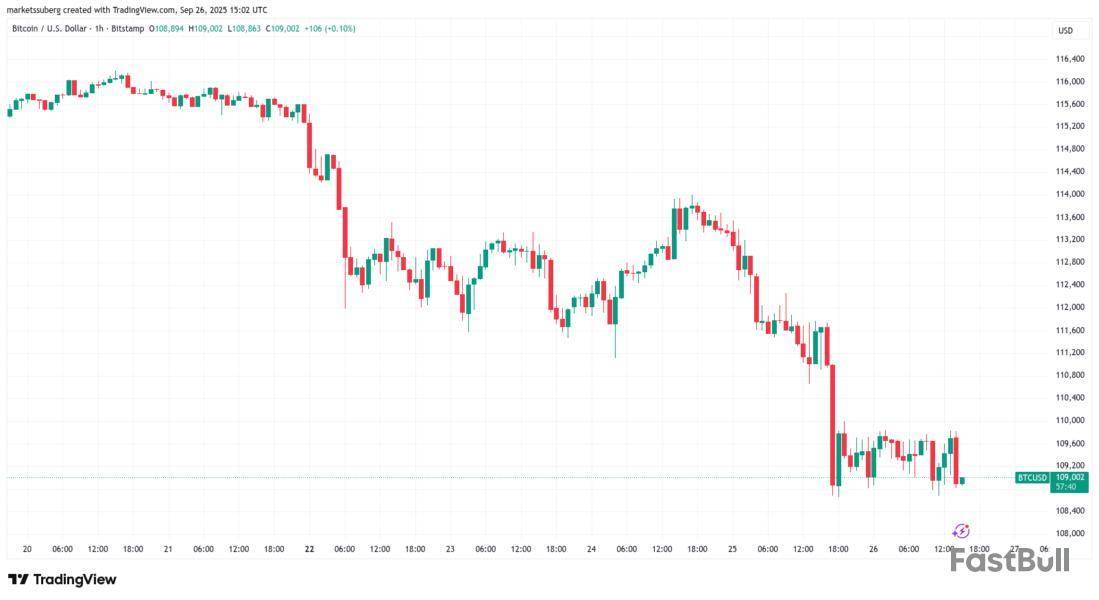
Liquidity stacks up as Bitcoin price falls further
Data from Cointelegraph Markets Pro and TradingView showed that risked a breakdown below $109,000.
Exchange order-book liquidity remained thick on either side of the spot price, providing both upside and downside “magnets” for momentum.
On the largest global exchange, Binance, bids were clustered around $108,200, with short liquidations due at $110,000 and up, per data from CoinGlass.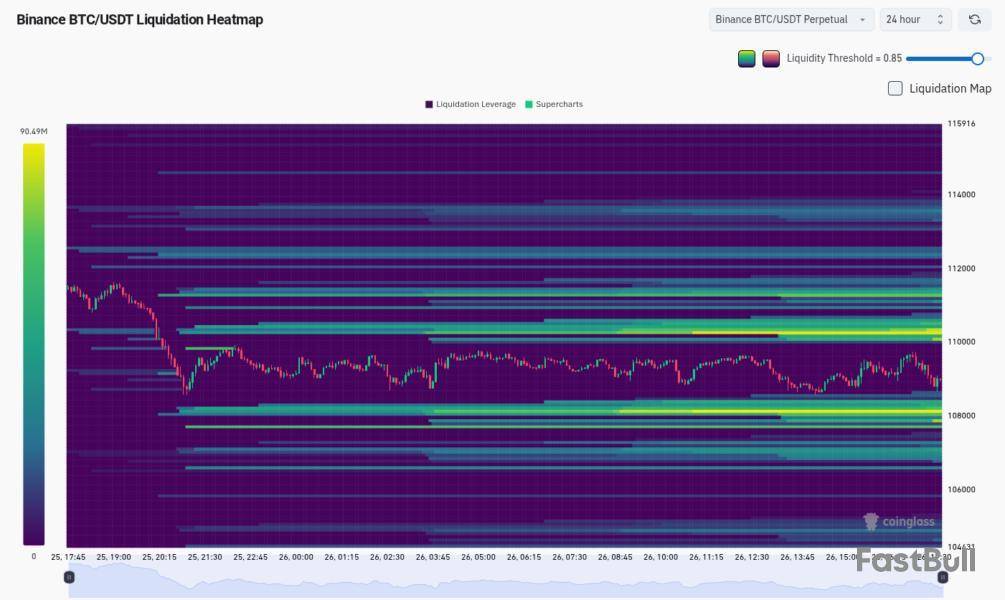
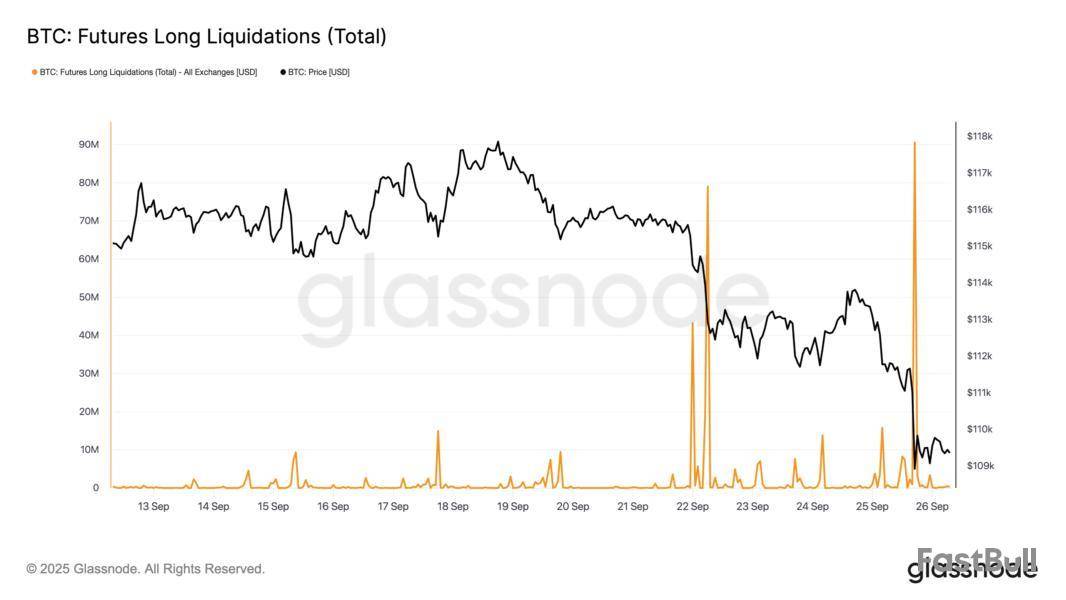
“Bitcoin futures saw another wave of long liquidations as price moved below $111k,” onchain analytics platform Glassnode summarized in a post on X.
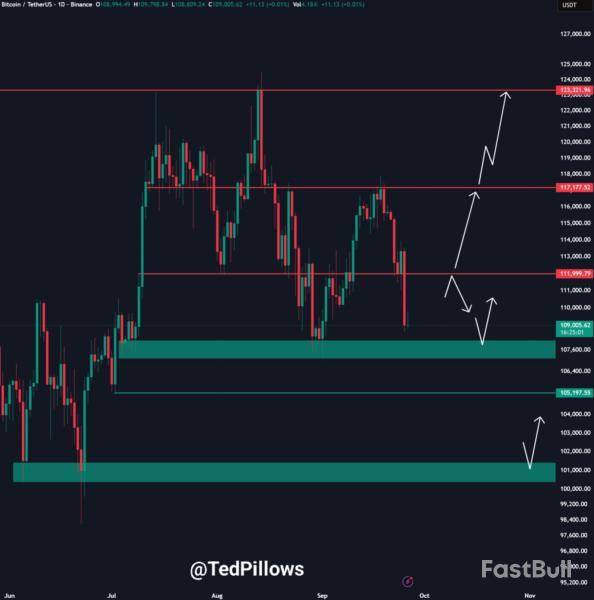
Still, Traders remained risk-averse, with BTC price targets toward $100,000 becoming more popular.
“$BTC is hovering just above its support level,” one market take from crypto investor and entrepreneur Ted Pillows read on the day.
PCE data preserves Fed rate-cut bets
Macroeconomic events had little perceptible impact on the crypto market trajectory.
The Personal Consumption Expenditures (PCE) index, known as the US Federal Reserve’s “preferred” inflation gauge, arrived in line with expectations at 2.7%.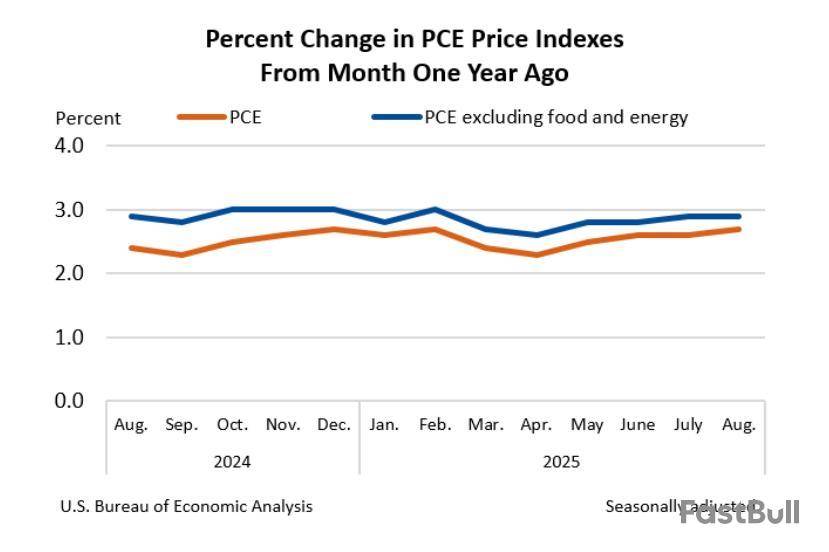
Reacting, trading resource The Kobeissi Letter concluded that while PCE was at seven-month highs, the Fed would press ahead with the interest-rate cuts sorely wanted by crypto and risk-asset traders.
“PCE inflation is at its highest since February 2025. Yet, the Fed will keep cutting rates,” it told X followers.
This article does not contain investment advice or recommendations. Every investment and trading move involves risk, and readers should conduct their own research when making a decision.
Bitcoin has experienced a sharp price drop in recent days, but one well-followed crypto analyst remains undaunted. Popular chartist Egrag Crypto says Bitcoin is still in a bull market, even with the pullback. He believes what is happening now is only part of a larger repeating pattern that has played out since the end of 2022. According to him, this cycle is not over yet, and the market still has another strong upward move before an actual bear phase begins.
Bitcoin Holds Strong Above Key Levels
Egrag Crypto explains that Bitcoin follows a clear pattern that has been in place since December 2022. First, the price surges upward, then it retests support, bounces back, corrects slightly, and makes a new local high.
Right now, the most critical level to watch is $103,000. As long as Bitcoin does not fall below that level, Egrag says there is no real danger. Instead, he expects one more big pump to arrive before the cycle tops out. His personal target for this move is between $150,000 and $175,000. In his view, this would mark the last push of the current bull run before the market flips to its next bear phase.
Egrag stresses that corrections along the way are normal and should not cause panic. He believes traders often get caught up in short-term drops without realizing that they are only part of a larger trend. Looking at the bigger picture, it is clear that the Bitcoin bull market still has room to run.
Market Parallels With Gold Suggest Bull Run Is Intact
Egrag Crypto also draws a strong comparison between Bitcoin and gold. He points out that many analysts once thought gold had peaked at a technical target of $3,500. Instead, the price continued to rise due to what he calls a short squeeze. This sudden surge, he says, was meant to trap retail buyers into a “suckers rally.”
He notes that gold demand is currently so high that even shop owners with decades of experience say they have never seen business like this. To Egrag, this kind of hype is usually a warning that the cycle is near its top. He expects gold to eventually fall by $600 to $1,000 once Russia and Ukraine restore peace, a move that he believes would once again confirm the cyclical nature of the market.
For Bitcoin, the same lesson applies. Despite loud voices calling the bull run over, Egrag insists that the cycle is still alive. He views the current downturn as merely a pause before another significant surge. He plans to invest around $30,000 in the following macro cycle and later rotate into strong altcoins. In his view, staying patient and respecting cycles is the most effective approach.
Digital asset treasury bull Peter Smith, co-founder and CEO of Blockchain.com, sees the trend of publicly-listed companies adopting crypto treasury strategies continuing for some time, although he expects a wave of mergers and acquisitions.
"More and more are going to come, until we run out of management teams or shells. Capitalism is awesome like that," Smith told The Block. "At some point, though, we sort of run out of steam, and then it gets really interesting because then you’ll see a lot of consolidation ... the really good management teams and sponsors will consolidate a lot of the space at a preferential capital stack."
Earlier this week, Vivek Ramaswamy's Bitcoin DAT Strive reached an agreement to acquire Semler fellow Bitcoin treasury Semler Scientific, which will result in a new company that holds nearly 11,000 BTC ( over $1 billion). Benchmark analyst Mark Palmer said smaller firms with meaningful crypto reserves but lower valuations are natural candidates for stock-for-stock tie-ups.
Smith said Blockchain.com has been perhaps one of the busiest firms active in the DAT space. His company has invested over $200 million in about a dozen companies, including Bitcoin-based DAT ProCap Financial, Ethereum treasury BitMine Immersion, and Toncoin DAT Ton Strategy.
The long-time crypto executive said that while taking over small-cap shell companies and giving them a new purpose is nothing new —Smith said biotechs have been using shells and PIPEs (private investments in public equity) for years— the move to use these tactics to accumulate a specific digital asset was inspired by Michael Saylor's Strategy.
Treasuries evolved beyond Bitcoin
Strategy, formerly MicroStrategy, demonstrated that accumulating crypto, specifically Bitcoin in its case, could translate into a major increase in shareholder value. Then, earlier this year, a host of smaller Nasdaq-listed companies decided to follow in Strategy's footsteps and began rebranding as DATs.
The first wave bought bitcoin and ethereum; the next broadened the model with altcoin-based treasury models. Now there are DATs dedicated to stockpiling XRP, Dogecoin, BNB, and others.
Currently, only those crypto treasuries holding either Bitcoin, Ethereum, or Solana, combined, possess over $120 billion in digital assets, according to The Block Data Dashboard. Fresh capital has fueled the growth, with DATs pulling in over $20 billion in VC funding so far this year.
Some have been critical of the DAT explosion. Last month, Komoto CTO Kadan Stadelmann called the trend "self-dealing, dressed up as capital deployment." This week, The Wall Street Journal reported U.S. regulators are investigating potentially suspicious stock trading patterns that occurred before publicly listed DATs announced plans to buy crypto. The inquiries are focused on unusual trading patterns, including abnormally high trading volumes and sharp stock price increases in the short periods preceding public announcements.
Two types of digital asset treasuries
Smith considers there to be two types of DATs.
"There are two reasons to have a DAT and they're distinct. One is a DAT as an investment vehicle and the other is as a replacement for foundations," he said.
In the case of an "investment DAT," Smith said investors buy shares in the hopes the management team behind the publicly-traded treasury will generate more value, thanks to their financing and ability to get tokens at a discount, than an investor could on their own by simply holding a cryptocurrency on spot.
Smith, however, believes "there's probably more risk" in buying shares in a DAT than in "holding spot."
In the case of an "ecosystem DAT," it's about "replacing these foundations with C-Corps that eventually go public," Smith said. "People forget all these Cayman or Swiss foundations that we have in crypto are a direct result of bad regulation."
Smith has been watching crypto evolve for a considerable amount of time, given that Blockchain.com was founded in 2011. The company was also an early success story, raising capital at a $14 billion valuation in 2022.
"We couldn't have a Delaware C-Corp ... that's where most tech startups are ... so the foundation, it was just a regulatory arbitrage," said Smith.
He's confident DATs are here to stay: "It's a sector and a vertical that's going to be here on a permanent basis."
Besides investing in DATs, Smith Blockchain.com is also extremely active in servicing digital asset treasuries by providing custody, trading, and staking services.
Disclaimer: The Block is an independent media outlet that delivers news, research, and data. As of November 2023, Foresight Ventures is a majority investor of The Block. Foresight Ventures invests in other companies in the crypto space. Crypto exchange Bitget is an anchor LP for Foresight Ventures. The Block continues to operate independently to deliver objective, impactful, and timely information about the crypto industry. Here are our current financial disclosures.
© 2025 The Block. All Rights Reserved. This article is provided for informational purposes only. It is not offered or intended to be used as legal, tax, investment, financial, or other advice.
What really is altcoin season?
Altcoin season, often called “altseason,” occurs when a significant portion of altcoins, cryptocurrencies other than Bitcoin, experience rapid price increases that outpace Bitcoin’s performance.
This period is characterized by a shift of investor capital from Bitcoin into assets such as Ether , Solana , Cardano (ADA) and even smaller tokens like Dogecoin or Pudgy Penguins (PENGU).
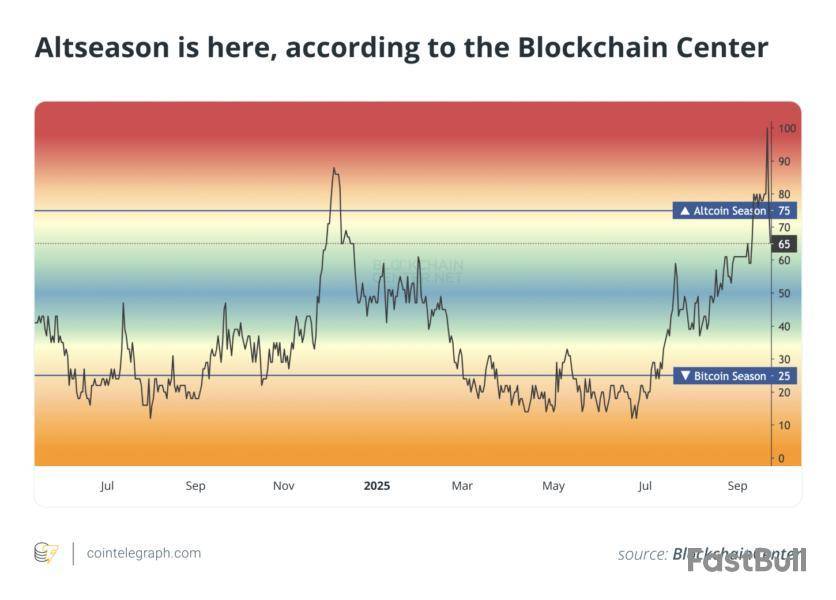
The Altcoin Season Index is frequently used as a benchmark. Per Blockchain Center’s definition, altseason is considered underway when at least 75% of the top 100 altcoins outperform Bitcoin over a 90-day period.
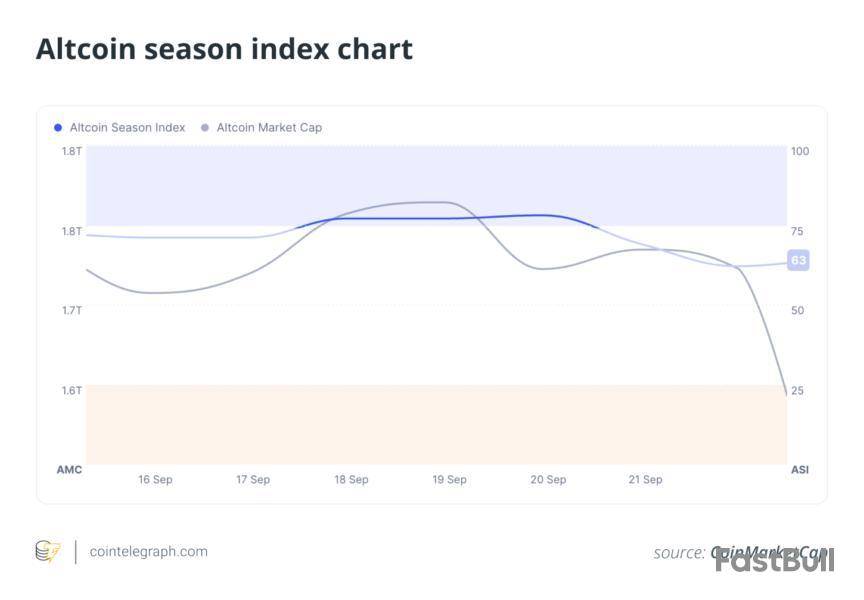
Historically, altcoin seasons have delivered outsized returns. For instance, during the 2021 cycle, large-cap altcoins gained approximately 174%, while Bitcoin advanced only about 2% over the same span.
These episodes raise a central question: What factors consistently drive altcoin season, and why do they matter?
Bitcoin’s price cycle: The catalyst for altcoin rallies
Bitcoin is the crypto market’s bellwether. Its price movements often set the stage for altcoin season. Typically, altseason follows a Bitcoin bull run.
When Bitcoin surges, say, crossing milestones such as $100,000, as it did in late 2024, investors pour capital into the market. Once Bitcoin’s price stabilizes or consolidates, traders often rotate their profits into altcoins, seeking higher returns from more volatile assets.
This pattern is rooted in market psychology. Bitcoin’s rally attracts new capital, boosting overall market confidence. As Bitcoin’s growth slows, investors look for the next big opportunity, and altcoins, with their potential for outsized gains, become the go-to choice. For instance, after Bitcoin’s 124% gain in 2024, 20 of the top 50 altcoins outperformed it, signaling the early stages of an altseason.
A key metric to watch is Bitcoin dominance (BTC.D), which measures Bitcoin’s share of the total crypto market capitalization. When BTC.D drops below 50%-60%, it often signals capital flowing into altcoins. In August 2025, Bitcoin dominance fell to 59% from 65%, hinting at an impending altseason.
Market sentiment and FOMO: The psychological fuel
Altcoin season thrives on human emotion, specifically, the fear of missing out (FOMO). As altcoins like Ether or memecoins like Pepe (PEPE) start posting double- or triple-digit gains, social media platforms like X, Reddit and Telegram light up with hype.
This buzz creates a feedback loop: Rising prices attract more investors, which drives prices higher still. In 2024, memecoins like Dogwifhat (WIF) surged over 1,100%, fueled by community-driven excitement.
Social media trends are a leading indicator of altcoin season. Heightened discussions on platforms like X often precede price rallies, as retail investors jump in to capitalize on the momentum.
For example, in 2025, Google Trends data for “altcoins” shattered records, reaching an all-time high in August, surpassing the May 2021 altseason peak, with search interest entering “price discovery” during Bitcoin’s consolidation above $110,000. This surge reflects exploding retail FOMO, especially for ETH, SOL and memecoins like DOGE, as institutional exchange-traded fund (ETF) inflows (e.g., $4 billion into ETH) rotate capital into altcoins.
Macroeconomic factors: Liquidity and risk appetite
The broader economic landscape plays a massive role in the altcoin season. Macroeconomic conditions like interest rates, inflation and global liquidity significantly influence crypto markets.
When central banks, such as the US Federal Reserve, cut interest rates or increase liquidity through measures like quantitative easing, riskier assets like altcoins tend to thrive. Lower interest rates push investors away from traditional safe havens like bonds and into high-risk, high-reward assets like altcoins.
For instance, analysts are hoping that Fed rate cuts in 2025 could inject liquidity into markets, fueling altcoin momentum. Conversely, tighter monetary policies can suppress altcoin growth by reducing market liquidity. In 2020-2021, aggressive money printing and low interest rates created a perfect storm for altcoins, with the altcoin market cap hitting record highs.
Geopolitical events and regulatory developments also matter. Pro-crypto policies in major markets, such as the US or EU, boost investor confidence and drive capital into altcoins. For example, the 2024 approval of Ether spot ETFs, with inflows reaching nearly $4 billion in August 2025, shows how regulatory clarity sparks altcoin rallies.Technological innovation and new narratives
Altcoin season isn’t just about hype; it’s often driven by technological advancements and emerging narratives. Each altseason tends to have a defining theme.
In 2017, it was the initial coin offering (ICO) boom. In 2021, decentralized finance (DeFi) and non-fungible tokens (NFTs) took center stage. In 2025, analysts point to AI-integrated blockchain projects, tokenization of real-world assets (RWAs) and layer-2 solutions as key drivers.
Platforms like Ethereum, Solana and Avalanche are gaining traction for their scalability and ability to support tokenized securities, from stocks to real estate. These innovations attract institutional capital, which often flows into altcoins before retail investors pile in.
Ethereum, in particular, plays a pivotal role. As the backbone of DeFi, NFTs and layer-2 solutions, Ether’s price surges often signal the start of broader altcoin rallies.
Institutional and retail capital: The money flow
The crypto market has matured, and institutional adoption is now a major driver of altcoin season. Unlike past retail-led booms, in 2025, institutional capital drives altcoin season, with Bitcoin dominance dropping below 59%, echoing 2017 and 2021 pre-altseason trends.
Ether ETFs amassed nearly $4 billion in inflows in August 2025 alone, while Solana and XRP (XRP) ETF reviews signal broader adoption. The US Securities and Exchange Commission’s streamlined ETF listing rules in September boosted over 90 applications, with XRP ETF approval odds at 95%, potentially unlocking $4.3 billion-$8.4 billion.
Solana exchange-traded products saw $1.16 billion year-to-date inflows, and CME’s SOL/XRP futures options launch in October 2025 will draw hedge funds. Retail investors amplify this via FOMO, with memecoins like DOGE ( 10% to $0.28) and presale tokens surging.
CryptoQuant shows altcoin trading volume on Binance Futures hitting $100.7 billion daily in July 2025 (the highest since February), driven by altcoin-to-stablecoin trades, not BTC rotation.
DeFi total value locked (TVL) reached over $140 billion, and the Altcoin Season Index hit 76, with 75% of altcoins outperforming BTC. This $4-trillion market cap growth reflects fresh capital. October’s ETF decisions could trigger over $5 billion of inflows, blending institutional stability with retail hype for sustained altcoin rallies in Q4.
Key metrics to watch: How to spot altcoin season
In the past, analysts have suggested that altcoin season was signaled when Bitcoin dominance fell below 55%, along with an Altcoin Season Index above 75, rising altcoin-to-stablecoin volumes and technical indicators.
To navigate altcoin season, investors rely on several indicators:
Risks and strategies to navigate altcoin season
While altcoin season offers massive opportunities, it’s not without risks. Altcoins are highly volatile, often losing 50%-90% of their value post-peak. Speculative hype, scams and regulatory uncertainty can also derail gains.
To maximize returns, you could consider these strategies:
However, caution is key. The crypto market is unpredictable, and altseason is often only clear in hindsight. By understanding the drivers, such as Bitcoin’s cycle, market sentiment, macro conditions and technological trends, investors can position themselves to ride the wave while managing risks.
TL;DR
Weekly Structure Builds Toward Breakout Zone
XRP has continued to trade within a symmetrical triangle pattern on the weekly chart. The structure has held for nearly a year, with the price now moving close to the upper trendline near $3.44. According to market analyst EGRAG CRYPTO, this level marks a potential breakout point. If cleared, XRP could target a move toward $7.34 based on the range of the formation.
The setup includes multiple Bullish Engulfing candles, which in past cycles have appeared before upward moves. These patterns have been noted in early 2025, with similar formations seen earlier in XRP’s trading history. EGRAG pointed out,
“The next time we see a Bullish Engulfing Candle on the weekly chart, XRP could shoot up to new all-time highs.”
Interestingly, the current weekly chart shows XRP remaining above a key support denoted as the Bull Market Support Band. This support has remained intact in recent weeks, as observed from the chart where it is drawn as a curved ribbon. It must hold for any structure to remain intact.
EGRAG mentioned that price movement inside this band has been stable. Traders have continued to defend the range, with no confirmation yet of a breakdown. This suggests the market remains in a controlled phase while waiting for a clearer signal.Support Levels Below Remain Active
Two levels on the downside have been marked as areas of interest in case of further weakness. One is $2.60, sitting near the center of the triangle. The other is $2.37, which is near the 0.618 retracement level. EGRAG noted this area could offer a final low before any potential rally. They said,
“If we hit $2.37 before the next rise, it’s your chance to buy cheap.”
XRP was priced at $2.72 at press time, reflecting a 3% decline in the past 24 hours and an 11% drop over the last week. Trading volume stands above $9 billion for the same period.Compression Pattern Signals Move Ahead
Sistine Research has also found a tightening price range on the weekly chart. This would be a third compression phase since the last United States election, having all compressed at a higher price level. The present range is the narrowest of all.
Sistine noted that order book liquidity has thinned, and most activity is now centered near the current price. They added,
Expecting a large expansionary move from XRP soon (within months).
As the price action compresses, so does the orderbook, with most liquidity compressing into a tighter and tighter range.
This results in very large gaps in liquidity.
XRP is on its 3rd compression since the… pic.twitter.com/hjRVzeK8wc
— Sistine Research (@sistineresearch) September 24, 2025
The setup mirrors previous cycles in 2017, 2021, and 2025, all of which led to strong price moves.
Bitcoin's pseudonymous creator, Satoshi Nakamoto, is believed to hold an estimated 1.096 million BTC, according to Arkham data. Satoshi's wallet, which made all its holdings from mining the network in its earliest days, has remained untouched since 2010, when it was run on a few laptops.
Satoshi accumulated this Bitcoin, mining over 22,000 blocks between 2009 and 2010. He was one of the first few miners of Bitcoin, with block rewards nearing over 50 BTC at the time.
According to Arkham data, Satoshi Nakamoto's Bitcoin stash is currently worth $119,640,092,296 ($119.64 billion) at a current Bitcoin price of $109,125.
With a current Bitcoin worth of $119.64 billion, Satoshi Nakamoto ranks among the wealthiest individuals on the planet, but none of the BTC has ever been moved.
Satoshi's Bitcoin holdings' fate predicted
Satoshi's Bitcoin holdings, accumulated from early network mining, have been untouched since 2010, but recent concerns about Quantum computing seem to be shifting this narrative.
Charles Edwards@caprioleioSep 26, 2025Satoshi's coins will be market dumped. In 2-8 years Quantum will break Bitcoin. These are scientifically calculated timelines. We must upgrade Bitcoin NOW. We are running out of time.
What are you doing about it?
Come to my @token2049 talk: 10:45am, Wed 1 Oct!
"Thank you for… pic.twitter.com/b4GR3S4Qjc
In light of this, Capriole Fund Founder Charles Edwards speculates on what the fate of Satoshi coins might be: they could be market dumped.
As quantum computing continues to advance, timelines for when a sufficiently powerful quantum computer could crack modern encryption algorithms are emerging.
Edwards gives this timeline to be 2-8 years (which would be from 2027 to 2033), stating this range to be "scientifically calculated timelines."
The timeline of when cryptocurrency encryption standards might be cracked by a sufficiently powerful quantum computer is causing debate among blockchain developers, as well as when migration to quantum-resistant cryptography must occur. Edwards indicated that the time to upgrade Bitcoin is now, as it is running out of time.
728 RM B 7/F GEE LOK IND BLDG NO 34 HUNG TO RD KWUN TONG KLN HONG KONG


White Label
Data API
Web Plug-ins
Poster Maker
Affiliate Program
The risk of loss in trading financial instruments such as stocks, FX, commodities, futures, bonds, ETFs and crypto can be substantial. You may sustain a total loss of the funds that you deposit with your broker. Therefore, you should carefully consider whether such trading is suitable for you in light of your circumstances and financial resources.
No decision to invest should be made without thoroughly conducting due diligence by yourself or consulting with your financial advisors. Our web content might not suit you since we don't know your financial conditions and investment needs. Our financial information might have latency or contain inaccuracy, so you should be fully responsible for any of your trading and investment decisions. The company will not be responsible for your capital loss.
Without getting permission from the website, you are not allowed to copy the website's graphics, texts, or trademarks. Intellectual property rights in the content or data incorporated into this website belong to its providers and exchange merchants.
Not Logged In
Log in to access more features

FastBull Membership
Not yet
Purchase


Log In
Sign Up


