Markets
News
Analysis
User
24/7
Economic Calendar
Education
Data
- Names
- Latest
- Prev



Signal Accounts for Members
All Signal Accounts
All Contests


U.S. S&P/CS 10-City Home Price Index MoM (Not SA) (Oct)A:--
F: --
P: --
U.S. S&P/CS 20-City Home Price Index (Not SA) (Oct)A:--
F: --
P: --
U.S. S&P/CS 20-City Home Price Index MoM (Not SA) (Oct)A:--
F: --
P: --
U.S. Chicago PMI (Dec)A:--
F: --
P: --
Brazil CAGED Net Payroll Jobs (Nov)A:--
F: --
P: --
U.S. Weekly Total Oil Rig CountA:--
F: --
P: --
U.S. Weekly Total Rig CountA:--
F: --
P: --
FOMC Meeting Minutes
U.S. API Weekly Refined Oil StocksA:--
F: --
P: --
U.S. API Weekly Crude Oil StocksA:--
F: --
P: --
U.S. API Weekly Cushing Crude Oil StocksA:--
F: --
P: --
U.S. API Weekly Gasoline StocksA:--
F: --
P: --
South Korea CPI YoY (Dec)A:--
F: --
P: --
China, Mainland NBS Manufacturing PMI (Dec)A:--
F: --
P: --
China, Mainland Composite PMI (Dec)A:--
F: --
P: --
China, Mainland NBS Non-manufacturing PMI (Dec)A:--
F: --
P: --
China, Mainland Caixin Manufacturing PMI (SA) (Dec)A:--
F: --
P: --
Turkey Trade Balance (Nov)A:--
F: --
P: --
South Africa Trade Balance (Nov)A:--
F: --
P: --
U.S. Initial Jobless Claims 4-Week Avg. (SA)A:--
F: --
U.S. Weekly Continued Jobless Claims (SA)A:--
F: --
U.S. Weekly Initial Jobless Claims (SA)A:--
F: --
U.S. EIA Weekly Cushing, Oklahoma Crude Oil Stocks ChangeA:--
F: --
P: --
U.S. EIA Weekly Crude Demand Projected by ProductionA:--
F: --
P: --
U.S. EIA Weekly Gasoline Stocks ChangeA:--
F: --
P: --
U.S. EIA Weekly Crude Stocks ChangeA:--
F: --
P: --
U.S. EIA Weekly Heating Oil Stock ChangesA:--
F: --
P: --
U.S. EIA Weekly Crude Oil Imports ChangesA:--
F: --
P: --
U.S. EIA Weekly Natural Gas Stocks ChangeA:--
F: --
P: --
South Korea Trade Balance Prelim (Dec)A:--
F: --
P: --
South Korea IHS Markit Manufacturing PMI (SA) (Dec)--
F: --
P: --
Indonesia IHS Markit Manufacturing PMI (Dec)--
F: --
P: --
India HSBC Manufacturing PMI Final (Dec)--
F: --
P: --
U.K. Nationwide House Price Index MoM (Dec)--
F: --
P: --
U.K. Nationwide House Price Index YoY (Dec)--
F: --
P: --
Turkey Manufacturing PMI (Dec)--
F: --
P: --
Italy Manufacturing PMI (SA) (Dec)--
F: --
P: --
Euro Zone Manufacturing PMI Final (Dec)--
F: --
P: --
Euro Zone M3 Money Supply (SA) (Nov)--
F: --
P: --
Euro Zone 3-Month M3 Money Supply YoY (Nov)--
F: --
P: --
Euro Zone Private Sector Credit YoY (Nov)--
F: --
P: --
Euro Zone M3 Money Supply YoY (Nov)--
F: --
P: --
U.K. Manufacturing PMI Final (Dec)--
F: --
P: --
India Deposit Gowth YoY--
F: --
P: --
Brazil IHS Markit Manufacturing PMI (Dec)--
F: --
P: --
Canada Manufacturing PMI (SA) (Dec)--
F: --
P: --
U.S. IHS Markit Manufacturing PMI Final (Dec)--
F: --
P: --
Mexico Manufacturing PMI (Dec)--
F: --
P: --
U.S. Weekly Treasuries Held by Foreign Central Banks--
F: --
P: --
Philadelphia Fed President Henry Paulson delivers a speech
Japan Manufacturing PMI Final (Dec)--
F: --
P: --
China, Mainland Caixin Composite PMI (Dec)--
F: --
P: --
China, Mainland Caixin Services PMI (Dec)--
F: --
P: --
Indonesia Trade Balance (Nov)--
F: --
P: --
Indonesia Core Inflation YoY (Dec)--
F: --
P: --
Indonesia Inflation Rate YoY (Dec)--
F: --
P: --
Saudi Arabia IHS Markit Composite PMI (Dec)--
F: --
P: --
Turkey CPI YoY (Excl. Energy, Food, Beverage, Tobacco & Gold) (Dec)--
F: --
P: --
Turkey CPI YoY (Dec)--
F: --
P: --
Turkey PPI YoY (Dec)--
F: --
P: --
U.K. Mortgage Approvals (Nov)--
F: --
P: --


No matching data
Latest Views
Latest Views
Trending Topics
Top Columnists
Latest Update
White Label
Data API
Web Plug-ins
Affiliate Program
View All

No data
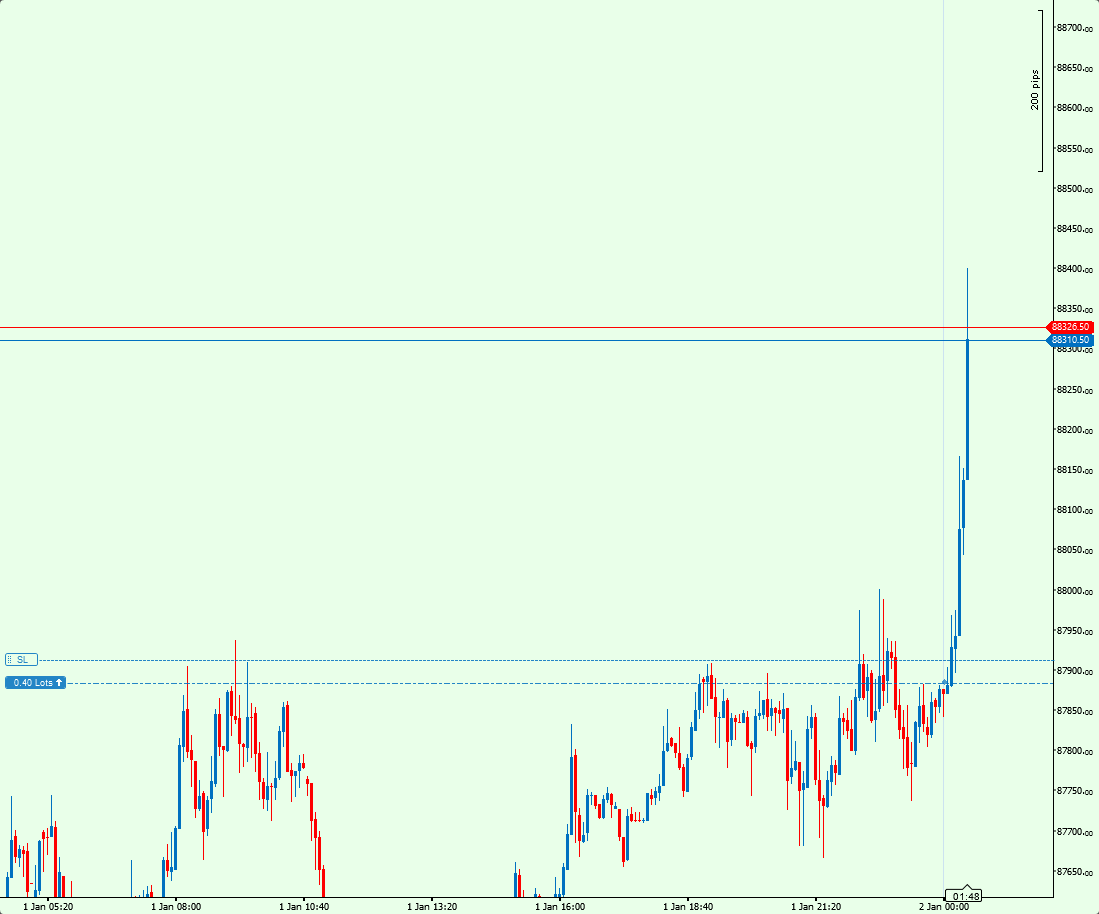
While Bitcoin (BTC) continues to hover near $87,000, onchain activity and exchange liquidity metrics suggest that the market is operating in a low-participation period, limiting its move above $90,000.
Key takeaways:
Bitcoin traded near $88,000 as network activity fell to yearly lows, alongside a reduction in sell pressure.
Exchange inflows on Binance and Coinbase have contracted sharply, signalling tighter liquidity.
Bitcoin network activity fades as price holds firm
Data from CryptoQuant pointed to a slowdown in Bitcoin’s network utility. The 30-day moving average of active addresses has dropped to roughly 807,000, the lowest level in the past year, indicating reduced participation from both retail users and short-term traders.
Exchange flow behavior reinforces this signal. The number of depositing and withdrawing addresses on Binance has declined in tandem, with both metrics sitting at annual lows. This slowdown reflects a market stalemate.
Low depositing activity suggests long-term holders are not rushing to sell, keeping sell-side pressure contained. At the same time, subdued withdrawals indicate that aggressive accumulation has paused, as investors exercised caution for the time being.
Liquidity tightens as exchange inflows contract
Meanwhile, exchange inflow value data highlighted how liquidity conditions have changed beneath stable prices.
On Nov. 24, when Bitcoin traded near $88,500, seven-day cumulative inflows reached $21 billion on Coinbase and $15.3 billion on Binance, reflecting active repositioning.
By Dec. 21, BTC was still $88,500, but Coinbase inflows dropped nearly 63% to $7.8 billion, while Binance saw a more modest decline to $10.3 billion. This shift signals a broad contraction in new liquidity, pointing to reduced short-term trading activity and tighter market conditions overall.
Related: Are altcoins coming back? Why 'Bitcoin season' has staying power in 2026
These BTC levels may define the next move
From a technical standpoint, Bitcoin remains range-bound between $85,000 and $90,000, repeatedly failing to sustain a breakout above resistance. BTC price is currently below the monthly volume-weighted average price (VWAP) indicator, reinforcing a neutral-to-cautious bias.
Liquidity clusters on Binance suggest two key magnet zones. On the downside, a buy-side fair-value gap (FVG) between $85,800 and $86,500 contains a dense cluster of leveraged long exposure.
A move into this zone would place over $60 million in long positions at liquidation risk, making it a possible downside liquidity target.
Related: Bitcoin perpetual open interest rises as traders bet on year-end rally
Conversely, the upside sell-side FVG between $90,600 and $92,000 remains unfilled and holds approximately $70 million in short liquidation exposure. With liquidity clearly defined above and below the price, Bitcoin’s near-term direction is likely to be decided by which side of the range is tapped first.
This article does not contain investment advice or recommendations. Every investment and trading move involves risk, and readers should conduct their own research when making a decision. While we strive to provide accurate and timely information, Cointelegraph does not guarantee the accuracy, completeness, or reliability of any information in this article. This article may contain forward-looking statements that are subject to risks and uncertainties. Cointelegraph will not be liable for any loss or damage arising from your reliance on this information.
Key takeaways Ondo plans an early 2026 rollout of tokenized US stocks and ETFs on Solana. The tokens are custody-backed. Underlying securities sit with US-registered broker-dealers, while onchain holders receive economic exposure rather than shareholder rights. Minting and redemption are designed to keep tokens anchored to real assets on a 24/5 basis, while transfers and trading can operate 24/7. Compliance is intended to travel with the asset, using Solana Token Extensions such as Transfer Hooks to enforce eligibility and transfer restrictions. Ondo’s core pitch is that investors should be able to hold traditional financial exposure, such as Treasurys, money market funds and now US equities, inside the same wallet they use for stablecoins and move those assets onchain. Most recently, the company plans to bring tokenized US stocks and exchange-traded funds (ETFs) to Solana. Ondo says it aims to launch these tokens in early 2026, extending a product line it already operates on other blockchains. The idea is straightforward: You hold a “stock token” in your wallet, then trade or transfer that exposure on Solana, with settlement that can occur much faster than the traditional market stack and access that continues even when US exchanges are closed. Did you know? Ondo Finance launched its USDY (“US Dollar Yield”) token in August 2023, describing it as a tokenized note backed by US Treasurys and bank deposits, paying 5% APY at launch.
What exactly is Ondo putting on Solana?
Ondo’s Global Markets product already offers onchain exposure to more than 100 US stocks and ETFs, with “hundreds more” on the roadmap. The team has flagged Solana as one of the next networks in line.
The Solana rollout focuses on taking that existing catalog and making it available on Solana in early 2026, with tokenized stock and ETF trading that runs 24/7 and settles in seconds.
With roughly $365 million already issued onchain, this represents a scale-up of Ondo’s existing tokenization business. Bringing the product to Solana follows an earlier expansion to BNB Chain.
According to Ondo’s disclosures, the tokens provide economic exposure to publicly traded stocks and ETFs, including dividend effects, with the underlying assets held at US-registered broker-dealers, along with cash in transit.
The holder’s claim is to that stream of economic returns, while shareholder rights over the underlying securities remain with the custodial structure that owns them. In short, financial performance lives onchain while formal ownership remains offchain. That is the core structure Ondo plans to bring to Solana.
How the structure works: Custody, minting and redemption
For stock tokens to be credible, they need to stay anchored to real securities.
Ondo’s design follows a classic custody-backed model. The underlying US stocks and ETFs are held with one or more US-registered broker-dealers, along with any cash that sits between trades or transfers. The tokens visible onchain are intended to reflect economic exposure to that pool of assets, rather than a separate synthetic product that could drift away from what is actually held.
That is where minting and redemption come in. Token supply is designed to expand and contract as users create and redeem tokens against the underlying assets, rather than leaving a fixed pool to trade freely on secondary markets.
Ondo says users will be able to mint and redeem 24 hours a day, five days a week, while the tokens themselves can move directly between crypto wallets and applications 24/7/365. In other words, creation and redemption align with traditional market hours, while transfers and trading follow crypto’s always-on rhythm.
Pricing is the other key component. If a token is meant to track total economic return, it cannot simply mirror the last exchange-traded share price. Dividends and corporate actions must be reflected in the data as well.
Ondo has pointed to Chainlink as the official oracle layer, and Chainlink has discussed building custom feeds for each tokenized equity that account for both price movements and events such as dividend payments. This gives protocols, trading venues and risk systems a single, consistent reference for what each token is worth at any given moment.
Solana’s technical features also matter at this level of detail. Tokenized equities require eligibility checks and transfer rules to be built into the asset’s behavior.
Solana’s Token Extensions include transfer hooks, which are pieces of code that run each time a token moves. This allows Ondo to attach conditions directly to the token, including who is allowed to hold it, which regions are excluded, and what happens when someone attempts to send it into a specific smart contract. These checks travel with the asset wherever it moves in the ecosystem.
Why Solana?
If Ondo wants tokenized US stocks to feel natural to everyday crypto users, Solana is an obvious candidate.
The network already has a large retail audience, fast confirmation times and a culture of trading applications built around low fees and near-instant execution. For something that looks and feels like an equity position but lives in a wallet alongside stablecoins and memecoins, those characteristics are hard to ignore. That context sets the stage for Ondo’s plan to launch its tokenized stocks and ETFs on Solana in early 2026.
There is also a regulatory and risk angle. These tokens are linked to regulated underlying assets, and as Ondo’s own disclosures make clear, they do not turn the holder into a direct shareholder.
That means there must be jurisdiction filters, investor eligibility checks and clear rules governing how and where the tokens can move. The product only works if those constraints are enforced consistently rather than being left to individual applications or exchanges to interpret on their own.
Solana’s Token Extensions are built with this type of real-world asset in mind. The Transfer Hook extension allows each token to call custom logic on every movement. For example, it can confirm that both the sender and receiver are permitted to hold the asset or block transfers to certain smart contracts altogether.
Instead of relying on every front end and every decentralized finance (DeFi) protocol to remember the rules, Ondo can embed those rules directly into the token itself and then focus on expanding coverage and improving the surrounding user experience.
Did you know? In the first half of 2025, Solana averaged around 3 million to 6 million daily active addresses, with peaks above 7 million on some days, while typical transaction fees were roughly $0.00025 per transaction and blocks were produced about every 400 milliseconds.
How it would work for a user (once it’s live on Solana)
The experience is expected to feel much more like a regulated investment product than a typical DeFi token.
The first step is eligibility. Ondo’s Global Markets line has been positioned for qualifying non-US investors, using jurisdiction filters and an eligibility screen. Before you ever hit “buy,” you would need to confirm that you are in a permitted region and meet the relevant requirements.
Onboarding will likely feel closer to opening a brokerage account than simply connecting a wallet to a decentralized exchange (DEX). Because the tokens are described as fully backed by underlying stocks and ETFs held at US-registered broker-dealers, along with cash in transit, access must meet strict regulatory standards.
That includes Know Your Customer (KYC) checks, custody obligations and other compliance requirements.
Once you are approved, the user flow then shifts into a more crypto-native model:
You fund a Solana wallet with a payment asset supported by Ondo for this product, typically stablecoins.
You select a ticker and buy or mint the tokenized version. Minting and redemption are described as operating 24 hours a day, five days a week, while transfers between wallets and applications can continue 24/7/365.
You hold the position like any other token in your wallet, with one important caveat: It provides economic exposure, including dividend effects, but it is not the stock or ETF itself and does not carry shareholder rights.
Upsides and limitations
The potential appeal is clear. If Ondo succeeds in making stock and ETF exposure behave more like standard tokens on Solana, users may experience faster settlement and more flexible movement of positions compared with traditional brokerage workflows.
Even with US markets moving to T+1 settlement, a day and a few seconds sit in very different buckets, especially for users who want to move value between venues or use positions within onchain applications without waiting for trades to clear.
At the same time, some limits remain built into the design. Ondo’s disclosures are clear that holders receive economic exposure only. The underlying shares and associated shareholder rights remain with the regulated custody and brokerage structure that actually owns the securities. Access is also filtered by jurisdiction and investor eligibility since the backing assets sit within that regulated environment.
Market mechanics add another layer of dependency. For the token to track the real instrument closely, liquidity must be present, prices must stay aligned, and corporate actions such as dividends need to flow through cleanly.
That is why Ondo emphasizes both broker-dealer custody and a dedicated oracle system as core components rather than optional extras. If either the custody link or the oracle layer fails, the promise of stock-like behavior onchain begins to break down, regardless of how smooth the Solana user experience may appear on the surface.
Did you know? T+1 settlement means a trade settles, with cash and securities officially exchanging hands, one business day after the trade date. If you buy a stock on Monday, it typically settles on Tuesday, assuming there is no market holiday. In the US, this became the standard for most securities on May 28, 2024, replacing the old T+2 cycle.
What to watch before this goes live on Solana
Between now and the early 2026 target, the key signals will be the launch details that determine who can use the product, how closely the tokens track the real instruments and what protections apply if something goes wrong.
Here is the short checklist worth watching:
Launch lineup: Which stocks and ETFs are supported on day one and whether Ondo sticks with the same custody-backed model it uses elsewhere.
Access rules: How non-US eligibility, jurisdiction limits and KYC checks work and what happens if a user’s status changes.
Custody and backing: Where the underlying shares and ETFs are held and how minting and redemption operate in practice.
Pricing and events: How Chainlink feeds handle both prices and corporate actions such as dividends and splits.
Onchain controls: Whether Solana Token Extensions, such as Transfer Hooks, are used and how strict the transfer rules are.
Finally, expect scrutiny. Regulators and market structure groups have warned that tokenized stock products can confuse investors because they often do not provide shareholder rights, and the token framing does not make them any less of a securities issue.
That scrutiny is likely to shape how aggressively Ondo restricts access and how explicit it is about what holders do and do not own.
Several blockchain startups once valued near $1 billion now have market capitalizations that are only a fraction of those figures, as tighter liquidity forces valuation resets.
This is evident across several high profile projects, according to data compiled by CryptoRank.
Humanity Protocol, which carried a venture valuation of around $1 billion, now has a market capitalization of about $285 million. Fuel Network, also previously valued near $1 billion, is trading closer to $11 million, while Bubblemaps, once assigned a similar venture capital (VC) valuation, has a market cap of about $6 million.
“During bull runs and narrative hype, VCs tend to overprice projects and assign aggressive valuations,” Fundraising Digest, CryptoRank’s venture deals tracker, wrote on X. “However, once sentiment fades or the narrative loses traction, most projects get a reality check and the market resets those euphoric numbers.”
The recent crypto market downturn has exposed gaps between venture capital valuations and public market pricing, revealing how aggressively projects were priced during the last bull cycle.
Related: HashKey secures $250M for new crypto fund amid ‘significant interest’
More crypto projects see sharp reset from VC valuations
The gap continues with projects with relatively lower valuations.
Plasma, which was valued at about $500 million by venture investors now trades around $224 million. ICNT fell from a $470 million VC valuation to a market cap near $247 million. DoubleZero, valued at roughly $400 million in its last round, currently sits near $373 million.
Other projects show even steeper disconnects. Camp Network and Treehouse, each previously valued at about $400 million, now carry market caps of roughly $15 million and $16 million, respectively. Everlyn, once valued near $250 million, trades around $26 million, while SoSoValue has slipped from a $200 million valuation to about $152 million.
“That’s why it's important to keep a cool head and weigh risk across multiple outcomes, before investing,” Fundraising Digest said.
Related: From FTX fallout to fresh capital: Former US chief raises $35M for new exchange
Crypto VC funding stays weak
As Cointelegraph reported, venture capital funding in the crypto sector remained subdued in November, extending a slowdown that has persisted through late 2025.
While total capital raised has been supported by a handful of big rounds, overall deal activity continues to lag, with just 57 disclosed funding rounds recorded during the month.
High-profile funding included Revolut’s $1 billion round and Kraken’s $800 million raise ahead of its anticipated initial public offering, which have masked broader weakness in early- and mid-stage investment.
Magazine: 2026 is the year of pragmatic privacy in crypto — Canton, Zcash and more
Internet service providers (ISPs) in the Philippines began blocking major crypto trading platforms as regulators moved to enforce local licensing rules on crypto service providers.
Users reported that as of Tuesday, access to global cryptocurrency exchanges Coinbase and Gemini was unavailable in the Philippines. Cointelegraph independently confirmed that both platforms were inaccessible across multiple local ISPs.
A report by the Manila Bulletin said the ISP blocks followed an order from the National Telecommunications Commission, which directed providers to restrict access to 50 online trading platforms flagged by the Bangko Sentral ng Pilipinas (BSP), the central bank, as operating without authorization.
The central bank did not publish a full list of the platforms hit by the order. However, the change signals an ongoing shift by local regulators from informal tolerance to enforcement, making local licensing the deciding factor for crypto market access in the Philippines.
Coinbase, Gemini join Binance in Philippines access block
While the Philippines has only recently blocked Coinbase and Gemini, the country has made enforcement moves against unlicensed crypto exchanges in the past.
In December 2023, the country started a 90-day countdown, giving Binance time to comply with local regulations before enforcing a ban on the crypto trading platform.
The Philippines Securities and Exchange Commission (SEC) said the period was meant to allow Filipinos to remove their funds from the exchange.
On March 25, 2024, the NTC ordered local ISPs to block Binance. Nearly a month later, the SEC ordered Apple and Google to block the exchange’s application from their stores.
After the ban was enforced, the Philippines SEC said it could not endorse ways for Filipinos to retrieve their funds.
More recently, the SEC identified 10 exchanges, including OKX, Bybit and KuCoin, operating without licenses.
Related: Grab deepens stablecoin push with StraitsX Web3 wallet and settlements
Regulated players roll out crypto products
While the country cracks down on unregulated platforms, compliant companies have been rolling out crypto-related infrastructure in the country.
On Nov. 19, regulated crypto exchange PDAX partnered with payroll provider Toku to let remote workers receive their salaries in stablecoins. This allows workers to convert earnings to pesos without wire fees or delays.
On Dec. 8, digital bank GoTyme rolled out crypto services in the Philippines following a partnership with US fintech firm Alpaca. With the rollout, 11 crypto assets can be bought and stored through the platform's banking application.
Spain is moving to close the regulatory gap for crypto firms. From 2026, MiCA and DAC8 will bring digital asset providers under the same licensing and reporting regime as traditional financial institutions, reshaping competition in one of Europe’s largest markets.
The country will begin enforcing the DAC8 directive on tax reporting from 1 January 2026, followed by the full implementation of the Markets in Crypto-Assets (MiCA) licensing framework by 1 July 2026.
Together, the two regimes will require crypto service providers to obtain full authorisation and automatically report client data, fundamentally altering the competitive landscape in a major European market.
The Two-Pronged Regulatory Overhaul
The new rules establish a comprehensive compliance framework that closely mirrors traditional financial regulation. From 2026, crypto firms operating in Spain will face a dual requirement. MiCA introduces a full licensing regime, obliging platforms to meet capital, governance and operational standards comparable to those applied to regulated brokers.
DAC8 adds a parallel layer of tax transparency, requiring firms to automatically report client balances and transactions. Taken together, the measures align crypto operations far more closely with conventional financial supervision.
Levelling the Playing Field for Brokers
For the brokerage industry, this dual implementation marks a strategic turning point. Crypto-native firms that have historically operated under lighter regulatory conditions will now face the same compliance costs and operational requirements long borne by traditional brokers.
The impact is already becoming visible. According to a study by Dutch crypto trading firm Yieldfund, 42% of crypto-asset service providers (CASPs) report a 45% increase in costs linked to MiCA preparations, while firms that have completed compliance efforts have seen a 45% rise in institutional investment.
Spain’s 2026 timeline underscores a broader shift in Europe’s approach to crypto regulation. The focus is no longer on incremental alignment, but on full integration into the financial system.
For firms able to absorb higher compliance costs, the new regime offers clarity and long-term legitimacy. For those reliant on regulatory arbitrage, the Spanish market may become increasingly difficult to access. Competition will not disappear, but the basis on which firms compete is being fundamentally redefined.
Bitcoin dominance continues its relentless climb as markets consolidate into year-end, leaving altcoins trapped under heavy supply pressure and an unforgiving token unlock schedule.
Wintermute’s latest confirms what many traders feared. Retail investors are rotating out of altcoins and back into major assets, signaling the end of the anticipated altcoin rally that typically follows Bitcoin’s strong performance.
The broader crypto market extended losses over the past 24 hours, with Bitcoin slipping 1.12% below $87,000 and Ethereum dropping 1.5% near $3,000.
Several altcoins saw sharp pullbacks, with the NFT sector leading declines at over 9% as weak short-term risk appetite dominated trading activity.Source: WintermuteBitcoin and Ethereum Absorb Market Pressure
Crypto markets saw intense downside pressure early last week, with Bitcoin falling below $85,000 midweek and Ethereum breaching $3,000.
Liquidations surged to approximately $600 million on Monday, followed by another $400 million each day on Wednesday and Thursday as choppy conditions forced leveraged positions out rapidly.
Bitcoin gradually recovered toward $90,000 later in the week, but the price action remained constrained.
Perpetual open interest dropped $3 billion for Bitcoin and $2 billion for Ethereum overnight, leaving markets vulnerable to sharp moves despite reduced leverage heading into the Christmas holiday period.
Wintermute’s internal flow data reveals aggregate buying pressure returning to major assets, with institutional flow providing consistent support since the summer.Source: Wintermute
The more notable shift involves retail traders rotating out of altcoins and back into Bitcoin and Ethereum, aligning with the growing consensus that Bitcoin must lead before risk appetite sustainably moves down the market cap curve.
For now, Wintermute stood on the path that “the market continues to trade choppy as liquidity continues to be thin and discretionary desks winding down into year end.”Macro Headwinds Compound Altcoin Struggles
Markets remain range-bound as liquidity thins and discretionary desks wind down into year-end.
Downside moves stay abrupt but increasingly self-contained as leverage flushes quickly and capital retrenches into the most liquid assets.
Bitcoin and Ethereum continue acting as primary risk absorbers while the broader market struggles under supply pressure and limited risk appetite.
“Funding and basis across majors remained relatively compressed through the sell-off,” Wintermute said, with options markets continuing to price a wide range of outcomes as implied volatility stays elevated.
Notably, a recent Galaxy Research analysis shows that Bitcoin never crossed $100,000 when adjusted for inflation using 2020 dollars, despite reaching an all-time high above $126,000 in October.
“If you adjust the price of Bitcoin for inflation using 2020 dollars, BTC never crossed $100,000,” Alex Thorn, head of research at Galaxy, said. “It actually topped at $99,848 in 2020 dollar terms.“Traditional Finance Entry Offers Medium-Term Support
Traditional financial players continue entering the space despite recent market volatility, providing a more durable foundation for future growth.
Bitmine another 67,886 ETH worth $201 million to its treasury, bringing total December purchases to approximately $953 million.
However, Bitcoin and Ethereum ETF net flows have turned negative since early November, signaling reduced institutional participation and broader crypto-market liquidity contraction.Source:
Bitcoin ETFs recorded $650.8 million in outflows over the past four days, led by BlackRock’s Bitcoin ETF (IBIT), which recorded the largest single-day outflow of $157 million.
Ethereum spot ETFs also recorded a net outflow of $95.52 million, with all nine ETFs posting no inflows, according to .
Farzam Ehsani, co-founder and CEO of VALR, outlined two plausible scenarios heading into 2026.
“Either the current drawdown reflects strategic positioning by large players ahead of renewed accumulation, or the market is undergoing a deeper reset driven by macro headwinds and Federal Reserve policy,” he told Cryptonews.
David Schassler, head of multi-asset solutions at VanEck, also maintained a constructive outlook despite current weakness.
🏦 Bitcoin prices would recoup in 2026, setting it up to be a “top performer,” despite the current market downturn, VanEck manager predicts. — Cryptonews.com (@cryptonews)
“Bitcoin is lagging the Nasdaq 100 Index by roughly 50% year-to-date, and that dislocation is setting it up to be a top performer in 2026,” he wrote in the company’s 2026 outlook report.
Ehsani sees scope for Bitcoin to revisit the $100,000–$120,000 range in the second quarter of 2026, though he cautioned that “without the emergence of new major players, there will be no altcoin season; at best, we can expect a market recovery to previous levels.“
Gold has jumped more than 70% this year and is now trading near a new record high of ,406. The rally is being driven by expected interest rate cuts and rising global tensions. At the same time, Bitcoin has been falling compared to gold. Bitcoin is now trading below $87,000, almost 29% down from its recent peak.
This growing gap has left many traders wondering whether Bitcoin can recover and eventually move ahead of gold again.
Gold Still Dominates Safe-Haven Status
For centuries, gold has been the top choice to store value. Recently, many countries and large institutions have rushed to buy gold as global tensions rise, inflation fears grow, and investors expect interest rate cuts.
Gold is widely seen as a safe place to park money during uncertain times. Because of this strong demand, gold prices have surged more than 70% this year, reaching new record levels above ,400 per ounce.
In contrast, Bitcoin has faced more selling pressure, with its value down roughly 29% from its peak and trading range-bound for weeks.
Why Bitcoin’s Supply Works Differently Than Gold
Gold supply increases slowly each year. When gold prices rise, miners are encouraged to dig deeper, use more machines, and extract more gold. This extra supply slowly enters the market and helps cool prices over time.
Bitcoin works in a completely different way.
Bitcoin has a fixed supply of only 21 million coins. No matter how high the price goes, no new Bitcoin can be created beyond this limit. Every four years, Bitcoin goes through a halving event that cuts the number of new coins entering the market in half. This makes Bitcoin harder to obtain as time passes.
Because of this design, rising demand does not increase Bitcoin’s supply.
Bitcoin could hit $1.5 million in 18 years
Meanwhile, a crypto researcher, David, offers a mathematical calculator using very conservative assumptions:
Under these slow estimates, Bitcoin could match gold’s total value in about 18 years. That would place Bitcoin near a $30 trillion market cap, or roughly $1.5 million per coin.
This is not hype. It is basic math based on supply rules.
Bitcoin vs Gold: What the Chart Is Showing
The Bitcoin-to-gold ratio chart shows how Bitcoin performs compared to gold over time. Right now, this ratio is moving inside a falling wedge pattern, which is often seen before a trend reversal.
Even more important, momentum indicators like RSI and MACD are showing bullish divergence. This means selling pressure is slowing, even though prices remain low. In simple terms, Bitcoin is losing strength less quickly against gold, which often happens before a rebound.
This setup suggests Bitcoin may be forming a base rather than collapsing further.
White Label
Data API
Web Plug-ins
Poster Maker
Affiliate Program
The risk of loss in trading financial instruments such as stocks, FX, commodities, futures, bonds, ETFs and crypto can be substantial. You may sustain a total loss of the funds that you deposit with your broker. Therefore, you should carefully consider whether such trading is suitable for you in light of your circumstances and financial resources.
No decision to invest should be made without thoroughly conducting due diligence by yourself or consulting with your financial advisors. Our web content might not suit you since we don't know your financial conditions and investment needs. Our financial information might have latency or contain inaccuracy, so you should be fully responsible for any of your trading and investment decisions. The company will not be responsible for your capital loss.
Without getting permission from the website, you are not allowed to copy the website's graphics, texts, or trademarks. Intellectual property rights in the content or data incorporated into this website belong to its providers and exchange merchants.
Not Logged In
Log in to access more features

FastBull Membership
Not yet
Purchase
Log In
Sign Up