Markets
News
Analysis
User
24/7
Economic Calendar
Education
Data
- Names
- Latest
- Prev


Signal Accounts for Members
All Signal Accounts
All Contests


Japan 30-Year JGB Auction YieldA:--
F: --
P: --
Turkey Trade BalanceA:--
F: --
P: --
Germany Construction PMI (SA) (Nov)A:--
F: --
P: --
Euro Zone IHS Markit Construction PMI (Nov)A:--
F: --
P: --
Italy IHS Markit Construction PMI (Nov)A:--
F: --
P: --
U.K. Markit/CIPS Construction PMI (Nov)A:--
F: --
P: --
France 10-Year OAT Auction Avg. YieldA:--
F: --
P: --
Euro Zone Retail Sales MoM (Oct)A:--
F: --
P: --
Euro Zone Retail Sales YoY (Oct)A:--
F: --
P: --
Brazil GDP YoY (Q3)A:--
F: --
P: --
U.S. Challenger Job Cuts (Nov)A:--
F: --
P: --
U.S. Challenger Job Cuts MoM (Nov)A:--
F: --
P: --
U.S. Challenger Job Cuts YoY (Nov)A:--
F: --
P: --
U.S. Initial Jobless Claims 4-Week Avg. (SA)A:--
F: --
P: --
U.S. Weekly Initial Jobless Claims (SA)A:--
F: --
P: --
U.S. Weekly Continued Jobless Claims (SA)A:--
F: --
P: --
Canada Ivey PMI (SA) (Nov)A:--
F: --
P: --
Canada Ivey PMI (Not SA) (Nov)A:--
F: --
P: --
U.S. Non-Defense Capital Durable Goods Orders Revised MoM (Excl. Aircraft) (SA) (Sept)A:--
F: --
U.S. Factory Orders MoM (Excl. Transport) (Sept)A:--
F: --
P: --
U.S. Factory Orders MoM (Sept)A:--
F: --
P: --
U.S. Factory Orders MoM (Excl. Defense) (Sept)A:--
F: --
P: --
U.S. EIA Weekly Natural Gas Stocks ChangeA:--
F: --
P: --
Saudi Arabia Crude Oil ProductionA:--
F: --
P: --
U.S. Weekly Treasuries Held by Foreign Central BanksA:--
F: --
P: --
Japan Foreign Exchange Reserves (Nov)A:--
F: --
P: --
India Repo RateA:--
F: --
P: --
India Benchmark Interest RateA:--
F: --
P: --
India Reverse Repo Rate--
F: --
P: --
India Cash Reserve Ratio--
F: --
P: --
Japan Leading Indicators Prelim (Oct)--
F: --
P: --
U.K. Halifax House Price Index YoY (SA) (Nov)--
F: --
P: --
U.K. Halifax House Price Index MoM (SA) (Nov)--
F: --
P: --
France Current Account (Not SA) (Oct)--
F: --
P: --
France Trade Balance (SA) (Oct)--
F: --
P: --
France Industrial Output MoM (SA) (Oct)--
F: --
P: --
Italy Retail Sales MoM (SA) (Oct)--
F: --
P: --
Euro Zone Employment YoY (SA) (Q3)--
F: --
P: --
Euro Zone GDP Final YoY (Q3)--
F: --
P: --
Euro Zone GDP Final QoQ (Q3)--
F: --
P: --
Euro Zone Employment Final QoQ (SA) (Q3)--
F: --
P: --
Euro Zone Employment Final (SA) (Q3)--
F: --
Brazil PPI MoM (Oct)--
F: --
P: --
Mexico Consumer Confidence Index (Nov)--
F: --
P: --
Canada Unemployment Rate (SA) (Nov)--
F: --
P: --
Canada Labor Force Participation Rate (SA) (Nov)--
F: --
P: --
Canada Employment (SA) (Nov)--
F: --
P: --
Canada Part-Time Employment (SA) (Nov)--
F: --
P: --
Canada Full-time Employment (SA) (Nov)--
F: --
P: --
U.S. Dallas Fed PCE Price Index YoY (Sept)--
F: --
P: --
U.S. PCE Price Index YoY (SA) (Sept)--
F: --
P: --
U.S. Personal Outlays MoM (SA) (Sept)--
F: --
P: --
U.S. Core PCE Price Index MoM (Sept)--
F: --
P: --
U.S. UMich 5-Year-Ahead Inflation Expectations Prelim YoY (Dec)--
F: --
P: --
U.S. Core PCE Price Index YoY (Sept)--
F: --
P: --
U.S. 5-10 Year-Ahead Inflation Expectations (Dec)--
F: --
P: --
U.S. UMich Current Economic Conditions Index Prelim (Dec)--
F: --
P: --


No matching data
Latest Views
Latest Views
Trending Topics
Top Columnists
Latest Update
White Label
Data API
Web Plug-ins
Affiliate Program
View All

No data
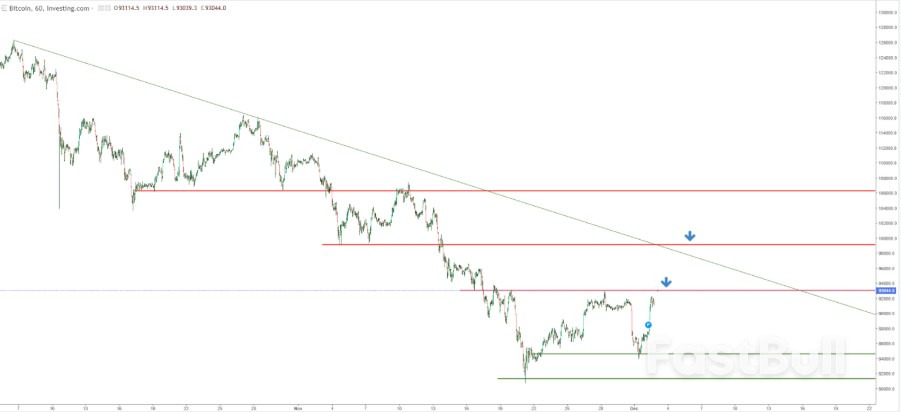
Bitcoin rebounds above $90K after heavy selling, but resistance at $93K is key. A breakout could target $99K, while weak ETF inflows keep risks of consolidation or declines.
U.S. import prices were unexpectedly unchanged in September as high costs for consumer goods, excluding motor vehicles, were offset by cheaper energy products.
The flat reading in import prices reported by the Labor Department's Bureau of Labor Statistics on Wednesday followed a downwardly revised 0.1% gain in August. Economists polled by Reuters had forecast import prices, which exclude tariffs, rising 0.1% after a previously reported 0.3% advance in August.
In the 12 months through September, import prices increased 0.3%. That was the first year-on-year rise since March and followed a 0.1% dip in August.
The report was delayed by a record 43-day shutdown of the government. The pass-through from tariffs to consumer prices has so far been modest, with economists saying businesses were opting to absorb the duties.
Economists, however, continue to expect an acceleration in the pass-through pace, arguing that a continued decline in margins at businesses was unsustainable and could hamper spending on capital and labor. The government last week reported a surge in producer prices for goods in September, mostly driven by higher food and energy costs.
Imported fuel prices dropped 1.5% in September after easing 0.5% in August. Natural gas prices declined 3.0%. Food prices decreased 0.8%. Excluding fuels and food, import prices rose 0.3%. Core import prices increased by the same margin in August. In the 12 months through September, they advanced 0.8%.
That partly reflects dollar weakness against the currencies of the main U.S. trade partners. The trade-weighted dollar is down about 5.6% this year.
Federal Reserve officials will meet next week to decide on interest rates. As many as five of the 12 voting policymakers on the central bank's rate-setting Federal Open Market Committee have voiced opposition to or skepticism about cutting rates further, while a core of three members of the Washington-based Board of Governors wants rates to fall.
Prices for imported consumer goods excluding motor vehicles increased 0.4%, matching August's rise. Imported capital goods prices fell 0.2% while those for motor vehicles, parts and engines were unchanged.
The Trump administration on Tuesday said it paused all immigration applications, including green card and U.S. citizenship processing, filed by immigrants from 19 non-European countries, citing concerns over national security and public safety.
The pause applies to people from 19 countries that were already subjected to a partial travel ban in June, placing further restrictions on immigration - a core feature of U.S. President Donald Trump's political platform.
The official memorandum outlining the new policy cites the attack on U.S. National Guard members in Washington last week in which an Afghan man has been arrested as a suspect. One member of the National Guard was killed and another was critically wounded in the shooting.
Trump has also stepped up rhetoric against Somalis in recent days, calling them "garbage" and saying "we don't want them in our country."
Since returning to office in January, Trump has aggressively prioritized immigration enforcement, sending federal agents to major U.S. cities and turning away asylum seekers at the U.S.-Mexico border. His administration has frequently highlighted the deportation push but until now it has put less emphasis on efforts to reshape legal immigration.
The flurry of promised restrictions since the attack on National Guard members suggests an increased focus on legal immigration framed around protecting national security and casting blame on former President Joe Biden for his policies.
The list of countries targeted in Wednesday's memorandum includes Afghanistan, Burma, Chad, the Republic of the Congo, Equatorial Guinea, Eritrea, Haiti, Iran, Libya, Somalia, Sudan and Yemen, which were subjected to the most severe immigration restrictions in June, including a full suspension on entries with a few exceptions.
Others on the list of 19 countries, which were subjected to partial restrictions in June, are Burundi, Cuba, Laos, Sierra Leone, Togo, Turkmenistan and Venezuela.
The new policy places a hold on pending applications and mandates that all immigrants from the list of countries "undergo a thorough re-review process, including a potential interview and, if necessary, a re-interview, to fully assess all national security and public safety threats."
The memorandum cited several recent crimes suspected to have been committed by immigrants, including the National Guard attack.
Sharvari Dalal-Dheini, senior director of government relations for the American Immigration Lawyers Association, said the organization had received reports of cancelled oath ceremonies, naturalization interviews and adjustment of status interviews for individuals from countries listed on the travel ban.
The U.S. labor market slowdown intensified in November as private companies cut 32,000 workers, with small businesses hit the hardest, payrolls processing firm ADP reported Wednesday.
With worries intensifying over the domestic jobs picture, ADP indicated the issues were worse than anticipated. The payrolls decline marked a sharp step down from October, which saw an upwardly revised gain of 47,000 positions, and was well below the Dow Jones consensus estimate from economists for an increase of 40,000.
Larger businesses, entailing companies with 50 or more employees, actually reported a net gain of 90,000 workers.
However, establishments with fewer than 50 workers saw a decline of 120,000, including a drop of 74,000 among firms with 20 to 49 employees. The total loss was the biggest drop since March 2023.
Education and health services led gainers with 33,000 hires, while leisure and hospitality added 13,000. But a broad-based decline across industries drove the total lower.
The biggest loss came in professional and business services, which saw a decline of 26,000. Others shedding jobs included information services (-20,000), manufacturing (-18,000) and financial activities and construction, both of which saw losses of 9,000.
The rate of pay also slowed, with workers staying in their jobs seeing a 4.4% year-over-year increase, down 0.1 percentage point from October.
"Hiring has been choppy of late as employers weather cautious consumers and an uncertain macroeconomic environment," said ADP chief economist Nela Richardson. "And while November's slowdown was broad-based, it was led by a pullback among small businesses."
The ADP report is the last jobs picture the Federal Reserve gets before it meets Dec. 9-10. Futures traders are assigning a nearly 90% probability that the central bank will approve another quarter percentage point cut in its key interest rate, despite misgivings from some officials over whether further easing is needed.
In recent weeks, Fed policymakers have expressed a divergence of opinions. One side sees cuts as necessary to head off further labor market troubles, while the other worries that additional reductions could aggravate inflation, which has held considerably above the Fed's 2% target.
The Bureau of Labor Statistics will release its take on the nonfarm payrolls picture on Dec. 16, a date delayed because of the government shutdown.
White Label
Data API
Web Plug-ins
Poster Maker
Affiliate Program
The risk of loss in trading financial instruments such as stocks, FX, commodities, futures, bonds, ETFs and crypto can be substantial. You may sustain a total loss of the funds that you deposit with your broker. Therefore, you should carefully consider whether such trading is suitable for you in light of your circumstances and financial resources.
No decision to invest should be made without thoroughly conducting due diligence by yourself or consulting with your financial advisors. Our web content might not suit you since we don't know your financial conditions and investment needs. Our financial information might have latency or contain inaccuracy, so you should be fully responsible for any of your trading and investment decisions. The company will not be responsible for your capital loss.
Without getting permission from the website, you are not allowed to copy the website's graphics, texts, or trademarks. Intellectual property rights in the content or data incorporated into this website belong to its providers and exchange merchants.
Not Logged In
Log in to access more features

FastBull Membership
Not yet
Purchase
Log In
Sign Up