Markets
News
Analysis
User
24/7
Economic Calendar
Education
Data
- Names
- Latest
- Prev




Signal Accounts for Members
All Signal Accounts
All Contests


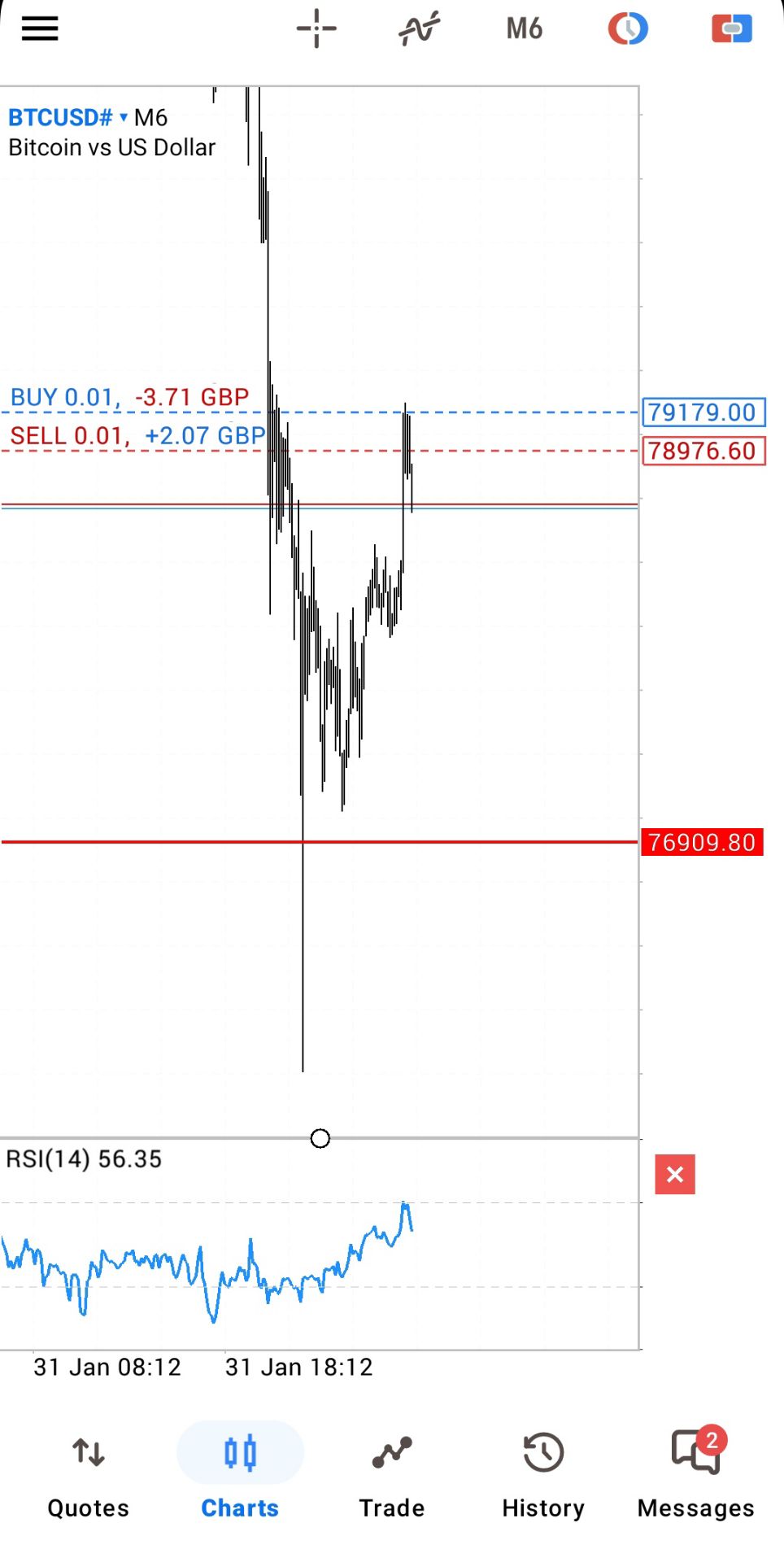
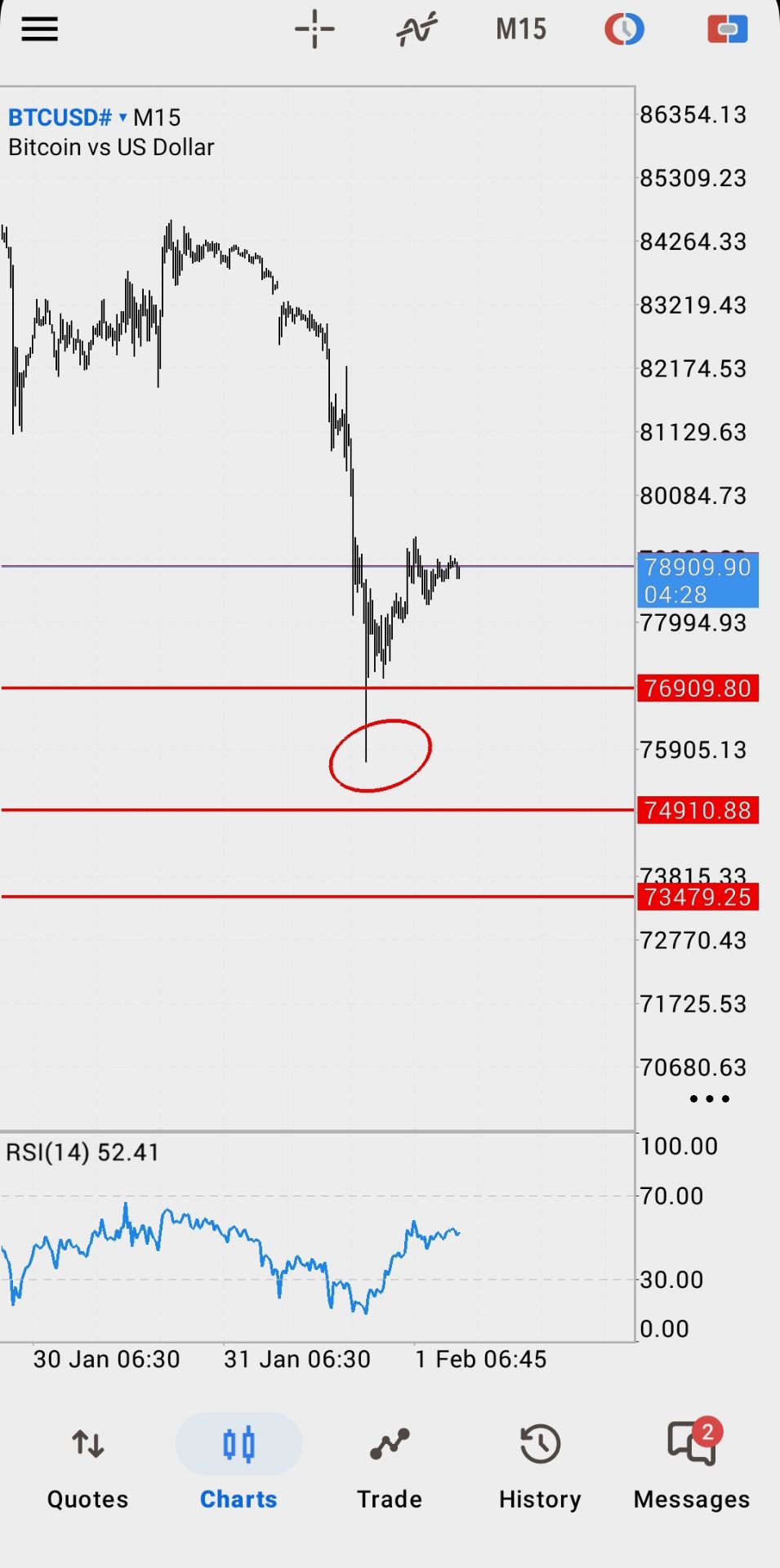
[Bitcoin Briefly Drops Below $78,000] February 1st, According To Htx Market Data, Bitcoin Briefly Dropped Below $78,000, And Is Now Trading At $78,184, With A 24-Hour Decrease Of 6.52%
India Budget: Targets 3.16 Trillion Rupees Dividend From Reserve Bank Of India, Financial Institutions
India Budget: Government To Switch Bonds Worth 2.5 Trillion Rupees For Fy26 (Adds Dropped Words)

U.K. M4 Money Supply (SA) (Dec)A:--
F: --
Italy Unemployment Rate (SA) (Dec)A:--
F: --
P: --
Euro Zone Unemployment Rate (Dec)A:--
F: --
P: --
Euro Zone GDP Prelim QoQ (SA) (Q4)A:--
F: --
P: --
Euro Zone GDP Prelim YoY (SA) (Q4)A:--
F: --
P: --
Italy PPI YoY (Dec)A:--
F: --
P: --
Mexico GDP Prelim YoY (Q4)A:--
F: --
P: --
Brazil Unemployment Rate (Dec)A:--
F: --
P: --
South Africa Trade Balance (Dec)A:--
F: --
P: --
India Deposit Gowth YoYA:--
F: --
P: --
Germany CPI Prelim YoY (Jan)A:--
F: --
P: --
Germany CPI Prelim MoM (Jan)A:--
F: --
P: --
Germany HICP Prelim YoY (Jan)A:--
F: --
P: --
Germany HICP Prelim MoM (Jan)A:--
F: --
P: --
U.S. Core PPI YoY (Dec)A:--
F: --
U.S. Core PPI MoM (SA) (Dec)A:--
F: --
P: --
U.S. PPI YoY (Dec)A:--
F: --
P: --
U.S. PPI MoM (SA) (Dec)A:--
F: --
P: --
Canada GDP MoM (SA) (Nov)A:--
F: --
P: --
Canada GDP YoY (Nov)A:--
F: --
P: --
U.S. PPI MoM Final (Excl. Food, Energy and Trade) (SA) (Dec)A:--
F: --
P: --
U.S. PPI YoY (Excl. Food, Energy & Trade) (Dec)A:--
F: --
P: --
U.S. Chicago PMI (Jan)A:--
F: --
Canada Federal Government Budget Balance (Nov)A:--
F: --
P: --
U.S. Weekly Total Oil Rig CountA:--
F: --
P: --
U.S. Weekly Total Rig CountA:--
F: --
P: --
China, Mainland NBS Manufacturing PMI (Jan)A:--
F: --
P: --
China, Mainland NBS Non-manufacturing PMI (Jan)A:--
F: --
P: --
China, Mainland Composite PMI (Jan)A:--
F: --
P: --
South Korea Trade Balance Prelim (Jan)A:--
F: --
Japan Manufacturing PMI Final (Jan)--
F: --
P: --
South Korea IHS Markit Manufacturing PMI (SA) (Jan)--
F: --
P: --
Indonesia IHS Markit Manufacturing PMI (Jan)--
F: --
P: --
China, Mainland Caixin Manufacturing PMI (SA) (Jan)--
F: --
P: --
Indonesia Trade Balance (Dec)--
F: --
P: --
Indonesia Inflation Rate YoY (Jan)--
F: --
P: --
Indonesia Core Inflation YoY (Jan)--
F: --
P: --
India HSBC Manufacturing PMI Final (Jan)--
F: --
P: --
Australia Commodity Price YoY (Jan)--
F: --
P: --
Russia IHS Markit Manufacturing PMI (Jan)--
F: --
P: --
Turkey Manufacturing PMI (Jan)--
F: --
P: --
U.K. Nationwide House Price Index MoM (Jan)--
F: --
P: --
U.K. Nationwide House Price Index YoY (Jan)--
F: --
P: --
Germany Actual Retail Sales MoM (Dec)--
F: --
Italy Manufacturing PMI (SA) (Jan)--
F: --
P: --
South Africa Manufacturing PMI (Jan)--
F: --
P: --
Euro Zone Manufacturing PMI Final (Jan)--
F: --
P: --
U.K. Manufacturing PMI Final (Jan)--
F: --
P: --
Brazil IHS Markit Manufacturing PMI (Jan)--
F: --
P: --
Canada National Economic Confidence Index--
F: --
P: --
Canada Manufacturing PMI (SA) (Jan)--
F: --
P: --
U.S. IHS Markit Manufacturing PMI Final (Jan)--
F: --
P: --
U.S. ISM Output Index (Jan)--
F: --
P: --
U.S. ISM Inventories Index (Jan)--
F: --
P: --
U.S. ISM Manufacturing Employment Index (Jan)--
F: --
P: --
U.S. ISM Manufacturing New Orders Index (Jan)--
F: --
P: --
U.S. ISM Manufacturing PMI (Jan)--
F: --
P: --
South Korea CPI YoY (Jan)--
F: --
P: --
Japan Monetary Base YoY (SA) (Jan)--
F: --
P: --
Australia Building Permits MoM (SA) (Dec)--
F: --
P: --


No matching data
Latest Views
Latest Views
Trending Topics
Top Columnists
Latest Update
White Label
Data API
Web Plug-ins
Affiliate Program
View All

No data
Knight-Swift Transportation’s fourth quarter saw management navigating a challenging freight environment, with demand in the truckload segment remaining subdued until late in the quarter. CEO Adam Miller pointed to a lack of typical seasonal improvement and supply reductions as primary market factors, while highlighting operational efficiencies and cost reductions that helped mitigate some revenue softness. The company’s focus on cost management, including holding truckload cost per mile flat despite a decline in miles, and integrating acquired brands, contributed to margin improvement within segments, even as overall operating margin declined year over year.
Knight-Swift Transportation (KNX) Q4 CY2025 Highlights:
While we enjoy listening to the management's commentary, our favorite part of earnings calls are the analyst questions. Those are unscripted and can often highlight topics that management teams would rather avoid or topics where the answer is complicated. Here is what has caught our attention.
Our Top 5 Analyst Questions From Knight-Swift Transportation’s Q4 Earnings Call
Catalysts in Upcoming Quarters
In the coming quarters, our analysts will be watching (1) progress on contract rate increases and asset utilization as bid season concludes, (2) visible cost savings and operational improvements from AI-driven technology rollouts, and (3) signs of margin recovery in the LTL segment as volumes better align with recent infrastructure investments. Regulatory developments impacting industry capacity will also be a key factor to monitor.
Knight-Swift Transportation currently trades at $55.05, down from $57.93 just before the earnings. At this price, is it a buy or sell? The answer lies in our full research report (it’s free).
The Best Stocks for High-Quality Investors
If your portfolio success hinges on just 4 stocks, your wealth is built on fragile ground. You have a small window to secure high-quality assets before the market widens and these prices disappear.
Don’t wait for the next volatility shock. Check out our Top 5 Strong Momentum Stocks for this week. This is a curated list of our High Quality stocks that have generated a market-beating return of 244% over the last five years (as of June 30, 2025).
Stocks that have made our list include now familiar names such as Nvidia (+1,326% between June 2020 and June 2025) as well as under-the-radar businesses like the once-micro-cap company Kadant (+351% five-year return).
By Liz Young
A Trump administration crackdown on foreign truck drivers threatens to take tens of thousands of truckers off the road.
Some of the country's largest trucking companies say the measures could help reverse a prolonged downturn in the trucking industry by reducing the number of drivers and pushing up rates.
"Capacity reduction is clearly under way," said Adam Miller, chief executive of Knight-Swift Transportation Holdings, on a call with investors Wednesday. "Regulatory enforcement of qualifications and safety standards was arguably the most welcome development in 2025 for our industry."
The Trump administration has been pressing states to revoke certain commercial driver's licenses and to restrict the issuance of some new certifications with the goal of improving road safety.
The Transportation Department in September proposed a rule that would sharply curtail the pool of immigrants eligible to earn commercial driver's licenses. Officials said the change would make the country's roads and highways safer, pointing to at least five fatal crashes across the U.S. that involved non-domiciled CDL holders through September of last year.
About 200,000 immigrants in the U.S. hold so-called non-domiciled commercial driver's licenses that allow them to haul freight professionally, representing about 5% of all CDL holders nationwide, according to the Federal Motor Carrier Safety Administration. The licenses are available to drivers who aren't U.S. citizens or lawful permanent residents.
The new proposed rule would in part limit the types of visas eligible for non-domiciled CDLs. The FMCSA estimated about 97% of current non-domiciled CDL holders would no longer be eligible under the new rule.
For now, the change is on hold. The U.S. Court of Appeals for the District of Columbia Circuit issued a stay on the Transportation Department's interim final rule in November, allowing states to continue issuing non-domiciled CDLs.
Transportation Secretary Sean Duffy has meanwhile accused several states of issuing non-domiciled CDLs illegally. These include licenses that expire years after a driver's work authorization is due to run out, or licenses granted to drivers from Mexico and Canada who are supposed to use their existing certifications from their countries.
Duffy this month said the federal government will withhold $160 million from California for its failure to revoke 17,000 licenses that an FMCSA audit found to be illegally issued. He has threatened over the past several months to slash federal funding to other states including North Carolina, New York and Colorado if they don't cancel thousands of similar permits.
A representative for the California Department of Motor Vehicles said the agency was in compliance with federal regulations and state law, and hopes the state will be allowed to promptly reissue legal non-domiciled CDLs.
Law-enforcement officers at the same time have been taking commercial drivers off the road who are deemed not to be proficient in English.
President Trump in April issued an executive order calling for stricter enforcement of a decades-old law requiring commercial drivers to be able to read and speak English sufficiently well to understand road signs and interact with law enforcement. The order reversed guidance issued in 2016 that a driver didn't have to be removed from service if found in violation of the English-language requirement.
Drivers "should be able to read and understand traffic signs, communicate with traffic safety, border patrol, agricultural checkpoints and cargo weight-limit station officers," Trump's executive order said. "This is common sense."
Matt Muenster, chief economist of transportation technology and insights firm Breakthrough Fuel, estimated that about 300 to 400 drivers on average have been removed from service nationwide each week since the executive order was issued.
Duffy said in a social-media post last week that more than 11,500 drivers had been removed from service under the rules.
Big trucking companies such as J.B. Hunt Transport Services, Knight-Swift, Schneider National and Werner Enterprises have said the administration's efforts could help reverse their fortunes after more than three years of grappling with rock-bottom freight rates.
Trucking executives and analysts have in part attributed the yearslong slump in rates to an overabundance of trucking capacity after tens of thousands of new operators entered the industry during a pandemic-driven boom in freight demand. Thousands of small trucking businesses have left the market over the past few years, but the industry still has more carriers on the roads than before the pandemic.
The Transportation Department said the enforcement actions won't hurt trucking service. "These safety actions will not impact the delivery of packages or essential goods to Americans," a representative said.
Spot rates increased in December and have stayed elevated in January, though analysts caution that questions remain about how much impact the enforcement measures will have. DAT Solutions, a load board matching truckers and loads, said average spot prices for flatbed truck transport rose about 6% in December from a year earlier.
"A combination of seasonality, weather, the quirks of the holiday calendar, and constrained capacity drove prices substantially higher, as opposed to stronger freight volumes," said Ken Adamo, DAT's chief of analytics.
Avery Vise, vice president of trucking at FTR Transportation Intelligence, said rates are starting to climb in part due to a drop in capacity. But he said that decrease in capacity has more to do with trucking operators leaving the business due to market conditions, rather than the administration's enforcement actions.
"Those would be contributing factors to a trend that was already happening," Vise said. "It took a long time for the market to finally say, 'OK, we can't just keep holding on to drivers. We have to let them go.'"
Write to Liz Young at liz.young@wsj.com
White Label
Data API
Web Plug-ins
Poster Maker
Affiliate Program
The risk of loss in trading financial instruments such as stocks, FX, commodities, futures, bonds, ETFs and crypto can be substantial. You may sustain a total loss of the funds that you deposit with your broker. Therefore, you should carefully consider whether such trading is suitable for you in light of your circumstances and financial resources.
No decision to invest should be made without thoroughly conducting due diligence by yourself or consulting with your financial advisors. Our web content might not suit you since we don't know your financial conditions and investment needs. Our financial information might have latency or contain inaccuracy, so you should be fully responsible for any of your trading and investment decisions. The company will not be responsible for your capital loss.
Without getting permission from the website, you are not allowed to copy the website's graphics, texts, or trademarks. Intellectual property rights in the content or data incorporated into this website belong to its providers and exchange merchants.
Not Logged In
Log in to access more features
Log In
Sign Up