- USDX
- XAUUSD
- XAGUSD
- WTI


Markets
Analysis
User
24/7
Economic Calendar
Education
Data
- Names
- Latest
- Prev





 Trading Analysis











Investors seek safety, yet few understand the mechanics. See how treasury bills are issued by sovereign governments to optimize your cash and tax liability.
When investors look for a secure place to park short-term cash, Treasury bills frequently emerge as the primary choice. While these instruments are definitively backed by the sovereign authority of the national government, the actual mechanics of who issues them, how auctions operate, and where they can be purchased are often misunderstood. Navigating these details allows investors to optimize liquidity, manage tax liabilities, and accurately compare true yields against retail banking alternatives.
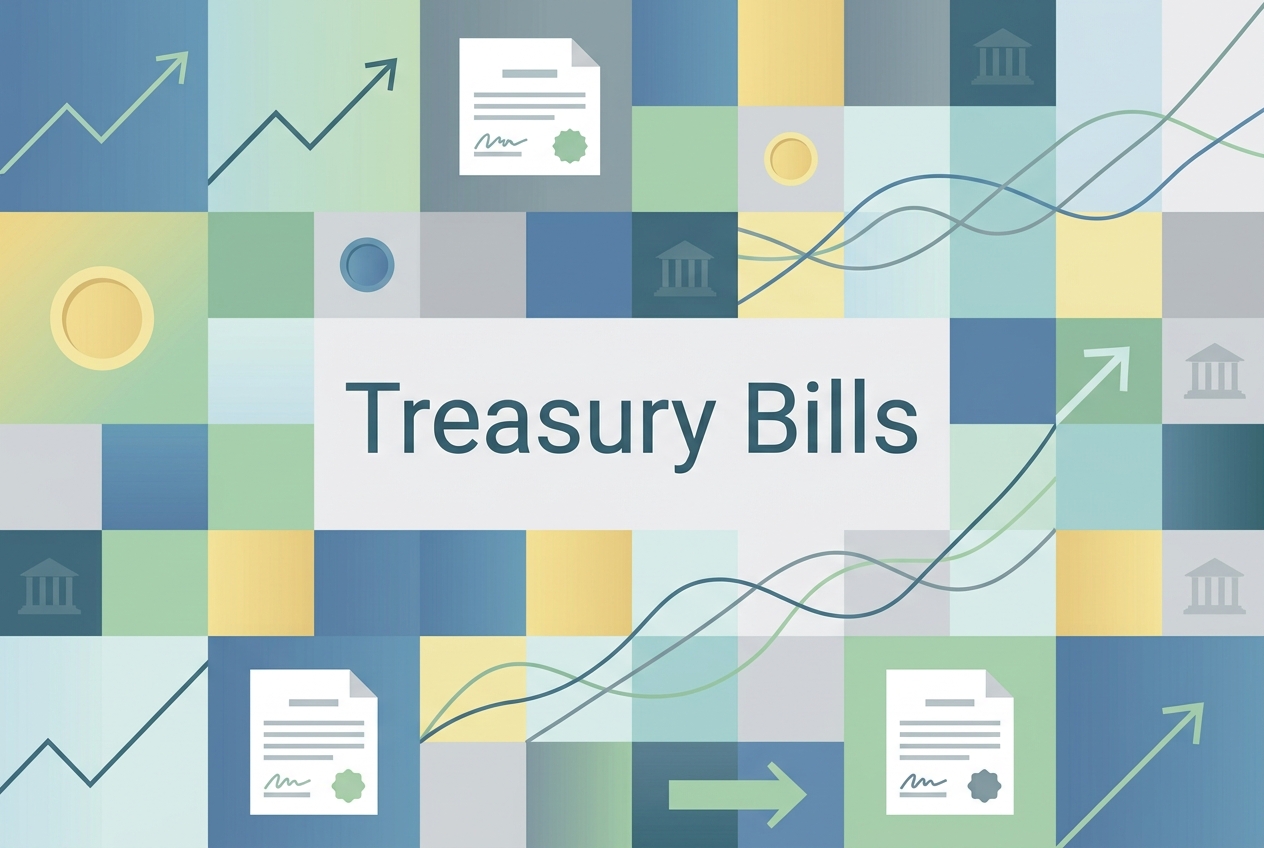
Treasury bills are issued by the sovereign national government of a country to finance public debt and manage short-term liquidity needs. Sub-national entities, such as state or municipal governments, do not issue Treasury bills; they issue municipal bonds. When investors purchase a T-bill, they are lending money directly to the federal or central government, which guarantees the repayment using its taxing authority.
The central government is the sole legal issuer and guarantor of a Treasury bill, but the execution involves a strict division of labor between the finance ministry and the central bank. Retail investors often confuse the roles of these entities because they interact with different branches during the issuance and auction process.
In the United States, treasury bills are issued by the Department of the Treasury—specifically through its sub-agency, the Bureau of the Fiscal Service.
The Bureau of the Fiscal Service dictates the auction calendar and operates TreasuryDirect, the primary platform where institutional and retail investors can purchase newly issued debt without a secondary broker. To facilitate the actual market mechanics, the Federal Reserve Bank of New York acts as the fiscal agent, processing the bids and executing the settlement for the Treasury.
Treasury bills are known to be sold at a discount to their face (par) value. They do not pay periodic interest; rather, the investor pays less than par upfront and receives the full par value at maturity, with the difference representing the yield.
Regarding format, the U.S. government no longer issues physical debt certificates. The Bureau of the Fiscal Service issues all modern T-bills exclusively in electronic book-entry form, a transition completed in the late 1980s to eliminate the risk of lost or stolen paper securities.
Yes, nearly all developed and emerging sovereign nations issue short-term, zero-coupon debt instruments to manage cash flow. While the fundamental mechanics of how do treasury bills work remain consistent globally—issued at a discount, maturing at par in one year or less—the specific issuing bodies and local terminology vary.
| Country / Region | Issuing Body (The Issuer) | Central Bank (Fiscal Agent) | Instrument Name |
|---|---|---|---|
| United States | Bureau of the Fiscal Service | Federal Reserve | U.S. Treasury Bills (T-Bills) |
| United Kingdom | UK Debt Management Office (DMO) | Bank of England | UK Treasury Bills |
| Germany | German Finance Agency (Finanzagentur) | Deutsche Bundesbank | Unverzinsliche Schatzanweisungen (Bubills) |
| India | Government of India | Reserve Bank of India (RBI) | Treasury Bills (91, 182, 364-day) |
| Canada | Department of Finance Canada | Bank of Canada | Government of Canada Treasury Bills |
In each of these jurisdictions, the distinction remains absolute: the treasury or finance agency issues the debt, while the central bank facilitates the auction and settlement.
Returning to the domestic market, the actual rollout of these securities follows a highly structured protocol.
In the United States, the issuance process relies on a public, single-price auction system designed to fund the national debt and manage short-term federal cash flows. The Federal Reserve operates as the fiscal agent, executing these primary market transactions on behalf of the U.S. Department of the Treasury. T-bills are issued entirely in electronic book-entry form—meaning no physical certificates exist—and are auctioned on a standardized weekly schedule. Treasury bills are issued for terms of 4, 8, 13, 17, 26, and 52 weeks. The government employs a "Dutch auction" mechanism, meaning all successful bidders ultimately pay the exact same price, which is determined by the highest yield the Treasury must accept to fund the total offering amount.
Investors purchase T-bills through three distinct channels: directly from the government via TreasuryDirect, or indirectly through secondary market intermediaries like brokerages and commercial banks. The optimal execution venue depends entirely on an investor's need for secondary market liquidity.
| Execution Venue | Market Access | Secondary Liquidity | Typical Fee Structure |
|---|---|---|---|
| TreasuryDirect | Primary (Auctions only) | None. Must transfer to a broker to sell before maturity (takes weeks). | $0 fees. |
| Brokerages | Primary and Secondary | High. Can liquidate existing T-bills intraday. | $0 for new issues; bid-ask spread applies to secondary trades. |
| Commercial Banks | Primary routing | Low to Moderate. | Highest. Often charge flat transaction fees or markups. |
Figuring out how to buy treasury bills efficiently requires weighing upfront costs against liquidity needs. TreasuryDirect restricts buyers to new issues and effectively locks up the capital until maturity. Brokerages provide the infrastructure to trade existing securities, allowing an investor to lock in a 3 month treasury bill rate but still liquidate the position instantly if capital requirements change.
Any U.S. citizen, resident, or legally registered domestic entity (such as a trust, estate, corporation, or partnership) can buy T-bills directly from the Treasury. The primary market divides participants into two distinct bidding categories based on their objectives and size:
The minimum purchase requirement across all direct channels is $100, scaling up in $100 increments. Foreign individuals and institutions cannot utilize TreasuryDirect; they must route their primary market orders through registered brokers or their respective central banks.
As previously established, Treasury bills are sold at a discount to their par (face) value rather than paying periodic coupon interest. The investor's total return is generated exclusively by the difference between the discounted purchase price and the full face value paid out at maturity.
If a 52-week T-bill clears an auction at a 5.0% discount rate, an investor purchases a $1,000 face-value bill for exactly $950. At maturity, the Treasury deposits $1,000 into the investor's account. The $50 difference is the earned interest.
However, the quoted discount rate mathematically understates the actual return. Because the investor only laid out $950 to generate that $50 gain, the true yield—known as the investment rate or bond equivalent yield (BEY)—is calculated as $50 divided by $950, resulting in 5.26%. When evaluating T-bills vs CDs or other interest-bearing assets, analysts rely on the investment rate to compare identical capital outlays accurately.
Beyond the initial auction mechanics, these instruments occupy a distinct role within the broader federal debt portfolio.
Whereas other securities issued by the U.S. government pay fixed periodic interest over multiple years, Treasury bills (T-bills) remain strictly short-term, zero-coupon obligations. The U.S. Department of the Treasury segments its debt issuance into different maturity buckets to manage the national debt's average duration and ensure government operations have continuous daily liquidity.
The primary differences between T-bills, notes, and bonds lie in their maturity timelines, payout mechanisms, and exposure to interest rate fluctuations (duration risk). Investors comparing Treasury bills vs bonds must weigh the absolute principal stability of a short-term bill against the ability to lock in a fixed yield for decades with a bond.
| Security Type | Standard Maturities | Payout Mechanism | Risk Trade-offs |
|---|---|---|---|
| Treasury Bills | 4, 8, 13, 17, 26, and 52 weeks | Original Issue Discount (no coupons) | Near-zero interest rate risk; high reinvestment risk. |
| Treasury Notes | 2, 3, 5, 7, and 10 years | Fixed semiannual coupon payments | Moderate interest rate risk; sensitive to medium-term economic outlooks. |
| Treasury Bonds | 20 and 30 years | Fixed semiannual coupon payments | High interest rate risk; low reinvestment risk. Highly sensitive to inflation expectations. |
Because T-bills mature in one year or less, their secondary market pricing is virtually immune to long-term interest rate shifts. A 100-basis-point increase in the federal funds rate will cause a severe price drop in a 30-year bond, but will barely affect the price of a 4-week T-bill holding. However, this capital protection forces T-bill investors to constantly roll over their capital at prevailing market rates, exposing them to reinvestment risk if yields fall.
T-bills do not distribute periodic coupon payments because their maximum 52-week lifespan makes the administrative mechanics of calculating and distributing semiannual interest highly inefficient. Instead, they operate as Original Issue Discount (OID) instruments.
As noted, investors purchase T-bills at a price below their actual face value (par). When the bill reaches maturity, the U.S. Treasury pays the investor the full par value. The difference between the discounted purchase price and the final payout is the implied interest earned.
For example, if an investor buys a $1,000, 26-week T-bill for $975, the Treasury does not mail them an interest check. Instead, 26 weeks later, the investor receives the $1,000 par value. The $25 spread represents the entire return on investment.
While this mechanism eliminates the need to track and reinvest small semiannual cash flows, it creates a specific tax reality. The Internal Revenue Service (IRS) classifies the accreted discount—the difference between the purchase price and par—as ordinary interest income, meaning it is taxed at the federal level in the year the bill matures, despite no physical interest payment ever changing hands.
Alongside these tax implications, investors must also weigh the fundamental security and potential vulnerabilities of the asset.
Treasury bills carry virtually zero default risk because they are backed by the full faith and credit of the U.S. government. To gauge this safety, investors can observe the mechanics in practice: an investor might pay $982 for a 26-week bill, and at maturity, the government pays the full $1,000 face value. The $18 difference represents the yield. Because the U.S. Treasury controls the domestic money supply and maintains an unbroken record of debt service, the probability of losing principal on a held-to-maturity T-bill is fundamentally zero.
The primary threats to a T-bill investor are inflation risk and reinvestment risk, rather than institutional default. Inflation risk occurs when the Consumer Price Index (CPI) rises faster than the T-bill's annualized yield, causing the investor to lose actual purchasing power even while gaining nominal dollars. Reinvestment risk materializes when macroeconomic interest rates fall. An investor rolling over 4-week bills in a declining rate environment will be forced to accept progressively lower yields each month, effectively dragging down their total annual return.
When weighing treasury bills vs bonds, T-bills naturally avoid severe duration risk. If the Federal Reserve unexpectedly hikes rates, a 30-year Treasury bond's secondary market value will crash. A T-bill, capping out at a 52-week maturity, suffers minimal price fluctuation and quickly returns the original face value, allowing the investor to redeploy that capital at the new, higher prevailing rates.
As of mid-2026, T-bills offer yields in the mid-3% range, making them highly competitive with retail bank products on an after-tax basis. Specifically, the 3 month treasury bill rate hovers near 3.60%, trailing slightly behind the 4.00% to 5.00% promotional rates currently offered by top-tier high-yield savings accounts and certificates of deposit.
However, comparing t-bills vs cds on nominal yield alone ignores the heaviest drag on returns: taxes. T-bill interest is strictly exempt from state and local income taxes, whereas bank interest is fully taxable at all levels. An investor in a high-tax jurisdiction like California or New York using a t-bill calculator will frequently find that a 3.60% T-bill delivers a higher net return than a 4.20% CD.
Low-Risk Cash Equivalents Compared (May 2026)
| Asset Type | Average Yield Context | State & Local Tax Exempt? | Liquidity & Lock-up Terms |
|---|---|---|---|
| Treasury Bills | ~3.60% | Yes | High; can be sold on the secondary market without penalty. |
| Certificates of Deposit (CDs) | 4.00% – 4.30% | No | Low; early withdrawal incurs a penalty (typically 60 to 180 days of interest). |
| High-Yield Savings | 4.00% – 5.00% | No | High; instant withdrawal, but the issuing bank can change rates daily. |
| Money Market Funds | 3.30% – 3.70% | Varies by fund assets | High; typically T+1 settlement via a brokerage account. |
For investors deciding how to buy treasury bills, liquidity access is the final differentiator. While breaking a CD early guarantees a penalty from the bank, T-bills can be liquidated early on the secondary market through a standard brokerage account. The exact sale price will fluctuate based on daily interest rate movements, but the investor retains access to their capital without a mandated fee.
Treasury bills are short-term securities with maturities of one year or less, whereas Treasury bonds are long-term investments that typically mature in 20 or 30 years. Additionally, Treasury bills are sold at a discount to their face value and do not pay regular interest. In contrast, Treasury bonds pay regular semi-annual interest to investors.
A $10,000 Treasury bill generally costs slightly less than $10,000 because these securities are sold at a discount to their face value. The exact purchase price depends on the current auction rate and the length of the maturity period. When the bill matures, the government pays you the full $10,000 face value, with the difference representing your interest earned.
Interest earned on United States Treasury bills is generally exempt from state and local income taxes. However, the earnings are still fully subject to federal income tax.
The primary downside to buying Treasury bills is that they generally offer lower returns compared to riskier investments like stocks or corporate bonds. Because of these lower yields, there is a risk that the returns may not keep pace with inflation over time, potentially reducing your purchasing power. Additionally, T-bills do not provide regular, periodic income payments since they are zero-coupon instruments.
Treasury bills provide a virtually risk-free vehicle for preserving capital while still earning competitive, tax-advantaged yields. By grasping the distinct roles of the Treasury and the central bank, alongside the specific mechanics of the discount auction model, investors can seamlessly integrate these instruments into their cash management strategies. Whether acquired directly at issuance or traded strategically on the secondary market, T-bills remain a foundational element of sound short-term liquidity planning.

728 RM B 7/F GEE LOK IND BLDG NO 34 HUNG TO RD KWUN TONG KLN HONG KONG





The risk of loss in trading financial instruments such as stocks, FX, commodities, futures, bonds, ETFs and crypto can be substantial. You may sustain a total loss of the funds that you deposit with your broker. Therefore, you should carefully consider whether such trading is suitable for you in light of your circumstances and financial resources.
No decision to invest should be made without thoroughly conducting due diligence by yourself or consulting with your financial advisors. Our web content might not suit you since we don't know your financial conditions and investment needs. Our financial information might have latency or contain inaccuracy, so you should be fully responsible for any of your trading and investment decisions. The company will not be responsible for your capital loss.
Without getting permission from the website, you are not allowed to copy the website's graphics, texts, or trademarks. Intellectual property rights in the content or data incorporated into this website belong to its providers and exchange merchants.
Not Logged In
Log in to access more features


Log In
Sign Up