Markets
News
Analysis
User
24/7
Economic Calendar
Education
Data
- Names
- Latest
- Prev


Signal Accounts for Members
All Signal Accounts
All Contests


France Industrial Output MoM (SA) (Oct)A:--
F: --
France Trade Balance (SA) (Oct)A:--
F: --
Euro Zone Employment YoY (SA) (Q3)A:--
F: --
Canada Part-Time Employment (SA) (Nov)A:--
F: --
P: --
Canada Unemployment Rate (SA) (Nov)A:--
F: --
P: --
Canada Full-time Employment (SA) (Nov)A:--
F: --
P: --
Canada Labor Force Participation Rate (SA) (Nov)A:--
F: --
P: --
Canada Employment (SA) (Nov)A:--
F: --
P: --
U.S. PCE Price Index MoM (Sept)A:--
F: --
P: --
U.S. Personal Income MoM (Sept)A:--
F: --
P: --
U.S. Core PCE Price Index MoM (Sept)A:--
F: --
P: --
U.S. PCE Price Index YoY (SA) (Sept)A:--
F: --
P: --
U.S. Core PCE Price Index YoY (Sept)A:--
F: --
P: --
U.S. Personal Outlays MoM (SA) (Sept)A:--
F: --
U.S. 5-10 Year-Ahead Inflation Expectations (Dec)A:--
F: --
P: --
U.S. Real Personal Consumption Expenditures MoM (Sept)A:--
F: --
U.S. Weekly Total Rig CountA:--
F: --
P: --
U.S. Weekly Total Oil Rig CountA:--
F: --
P: --
U.S. Consumer Credit (SA) (Oct)A:--
F: --
China, Mainland Foreign Exchange Reserves (Nov)A:--
F: --
P: --
Japan Trade Balance (Oct)A:--
F: --
P: --
Japan Nominal GDP Revised QoQ (Q3)A:--
F: --
P: --
China, Mainland Imports YoY (CNH) (Nov)A:--
F: --
P: --
China, Mainland Exports (Nov)A:--
F: --
P: --
China, Mainland Imports (CNH) (Nov)A:--
F: --
P: --
China, Mainland Trade Balance (CNH) (Nov)A:--
F: --
P: --
China, Mainland Exports YoY (USD) (Nov)A:--
F: --
P: --
China, Mainland Imports YoY (USD) (Nov)A:--
F: --
P: --
Germany Industrial Output MoM (SA) (Oct)A:--
F: --
Euro Zone Sentix Investor Confidence Index (Dec)A:--
F: --
P: --
Canada National Economic Confidence Index--
F: --
P: --
U.K. BRC Like-For-Like Retail Sales YoY (Nov)--
F: --
P: --
U.K. BRC Overall Retail Sales YoY (Nov)--
F: --
P: --
Australia Overnight (Borrowing) Key Rate--
F: --
P: --
RBA Rate Statement
RBA Press Conference
Germany Exports MoM (SA) (Oct)--
F: --
P: --
U.S. NFIB Small Business Optimism Index (SA) (Nov)--
F: --
P: --
Mexico 12-Month Inflation (CPI) (Nov)--
F: --
P: --
Mexico Core CPI YoY (Nov)--
F: --
P: --
Mexico PPI YoY (Nov)--
F: --
P: --
U.S. Weekly Redbook Index YoY--
F: --
P: --
U.S. JOLTS Job Openings (SA) (Oct)--
F: --
P: --
China, Mainland M1 Money Supply YoY (Nov)--
F: --
P: --
China, Mainland M0 Money Supply YoY (Nov)--
F: --
P: --
China, Mainland M2 Money Supply YoY (Nov)--
F: --
P: --
U.S. EIA Short-Term Crude Production Forecast For The Year (Dec)--
F: --
P: --
U.S. EIA Natural Gas Production Forecast For The Next Year (Dec)--
F: --
P: --
U.S. EIA Short-Term Crude Production Forecast For The Next Year (Dec)--
F: --
P: --
EIA Monthly Short-Term Energy Outlook
U.S. API Weekly Gasoline Stocks--
F: --
P: --
U.S. API Weekly Cushing Crude Oil Stocks--
F: --
P: --
U.S. API Weekly Crude Oil Stocks--
F: --
P: --
U.S. API Weekly Refined Oil Stocks--
F: --
P: --
South Korea Unemployment Rate (SA) (Nov)--
F: --
P: --
Japan Reuters Tankan Non-Manufacturers Index (Dec)--
F: --
P: --
Japan Reuters Tankan Manufacturers Index (Dec)--
F: --
P: --
Japan Domestic Enterprise Commodity Price Index MoM (Nov)--
F: --
P: --
Japan Domestic Enterprise Commodity Price Index YoY (Nov)--
F: --
P: --
China, Mainland PPI YoY (Nov)--
F: --
P: --
China, Mainland CPI MoM (Nov)--
F: --
P: --


No matching data
Latest Views
Latest Views
Trending Topics
Top Columnists
Latest Update
White Label
Data API
Web Plug-ins
Affiliate Program
View All

No data
The latest data released by the Office for National Statistics (ONS) shows that the UK's ILO unemployment rate has dropped to 4% in June to August, reaching its lowest level since January 2024. Meanwhile, during the three months ending in August, UK wage growth slowed to its lowest level in over two years, and job vacancies fell again.
Crude oil took a dive today on reports that Israel was willing to not target Iranian oil facilities in its retaliatory strike that had oil traders on edge earlier this month.
The original report came out in the Washington Post, which wrote, citing two unnamed officials, that Israel’s Prime Minister Benjamin Netanyahu had told his U.S. allies that the IDF would focus on military targets, and not oil and nuclear power facilities.
That report essentially killed the geopolitical premium supporting oil prices last week, reinforcing a couple of other bearish news updates since the start of the week.
The first of these was Chinese consumer prices, which appeared to have disappointed oil traders by not rising sufficiently in September, and the other was OPEC’s latest monthly report that featured a revised outlook on global oil demand.
The group cut its oil demand growth estimate for a third consecutive month, based on actual consumption data so far this year and expectations of slightly lower demand in some regions.
OPEC now expects global crude oil demand to grow by 1.93 million barrels per day in 2024, down by 106,000 bpd compared to last month’s assessment, the cartel’s Monthly Oil Market Report for October showed on Monday.
Chinese oil demand growth was cut again and accounted for most of the downward revision of global oil demand growth in 2024. OPEC now expects China’s oil demand to grow by 580,000 bpd this year, down from the 650,000 bpd growth expected in the September report.
In further bearish news for oil prices, the latest China energy import data showed that shipments of crude over the first nine months of the year had dipped by 3%, according to Reuters. Imports were also down by over 7% from August as refineries entered planned maintenance amid weak margins.
The Melaka government is aiming for approximately 70% of the 186-hectare German Technology Park (GTP) currently under construction in Ayer Keroh to be filled by investors within two years.
Chief Minister Datuk Seri Ab Rauf Yusoh said the state government had received technical approval for the development of the GTP, and the infrastructure construction is expected to be completed within 12 months.
"The state government will then actively promote to Germany afterwards to ensure that this target is achieved, and thus create approximately 10,000 job opportunities for the people of Melaka.
“The GTP is located about 2km from the Ayer Keroh Toll [Plaza], and is an area of potential for investors,” he told the media after officiating at the Deutscher Brand Summit 2024 at the Melaka International Trade Centre at Ayer Keroh here on Tuesday.
Present with Minister for Economic, Affairs, Labour and Tourism of the State of Baden-Wurthemberg Dr Nicole Hoffmeiser-Kraut were senior state exco member for housing, local government, drainage, climate change and disaster management Datuk Rais Yasin and state secretary Datuk Azhar Arshad.
Ab Rauf said the opening of the GTP is the state government's wish to make Melaka an investment hub not only for German high-tech companies, but also fashion industry players from Germany.
He said the state government created the Melaka Industrial Booster initiative to help speed up the application approval process for investors or developers who want to invest in the state.
"The 186-hectare GTP will become an icon for the new industry in Melaka," he said.
Stellantis CEO Carlos Tavares alternated between defiance and contrition about the company's turnaround plans on Monday in a packed schedule of public events at the Paris auto show following a massive profit warning.
The Sept. 30 warning from the world's No. 4 automaker shocked investors used to high margins fueled by lucrative U.S. pickup truck and Jeep sales. Stellantis stock is now down nearly 45% year-to-date.
Tavares initially brushed off the U.S. problems as a "small operational error." But Stellantis shares slid further last week as news of his exit when his contract expires in 2026 and a major management reshuffle failed to soothe investors.
Speaking to reporters at the show on Monday, Tavares said he had not sought a further term as CEO "for personal reasons".
"I'm the guy who is heading the company, so I'm here to take the hits," Tavares told reporters.
But Tavares said Stellantis' U.S. problems came down to a "risky" second-quarter marketing plan decided upon by regional managers in that market.
"I saw that it was risky," Tavares said. "I could have stopped it. I didn't and it didn't work."
Previously seen as almost invincible after revving up Peugeot maker PSA and then overseeing its merger with Fiat Chrysler to create Stellantis, Tavares was in unfamiliar territory as he embarked on a media blitz.
The 66-year-old was scheduled to speak at five events, the same as Renault CEO Luca de Meo but more than executives from BMW and many other automakers. Volkswagen chief Oliver Blume will not attend the show at all. In the end, he took questions at four briefings.
Under pressure to explain how he plans to revive Stellantis' fortunes in his remaining 18 months in charge at a time of growing competition from cheaper Chinese rivals, weak demand, and rising costs, Tavares told French radio RTL he could not rule out job cuts.
He also said keeping up with Chinese rivals and staying profitable could require plant closures or offloading brands, adding it was up to the group's customers to decide which brands had a future.
He also said Stellantis' U.S. problems should be fixed by the end of the year.
"It's essentially a problem of excessive inventories," said Tavares, adding: "I can safely say the problem will be solved before Christmas 2024."
An investor update would probably come before Christmas, he told reporters. The company's shares ended the day up 1.6%.
Data from analysts and interviews with industry players show major U.S. operational errors at Stellantis, which raised prices beyond customers' budgets then reacted too slowly to discount models, leaving tens of thousands of cars stuck on dealer lots.
"They tried for too long to stand tough on pricing," said Erin Keating, an analyst at researchers Cox Automotive, whose data show inventory problems across the board at Stellantis.
"When the U.S. is your cash cow, it seems negligent to ignore it."
Dealers complain that, besides over-pricing, Stellantis scrapped entry-level vehicles and under-invested in popular cars while rivals including Ford and General Motors revamped theirs.
Ford in particular has eaten into Jeep's market with its Bronco SUV.
In a Sept. 10 letter to Tavares, Stellantis national dealer council president Kevin Farrish complained the pursuit of short-term profits meant "rapid degradation" of the Jeep, Dodge, Ram and Chrysler brands, adding: "You created this problem".
David Kelleher, president of David Auto Group, which has a Chrysler-Dodge-Jeep-Ram store outside Philadelphia, said when Stellantis was created in 2021 he sold an average of 165 new cars per month. This year, that has fallen to 89.
"We need a CEO who understands the North American market," Kelleher said.
Tavares faces tough choices and a possible battle with the United Auto Workers (UAW) union to fix Stellantis' problems. The UAW has threatened to strike over delayed investments, prompting lawsuits from Stellantis accusing the union of breach of contract.
Experts say, long term, Stellantis must determine whether it needs four separate U.S. brands.
In downturns going back to the early 1980s when Lee Iacocca turned Chrysler around, the company that is now Stellantis has often been the first of the Detroit Big Three to suffer, with lower-cost products and more price-sensitive customers.
Today, Stellantis' problem is different.
Like rivals, Stellantis raised prices during the pandemic as supply chain glitches caused shortages of new cars. But it then refused to lower them.
Pat Ryan, CEO of car-shopping app CoPilot, said Stellantis raised prices 50% between 2019 and 2024, while inflation rose 23%.
"Stellantis really priced themselves out of their historical market," Ryan said.
Data provided to Reuters by CoPilot show 131 days supply on dealer lots of Ram 1500 pickup trucks, 41 days above its nearest rival the Chevrolet Silverado. Supply of the Jeep Wagoneer stands at 137 days, 22 days above nearest rival the Ford Expedition. Other models show similar or even larger gaps.
"Everyone has inventory problems, but nowhere near as chronic or dramatic as at Stellantis," Ryan said.
A slow response left Stellantis with a higher proportion of 2023 model year cars - that require larger discounts to sell - than most rivals on dealer lots even as 2025 models arrive.
Cox Automotive data provided to Reuters show as of early October Stellantis 2023 models still accounted for 19.3% of Dodge cars, 8.3% of Chrysler vehicles, 2.3% of Ram trucks and 1.3% of Jeeps on dealer lots. Meanwhile, 2025 models already account for 36.6% of Ram's inventory and between 11% and 14.5% for the other brands.
Stellantis reported a 20% drop in third-quarter U.S. sales, despite "aggressive" incentives across its U.S. portfolio.
According to Cox data, incentives for Jeeps as a percentage of average transaction price rose to 9% in September from 5.3% in May and to 9.6% from 6.3% for Ram pickup trucks.
CoPilot's data show Stellantis offering $4,500 cash back on a Ram 1500 pickup truck, Ryan said, but Stellantis may need to double discounts to slash inventories.
It could also cut production.
"They (Stellantis) just need to produce less ... for a few months to get dealer stock back in line," said Brian Sponheimer, an analyst at Gabelli Funds, a Stellantis investor.
Beyond the immediate crisis, experts say Jeep and Ram - and especially Dodge and Chrysler - have few vehicles, but each with separate and costly marketing, branding and design teams.
"Stellantis has substantial brand work to do in the U.S.," Cox's Keating said. "And that's going to be painful."
The S&P 500 hit its 46th record high of the year on Monday, defying the recent and uncomfortable combination of stronger-than-expected jobs and higher-than-expected inflation numbers that hint that the Federal Reserve (Fed) should slow down the pace of whatever policy easing plan it had in head a month ago. The index traded at 5871, Nvidia erased all the summer weakness and flirted with ATH levels as well after the company CEO Jensen Huang said that the next generation Blackwell chip – which suffered some delay – is now ‘in full production’ and that the demand for it ‘is insane’. Nvidia is probably not done surprising and thriving. The bad news is that we must wait one more month before finding out its Q3 results, but the good news is that the earnings from TSM will give a first hint on the strength of the upcoming numbers already this week.
And speaking of surprising, the earnings season kicked off well for the big US banks that announced their earnings so far. And beyond banks, around 6% of the S&P500 companies revealed their earnings and nearly 80% reported a positive EPS surprise according to FactSet. And positive vibes could continue as we dive deeper into the earnings season. If nothing, analysts cut their earnings expectations for the Q3 gradually to around 4% growth, whereas this expectation was near 8% in summer. Yet the companies themselves have a guidance for about 16% growth in earnings. The gap hints that the actual earnings could easily beat estimates. And better-than-expected estimates is the valuations’ best friend.
Today, Goldman, Bank of America and Citigroup will go to the earnings confessional, tomorrow Morgan Stanley, again tomorrow ASML, then on Thursday we will focus on TSM and Netflix results. Voila. Fasten your seat belt.Fading optimism
Enthusiasm around the Chinese stimulus measures fade, as investors digest the fact that the Chinese authorities didn’t give a headline number about what they expect to spend to prop up their economy.
Whatever the plans, the Chinese authorities have not been good at communicating with investors and that will probably lead to some more profit taking in Chinese equities; vulnerability to potentially soft data is also growing with the fading enthusiasm. The CSI 300 is down by around 0.50% this morning, as Hang Seng is down by 1.34%. Copper futures come down gradually on fading China optimism, as iron ore futures consolidate in Singapore.
Crude oil, on the other hand, kicked off the week with a 4% decline. US crude took out the 50-DMA support and slipped below the major 38.2% Fibonacci retracement that distinguishes between the summer negative trend and the latest bullish reversal. As such, US crude is back to the negative trend on fading optimism that China will succeed to boost growth with its stimulus measures and on softer demand prospects for the global oil demand. In fact, OPEC just trimmed its forecast for demand growth for the third straight month, and said that the global demand will grow less than 2% this year, and around 1.6% next year. The fact that OPEC is lowering its demand forecast could bring more delays to the cartel’s production restoration plans. But the recent reports suggested that Saudi is more willing to grab market share rather than chase a higher price per barrel. Consequently, the medium-term demand/supply dynamics remain in favour of the bears with one bemol: the Middle East tensions could trigger sudden, short-term price spikes. And that fear alone could limit oil’s downside potential. The next support for US crude is seen at $70pb level.
The US dollar extends gains as the combination of better-than-expected jobs and higher-than-expected inflation figures continue to push the Fed doves to the sidelines. The Fed is still expected to offer another 25bp to the US economy next month, but given the economic data of late, if these expectations were to take another direction, it would rather be in favour of a no cut. The US dollar index has regained half of its summer losses and is presently drilling above its 100-DMA. Trend and momentum indicators remain comfortably positive for a further recovery, but the overbought market conditions call for a period of consolidation of the gains before a further advance.
From the fundamental lenses, the dollar’s recent rebound makes sense as the Fed doves move aside, and other central bank doves gain field. The USDJPY, for example, is back to testing the 150 offers since the Bank of Japan (BoJ) considers no more interest rate hikes this year since its new PM said there was no need for further hikes.
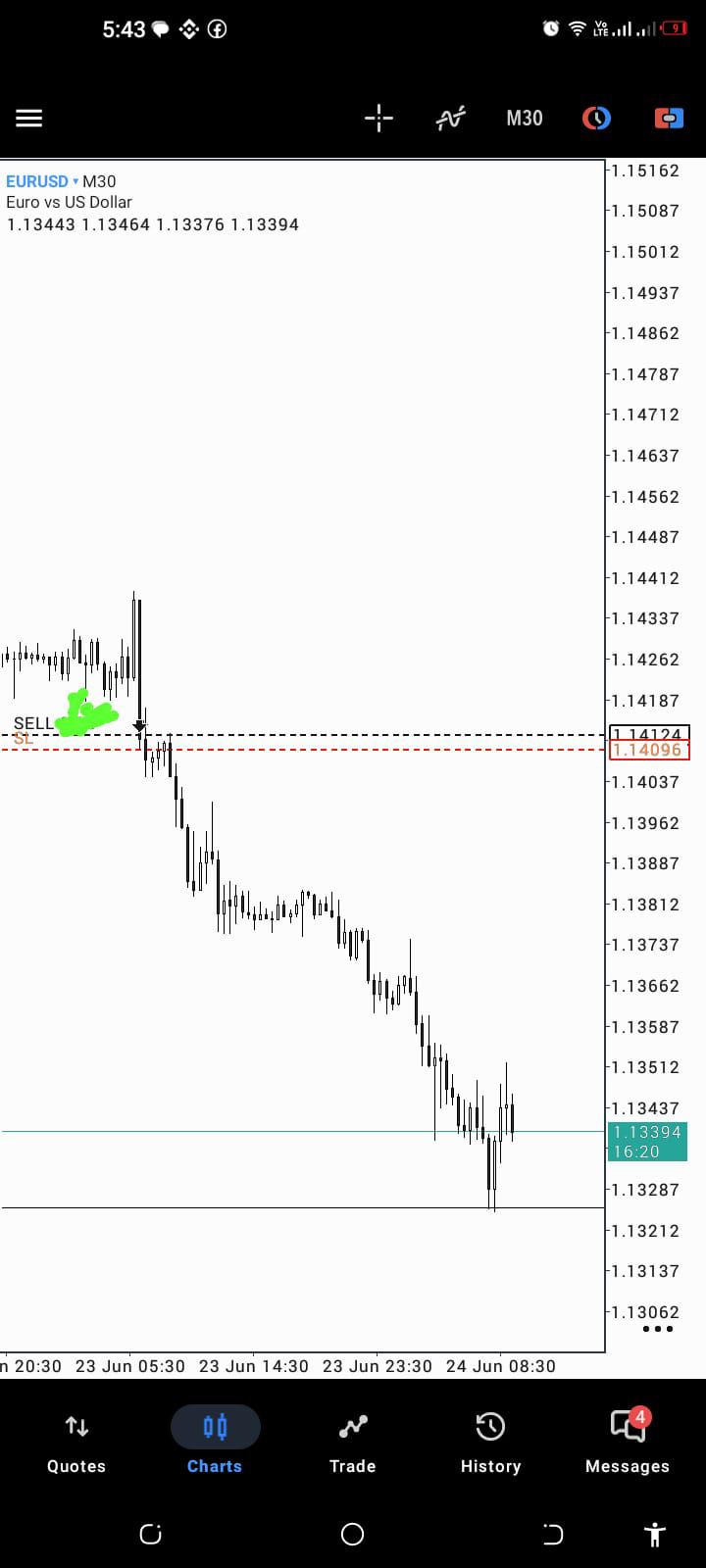
The EURUSD reflects the misery of its underlying fundamentals. The stagnating German economy, topped off with a sour French outlook downgrade from Fitch, dragged the EURUSD down to 1.0888. The pair now stands a few pips above the next natural target of 200-DMA, near the 1.0875 level, and the euro bears could swallow it in one bite.
Elsewhere, the USDCAD just reached the 1.38 mark on the back of a broadly stronger US dollar and falling oil prices, while the Aussie bulls are giving in against a broadly stronger US dollar, as optimism around China is no longer enough to fuel the recent rally. The Aussie bears are gaining field below the major 38.2% Fibonacci level, which hints at a medium-term bearish reversal and the growing possibility of deeper losses.
Global sales of fully electric and plug-in hybrid vehicles rose by an annual 30.5% in September, as China surpassed its record numbers recorded in August and Europe resumed growth, market research firm Rho Motion said on Tuesday.
Gains in the U.S. market have been slow and steady in anticipation of the Nov. 5 election, which makes it difficult to predict future trends in the country, data manager Charles Lester told Reuters.
Chinese carmakers are seeking to grow their sales in the EU despite import duties of up to 45% and amid cooling global demand for electric cars. Chinese and European automakers were going head-to-head at the Paris car show on Monday.
EVs - whether fully electric (BEV) or plug-in hybrids (PHEVs) - sold worldwide reached 1.69 million in September, Rho Motion data showed.
Sales in China jumped 47.9% in September and reached 1.12 million vehicles, while in the United States and Canada they were up 4.3% to 0.15 million.
In Europe, EV sales rose 4.2% to 0.3 million units, thanks to a 24% jump in the United Kingdom and gains in Italy, Germany and Denmark, Lester said.
In the Chinese market, the penetration rate of BEV and PHEV is growing faster than some expected and sales "could be a record every month until the end of the year", Lester said.
He added that Germany's 7% year-on-year growth was "definitely positive news", and that intermediate carbon emission reduction goals set in the EU for next year will test the bloc's market.
Rho Motion expects EV sales in Europe to reach 3.78 million vehicles in 2025 and 9.78 million in 2030, respectively 24% and 19% lower than in previous estimates, automotive research lead William Roberts told Reuters.
Singapore’s former oil tycoon Lim Oon Kuin will be sentenced on Nov 18 for cheating and forgery in a trading scandal that will go into the history books as one of the biggest in the global energy-trading hub.
In a Singapore court on Tuesday, public prosecutor Christopher Ong argued for a 20-year jail sentence for Lim on three counts including instigating forgery and deceiving HSBC Holdings plc. Lim’s defence lawyers led by Davinder Singh sought a 7-year period.
The 82-year-old known as OK Lim arrived in court in a wheelchair.
The sentence is the latest development in the dramatic downfall of Lim, founder of now-defunct oil company Hin Leong Trading Pte. Lim filed for bankruptcy this week after agreeing to pay US$3.59 billion (RM15.46 billion) to the liquidators and creditor HSBC to resolve multi-year civil lawsuits against him and his family.
In 2020, Bloomberg News was the first to report that at least two lenders had frozen credit lines to Hin Leong, citing concerns over the company’s ability to repay its debts. In the months that followed, it emerged that Lim had hid hundreds of millions in losses speculating in oil futures and sold inventories that were pledged as collateral for loans.
Lim, better known as O K Lim, founded Hin Leong in 1973 as an oil distributor with one truck. Over the years, he expanded the family-run company into Singapore’s largest independent oil trader with interests from bunkering to storage.
In its heyday, the homegrown trading house was widely respected as one of the boldest and most secretive traders of diesel and shipping fuel. The company, which owned a stake in storage tanks in Singapore as well as its own vessel fleet, was able to corner the market with its knowledge of inventories in and around the hub, cementing its position as one of the region’s top players.
A plunge in oil prices in 2020, however, sent Lim’s empire tumbling down. He had initially faced 130 charges after his firm was accused of hiding more than US$800 million in losses and leaving more than 20 banks with huge liabilities.
Hin Leong’s case has tarnished Singapore’s hard-earned reputation as a leading hub for energy trading and financing, and dented public confidence in the city-state, said prosecutor Ong. He described the scandal as “unprecedented” in the country’s history, a label that Lim’s lawyer Singh passionately argued against, citing more severe offences and losses in previous cases including one involving Agritrade International Pte.
In recent years, Singapore has been rocked by numerous commodity trading and financing scandals. From Agritrade to Noble Group Ltd and ZenRock Commodities Trading Pte to Hontop Energy (Singapore) Pte Ltd, issues surrounding fraud and forgery around paperwork that form the backbone of commodity financing have come to the fore, implicating dozens of banks including HSBC, DBS Group Holdings Ltd and CIMB Bank.
Lim and his family have been seeking to raise money by selling assets including property and business holdings in recent years. Singh, who’s representing Lim, highlighted his client’s state of health and the potential effects of a jail sentence on the octogenarian.
White Label
Data API
Web Plug-ins
Poster Maker
Affiliate Program
The risk of loss in trading financial instruments such as stocks, FX, commodities, futures, bonds, ETFs and crypto can be substantial. You may sustain a total loss of the funds that you deposit with your broker. Therefore, you should carefully consider whether such trading is suitable for you in light of your circumstances and financial resources.
No decision to invest should be made without thoroughly conducting due diligence by yourself or consulting with your financial advisors. Our web content might not suit you since we don't know your financial conditions and investment needs. Our financial information might have latency or contain inaccuracy, so you should be fully responsible for any of your trading and investment decisions. The company will not be responsible for your capital loss.
Without getting permission from the website, you are not allowed to copy the website's graphics, texts, or trademarks. Intellectual property rights in the content or data incorporated into this website belong to its providers and exchange merchants.
Not Logged In
Log in to access more features

FastBull Membership
Not yet
Purchase
Log In
Sign Up