• Trade
  • Markets
  • Copy
  • Contests
  • 24/7
  • Calendar
  • Q&A
  • Chats
Screeners
SYMBOL
LAST
BID
ASK
HIGH
LOW
NET CHG.
%CHG.
SPREAD
SOURCE
SPX
S&P 500 Index
7198.12
7198.12
7198.12
7244.55
7175.02
-32.00
-0.44%
--
--
DJI
Dow Jones Industrial Average
49047.49
49047.49
49047.49
49441.43
48913.06
-451.77
-0.91%
--
--
IXIC
NASDAQ Composite Index
25019.34
25019.34
25019.34
25210.47
24913.12
-95.09
-0.38%
--
--
USDX
US Dollar Index
98.280
98.280
98.360
98.370
97.790
+0.270
+ 0.28%
--
--
EURUSD
Euro / US Dollar
1.16937
1.16937
1.16944
1.17489
1.16841
-0.00237
-0.20%
--
--
GBPUSD
Pound Sterling / US Dollar
1.35328
1.35328
1.35338
1.36029
1.35120
-0.00390
-0.29%
--
--
XAUUSD
Gold / US Dollar
4521.75
4521.75
4522.09
4629.29
4500.93
-92.61
-2.01%
--
--
WTI
Light Sweet Crude Oil
102.122
102.122
102.152
103.845
96.577
+2.612
+ 2.62%
--
--

Community Accounts

Signal Accounts
--
Profit Accounts
--
Loss Accounts
--
View More

Become a signal provider

Sell trading signals to earn additional income

View More

Guide to Copy Trading

Get started with ease and confidence

View More

Signal Accounts for Members

All Signal Accounts

Best Return
  • Best Return
  • Best P/L
  • Best MDD
Past 1W
  • Past 1W
  • Past 1M
  • Past 1Y

All Contests

  • All
  • Recommend
  • Stocks
  • Cryptocurrencies
  • Central Banks
  • Trump Updates
  • Featured News
Top News Only
Share

Turkish President Recep Tayyip Erdoğan: Despite Changes In The Global Situation, Our Fight Against Inflation Has Not Been Relaxed In The Slightest

Share

U.S. Central Command Commander General Brad Cooper: Iran Has Used Cruise Missiles To Strike Merchant Ships And U.S. Warships

Share

General Brad Cooper, Commander Of U.S. Central Command: Iran Attempted To Disrupt Merchant Ships By Firing On Them, But Failed. The U.S. Has Destroyed Six Small Iranian Vessels That Attempted To Interfere With Merchant Navigation. It Is Strongly Recommended That Iranian Forces Maintain A Sufficient Distance From U.S. Military Assets. The U.S. Military Blockade Of Iran Has Been More Effective Than Expected

Share

According To Flight Tracking Platform FlightRadar24, Amid Reports Of Attacks In The Region, Several Flights Originally Scheduled To Fly To The UAE Are Being Diverted To Muscat, The Capital Of Oman

Share

Fitch Ratings: Despite Tariffs, Capital Goods Related To Artificial Intelligence Are Driving U.S. Imports To Remain High

Share

Zelenskyy Calls On Europe To Participate In Ukraine-Russia Talks

Share

German Vice Chancellor: The EU Will Retaliate If The U.S. Imposes Additional Tariffs

Share

The Media Office In Fujairah, UAE, Reported That Three Indian Citizens Sustained Minor Injuries In An Iranian Drone Strike On The Fujairah Oil Complex

Share

Ukrainian President Zelensky: A One-day Ceasefire With Russia Is Not An Option

Share

The New Zealand Dollar Fell 0.50% Against The US Dollar (NZD/USD) On The Day, Currently Trading At 0.5869

Share

The Australian Dollar Fell 0.50% Against The US Dollar On The Day, Currently Trading At 0.7164

Share

The China Earthquake Networks Center Officially Reported That A 5.5-magnitude Earthquake Occurred In Mexico (16.60 Degrees North Latitude, 98.05 Degrees West Longitude) At 23:19 On May 4, With A Focal Depth Of 10 Kilometers

Share

Market Reports: Multiple Aircraft Were Seen Circling Above The UAE After Iran Launched Missile And Drone Attacks

Share

Mexico’s National Seismological Service Released A Preliminary Report On The 4th, Saying That A Magnitude 6 Earthquake Struck The Southern State Of Oaxaca That Day, And The Tremors Were Felt In The Capital, Mexico City

Share

The Foreign Ministers Of Iran And Algeria Spoke By Phone To Discuss The Latest Situation In The Region

Share

The Iranian Army Commander-in-Chief Stated: "US Destroyers, Relying On Their Radar Silence, Assumed They Were Approaching The Strait Of Hormuz; But Our Response Was A Full-scale Attack. Cruise Missiles And Combat Drones Were Launched. Security In This Region Is A Red Line For Iran."

Share

US 3-Month Treasury Bill Auction As Of May 4 - Bid-to-Cover Ratio 2.76, Previous Value 3.09

Share

A Car Rammed Into A Crowd In Leipzig, Germany

Share

[UAE: Air Defense System Currently Addressing Missile Threat From Iran] May 4th, The UAE Ministry Of Defense Reported That 4 Cruise Missiles From The Direction Of Iran Were Detected, With 3 Of Them Successfully Intercepted In The Territorial Waters And The Other 1 Falling Into The Sea. Additionally, A Fire Broke Out At The UAE's Fujairah Oil Industry Zone Due To An Iranian Drone Attack

Share

The Yield On The 30-year U.S. Treasury Note Broke Through 5.01% For The First Time Since July Of Last Year

TIME
ACT
FCST
PREV
IMPACT
U.S. ISM Manufacturing New Orders Index (Apr)

A:--

F: --

P: --

USDX
  • USDX
  • XAUUSD
  • XAGUSD
  • WTI
U.S. ISM Manufacturing Employment Index (Apr)

A:--

F: --

P: --

USDX
  • USDX
  • XAUUSD
  • XAGUSD
  • WTI
U.S. ISM Output Index (Apr)

A:--

F: --

P: --

USDX
  • USDX
  • XAUUSD
  • XAGUSD
  • WTI
U.S. ISM Inventories Index (Apr)

A:--

F: --

P: --

USDX
  • USDX
  • XAUUSD
  • XAGUSD
  • WTI
U.S. Weekly Total Oil Rig Count

A:--

F: --

P: --

WTI
  • WTI
  • XAUUSD
  • XAGUSD
  • USDX
U.S. Weekly Total Rig Count

A:--

F: --

P: --

WTI
  • WTI
  • XAUUSD
  • XAGUSD
  • USDX
Turkey Trade Balance (Apr)

A:--

F: --

P: --

XAUUSD
  • XAUUSD
  • XAGUSD
  • WTI
  • USDX
Indonesia IHS Markit Manufacturing PMI (Apr)

A:--

F: --

P: --

XAUUSD
  • XAUUSD
  • XAGUSD
  • WTI
  • USDX
South Korea IHS Markit Manufacturing PMI (SA) (Apr)

A:--

F: --

P: --

XAUUSD
  • XAUUSD
  • XAGUSD
  • WTI
  • USDX
Australia Private Building Permits MoM (SA) (Mar)

A:--

F: --

P: --

AUDUSD
  • AUDUSD
  • XAUUSD
  • XAGUSD
  • WTI
  • USDX
Australia Building Permits YoY (SA) (Mar)

A:--

F: --

P: --

AUDUSD
  • AUDUSD
  • XAUUSD
  • XAGUSD
  • WTI
  • USDX
Australia Building Permits MoM (SA) (Mar)

A:--

F: --

P: --
AUDUSD
  • AUDUSD
  • XAUUSD
  • XAGUSD
  • WTI
  • USDX
Indonesia Trade Balance (Mar)

A:--

F: --

P: --

XAUUSD
  • XAUUSD
  • XAGUSD
  • WTI
  • USDX
Indonesia Inflation Rate YoY (Apr)

A:--

F: --

P: --

XAUUSD
  • XAUUSD
  • XAGUSD
  • WTI
  • USDX
Indonesia Core Inflation YoY (Apr)

A:--

F: --

P: --

XAUUSD
  • XAUUSD
  • XAGUSD
  • WTI
  • USDX
India HSBC Manufacturing PMI Final (Apr)

A:--

F: --

P: --

XAUUSD
  • XAUUSD
  • XAGUSD
  • WTI
  • USDX
Russia IHS Markit Manufacturing PMI (Apr)

A:--

F: --

P: --

WTI
  • WTI
  • XAUUSD
  • XAGUSD
  • USDX
Turkey Manufacturing PMI (Apr)

A:--

F: --

P: --

XAUUSD
  • XAUUSD
  • XAGUSD
  • WTI
  • USDX
Turkey PPI YoY (Apr)

A:--

F: --

P: --

XAUUSD
  • XAUUSD
  • XAGUSD
  • WTI
  • USDX
Turkey CPI YoY (Apr)

A:--

F: --

P: --

XAUUSD
  • XAUUSD
  • XAGUSD
  • WTI
  • USDX
Italy Manufacturing PMI (SA) (Apr)

A:--

F: --

P: --

EURUSD
  • EURUSD
  • XAUUSD
  • XAGUSD
  • WTI
  • USDX
Turkey Trade Balance (Apr)

A:--

F: --

P: --

XAUUSD
  • XAUUSD
  • XAGUSD
  • WTI
  • USDX
Euro Zone Sentix Investor Confidence Index (May)

A:--

F: --

P: --

EURUSD
  • EURUSD
  • XAUUSD
  • XAGUSD
  • WTI
  • USDX
South Africa Manufacturing PMI (Apr)

A:--

F: --

P: --

XAUUSD
  • XAUUSD
  • XAGUSD
  • WTI
  • USDX
Canada National Economic Confidence Index

A:--

F: --

P: --

USDCAD
  • USDCAD
  • XAUUSD
  • XAGUSD
  • WTI
  • USDX
Brazil IHS Markit Manufacturing PMI (Apr)

A:--

F: --

P: --

XAUUSD
  • XAUUSD
  • XAGUSD
  • WTI
  • USDX
U.S. Factory Orders MoM (Excl. Transport) (Mar)

A:--

F: --

P: --
USDX
  • USDX
  • XAUUSD
  • XAGUSD
  • WTI
U.S. Factory Orders MoM (Mar)

A:--

F: --

P: --
USDX
  • USDX
  • XAUUSD
  • XAGUSD
  • WTI
U.S. Factory Orders MoM (Excl. Defense) (Mar)

A:--

F: --

P: --

USDX
  • USDX
  • XAUUSD
  • XAGUSD
  • WTI
Mexico Manufacturing PMI (Apr)

A:--

F: --

P: --

XAUUSD
  • XAUUSD
  • XAGUSD
  • WTI
  • USDX
New York Federal Reserve President Williams delivered a speech.
Bank of Canada Governor Macklem and Senior Deputy Governor Rogers attended a parliamentary hearing.
Indonesia GDP YoY (Q1)

--

F: --

P: --

Saudi Arabia IHS Markit Composite PMI (Apr)

--

F: --

P: --

Australia Overnight (Borrowing) Key Rate

--

F: --

P: --

RBA Rate Statement
RBA Press Conference
Canada Trade Balance (SA) (Mar)

--

F: --

P: --

U.S. Trade Balance (Mar)

--

F: --

P: --

U.S. Exports (Mar)

--

F: --

P: --

Canada Imports (SA) (Mar)

--

F: --

P: --

Canada Exports (SA) (Mar)

--

F: --

P: --

U.S. Weekly Redbook Index YoY

--

F: --

P: --

U.S. ISM Non-Manufacturing New Orders Index (Apr)

--

F: --

P: --

U.S. ISM Non-Manufacturing Price Index (Apr)

--

F: --

P: --

U.S. New Home Sales Annualized MoM (Mar)

--

F: --

P: --

U.S. ISM Non-Manufacturing Employment Index (Apr)

--

F: --

P: --

U.S. Annual Total New Home Sales (Mar)

--

F: --

P: --

U.S. ISM Non-Manufacturing Inventories Index (Apr)

--

F: --

P: --

U.S. ISM Non-Manufacturing PMI (Apr)

--

F: --

P: --

U.S. JOLTS Job Openings (SA) (Mar)

--

F: --

P: --

U.S. API Weekly Crude Oil Stocks

--

F: --

P: --

U.S. API Weekly Cushing Crude Oil Stocks

--

F: --

P: --

U.S. API Weekly Gasoline Stocks

--

F: --

P: --

U.S. API Weekly Refined Oil Stocks

--

F: --

P: --

South Korea CPI YoY (Apr)

--

F: --

P: --

China, Mainland Caixin Services PMI (Apr)

--

F: --

P: --

China, Mainland Caixin Composite PMI (Apr)

--

F: --

P: --

India IHS Markit Composite PMI (Apr)

--

F: --

P: --

India HSBC Services PMI Final (Apr)

--

F: --

P: --

Russia IHS Markit Services PMI (Apr)

--

F: --

P: --

Q&A with Experts
    • All
    • Chatrooms
    • Groups
    • Friends
    Huynh Thao flag
    Size
    Market doesn’t always continue one direction straight, it can also retrace before deciding..@Huynh Thao
    @Sizevàng muống tăng có thẻ là cuối tuần
    SlowBear ⛅ flag
    horus
    @SlowBear ⛅ya empezó el rebote Bro
    @horus Well i am seeing that 60pips rebound lets see how much rebound we get before the market close today
    Size flag
    Aster
    @Size so do you have another asset for nq? like es2606 we have S&P500
    @AsterNot really bro 😄 I don’t trade NQ alternatives like ES..
    JOSHUA flag
    SlowBear ⛅
    @Huynh ThaoBut when you say "PRICE WILL CONTINUE TO FALL" i just have to ask how did you know that?
    @SlowBear ⛅Guessing game, gambling expert😂
    Nawhdir Øt flag
    Size flag
    I mainly focus on gold, BTC, and major currency pairs.@Aster
    Nawhdir Øt flag
    apapun yang terjadi, masa bodo
    4273699 flag
    vous me conseiller d 'investir sur quoi les freres
    Huynh Thao flag
    SlowBear ⛅
    @horus Well i am seeing that 60pips rebound lets see how much rebound we get before the market close today
    @SlowBear ⛅phục hồi để giảm phá 4500 về 4490
    SlowBear ⛅ flag
    JOSHUA
    @SlowBear ⛅Guessing game, gambling expert😂
    @JOSHUAWell some people can see into tomorrow though so that might be it
    USER_ERROR flag
    Rsi dalam Tf 15 sudah terlalu jenuh di angka 20 pada stock emas
    Aster flag
    Size
    I mainly focus on gold, BTC, and major currency pairs.@Aster
    @Size I was trading Gold for a year and it made me lose 41 funded accounts so i switched to nq and its way much better
    Size flag
    Huynh Thao
    @Sizevàng muống tăng có thẻ là cuối tuần
    true bro, anything can happen by the end of the week, depends on demand and supply..
    horus flag
    SlowBear ⛅
    @horus Well i am seeing that 60pips rebound lets see how much rebound we get before the market close today
    @SlowBear ⛅vale lo vas a tener Bro
    Size flag
    Let’s see how price actually reacts instead of guessing early..@Huynh Thao
    4178802 flag
    tomorrow Nifty axpayri ...up ya dawon ??...
    JOSHUA flag
    Size
    Market doesn’t always continue one direction straight, it can also retrace before deciding..@Huynh Thao
    @SizeIf it does as he expects, then all will be C/2 and suffering from depression 🤣
    Nawhdir Øt flag
    4178802
    tomorrow Nifty axpayri ...up ya dawon ??...
    @Pengunjung4178802jay sri ram ?
    Size flag
    Aster
    @Size I was trading Gold for a year and it made me lose 41 funded accounts so i switched to nq and its way much better
    @AsterDamn bro, 41 funded accounts is rough..
    4178802 flag
    4178802
    tomorrow Nifty axpayri ...up ya dawon ??...
    tell me pls all
    Type here...
    Add Symbol or Code

      No matching data

      All
      Recommend
      Stocks
      Cryptocurrencies
      Central Banks
      Trump Updates
      Featured News
      • All
      • Russia-Ukraine Conflict
      • Middle East Flashpoint
      • All
      • Russia-Ukraine Conflict
      • Middle East Flashpoint
      Search
      Products

      Charts Free Forever

      Chats Q&A with Experts
      Screeners Economic Calendar Data Tools
      Membership Features
      Data Warehouse Market Trends Institutional Data Policy Rates Macro

      Market Trends

      Market Sentiment Order Book Forex Correlations

      Top Indicators

      Charts Free Forever
      Markets

      News

      24/7 Analysis Education

      Latest Views

      Latest Update

      Signals

      Copy Rankings Latest Signals Become a signal provider AI Rating
      Contests
      Brokers

      Overview Brokers Assessment Rankings Regulators News Claims
      Broker listing Forex Brokers Comparison Tool Live Spread Comparison Scam
      Q&A Complaint Scam Alert Videos Tips to Detect Scam
      More

      Business
      Events
      Careers About Us Advertising Help Center

      White Label

      Broker API

      Data API

      Web Plug-ins

      Affiliate Program

      Awards Institution Evaluation IB Seminar Salon Event Exhibition
      Vietnam Thailand Singapore Dubai
      Fans Party Investment Sharing Session
      FastBull Summit BrokersView Expo
      Recent Searches
        Top Searches
          Markets
          Analysis
          User
          24/7
          Economic Calendar
          Education
          Data
          • Names
          • Latest
          • Prev

          View All

          No data

          Scan to Download

          Faster Charts, Chat Faster!

          Download App
          English
          • English
          • Español
          • العربية
          • Bahasa Indonesia
          • Bahasa Melayu
          • Tiếng Việt
          • ภาษาไทย
          • Français
          • Italiano
          • Türkçe
          • Русский язык
          • 简中
          • 繁中
          Open Account
          Search
          Products
          Charts Free Forever
          Markets
          News
          Signals

          Copy Rankings Latest Signals Become a signal provider AI Rating
          Contests
          Brokers

          Overview Brokers Assessment Rankings Regulators News Claims
          Broker listing Forex Brokers Comparison Tool Live Spread Comparison Scam
          Q&A Complaint Scam Alert Videos Tips to Detect Scam
          More

          Business
          Events
          Careers About Us Advertising Help Center

          White Label

          Broker API

          Data API

          Web Plug-ins

          Affiliate Program

          Awards Institution Evaluation IB Seminar Salon Event Exhibition
          Vietnam Thailand Singapore Dubai
          Fans Party Investment Sharing Session
          FastBull Summit BrokersView Expo

          Tariff and Trade Explained: Meaning, Policies & Trade Wars

          zhan chen
          Summary:

          Global supply chains are fracturing. Navigate the reality of tariff and trade with our analysis of 2026’s economic shifts and their impact on your portfolio.

          Understanding tariff and trade dynamics is crucial for navigating today's global markets. This article breaks down how import taxes function, their real-world economic impact, and the mechanics of international trade disputes. Investors will learn how the unprecedented 2025–2026 global trade conflicts reshape supply chains, consumer prices, and long-term portfolio strategies.
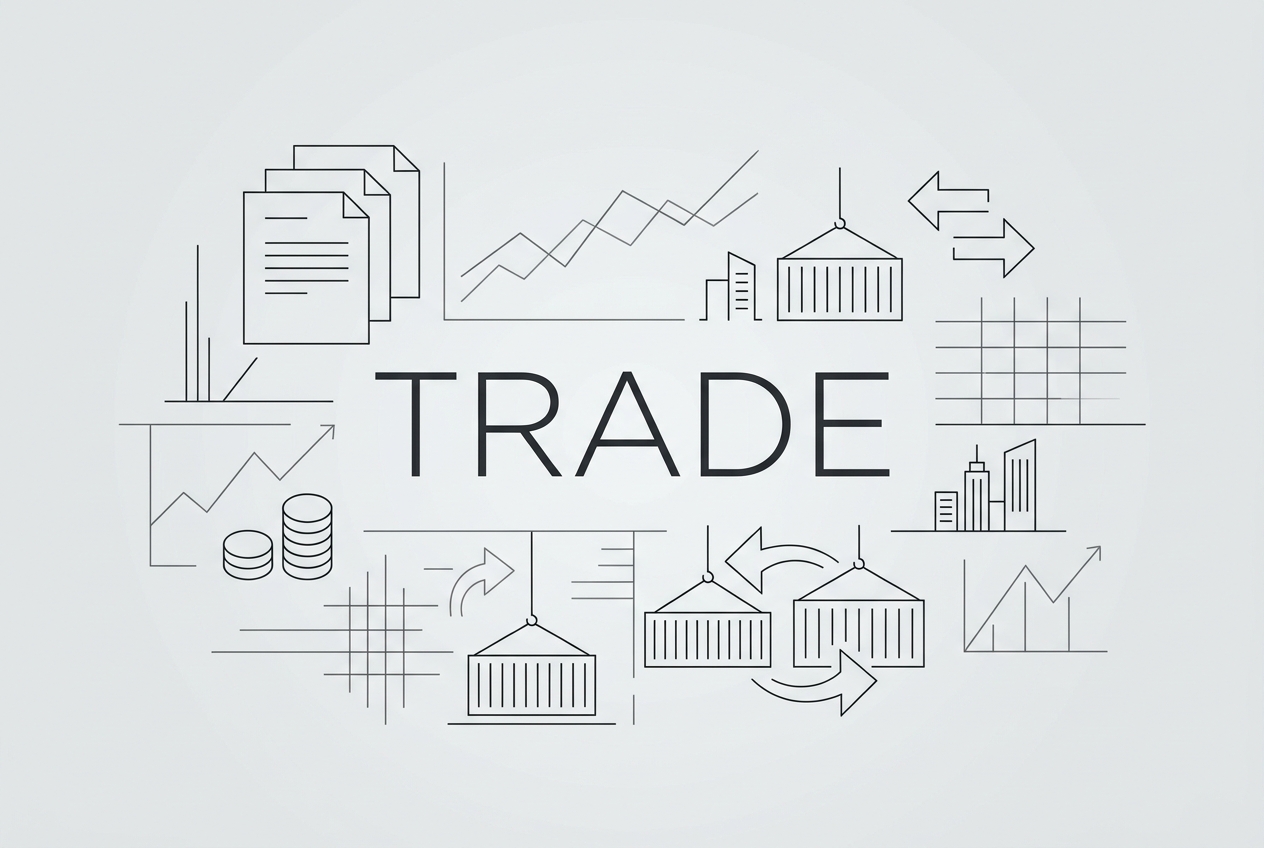
          Tariff and Trade Explained: Meaning, Policies & Trade Wars

          What Do Tariffs Actually Do to Trade?

          How a Tariff Changes the Price of Imported Goods

          A tariff is essentially a tax levied by a government on imported goods and services. When a foreign product reaches the border, the importing company must pay this tax to customs authorities before the goods can enter the domestic market. This added cost immediately compresses the importer’s profit margins.

          To maintain profitability, importing businesses typically pass this expense down the supply chain. Wholesalers pay more, retailers pay more, and eventually, the end consumer sees a higher price tag on the shelf. By artificially raising the price of foreign goods, tariffs make domestically produced alternatives more financially attractive to buyers.

          Why Governments Use Tariffs Instead of Other Trade Barriers

          Governments have several tools to restrict trade, including embargoes and strict import quotas. However, tariffs remain the preferred instrument because they are market-based and generate federal revenue. Instead of outright banning a product, a tariff allows the market to dictate whether the foreign good is still worth buying at a premium.

          Tariffs are also highly flexible policy tools. Governments can adjust tariff rates based on geopolitical leverage, target specific industries, or use them as bargaining chips during broader economic negotiations. Unlike rigid quotas, tariffs provide a continuous financial penalty on competitors without completely severing supply chains.

          What Happens to Domestic Industries When Tariffs Go Up

          When foreign goods become more expensive, domestic producers of identical products gain an immediate competitive advantage. They can capture more market share or raise their own prices to boost profit margins, knowing that foreign competitors are burdened by the tax. This dynamic frequently leads investors to ask: are tariffs good or bad?

          The answer depends entirely on a company’s position within the supply chain. While domestic manufacturers of raw materials may thrive, businesses that rely on imported components suffer. For example, when tariffs on imported steel rise, domestic steelmakers see increased revenues, but local automobile manufacturers face surging production costs.

          What Trade Policies Shape How Countries Use Tariffs?

          Free Trade Agreements vs. Protectionist Policies: What's the Difference?

          Free trade agreements (FTAs), such as the United States–Mexico–Canada Agreement (USMCA), are designed to eliminate or significantly reduce tariffs among participating nations. These treaties promote economic integration, lower consumer costs, and create unified regional supply chains. They rely on mutually agreed-upon rules and dispute-resolution frameworks.

          Protectionist policies take the opposite approach by prioritizing domestic industries over international integration. Unilateral tariffs are a hallmark of protectionism, utilized to shield local jobs from foreign competition or address perceived trade imbalances. A sudden shift from an FTA-driven policy to a protectionist stance usually triggers high market volatility and forces multinational corporations to restructure their operations.

          The Shifting Role of the WTO and National Courts in Trade Disputes

          Historically, the World Trade Organization (WTO) acted as the global referee for tariff disputes. However, recent years have seen nations bypass the WTO, citing national security or emergency economic powers to justify unilateral tariffs. This shift has moved the battleground for trade policy from international tribunals to national judicial systems.

          A landmark example occurred in February 2026, when the U.S. Supreme Court ruled in Learning Resources, Inc. v. Trump. The Court struck down sweeping international tariffs implemented under the International Emergency Economic Powers Act (IEEPA), forcing the government to refund an estimated $166 billion to businesses. This ruling demonstrated that domestic courts now play a definitive role in checking executive trade authority.

          When Countries Retaliate: How Trade Policy Escalates

          Trade policy rarely exists in a vacuum; when one country imposes unilateral tariffs, targeted nations almost always retaliate. Retaliatory tariffs are strategically calculated to inflict maximum political and economic pain on the instigating country. Governments typically target industries located in politically sensitive regions or sectors heavily reliant on export revenues.

          This tit-for-tat escalation disrupts global commerce. Instead of a single industry facing higher costs, entire cross-border economic ecosystems become entangled in the dispute. Retaliation breeds further uncertainty, freezing corporate capital expenditure as executives wait to see how the policy landscape will settle.

          What Causes a Trade War and How Does It Play Out?

          How a Trade War Starts From a Single Tariff Decision

          A trade war typically begins with a single, aggressive policy move—such as a steep tariff intended to protect a vital domestic industry. The targeted country views this as a violation of fair trade norms and responds with its own import taxes. Because neither side wants to appear weak, the initial dispute quickly snowballs into broader economic conflict.

          As the conflict broadens, both sides begin taxing goods completely unrelated to the original dispute. What starts as a disagreement over raw metals can rapidly escalate into tariffs on agriculture, consumer electronics, and rare earth minerals. This unpredictable expansion is what separates a localized trade dispute from a full-scale trade war.

          Real Examples: The 2025-2026 Global Trade Wars and U.S.-China Tensions

          The 2025–2026 economic landscape was defined by an unprecedented global tariff and trade war. Early in 2025, the U.S. enacted sweeping import taxes, aggressively targeting China. U.S. tariffs on Chinese goods surged to an astonishing 145%, prompting Beijing to retaliate with 125% tariffs on American exports.

          This massive escalation severed deep-rooted supply chains. According to data from the Peterson Institute for International Economics (PIIE), U.S. imports from China plummeted to levels not seen since 2009. After the U.S. Supreme Court invalidated the emergency IEEPA tariffs in February 2026, the administration quickly pivoted, implementing a 10% global tariff under Section 122 of the Trade Act of 1974.

          TimelineMajor Policy ShiftEconomic Impact
          April 2025U.S. imposes "Liberation Day" emergency tariffsTariffs on China peak at 145%; massive global supply chain disruption.
          May 2025U.S.-China temporary truceBoth sides reduce rates; U.S. auto production restarts after input shortages.
          February 2026Supreme Court strikes down IEEPA tariffsBillions mandated for corporate refunds; executive emergency powers curtailed.
          Feb–April 2026Section 122 & Section 232 tariffs implementedNew 10% global tariff and 50% tariffs on metals like steel, aluminum, and copper.

          Who Actually Pays the Price During a Trade War?

          A common misconception is that the exporting country pays the tariff. In reality, understanding who pays tariffs requires looking at the domestic supply chain. The import taxes are paid directly by the importing businesses at the port of entry.

          Ultimately, the burden falls on the domestic consumer. When importers and retailers face higher procurement costs, they raise the final retail prices of everyday goods. While foreign exporters may suffer from reduced sales volumes due to lower demand, the actual financial tax is extracted directly from domestic corporate margins and household budgets.

          How Do Tariffs and Trade Wars Affect Everyday Prices and Jobs?

          Why Consumers Often End Up Paying More When Tariffs Rise

          The impact of tariffs on US economy indicators is most visible in inflation and household spending. Despite political claims that foreign entities absorb the costs, economic data indicates otherwise. According to the Tax Foundation, the revised 2026 tariffs act as a de facto tax increase, costing the average U.S. household approximately $700 annually.

          Furthermore, broad-based tariffs create a ripple effect across the economy. Coface reported that while some foreign margins were squeezed, 2025 ended with a 2.8% average inflation rate—meaningfully higher than the 2% expected without a trade war. Consumers ultimately face higher prices at the grocery store, the dealership, and the electronics counter.

          Which Industries Benefit and Which Ones Lose Out

          When evaluating who benefits from tariffs, investors must look at sheltered domestic producers. The positive effects of tariffs are highly concentrated. In 2026, U.S. manufacturers of raw steel, aluminum, and copper benefited immensely from 50% import duties shielding them from cheaper foreign alternatives. This pricing power directly boosts their quarterly earnings.

          Conversely, downstream industries that rely on imported materials are the primary losers. Automakers, technology hardware firms, and consumer discretionary brands suffer from compressed margins and disrupted logistics. For these sectors, tariffs are a headwind that destroys capital, suppresses hiring, and delays corporate expansion plans.

          Where Is Tariff and Trade Policy Headed for the Rest of 2026 and Beyond?

          As of mid-2026, trade volatility remains high. The temporary 10% global tariff implemented under Section 122 is scheduled to expire in July 2026 unless legally extended. Meanwhile, the U.S. Trade Representative continues aggressive Section 301 investigations into multiple nations, including Vietnam, Mexico, and the EU, threatening to institutionalize new layers of tariffs.

          Corporate strategy has permanently shifted from optimization to resilience. Companies are accelerating the movement of supply chains out of China, relocating manufacturing hubs to Southeast Asia and Latin America to bypass direct duties. Investors should expect elevated compliance costs and persistent inflation as the global economy slowly fragments into localized trading blocs.

          FAQs about tariff and trade

          What is the primary economic purpose of a tariff?

          The primary purpose is to protect domestic industries from foreign competition by making imported goods more expensive. Tariffs also serve as a direct mechanism for governments to generate federal tax revenue.

          How does a tariff affect trade?

          Tariffs restrict international trade volumes by artificially raising the cost of imported goods for domestic buyers. This price distortion encourages consumers to seek out locally produced alternatives instead.

          What are Trump's new tariffs?

          Following a February 2026 Supreme Court ruling, the administration instituted a temporary 10% global tariff under Section 122 of the Trade Act. Additionally, strict 50% tariffs remain on imported metals like steel, aluminum, and copper under Section 232 national security provisions.

          How do trade tariffs impact stock market performance and investor sentiment?

          Tariffs generally increase market volatility and compress the profit margins of multinational companies reliant on global supply chains. However, stock prices for protected domestic industries often experience short-term upward momentum as foreign competition is priced out.

          Conclusion

          The complexities of tariff and trade policy will continue to drive market volatility throughout 2026. By understanding which sectors are protected and which bear the costs, investors can better position their portfolios. Adapting to these ongoing geopolitical shifts remains essential for long-term financial success.

          Risk Warnings and Disclaimers
          You understand and acknowledge that there is a high degree of risk involved in trading. Following any strategies or investment methods may lead to potential losses. The content on the site is provided by our contributors and analysts for information purposes only. You are solely responsible for determining whether any trading assets, securities, strategy, or any other product is suitable for investing based on your own investment objectives and financial situation.
          Add to Favorites
          Share
          FastBull
          Copyright © 2026 FastBull Ltd

          728 RM B 7/F GEE LOK IND BLDG NO 34 HUNG TO RD KWUN TONG KLN HONG KONG

          TelegramInstagramTwitterfacebooklinkedin
          App Store Google Play Google Play
          Products
          Charts

          Chats

          Q&A with Experts
          Screeners
          Economic Calendar
          Data
          Tools
          Membership
          Features
          Function
          Markets
          Copy Trading
          Latest Signals
          Contests
          24/7
          Analysis
          Education
          Company
          Careers
          About Us
          Contact Us
          Advertising
          Help Center
          Feedback
          User Agreement
          Privacy Policy
          Personal Information Protection Statement
          Business

          White Label

          Broker API

          Data API

          Web Plug-ins

          Poster Maker

          Affiliate Program

          Risk Disclosure

          The risk of loss in trading financial instruments such as stocks, FX, commodities, futures, bonds, ETFs and crypto can be substantial. You may sustain a total loss of the funds that you deposit with your broker. Therefore, you should carefully consider whether such trading is suitable for you in light of your circumstances and financial resources.

          No decision to invest should be made without thoroughly conducting due diligence by yourself or consulting with your financial advisors. Our web content might not suit you since we don't know your financial conditions and investment needs. Our financial information might have latency or contain inaccuracy, so you should be fully responsible for any of your trading and investment decisions. The company will not be responsible for your capital loss.

          Without getting permission from the website, you are not allowed to copy the website's graphics, texts, or trademarks. Intellectual property rights in the content or data incorporated into this website belong to its providers and exchange merchants.

          Not Logged In

          Log in to access more features

          Connect Broker
          Become a signal provider
          Help Center
          Customer Service
          Dark Mode
          Price Up/Down Colors

          Log In

          Sign Up

          Position
          Layout
          Fullscreen
          Default to Chart
          The chart page opens by default when you visit fastbull.com