- USDX
- XAUUSD
- XAGUSD
- WTI


Markets
Analysis
User
24/7
Economic Calendar
Education
Data
- Names
- Latest
- Prev













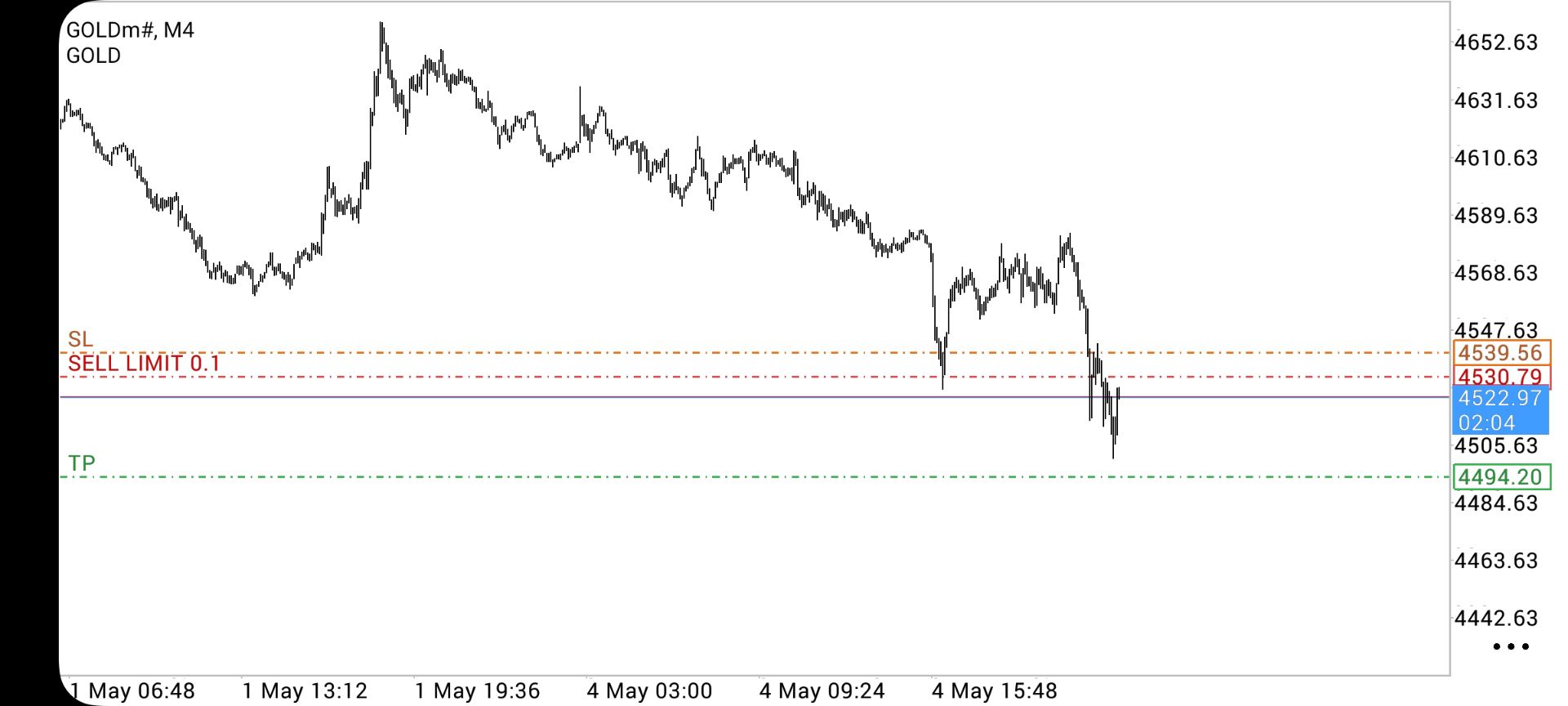
Sharpen market insight. By analyzing a precise line graph example, you can decode financial trends and avoid common pitfalls of data distortion.
Every investor and analyst needs reliable tools to visualize continuous data. This guide provides a clear line graph example for various fields, explaining how to interpret trends accurately. You will learn to compare financial metrics, spot market shifts, and build effective charts without distortion, ensuring your data analysis remains sharp and actionable.
Line graphs are uniquely designed to display continuous changes over a designated period. While bar charts excel at comparing categorical data and scatter plots highlight the correlation between two distinct variables, a line graph connects individual data points sequentially. This creates a visible trajectory that makes identifying long-term trends instant and intuitive.
A standard line plot graph example typically places time on the horizontal axis and numeric values on the vertical axis. This linear progression is superior to a scatter plot when the sequence of events matters more than individual data clusters.
| Chart Type | Best Used For | Typical Financial Example |
|---|---|---|
| Line Graph | Tracking continuous changes over time | S&P 500 daily closing prices over a decade |
| Bar Chart | Comparing different categories or groups | Quarterly revenue comparison of five tech companies |
| Scatter Plot | Identifying correlations between variables | The relationship between P/E ratios and dividend yields |
Data that is continuous and time-dependent is the ideal candidate for this format. Line graphs filter out the noise of isolated data points, allowing analysts to focus on the overarching narrative.
You should use a line graph when plotting:
Financial markets rely heavily on visual trajectory to dictate trading strategies. A classic line graph example with explanation involves charting a stock index, like the Dow Jones Industrial Average, over a multi-year period. The line filters out intraday volatility by only connecting the daily closing prices.
This visual simplicity allows investors to identify support and resistance levels effortlessly. Furthermore, overlaying a 200-day moving average as a second line creates a clear comparative benchmark, helping traders differentiate between a temporary market dip and a broader bear market trend.
Scientists depend on line charts to track slow-moving variables over extended timelines. A common use case is climatology, where researchers map global temperature anomalies spanning centuries.
In clinical trials or biological studies, a double line graph example is frequently utilized. Researchers will plot the growth rate of an experimental group on one line and a control group on another. By running both lines on the same axes, the divergence in their trajectories instantly visually proves or disproves the experiment's hypothesis.
Corporate executives need immediate visibility into company health. Line graphs translate raw CRM or sales data into clear performance narratives. For instance, mapping monthly sales figures allows stakeholders to identify seasonal dips or the immediate impact of a new marketing campaign.
When businesses track cumulative cash flow against operational expenses, they often rely on these visualizations. An upward trajectory in the revenue line combined with a flat expense line instantly communicates expanding profit margins to a board of directors.
To extract actionable intelligence from a chart, you must understand its core mechanics. The x-axis almost universally represents the independent variable (time), while the y-axis displays the dependent variable (value). The slope of the line indicates the rate of change; a steep upward slope signifies rapid growth, whereas a plateau indicates stagnation.
A practical line graph interpretation example involves analyzing intersections. In a multiple line graph example comparing two different moving averages, an intersection indicates a "crossover." In finance, when a short-term moving average crosses above a long-term moving average, it is recognized as a "golden cross," a bullish signal indicating upward momentum.
Even accurate data can be manipulated through deceptive charting practices. The most common distortion occurs when the y-axis does not start at zero or is heavily truncated. This visual trickery exaggerates minor price movements, making a relatively stable asset appear highly volatile.
Another pitfall is irregular x-axis intervals. If the time gaps between data points are inconsistent, the slope of the line will distort the true speed of the trend. Always verify the scale and baseline before making investment decisions based on a chart's apparent trajectory.
Constructing a reliable graph requires strict adherence to uniform scaling. Ensure your y-axis intervals are evenly spaced, and start at zero whenever dealing with absolute volumes or revenues. If you must use a broken axis to show high-value data changes, explicitly mark the break on the graph.
For long-term financial charts tracking exponential growth—such as decades of compounding stock returns—a logarithmic scale is often more accurate than a linear scale. A logarithmic y-axis displays percentage changes proportionally, preventing recent high-dollar price movements from visually dwarfing early historical data.
A single line is the gold standard for clarity. It draws the viewer's eye directly to one unified narrative, such as a company's net income over five years. However, comparative analysis often requires adding secondary lines.
Use multiple lines when benchmarking an asset, such as charting an individual stock's performance against the broader S&P 500 index. Keep in mind that adding too many lines turns your graph into an unreadable "spaghetti chart." As a best practice, limit your graph to three to five distinct lines and use highly contrasting colors to ensure readability.
Financial analysts frequently use line graphs to track historical stock prices, display moving averages, and monitor overall index performance. Another common application is charting inflation rates or bond yields to forecast broad economic shifts.
Plot your independent variable, such as time, on the horizontal x-axis and your dependent variable, such as price, on the vertical y-axis. Connect the plotted data points with a single, continuous line to reveal the underlying trend.
Line charts typically connect the daily closing prices of an asset, which strips away chaotic intraday price fluctuations. An upward-sloping line clearly indicates a bullish trend, while a consistent downward slope signals bearish market sentiment.
Locate a specific date on the x-axis and match it to the corresponding price value on the y-axis. Analyze the steepness and direction of the line to evaluate the momentum and volatility of the asset's price action.
Mastering the visual presentation of data allows investors to make faster, more informed decisions. Whether you are tracking corporate revenue or personal investments, an accurate line graph example provides clarity amid market noise. Apply these principles to build clean, undistorted charts that communicate true financial performance effectively.

728 RM B 7/F GEE LOK IND BLDG NO 34 HUNG TO RD KWUN TONG KLN HONG KONG


The risk of loss in trading financial instruments such as stocks, FX, commodities, futures, bonds, ETFs and crypto can be substantial. You may sustain a total loss of the funds that you deposit with your broker. Therefore, you should carefully consider whether such trading is suitable for you in light of your circumstances and financial resources.
No decision to invest should be made without thoroughly conducting due diligence by yourself or consulting with your financial advisors. Our web content might not suit you since we don't know your financial conditions and investment needs. Our financial information might have latency or contain inaccuracy, so you should be fully responsible for any of your trading and investment decisions. The company will not be responsible for your capital loss.
Without getting permission from the website, you are not allowed to copy the website's graphics, texts, or trademarks. Intellectual property rights in the content or data incorporated into this website belong to its providers and exchange merchants.
Not Logged In
Log in to access more features


Log In
Sign Up