- XAUUSD
- XAGUSD
- WTI
- USDX


Markets
Analysis
User
24/7
Economic Calendar
Education
Data
- Names
- Latest
- Prev



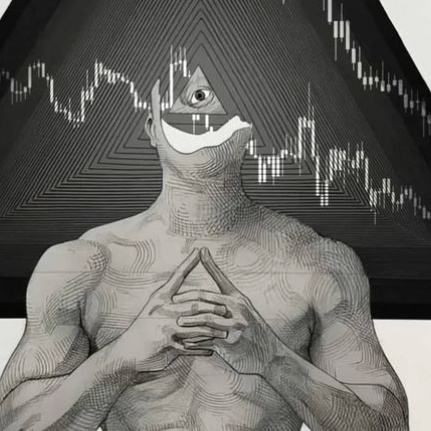





Why does the Oracle of Omaha reject digital assets? Inside the unyielding logic of the warren buffett cryptocurrency skepticism, and his indirect exposure.
Despite the explosive growth of digital assets over the past decade, Warren Buffett has remained one of the most prominent and unwavering skeptics of the cryptocurrency industry. The legendary investor and Berkshire Hathaway CEO has consistently rejected digital currencies, evaluating them through the strict, unyielding lens of traditional value investing. This article explores the philosophical and financial reasoning behind his severe warnings to retail investors, dissects his precise definition of intrinsic value, and clarifies the nuanced reality of his conglomerate's historical exposure to crypto-adjacent equities.

Warren Buffett views cryptocurrency as a non-productive, speculative token with zero intrinsic value. His investment philosophy, rooted in Benjamin Graham’s traditional value investing principles, dictates that an asset must produce earnings, dividends, or tangible utility to possess actual worth. Because cryptocurrencies generate no internal cash flow, Buffett argues their market capitalization relies entirely on the Greater Fool Theory—the expectation that another buyer will pay a higher price in the future.
At the 2022 Berkshire Hathaway annual shareholder meeting, Buffett illustrated this framework by contrasting Bitcoin with yield-bearing assets. He noted he would eagerly write a $25 billion check for a 1% stake in all U.S. farmland or all U.S. apartment houses because they reliably produce food and rental income. In contrast, he stated he would not pay $25 for all the Bitcoin in the world because it generates nothing, leaving him reliant on selling it back to someone else to realize a return.
Buffett’s famous "rat poison squared" moniker, delivered during a 2018 interview, stems from his conviction that Bitcoin actively harms retail investors while failing basic tests as a currency or store of value. His aversion is not rooted in a misunderstanding of the technology, but rather a rigid checklist of financial deficiencies:
Buffett’s philosophical stance on cryptocurrency has not softened, and Berkshire Hathaway does not hold any digital assets on its balance sheet. Autocompletion searches and clickbait articles frequently pair his name with specific altcoins to generate predictions regarding XRP or Ethereum; these claims are categorically false. Buffett does not own cryptocurrency, nor is he buying it.
However, investors investigating Warren Buffett's cryptocurrency exposure have identified a legitimate, albeit indirect, link through Berkshire’s equity portfolio. In 2021, Berkshire Hathaway invested $1 billion in Nu Holdings (Nubank), a massive, publicly traded Brazilian digital bank.
Nubank operates a proprietary crypto trading platform (Nubank Cripto) and has previously allocated a portion of its own balance sheet to Bitcoin. This creates a critical distinction for analysts evaluating Berkshire's portfolio:
Berkshire’s investment in Nu Holdings is a calculated bet on the bank's exceptional user growth, low customer acquisition costs, and dominance in the Latin American financial sector. It is not a backdoor endorsement of the cryptocurrencies traded on the bank's platform.
To expand on his view of digital tokens as non-productive assets, Buffett warns that cryptocurrency markets are driven entirely by speculative mania rather than intrinsic value. This primary critique underscores his belief that the absence of underlying cash flows makes digital assets a vehicle for the Greater Fool Theory rather than a viable, long-term investment strategy.
Because traditional valuation models like discounted cash flow (DCF) require a cash-generating underlying business or asset, Buffett classifies cryptocurrencies as fundamentally uninvestable. Reiterating his 2022 shareholder meeting hypothetical, Buffett emphasizes that while he would gladly buy a 1% interest in all U.S. farmland or apartments for $25 billion, he would refuse all the Bitcoin in the world for $25 because it lacks earnings, dividends, or tangible utility.
Because cryptocurrencies generate no internal yield, their fiat valuation relies entirely on the premise that another buyer will pay a higher price in the future. Buffett classifies this dynamic not as investing, but as a zero-sum loop where one participant’s gain requires another's identical loss. He acknowledges that blockchain technology has utility as a routing mechanism, but maintains that a secure transfer method does not confer financial value to the token itself.
Buffett evaluates asset classes based on their capacity to generate wealth independently of their market price. He categorizes cryptocurrency alongside gold: an inert asset that owners hold solely out of the belief its fiat price will rise.
| Asset Category | Examples | Yield Mechanism | Buffett's Classification |
|---|---|---|---|
| Productive Assets | S&P 500 Equities, Farmland, Real Estate | Generates dividends, crop yields, or rent over time. | Investments. Value compounds internally regardless of daily market quotes. |
| Non-Productive Assets | Gold, Silver, Fine Art | None. Relies purely on capital appreciation. | Speculation. Capital sits dormant; incurs opportunity cost. |
| Cryptocurrency | Bitcoin, Ethereum, XRP | None. Staking yields are often paid in the same highly volatile, non-productive token. | Speculative Mirage. Lacks both internal yield and historical utility as a physical store of value. |
Equities and real estate compound wealth through business operations or rent collection. In contrast, holding cryptocurrency requires capital to sit dormant. The investor incurs a heavy opportunity cost while waiting for market sentiment to shift in their favor. By treating Bitcoin exactly as he treats gold—an asset he has historically avoided—Buffett underscores his mandate that capital must actively work and produce to justify an allocation.
Buffett warns that cryptocurrency markets prey on retail investors by weaponizing the fear of missing out (FOMO) and obscuring a fundamental lack of utility. He and his late business partner, Charlie Munger, consistently characterized the asset class as a magnet for fraud, delusion, and irresponsible risk-taking.
His specific warnings target three behavioral and structural risks:
Warren Buffett does not hold Bitcoin, Ethereum, or any other cryptocurrency in Berkshire Hathaway’s equity portfolio. Speculation regarding what cryptocurrency Warren Buffett is buying ends at the firm's SEC 13F filings, which confirm the conglomerate maintains zero direct cryptocurrency exposure. As previously established, his prediction relies on the fact that digital tokens lack intrinsic utility and internal cash flow, leading him to expect their long-term value to trend toward zero.
While Berkshire currently holds no crypto-adjacent equities, its most significant historical connection to the digital asset space was Nu Holdings (Nubank)—a Brazilian digital bank with an aggressive cryptocurrency division. Berkshire invested $750 million across two funding rounds in 2021 before Nu Holdings went public. However, by the first quarter of 2025, Berkshire completely liquidated its 107-million-share position in the fintech giant, securing an estimated $250 million profit in the process.
Nu Holdings operates Nucripto, an internal trading platform that rapidly expanded its digital asset offerings to millions of Latin American users. As of 2025, Nucripto allows its customer base to buy, sell, and swap over a dozen tokens, including Bitcoin, Solana, and USDC. During Berkshire's holding period, owning Nu Holdings stock gave the conglomerate passive, derivative exposure to crypto trading volumes—without requiring Buffett to purchase a single coin directly. The eventual 2025 exit aligned with a broader Berkshire pullback from the banking sector rather than a specific indictment of Nubank's crypto strategy.
The analytical distinction between allocating capital to Nu Holdings versus Bitcoin centers entirely on cash flow generation. Nu Holdings is a productive enterprise; it leverages a low cost-to-serve digital model to extract real fee revenue and net interest income from over 131 million banking customers across Brazil, Mexico, and Colombia. In 2025, the bank generated $16.4 billion in revenue and nearly $2.9 billion in net income.
Bitcoin, by contrast, relies entirely on market demand. Buffett's famous refusal to buy the global supply of Bitcoin for $25 highlights his disdain for assets where investors only profit if a subsequent buyer is willing to pay a higher price.
The fundamental trade-offs between the two assets dictate Berkshire's capital allocation logic:
| Asset Characteristic | Nu Holdings (Nubank) | Bitcoin (BTC) |
|---|---|---|
| Asset Classification | Productive corporate equity | Decentralized digital commodity |
| Primary Value Driver | Net interest income and loan growth | Network adoption and scarcity |
| Cash Flow Profile | Generated $16.4 billion in 2025 revenue | Zero internal cash flow |
| Buffett's Valuation View | Priced via discounted future earnings | Unvaluable (lacks yield or dividend) |
Investing in a crypto-adjacent bank aligned perfectly with Buffett's traditional strategy of owning financial infrastructure. Berkshire benefited from the transaction fees generated when retail investors traded cryptocurrency, capturing the economic upside of the digital asset boom while remaining completely insulated from the price volatility of the underlying tokens.
Warren Buffett’s dismissal of cryptocurrency remains highly relevant as a strict application of value investing, but it serves poorly as a framework for pricing non-productive monetary assets. Buffett measures an asset's worth exclusively by its ability to generate future cash flows. Under a standard Discounted Cash Flow (DCF) model, a digital token that yields no dividends, interest, or rent has an intrinsic value of zero. His stance is not a misunderstanding of the technology; it is a rigid adherence to Graham-and-Dodd valuation principles.
However, retail and institutional investors must separate his philosophical warnings from his conglomerate's actual market positioning. For those asking, "does Warren Buffett own cryptocurrency?", the answer is legally no, but practically nuanced. Berkshire Hathaway has maintained indirect cryptocurrency exposure through its $1 billion investment in Nu Holdings. Nubank, the company's operating entity, actively provides crypto trading services and utilizes blockchain infrastructure across Latin America. Buffett operates pragmatically: he refuses to hold decentralized digital assets on Berkshire's balance sheet, but he has been willing to profit from the transaction fees and retail adoption of crypto through regulated, cash-flowing financial institutions.
Crypto proponents counter that Buffett structurally miscategorizes digital assets by evaluating them as corporate equities rather than decentralized commodity money. When investors research why does Warren Buffett not like crypto, they find a clash of economic frameworks, not just differing opinions on risk.
Advocates highlight three specific flaws in his critiques:
Buffett has a documented history of ignoring major technological paradigm shifts, famously admitting he missed early investments in Amazon and Google because they fell outside his "circle of competence." Critics frequently point to these omissions to invalidate his cryptocurrency prediction, but the mechanics behind these blind spots are entirely different.
| Asset Category | Core Reason for Buffett's Rejection | Eventual Outcome | Applicability to Cryptocurrency |
|---|---|---|---|
| Early Tech (Google, Amazon) | Initial lack of obvious cash flow; outside his circle of competence to project long-term earnings. | Berkshire eventually capitalized on tech by making Apple its largest equity holding once its cash flows became undeniable. | Low. Tech companies eventually matured into high-margin, dividend-paying monopolies that fit his traditional models. |
| Cryptocurrency (Bitcoin, etc.) | The asset structurally cannot produce corporate earnings or yield by design. | Berkshire targets crypto-adjacent equities (like Nu Holdings) but avoids the underlying tokens. | High. Unlike early tech, Bitcoin will never generate a dividend. It permanently falls outside his DCF valuation framework. |
Investors searching for what cryptocurrency is Warren Buffett buying are missing the fundamental mechanics of his strategy. His refusal to buy digital assets is not analogous to his early failure to understand search engines or e-commerce. Technology companies eventually transition into cash-printing businesses, allowing traditional valuation models to catch up. Cryptocurrencies are mathematically designed to function as bearer instruments without issuing dividends or earnings. Consequently, Buffett’s analytical framework will permanently value them at zero, regardless of how high their market capitalization or global adoption scales.
Warren Buffett does not directly own any cryptocurrency. He has stated repeatedly that neither he nor his company, Berkshire Hathaway, holds Bitcoin or any other digital currencies. Instead, he views them as speculative investments rather than real, productive assets.
Warren Buffett has been highly critical of cryptocurrency, famously calling Bitcoin "rat poison squared". He has predicted that digital currencies will eventually come to a "bad ending". Furthermore, he once told shareholders that he would not pay $25 for all the Bitcoin in the world.
Warren Buffett believes cryptocurrency lacks intrinsic value because it does not produce anything and generates no cash flow. He prefers investing in productive assets, such as real estate, farms, or businesses that provide tangible outputs and long-term earnings. In his view, cryptocurrency returns rely entirely on the speculative hope of finding a future buyer.
Berkshire Hathaway does not hold any direct investments in Bitcoin or other cryptocurrencies. However, the company does have indirect exposure to the digital asset market. It has invested in companies that operate within the crypto space, such as Nu Holdings, a Brazilian digital bank offering crypto services, and Jefferies Financial Group.
Warren Buffett’s steadfast rejection of cryptocurrency is not a failure to grasp new technology, but rather a rigid adherence to the cash-flow valuation principles that built his fortune. By defining an asset strictly by its ability to produce internal earnings, rent, or dividends, he fundamentally excludes decentralized digital tokens from his legitimate investment universe. For market participants, the ultimate takeaway is to recognize the stark functional difference between holding non-productive tokens reliant on market sentiment and owning tangible financial infrastructure that safely captures revenue regardless of asset volatility.

728 RM B 7/F GEE LOK IND BLDG NO 34 HUNG TO RD KWUN TONG KLN HONG KONG





The risk of loss in trading financial instruments such as stocks, FX, commodities, futures, bonds, ETFs and crypto can be substantial. You may sustain a total loss of the funds that you deposit with your broker. Therefore, you should carefully consider whether such trading is suitable for you in light of your circumstances and financial resources.
No decision to invest should be made without thoroughly conducting due diligence by yourself or consulting with your financial advisors. Our web content might not suit you since we don't know your financial conditions and investment needs. Our financial information might have latency or contain inaccuracy, so you should be fully responsible for any of your trading and investment decisions. The company will not be responsible for your capital loss.
Without getting permission from the website, you are not allowed to copy the website's graphics, texts, or trademarks. Intellectual property rights in the content or data incorporated into this website belong to its providers and exchange merchants.
Not Logged In
Log in to access more features


Log In
Sign Up