• Trade
  • Markets
  • Copy
  • Contests
  • 24/7
  • Calendar
  • Q&A
  • Chats
Screeners
SYMBOL
LAST
BID
ASK
HIGH
LOW
NET CHG.
%CHG.
SPREAD
SOURCE
SPX
S&P 500 Index
7365.45
7365.45
7365.45
7424.17
7347.60
-107.33
-1.44%
--
--
DJI
Dow Jones Industrial Average
51666.83
51666.83
51666.83
51872.56
51301.77
-45.87
-0.09%
--
--
IXIC
NASDAQ Composite Index
25587.05
25587.05
25587.05
25882.57
25513.26
-579.54
-2.21%
--
--
USDX
US Dollar Index
101.290
101.290
101.370
101.310
101.110
+0.160
+ 0.16%
--
--
EURUSD
Euro / US Dollar
1.13551
1.13551
1.13558
1.13837
1.13514
-0.00260
-0.23%
--
--
GBPUSD
Pound Sterling / US Dollar
1.31831
1.31831
1.31839
1.32087
1.31797
-0.00194
-0.15%
--
--
XAUUSD
Gold / US Dollar
4086.75
4086.75
4087.16
4114.95
4050.25
-23.73
-0.58%
--
--
WTI
Light Sweet Crude Oil
72.224
72.224
72.254
73.018
71.927
-0.639
-0.88%
--
--

Community Accounts

Signal Accounts
--
Profit Accounts
--
Loss Accounts
--
View More

Become a signal provider

Sell trading signals to earn additional income

View More

Guide to Copy Trading

Get started with ease and confidence

View More

Signal Accounts for Members

All Signal Accounts

Best Return
  • Best Return
  • Best P/L
  • Best MDD
Past 1W
  • Past 1W
  • Past 1M
  • Past 1Y

All Contests

  • All
  • Recommend
  • Stocks
  • Cryptocurrencies
  • Central Banks
  • Trump Updates
  • Featured News
Top News Only
Share

The Bank Of Thailand Expects Inflation To Peak At 4.5% This Year

Share

The Bank Of Thailand: Exports Are Projected To Grow By 14.0% In 2026

Share

The Bank Of Thailand Expects The Number Of Foreign Tourists To Reach 33 Million By 2026

Share

The Yield On 10-year UK Government Bonds Fell To 4.736%, A One-week Low

Share

Swiss National Bank Vice President: We Are Also Working To Improve Cross-border Payments

Share

Swiss National Bank Vice President: We Hope To Improve The Instant Payment Process In The Current Payment System

Share

According To Iran's Mehr News Agency, A Spokesperson For The Pakistani Foreign Ministry Stated That Pakistan Is Communicating With The United States And Iran To Ensure The Effective Implementation Of The Memorandum Of Understanding

Share

The President Of JERA, Japan's Largest Power Company, Said The Company Will Consider Whether To Renew Its LNG Supply Contract With Russia's Sakhalin-2 Operator, While Ensuring That Any Decision Is Consistent With National Policy

Share

Swiss National Bank Vice President: There Are No Plans To Launch A Digital Swiss Franc At Present

Share

Kremlin Spokesman Dmitry Peskov Said: "Russian Authorities Are Preparing For The Upcoming State Duma Elections, And The Date Will Not Be Postponed."

Share

The Bank Of Thailand Expects Inflation To Exceed The Target Range Later This Year

Share

The The Bank Of Thailand: The Impact Of The Middle East Conflict On Manufacturing And Tourism Is Less Severe Than Expected

Share

The Bank Of Thailand: Monetary Policy Should Remain Accommodative

Share

The The Bank Of Thailand: Inflation Is Expected To Rise Due To Supply-side Factors. It Will Decline Once Supply-side Pressures Gradually Ease

Share

The Bank Of Thailand: The Thai Baht Weakened Due To The Strengthening Of The US Dollar

Share

The The Bank Of Thailand: Thailand's Economic Growth Is Expected To Be Stronger Than Previously Assessed, But The Growth Rate Remains Low

Share

The Bank Of Thailand Projects An Overall Inflation Rate Of 2.8% For 2026

Share

The Bank Of Thailand Projects GDP Growth Of 2.3% In 2026 (up From 2.0% In June) And 1.8% In 2027

Share

The Bank Of Thailand Kept Its Benchmark Interest Rate Unchanged At 1%, In Line With Market Expectations

Share

Market Sources: Kremlin Spokesman Dmitry Peskov Did Not Announce Whether Russian President Vladimir Putin Would Congratulate Donald Trump On U.S. Independence Day

TIME
ACT
FCST
PREV
IMPACT
China, Mainland 5-Year Loan Prime Rate

A:--

F: --

P: --

XAUUSD
  • XAUUSD
  • XAGUSD
  • WTI
  • USDX
Turkey Consumer Confidence Index (Jun)

A:--

F: --

P: --

XAUUSD
  • XAUUSD
  • XAGUSD
  • WTI
  • USDX
Canada National Economic Confidence Index

A:--

F: --

P: --

USDCAD
  • USDCAD
  • XAUUSD
  • XAGUSD
  • WTI
  • USDX
Canada Trimmed CPI YoY (SA) (May)

A:--

F: --

P: --

WTI
  • WTI
  • XAUUSD
  • XAGUSD
  • USDX
Canada Core CPI YoY (May)

A:--

F: --

P: --

WTI
  • WTI
  • XAUUSD
  • XAGUSD
  • USDX
Canada CPI MoM (May)

A:--

F: --

P: --

WTI
  • WTI
  • XAUUSD
  • XAGUSD
  • USDX
Canada CPI YoY (May)

A:--

F: --

P: --

WTI
  • WTI
  • XAUUSD
  • XAGUSD
  • USDX
Canada Core CPI MoM (May)

A:--

F: --

P: --

WTI
  • WTI
  • XAUUSD
  • XAGUSD
  • USDX
ECB President Lagarde Speaks
FOMC Member Waller Speaks
Argentina Unemployment Rate (Q1)

A:--

F: --

P: --

XAUUSD
  • XAUUSD
  • XAGUSD
  • WTI
  • USDX
ECB Chief Economist Lane Speaks
Germany 2-Year Schatz Auction Avg. Yield

A:--

F: --

P: --

EURUSD
  • EURUSD
  • XAUUSD
  • XAGUSD
  • WTI
  • USDX
U.K. CBI Industrial Prices Expectations (Jun)

A:--

F: --

P: --

GBPUSD
  • GBPUSD
  • XAUUSD
  • XAGUSD
  • WTI
  • USDX
U.K. CBI Industrial Trends - Orders (Jun)

A:--

F: --

P: --

GBPUSD
  • GBPUSD
  • XAUUSD
  • XAGUSD
  • WTI
  • USDX
Mexico Retail Sales MoM (Apr)

A:--

F: --

P: --

XAUUSD
  • XAUUSD
  • XAGUSD
  • WTI
  • USDX
Mexico Economic Activity Index YoY (Apr)

A:--

F: --

P: --

XAUUSD
  • XAUUSD
  • XAGUSD
  • WTI
  • USDX
U.S. Weekly Redbook Index YoY

A:--

F: --

P: --

XAUUSD
  • XAUUSD
  • XAGUSD
  • WTI
  • USDX
BOC Gov Macklem Speaks
U.S. Richmond Fed Manufacturing Composite Index (Jun)

A:--

F: --

P: --

USDX
  • USDX
  • XAUUSD
  • XAGUSD
  • WTI
U.S. Richmond Fed Services Revenue Index (Jun)

A:--

F: --

P: --

USDX
  • USDX
  • XAUUSD
  • XAGUSD
  • WTI
U.S. Richmond Fed Manufacturing Shipments Index (Jun)

A:--

F: --

P: --

USDX
  • USDX
  • XAUUSD
  • XAGUSD
  • WTI
U.S. 2-Year Note Auction Avg. Yield

A:--

F: --

P: --

XAUUSD
  • XAUUSD
  • XAGUSD
  • WTI
  • USDX
US President Trump delivered a speech
Argentina GDP YoY (Constant Prices) (Q1)

A:--

F: --

P: --

XAUUSD
  • XAUUSD
  • XAGUSD
  • WTI
  • USDX
U.S. API Weekly Cushing Crude Oil Stocks

A:--

F: --

P: --

WTI
  • WTI
  • XAUUSD
  • XAGUSD
  • USDX
U.S. API Weekly Crude Oil Stocks

A:--

F: --

P: --

WTI
  • WTI
  • XAUUSD
  • XAGUSD
  • USDX
U.S. API Weekly Refined Oil Stocks

A:--

F: --

P: --

WTI
  • WTI
  • XAUUSD
  • XAGUSD
  • USDX
U.S. API Weekly Gasoline Stocks

A:--

F: --

P: --

WTI
  • WTI
  • XAUUSD
  • XAGUSD
  • USDX
BOJ Gov Ueda Speaks
Germany Ifo Current Business Situation Index (SA) (Jun)

--

F: --

P: --

Germany IFO Business Climate Index (SA) (Jun)

--

F: --

P: --

Germany Ifo Business Expectations Index (SA) (Jun)

--

F: --

P: --

U.S. MBA Mortgage Application Activity Index WoW

--

F: --

P: --

U.S. Current Account (Q1)

--

F: --

P: --

U.S. New Home Sales Annualized MoM (May)

--

F: --

P: --

U.S. Annual Total New Home Sales (May)

--

F: --

P: --

U.S. EIA Weekly Heating Oil Stock Changes

--

F: --

P: --

U.S. EIA Weekly Crude Oil Imports Changes

--

F: --

P: --

U.S. EIA Weekly Gasoline Stocks Change

--

F: --

P: --

U.S. EIA Weekly Crude Demand Projected by Production

--

F: --

P: --

U.S. EIA Weekly Cushing, Oklahoma Crude Oil Stocks Change

--

F: --

P: --

U.S. EIA Weekly Crude Stocks Change

--

F: --

P: --

U.S. 5-Year Note Auction Avg. Yield

--

F: --

P: --

BOJ Gov Ueda Speaks
Australia Labor Force Participation Rate (SA) (May)

--

F: --

P: --

Australia Unemployment Rate (SA) (May)

--

F: --

P: --

Australia Full-time Employment (SA) (May)

--

F: --

P: --

Australia Employment (May)

--

F: --

P: --

Germany GfK Consumer Confidence Index (SA) (Jul)

--

F: --

P: --

South Africa PPI YoY (May)

--

F: --

P: --

U.K. CBI Retail Sales Expectations Index (Jun)

--

F: --

P: --

U.K. CBI Distributive Trades (Jun)

--

F: --

P: --

ECB Chief Economist Lane Speaks
Mexico Unemployment Rate (Not SA) (May)

--

F: --

P: --

U.S. Weekly Initial Jobless Claims (SA)

--

F: --

P: --

U.S. Core PCE Price Index YoY (May)

--

F: --

P: --

U.S. Personal Outlays MoM (SA) (May)

--

F: --

P: --

U.S. Real Personal Consumption Expenditures Final QoQ (Q1)

--

F: --

P: --

U.S. Core PCE Price Index MoM (May)

--

F: --

P: --

U.S. Durable Goods Orders MoM (May)

--

F: --

P: --

Q&A with Experts
    • All
    • Chatrooms
    • Groups
    • Friends
    SlowBear ⛅ flag
    Mr. Grey
    @SlowBear ⛅Yeah a big opportunity is coming we should wait in gold also
    @Mr. Grey oh bro,, you are right on point on this one, i will surely wait for it
    SlowBear ⛅ flag
    Newbie
    @SlowBear ⛅..same here
    @Newbie All the best to those who can ride the market with us then
    Mr. Grey flag
    SlowBear ⛅
    @Mr. Grey oh bro,, you are right on point on this one, i will surely wait for it
    @SlowBear ⛅We can target 49111 in BTC
    "JABO GOLD TRADER " was muted by "FastBuller"
    SlowBear ⛅ flag
    Mr. Grey
    @SlowBear ⛅We can target 49111 in BTC
    @Mr. Grey you are going massive on BTC bro, 49k damn i was not expectingt hat
    Mr. Grey flag
    @SlowBear ⛅But before that we can see a buy trap, a massive buy trap
    Mr. Grey flag
    @SlowBear ⛅Because a massive liquidity is resting there on 49K so that will be by long term target in BTC
    Ali flag
    i,m a beginner
    Ali flag
    who can help me in learning this
    SlowBear ⛅ flag
    Mr. Grey
    @SlowBear ⛅But before that we can see a buy trap, a massive buy trap
    @Mr. Grey Oh yes i am waiting for that trade mixed with a liquidity sweep sort of
    "Newbie" recalled a message
    SlowBear ⛅ flag
    Mr. Grey
    @SlowBear ⛅Because a massive liquidity is resting there on 49K so that will be by long term target in BTC
    @Mr. GreyOh i see, that is nice, then and then we can now begin to buy BTC and target a fresh All time high right?
    Mr. Grey flag
    SlowBear ⛅
    @Mr. GreyOh i see, that is nice, then and then we can now begin to buy BTC and target a fresh All time high right?
    @SlowBear ⛅Yeah Bro. You are absolutely right My Dear
    SlowBear ⛅ flag
    Mr. Grey
    @SlowBear ⛅Yeah Bro. You are absolutely right My Dear
    @Mr. Grey Thanks for that, i guess we have to start looking forward to the market update and reaction now
    Newbie flag
    "Newbie" recalled a message
    Newbie flag
    Newbie
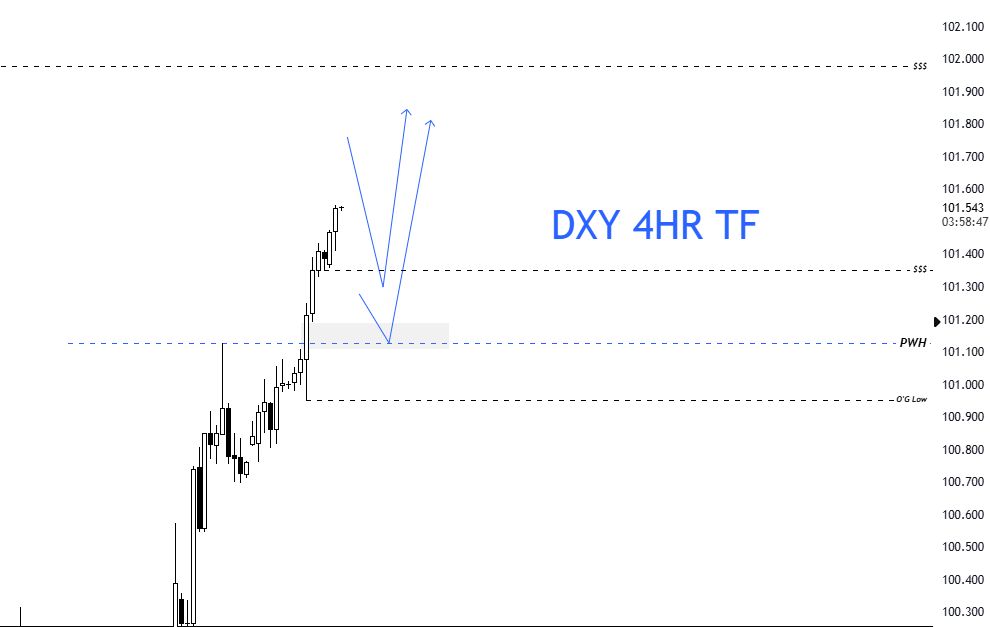
    @EuroTrader here is my take.... As we can see price didn't react after taking the previous week high...... But decided to continue upward.... So we are in for a continuation upwards......
    hackorr flag
    hlo hlo
    G4D372N0Y7 flag
    hey i am new here
    hackorr flag
    SlowBear ⛅
    @Mr. Grey Thanks for that, i guess we have to start looking forward to the market update and reaction now
    @SlowBear ⛅how r u bro
    Type here...
    Add Symbol or Code

      No matching data

      All
      Recommend
      Stocks
      Cryptocurrencies
      Central Banks
      Trump Updates
      Featured News
      • All
      • Russia-Ukraine Conflict
      • Middle East Flashpoint
      • All
      • Russia-Ukraine Conflict
      • Middle East Flashpoint
      Search
      Products

      Charts Free Forever

      Chats Q&A with Experts
      Screeners Economic Calendar Data Tools
      Membership Features
      Data Warehouse Market Trends Institutional Data Policy Rates Macro

      Market Trends

      Market Sentiment Order Book Forex Correlations

      Top Indicators

      Charts Free Forever
      Markets

      News

      24/7 Analysis Education

      Latest Views

      Latest Update

      Signals

      Copy Rankings Latest Signals Become a signal provider AI Rating
      Contests
      Brokers

      Overview Brokers Assessment Rankings Regulators News Claims
      Broker listing Forex Brokers Comparison Tool Live Spread Comparison Scam
      Q&A Complaint Scam Alert Videos Tips to Detect Scam
      More

      Business
      Events
      Careers About Us Advertising Help Center

      White Label

      Broker API

      Data API

      Web Plug-ins

      Affiliate Program

      Awards Institution Evaluation IB Seminar Salon Event Exhibition
      Vietnam Thailand Singapore Dubai
      Fans Party Investment Sharing Session
      FastBull Summit BrokersView Expo
      Recent Searches
        Top Searches
          Markets
          Analysis
          User
          24/7
          Economic Calendar
          Education
          Data
          • Names
          • Latest
          • Prev

          View All

          No data

          Scan to Download

          Faster Charts, Chat Faster!

          Download
          English
          • English
          • Español
          • العربية
          • Bahasa Indonesia
          • Bahasa Melayu
          • Tiếng Việt
          • ภาษาไทย
          • Français
          • Italiano
          • Türkçe
          • Русский язык
          • 简中
          • 繁中
          Open Account
          Search
          Products
          Charts Free Forever
          Markets
          News
          Signals

          Copy Rankings Latest Signals Become a signal provider AI Rating
          Contests
          Brokers

          Overview Brokers Assessment Rankings Regulators News Claims
          Broker listing Forex Brokers Comparison Tool Live Spread Comparison Scam
          Q&A Complaint Scam Alert Videos Tips to Detect Scam
          More

          Business
          Events
          Careers About Us Advertising Help Center

          White Label

          Broker API

          Data API

          Web Plug-ins

          Affiliate Program

          Awards Institution Evaluation IB Seminar Salon Event Exhibition
          Vietnam Thailand Singapore Dubai
          Fans Party Investment Sharing Session
          FastBull Summit BrokersView Expo

          Trade Tariffs Meaning: Simple Definition, Examples & Who Pays

          zhan chen
          Summary:

          Who pays when imports are taxed? We demystify the trade tariffs meaning, tracking how these border levies ripple from global ports to your local store receipt.

          International commerce touches nearly every product on store shelves, making border policies a crucial factor in the cost of living. Among these policies, trade tariffs frequently spark intense political debate and economic anxiety, yet their actual mechanical functions are often misunderstood. This article breaks down the precise definition of a trade tariff, explains how the costs move through global supply chains, and examines real-world data to clarify exactly who bears the financial burden at the checkout counter.
          Trade Tariffs Meaning: Simple Definition, Examples & Who Pays

          What Does "Trade Tariff" Actually Mean?

          A trade tariff is a direct tax imposed by a national government on goods and services crossing international borders. While historically used to fund federal budgets, modern governments primarily deploy tariffs to protect domestic industries from foreign competition or as leverage in geopolitical negotiations. The most common application is tariffs on imports, which artificially raise the final price of foreign goods to make domestically produced alternatives more attractive to buyers. Though rare, governments can also apply tariffs on exports to restrict the outflow of essential domestic raw materials, ensuring they remain available for local manufacturing.

          Is a Tariff a Tax, a Fee, or Something Else?

          A tariff is strictly a tax—specifically, an indirect tax levied at the customs border. When a business imports goods, it must pay this tax to the destination country's customs authority before the shipments can legally clear the border and enter the domestic market.

          To clarify the financial mechanics, customs authorities distinguish between three distinct border charges:

          • Customs Duties (Tariffs): The actual tax designed to alter trade flows or raise revenue. These types of tariff are usually calculated as either ad valorem (a percentage of the good's total value, such as 25% on foreign steel) or specific (a fixed dollar amount per physical unit, such as $0.50 per kilogram of sugar).
          • Processing Fees: Administrative charges that cover the government's cost of inspecting and processing the shipment. For example, U.S. Customs and Border Protection (CBP) charges a Merchandise Processing Fee (MPF) on most import tariffs us entries. This is a fee for a logistical service, not a tariff.
          • Excise Taxes: Internal domestic taxes applied to specific product categories like alcohol, tobacco, or fuel. These are applied equally regardless of whether the good was manufactured domestically or imported.

          What Makes Something a Trade Tariff vs. Other Import Restrictions?

          A trade tariff restricts foreign commerce through price distortion, whereas other trade restrictions operate by limiting physical volume or enforcing strict regulatory standards. Tariffs allow unlimited quantities of a product to enter a country, provided the importing business is willing to pay the associated border tax.

          When governments want to protect domestic markets, they choose from different mechanisms based on their exact economic goals. The table below outlines the precise boundaries between tariffs and other common trade barriers.

          Restriction TypePrimary MechanismEconomic ImpactReal-World Example
          Trade TariffPrice increase (Tax)Raises the cost of foreign goods; generates direct government revenue.A 20% border tax applied to imported foreign vehicles.
          Import QuotaVolume limit (Cap)Caps the absolute quantity of a good that can enter; generates no tax revenue.Allowing only 1.5 million tons of foreign raw sugar per year.
          EmbargoAbsolute banCompletely halts trade with a specific country or in a specific sector for political reasons.A total prohibition on importing advanced semiconductor technology.
          Non-Tariff Barrier (NTB)Regulatory complianceIncreases compliance costs through strict product standards, testing, or labeling rules.Requiring foreign agricultural imports to undergo a 30-day quarantine.

          While an import quota physically stops a product at the border once a hard cap is reached, a tariff relies on basic supply and demand. If the tax pushes the final retail price too high, consumer demand drops, and the volume of imports naturally falls without a legally mandated limit.

          How Do Tariffs Work in Practice?

          In practice, a trade tariff acts as an artificial cost injection designed to alter the economics of international trade, making imported products more expensive relative to domestically produced alternatives.

          What Happens When a Tariff Is Applied to an Imported Good?

          The implementation of tariffs on imports follows a strict procedural sequence governed by customs authorities at the port of entry. When a commercial shipment arrives, its tax liability is calculated based on its physical classification and origin country.

          The border process follows four distinct steps:

          1. Classification: Customs authorities assign the good a Harmonized System (HS) code. This internationally standardized 6-to-10 digit identifier defines exactly what the product is (e.g., raw steel sheet versus a stamped automotive part).
          2. Valuation: Customs assesses the total commercial value of the incoming shipment.
          3. Assessment: The government applies the specific tariff rate tied to that exact HS code and origin country. This assessment process represents the core import tariffs meaning in trade logistics—a legally binding fee schedule attached to specific foreign goods.
          4. Calculation: The final tax is calculated based on the types of tariff applied. An ad valorem tariff charges a percentage of the good's total value (e.g., 25% on imported electronics). A specific tariff charges a fixed fiat amount per physical unit (e.g., $1.20 per kilogram of refined sugar).

          Who Physically Pays the Tariff at the Border?

          The domestic importing company physically pays the tariff. Despite recurring political rhetoric suggesting that foreign nations cover these taxes, foreign exporting firms and foreign governments do not send money to the importing country's treasury.

          The legal entity responsible for the tax is the Importer of Record (IoR). If a U.S. retailer purchases $1 million worth of furniture from a Vietnamese manufacturer subject to a 10% tariff, the Vietnamese factory simply receives its negotiated $1 million base price. The U.S. retailer must separately remit $100,000 to U.S. Customs and Border Protection (CBP) within days of the goods arriving at a domestic port. In practice, a licensed customs broker usually executes an electronic funds transfer directly from the importer’s bank account to the government before the cargo is legally cleared to leave the docks.

          How Does That Cost Move Through the Supply Chain to You?

          Once the importer remits the payment at the border, that tax converts immediately into a higher Cost of Goods Sold (COGS) on their balance sheet. The importing firm then faces a zero-sum financial decision regarding who ultimately absorbs that economic burden.

          Depending on market dynamics, the cost moves through the supply chain via four primary channels:

          • Full Pass-Through (The Consumer Pays): The importer raises wholesale prices, and retailers subsequently raise final shelf prices. Take a standard tariff example: If a 25% tariff hits imported bicycles, a bike that previously retailed for $400 may instantly reprice to $500, shifting 100% of the tax burden onto the end retail buyer.
          • Margin Absorption (The Importer Pays): The importing business keeps retail prices flat to defend its market share against domestic competitors. The firm absorbs the border tax by accepting compressed gross profit margins. This typically occurs in highly commoditized sectors where buyers are acutely price-sensitive.
          • Supplier Squeeze (The Foreign Factory Pays Indirectly): The domestic importer demands a price reduction from the foreign manufacturer to offset the new tax. If a 10% tariff is enacted, the importer forces the supplier to cut their base wholesale price by 10% under threat of moving production to a non-tariffed country. The foreign firm loses profit, but they still do not pay the tariff directly.
          • Component Cascading (The Multiplier Effect): When governments place tariffs on intermediate goods—such as raw aluminum, microchips, or industrial chemicals—the cost compounds. A domestic manufacturer pays the tariff on imported raw materials, then applies their standard markup percentage to the higher production cost. By the time the finished good passes through wholesalers and retailers, the total dollar increase in the final consumer price frequently exceeds the original border tax.

          Real-World Examples That Show What Tariffs Look Like

          Rather than a vague macroeconomic concept, a trade tariff manifests as a hard, unavoidable cost paid by domestic importing companies to national customs authorities before goods can legally enter the domestic market.

          What Do the New 2025-2026 U.S. Universal Tariffs on Everyday Goods Actually Look Like?

          The 2025–2026 U.S. trade policy operates primarily as a 10% to 25% ad valorem tax applied directly to the invoice value of imported goods at the port of entry. When the U.S. levies import tariffs, the foreign manufacturer does not write a check to the U.S. Treasury; the domestic importing company pays the tax directly to U.S. Customs and Border Protection (CBP).

          To understand precisely who pays a tariff, consider a standard tariff example. If a U.S. retailer imports a $50,000 wholesale shipment of household furniture from a foreign supplier subject to a 10% baseline tariff, the retailer must pay CBP a $5,000 duty to clear the shipment.

          The current landscape of import tariffs in the US relies on several distinct, overlapping types of tariff actions:

          • The 10% Global Baseline: Following a February 2026 U.S. Supreme Court decision that struck down the administration's initial 2025 tariffs under the International Emergency Economic Powers Act (IEEPA), the government implemented a temporary 10% universal tariff on global imports utilizing Section 122 of the Trade Act of 1974.
          • Elevated Country-Specific Levies: Punitive, elevated duties ranging from 20% to 60% apply to specific China-origin consumer and industrial goods. Concurrently, a 25% tariff targets non-energy imports from Mexico and Canada, with energy imports capped at a 10% duty.
          • Retaliatory Measures: While the U.S. Constitution forbids domestic tariffs on exports, trading partners systematically respond to U.S. border policies by placing their own retaliatory import taxes on American exports, which immediately compresses margins for domestic agricultural and manufacturing firms.

          How Are the Ongoing 2025-2026 Tariff Shocks Changing Prices in Real Markets?

          The 2025–2026 tariff shocks act as a direct input cost increase for domestic retailers, translating into a 0.80 percentage point increase in core consumer inflation as companies pass border taxes down to retail shelves. By the first quarter of 2026, transaction data tracked by the Harvard Business School Pricing Lab confirmed that consumers absorbed approximately 43% of the initial tariff burden. U.S. corporations absorbed the remaining 57% through compressed profit margins and supply chain reconfigurations.

          The economic mechanism dictating these price changes is called pass-through. When a retailer faces a 10% higher import cost, they must choose between raising the final shelf price, negotiating lower wholesale costs with the foreign supplier, or taking a margin hit. According to Federal Reserve data tracking the 2025 tariffs on imports, pass-through occurs gradually rather than immediately, slowly materializing in the Personal Consumption Expenditures (PCE) price index over seven to ten months.

          Different product categories absorb these shocks differently, governed strictly by their reliance on foreign supply chains:

          Product CategoryTypical Supply Chain Exposure2025–2026 Measured Price Impact
          Household FurnitureHigh (majority of finished units imported)+7.0% price increase above pre-tariff baseline trends
          Consumer ElectronicsHigh (heavy reliance on China-origin components)Sharp corporate margin compression; moderate retail price hikes
          Domestic GroceriesLow (primarily sourced within North America)Minimal direct impact; secondary effects from transportation costs

          Firms unable to quickly shift their sourcing away from heavily tariffed jurisdictions are forced to push these added border costs downstream. Consequently, a strict border levy steadily mutates into reduced purchasing power for the end consumer.

          So Who Really Ends Up Paying — the Importer, the Exporter, or the Consumer?

          As established, the domestic importing company remits the actual tax to the government, but the final economic burden falls almost entirely on the domestic consumer and the importer's profit margins. Exporting nations do not pay tariffs. Understanding who pays a trade tariff requires separating the mechanical payment from the ultimate economic cost.

          The distribution of this burden breaks down into three distinct roles:

          • The Exporter: The foreign manufacturer prices their goods at the factory gate or port of origin. They do not write a check to the importing country’s government. Their only financial loss occurs if the tariff drives retail prices so high that aggregate demand for their product collapses.
          • The Importer of Record: Statutory incidence—the legal obligation to remit the tax—falls strictly on the domestic business bringing the goods across the border. If an American retailer imports French wine, the American retailer pays the exact tariff amount directly to U.S. Customs and Border Protection (CBP) before the wine clears the port.
          • The Consumer: Economic incidence—who actually suffers the wealth loss—typically lands on the final buyer. Importers pass the cost of the customs bill down the supply chain by raising wholesale and retail prices.

          How much of that cost reaches the consumer depends on price elasticity. When an importer faces a new 20% tariff, they must decide whether to raise retail prices by 20% or absorb the cost by compressing their own profit margins. This decision is dictated by market conditions.

          Market ConditionPrice ElasticityWho Bears the Economic BurdenExample Outcome
          No Domestic SubstitutesInelastic DemandThe Consumer (100%)The importer passes the full tariff cost to buyers, knowing consumers cannot source the product elsewhere. Retail prices rise in lockstep with the tariff rate.
          Plentiful SubstitutesHighly Elastic DemandThe ImporterRaising retail prices would destroy sales. The importer absorbs the tariff cost out of their profit margins to maintain market share.
          Monopsony BuyerExporter DependencyThe Exporter (Indirectly)A massive importer (e.g., Walmart) forces the foreign supplier to lower their wholesale factory price by the exact amount of the tariff, neutralizing the tax effect.

          Empirical data from recent trade conflicts provides concrete evidence of these mechanics. A widely cited 2019 National Bureau of Economic Research (NBER) study analyzing the 2018 U.S. tariffs on imports found a near-100% pass-through rate to domestic buyers. Prices for affected goods, such as washing machines and industrial steel, rose one-for-one with the tariff rates.

          The data demonstrated that foreign exporters did not lower their pre-tariff prices to accommodate the U.S. buyers. Consequently, U.S. importers and consumers bore the entire cost of the import tariffs, resulting in an estimated $51 billion deadweight loss to the U.S. economy that year.

          Why Do Governments Use Tariffs, and Does It Actually Work?

          Governments deploy tariffs primarily to shield domestic industries from foreign competition, generate federal revenue, or penalize nations for unfair trade practices. While they reliably inflate prices for imported goods, their broader effectiveness depends entirely on whether success is measured by the survival of a specific domestic industry or by overall macroeconomic growth.

          Are Tariffs Meant to Raise Revenue, Protect Jobs, or Punish Trading Partners?

          A single trade duty can accomplish all three, but policymakers generally structure different types of tariff to target one specific objective.

          • Revenue Generation: Before the implementation of modern income taxes, tariffs were the primary funding source for federal governments. Today, revenue-focused tariffs on imports are typically low (often single-digit percentages) and applied broadly across goods to raise state capital without severely depressing global trade volumes.
          • Protectionism: These tariffs are set deliberately high to make foreign goods artificially more expensive than domestic equivalents. For a tariff example, when a government places a 25% duty on imported steel (such as U.S. Section 232 tariffs), domestic steelmakers gain the pricing power to raise their own rates without losing market share. This directly protects domestic jobs within that specific sector by handicapping foreign competitors.
          • Retaliation and Geopolitics: Governments use punitive tariffs to penalize trading partners for intellectual property theft, currency manipulation, or illegal state subsidies. These measures are deployed as leverage, inflicting targeted economic pain to force a rival back to the negotiating table. Notably, while governments heavily tax imports for this purpose, they almost never place tariffs on exports, as doing so would only make their own domestic goods less competitive abroad.

          What Do Economists Say About Whether Tariffs Achieve Their Goals?

          Mainstream economic consensus views tariffs as an inefficient mechanism that creates a net loss for the domestic economy, functioning primarily as a regressive consumption tax rather than a penalty paid by a foreign adversary.

          When analyzing who pays a trade tariff, the mechanics are straightforward: because the foreign government or manufacturing firm does not pay the duty, the domestic importing company pays the tax to the national customs agency at the border. To maintain operating margins, the importer passes the cost down the supply chain, ultimately culminating in higher retail prices for the end consumer.

          Economists argue that while tariffs frequently succeed at their narrowest goal—protecting the immediate target industry—they systematically damage downstream sectors. If import tariffs inflate the price of aluminum, domestic manufacturers of auto parts, canned goods, and construction materials immediately face higher input costs. This margin compression often forces downstream job cuts that completely offset the employment gains in the protected sector.

          Economic ActorDirect Impact of a TariffUnderlying Mechanism
          Protected Domestic ProducersBenefitGain pricing power and market share as foreign competitors are forced to raise their prices at the border.
          Federal GovernmentBenefitCollects immediate, direct tax revenue from domestic importing companies at the port of entry.
          Downstream Domestic BusinessesSufferFace artificially inflated costs for raw materials, squeezing profit margins and destroying global competitiveness.
          Domestic ConsumersSufferBear the final burden of the import tax through higher retail prices and reduced product variety.
          Domestic ExportersSufferFrequently face reciprocal retaliatory tariffs from angry trading partners, destroying overseas demand for their goods.

          Despite the broad consensus against routine tariffs, some trade economists concede their utility in specific geopolitical scenarios. Targeted tariffs are increasingly viewed as necessary to protect "infant industries" (such as early-stage semiconductor or green energy manufacturing) from heavily subsidized foreign monopolies, or to secure vital national supply chains against foreign dumping practices.

          FAQs about trade tariffs meaning

          What is a trade tariff in simple terms?

          A trade tariff is a tax imposed by a government on goods or services imported from another country. It is applied when physical products cross an international border, effectively making foreign items more expensive. Governments typically use tariffs to raise tax revenue or to protect domestic industries from overseas competition.

          What is an example of a trade tariff?

          An ad valorem tariff is calculated as a percentage of a product's value, such as a 15% tax on imported automobiles. Another common type is a specific tariff, which applies a fixed monetary charge per physical unit regardless of the item's total price. For instance, a government might levy a $5 specific tariff on every kilogram of imported cheese or a $300 tariff on each imported computer.

          How do trade tariffs affect the economy?

          Trade tariffs often lead to higher prices for consumers because importing businesses pass down the additional tax costs. While they can protect domestic industries by making foreign goods less competitive, they can also increase production costs for local companies that rely on imported raw materials. Furthermore, tariffs can trigger retaliatory trade measures from other nations, which may disrupt global supply chains and slow down overall economic growth.

          Who pays for a trade tariff?

          Despite common misconceptions, the foreign country exporting the goods does not pay the tariff. Instead, the domestic importing business pays the tax directly to its own country's customs authority when the goods cross the border. Ultimately, this financial burden is usually absorbed by everyday consumers in the form of higher retail prices.

          Conclusion

          Trade tariffs function as direct border taxes that artificially raise the price of foreign goods to shield domestic industries, generate federal revenue, or exert geopolitical leverage. While the importing business is legally responsible for remitting the payment to customs authorities, the underlying economic burden reliably flows down the supply chain. Businesses must weigh market conditions to decide whether to absorb these added costs through compressed profit margins or pass them directly to the consumer in the form of higher retail prices.

          Risk Warnings and Disclaimers
          You understand and acknowledge that there is a high degree of risk involved in trading. Following any strategies or investment methods may lead to potential losses. The content on the site is provided by our contributors and analysts for information purposes only. You are solely responsible for determining whether any trading assets, securities, strategy, or any other product is suitable for investing based on your own investment objectives and financial situation.
          Add to Favorites
          Share
          FastBull
          Copyright © 2026 FastBull Ltd

          728 RM B 7/F GEE LOK IND BLDG NO 34 HUNG TO RD KWUN TONG KLN HONG KONG

          TelegramInstagramTwitterfacebooklinkedin
          App Store Google Play Android Windows
          Products
          Charts

          Chats

          Q&A with Experts
          Screeners
          Economic Calendar
          Data
          Tools
          Membership
          Features
          Function
          Markets
          Copy Trading
          Latest Signals
          Contests
          24/7
          Analysis
          Education
          Company
          Careers
          About Us
          Contact Us
          Advertising
          Download FastBull
          Help Center
          Feedback
          User Agreement
          Privacy Policy
          Personal Information Protection Statement
          Business

          White Label

          Broker API

          Data API

          Web Plug-ins

          Poster Maker

          Affiliate Program

          Risk Disclosure

          The risk of loss in trading financial instruments such as stocks, FX, commodities, futures, bonds, ETFs and crypto can be substantial. You may sustain a total loss of the funds that you deposit with your broker. Therefore, you should carefully consider whether such trading is suitable for you in light of your circumstances and financial resources.

          No decision to invest should be made without thoroughly conducting due diligence by yourself or consulting with your financial advisors. Our web content might not suit you since we don't know your financial conditions and investment needs. Our financial information might have latency or contain inaccuracy, so you should be fully responsible for any of your trading and investment decisions. The company will not be responsible for your capital loss.

          Without getting permission from the website, you are not allowed to copy the website's graphics, texts, or trademarks. Intellectual property rights in the content or data incorporated into this website belong to its providers and exchange merchants.

          Not Logged In

          Log in to access more features

          Connect Broker
          Become a signal provider
          Help Center
          Customer Service
          Dark Mode
          Price Up/Down Colors

          Log In

          Sign Up

          Position
          Layout
          Fullscreen
          Default to Chart
          The chart page opens by default when you visit fastbull.com