• Trade
  • Markets
  • Copy
  • Contests
  • News
  • 24/7
  • Calendar
  • Q&A
  • Chats
Trending
Screeners
SYMBOL
LAST
BID
ASK
HIGH
LOW
NET CHG.
%CHG.
SPREAD
SPX
S&P 500 Index
6870.39
6870.39
6870.39
6895.79
6858.28
+13.27
+ 0.19%
--
DJI
Dow Jones Industrial Average
47954.98
47954.98
47954.98
48133.54
47871.51
+104.05
+ 0.22%
--
IXIC
NASDAQ Composite Index
23578.12
23578.12
23578.12
23680.03
23506.00
+72.99
+ 0.31%
--
USDX
US Dollar Index
98.870
98.950
98.870
98.960
98.730
-0.080
-0.08%
--
EURUSD
Euro / US Dollar
1.16538
1.16545
1.16538
1.16717
1.16341
+0.00112
+ 0.10%
--
GBPUSD
Pound Sterling / US Dollar
1.33274
1.33284
1.33274
1.33462
1.33136
-0.00038
-0.03%
--
XAUUSD
Gold / US Dollar
4204.95
4205.29
4204.95
4218.85
4190.61
+7.04
+ 0.17%
--
WTI
Light Sweet Crude Oil
59.165
59.195
59.165
60.084
58.980
-0.644
-1.08%
--

Community Accounts

Signal Accounts
--
Profit Accounts
--
Loss Accounts
--
View More

Become a signal provider

Sell trading signals to earn additional income

View More

Guide to Copy Trading

Get started with ease and confidence

View More

Signal Accounts for Members

All Signal Accounts

Best Return
  • Best Return
  • Best P/L
  • Best MDD
Past 1W
  • Past 1W
  • Past 1M
  • Past 1Y

All Contests

  • All
  • Trump Updates
  • Recommend
  • Stocks
  • Cryptocurrencies
  • Central Banks
  • Featured News
Top News Only
Share

White House Economic Adviser Hassett On Trump's Ai 'One Rule': Order Should Help Ai Companies Understand What The Rules Are

Share

German Chancellor Merz: Sceptical About Some Of The Details In Documents Coming From The United States

Share

White House Economic Adviser Hassett On Aca Subsidies: There Is Room For Negotiation

Share

French President Macron: Russia Economy Is Starting To Suffer After Latest Sanctions

Share

Ukraine President Zelenskiy: Unity Between Europe, Ukraine And Unites States Is Important

Share

UK Labour Party Leader Starmer: Matters For Ukraine Are For Ukraine

Share

China's Commerce Minister: China Has Already Implemented Export License Exemptions For Nexperia Chips

Share

China's Commerce Minister: China Is Gradually Applying A General Licensing System In Areas Such As Rare Earths

Share

China's Commerce Minister: China Attaches Importance To Germany's Concerns Regarding Export Controls And Nexperia

Share

Trump: I Will Be Doing A One Rule Executive Order This Week On Ai

Share

China's Commerce Minister: Hopese German Government To Create Fair, Open Environment For Chinese Firms

Share

White House National Economic Council Director Hassett: Powell May Also Believe That A Rate Cut Is Prudent. Regarding The Magnitude Of The Rate Cut, He Said That We Must Pay Attention To The Data. It Is Irresponsible To Commit To The Interest Rate Path For The Next Six Months In Advance

Share

White House Economic Adviser Hassett: Bond Market Is Fluctuating In Part Perhaps Over Fed Uncertainty

Share

China's Commerce Minister: Meets German Foreign Minister

Share

White House Economic Adviser Hassett On Fed: Trump Has Lots Of Good Choices

Share

White House Economic Adviser Hassett On Fed: We Should Continue To Get The Rate Down Some

Share

Argus: Ukraine Wheat Crop Could Rise To 23.9 Million T Next Year

Share

Argus Media Forecasts Ukraine's 2026/27 Wheat Production At 23.9 Million T, Up From 23.0 Million T In 2025/26

Share

Standard Chartered Expects US Fed To Cut Interest Rates By 25 Bps In December Versus Prior Forecast Of No Rate Cut

Share

Morgan Stanley Sees Upside Risks To Copper Price Forecast (2026 Base Case $10650/T, Bull Case $12780/T)

TIME
ACT
FCST
PREV
France Trade Balance (SA) (Oct)

A:--

F: --

P: --
Euro Zone Employment YoY (SA) (Q3)

A:--

F: --

P: --
Canada Part-Time Employment (SA) (Nov)

A:--

F: --

P: --

Canada Unemployment Rate (SA) (Nov)

A:--

F: --

P: --

Canada Full-time Employment (SA) (Nov)

A:--

F: --

P: --

Canada Labor Force Participation Rate (SA) (Nov)

A:--

F: --

P: --

Canada Employment (SA) (Nov)

A:--

F: --

P: --

U.S. PCE Price Index MoM (Sept)

A:--

F: --

P: --

U.S. Personal Income MoM (Sept)

A:--

F: --

P: --

U.S. Core PCE Price Index MoM (Sept)

A:--

F: --

P: --

U.S. PCE Price Index YoY (SA) (Sept)

A:--

F: --

P: --

U.S. Core PCE Price Index YoY (Sept)

A:--

F: --

P: --

U.S. Personal Outlays MoM (SA) (Sept)

A:--

F: --

P: --
U.S. 5-10 Year-Ahead Inflation Expectations (Dec)

A:--

F: --

P: --

U.S. Real Personal Consumption Expenditures MoM (Sept)

A:--

F: --

P: --
U.S. Weekly Total Rig Count

A:--

F: --

P: --

U.S. Weekly Total Oil Rig Count

A:--

F: --

P: --

U.S. Consumer Credit (SA) (Oct)

A:--

F: --

P: --
China, Mainland Foreign Exchange Reserves (Nov)

A:--

F: --

P: --

Japan Trade Balance (Oct)

A:--

F: --

P: --

Japan Nominal GDP Revised QoQ (Q3)

A:--

F: --

P: --

China, Mainland Imports YoY (CNH) (Nov)

A:--

F: --

P: --

China, Mainland Exports (Nov)

A:--

F: --

P: --

China, Mainland Imports (CNH) (Nov)

A:--

F: --

P: --

China, Mainland Trade Balance (CNH) (Nov)

A:--

F: --

P: --

China, Mainland Exports YoY (USD) (Nov)

A:--

F: --

P: --

China, Mainland Imports YoY (USD) (Nov)

A:--

F: --

P: --

Germany Industrial Output MoM (SA) (Oct)

A:--

F: --

P: --
Euro Zone Sentix Investor Confidence Index (Dec)

A:--

F: --

P: --

Canada National Economic Confidence Index

A:--

F: --

P: --

U.K. BRC Like-For-Like Retail Sales YoY (Nov)

--

F: --

P: --

U.K. BRC Overall Retail Sales YoY (Nov)

--

F: --

P: --

Australia Overnight (Borrowing) Key Rate

--

F: --

P: --

RBA Rate Statement
RBA Press Conference
Germany Exports MoM (SA) (Oct)

--

F: --

P: --

U.S. NFIB Small Business Optimism Index (SA) (Nov)

--

F: --

P: --

Mexico 12-Month Inflation (CPI) (Nov)

--

F: --

P: --

Mexico Core CPI YoY (Nov)

--

F: --

P: --

Mexico PPI YoY (Nov)

--

F: --

P: --

U.S. Weekly Redbook Index YoY

--

F: --

P: --

U.S. JOLTS Job Openings (SA) (Oct)

--

F: --

P: --

China, Mainland M1 Money Supply YoY (Nov)

--

F: --

P: --

China, Mainland M0 Money Supply YoY (Nov)

--

F: --

P: --

China, Mainland M2 Money Supply YoY (Nov)

--

F: --

P: --

U.S. EIA Short-Term Crude Production Forecast For The Year (Dec)

--

F: --

P: --

U.S. EIA Natural Gas Production Forecast For The Next Year (Dec)

--

F: --

P: --

U.S. EIA Short-Term Crude Production Forecast For The Next Year (Dec)

--

F: --

P: --

EIA Monthly Short-Term Energy Outlook
U.S. API Weekly Gasoline Stocks

--

F: --

P: --

U.S. API Weekly Cushing Crude Oil Stocks

--

F: --

P: --

U.S. API Weekly Crude Oil Stocks

--

F: --

P: --

U.S. API Weekly Refined Oil Stocks

--

F: --

P: --

South Korea Unemployment Rate (SA) (Nov)

--

F: --

P: --

Japan Reuters Tankan Non-Manufacturers Index (Dec)

--

F: --

P: --

Japan Reuters Tankan Manufacturers Index (Dec)

--

F: --

P: --

Japan Domestic Enterprise Commodity Price Index MoM (Nov)

--

F: --

P: --

Japan Domestic Enterprise Commodity Price Index YoY (Nov)

--

F: --

P: --

China, Mainland PPI YoY (Nov)

--

F: --

P: --

China, Mainland CPI MoM (Nov)

--

F: --

P: --

Q&A with Experts
    • All
    • Chatrooms
    • Groups
    • Friends
    Connecting
    .
    .
    .
    Type here...
    Add Symbol or Code

      No matching data

      All
      Trump Updates
      Recommend
      Stocks
      Cryptocurrencies
      Central Banks
      Featured News
      • All
      • Russia-Ukraine Conflict
      • Middle East Flashpoint
      • All
      • Russia-Ukraine Conflict
      • Middle East Flashpoint
      Search
      Products

      Charts Free Forever

      Chats Q&A with Experts
      Screeners Economic Calendar Data Tools
      Membership Features
      Data Warehouse Market Trends Institutional Data Policy Rates Macro

      Market Trends

      Market Sentiment Order Book Forex Correlations

      Top Indicators

      Charts Free Forever
      Markets

      News

      News Analysis 24/7 Columns Education
      From Institutions From Analysts
      Topics Columnists

      Latest Views

      Latest Views

      Trending Topics

      Top Columnists

      Latest Update

      Signals

      Copy Rankings Latest Signals Become a signal provider AI Rating
      Contests
      Brokers

      Overview Brokers Assessment Rankings Regulators News Claims
      Broker listing Forex Brokers Comparison Tool Live Spread Comparison Scam
      Q&A Complaint Scam Alert Videos Tips to Detect Scam
      More

      Business
      Events
      Careers About Us Advertising Help Center

      White Label

      Data API

      Web Plug-ins

      Affiliate Program

      Awards Institution Evaluation IB Seminar Salon Event Exhibition
      Vietnam Thailand Singapore Dubai
      Fans Party Investment Sharing Session
      FastBull Summit BrokersView Expo
      Recent Searches
        Top Searches
          Markets
          News
          Analysis
          User
          24/7
          Economic Calendar
          Education
          Data
          • Names
          • Latest
          • Prev

          View All

          No data

          Scan to Download

          Faster Charts, Chat Faster!

          Download App
          English
          • English
          • Español
          • العربية
          • Bahasa Indonesia
          • Bahasa Melayu
          • Tiếng Việt
          • ภาษาไทย
          • Français
          • Italiano
          • Türkçe
          • Русский язык
          • 简中
          • 繁中
          Open Account
          Search
          Products
          Charts Free Forever
          Markets
          News
          Signals

          Copy Rankings Latest Signals Become a signal provider AI Rating
          Contests
          Brokers

          Overview Brokers Assessment Rankings Regulators News Claims
          Broker listing Forex Brokers Comparison Tool Live Spread Comparison Scam
          Q&A Complaint Scam Alert Videos Tips to Detect Scam
          More

          Business
          Events
          Careers About Us Advertising Help Center

          White Label

          Data API

          Web Plug-ins

          Affiliate Program

          Awards Institution Evaluation IB Seminar Salon Event Exhibition
          Vietnam Thailand Singapore Dubai
          Fans Party Investment Sharing Session
          FastBull Summit BrokersView Expo

          Eu's chip production plan aims to ease dependency on Asia

          Summary:

          The European Union announced a $48 billion plan Tuesday to become a major semiconductor producer, seeking to curb its dependency on Asian markets for the component that powers everything from cars to hospital ventilators and game consoles.
          Eu's chip production plan aims to ease dependency on Asia_1
          At a time when natural gas shortages and Europe's reliance on Russia for energy shows the political risks of economic dependency, the 27-nation bloc is moving to boost its economic independence in the critical semiconductor sector with its Chips Act.
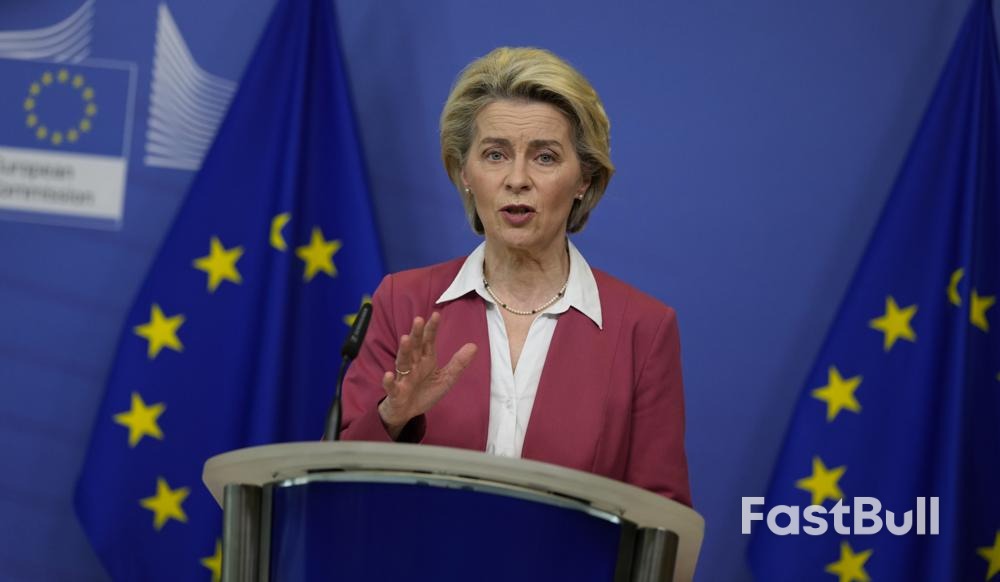
          “Chips are at the center of the global technological race. They are, of course, also the bedrock of our modern economies,” European Commission President Ursula von der Leyen said. The plan still needs the backing of the EU parliament and the member states.
          The EU move mirrors U.S. President Joe Biden’s $52 billion push to invest in a national chip-producing sector to make sure more production occurs in the United States.
          As the economy has bounced back from the COVID-19 pandemic over the past year, there has been a supply chain bottleneck for semiconductors. In Europe, some consumers have had to wait up to almost a year to get a car because of a lack of spare parts.
          “The pandemic has also painfully exposed the vulnerability of its supply chains,” von der Leyen said. “We have seen that whole production lines came to a standstill.”
          “While the demand was increasing, we could not deliver as needed because of the lack of chips,” she added. As a result, factory belt lines ground to a halt, some factories had to temporarily close and workers were left unemployed because of lack of electronic parts.
          Semiconductors are the tiny microchips that act as the brains for everything from smartphones to cars, and an extended shortage has highlighted the importance of chipmakers, most of which are based in Asia, to global supply chains.
          Von der Leyen said Europe’s Chips Act will link research, design and testing and coordinate EU and national investment. The 43 billion euro plan pools public and private funds and allows for state aid to get the massive investments off the ground.
          The prospect of massive industrial subsidies at first seems like a blast from Europe’s past, when overreaching state involvement stifled creativity and kept ambitious newcomers out of the market. The EU itself has been trying to undo this over the past decades with rigorous vetting whether state aid was not impeding competition.
          The EU Commission promised that every Chips Act project will be carefully vetted on anticompetitive grounds, but that the sheer size of setting up production facilities demand a push if the bloc is to become a global player.
          “Europe needs advanced production facilities, which come, of course, with a huge upfront cost. We are therefore adapting our state aid rules,” said von der Leyen.
          Now, EU nations only have 9% of the global market share of semiconductors, and von der Leyen wants to increase that to 20% by 2030. Because global market production is expected to about double over the same time, “it means basically quadrupling our efforts,” she said.
          She said the plan will add 15 billion euros ($17 billion) in public and private investment on top of funds already committed in the EU’s budget.
          The EU also wants to get involved in chip production for geopolitical reasons and become more resilient in its strategic independence. Still, von der Leyen did hold out her hand for cooperation.
          “Europe will build partnerships on chips with like-minded partners, for example, the United States or, for example, Japan,” she said.

          Source:AP NEWS

          Risk Warnings and Disclaimers
          You understand and acknowledge that there is a high degree of risk involved in trading. Following any strategies or investment methods may lead to potential losses. The content on the site is provided by our contributors and analysts for information purposes only. You are solely responsible for determining whether any trading assets, securities, strategy, or any other product is suitable for investing based on your own investment objectives and financial situation.
          Comments
          Add to Favorites
          Share

          Record volumes for Australian carbon markets, record prices for EU carbon

          Australia’s carbon markets have started 2022 by setting a new record for trade activity, with the highest monthly volume of carbon units changing hands, just as the price of European emissions permits approach their own major milestone.
          According to carbon markets analysts Reputex, Australia set a new monthly record for the volume of Australian Carbon Credit Units (ACCUs) traded in January, reaching almost 550,000 across spot and forward markets.
          Despite the record activity, Reputex said that prices of ACCUs had also started the year with a comparatively softer run compared to the rapid upward surge observed throughout last year, with spot prices tipping by 2.65 per cent during the previous two weeks to $54.50 per tonne.
          The price of Australian offsets underwent a dramatic increase over the 2021 year, with spot prices more than doubling in value over the year.
          Voluntary demand for ACCUs has surged due to growing interest from corporate buyers, and Reputex attributed the increase in prices to the entry of new participants in Australia’s voluntary carbon market.
          Several corporate emitters have begun accumulating ACCUs to help meet their own commitments to zero net emissions targets and in anticipation of future government policies that may mandate companies cut emissions towards a national commitment to a net zero target.
          Federal Labor has flagged that it may strengthen the existing Safeguard Mechanism should it form government after the next election, further increasing demand for ACCUs.
          The Safeguard Mechanism imposes emissions caps on Australian industrial emitters, and includes an allowance for companies to use ACCUs to offset their emissions and stay under their cap. Should the caps be tightened, some emitters may opt to purchase ACCUs to stay under their caps.
          But Reputex executive director Hugh Grossman said that a recent dip in ACCU prices, driven larger volume trades, suggested that some traders were taking an early opportunity to cash in on higher prices.
          “While the recent bull run has been driven by smaller trades of around 5,000 units, the latest price declines have come on much larger parcel sizes – around 20,000 to 50,000 – suggesting that sellers have reached a happy level of price support in the mid-50s to service larger volumes,” Grossman said.
          “Around 250,000 units have been transacted in the spot market over the last two weeks, suggesting that corporate buyers remain keen to lock in prices and build their pipeline of supply, while investors still consider the local market to be undervalued relative to more mature systems such as the EU ETS.”
          The high prices have raised the prospect that some offset projects could seek to back out of contracts for the sale of ACCUs to the federal government – most of which were entered into when ACCU prices were around $15 per tonne.
          As detailed by RenewEconomy, it may be possible for these projects to non-comply with their government projects and make a profit by selling ACCUs into the inflated spot market, even after contractual penalties are taken into account.
          Reputex pointed to the similar surge in the prices of European emissions units, known as EU emission allowances (EUAs), which were approaching record levels of €100 per tonne (A$160), as tightening caps put pressure on companies to cut emissions.
          The high prices being seen in the European scheme, Reputex said, could ultimately help drive investment in long-term emissions reduction measures. The EU emissions trading scheme was first launched in 2005 and is seen as one of the more “mature” carbon markets, having undergone several key reforms.
          “EUA prices continue to be supported by that market’s more mature policy setting, including the EU’s target to reduce emissions by 55 per cent by 2030, the expectation of higher prices to support investment in technologies to meet net-zero, such as green hydrogen, and prices needed to incentivise fuel switching,” Grossman said.
          “While the European carbon price has no direct impact on the local offset market, positive momentum may yet flow through to ACCU prices, particularly as volumes increase and new entrants look to replicate gains seen in the EU ETS.”

          Source: reneweconomy.com

          Risk Warnings and Disclaimers
          You understand and acknowledge that there is a high degree of risk involved in trading. Following any strategies or investment methods may lead to potential losses. The content on the site is provided by our contributors and analysts for information purposes only. You are solely responsible for determining whether any trading assets, securities, strategy, or any other product is suitable for investing based on your own investment objectives and financial situation.
          Comments
          Add to Favorites
          Share

          Australia to reopen borders to vaccinated travellers after two years of COVID-19

          Damon
          Australia to reopen borders to vaccinated travellers after two years of COVID-19_1
          The move effectively calls time on the last main component of Australia’s response to the COVID-19 pandemic, which it has attributed to relatively low death and infection rates. The other core strategy, stop-start lockdowns, was shelved for good in December.
          The country had taken steps in recent months to relax border controls, like allowing in skilled migrants and quarantine-free travel arrangements – “travel bubbles” – with select countries like New Zealand.
          But the reopening, which takes effect on Feb. 21, represents the first time since March 2020 that people can travel to Australia from anywhere in the world as long as they are vaccinated.
          “If you’re double-vaccinated, we look forward to welcoming you back to Australia,” Prime Minister Scott Morrison said at a media briefing in Canberra.
          The tourism industry, which has relied on the domestic market that has itself been heavily impacted by movement restrictions, welcomed the decision which comes three months before Morrison is due to face an election.
          “Over the two years since the borders have been closed the industry has been on its knees,” said Australian Tourism Export Council Managing Director Peter Shelley by phone.
          “Now we can turn our collective efforts towards rebuilding an industry that is in disrepair,” he added.
          Tourism and Transport Forum CEO Margy Osmond said the industry was “thrilled” by the reopening, but would need coordination to ensure Australia was competitive as a destination.
          “It’s not as simple as just turning on the tap and we see numbers of international tourists back where they were pre-COVID,” she told reporters.
          International and domestic tourism losses since the start of the pandemic totalled A$101.7 billion ($72 billion), according to government body Tourism Research Australia. International travel spending in Australia plunged from A$44.6 billion in the 2018-19 financial year to A$1.3 billion in 2020-21, TRA said.
          Shares of tourism-related stocks soared as investors cheered the prospect of a return to profit growth. Shares of the country’s main airline Qantas Airways Ltd jumped 5% while shares of travel agent Flight Centre Travel Group Ltd surged 8%.
          Qantas CEO Alan Joyce said in a statement the company was looking at flight schedules to determine ways to restart flights from more international locations soon.
          As elsewhere in the world, Australian COVID cases have soared in recent weeks due to the Omicron variant which medical experts say may be more transmissable but less virulent than previous strains.
          But with more than nine in 10 Australians aged over 16 fully vaccinated, new cases and hospitalisations appear to have slowed, the authorities say.
          The country reported just over 23,000 new infections on Monday, its lowest for 2022 and far from a peak of 150,000 around a month ago.
          Morrison meanwhile said the government would send up to 1,700 Australian Defence Force personnel to fill staffing shortages in the aged care sector, following complaints of understaffing and fatigue due to increased pressures brought by the pandemic.
          Around 2.4 million cases have been recorded in Australia since the first Omicron case was detected in Australia in November. Until then, Australia had counted only around 200,000 cases. Total deaths stand at 4,248 since the pandemic began.

          Source:Global NEWS

          Risk Warnings and Disclaimers
          You understand and acknowledge that there is a high degree of risk involved in trading. Following any strategies or investment methods may lead to potential losses. The content on the site is provided by our contributors and analysts for information purposes only. You are solely responsible for determining whether any trading assets, securities, strategy, or any other product is suitable for investing based on your own investment objectives and financial situation.
          Comments
          Add to Favorites
          Share

          Vietnam: Long-term plan encourages foreign investment in seaport development

          Under the Prime Minister’s decision approving the Vietnam’s seaport plan in the 2021-2030 period with a vision to 2050, seaports are divided into different groups depending on the scale and function. The seaport system is connected with railway and waterway routes as well as the national highway and local road system.
          The first group includes five northern ports in Hai Phong, Quang Ninh, Thai Binh, Nam Dinh and Ninh Binh. They are set to handle 305-357 million tonnes of cargo and 162,000-164,000 passengers by 2030, with annual growth of 5-5.3 percent and 1.5-1.6 percent, respectively, by 2050.
          The second group consists of six ports in the northern part of the central region, namely Thanh Hoa, Nghe An, Ha Tinh, Quang Binh, Quang Tri and Thua Thien-Hue; while the third one features eight ports in the southern part of the central region – Da Nang, Quang Nam, Quang Ngai, Binh Dinh, Phu Yen, Khanh Hoa, Ninh Thuan and Binh Thuan.
          The fourth group comprising five ports in Ho Chi Minh City and the southern provinces of Dong Nai, Ba Ria-Vung Tau, Binh Duong and Long An are set to handle the largest share of cargo volume – from 461-540 million tonnes – by 2030 and the goods volume going through the ports is forecast to grow 3.5-3.8 percent by 2050.
          The last one consists of 12 ports in Can Tho City and the provinces of Dong Thap, Tien Giang, Vinh Long, Benh Tre, An Giang, Hau Giang, Soc Trang, Tra Vinh, Ca Mau, Bac Lieu and Kien Giang in the Mekong Delta. They will focus on serving passenger transport with 6.1 – 6.2 million annually by 2030, the largest among the five groups.
          The planning gives priority to upgrading infrastructure of international gateway ports such as Lach Huyen Port in Hai Phong and Cai Mep Port in Ba Ria – Vung Tau. Meanwhile, appropriate mechanisms and policies will be studied to improve the international transhipment port in Van Phong, Khanh Hoa province.
          According to the planning, Vietnam has two special seaports including Hai Phong and Ba Ria – Vung Tau, 15 seaports of first class, six seaports of second class and 13 seaports of third class.
          The seaport system is expected to handle 1,140 to 1,423 million tonnes of cargo, including 38 to 47 million TEUs of container cargo, and transport about 10.1 to 10.3 million passengers.
          Total investment needed for the scheme until 2030 is about 313 trillion VND (13.79 billion USD).
          Le Tan Dat, Deputy General Director of Construction Consultation Joint Stock Company for Maritime Building held that transport connection is key in seaport operation. He lauded the planning for giving directions in forming a transport network to promote the strengths of each region and area.
          Dat noted that the planning also clarifies projects to receive capital priority in different groups, thus optimising the exploitation of the ports.
          Meanwhile, Ho Kim Lan, General Secretary of the Vietnam Seaports Association (VPA), said that the planning was based on careful calculation of the market in particular area, taking seaports as the core in the network of transport system connecting localities for highest convenience.
          Lan held that the development of the railway system in major seaport areas will help ease overload in road transport.

          Diversifying investment attraction forms

          In the 2011-2020 period, the mobilisation of capital from different sources in society in the maritime sector was conducted effectively. Among 202 trillion VND mobilised, 173 trillion came from businesses, accounting for 86 percent.
          Hoang Hong Giang, Vice Director of the Vietnam Maritime Administration, said that with the motto that seaport infrastructure should be developed one step ahead and the planning of the seaport system needs a long-term vision, policies on the diversification of capital resources for seaport development in Vietnam that were stated in the planning showed positive outcomes. So far, nearly 100 percent of Vietnam’s seaport infrastructure has been invested using capital raised from different sources in society, he noted.
          Giang said that in recent years, many big foreign players have engaged in building and exploiting seaports in Vietnam, including PSA from Singapore, APMT from Denmark, Hutchison Port Holding of Hong Kong (China), Mitsui O.S.K line from Japan, and Wanhai Lines from Taiwan (China).
          Thanks to the early opening doors to welcome foreign investors, seaport has become the leading sector in attracting foreign investment of Vietnam in the recent 10 years. With the construction of many deep-water seaports in the Cai Mep-Thi Vai and Lach Huyen areas, Vietnamese export goods have been directly transported to Europe and North America without having to transit in seaports in Singapore or Hong Kong, thus improving the competitiveness for the Vietnamese economy, he said.
          “Authorised agencies will promptly complete mechanisms to mobilise different resources inside and outside the country for the sector through suitable investment forms in line with the regulations,” Giang stated.

          Source: VietNamNet

          Risk Warnings and Disclaimers
          You understand and acknowledge that there is a high degree of risk involved in trading. Following any strategies or investment methods may lead to potential losses. The content on the site is provided by our contributors and analysts for information purposes only. You are solely responsible for determining whether any trading assets, securities, strategy, or any other product is suitable for investing based on your own investment objectives and financial situation.
          Comments
          Add to Favorites
          Share

          Small Business Owners Struggle To Remain A Step Ahead of Rising Costs

          Small Business Optimism Edges Lower in January

          The National Federation of Independent Business Small Business Optimism Index fell 1.8 points to 97.1 in January. Only 1 of the 10 Index components rose, while 7 declined and 2 were unchanged. Small business optimism has been edging lower since hitting its post lockdown peak of 104.0 in October and November 2020. While the current level is roughly in line with the survey's long-run average, business owners have become increasingly concerned about rising inflation and more specifically their ability to maintain their profit margins at a time that labor, material and other input costs are rising rapidly.

          Small Business Confidence Edges Lower

          The NFIB Small Business Optimism Index fell 1.8 points to 97.1 in January. Only 1 of the 10 Index components rose, while 7 declined and 2 were unchanged. Small business optimism has been edging lower since hitting its post lockdown peak of 104.0 in October and November 2020.
          The one component that increased was the net proportion of small business owners that expect the economy to improve over the next six months, which rose 2 pp to a still abysmal -33%, where it has more or less been since September. Pessimism about the economic outlook is primarily being driven by increasingly concerning inflation. Twenty-two percent of small business owners cited inflation as the most important problem facing their business in January, which is 19 points higher than it was last a year ago.
          The spike in inflation concerns closely follows the spike in compensation costs. A large share of small business owners also note their business is being negatively impacted by supply chain bottlenecks. The big question for small business owners in 2022 is whether they will continue to be able to remain a step ahead of surging operating costs. That challenge will be made more difficult by the wind down of monetary and fiscal stimulus.
          Small Business Owners Struggle To Remain A Step Ahead of Rising Costs_1

          Labor Remains in Short Supply

          The NFIB small business survey includes a large swath of the economy. The largest share of firms responding to the January's survey were in the retail sector (22%), followed by construction (19%), services (17%), agriculture (14%) and manufacturing (10%). All of these industries have faced persistent challenges in finding and retaining the workers they need, which has pulled compensation persistently higher.
          The employment series mostly improved nominally in January, with the proportion of small businesses reporting they had job openings they could not fill falling 2 points to 47%. Despite the nominal improvement, the proportion of business owners planning to fill open positions remains near a record high, with 26% of small businesses planning to add staff over the next 3 months. While that reading is down 2 points from December, it is just 6 points shy of its all-time high hit last August.
          Filling those positions is challenging, with 55% of those businesses trying to hire working this past month reporting they had few or no qualified applicants for the positions they were trying to fill. That was also down 2 points from December.
          Given the recent antitrust push, the precipitous drop in the share of small business owners citing competition from big business as being their most important problem is notable. The share of firms citing competition from big business as their most pressing problem fell to zero in January and is down 8 points over the past year. The all-time high for this series was 14%, which was hit in the late 1990s.
          Small Business Owners Struggle To Remain A Step Ahead of Rising Costs_2

          Staying A Step Ahead of Inflation is Challenging

          With labor in short supply, business are working harder to hold on to their existing workers. A net 50% of small business owners reported raising compensation in January, which is 2 points higher than in December, and marks the highest proportion of firms boosting compensation in the 48-year history of the survey. A net 27% of firms said they planned to raise compensation during the next 3 months, which is down 5 points from December, but remains historically high.
          The share of business owners stating that labor costs is their top business problem fell 2 points from its record-high level in December to 11%. The number would undoubtedly be higher if business were unable to pass those higher cost on to their customers. With the economy the growing solidly and inventories of so many items so low, businesses have had little difficulty passing along their higher costs. The share of businesses raising prices rose 4 points in January to 61%, which is the highest proportion of firms raising prices since the fourth quarter of 1974. When taken together with the unusually high proportion of firms raising compensation, the latest data raise the prospect of a problematic wage/price spiral, which may make inflation even hard to contain — both in an absolute sense and politically.
          The latest data suggest that inflation will get worse before it gets better. Small business also know that when inflation does get better, it will likely pressure business operating margins, which is a reason why such a large proportion of business owners remain pessimistic about the near-term economic outlook.

          Source:WELLS FARGO

          Risk Warnings and Disclaimers
          You understand and acknowledge that there is a high degree of risk involved in trading. Following any strategies or investment methods may lead to potential losses. The content on the site is provided by our contributors and analysts for information purposes only. You are solely responsible for determining whether any trading assets, securities, strategy, or any other product is suitable for investing based on your own investment objectives and financial situation.
          Comments
          Add to Favorites
          Share

          Ukraine’s Zelensky Wants to Fend Off Russia—and America, Too

          With Russian military forces gathering on three sides of Ukraine last month, advisers to President Volodymyr Zelensky urged a low-key response. His top national security adviser, in a cellphone call, counseled him with two words: “Olympian calm.”
          The following day, Mr. Zelensky addressed the nation on television and said the threat of war was no greater than any other time since Russian President Vladimir Putin invaded portions of the country in 2014.
          This is the tack chosen by Mr. Zelensky, a 44-year-old ex-comic with no political experience prior to his election, in his bid to fend off both Russian aggression as well as the American response it has kicked off. Caught between two powers increasingly at odds with each other, Mr. Zelensky is adamant he can prevent an invasion on his terms. The question hovering over his jittery nation is whether he is right.
          The Ukrainian’s approach to Moscow has toughened since he took office in 2019, but central elements remain. He picks only certain battles with the Kremlin, leaving the door ajar for diplomacy. He urges calm to keep Ukraine and its economy secure. And he’s keen to avoid being big-footed by Western powers.
          Mr. Zelensky is the sixth Ukrainian president caught between Moscow and Washington since the country’s independence from the Soviet Union. The U.S. and its allies are trying to avert a potential Russian attack that President Biden has described as potentially the largest land invasion since World War II. Mr. Putin wants to yank his nation’s former vassal away from the West, if not through an invasion then by wrecking its finances.
          “He wants to project determination and calm because the threat the Russians are posing is also having an effect on the economy,” said William Taylor, a U.S. ambassador to Ukraine under former Presidents George W. Bush and Barack Obama, who met with Mr. Zelensky late last month. “On the other hand, he has to project calm, determination and resolve to Putin to stare him down,” said Mr. Taylor, who also served as acting ambassador to Ukraine during the Trump administration.Ukraine’s Zelensky Wants to Fend Off Russia—and America, Too_1
          Mr. Biden spoke by phone with Mr. Zelensky not long after the TV appearance to warn about the increased security threat from Russia, U.S. officials said. When Mr. Zelensky argued that the threat has been constant since 2014, Mr. Biden disagreed, the officials said. Russian troops were not far away in southern Belarus, the U.S. president noted, posing a potential game-changer.
          Mr. Zelensky still believes an invasion is unlikely, according to people familiar with his thinking, and worries that dire public warnings from the U.S. about a possible invasion are serving to amplify Russian efforts to destabilize Ukraine and its economy.
          A spokesman for the Ukrainian president declined to answer a list of questions for this article.
          Allies say Mr. Zelensky is a sharp, creative political outsider who has shed some of the naiveté he displayed in asserting, when he took office in 2019, that he could negotiate a peace deal with Mr. Putin. They say his approach has merit, noting the national currency, the hryvnia, has stabilized. In January, the central bank spent more than $1 billion to prop up the value of the currency. The military is firmly behind Mr. Zelensky, who has boosted military spending and promised higher salaries and benefits, Ukrainian officials said.
          Opponents, including some former advisers, say he is vain, vengeful and increasingly isolated. His predecessor and the current opposition leader, Petro Poroshenko, said in a January interview that Mr. Zelensky is fumbling his response to Russia’s military buildup. Last month, as Mr. Zelensky met with U.S. Secretary of State Antony Blinken, thousands of Poroshenko supporters demonstrated against Kyiv’s investigation of the ex-president in a treason case, which Mr. Poroshenko says is a fabrication.
          U.S. officials said Mr. Biden has noted in private conversations that Mr. Zelensky faces seemingly unending challenges, including corruption, tension with Russia and a vocal opposition. Washington has tried unsuccessfully to quell a deepening feud between Mr. Zelensky and Mr. Poroshenko, the incumbent he defeated.
          Even by the standards of Ukraine—whose leaders have included a former rocket-factory boss, a twice-jailed ex-transport manager and a confectionary tycoon—Mr. Zelensky stands out. Born in a rough, industrial town in central Ukraine, he excelled at school and stood out on gang-infested streets wearing red socks and earrings, childhood friends recalled.
          Mr. Zelensky built a career on the Ukrainian and Russian comedy circuits. His role in a sitcom as an honest schoolteacher-turned-president propelled him to a landslide victory in the April 2019 election, where he ran as an outsider who would bring peace and uproot Ukraine’s corrupt political system.
          His ascent evoked fascination abroad. Then-President Donald Trump reached him on an aide’s cellphone to congratulate him shortly after Mr. Poroshenko conceded on election night.Ukraine’s Zelensky Wants to Fend Off Russia—and America, Too_2
          Mr. Zelensky blamed Mr. Poroshenko for poor relations with Russia, and set out to fix them through a personal connection with Mr. Putin. In a victory speech, Mr. Zelensky portrayed his victory as one for Ukraine’s vibrant if unruly democracy in a region dominated by authoritarian leaders, telling other former Soviet citizens: “Everything is possible.”
          Mr. Putin didn’t call. He signed a decree easing the path to Russian citizenship for residents of areas in the Donbas region of eastern Ukraine, controlled by Russian-led militants since 2014. “It was Putin setting the agenda,” said Oleksandr Danylyuk, Mr. Zelensky’s national security adviser until October 2019.
          After three months of silence from the Russian president Mr. Zelensky picked up the phone. “He was sure he could make a deal with Mr. Putin,” said one former adviser. “I think he still does.”
          Short of a peace deal, Messrs. Zelensky and Putin in 2019 agreed to a prisoner swap, a transaction that let each man size up the other. Mr. Zelensky learned that the Kremlin would negotiate on at least some things; Mr. Putin learned that he had some control over Mr. Zelensky’s ability to deliver on his electoral promises.
          Mr. Zelensky faced a sharp learning curve. Aides coached him on essential matters of governance, such as the structure and functions of state institutions. Some advisers were enthused by his collegial style, eagerness to learn and apparent aversion to the kind of back-room deals with tycoons and other power brokers that marred predecessors’ terms. Others close to him worried about large, unwieldy meetings and his connections with a powerful businessman who has since been banned from the U.S.
          U.S. ties, meanwhile, were strained. After Kyiv failed to persuade the Obama administration to deliver lethal aid in the form of Javelin antitank missiles, Mr. Trump in 2017 reluctantly approved a transfer under Mr. Zelensky’s predecessor. However, Mr. Trump had put other forms of military aid on hold in 2019. Around that time, Mr. Trump had urged Mr. Zelensky in a phone call to pursue a probe into Mr. Biden, then a likely Democratic challenger, and his son’s activities in Ukraine. That request to Mr. Zelensky was at the heart of Mr. Trump’s first impeachment. He was acquitted in the Senate.Ukraine’s Zelensky Wants to Fend Off Russia—and America, Too_3
          When Mr. Zelensky first met Mr. Trump in New York in September 2019, the U.S. president counseled him to seek a deal with Mr. Putin, who Mr. Trump assessed was smarting from economic sanctions.
          Soon after, Russia, Ukraine and the separatists agreed a path toward implementing a peace deal signed in 2015. The agreement halted large-scale fighting but failed to reintegrate areas out of the government’s control. They inched toward a new timetable for the steps. It was the first major progress on the deal in years, and signaled that peace in Ukraine’s east was a possibility, albeit still a distant one.
          But opposition was rising in Kyiv. Thousands of protesters, including veterans, took to the streets to accuse Mr. Zelensky of weakness. Some were incensed by a deal to pull forces back in some areas. Political opponents and media commentators argued that Mr. Putin was outfoxing the novice president.
          Mr. Zelensky, accustomed to the applause of fans, was stung by the criticism. He said in a televised address that there would be “no surrender” and no deal without public consent. Mr. Putin publicly questioned his political will to implement the deal.
          Former aides say Mr. Zelensky learned a lesson from the episode. He pressed ahead with talks but adopted a firmer tone. That November, a meeting with Mr. Putin and the leaders of France and Germany yielded a vague commitment to a deal, but a concrete date only for a cease-fire. Mr. Zelensky and his advisers began speaking publicly of an unspecified Plan B if peace wasn’t achieved within a year.
          Russia agreed to a further prisoner swap and its state-controlled gas company paid Ukraine $2.9 billion to settle debts for gas transit—compromises that former Zelensky advisers say were aimed at seducing the president into big concessions. But talks petered out as Mr. Zelensky came to acknowledge that Mr. Putin’s aim was to gain a veto over Ukraine’s future.
          “It was a maturing process,” said Mr. Taylor, the former ambassador. “He learned that Putin was not for negotiating, and that Ukrainian people cared about Donbas.”
          Relations with the U.S., meanwhile, were in limbo, as Ukrainian officials tried not to get dragged into the U.S. election.
          One former adviser recalled taking two folders to meetings with U.S. officials, one tackling the economy, security and energy issues and the other on how to navigate the run-up to the election. “We never opened the first folder until Biden was inaugurated,” the adviser said.Ukraine’s Zelensky Wants to Fend Off Russia—and America, Too_4
          After Mr. Biden took office in January 2021, Mr. Zelensky’s security council placed Viktor Medvedchuk, a pro-Russian lawmaker and close personal friend of Mr. Putin’s, on its sanctions list and banned his three television channels. Ukraine’s top prosecutor later accused Mr. Medvedchuk of high treason, and a court placed him under house arrest. Mr. Medvedchuk denies wrongdoing.
          Then, Mr. Zelensky signed a decree launching a diplomatic initiative called the Crimea Platform, aimed at taking steps toward reclaiming Crimea, which Russia seized in 2014.
          Moscow had already all but given up on making progress in talks, saying Mr. Zelensky lacked the will or was under sway of nationalists, a catchall term Russian officials often use to describe pro-Western Ukrainians. But now the Kremlin was furious.
          Mr. Putin publicly accused Mr. Zelensky of building an “anti-Russia.” Foreign Minister Sergei Lavrov called him “a pianist” in a recent radio interview, a reference to a well-known comedy routine where Mr. Zelensky pretends to play a piano with his penis.
          Russia began staging military exercises around Ukraine, involving tens of thousands of troops. Mr. Putin withdrew some of them after Mr. Biden agreed to a summit.
          Offering a small olive branch to Moscow, the administration declined to levy sanctions on Russia’s nearly complete Nord Stream 2 gas pipeline to Germany. If the pipeline opens, Russia will be able to cut gas shipments to Europe via Ukraine and payments for them. Ukrainian officials fear that would make them more vulnerable.
          The U.S. move disappointed Mr. Zelensky. He began pushing vocally for membership in the North Atlantic Treaty Organization. The alliance had dangled membership in 2008 without setting a timeline. He was under no illusions that Ukraine would be offered membership, but wanted to expose what he saw as the West’s insincerity and to appear strong by making demands rather than pleading, former aides said.
          Russian troops and equipment remained near Ukraine’s borders. “Putin saw the Nord Stream 2 decision as a weakness and started pushing,” said a former Zelensky adviser.
          When reports emerged in October of a fresh Russian buildup, Ukrainian officials played them down. In January, Washington sharpened its warnings and put U.S. troops on high alert, pointing to Moscow’s planned military exercises in Belarus, which it said poses a serious threat not only to Kyiv, but all of Eastern Europe.
          Mr. Zelensky argued that the U.S. was misreading the situation. His administration was particularly vexed, senior Ukrainian officials said, by the American decision to remove diplomats’ families and nonessential personnel from Kyiv, giving the impression that the capital was about to fall like Kabul a few months earlier. The U.S. move, and several governments raising their risk assessments of Ukraine, led investors to pull money from the country.
          “We don’t have any misunderstandings with President Biden,” Mr. Zelensky said at a press conference last month. “I just deeply understand what’s happening in my country, just as he does with the U.S.”

          Source: The Wall Street Journal.

          Risk Warnings and Disclaimers
          You understand and acknowledge that there is a high degree of risk involved in trading. Following any strategies or investment methods may lead to potential losses. The content on the site is provided by our contributors and analysts for information purposes only. You are solely responsible for determining whether any trading assets, securities, strategy, or any other product is suitable for investing based on your own investment objectives and financial situation.
          Comments
          Add to Favorites
          Share

          Macron claims Putin gave him personal assurances on Ukraine

          Emmanuel Macron completed a whirlwind diplomatic mission to Moscow and Kyiv on Tuesday, claiming that he had received personal assurances from Vladimir Putin that Russia would not worsen the crisis over Ukraine.
          Speaking after talks with Ukraine’s president, Volodymyr Zelenskiy, in Kyiv, Macron said Putin had made clear during discussions on Monday that he would not be the one to escalate tensions. The standoff could take months to resolve, Macron added.
          Zelenskiy, however, said he was sceptical about his Russian counterpart’s apparent commitment to peace. “I do not really trust words. I believe that every politician can be transparent by taking concrete steps,” Zelenskiy said at a joint press conference with Macron. “Openness was great” so long as it was “not a game”, Zelenskiy added.
          On Tuesday, six Russian warships and a submarine passed through the Dardanelles strait, heading towards the Black Sea from the Mediterranean. The Russian vessels, landing ships used for amphibious assault, began arriving in the Black Sea on Wednesday.
          Josep Borrell, the EU foreign policy chief, said the arrival of the ships, adding to Russia’s already substantial firepower, showed that “the visit of president Macron was important, but it has not produced a miracle.”
          Macron flew from Ukraine to Berlin for a meeting with German and Polish leaders. The German chancellor, Olaf Scholz, said: “Our appraisal of the situation is united, as is our position on this. Any further attack on the sovereignty and territorial integrity of Ukraine is unacceptable and will draw wide-reaching consequences for Russia – politically, economically and geo-strategically.”
          After a meeting in Washington with Joe Biden on Monday, Scholz refused to say definitively whether the Nord Stream 2 gas pipeline between Russia and Germany would be shut down in the event of an invasion. However, the US Senate Republican leader, Mitch McConnell, said that the chancellor had given that assurance privately at a dinner on Monday night.
          “The good news is, he confirmed what President Biden said yesterday: that if the invasion occurs, Nord Stream 2 will not go forward,” McConnell said. “The bad news is that would be after an invasion.”
          Macron insisted on Tuesday that the Minsk agreements signed by Ukraine in 2014 and 2015 at a time of military defeat were the best way out of the conflict. But Kyiv and Moscow do not agree on what the deal means.
          Macron claims Putin gave him personal assurances on Ukraine_1
          The Kremlin says Zelenskiy’s government needs to recognise pro-Moscow separatists in the eastern territories of Donetsk and Luhansk. Kyiv insists the separatists need to disarm before any political solution can be found, and officials believe implementing the accords could lead to the collapse of the Ukrainian state.
          Asked about Ukraine’s reluctance to implement the Minsk accords, Putin had responded on Monday night with a sinister-seeming phrase: “Like it or not, you’ll have to tolerate it, my beauty.”
          Switching to Russian and addressing Putin directly on Tuesday, Zelenskiy said Ukraine was indeed “tolerant” because it was not replying to Kremlin provocations. “There’s wisdom in this tolerance,” he said.
          It was not clear whether two days of intense French diplomacy had brought about modest concessions by Moscow, as Macron intimated, or nothing of the kind. French officials said Putin had pledged not to carry out any new “military initiatives”, after six hours of frank talks with Macron.
          But the Kremlin quickly moved to ridicule any suggestion that it had made concessions.
          In a call with reporters on Tuesday, Putin’s spokesperson, Dmitry Peskov, denied that Putin had agreed with Macron to de-escalate. “This is wrong in its essence. Moscow and Paris couldn’t do any deals. It’s simply impossible,” Peskov said, insinuating that it would be pointless to make a deal with France.
          Peskov added: “France is a leading country in the EU, France is a member of Nato, but Paris is not the leader there. In this bloc, a very different country is in charge. So, what deals can we talk about?”
          In Kyiv, Macron clarified reports that he had suggested that “Finlandising” Ukraine might resolve the crisis. The term Findlandisation refers to Helsinki’s non-aligned status during the cold war.
          Asked at the press conference in Kyiv about “Finlandisation”, Macron said he had “never used this formula”, and declined to repeat the word. The Normandy format – featuring French, German, Russian and Ukrainian officials – was the best way of making progress, he said.
          The Biden administration has rejected Putin’s demand that Nato rule out membership for Ukraine.
          Ukraine’s foreign minister, Dmytro Kuleba, said his government was not prepared to ditch its long-held red lines. These included Ukraine’s right to make its own security choices, including over Nato, and its refusal to hold negotiations with Moscow-backed separatists. “No one will be able to force us to cross them,” he said on Tuesday.
          The French officials said that during the talks Macron had agreed to “open dialogue on strategic questions”, but there were no details on what that dialogue might involve.
          Macron is the most senior western leader to meet Putin since Moscow began massing troops last autumn near Ukraine. The Kremlin has deployed and estimated 140,000 soldiers along Ukraine’s borders and will begin major military exercises on Thursday in Belarus, within striking distance of Kyiv. These are due to finish on 20 February.
          Even if the Kremlin does then withdraw tactical battalions from Belarus, it is unclear if they would return to their bases in the far east of Russia or remain closer to Ukraine.
          Western states have been saying for the past several weeks that they fear Russia is preparing to invade. Putin denies this but has previously said he could take “military-technical measures” if his security demands are not met. He wants Nato to return to its 1997 levels of deployment and to pull out of central and eastern Europe.
          Ukraine’s defence minister, Oleksii Reznikov, said Kyiv would carry out its own parallel exercises at the same time as Russia and Belarus. These would take place across the country, including in the Chernihiv region, close to the Belarus border. Reznikov estimated Russia had deployed 140,000 soldiers and 72 battalion tactical groups, 11 of them in Belarus.
          Orysia Lutsevych, the head of the Ukraine forum at the Chatham House thinktank, said Putin was notching up a series of “tactical wins” over the White House and its western allies. “His strategy is to plant these seeds of discord,” she said, adding that he may yet string this crisis out for months.
          She said: “Putin offers the miracle of a possible solution. It’s very alluring for each western leader to say: ‘I found it! I’m the saviour of Europe.’ He plays on people’s egos. This is especially true with Macron.”
          Speaking alongside Macron in the Kremlin on Monday, Putin claimed that if Ukraine joined Nato, it would inevitably lead to conflict between the alliance and Russia, given Ukraine’s claims on Crimea, which Russia annexed in 2014.
          “Ask your readers, viewers, internet users: do you want France to fight with Russia? But that’s the way it will be,” said Putin, angrily lecturing a French journalist.

          Source: The Guardian.

          Risk Warnings and Disclaimers
          You understand and acknowledge that there is a high degree of risk involved in trading. Following any strategies or investment methods may lead to potential losses. The content on the site is provided by our contributors and analysts for information purposes only. You are solely responsible for determining whether any trading assets, securities, strategy, or any other product is suitable for investing based on your own investment objectives and financial situation.
          Comments
          Add to Favorites
          Share
          FastBull
          Copyright © 2025 FastBull Ltd

          728 RM B 7/F GEE LOK IND BLDG NO 34 HUNG TO RD KWUN TONG KLN HONG KONG

          TelegramInstagramTwitterfacebooklinkedin
          App Store Google Play Google Play
          Products
          Charts

          Chats

          Q&A with Experts
          Screeners
          Economic Calendar
          Data
          Tools
          Membership
          Features
          Function
          Markets
          Copy Trading
          Latest Signals
          Contests
          News
          Analysis
          24/7
          Columns
          Education
          Company
          Careers
          About Us
          Contact Us
          Advertising
          Help Center
          Feedback
          User Agreement
          Privacy Policy
          Business

          White Label

          Data API

          Web Plug-ins

          Poster Maker

          Affiliate Program

          Risk Disclosure

          The risk of loss in trading financial instruments such as stocks, FX, commodities, futures, bonds, ETFs and crypto can be substantial. You may sustain a total loss of the funds that you deposit with your broker. Therefore, you should carefully consider whether such trading is suitable for you in light of your circumstances and financial resources.

          No decision to invest should be made without thoroughly conducting due diligence by yourself or consulting with your financial advisors. Our web content might not suit you since we don't know your financial conditions and investment needs. Our financial information might have latency or contain inaccuracy, so you should be fully responsible for any of your trading and investment decisions. The company will not be responsible for your capital loss.

          Without getting permission from the website, you are not allowed to copy the website's graphics, texts, or trademarks. Intellectual property rights in the content or data incorporated into this website belong to its providers and exchange merchants.

          Not Logged In

          Log in to access more features

          FastBull Membership

          Not yet

          Purchase

          Become a signal provider
          Help Center
          Customer Service
          Dark Mode
          Price Up/Down Colors

          Log In

          Sign Up

          Position
          Layout
          Fullscreen
          Default to Chart
          The chart page opens by default when you visit fastbull.com