- AUDUSD
- XAUUSD
- XAGUSD
- WTI


Markets
Analysis
User
24/7
Economic Calendar
Education
Data
- Names
- Latest
- Prev















Is the crypto com supercharger a smart liquidity play or a low-yield trap? We dissect the mathematical reality and dual-asset risks for 2026.
As centralized crypto platforms evolve their yield generation products, the Crypto.com Supercharger remains a popular but heavily debated tool for maximizing passive returns on Cronos (CRO). While it promises flexible liquidity and exposure to trending tokens without restrictive lock-up periods, determining its actual value requires looking past the promotional double-digit yields. This guide breaks down the precise mechanics, realistic returns, and hidden dual-asset risks of the Supercharger to help you decide if deploying your capital into this specific yield vehicle is a mathematically sound strategy for 2026.
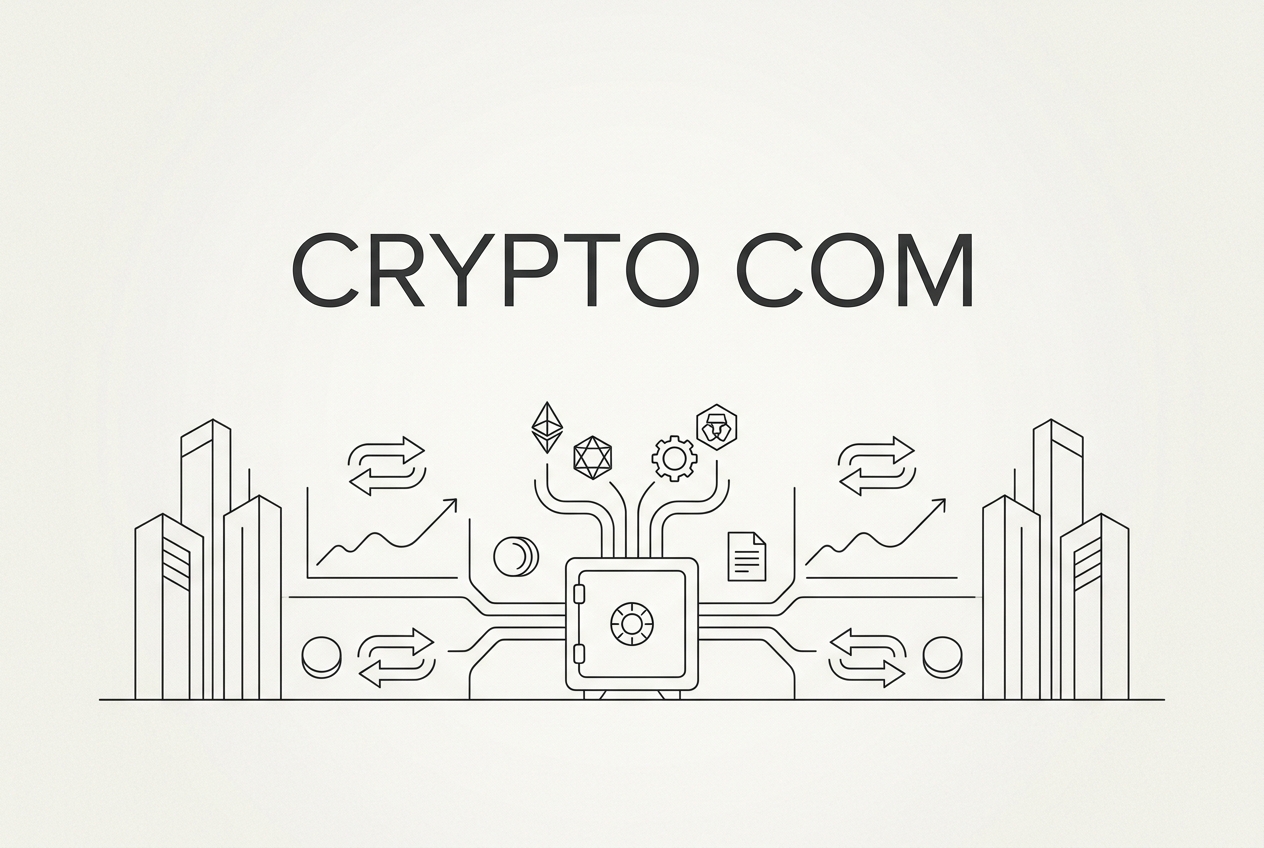
The Crypto.com Supercharger is a flexible liquidity mining pool that allows users to deposit Cronos (CRO) to farm alternative cryptocurrencies. Available via the Crypto.com App and Exchange, it functions as a low-risk yield farming vehicle where deposits generate fractional payouts in a rotating "target token."
Unlike fixed-term staking products, the Supercharger operates with zero lock-up restrictions. Users can deposit and withdraw their CRO at any time without penalty. However, this flexibility comes with an explicit trade-off: when evaluating the Crypto.com Supercharger vs Earn, the base APY in the Supercharger is typically much lower than what users can secure by committing to a 1-month or 3-month term in Earn or by staking CRO directly on the Cronos POS chain.
The Supercharger operates on a continuous, two-phase cycle. The platform designates a target cryptocurrency for a specific timeframe, measures how much CRO users supply to the pool, and then distributes the target token proportionally based on that supplied liquidity.
Rewards are generated based on a user's average hourly CRO contribution relative to the total pool size across a defined time window. The process requires active participation and follows a strict mechanical timeline:
To achieve the double-digit yields often advertised in promotional materials, users typically need a Crypto.com Supercharger booster. The base Crypto.com Supercharger APY generally hovers between 1.5% and 5%. The advertised high yields (e.g., 20%+) are usually restricted to a small subset of users who win a lottery multiplier (often 10x) by holding specific Crypto.com NFTs, such as "Loaded Lions."
Historically, Crypto.com has used the Supercharger to distribute a mix of blue-chip assets, layer-1 network tokens, and highly speculative meme or gaming coins. The selection process typically mirrors broader market cycles or coincides with new asset listings on the Crypto.com Exchange.
Past events demonstrate three distinct categories of target tokens, each carrying different volatility and yield profiles for the end user:
| Token Category | Examples from Past Events | Historical Base APY Range | Asset Profile & Volatility |
|---|---|---|---|
| Blue-Chip Assets | Bitcoin (BTC), Ethereum (ETH) | 1.5% – 3.0% | High liquidity, lowest volatility. Rewards preserve value well but offer minimal yield for low-CRO depositors. |
| Layer-1 & Infra | Polkadot (DOT), Polygon (MATIC), Avalanche (AVAX) | 2.5% – 5.0% | Medium volatility. Offers exposure to competing smart-contract networks without requiring capital rotation. |
| Gaming, DeFi & Meme | Shiba Inu (SHIB), Enjin (ENJ), Decentraland (MANA) | 3.5% – 6.0%+ | High volatility. Higher base yields are common, but the fiat value of the daily payouts can fluctuate wildly during the Reward Period. |
When assessing whether a specific Supercharger event is worth it, investors must calculate the absolute dollar yield. For instance, a 3% APY on a 10,000 CRO deposit (roughly $900 USD at a $0.09 CRO price) yields approximately $2.25 worth of the target token over a 30-day event. For retail investors with smaller balances, the opportunity cost of bypassing standard CRO DeFi staking—which often yields 7% to 9% APY—frequently outweighs the benefit of earning micro-allocations of alternative tokens.
Beyond the specific assets offered, the most critical factor for investors is the realistic yield they can achieve. Most participants can expect an annualized yield between 1.5% and 3% when using the Crypto.com Supercharger. While promotional materials frequently highlight APYs of 15% to 30%, these top-tier rates rely on the aforementioned "Booster Bonus"—a lottery system where only a handful of users receive a 10x or 20x multiplier on their base earnings. For the vast majority of retail participants, the yield is equivalent to the un-boosted baseline.
As established, the reward pool is distributed based on your time-weighted liquidity score, meaning your share depends on both how much you deposit and how long it stays in the pool. To determine the precise payout, Crypto.com relies on the following exact mechanism over the designated Charging Period:
Depositing more CRO increases your absolute payout in the reward token, but it does not improve your percentage yield (APY). Unlike Crypto.com Earn, which historically offered higher APY tiers for users who locked large amounts of CRO for elite Visa cards, the Supercharger applies the exact same base rate to every participant.
Because the system is strictly proportional, massive deposits from large holders actually dilute the pool. If high-net-worth users flood a specific event, the total pool size inflates, compressing the APY for retail participants regardless of their individual deposit size. Furthermore, because there is no maximum allocation limit, the final yield remains entirely unpredictable until the Charging Period officially closes.
The Supercharger offers the lowest yield among Crypto.com's native earning options, trading high returns for absolute liquidity. For users looking to generate yield on CRO specifically, the platform provides three distinct avenues, each carrying different lockup requirements and baseline rates.
| Feature | Crypto.com Supercharger | Crypto.com Earn (App) | On-Chain Staking (DeFi Wallet) |
|---|---|---|---|
| Realistic APY (CRO) | 1.5% – 3.0% (variable) | 2.0% – 5.0% (fixed tiers) | ~4.6% (network driven) |
| Liquidity / Lockup | Fully flexible; withdraw anytime | Flexible, 1-month, or 3-month locks | 28-day unbonding period |
| Reward Payout | Daily (in a different mined token) | Weekly (in CRO) | Continuous (in CRO) |
| Custody Risk | Centralized (exchange holds funds) | Centralized (exchange holds funds) | Non-custodial (you hold keys) |
| Primary Advantage | Zero lockups while mining altcoins | Predictable rates on centralized app | Highest baseline yield |
Investors prioritizing maximum yield on CRO typically migrate to on-chain staking via the DeFi Wallet to capture protocol-level inflation rewards. The Supercharger serves best as a temporary parking spot for idle CRO that a user intends to sell or trade in the short term, avoiding the strict 28-day unbonding penalty inherent to decentralized staking.
Evaluating Crypto.com Supercharger risks requires calculating dual-asset exposure and the opportunity cost of your capital. The platform markets this feature as a flexible, zero-fee liquidity mining alternative, but users face two distinct threats: the fiat depreciation of the CRO principal and yield dilution from an oversubscribed pool. A direct comparison of Crypto.com Supercharger vs Earn or on-chain DeFi staking reveals that the Supercharger trades guaranteed baseline yields for liquidity and exposure to trending tokens.
If the price of your deposited CRO declines during the Charging Period, your fiat principal drops, but your fractional share of the reward pool remains unchanged. The Supercharger calculates your allocation based on the total number of CRO tokens provided relative to the pool size, relying on hourly snapshots of your token balance, not its dollar value.
However, this structure introduces significant dual-asset risk. You are holding a highly volatile asset (CRO) to generate yield in a secondary asset (such as BTC, ETH, or SHIB). Because the Crypto.com Supercharger APY is typically variable and heavily diluted by the sheer volume of participating users, the generated yield rarely offsets structural declines in CRO's price.
Consider the mathematical threshold required to break even. If you deposit 10,000 CRO at $0.10 ($1,000 total principal) into a 30-day BTC event yielding an annualized 5%, you earn roughly $4.10 in Bitcoin. If CRO's price drops by just 0.5% to $0.0995 during that month, your principal loses $5. This minor price fluctuation instantly entirely wipes out a month of yield, making the strategy viable only if you are already structurally long on CRO and indifferent to its short-term fiat volatility.
No, the Crypto.com Supercharger does not impose hard lock-ups on your principal, but as noted, it utilizes a strict administrative structure spanning the Charging and Reward periods that can penalize inattentive users.
A critical operational detail often misunderstood by retail users is the separation of capital during the Reward Period. You do not need to keep your CRO in the Supercharger during the Reward phase to receive payouts. Once the Charging Period concludes, your final liquidity score is locked. You can immediately withdraw your CRO, sell it, or move it to standard staking, while still receiving the daily fractional drops of the rewarded token.
For most investors seeking to maximize yield on their Cronos (CRO) holdings, the Crypto.com Supercharger is no longer the optimal vehicle. However, it remains a highly utilitarian tool for a specific profile: risk-averse holders who demand immediate liquidity.
To determine if the Crypto.com Supercharger is worth it, users must compare it directly against the platform’s alternative yield products. The decision comes down to a strict trade-off between yield and flexibility.
| Yield Vehicle | Typical APY Profile | Lockup Period | Asset Earned |
|---|---|---|---|
| Supercharger | 1.5% – 3.0% (Base) Up to 40% (Boosted) | None (100% liquid) | Variable (BTC, ETH, Altcoins) |
| Crypto.com Earn (App) | 4.0% – 20.0% (Depends on term/tier) | 1, 3, or 12 months | CRO |
| Onchain DeFi Staking | ~7.0% – 8.0% | 28-day unbonding | CRO |
Participants sacrifice roughly 500 to 1,500 basis points of annualized yield in exchange for zero lock-up risk. When comparing the Crypto.com Supercharger vs Earn, the Supercharger only wins if you place a premium on the ability to exit your position tomorrow morning. If you do not need immediate access to your capital, native staking or fixed-term Earn allocations mathematically outperform it.
The base return profile of the Supercharger has progressively worsened for the average retail investor, even as the top-line advertised metrics appear unchanged. Crypto.com continues to market events with headlines of "Up to 30% APY" or "10x Booster Bonuses," but these figures mask a tiered reality.
As previously established, to achieve the advertised maximum APY, users must either win a randomized lottery multiplier or hold specific platform NFTs like Loaded Lions. For the remaining 99% of the liquidity pool, the base rate routinely settles between 1.5% and 3.0% annualized. When running a Crypto.com Supercharger calculator projection, this base rate is the only reliable input for standard users.
Furthermore, the mechanics of the Reward Period introduce secondary price friction. After the 30- to 45-day "Charging Period," rewards are paid out daily over the subsequent 30 to 45 days. Because recent Supercharger events frequently rotate through high-volatility altcoins and meme tokens alongside stalwarts like BTC and ETH, the fiat value of your pending rewards can fluctuate wildly before you take full possession of them. The primary Crypto.com Supercharger risks lie in this opportunity cost and the volatility of the rewarded token, as the principal CRO remains fully intact and unslashed.
The primary beneficiaries of the Supercharger are users parking idle CRO while waiting for a specific price action or platform upgrade. It is not designed for aggressive capital compounding.
If you are buying CRO specifically to use the Supercharger, the math rarely justifies the exposure. However, if you already hold the token, the mechanism serves a highly specific demographic:
Crypto.com Supercharger is a flexible liquidity mining platform available on the Crypto.com App and Exchange. Users can deposit supported tokens, primarily CRO, into designated event pools to earn crypto rewards. In exchange for providing this liquidity, participants receive allocations of popular or trending decentralized finance (DeFi) tokens.
Whether the Supercharger is beneficial depends on your individual investment goals and risk tolerance. It offers a user-friendly, flexible way to passively earn new tokens without any fees or lock-up periods. However, the variable reward rates can sometimes be lower than what might be earned through traditional fixed-term staking or decentralized finance (DeFi) alternatives.
To withdraw funds, log in to the Crypto.com App or Exchange and navigate to your active Supercharger event. Tap the "Withdraw" option or the minus ("-") button next to your staked allocation. Enter the amount you wish to remove and confirm the transaction, which will immediately return the funds to your standard wallet.
The Supercharger cycle operates in two main phases: the Charging Period and the Reward Period. During the Charging Period, users deposit tokens into the liquidity pool, and their time-weighted average share of the pool is calculated. Once the Reward Period begins, users automatically receive daily payouts of the event's featured token based on the liquidity score they established.
The Crypto.com Supercharger prioritizes absolute liquidity and asset flexibility over aggressive yield generation. For investors holding Cronos long-term, decentralized on-chain staking or fixed-term Earn allocations mathematically outperform the fractional altcoin payouts provided by the Supercharger. However, for users accumulating CRO toward a Visa card upgrade or seeking a temporary, zero-friction parking spot for their capital, the protocol remains a highly practical tool for capturing passive returns while retaining immediate access to funds.

728 RM B 7/F GEE LOK IND BLDG NO 34 HUNG TO RD KWUN TONG KLN HONG KONG





The risk of loss in trading financial instruments such as stocks, FX, commodities, futures, bonds, ETFs and crypto can be substantial. You may sustain a total loss of the funds that you deposit with your broker. Therefore, you should carefully consider whether such trading is suitable for you in light of your circumstances and financial resources.
No decision to invest should be made without thoroughly conducting due diligence by yourself or consulting with your financial advisors. Our web content might not suit you since we don't know your financial conditions and investment needs. Our financial information might have latency or contain inaccuracy, so you should be fully responsible for any of your trading and investment decisions. The company will not be responsible for your capital loss.
Without getting permission from the website, you are not allowed to copy the website's graphics, texts, or trademarks. Intellectual property rights in the content or data incorporated into this website belong to its providers and exchange merchants.
Not Logged In
Log in to access more features


Log In
Sign Up