- XAUUSD
- XAGUSD
- WTI
- USDX


Markets
Analysis
User
24/7
Economic Calendar
Education
Data
- Names
- Latest
- Prev





 @游客4482336 其实你不要讲这么久的时间我们讲日内就好了




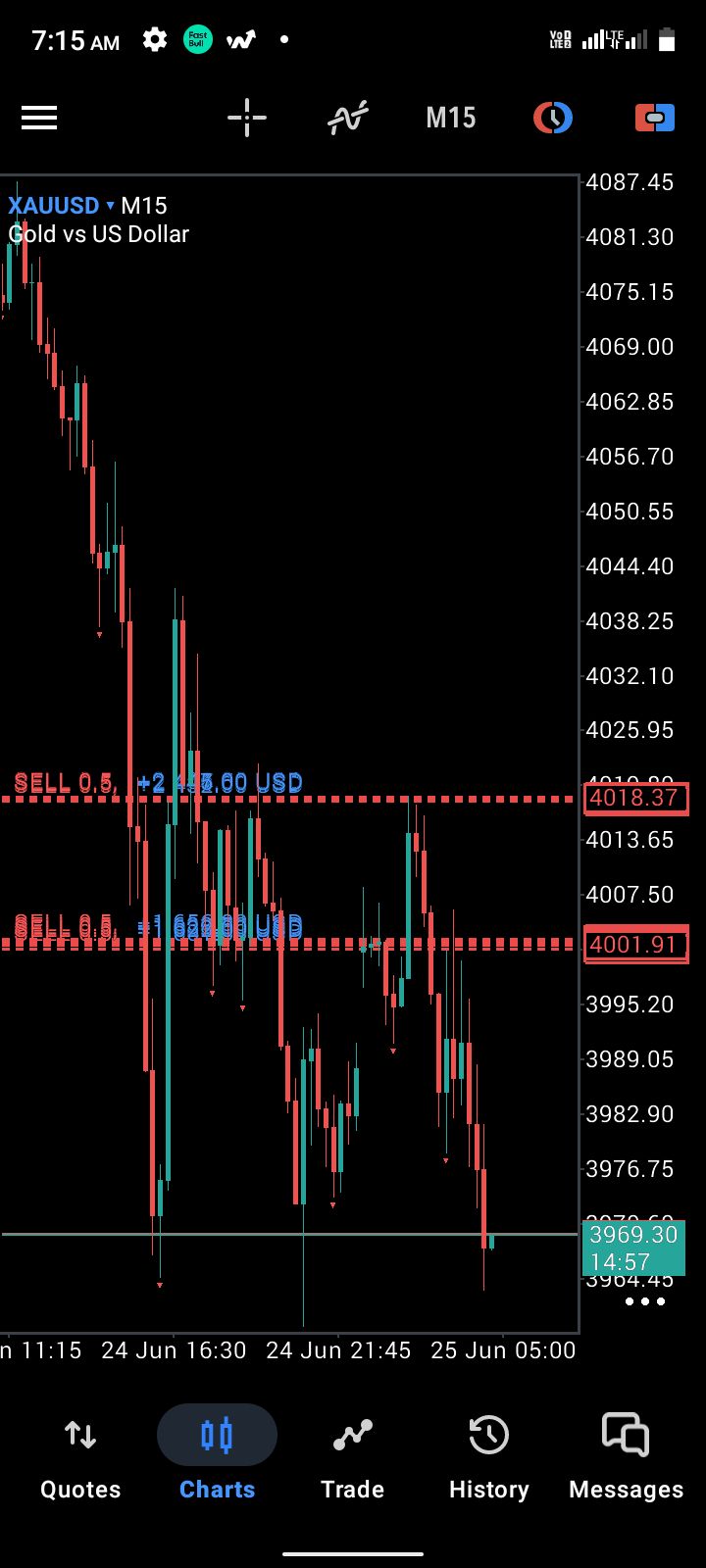
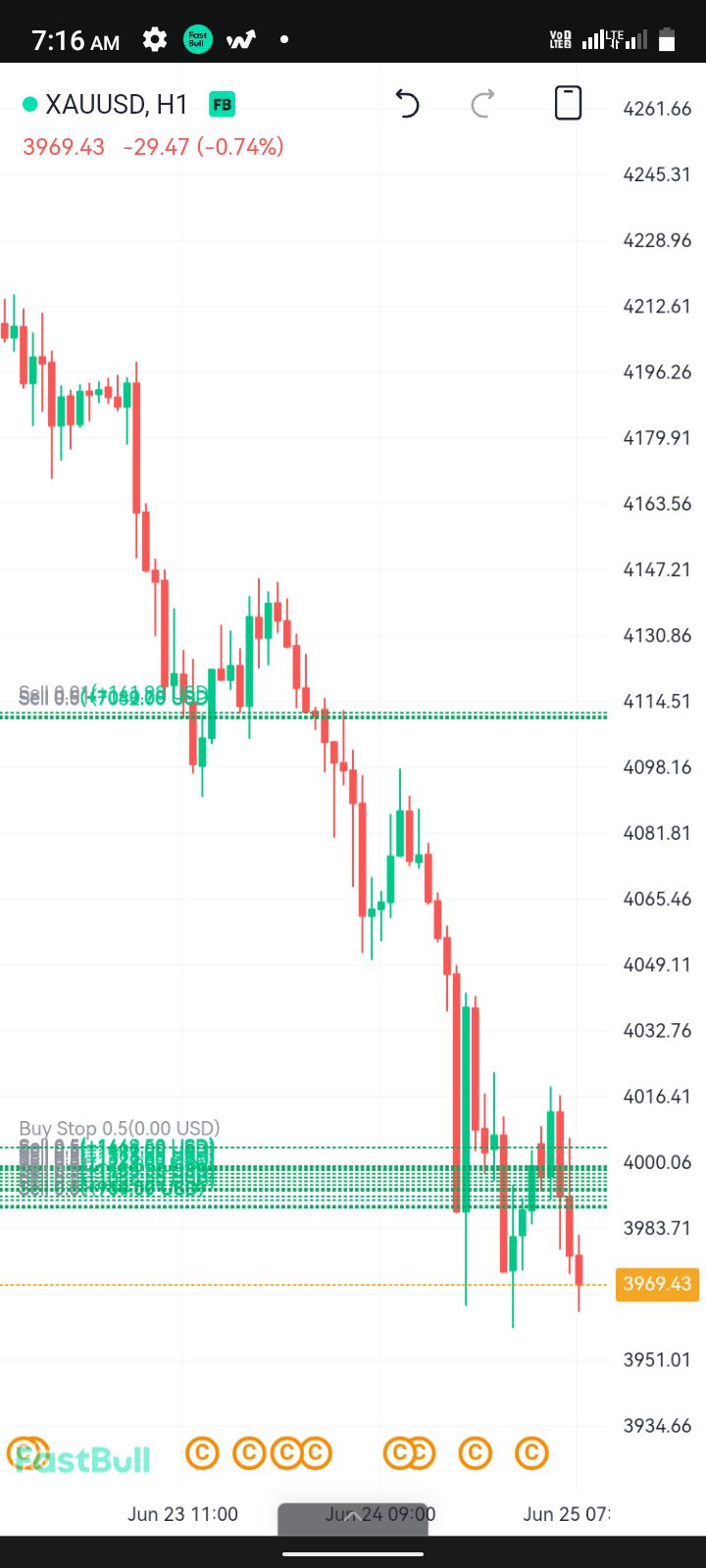


Don't just watch the ticker. Our guide to kitco metal prices cuts through the noise, showing how institutional spot rates influence your next physical trade.
For investors navigating the complexities of the commodities market, tracking accurate and up-to-the-minute valuations is essential for timing trades and managing physical assets. Kitco has become an industry standard for monitoring real-time global bid and ask metrics across the precious and industrial metals complex. Understanding how these baseline figures are derived, updated, and applied empowers both institutional traders and retail stackers to make informed purchasing decisions. This guide explores the mechanics behind these live feeds, interprets chart data, and evaluates the differences between baseline spot metrics and physical retail costs.

Kitco metal prices today track significant intraday volatility across the metals complex, as markets price in shifting Federal Reserve interest rate policies and fluctuating US Dollar (DXY) strength. Spot rates on the platform reflect the current global price to buy or sell one troy ounce of a precious metal, or the copper price per lb, for immediate delivery. Rather than pulling from a single exchange, these figures aggregate near-month futures contracts with the highest volume across global hubs—including the COMEX in New York, the London Bullion Market Association (LBMA), and Asian exchanges.
Because precious metals are globally priced in US dollars, currency fluctuations frequently distort actual metal values. Kitco isolates this variable using the Kitco Global Index (KGX), which separates absolute price changes from decreases or increases caused specifically by a strengthening or weakening dollar. If gold drops $111 per ounce intraday, the platform quantifies exactly how much of that decline is due to predominant seller pressure versus a stronger USD.
Kitco’s live spot prices automatically update every 60 seconds during active global trading hours. This continuous pricing cycle provides 24 hour gold and silver prices, beginning Sunday at 6:00 PM EST when Asian markets open, and ending Friday at 5:00 PM EST at the New York close.
The feed experiences a standard 60-minute daily halt between 5:00 PM and 6:00 PM EST, during which the spot market is officially closed for system maintenance and the transition between trading days. While retail investors using the standard website or app see one-minute refresh intervals, institutional traders routing through application programming interfaces (APIs) receive tick-by-tick data. Differences of 10 to 20 cents between Kitco's spot rate and a retail bullion dealer's advertised spot price typically reflect these minor refresh intervals and individual dealer markup algorithms, not a discrepancy in the underlying commodity.
Current price action is being dictated by a clash between strong US macroeconomic data and acute physical supply deficits in industrial metals. Central bank buying and safe-haven flows continue to establish a high floor for gold, while silver and base metals are increasingly disconnected from monetary policy, driven instead by electrification and infrastructure demands.
| Metal Category | Primary Price Driver (May 2026) | Industrial vs. Safe-Haven Weight | Current Supply Reality |
|---|---|---|---|
| Gold (XAU) | US Dollar (DXY) strength & Fed rate policy | ~10% Industrial / ~90% Safe-Haven | Sustained central bank accumulation (60+ tonnes/month) |
| Silver (XAG) | AI data-center & solar manufacturing demand | ~55% Industrial / ~45% Safe-Haven | Multi-year structural deficit; forward curve in backwardation |
| Copper (XCU) | Chinese manufacturing PMI & grid infrastructure | ~100% Industrial / 0% Safe-Haven | Acute front-end physical tightness |
| Platinum (XPT) | Auto-catalyst production & tariff risks | ~75% Industrial / ~25% Safe-Haven | Constrained mine output amid geopolitical friction |
Tracking these global movements requires a comprehensive view of the commodities complex. Kitco’s data feeds track five primary precious metals—gold, silver, platinum, palladium, and rhodium—alongside a suite of base metals and scrap materials. As established, the platform aggregates tick-by-tick data from global commodity exchanges to display live valuations for unfabricated metal prior to consumer markups.
As of May 2026, Kitco’s live charts show the gold spot price trading near $4,550 per troy ounce. This figure represents the wholesale cost of 31.103 grams of .999 fine gold for immediate institutional delivery, derived primarily from COMEX futures and the LBMA benchmark. Because global markets operate across multiple time zones, Kitco updates its 24 hour gold and silver prices continuously via the GLOBEX electronic trading system. This spot valuation reflects raw metal value before any fabrication costs, distribution logistics, or dealer margins are applied.
Beyond gold, Kitco metal prices include real-time tracking for the wider precious metals complex, which trades on a mix of monetary hedging and industrial demand. The silver spot price today sits near $76.50 per ounce, reflecting its dual role as a safe-haven asset and a critical input for electronics and solar panel manufacturing.
The platinum group metals (PGMs)—platinum, palladium, and rhodium—price heavily off auto-catalyst manufacturing cycles and supply concentration in South Africa and Russia.
| Metal | May 2026 Spot Price (USD/oz) | Primary Market Driver | Volatility Profile |
|---|---|---|---|
| Silver | ~$76.50 | 50% Monetary / 50% Industrial | High; subject to rapid retail sentiment shifts. |
| Platinum | ~$1,995.00 | Heavy-duty auto catalysts, hydrogen tech | Moderate; constrained by deep mining deficits. |
| Palladium | ~$1,420.00 | Gas-powered auto catalytic converters | Extreme; heavily impacted by EV adoption rates. |
| Rhodium | ~$10,150.00 | Auto emissions scrubbing | Extreme; highly illiquid with a narrow buyer pool. |
The Kitco platinum price and other PGMs frequently experience pricing inversions based on substitution mechanics in the auto industry. When palladium becomes too expensive, manufacturers retool their production lines to utilize cheaper platinum, gradually shifting demand and rebalancing the price ratio between the two metals.
Kitco’s spot prices represent institutional transactions for raw metal, making them universally lower than the price retail investors pay and distinct from futures contract pricing. When retail buyers purchase physical coins or bars, they pay the dealer retail price, which stacks a premium on top of the spot baseline.
| Price Type | Calculation Mechanism | Included Costs | Target Market |
|---|---|---|---|
| Spot Price | Average of wholesale market bids/asks | None (raw, unfabricated metal) | Institutional banks, market makers |
| Futures Price | Spot Price + Cost of Carry | Interest, storage, and insurance until delivery | Hedgers, commodity traders |
| Dealer Retail | Spot Price + Premium | Fabrication (minting), distribution, dealer margin | Retail stackers, self-directed IRAs |
If the gold spot price is $4,550, a futures contract for delivery in six months will typically price higher to account for storage and interest (a market condition known as contango). Conversely, a retail buyer purchasing a fabricated 1-ounce coin might pay $4,650 to $4,750. The premium covers the minting process and dealer markup, meaning physical investors begin their trade at a deficit to spot and require underlying price appreciation simply to break even.
Visualizing this continuous data stream is crucial for active market participants. Kitco's spot charts display these real-time, global wholesale transaction values for precious metals, strictly priced in fiat currency per troy ounce (31.103 grams). Interpreting these interfaces requires isolating dealer pricing mechanics from product premiums and selecting timeframes that align with your physical or derivative execution horizon.
The bid, ask, and change figures represent the real-time two-way wholesale market quote and its net deviation from the previous trading day's close.
| Metric | Kitco Definition | Practical Implication |
|---|---|---|
| Bid | The highest current price a market maker will pay to buy the metal. | Your baseline execution price if you are liquidating unrefined scrap or wholesale bars. |
| Ask | The lowest current price a market maker will accept to sell the metal. | Your baseline cost before physical fabrication premiums and dealer markups are applied. |
| Change | The numerical price variation since the previous day's New York close (typically 5:15 PM EST). | Dictates daily momentum. Green indicates a price increase; red indicates a decrease. |
The gap between the ask and the bid represents the bid-ask spread—the implicit cost of executing a transaction. For highly liquid assets tracking 24 hour gold and silver prices, this spread remains mathematically tight during peak hours, frequently holding below $1.00 per ounce for gold and $0.05 for silver.
Crucially, Kitco metal prices displayed on the spot ticker reflect unallocated, wholesale paper contracts. They do not represent the final cost of acquiring a physical coin or the exact payout for jewelry, both of which factor in localized supply, assay costs, and fabrication premiums.
The 24-hour and 3-day charts provide the highest-fidelity signals for tracking immediate price momentum and intra-session volatility. Different chart intervals serve distinct analytical functions:
Rely on the 24-hour view to pinpoint exact entry or exit timing within a single trading day, but default to the 3-day chart to ensure you are not trading against the dominant weekly trend.
Kitco is universally recognized as a reliable baseline benchmark for retail investors, dealers, and analysts tracking precious metals. The platform accurately reflects the global bid/ask spread for unallocated, wholesale metal settling in two business days (T+2).
However, judging accuracy requires understanding that a spot price is a theoretical composite, not a single printed trade on a centralized exchange. Precious metals trade globally around the clock via over-the-counter (OTC) interbank networks. Because no single exchange controls all trading volume, the "spot price" displayed by any financial outlet is a blended average of institutional quotes. Kitco provides a highly precise, low-latency reflection of this wholesale market, but retail investors cannot purchase physical bullion at these exact spot rates due to fabrication costs, dealer markups, and supply constraints.
Kitco aggregates real-time price feeds from a network of global OTC interbank markets and major commodity derivative exchanges. Because the precious metals market operates continuously from Sunday evening to Friday afternoon (EST), the primary data sources shift depending on which global market is most active.
The live pricing algorithm pulls from three primary tiers of market data:
Whether a user is checking the silver spot price today or viewing the 24 hour gold and silver prices across overlapping global sessions, Kitco’s feed translates these disparate institutional inputs into a single, continuous ticker.
While Kitco, APMEX, and BullionVault all track the same underlying wholesale markets, their displayed spot prices typically diverge by a few cents on silver or a few dollars on gold. This variance stems from their different core business models, specific data aggregators, and the fact that they are displaying prices for different asset classifications.
| Feature | Kitco | APMEX | BullionVault |
|---|---|---|---|
| Primary Function | Market news aggregator and bullion dealer. | Pure-play direct-to-consumer physical bullion retailer. | Peer-to-peer vaulted metal exchange. |
| Spot Price Derivation | Blended composite of global OTC and futures data feeds. | Internal proprietary feed utilized to price their retail inventory. | Live crossing network; actual executing trades on their internal order book. |
| Price Bias & Spread | Neutral indicative benchmark. Accurately reflects standard institutional bid/ask spreads. | Spot price often reads slightly higher. Serves as a baseline to anchor retail premiums. | Highly dynamic. Sits between the institutional spread based on exact user supply and demand. |
| Execution Reality | Spot price is indicative. Actual physical purchases require paying Kitco’s dealer premiums. | Spot price is indicative. Retail premiums are dynamically added at checkout. | Spot price is actionable. Users trade at the displayed live prices minus a standard commission (typically 0.5% or lower). |
APMEX operates primarily as a retail vendor. Their spot feed serves as the foundation for their dynamic pricing algorithms, and they frequently display a spot price that bakes in a marginal buffer compared to institutional feeds. If you are comparing the copper price per lb or silver eagles, APMEX's base feed will often show a slightly higher floor than a pure market aggregator.
BullionVault operates a live limit-order book for vaulted, allocated metal in specific locations (e.g., London, Zurich). Their displayed price is not a theoretical composite; it is the exact price at which real buyers and sellers are crossing trades on their platform at that exact millisecond.
Kitco sits in the middle. It functions as the media standard. Its prices are strictly indicative of the broader unallocated market rather than an internal retail formula or an isolated peer-to-peer exchange book.
Yes, Kitco provides a mobile application called Gold Live!, which is available for both iOS and Android devices. The app allows users to track live spot prices for precious metals, base metals, and cryptocurrencies. It also features customizable watchlists, interactive market charts, and real-time price alerts.
Yes, you can purchase physical gold, silver, and other precious metals directly through Kitco's online store. They sell a wide variety of tangible bullion products, including bars, rounds, and coins from recognized mints. Additionally, customers utilizing digital investment options like Kitco Pool accounts or VaultChain can choose to exchange their digital holdings for physical metal delivery at any time.
The London Fix is a global benchmark price established once or twice a day by participating banks to settle large institutional orders and value inventories. In contrast, Kitco's live spot prices fluctuate continuously in real-time throughout the trading day based on active global market transactions. While Kitco reports the daily London Fix for reference, its live spot charts reflect the immediate, second-by-second valuation of metals for standard retail and market trading.
Navigating the precious metals market effectively requires a clear separation between institutional baseline data and physical acquisition costs. Kitco metal prices serve as an essential, real-time barometer for global wholesale valuations, filtering out currency distortions to reveal true market sentiment. By leveraging these spot charts and understanding the bid-ask dynamics, investors can accurately time their entries and exits across both derivative and physical markets. Ultimately, mastering these tools bridges the gap between tracking global macroeconomic trends and executing profitable local trades.

728 RM B 7/F GEE LOK IND BLDG NO 34 HUNG TO RD KWUN TONG KLN HONG KONG





The risk of loss in trading financial instruments such as stocks, FX, commodities, futures, bonds, ETFs and crypto can be substantial. You may sustain a total loss of the funds that you deposit with your broker. Therefore, you should carefully consider whether such trading is suitable for you in light of your circumstances and financial resources.
No decision to invest should be made without thoroughly conducting due diligence by yourself or consulting with your financial advisors. Our web content might not suit you since we don't know your financial conditions and investment needs. Our financial information might have latency or contain inaccuracy, so you should be fully responsible for any of your trading and investment decisions. The company will not be responsible for your capital loss.
Without getting permission from the website, you are not allowed to copy the website's graphics, texts, or trademarks. Intellectual property rights in the content or data incorporated into this website belong to its providers and exchange merchants.
Not Logged In
Log in to access more features


Log In
Sign Up