• Trade
  • Markets
  • Copy
  • Contests
  • 24/7
  • Calendar
  • Q&A
  • Chats
Screeners
SYMBOL
LAST
BID
ASK
HIGH
LOW
NET CHG.
%CHG.
SPREAD
SOURCE
SPX
S&P 500 Index
7554.28
7554.28
7554.28
7577.92
7516.75
+122.83
+ 1.65%
--
--
DJI
Dow Jones Industrial Average
51671.02
51671.02
51671.02
51945.89
51647.50
+468.77
+ 0.92%
--
--
IXIC
NASDAQ Composite Index
26683.93
26683.93
26683.93
26687.56
26438.77
+795.10
+ 3.07%
--
--
USDX
US Dollar Index
99.310
99.310
99.390
99.430
99.080
-0.150
-0.15%
--
--
EURUSD
Euro / US Dollar
1.15894
1.15894
1.15928
1.15918
1.15866
+0.00006
+ 0.01%
--
--
GBPUSD
Pound Sterling / US Dollar
1.34080
1.34080
1.34138
1.34117
1.34039
-0.00025
-0.02%
--
--
XAUUSD
Gold / US Dollar
4308.35
4308.35
4308.79
4369.29
4266.28
+88.73
+ 2.10%
--
--
WTI
Light Sweet Crude Oil
79.838
79.838
79.934
80.361
78.483
-3.026
-3.65%
--
--

Community Accounts

Signal Accounts
--
Profit Accounts
--
Loss Accounts
--
View More

Become a signal provider

Sell trading signals to earn additional income

View More

Guide to Copy Trading

Get started with ease and confidence

View More

Signal Accounts for Members

All Signal Accounts

Best Return
  • Best Return
  • Best P/L
  • Best MDD
Past 1W
  • Past 1W
  • Past 1M
  • Past 1Y

All Contests

  • All
  • Recommend
  • Stocks
  • Cryptocurrencies
  • Central Banks
  • Trump Updates
  • Featured News
Top News Only
Share

PGIM Expects Three Interest-rate Hikes This Year, Followed By A Policy Reversal In 2027

Share

Zimbabwe Cut Its Benchmark Interest Rate By 500 Basis Points, Becoming The First Central Bank To Lower Rates Following The U.S.-Iran Agreement

Share

The European Union And Moldova Officially Launched Negotiations On The First Accession Negotiation Chapter

Share

The Reserve Bank Of Zimbabwe Lowered Its Policy Rate From 35% To 30%

Share

International Oil Prices Fell Sharply On The 15th

Share

U.S. Dollar Index Falls On The 15th

Share

According To A Reuters/Ipsos Poll, Trump's Approval Rating Has Risen To 36% As Public Dissatisfaction Over The Cost Of Living Has Eased

Share

According To A Reuters/Ipsos Poll, 24% Of Americans Approve Of Trump's Approach To Addressing The Cost Of Living, Up From 22% A Week Ago And 20% A Month Ago

Share

California Governor Gavin Newsom: US President Trump Has Instructed The Department Of Justice To Investigate Me

Share

Israeli Prime Minister Netanyahu: We Have An Equal Partnership With US President Trump

Share

The Indian Government Has Announced That It Will Raise The Windfall Tax On Diesel Exports To 14 Rupees Per Liter; And In The Next Two Weeks, The Export Tax On Aviation Turbine Fuel Will Be Raised To 12.5 Rupees Per Liter

Share

Israeli Prime Minister Netanyahu: Sometimes US President Trump And I Disagree

Share

Citigroup Has Raised Its 3-month Gold Price Forecast To $4,500 Per Ounce And Its Silver Price Forecast To $70 Per Ounce

Share

Citigroup Has Lowered Its Oil Price Forecast To Its Previous Bearish Scenario, With Updated Quarterly Oil Price Forecasts Of $75 And $70 Per Barrel For The Third And Fourth Quarters Of 2026, Respectively

Share

Fitch Ratings: If The Agreement Fully Opens The Strait Of Hormuz, The Global Oil Market Is Expected To Return To Oversupply Within About A Month

Share

Fitch Ratings: (Regarding A Potential US-Iran Deal) Believes That Iran's Nuclear Program And Capabilities Will Remain A Source Of Tension In Its Relations With The US And Israel

Share

Fitch: (Regarding A Potential US-Iran Deal) Even If An Agreement Is Signed, The Medium-term Outlook For The Gulf Region Remains Uncertain

Share

Fitch Ratings: The Prospects For A Potential Deal Between The US And Iran Are Positive, But Still Face High Uncertainty

Share

Canadian Ambassador To The United States, Wiseman: The Work Behind The Scenes Is Being Carried Out In A Rational, Cooperative, Flexible And Pragmatic Manner

Share

European Council President Costa: A United And Resolute G7 Is Crucial To Helping End The Russia-Ukraine War And Achieve A Just And Lasting Peace

TIME
ACT
FCST
PREV
IMPACT
U.S. 5-10 Year-Ahead Inflation Expectations (Jun)

A:--

F: --

P: --

XAUUSD
  • XAUUSD
  • XAGUSD
  • WTI
  • USDX
U.S. Weekly Total Rig Count

A:--

F: --

P: --

WTI
  • WTI
  • XAUUSD
  • XAGUSD
  • USDX
U.S. Weekly Total Oil Rig Count

A:--

F: --

P: --

WTI
  • WTI
  • XAUUSD
  • XAGUSD
  • USDX
U.K. Rightmove House Price Index YoY (Jun)

A:--

F: --

P: --

GBPUSD
  • GBPUSD
  • XAUUSD
  • XAGUSD
  • WTI
  • USDX
ECB President Lagarde Speaks
Euro Zone Industrial Output YoY (Apr)

A:--

F: --

P: --
EURUSD
  • EURUSD
  • XAUUSD
  • XAGUSD
  • WTI
  • USDX
Euro Zone Trade Balance (Not SA) (Apr)

A:--

F: --

P: --
EURUSD
  • EURUSD
  • XAUUSD
  • XAGUSD
  • WTI
  • USDX
Euro Zone Trade Balance (SA) (Apr)

A:--

F: --

P: --
EURUSD
  • EURUSD
  • XAUUSD
  • XAGUSD
  • WTI
  • USDX
Euro Zone Industrial Output MoM (Apr)

A:--

F: --

P: --
EURUSD
  • EURUSD
  • XAUUSD
  • XAGUSD
  • WTI
  • USDX
Euro Zone Total Reserve Assets (May)

A:--

F: --

P: --

EURUSD
  • EURUSD
  • XAUUSD
  • XAGUSD
  • WTI
  • USDX
Canada National Economic Confidence Index

A:--

F: --

P: --

USDCAD
  • USDCAD
  • XAUUSD
  • XAGUSD
  • WTI
  • USDX
Canada New Housing Starts (May)

A:--

F: --

P: --
USDCAD
  • USDCAD
  • XAUUSD
  • XAGUSD
  • WTI
  • USDX
Canada Manufacturing New Orders MoM (Apr)

A:--

F: --

P: --

USDCAD
  • USDCAD
  • XAUUSD
  • XAGUSD
  • WTI
  • USDX
Canada Manufacturing Unfilled Orders MoM (Apr)

A:--

F: --

P: --

USDCAD
  • USDCAD
  • XAUUSD
  • XAGUSD
  • WTI
  • USDX
U.S. NY Fed Manufacturing Employment Index (Jun)

A:--

F: --

P: --

USDX
  • USDX
  • XAUUSD
  • XAGUSD
  • WTI
U.S. NY Fed Manufacturing New Orders Index (Jun)

A:--

F: --

P: --

USDX
  • USDX
  • XAUUSD
  • XAGUSD
  • WTI
U.S. NY Fed Manufacturing Prices Received Index (Jun)

A:--

F: --

P: --

USDX
  • USDX
  • XAUUSD
  • XAGUSD
  • WTI
Canada Wholesale Inventory MoM (Apr)

A:--

F: --

P: --

USDCAD
  • USDCAD
  • XAUUSD
  • XAGUSD
  • WTI
  • USDX
Canada Wholesale Sales YoY (Apr)

A:--

F: --

P: --

USDCAD
  • USDCAD
  • XAUUSD
  • XAGUSD
  • WTI
  • USDX
Canada Manufacturing Inventory MoM (Apr)

A:--

F: --

P: --

USDCAD
  • USDCAD
  • XAUUSD
  • XAGUSD
  • WTI
  • USDX
Canada Wholesale Inventory YoY (Apr)

A:--

F: --

P: --

USDCAD
  • USDCAD
  • XAUUSD
  • XAGUSD
  • WTI
  • USDX
Canada Wholesale Sales MoM (SA) (Apr)

A:--

F: --

P: --
USDCAD
  • USDCAD
  • XAUUSD
  • XAGUSD
  • WTI
  • USDX
U.S. NY Fed Manufacturing Index (Jun)

A:--

F: --

P: --

USDX
  • USDX
  • XAUUSD
  • XAGUSD
  • WTI
U.S. Industrial Output MoM (SA) (May)

A:--

F: --

P: --
USDX
  • USDX
  • XAUUSD
  • XAGUSD
  • WTI
U.S. Capacity Utilization MoM (SA) (May)

A:--

F: --

P: --

WTI
  • WTI
  • XAUUSD
  • XAGUSD
  • USDX
U.S. Manufacturing Output MoM (SA) (May)

A:--

F: --

P: --
USDX
  • USDX
  • XAUUSD
  • XAGUSD
  • WTI
U.S. Industrial Output YoY (May)

A:--

F: --

P: --

USDX
  • USDX
  • XAUUSD
  • XAGUSD
  • WTI
U.S. Manufacturing Capacity Utilization (May)

A:--

F: --

P: --

USDX
  • USDX
  • XAUUSD
  • XAGUSD
  • WTI
U.S. NAHB Housing Market Index (Jun)

A:--

F: --

P: --

USDX
  • USDX
  • XAUUSD
  • XAGUSD
  • WTI
Saudi Arabia CPI YoY (May)

A:--

F: --

P: --

China, Mainland Urban Area Unemployment Rate (May)

--

F: --

P: --

China, Mainland Industrial Output YoY (YTD) (May)

--

F: --

P: --

Japan Benchmark Interest Rate

--

F: --

P: --

BOJ Monetary Policy Statement
Australia Overnight (Borrowing) Key Rate

--

F: --

P: --

RBA Rate Statement
BOJ Press Conference
Turkey Retail Sales YoY (Apr)

--

F: --

P: --

Euro Zone Gross Wages YoY (Q1)

--

F: --

P: --

Euro Zone ZEW Current Conditions Index (Jun)

--

F: --

P: --

Germany ZEW Economic Sentiment Index (Jun)

--

F: --

P: --

Canada Existing Home Sales MoM (May)

--

F: --

P: --

Euro Zone Labor Cost YoY (Q1)

--

F: --

P: --

Euro Zone ZEW Economic Sentiment Index (Jun)

--

F: --

P: --

Germany ZEW Current Conditions Index (Jun)

--

F: --

P: --

Brazil Retail Sales MoM (Apr)

--

F: --

P: --

U.S. Import Price Index YoY (May)

--

F: --

P: --

U.S. Building Permits MoM (SA) (May)

--

F: --

P: --

U.S. New Housing Starts Annualized MoM (SA) (May)

--

F: --

P: --

U.S. Export Price Index MoM (May)

--

F: --

P: --

U.S. Export Price Index YoY (May)

--

F: --

P: --

U.S. Import Price Index MoM (May)

--

F: --

P: --

U.S. Total Building Permits (SA) (May)

--

F: --

P: --

U.S. Annual New Housing Starts (SA) (May)

--

F: --

P: --

U.S. Weekly Redbook Index YoY

--

F: --

P: --

ECB Chief Economist Lane Speaks
U.S. API Weekly Refined Oil Stocks

--

F: --

P: --

U.S. API Weekly Gasoline Stocks

--

F: --

P: --

U.S. API Weekly Cushing Crude Oil Stocks

--

F: --

P: --

U.S. API Weekly Crude Oil Stocks

--

F: --

P: --

Japan Reuters Tankan Manufacturers Index (Jun)

--

F: --

P: --

Q&A with Experts
    • All
    • Chatrooms
    • Groups
    • Friends
    Stave Brown flag
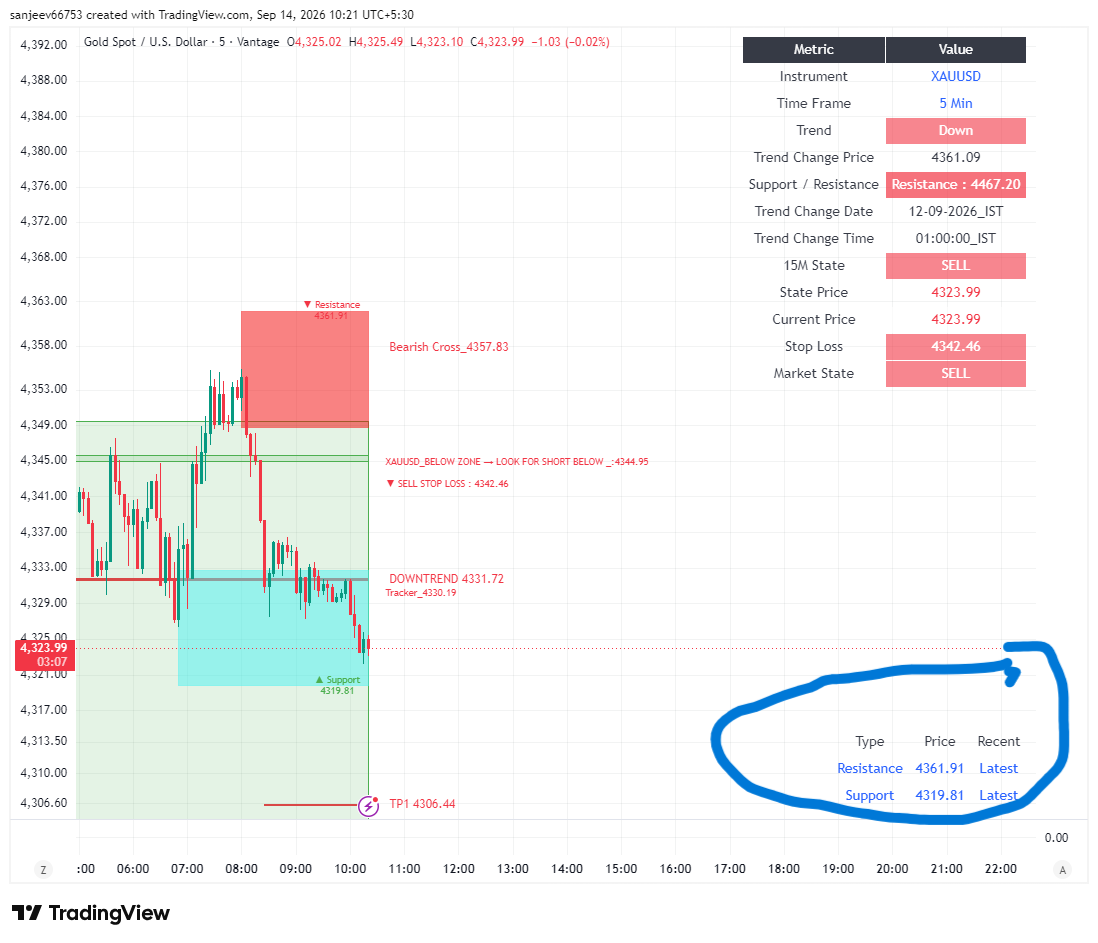
    🔴 STRONG RESISTANCE 4323.3 – 4324.2 🎯 TP3 → 4325.0 – 4325.5 ▲ 🎯 TP2 → 4324.2 – 4324.8 ▲ 🎯 TP1 → 4323.3 – 4323.8 ▲ 🟣 BREAKOUT → 4322.6 – 4323.3 ▲ 🔵 CURRENT → 4321.1 │ 🟢 SUPPORT → 4319.8 – 4320.2 │ 🛑 SL → 4318.4
    Billion$$$ flag
    Citigroup Has Lowered Its Oil Price Forecast To Its Previous Bearish Scenario, With Updated Quarterly Oil Price Forecasts Of $75 And $70 Per Barrel For The Third And Fourth Quarters Of 2026, Respectively
    Billion$$$ flag
    Citigroup Has Raised Its 3-month Gold Price Forecast To $4,500 Per Ounce And Its Silver Price Forecast To $70 Per Ounce
    3DX cheetah flag
    put support and call resistance
    4518782 flag
    soja
    "Stave Brown" recalled a message
    3DX cheetah flag
    gamma
    Stave Brown flag
    Stave Brown
    🔴 STRONG RESISTANCE 4323.3 – 4324.2 🎯 TP3 → 4325.0 – 4325.5 ▲ 🎯 TP2 → 4324.2 – 4324.8 ▲ 🎯 TP1 → 4323.3 – 4323.8 ▲ 🟣 BREAKOUT → 4322.6 – 4323.3 ▲ 🔵 CURRENT → 4321.1 │ 🟢 SUPPORT → 4319.8 – 4320.2 │ 🛑 SL → 4318.4
    done check
    3DX cheetah flag
    option Greek
    3DX cheetah flag
    call wall. am about to take this game to market makers.
    4764134 flag
    Stave Brown
    🔴 STRONG RESISTANCE 4323.3 – 4324.2 🎯 TP3 → 4325.0 – 4325.5 ▲ 🎯 TP2 → 4324.2 – 4324.8 ▲ 🎯 TP1 → 4323.3 – 4323.8 ▲ 🟣 BREAKOUT → 4322.6 – 4323.3 ▲ 🔵 CURRENT → 4321.1 │ 🟢 SUPPORT → 4319.8 – 4320.2 │ 🛑 SL → 4318.4
    @Stave BrownThis your signal makes zero sense TP 4323 and resistance also there
    4764134 flag
    GOLD BUY NOW SUPPORT 4322 SL 4312 TP 4330 TP 4350 TP 4370
    Smartt Bwoii flag
    Any signals
    john flag
    Smartt Bwoii
    Any signals
    @Smartt Bwoii You can check for latest signals here
    john flag
    Smartt Bwoii
    Any signals
    @Smartt Bwoii https://www.fastbull.com/signal
    john flag
    if this then it might pave way for gold bulls to go back to 5k
    john flag
    Billion$$$ flag
    International Oil Prices Fell Sharply On The 15th.U.S. Dollar Index Falls On The 15th (FastBull APP)
    Fxstudent flag
    4764134
    GOLD BUY NOW SUPPORT 4322 SL 4312 TP 4330 TP 4350 TP 4370
    @Visitor4764134how is the buy going,,.am o. nassaq
    Fxstudent flag
    think it is filling th gap
    Type here...
    Add Symbol or Code

      No matching data

      All
      Recommend
      Stocks
      Cryptocurrencies
      Central Banks
      Trump Updates
      Featured News
      • All
      • Russia-Ukraine Conflict
      • Middle East Flashpoint
      • All
      • Russia-Ukraine Conflict
      • Middle East Flashpoint

      Search
      Products

      Charts Free Forever

      Chats Q&A with Experts
      Screeners Economic Calendar Data Tools
      Membership Features
      Data Warehouse Market Trends Institutional Data Policy Rates Macro

      Market Trends

      Market Sentiment Order Book Forex Correlations

      Top Indicators

      Charts Free Forever
      Markets

      News

      24/7 Analysis Education

      Latest Views

      Latest Update

      Signals

      Copy Rankings Latest Signals Become a signal provider AI Rating
      Contests
      Brokers

      Overview Brokers Assessment Rankings Regulators News Claims
      Broker listing Forex Brokers Comparison Tool Live Spread Comparison Scam
      Q&A Complaint Scam Alert Videos Tips to Detect Scam
      More

      Business
      Events
      Careers About Us Advertising Help Center

      White Label

      Broker API

      Data API

      Web Plug-ins

      Affiliate Program

      Awards Institution Evaluation IB Seminar Salon Event Exhibition
      Vietnam Thailand Singapore Dubai
      Fans Party Investment Sharing Session
      FastBull Summit BrokersView Expo
      Recent Searches
        Top Searches
          Markets
          Analysis
          User
          24/7
          Economic Calendar
          Education
          Data
          • Names
          • Latest
          • Prev

          View All

          No data

          Scan to Download

          Faster Charts, Chat Faster!

          Download
          English
          • English
          • Español
          • العربية
          • Bahasa Indonesia
          • Bahasa Melayu
          • Tiếng Việt
          • ภาษาไทย
          • Français
          • Italiano
          • Türkçe
          • Русский язык
          • 简中
          • 繁中
          Open Account
          Search
          Products
          Charts Free Forever
          Markets
          News
          Signals

          Copy Rankings Latest Signals Become a signal provider AI Rating
          Contests
          Brokers

          Overview Brokers Assessment Rankings Regulators News Claims
          Broker listing Forex Brokers Comparison Tool Live Spread Comparison Scam
          Q&A Complaint Scam Alert Videos Tips to Detect Scam
          More

          Business
          Events
          Careers About Us Advertising Help Center

          White Label

          Broker API

          Data API

          Web Plug-ins

          Affiliate Program

          Awards Institution Evaluation IB Seminar Salon Event Exhibition
          Vietnam Thailand Singapore Dubai
          Fans Party Investment Sharing Session
          FastBull Summit BrokersView Expo

          Monetary policy in response to tariff shocks

          CEPR
          Summary:

          Donald Trump’s victory in the recent US presidential election has re-ignited a debate over the macroeconomic effects of tariffs and the appropriate monetary policy response. This column argues that even if there is broad agreement that new tariffs would likely be inflationary for the US, the current situation presents various factors which suggest that it might be optimal for policy to focus more on the inefficient fall in output.

          The results of the recent US presidential election re-ignited a debate over the macroeconomic effects of tariffs, and the appropriate monetary policy response to a trade war. During the first Trump administration, US tariffs on Chinese exports rose seven-fold between 2018 and 2020, and they remained high under the Biden administration. More to the point, global political trends point to a significant weakening of global consensus regarding free trade and herald a new environment in which central banks may face this new type of shock with increasing frequency.
          Much of recent research on the macroeconomic effects of trade policy shocks has been conducted in the context of real trade models, or in empirical exercises without consideration of monetary policy. But the consequences of trade frictions obviously challenge central banks: how should they respond to a backwards step in the progress towards increasing trade integration, with potentially significant effects on inflation, economic activity, external balances, and real exchange rates? In a recent paper (Bergin and Corsetti 2023), we study the optimal monetary policy responses to tariff shocks of various types. In this column, we update the analysis and distill lessons appropriate to the current situation.
          In our paper, we study the optimal monetary policy responses to tariff shocks using a standard workhorse open-economy New Keynesian (sticky-price) model augmented with international value chains in production, i.e. imported goods are used in the production of domestic goods and exports. This implies that raising tariff protection of domestic exporters raises the cost of production for domestic firms. Throughout our analysis, we assume a share of imported inputs in production close to estimates based on the US input–output tables for 2011 (but we also verify our main conclusions varying this share). Our main analysis assumes substantial pass through of tariffs to consumer prices, but we also demonstrate robustness of our main results to enriching the model with a distribution sector that limits pass-through. Finally, we posit that monetary authorities do not take advantage of cross-border spillovers to pursue beggar-thy-neighbour policies, i.e. we rule out opportunistic manipulation of the exchange rate.
          To sum up our main message: even if there is broad agreement that new Trump tariffs will likely be inflationary for the US, it is far from obvious that the optimal response of monetary policy to these tariffs should focus on fighting these inflationary effects via monetary contraction. Tariff shocks combine elements of both demand and supply disturbances, and monetary policy is bound to face a difficult trade-off between moderating inflation and supporting economic activity; in fact, a reasonable calibration of our model indicates that the optimal monetary response to such a scenario may well involve monetary expansion. Our analysis underscores that, while the optimal monetary response to tariffs depends on several factors, a key role is played by (i) the likelihood that the tariffs are reciprocated in a trade war, (ii) the degree of reliance of domestic production on imported intermediates, and (iii) the special role of the US dollar as the dominant currency for invoicing international trade. We discuss different cases in turn.

          The case for monetary tightening: Unilateral tariffs without retaliation

          Let us consider first the rationale for monetary tightening. This would be clear in a scenario in which the US unilaterally imposes a tariff on domestic purchases of foreign goods to boost demand for domestic goods, causing inflation in the price paid by domestic consumers and producers using imported inputs.
          In Figure 1, we use our model to trace the effects of a unilateral tariff shock. The dashed lines trace the effect of such a shock over time while holding policy rates constant: GDP and inflation rise in the US, but they move in the opposite direction in the US’ trade partner (the foreign country). At the ongoing exchange rate, the US trade balance turns into a surplus.Monetary policy in response to tariff shocks_1
          Looking at these baseline results, a policy of monetary contraction at home (US) can be motivated by a need to moderate inflation – corresponding to monetary expansion abroad to moderate deflation. But a further motivation can be found in the fact that the divergence in the home and foreign policy stance works to appreciate the home currency, which can serve to lower the effective price of foreign goods that home consumers see, and thus partly offset the distortionary effect of the tariffs on relative prices.
          These considerations underlie the behaviour of macro variables under the optimal policy, traced as a solid line in the figure. The US monetary authorities curb inflation, which in our case serves also to moderate the domestic rise in output. The fall in demand and the dollar appreciation reduce the trade surplus somewhat. Abroad, monetary authorities support activity at the cost of inflation, contributing to correcting in part the international relative price of goods distorted by the tariff.
          As we show in our paper, the conclusions so far remain valid also when the degree of exchange rate pass through is low across all borders, i.e. prices are sticky in the currency of the export destination country. A low pass through reduces the effect of currency depreciation on relative prices, and monetary policy cannot rely on currency depreciation to redirect global demand towards own traded goods. Yet, in response to a unilateral tariff, the optimal stance is still contractionary at home and expansionary abroad.

          The case for monetary expansions: Trade wars

          Where our paper is more innovative is in showing that the optimal policy is generally expansionary in the case of a symmetric tariff war – say, if the foreign country retaliates with equivalent tariffs on imports of US goods. In this case, the US experiences not only higher inflation but also a drop in output, driven by the fall in global demand induced by the hike in trade costs. Trade wars present policymakers with a choice between moderating headline inflation with a monetary contraction, or instead moderating its negative impact on output and employment with a monetary expansion.
          The trade-off confronting central banks is illustrated by the dashed lines in Figure 2, drawn for a symmetric war, under the assumptions that the pass through of the exchange rate on border prices is very high. The contractionary effects of the tariff war include a deep drop in gross exports worldwide. Inflation spikes, while output falls.Monetary policy in response to tariff shocks_2
          A trade-off between inflation and unemployment is obviously not unfamiliar to policymakers. If it were generated by a standard supply shock – say, a fall in productivity – standard macro models would suggest optimal policy would choose monetary contraction to stabilise inflation. However, as stressed in our analysis, tariffs are quite different from a standard productivity shock, in that they combine elements of supply shocks with demand shocks, and the optimal policy consequently tends to be quite different. One way to see this is that while a tariff war raises the average price of all consumption goods, including imports, the contraction in global demand tends to reduce the prices set by domestic firms. In other words, tariffs raise CPI inflation but tend to depress PPI inflation. In a retaliatory trade war, it is optimal to expand and stabilise PPI inflation despite the hike in CPI inflation hitting consumers. This is shown by the solid lines in Figure 2, drawn for one country (the conclusion applies symmetrically of course to all countries engaging in the trade war).
          While we have demonstrated above that tariff shocks are quite different from productivity shocks, it is also important not to confuse tariff shocks with cost-push markup shocks. First, a home tariff shock only affects the prices of imported goods, while markup shocks are typically envisioned as affecting domestically produced goods. Second, the revenue generated by a tariff shock accrues to the importing country, while the profits from higher markups go to firms in the exporting country. Third, tariffs are imposed directly on the buyer, thus added on top of the price set by the exporter. Our model highlights the unique nature of tariff shocks relative to these other supply disturbances; even while monetary contraction is the optimal response to adverse productivity or markup shocks in the context of our model, monetary expansion is the optimal response to a tariff shock generating inflation.
          Our analysis fully accounts for the fact that production in the US uses a high share of imported intermediate inputs, i.e. higher production costs amplify the supply-side implications of the tariff relative to the demand implications. Indeed, in our quantitative exercises, we find that the optimal response to a trade war becomes contractionary at a particularly high share of imported intermediate inputs in production. But based on input–output estimates of this share (and extensive robustness analysis in which we vary the share), we believe that our benchmark conclusion (prescribing an expansionary monetary stance) can be expected to be more relevant empirically.

          The ‘privilege’ of issuing the dominant currency in international trade

          The US dollar has a special role as the dominant currency used in international trade of goods. It is well known that if the prices of imports in all countries are sticky in dollar units, the US (the dominant currency country) can rely to a much larger extent on monetary policy as a stabilisation tool. That is, it should be in a better position to redress the distortionary effects of the tariff shock on own output and employment, with relevant implications for the rest of the world.
          Consider first a tariff war, depicted in Figure 3 (again, the dashed lines trace the no-policy scenario, the solid lines the optimal policy scenario). On impact, the war is a global contractionary shock. In the dominant currency country, the optimal monetary response is now relatively more expansionary, as the national monetary authorities can redress the lack of global demand without feeding the inflation of imported inputs at the border – imports in dollars move very little with a dollar depreciation. An expansion in the dominant-currency country is good news for the other country: it contains the fall in global demand and reduces imported inflation there (a dollar depreciation means that importers abroad pay a cheaper price in domestic currency at the border). Because of this, even if the tariffs hikes are perfectly symmetric, the other country is in a different position. Rather than matching the expansion in the US, it resorts to a mild upfront contraction to contain inflation. Note that, while GDP falls in both countries, it falls by less in the country issuing the dominant currency. The US dollar depreciates in this scenario.Monetary policy in response to tariff shocks_3
          As we discussed above, in the case that the tariff is unilaterally imposed by the dominant currency country, the global demand for exports by this country does not suffer the effects of a retaliatory tariff. Hence, inflation becomes a more pressing concern for monetary authorities – the optimal stance is contractionary. The contraction can now be stronger, because the dollar appreciation has more muted crowding-out effects on US goods in the international market. The stronger contraction has global repercussions. Abroad the optimal stance becomes expansionary – to prompt domestic demand vis-à-vis falling exports to the US – tolerating inflation and exacerbating currency depreciation. The US dollar appreciates sharply in this scenario.

          Conclusions

          Tariff shocks may present policymakers with a particularly difficult choice between moderating inflation and the output gap. Several factors of the current situation suggest that, even while tariffs are likely to be inflationary, it might be optimal for policy to focus more on the inefficient fall in output. These factors include the likelihood that US tariffs could be reciprocated in a tariff war, the fact that current tariff threats seem centred more on final consumption goods rather than intermediate inputs in domestic production, and the fact that the US dollar has an asymmetric position in world trade as a dominant currency.
          Source:CEPR
          Risk Warnings and Disclaimers
          You understand and acknowledge that there is a high degree of risk involved in trading. Following any strategies or investment methods may lead to potential losses. The content on the site is provided by our contributors and analysts for information purposes only. You are solely responsible for determining whether any trading assets, securities, strategy, or any other product is suitable for investing based on your own investment objectives and financial situation.
          Add to Favorites
          Share
          FastBull
          Copyright © 2026 FastBull Ltd

          728 RM B 7/F GEE LOK IND BLDG NO 34 HUNG TO RD KWUN TONG KLN HONG KONG

          TelegramInstagramTwitterfacebooklinkedin
          App Store Google Play Android Windows
          Products
          Charts

          Chats

          Q&A with Experts
          Screeners
          Economic Calendar
          Data
          Tools
          Membership
          Features
          Function
          Markets
          Copy Trading
          Latest Signals
          Contests
          24/7
          Analysis
          Education
          Company
          Careers
          About Us
          Contact Us
          Advertising
          Download FastBull
          Help Center
          Feedback
          User Agreement
          Privacy Policy
          Personal Information Protection Statement
          Business

          White Label

          Broker API

          Data API

          Web Plug-ins

          Poster Maker

          Affiliate Program

          Risk Disclosure

          The risk of loss in trading financial instruments such as stocks, FX, commodities, futures, bonds, ETFs and crypto can be substantial. You may sustain a total loss of the funds that you deposit with your broker. Therefore, you should carefully consider whether such trading is suitable for you in light of your circumstances and financial resources.

          No decision to invest should be made without thoroughly conducting due diligence by yourself or consulting with your financial advisors. Our web content might not suit you since we don't know your financial conditions and investment needs. Our financial information might have latency or contain inaccuracy, so you should be fully responsible for any of your trading and investment decisions. The company will not be responsible for your capital loss.

          Without getting permission from the website, you are not allowed to copy the website's graphics, texts, or trademarks. Intellectual property rights in the content or data incorporated into this website belong to its providers and exchange merchants.

          Not Logged In

          Log in to access more features

          Connect Broker
          Become a signal provider
          Help Center
          Customer Service
          Dark Mode
          Price Up/Down Colors

          Log In

          Sign Up

          Position
          Layout
          Fullscreen
          Default to Chart
          The chart page opens by default when you visit fastbull.com