


Fake Capital.com Platform Exposed: Investor Loses Funds After Being Targeted by Impersonators
An investor’s complaint against Capital.com has revealed a suspected impersonation scam involving a fake trading platform using the brand name of the well-known broker.
The investor claimed that since mid-February 2026, multiple traders had experienced similar issues, including invalid account links, inability to access trading accounts, and difficulties withdrawing funds. According to the investor, the total amount of funds involved among affected users could reach tens of millions in value.
However, after investigation and communication with Capital.com, it was confirmed that the investor was not trading through the official Capital.com platform, but through a fraudulent website impersonating the brand.
Fake Account Managers Used Social Media to Attract Investors
According to the investor’s statement, the alleged account managers initially contacted clients through social media platforms, presenting themselves as senior financial professionals and using luxury lifestyles and stolen online images to build credibility.
After establishing trust, they encouraged investors to open accounts and trade forex through a website claimed to be Capital.com.
When investors’ available funds became insufficient, the account managers allegedly persuaded them to borrow money from relatives, friends, or financial institutions to continue depositing funds. The investor claimed that these individuals encouraged leveraged trading with borrowed funds while failing to disclose potential risks and obligations.
The investor further alleged that multiple account managers appeared to cooperate, using similar communication strategies and emotional pressure to convince clients to increase their investments.
Platform Responses Raised Further Questions
After affected investors reported the matter to police in late February, the alleged account managers reportedly stopped responding.
The investor said that Capital.com initially appeared to handle the complaint as a dispute between the customer and the account manager.
In April 2026, a response attributed to the platform stated that the issue involved a personal dispute between the investor and the account manager. The response claimed that the account manager had engaged in inappropriate behavior, including influencing users to borrow money and invest, but argued that private lending arrangements could not be directly covered by the platform.
The platform later stated that cooperation with the account manager had been terminated due to alleged violations and that related commissions had been handled accordingly.
In subsequent communications in May and June, the investor claimed that the platform repeatedly requested repayment of certain USDT-related amounts before processing withdrawals, while also stating that withdrawal issues were linked to disputes involving the former account manager.
By July 2026, the investor said the platform continued to attribute the withdrawal suspension to unresolved disputes and complaints involving the former account manager.
Official Capital.com Confirms Investor Used a Fake Website
On August 11, 2026, Capital.com provided an official response after reviewing the complaint.
According to Capital.com, the investor did have an account registered with the company, but the account was newly created, had not completed registration, and showed no deposits or trading activity.
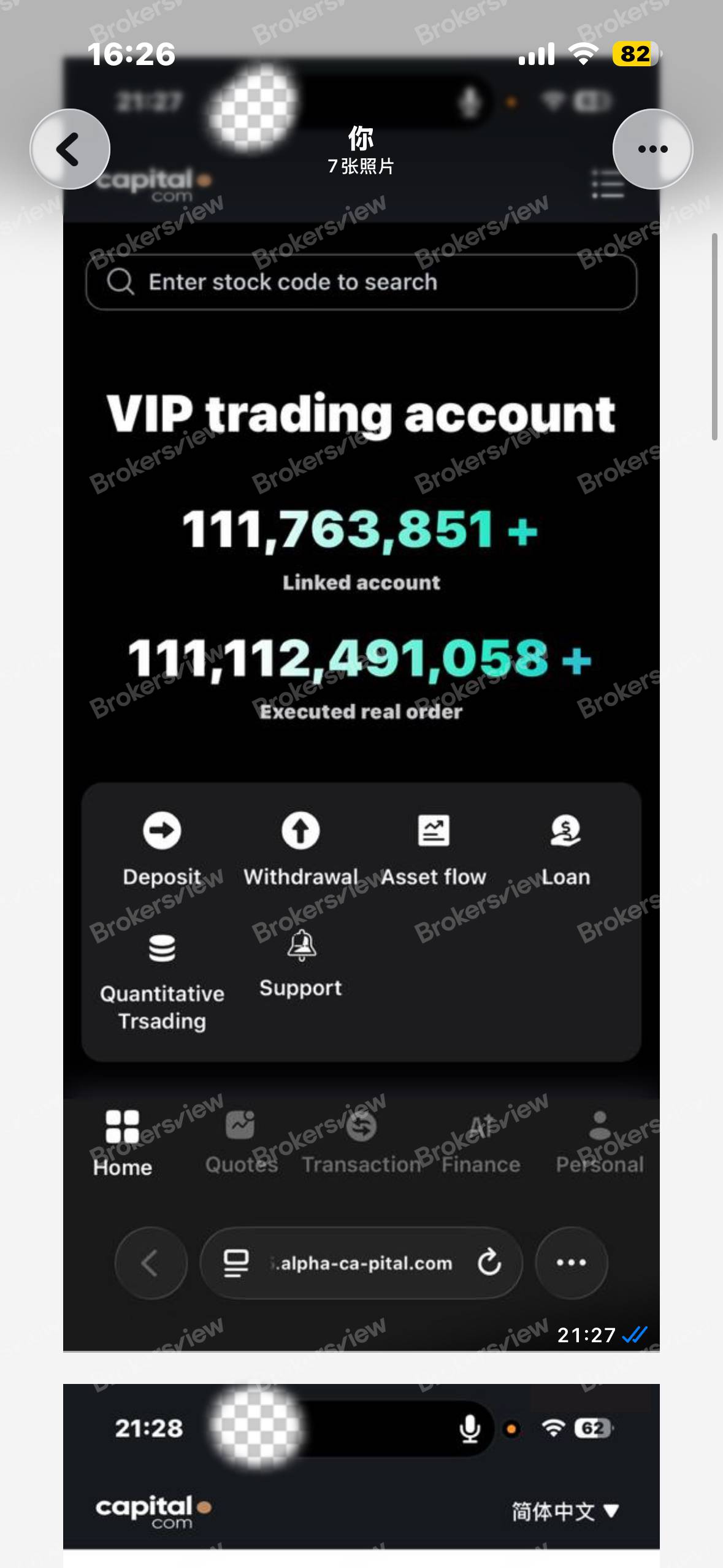
The company also confirmed that the website mentioned in the complaint — alpha-ca-pital.com — was not an official Capital.com website and had no connection with the company.
Capital.com clarified that its official website is capital.com, and warned users to distinguish between the genuine platform and fraudulent websites using similar domain names.
The broker also stated that it does not currently provide services in mainland China and does not offer any lending or credit services. Capital.com emphasized that it would never encourage clients to borrow money, increase deposits, or trade using borrowed funds.
According to the company, any such actions were likely carried out by third parties impersonating Capital.com. And recommended that affected individuals report the matter to local law enforcement.
BrokersView Reminder You
This case once again highlights the danger of clone broker websites and impersonation scams. Fraudsters often copy the names, logos, and appearance of legitimate financial companies, then use fake account managers, social media contacts, and fabricated investment opportunities to gain victims’ trust.
For investors, verifying the official website, checking regulatory information, and avoiding any broker or representative that pressures users to borrow money or make urgent deposits remain essential steps to protect funds.
If the issue remains unresolved, investors may also submit a complaint through the BrokersView Complaint Center for further assistance.



Copyright © 2026 FastBull Ltd


Risk Warning
FX trading is of high risk and may not be suitable for all investors. Leverage will create additional risks and loss. Before trading, please carefully consider your investment objectives, experience level and risk tolerance. You may lose part or all of your initial investment; do not invest money that you cannot afford. Educate yourself about the risks associated with FX trading. If you have any questions, please consult an independent financial or tax advisor. Any data and information are provided "as is" and only for information purpose, not for trading or recommendations. Past performance does not predict future results.
Disclaimer
The data contained in this website may not be real-time and accurate. The data and prices on this site are not necessarily provided by the market or exchange, but may be provided by market makers, so prices may be inaccurate and differ from actual market prices. Namely, this price is indicative price only to reflect market trend, and is unfavorable for trading purpose. The provider of the data contained in the Website shall not be liable for any loss incurred by you as a result of your trading activities or reliance on the information contained in the Website.