


- GBPUSD
- XAUUSD
- XAGUSD
- WTI
- USDX



Thị trường
Phân tích
Người dùng
24x7
Lịch kinh tế
Học tập
Dữ liệu
- Tên
- Mới nhất
- Trước đây













Việc đào Bitcoin một mình vào năm 2025 về mặt kỹ thuật là khả thi nhưng cực kỳ khó khăn. Tìm hiểu về tỷ lệ thành công, chi phí, lợi nhuận so với đào theo nhóm, và liệu có đáng để thử hay không.
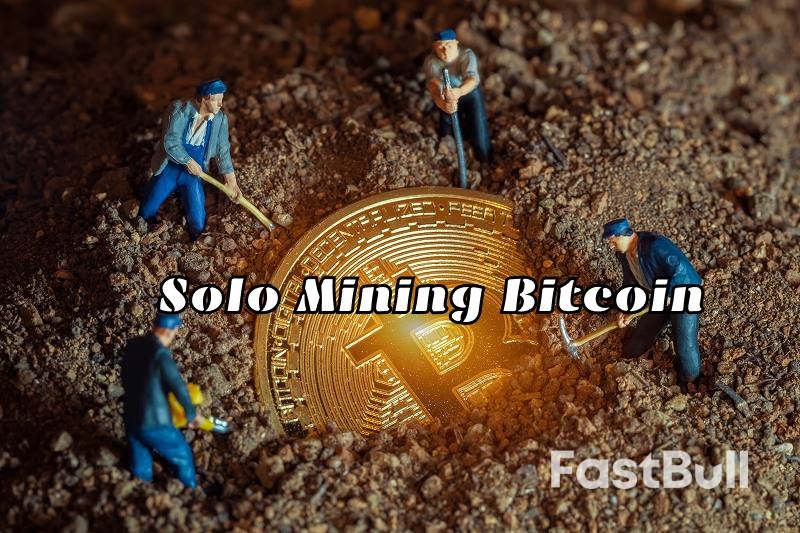
Khai thác Bitcoin một mình đã trở nên ngày càng hiếm hoi khi các nhóm khai thác công nghiệp thống trị mạng lưới vào năm 2025. Tuy nhiên, một số thợ đào vẫn theo đuổi sự độc lập và tiềm năng lợi nhuận trọn vẹn của việc khai thác một mình. Hướng dẫn này giải thích cách thức hoạt động của khai thác một mình hiện nay, mức độ khó khăn của nó, và liệu các cá nhân có còn có thể hưởng lợi từ nó hay không.
Đào Bitcoin một mình nghĩa là bạn tự đào các khối Bitcoin mà không cần tham gia vào một nhóm đào nào. Khi đào một mình, bạn cạnh tranh trực tiếp với toàn bộ mạng lưới thợ đào toàn cầu để giải các câu đố mật mã phức tạp. Nếu tìm thấy một khối, bạn sẽ nhận được toàn bộ phần thưởng khối - hiện tại là 6,25 BTC cộng với phí giao dịch - nhưng bạn tự chịu mọi chi phí tính toán và rủi ro.
Quá trình đào Bitcoin một mình tuân theo cơ chế đồng thuận bằng chứng công việc (proof-of-work) của Bitcoin. Phần cứng đào của bạn liên tục băm dữ liệu tiêu đề khối, tìm kiếm giá trị băm đáp ứng mục tiêu độ khó của mạng. Về cơ bản, đây là một trò chơi xổ số tính toán, trong đó sức mạnh băm càng cao thì cơ hội trúng càng lớn nhưng không đảm bảo điều gì.
Sau đây là những gì xảy ra trong quá trình khai thác bitcoin một mình:
Không giống như khai thác theo nhóm, nơi phần thưởng được phân phối dựa trên công sức đóng góp, khai thác đơn lẻ hoạt động theo cơ chế "được ăn cả ngã về không". Bạn có thể đào trong nhiều tháng hoặc nhiều năm mà không tìm thấy một khối nào, hoặc về mặt lý thuyết, bạn có thể tìm thấy một khối ngay trong ngày đầu tiên - mặc dù kịch bản thứ hai cực kỳ khó xảy ra với phần cứng thông thường.
Việc hiểu được những khác biệt cơ bản giữa khai thác solo và khai thác theo nhóm là điều cần thiết trước khi cam kết nguồn lực cho bất kỳ phương pháp nào.
| Diện mạo | Khai thác đơn lẻ | Khai thác mỏ |
|---|---|---|
| Phân phối phần thưởng | 100% phần thưởng khối (6,25 BTC + phí) nếu thành công | Tỷ lệ chia sẻ dựa trên hashrate đóng góp |
| Tần suất thanh toán | Cực kỳ hiếm, không thể đoán trước (có thể không bao giờ) | Thanh toán thường xuyên (hàng ngày đến hàng tuần) |
| Sự ổn định thu nhập | Không có thu nhập trong thời gian dài, sau đó được trả tiền lớn | Lợi nhuận ổn định và có thể dự đoán được |
| Phí hồ bơi | Không có | 1-3% thu nhập |
| Yêu cầu kỹ thuật | Chạy nút Bitcoin đầy đủ, thiết lập nâng cao | Kết nối đơn giản đến máy chủ nhóm |
| Rủi ro phương sai | Tỷ lệ cược cực kỳ cao—giống như xổ số | Lợi nhuận thấp—được làm mịn trên nhiều thợ đào |
| Hashrate tối thiểu | Thực tế là 100+ TH/s cho bất kỳ cơ hội hợp lý nào | Bất kỳ số tiền nào được chấp nhận (kể cả ASIC đơn lẻ) |
The economic reality is stark: pool mining provides predictable income that covers electricity costs and generates steady profit, while solo mining bitcoin resembles buying lottery tickets with your electricity bill. Most rational miners choose pools because consistent returns allow for business planning, equipment maintenance, and risk management.
The difficulty of solo mining bitcoin has reached unprecedented levels in 2025. To understand just how challenging it has become, we need to examine the current network conditions and calculate your realistic probability of success.
Bitcoin's mining difficulty adjusts every 2,016 blocks (approximately every two weeks) to maintain a consistent 10-minute block time. As of 2025, the network difficulty has increased dramatically compared to Bitcoin's early years, making solo mining exponentially harder than it was even a few years ago.
Key network statistics that impact solo mining difficulty:
This difficulty level means that even a state-of-the-art ASIC miner running at 100 terahashes per second (TH/s) represents only 0.000017% of the total network hashrate. You're competing against massive mining farms with thousands of machines operating in regions with cheap electricity.
Mathematics reveals the harsh reality of bitcoin solo mining success. Your probability of finding a block depends entirely on your hashrate relative to the total network hashrate.
Here's the probability calculation for different hardware scenarios:
| Your Hashrate | % of Network | Expected Time to Find 1 Block | Probability per Day |
|---|---|---|---|
| 100 TH/s (1 high-end ASIC) | 0.000017% | ~11.4 years | 0.024% |
| 500 TH/s (5 ASICs) | 0.000083% | ~2.3 years | 0.12% |
| 1 PH/s (10 ASICs) | 0.00017% | ~14 months | 0.24% |
| 10 PH/s (100 ASICs) | 0.0017% | ~42 days | 2.4% |
| 100 PH/s (1000 ASICs) | 0.017% | ~4.2 days | 24% |
These are expected averages based on probability. The actual time could be much shorter or significantly longer due to the random nature of mining. You might find a block on your first day (probability near zero) or mine for triple the expected time without success—both scenarios have occurred in practice.
For perspective, if you run a single high-end ASIC costing $3,000-$5,000 with electricity expenses around $150-$300 monthly, you could spend $20,000+ on electricity over the expected 11.4 years before finding your first block. Even if successful, the block reward might not cover your accumulated costs, especially considering hardware depreciation and potential Bitcoin price fluctuations.
Despite astronomical odds, solo bitcoin mining pool victories do occasionally occur—but context matters enormously when evaluating these rare successes.
Notable recent success cases include:
The failure stories are far more common but rarely discussed:
Even success stories often reveal that pool mining would have been more profitable when considering risk-adjusted returns. The psychological appeal of potentially winning a full block reward clouds the mathematical reality that consistent pool returns typically generate superior outcomes over time.
Successfully mining bitcoins solo demands significant hardware investment and infrastructure planning. Unlike pool mining where even modest equipment can generate some returns, solo mining requires substantial computational power to have any realistic chance of finding a block within a reasonable timeframe.
Application-Specific Integrated Circuit (ASIC) miners are the only viable hardware for solo bitcoin mining in 2025. Graphics cards (GPUs) and CPUs became obsolete for Bitcoin mining years ago due to efficiency limitations. Modern ASIC miners are purpose-built for the SHA-256 algorithm that Bitcoin uses, delivering hashrates that general-purpose hardware cannot match.
Current top-tier ASIC miners for solo mining consideration:
| Model | Hashrate | Power Consumption | Efficiency | Approximate Cost |
|---|---|---|---|---|
| Antminer S21 | 200 TH/s | 3,500W | 17.5 J/TH | $5,000-$7,000 |
| Whatsminer M60 | 172 TH/s | 3,344W | 19.4 J/TH | $4,500-$6,500 |
| Antminer S19 XP | 140 TH/s | 3,010W | 21.5 J/TH | $3,500-$5,000 |
| AvalonMiner 1466 | 150 TH/s | 3,500W | 23.3 J/TH | $4,000-$5,500 |
For solo mining to be remotely feasible, you realistically need at least 500 TH/s to 1 PH/s of total hashrate. This translates to investing in 3-5 high-end ASIC miners, with an initial hardware outlay of $15,000 to $35,000. Even at this investment level, your expected time to find a block remains between 1-3 years under current network conditions.
Critical factors when selecting ASIC hardware:
Some miners explore solar powered bitcoin mining to offset electricity costs, though this requires additional investment in solar panels, inverters, and battery storage systems. A typical ASIC drawing 3,500 watts continuously needs approximately 12-15 kilowatts of solar panel capacity (accounting for efficiency losses and nighttime operations), adding $10,000-$20,000 to your initial investment per miner.
Electricity represents the ongoing operational expense that determines whether solo bitcoin mining remains financially viable. Unlike the one-time hardware purchase, electricity costs accumulate continuously and often exceed hardware investment over extended mining periods.
Understanding your electricity costs:
| Hardware Setup | Total Power Draw | Monthly kWh | Cost at $0.10/kWh | Cost at $0.15/kWh |
|---|---|---|---|---|
| 1 ASIC (200 TH/s) | 3,500W | 2,520 kWh | $252 | $378 |
| 3 ASICs (600 TH/s) | 10,500W | 7,560 kWh | $756 | $1,134 |
| 5 ASICs (1 PH/s) | 17,500W | 12,600 kWh | $1,260 | $1,890 |
| 10 ASICs (2 PH/s) | 35,000W | 25,200 kWh | $2,520 | $3,780 |
Beyond electricity, infrastructure requirements add substantial costs:
Solar bitcoin mining can reduce operational costs, but requires substantial upfront investment and depends heavily on geographic location. Areas with optimal sun exposure (Southwest United States, parts of Australia, Middle East) provide better ROI for solar installations. However, battery storage systems necessary for 24/7 mining operations significantly increase costs—a battery bank capable of running 5 ASICs overnight might cost $15,000-$30,000 alone.
Insurance and maintenance represent ongoing expenses often overlooked by new miners. ASIC miners require regular cleaning, fan replacements, and occasional repairs. Budget approximately 5-10% of hardware value annually for maintenance and unexpected component failures.
Return on investment calculations for solo bitcoin mining reveal why most rational actors choose pool mining instead. While the potential for a massive one-time payout exists, the mathematical expected value typically favors consistent pool returns when accounting for risk, time value of money, and operational complexities.
A comprehensive cost analysis exposes the financial reality of solo mining attempts. Let's examine a realistic scenario with specific numbers to illustrate the economic challenge.
Example scenario: 1 PH/s solo mining operation (5 high-end ASICs)
| Cost Category | Initial Investment | Monthly Recurring | Annual Total |
|---|---|---|---|
| ASIC Hardware (5 miners) | $30,000 | — | — |
| Infrastructure Setup | $5,000 | — | — |
| Electricity (at $0.12/kWh) | — | $1,512 | $18,144 |
| Internet Maintenance | — | $150 | $1,800 |
| Hardware Depreciation | — | — | $7,500 |
| Total First Year | $35,000 | $1,662 | $62,444 |
Expected outcome analysis:
This appears attractive on paper, but several critical risk factors undermine this optimistic scenario:
The probability distribution matters enormously. You have roughly a 30% chance of finding zero blocks in 20 months, a scenario where you lose your entire $70,000+ investment. Conversely, you have about a 5% chance of finding a block within 2 months, generating exceptional returns. This risk profile resembles venture capital investing or gambling rather than traditional business operations.
Comparing identical hardware operating in solo versus pool mining modes reveals the fundamental economic trade-off between variance and expected value.
Using the same 1 PH/s setup over 14 months:
| Metric | Solo Mining | Pool Mining |
|---|---|---|
| Expected Blocks Found | 1 block (average) | N/A (proportional shares) |
| Expected Revenue | $381,000-$393,000 | $385,000 |
| Pool Fees | $0 | $7,700 (2%) |
| Net Mining Revenue | $381,000-$393,000 | $377,300 |
| Operating Costs | $58,317 | $58,317 |
| Net Profit | $322,683-$334,683 | $318,983 |
| Revenue Certainty | High variance (might be $0) | 99%+ certainty |
| Cash Flow | Zero for months, then lump sum | Daily/weekly payouts |
The expected value difference is minimal—solo mining potentially saves 2% in pool fees, translating to roughly $3,700-$15,700 more profit over 14 months. However, this marginal advantage disappears when considering:
The solo bitcoin mining pool concept has emerged as a middle-ground option, where miners contribute hashrate to a pool that attempts solo mining on behalf of participants. If the pool finds a block, rewards distribute proportionally among contributors. This reduces individual variance while maintaining some solo mining characteristics, though it doesn't eliminate the fundamental probability challenges of competing against the entire network.
Bitcoin's notorious price volatility introduces another layer of complexity to solo mining ROI calculations. Unlike pool mining where you can sell rewards regularly to lock in prices, solo mining forces you to bet on Bitcoin's value at an unknowable future date when you might find a block.
Price scenario analysis for 1 PH/s operation finding a block after 14 months:
| BTC Price Scenario | Block Reward Value | Total Costs | Net Profit/Loss | ROI |
|---|---|---|---|---|
| $100,000 (bull case) | $635,000 | $58,317 | +$576,683 | 989% |
| $80,000 (optimistic) | $508,000 | $58,317 | +$449,683 | 771% |
| $60,000 (moderate) | $381,000 | $58,317 | +$322,683 | 553% |
| $40,000 (pessimistic) | $254,000 | $58,317 | +$195,683 | 336% |
| $25,000 (bear market) | $158,750 | $58,317 | +$100,433 | 172% |
Even in pessimistic price scenarios, finding a block generates positive returns—but this analysis assumes you successfully find a block. The compounding risk involves both probability (might never find a block) and price uncertainty (block might be worth less than expected).
Additional price-related considerations:
The optimal strategy for most miners involves pool mining to generate steady income while Bitcoin price remains uncertain, then potentially switching to solo mining only if accumulating significant hashrate (10+ PH/s) that makes probability of success reasonable within specific timeframes. Attempting solo mining with modest hashrate essentially converts your mining operation into a speculative bet on both probability and future Bitcoin valuation—a dual-risk proposition that sophisticated investors typically avoid.
Setting up a solo mining operation requires technical knowledge beyond simply connecting hardware to a pool. You'll need to run your own Bitcoin node, configure mining software, and maintain reliable infrastructure. This section walks through the essential steps for anyone determined to attempt mining bitcoins solo despite the challenging odds.
The foundation of any solo mining operation is a fully synchronized Bitcoin Core node. Unlike pool mining where the pool operator manages blockchain data, solo miners must maintain their own complete copy of the Bitcoin blockchain and validate all transactions independently.
Step-by-step Bitcoin Core installation:
Mining software configuration comes next. Several options exist for solo bitcoin mining, each with different features and compatibility:
| Software | Best For | Key Features | Difficulty Level |
|---|---|---|---|
| CGMiner | Advanced users | Highly customizable, supports multiple hardware types | High |
| BFGMiner | ASIC miners | Dynamic clocking, monitoring, remote interface | High |
| Braiins OS+ | Antminer hardware | Firmware replacement with optimization features | Medium |
| Solo CK Pool | Beginners wanting solo experience | Simplified solo mining without running full node | Low |
For true solo mining, CGMiner or BFGMiner connected to your local Bitcoin Core node provides complete control. Configure your mining software with these essential parameters:
Alternative approach for those wanting to avoid full node complexity: solo bitcoin mining pool services like Solo CK Pool allow you to attempt solo mining by connecting your hardware to their infrastructure. You maintain the solo mining reward structure (keeping 100% of any block found minus a small fee), but delegate the technical burden of running a node. This reduces setup complexity but introduces minor centralization and trust requirements.
Once your software infrastructure is ready, connecting ASIC hardware involves both physical setup and network configuration. Modern ASICs include built-in web interfaces that simplify configuration compared to earlier generations of mining hardware.
Physical connection process:
Network configuration through ASIC web interface:
Verification steps to confirm successful connection:
Common troubleshooting issues include incorrect RPC credentials, firewall blocking connections between miner and node, or insufficient PSU power delivery causing hashboard failures. Most ASIC manufacturers provide detailed logs through the web interface that help diagnose connectivity problems.
Continuous monitoring separates successful mining operations from costly failures. Hardware issues, network disruptions, or configuration problems can silently drain electricity for days while generating zero useful work. Implementing robust monitoring systems provides early warning of problems and maximizes your already-slim chances of bitcoin solo mining success.
Essential metrics to monitor continuously:
Monitoring tools and platforms:
| Tool | Type | Key Features | Cost |
|---|---|---|---|
| Awesome Miner | Software suite | Multi-device monitoring, alerts, remote management | Free (limited) / $200+ (pro) |
| Hive OS | Operating system | Comprehensive dashboard, mobile app, auto-tuning | Free (3 devices) / $3/device/month |
| MinerStat | Web platform | Cloud monitoring, profit switching, alerts | $2-4/device/month |
| Built-in ASIC interface | Hardware native | Basic stats, logs, configuration | Free (included) |
Setting up effective alert systems prevents costly extended downtime:
For operations using solar powered bitcoin mining, additional monitoring becomes essential. Track solar panel output, battery charge levels, and grid consumption to optimize your energy mix. Solar monitoring systems should alert you when battery reserves drop below thresholds needed to maintain 24/7 operation, allowing you to temporarily reduce mining intensity or switch to grid power during extended cloudy periods.
Regular maintenance schedules complement automated monitoring. Monthly tasks should include physically inspecting your ASICs for dust accumulation, verifying all fans spin freely, checking cable connections remain secure, and reviewing performance trends to identify gradual degradation before catastrophic failure occurs. Quarterly deep cleaning with compressed air prevents dust buildup that reduces cooling efficiency and shortens hardware lifespan.
Documentation practices help optimize long-term operations. Maintain logs of hashrate performance, downtime incidents, maintenance activities, and electricity costs. This data proves invaluable for calculating actual ROI, identifying patterns in hardware behavior, and making informed decisions about when to upgrade equipment or abandon unprofitable operations.
Yes, solo mining Bitcoin is still possible in 2025, but success chances are extremely low due to the high network difficulty and dominance of industrial-scale miners.
Với một máy đào ASIC cao cấp, trung bình có thể mất hơn 10 năm để tìm được một khối. Ngay cả những thiết bị lớn cũng có thể phải chờ hàng tháng hoặc hàng năm mà vẫn không thành công.
Hầu hết thợ đào đơn lẻ không kiếm được gì trừ khi họ tìm thấy một khối đầy đủ. Khi thành công, phần thưởng có thể vượt quá 300.000 đô la tùy thuộc vào giá và phí của Bitcoin.
Đúng vậy, khai thác đơn lẻ là hợp pháp và phù hợp với thiết kế phi tập trung của Bitcoin. Tuy nhiên, khả năng sinh lời ổn định là rất thấp đối với hầu hết mọi người.
Việc khai thác Bitcoin một mình vào năm 2025 về mặt kỹ thuật vẫn khả thi nhưng đầy thách thức. Việc này đòi hỏi đầu tư đáng kể, nguồn điện liên tục và sự sẵn sàng chấp nhận rủi ro dài hạn để đạt được những phần thưởng không chắc chắn. Mặc dù hấp dẫn những người coi trọng tính độc lập và phi tập trung, hầu hết thợ đào đều thấy khai thác theo nhóm là một phương pháp thực tế và sinh lời hơn nhiều.

728 RM B 7/F GEE LOK IND BLDG NO 34 HUNG TO RD KWUN TONG KLN HONG KONG





Giao dịch các công cụ tài chính như cổ phiếu, tiền tệ, hàng hóa, hợp đồng tương lai, trái phiếu, quỹ hoặc tiền kỹ thuật số tiềm ẩn mức độ rủi ro cao, bao gồm rủi ro mất một phần hoặc toàn bộ vốn đầu tư, và có thể không phù hợp với mọi nhà đầu tư.
Trước khi quyết định giao dịch các công cụ tài chính hoặc tiền điện tử, bạn cần hiểu đầy đủ về rủi ro và chi phí giao dịch trên thị trường tài chính, thận trọng cân nhắc đối tượng đầu tư, và tiến hành tư vấn chuyên môn cần thiết. Dữ liệu trên trang web này không nhất thiết là theo thời gian thực hay chính xác. Dữ liệu và giá cả trên trang web không nhất thiết là thông tin do bất kỳ sở giao dịch nào cung cấp, nhưng có thể được cung cấp bởi các nhà tạo lập thị trường. Bạn chịu trách nhiệm hoàn toàn về tất cả quyết kết giao dịch bạn đã thực hiện. Chúng tôi không chấp nhận bất cứ nghĩa vụ nào trước bất kỳ tổn thất hay thiệt hại nào xảy ra từ kết quả giao dịch của bạn, hoặc trước việc bạn dựa vào thông tin có trong trang web này.
Bạn không được phép sử dụng, lưu trữ, sao chép, hiển thị, sửa đổi, truyền hay phân phối dữ liệu có trên trang web này và chưa nhận được sự cho phép rõ ràng bằng văn bản của Trang web này. Tất cả các quyền sở hữu trí tuệ đều được bảo hộ bởi các nhà cung cấp và/hoặc sở giao dịch cung cấp dữ liệu có trên trang web này.
Chưa đăng nhập
Đăng nhập để xem nội dung nhiều hơn


Đăng nhập
Đăng ký


