


Navigating the Delicate Balance: EA Profits and Compliance Risks in the Age of Automation
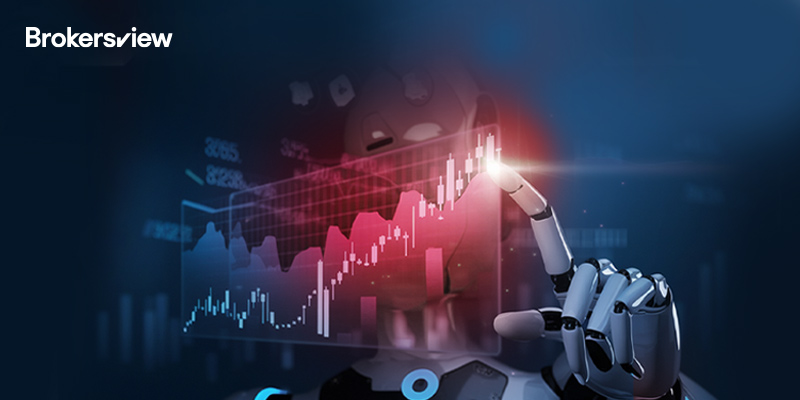
In the global financial landscape of 2026, the Forex market is undergoing a profound transformation led by algorithms. According to data from 2025, the daily global Forex turnover has surged to $9.6 trillion. Behind this staggering figure, over 92% of trading orders are no longer executed by human hands but by tireless Expert Advisors (EAs). This migration from "intuitive decision-making" to "logical execution" has shifted automation tools from a mere industry trend to a fundamental law of market survival.
The "Dimensional Strike" on Human Weakness
The rise of automated trading is, at its core, a battle against human physiological limitations. In traditional demo account testing, many traders demonstrate impressive profitability. However, once real capital is at stake, as many as 83% of traders fail due to emotional biases like fear and greed. This is where the core value of an EA lies—it solidifies pre-set stop-loss and take-profit logic into code, ensuring that trades maintain machine-like calm and discipline even amidst violent market volatility.
Furthermore, the 24/7 nature of the Forex market means that golden hours—such as the London-New York session overlap, which accounts for 37% of daily volume—often fall outside human waking hours. EAs not only fill the gap in market monitoring but also eliminate guesswork in strategy development through robust historical backtesting. Statistics show that over half of retail investors and the vast majority of quantitative analysts now consider backtesting a mandatory step before depositing funds.
The "Technical Red Line" Hidden Behind Efficiency
However, pursuing extreme efficiency without boundaries can easily lead to conflicts with broker rules. A recent incident involving an Iranian trader on the OpoFinance platform reveals the darker side of EA trading. By deploying a high-frequency robot that executed over 900,000 orders on the SOL/USD pair in a very short period, the trader triggered the platform's defense mechanisms—even though each trade was only 0.01 lots.
In the ensuing dispute, the broker forcibly liquidated the positions and deleted the account under the guise of "protecting infrastructure," resulting in a loss of approximately $2,300. Although the trader appealed to the Financial Commission (FinCom), the investigation ultimately supported the broker. It was ruled that such extreme high-frequency activity exceeded normal investment behavior and was categorized as an intentional circumvention of system characteristics or an attack on server load. This case clearly demonstrates that even platforms claiming to support EAs will not hesitate to intervene when an "algorithmic flood" threatens system stability.
Finding the Golden Ratio Between Precision and Rules
Automated trading is by no means a guaranteed "money-making machine." For savvy traders, the true competitive advantage does not rely solely on execution speed but on the organic integration of human market insight with machine precision. An EA can only truly serve as a "wealth engine" when it is viewed as a risk management tool rather than a shortcut to exploit system loopholes.
BrokersView Reminds You
While automated strategies are powerful, traders face significant compliance risks if they do not understand the underlying rules:
- Beware of the High-Frequency Gray Area: Most retail brokers, while supporting EAs, reserve the right to "infrastructure protection" in their terms of service. Generating hundreds of thousands of requests in a short time—even with micro-lots—can easily trigger risk controls and lead to account bans.
- Study Execution Policies Deeply: Before running any EA, you must read the platform's execution policy thoroughly, particularly specific restrictions on server load and scalping strategies, to avoid being flagged for aggressive behavior.
- Ensure a Complete Evidence Chain: Automated trading does not mean operating outside of oversight. Ensure your trading logs are backed up regularly. In cases like the OpoFinance dispute, where network outages or account deletions occur, these logs are critical evidence to prove your case to regulators or dispute resolution bodies.
If you encounter malicious liquidation or data deletion while using automated programs, please contact BrokersView immediately to submit evidence. We will assist you with rights protection.

Hottest


Copyright © 2026 FastBull Ltd


Risk Warning
FX trading is of high risk and may not be suitable for all investors. Leverage will create additional risks and loss. Before trading, please carefully consider your investment objectives, experience level and risk tolerance. You may lose part or all of your initial investment; do not invest money that you cannot afford. Educate yourself about the risks associated with FX trading. If you have any questions, please consult an independent financial or tax advisor. Any data and information are provided "as is" and only for information purpose, not for trading or recommendations. Past performance does not predict future results.
Disclaimer
The data contained in this website may not be real-time and accurate. The data and prices on this site are not necessarily provided by the market or exchange, but may be provided by market makers, so prices may be inaccurate and differ from actual market prices. Namely, this price is indicative price only to reflect market trend, and is unfavorable for trading purpose. The provider of the data contained in the Website shall not be liable for any loss incurred by you as a result of your trading activities or reliance on the information contained in the Website.