


The Trading Paradox: How the Illusion of Control Through "Busyness" Empties Your Wallet
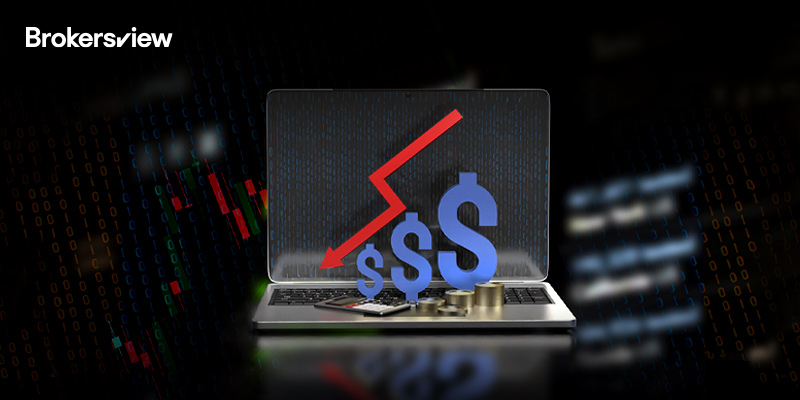
"Trading becomes a source of income only when it stops being emotional turbulence and turns into a boring, clear-cut profession."
This quote from the trading community reveals a highly ironic phenomenon in financial markets: many plunge into trading in pursuit of freedom, only to find themselves trapped in a grueling, 24/7 grind. Even now, in 2026, the debate over whether trading is a legitimate profession or a sophisticated scam continues to vibrate among market participants.
Busyness Is Not Work
Imagine a surgeon who, during an operation, decides to switch instruments every two minutes just because it "feels" better, or makes a few extra incisions "just in case." While that sounds horrifying, it is exactly how countless traders behave in front of their terminals every day.
Many traders suffer from "Restless Hands Syndrome." They frequently move stop-losses to give the price more "breathing room" or rush to close positions early for a "bird in the hand" before their targets are ever reached. These "extra" moves are not protecting profit; they are creating chaos. A professional seeks one precise cut like a surgeon, while an amateur fidgets until their entire account is flooded with the "blood" of their margin.
In essence, trading becomes a profession only when you stop reacting and start choosing. An amateur reacts instinctively to every tick of a candle, whereas a professional pre-selects the risk they are willing to endure.
Professionalism or Buy-and-Hold?
Even if you possess the icy calm of a surgeon, the market data remains sobering. In social media discussions, many users point to a painful reality: approximately 90% of traders eventually exit the market at a loss. In day trading, the proportion of those who remain consistently profitable is less than 3%.
Some argue that for the vast majority of people, monthly contributions to an investment (such as a Roth IRA or an S&P 500 index fund) will yield more stable and substantial returns over time through the power of compounding. After all, the taxes and transaction fees involved in active trading constantly erode an account's growth potential.
A true strategy isn't a "magic indicator" that draws buy and sell arrows; it is your "guardrail." It answers the question: "What will I definitely not do today?" Without this boundary, risk becomes background noise until it eventually knocks you down. One trader, who struggled through the markets from 2024 to 2025, shared that after failing with options and scaling strategies, he realized that "slowly accumulating small profits" and "swing trading over several weeks" was the right track for him.
Is Trading Just a Massive Scam?
Technically, financial trading itself is totally legitimate, but it is often stigmatized due to unrealistic expectations and unregulated platforms.
The hallmark of turning professional is the moment you decide to stop "playing" the market and start building a "system." This requires infrastructure—you cannot perform surgery with a kitchen knife. As suggested in various discussions, using paper trading or backtesting tools to verify ideas before risking real capital, and seeking guidance from mentors, are effective ways to avoid spinning in circles in the fog.
Becoming a pro isn't about seeking complexity; it's about simplification. Remove unnecessary actions, keep only what matters, and equip yourself with tools that protect you from your "emotional self."
BrokersView Reminds You
Trading can be extremely arduous, and it is not a shortcut to quick wealth. To check more broker risks, please visit the BrokersView Broker page.
Hottest


Copyright © 2026 FastBull Ltd


Risk Warning
FX trading is of high risk and may not be suitable for all investors. Leverage will create additional risks and loss. Before trading, please carefully consider your investment objectives, experience level and risk tolerance. You may lose part or all of your initial investment; do not invest money that you cannot afford. Educate yourself about the risks associated with FX trading. If you have any questions, please consult an independent financial or tax advisor. Any data and information are provided "as is" and only for information purpose, not for trading or recommendations. Past performance does not predict future results.
Disclaimer
The data contained in this website may not be real-time and accurate. The data and prices on this site are not necessarily provided by the market or exchange, but may be provided by market makers, so prices may be inaccurate and differ from actual market prices. Namely, this price is indicative price only to reflect market trend, and is unfavorable for trading purpose. The provider of the data contained in the Website shall not be liable for any loss incurred by you as a result of your trading activities or reliance on the information contained in the Website.