


- WTI
- XAUUSD
- XAGUSD
- USDX


ตลาด
การวิเคราะห์
ผู้ใช้
24x7
ปฏิทินเศรษฐกิจ
แหล่งเรียนรู้
ข้อมูล
- ชื่อ
- ค่าล่าสุด
- ครั้งก่อน












นโยบายการเงินคืออะไร และทำงานอย่างไร เรียนรู้ว่าธนาคารกลางใช้อัตราดอกเบี้ยอย่างไรในการควบคุมอัตราเงินเฟ้อ มีอิทธิพลต่อเศรษฐกิจ และสนับสนุนการเติบโต
นโยบายการเงินคือวิธีการที่ธนาคารกลางใช้ในการควบคุมอัตราดอกเบี้ยและสภาวะทางการเงิน เพื่อควบคุมอัตราเงินเฟ้อและรักษาเสถียรภาพทางเศรษฐกิจ เมื่อราคาสินค้าสูงขึ้นเร็วเกินไป การกู้ยืมอาจมีราคาแพงขึ้น เมื่อการเติบโตทางเศรษฐกิจอ่อนแอลง ต้นทุนการกู้ยืมอาจลดลง การตัดสินใจเหล่านี้ส่งผลกระทบต่อทุกสิ่ง ตั้งแต่สินเชื่อบ้านและเงินออม ไปจนถึงการจ้างงานและการลงทุนทางธุรกิจ
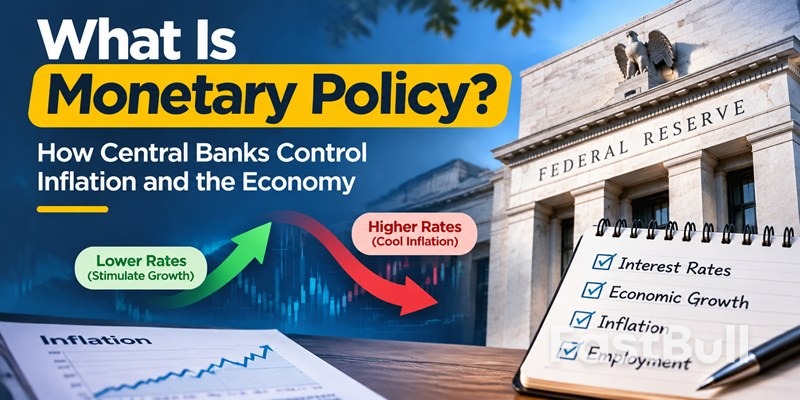
นโยบายการเงินหมายถึงการกระทำของธนาคารกลางเพื่อควบคุมต้นทุนและความพร้อมของเงินและสินเชื่อในระบบเศรษฐกิจ จุดประสงค์คือเพื่อรักษาเสถียรภาพราคาและสนับสนุนกิจกรรมทางเศรษฐกิจที่ยั่งยืน
ธนาคารกลางไม่ได้ควบคุมราคาสินค้าที่ผู้บริโภคจ่ายหรือจำนวนแรงงานที่ธุรกิจจ้างโดยตรง แต่ธนาคารกลางมีอิทธิพลต่อสภาวะทางการเงิน โดยส่วนใหญ่ผ่านทางอัตราดอกเบี้ย ซึ่งส่งผลต่อจำนวนเงินที่ประชาชนกู้ยืม ใช้จ่าย ออม และลงทุน
ลองพิจารณาตัวอย่างง่ายๆ หากอัตราเงินเฟ้อสูงขึ้นเนื่องจากผู้บริโภคและธุรกิจใช้จ่ายเร็วกว่าที่เศรษฐกิจจะสามารถจัดหาสินค้าและบริการได้ ธนาคารกลางอาจขึ้นอัตราดอกเบี้ย ต้นทุนการกู้ยืมที่สูงขึ้นสามารถลดการใช้จ่ายและลดแรงกดดันต่อราคาได้ หากเศรษฐกิจชะลอตัวและอัตราการว่างงานเพิ่มขึ้น ธนาคารกลางอาจลดอัตราดอกเบี้ยเพื่อกระตุ้นการกู้ยืมและการลงทุน
การตัดสินใจเหล่านี้คือการดำเนินงานตามนโยบายการเงิน
เป้าหมายหลักของนโยบายการเงินคือการรักษาเสถียรภาพทางเศรษฐกิจ แม้ว่าความรับผิดชอบเฉพาะเจาะจงจะแตกต่างกันไปในแต่ละประเทศก็ตาม
ในสหรัฐอเมริกา ธนาคารกลางสหรัฐ (Federal Reserve) มีเป้าหมายนโยบายการเงินหลักสองประการ ซึ่งโดยทั่วไปเรียกว่าภารกิจคู่ขนาน (dual mandate ):
ธนาคารกลางสหรัฐตั้งเป้าหมายอัตราเงินเฟ้อไว้ที่ 2% ในระยะยาว โดยวัดจากดัชนีราคาการใช้จ่ายเพื่อการบริโภคส่วนบุคคล (PCE) นี่ไม่ได้หมายความว่าราคาสินค้าควรลดลง 2% หรือคงที่โดยสิ้นเชิง แต่หมายความว่าระดับราคาสินค้าโดยรวมควรเพิ่มขึ้นในอัตราที่ค่อนข้างช้าและคาดการณ์ได้
เป้าหมายเหล่านี้อาจขัดแย้งกันได้ในบางครั้ง อัตราดอกเบี้ยที่ต่ำลงอาจช่วยกระตุ้นการจ้างงาน แต่ก็อาจทำให้เกิดภาวะเงินเฟ้อเพิ่มขึ้น ในขณะที่อัตราดอกเบี้ยที่สูงขึ้นอาจช่วยควบคุมเงินเฟ้อ แต่ก็อาจทำให้การจ้างงานลดลง ผู้กำหนดนโยบายต้องชั่งน้ำหนักผลกระทบเหล่านี้ แทนที่จะมุ่งเน้นเพียงเป้าหมายเดียวโดยไม่คำนึงถึงอีกเป้าหมายหนึ่ง
โดยทั่วไปแล้ว นโยบายการเงินจะถูกบริหารจัดการโดยธนาคารกลางของประเทศ ไม่ใช่โดยรัฐบาลโดยตรง
ในสหรัฐอเมริกาธนาคารกลางสหรัฐ (Federal Reserve)เป็นผู้ดำเนินนโยบายการเงิน คณะกรรมการตลาดเปิดกลาง (FOMC) ของธนาคารกลางสหรัฐเป็นผู้กำหนดช่วงเป้าหมายของอัตราดอกเบี้ยเงินกู้ระหว่างธนาคาร (federal funds rate) ซึ่งเป็นดัชนีชี้วัดที่มีอิทธิพลต่อต้นทุนการกู้ยืมทั่วทั้งระบบเศรษฐกิจ
Other central banks perform similar functions, including the European Central Bank (ECB) in the euro area and the Bank of England (BoE) in the United Kingdom. Their mandates and policy frameworks differ, but controlling inflation is a central responsibility.
Governments influence the economy through taxation and public spending. Those decisions belong to fiscal policy, which is different from monetary policy.
Monetary policy works by changing financial conditions rather than directly ordering businesses to adjust prices or consumers to spend less.
Interest rates are the main channel. When a central bank changes its policy rate, the effects spread through financial markets, commercial banks, household borrowing, and business investment. These changes influence demand for goods and services, which eventually affects employment and inflation.
Suppose inflation is running above the central bank's target. Raising interest rates makes borrowing more expensive. Some households delay purchasing homes or cars, while businesses reconsider expansion plans that depend on loans.
As spending and investment slow, demand puts less pressure on the economy's productive capacity. Businesses may find it harder to raise prices without losing customers, allowing inflation to ease.
The process generally follows this pattern:
Higher interest rates → More expensive borrowing → Slower spending and investment → Weaker demand → Lower inflationary pressure.
Lower interest rates generally work in the opposite direction. They can encourage borrowing and spending, supporting economic growth when demand is weak.
However, monetary policy does not produce immediate or guaranteed results. It can take months or longer for interest rate changes to affect economic activity and inflation. Longer-term borrowing rates also depend on expectations about future rates, inflation, and financial risks.
There are limits to what interest rates can achieve. For example, if oil prices rise because of a disruption in global supply, raising rates cannot produce more oil. It can reduce broader demand and prevent inflation from spreading, but it cannot directly resolve the shortage.
Another important distinction is that lower inflation does not necessarily mean lower prices. If inflation falls from 6% to 2%, prices are still rising, just more slowly than before.
The effects of monetary policy extend beyond inflation statistics. They influence financial decisions that households and businesses make every day.
These effects are connected. A business facing higher loan costs may postpone opening another location. That decision reduces demand for equipment, construction services, and additional workers.
Monetary policy therefore affects employment and economic growth indirectly, even though the central bank does not determine individual wages, loan rates, or hiring decisions.
Central banks adjust monetary policy according to economic conditions. When growth is weak, they may try to stimulate spending and investment. When inflation is persistently high, they may try to reduce demand.
These two approaches are known as expansionary monetary policy and contractionary monetary policy.
Expansionary monetary policy is generally used when economic activity is weak, unemployment is rising, or inflation is below the central bank's target.
Central banks can lower policy interest rates or use other measures to ease financial conditions. The aim is to make borrowing and investment more attractive, encouraging households and businesses to increase spending.
For example, during an economic downturn, a company might delay expanding because sales are falling. Lower financing costs can make new investment more affordable, especially if the company expects demand to recover.
However, lower rates cannot guarantee stronger growth. If businesses are pessimistic about future sales or consumers are worried about losing their jobs, they may avoid borrowing even when credit is inexpensive.
Expansionary policy also carries inflation risks. If demand rises faster than the economy can increase production, prices may begin climbing too quickly.
Contractionary monetary policy is used when inflation is too high or economic demand is growing at an unsustainable pace.
Central banks typically raise policy interest rates or tighten financial conditions through other tools. This discourages some borrowing and spending, helping bring demand closer to the economy's available supply.
For example, if strong consumer demand is allowing businesses to raise prices repeatedly, higher borrowing costs can reduce purchases financed by credit. As demand moderates, businesses may have less room to increase prices.
The trade-off is slower economic activity. If monetary policy becomes too restrictive, businesses may reduce investment, hiring may weaken, and the economy could enter a recession.
The difference between the two approaches is summarized below.
| Feature | Expansionary Policy | Contractionary Policy |
|---|---|---|
| Main Purpose | Stimulate economic activity | Reduce inflationary pressure |
| Typical Conditions | Weak growth, rising unemployment, or low inflation | High inflation or excessive demand |
| Interest Rate Direction | Generally lower | Generally higher |
| Borrowing and Spending | Encouraged | Discouraged |
| Employment Impact | May support hiring | May slow hiring |
| Main Risk | Excessive inflation | Recession and higher unemployment |
Neither approach is inherently better. The appropriate policy depends on whether the economy needs stronger demand or relief from inflationary pressure. Central banks may also keep policy unchanged while assessing whether earlier decisions are having their intended effects.
Central banks use several tools to influence interest rates, credit conditions, and the amount of liquidity in the financial system. The exact tools vary by country, but interest rates and open market operations are among the most important.
The main monetary policy tool used by the Federal Reserve is its target range for the federal funds rate. This is the interest rate banks charge each other for overnight loans of reserve balances.
Although the Fed does not directly set mortgage rates, credit card rates, or business loan rates, changes in the federal funds rate influence borrowing costs across financial markets. Banks adjust their lending and deposit rates as funding conditions change.
The Fed uses several mechanisms to keep short-term market rates within its target range. These include:
Another important tool is open market operations. These involve the Federal Reserve buying or selling government securities, or conducting short-term repurchase agreements, to manage liquidity and support its interest rate targets.
For example, when the Fed buys securities, it adds reserve balances to the banking system. When it conducts operations that absorb reserves, it reduces available liquidity. These operations help the Fed implement its monetary policy decisions.
When adjusting short-term interest rates is not enough to influence financial conditions, central banks can use other measures, including quantitative easing (QE) and quantitative tightening (QT).
QE is generally used when an economy needs additional monetary support, particularly when short-term interest rates are already very low. QT is more commonly used when policymakers want to gradually withdraw some of the monetary support provided through earlier asset purchases.
Other tools include the discount window, through which eligible banks can borrow directly from the Federal Reserve to address short-term funding needs, and forward guidance, which communicates the central bank's likely future policy direction to influence market expectations.
One distinction is important when looking at U.S. monetary policy: although reserve requirements are often listed in traditional explanations of central bank tools, the Federal Reserve reduced reserve requirement ratios to zero in March 2020. They are not a primary tool in its current operating framework.
The Fed also ended its balance sheet reduction process on December 1, 2025. Therefore, QT is useful to understand as a monetary policy tool, but it should not be confused with an ongoing Fed policy as of November 2026.
For a complete overview, see the Federal Reserve's monetary policy tools.
The Federal Reserve does not raise or lower interest rates simply because inflation changes in one month. Its policymakers examine a range of economic indicators to determine whether the economy needs tighter or looser financial conditions.
The Federal Open Market Committee (FOMC) is responsible for setting the direction of U.S. monetary policy. It holds eight regularly scheduled meetings each year to review economic conditions and decide whether to change its policy stance.
Several factors influence these decisions:
The Fed must also consider how long monetary policy takes to work. An interest rate increase may affect new borrowing relatively quickly, but its full impact on consumer spending, business investment, hiring, and inflation can take much longer to appear.
This is why policymakers look at both current economic data and the likely direction of the economy. Raising rates too aggressively can weaken employment and growth, while waiting too long to address persistent inflation can allow price pressures to become more entrenched.
As of November 13, 2026, the Federal Reserve's latest monetary policy decision was announced on October 28, 2026. The FOMC voted 10–2 to maintain the federal funds rate target range at 3.75% to 4.00%.
The Committee said economic activity was expanding at a strong pace, supported by resilient domestic spending, productivity growth, and business investment. Job gains had kept pace with the workforce, while inflation remained elevated relative to the Fed's 2% goal.
The decision was not unanimous. Two FOMC members, Lisa D. Cook and Beth M. Hammack, preferred to raise the target range by another 0.25 percentage point rather than leave rates unchanged.
This decision illustrates an important point: monetary policy is not determined by inflation alone. The Fed must weigh price stability against employment and economic growth, particularly when different indicators suggest different policy responses.
Future rate decisions will depend on incoming economic data and how inflation and employment develop. The Fed does not follow a fixed schedule of rate increases or cuts simply because a particular number of months has passed.
You can check the October 28, 2026 FOMC statement for the official decision and its economic assessment.
Monetary policy and fiscal policy are two major ways governments influence economic activity, but they work through different channels and are controlled by different institutions.
นโยบายการเงินบริหารจัดการโดยธนาคารกลางของประเทศ และมีอิทธิพลหลักต่ออัตราดอกเบี้ย เงื่อนไขสินเชื่อ และสภาพคล่องทางการเงิน ส่วนนโยบายการคลังกำหนดโดยรัฐบาลผ่านการจัดเก็บภาษี การใช้จ่ายภาครัฐ และการกู้ยืม
ในสหรัฐอเมริกา ธนาคารกลางสหรัฐ (Federal Reserve) ทำหน้าที่บริหารนโยบายการเงิน ในขณะที่รัฐสภาและฝ่ายบริหารทำหน้าที่ตัดสินใจเกี่ยวกับนโยบายการคลัง
| คุณสมบัติ | นโยบายการเงิน | นโยบายการคลัง |
|---|---|---|
| ใครเป็นผู้ควบคุม? | ธนาคารกลาง เช่น ธนาคารกลางสหรัฐ (Federal Reserve) | รัฐบาล ซึ่งรวมถึงรัฐสภาและฝ่ายบริหารในสหรัฐอเมริกา |
| เครื่องมือหลัก | อัตราดอกเบี้ย การดำเนินงานในตลาดเปิด และการซื้อสินทรัพย์ | ภาษี การใช้จ่ายของรัฐบาล และการโอนเงิน |
| จุดเน้นหลัก | เสถียรภาพราคาและการจ้างงาน | การเติบโตทางเศรษฐกิจ บริการสาธารณะ การสนับสนุนรายได้ และการจ้างงาน |
| ผลกระทบต่อเศรษฐกิจ | การเปลี่ยนแปลงต้นทุนการกู้ยืม เงื่อนไขสินเชื่อ และแรงจูงใจในการใช้จ่าย | การเปลี่ยนแปลงรายได้ครัวเรือน แรงจูงใจทางธุรกิจ และความต้องการของประชาชน |
| ตัวอย่าง | ธนาคารกลางสหรัฐ (เฟด) ปรับขึ้นอัตราดอกเบี้ยเพื่อลดแรงกดดันด้านเงินเฟ้อ | รัฐบาลเพิ่มงบประมาณด้านโครงสร้างพื้นฐานเพื่อสนับสนุนกิจกรรมทางเศรษฐกิจ |
นโยบายทั้งสองสามารถส่งเสริมซึ่งกันและกันได้ แต่ก็อาจดึงเศรษฐกิจไปในทิศทางที่แตกต่างกันได้เช่นกัน
ตัวอย่างเช่น ในช่วงเศรษฐกิจถดถอย รัฐบาลอาจเพิ่มการใช้จ่ายภาครัฐเพื่อสนับสนุนการจ้างงานและความต้องการของผู้บริโภค ในขณะที่ธนาคารกลางลดอัตราดอกเบี้ยเพื่อกระตุ้นการกู้ยืมและการลงทุนของภาคเอกชน การดำเนินการทั้งสองอย่างนี้สามารถช่วยสนับสนุนการฟื้นตัวทางเศรษฐกิจได้
อย่างไรก็ตาม หากรัฐบาลเพิ่มการใช้จ่ายอย่างมีนัยสำคัญในขณะที่อัตราเงินเฟ้อสูงอยู่แล้ว ธนาคารกลางอาจจำเป็นต้องคงอัตราดอกเบี้ยไว้ในระดับสูงหรือเข้มงวดนโยบายการเงินเพื่อป้องกันไม่ให้ความต้องการที่เพิ่มขึ้นผลักดันราคาให้สูงขึ้น
กล่าวโดยสรุป นโยบายการเงินมีอิทธิพลต่อต้นทุนและความพร้อมใช้งานของเงินและสินเชื่อ ในขณะที่นโยบายการคลังเปลี่ยนแปลงรายได้และรายจ่ายของรัฐบาลโดยตรง ทั้งสองนโยบายส่งผลต่อการเติบโตทางเศรษฐกิจ แต่ใช้กลไกที่แตกต่างกัน
สำหรับรายละเอียดเพิ่มเติม โปรดดูคำอธิบายของธนาคารกลางสหรัฐเกี่ยวกับความแตกต่างระหว่างนโยบายการเงินและนโยบายการคลัง
นโยบายการเงินมีอิทธิพลต่ออัตราเงินเฟ้อ การจ้างงาน และการเติบโตทางเศรษฐกิจโดยการเปลี่ยนแปลงอัตราดอกเบี้ยและเงื่อนไขทางการเงิน การทำความเข้าใจว่าธนาคารกลางใช้เครื่องมือเหล่านี้อย่างไร จะช่วยอธิบายได้ว่าเหตุใดการตัดสินใจของธนาคารกลางจึงส่งผลกระทบต่อการกู้ยืม การออม การลงทุนทางธุรกิจ และเศรษฐกิจโดยรวม

728 RM B 7/F GEE LOK IND BLDG NO 34 HUNG TO RD KWUN TONG KLN HONG KONG


ความเสี่ยงของการสูญเสียในการซื้อขายสินทรัพย์ทางการเงิน เช่น หุ้น FX สินค้าโภคภัณฑ์ ฟิวเจอร์ส พันธบัตร ETFs หรือเงินดิจิทัลอาจมีมาก คุณอาจสูญเสียเงินทุนทั้งหมดที่คุณฝากไว้กับโบรกเกอร์ของคุณ ดังนั้น คุณควรพิจารณาอย่างรอบคอบว่าการซื้อขายดังกล่าวเหมาะสมกับคุณหรือไม่ในสถานการณ์และทรัพยากรทางการเงินของคุณ
ไม่ควรตัดสินใจลงทุนโดยไม่ได้ดำเนินการตรวจสอบสถานะอย่างละเอียดถี่ถ้วนด้วยตัวเองหรือปรึกษากับที่ปรึกษาทางการเงินของคุณ เนื้อหาเว็บของเราอาจไม่เหมาะกับคุณเนื่องจากเราไม่ทราบเงื่อนไขทางการเงินและความต้องการในการลงทุนของคุณ ข้อมูลทางการเงินของเราอาจมีความล่าช้าหรือมีความไม่ถูกต้อง ดังนั้นคุณควรรับผิดชอบอย่างเต็มที่ต่อการตัดสินใจซื้อขายและการลงทุนของคุณ บริษัทจะไม่รับผิดชอบต่อการสูญเสียเงินทุนของคุณ
หากไม่ได้รับอนุญาตจากเว็บไซต์ คุณจะไม่สามารถคัดลอกกราฟิก ข้อความ หรือเครื่องหมายการค้าของเว็บไซต์ได้ สิทธิ์ในทรัพย์สินทางปัญญาในเนื้อหาหรือข้อมูลที่รวมอยู่ในเว็บไซต์นี้เป็นของผู้ให้บริการและผู้ค้าแลกเปลี่ยน
ไม่ได้ล็อกอิน
เข้าสู่ระบบเพื่อเข้าถึงฟังก์ชั่นเพิ่มเติม


เข้าสู่ระบบ
ลงทะเบียน


