


- XAUUSD
- XAGUSD
- WTI
- USDX


ตลาด
การวิเคราะห์
ผู้ใช้
24x7
ปฏิทินเศรษฐกิจ
แหล่งเรียนรู้
ข้อมูล
- ชื่อ
- ค่าล่าสุด
- ครั้งก่อน










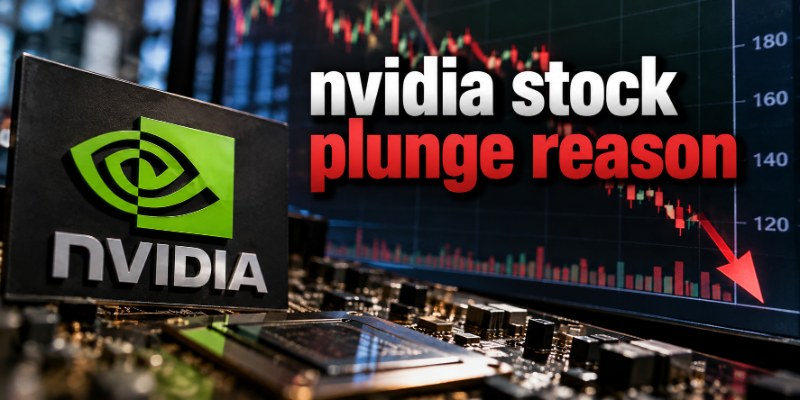
เหตุใดราคาหุ้น Nvidia จึงร่วงลงในปี 2026? มาสำรวจเหตุผลสำคัญที่อยู่เบื้องหลังการลดลงของราคาหุ้น NVDA ซึ่งรวมถึงข้อจำกัดด้านชิปจากจีน ความกังวลเกี่ยวกับการใช้จ่ายด้าน AI การแข่งขัน และความเสี่ยงด้านการประเมินมูลค่า
หุ้น Nvidia เผชิญแรงกดดันในเดือนตุลาคม 2026 ทำให้นักลงทุนสงสัยว่าทำไมหนึ่งในบริษัทที่ได้รับประโยชน์มากที่สุดจากความเฟื่องฟูของ AI จึงกำลังประสบปัญหา คำตอบนั้นไม่ใช่แค่ข่าวร้ายเพียงข่าวเดียว ข้อจำกัดการส่งออกของจีน การแข่งขันที่เพิ่มขึ้น ความกังวลเกี่ยวกับภาวะเงินเฟ้อ และคำถามเกี่ยวกับการใช้จ่ายด้าน AI ล้วนเป็นปัจจัยที่กดดัน NVDA แม้ว่าธุรกิจพื้นฐานของ Nvidia จะยังคงเติบโตอย่างต่อเนื่องก็ตาม
สารบัญ
สาเหตุหลักที่ทำให้ราคาหุ้นของ Nvidia ร่วงลงในช่วงที่ผ่านมา เกิดจากความเสี่ยงเฉพาะของบริษัทและแรงกดดันในวงกว้างต่อหุ้นกลุ่มเทคโนโลยี
เมื่อวันที่ 14 ตุลาคม หุ้นของ Nvidia ร่วงลงประมาณ 3.6% ในช่วงบ่าย เนื่องจากข้อมูลอัตราเงินเฟ้อของสหรัฐฯ ที่สูงกว่าที่คาดการณ์ไว้ ส่งผลให้อัตราผลตอบแทนพันธบัตรของรัฐบาลสหรัฐฯ ปรับตัวสูงขึ้น ในขณะเดียวกัน นักลงทุนกำลังพิจารณารายงานเกี่ยวกับการส่งออกชิปของ Nvidia ไปยังประเทศจีนที่ลดลง และการแข่งขันที่เพิ่มขึ้นจากโปรเซสเซอร์ AI ทางเลือกอื่นๆ
การเปลี่ยนแปลงเหล่านี้ทำให้บรรดานักลงทุนต้องทบทวนว่าพวกเขายินดีจ่ายเงินเท่าใดสำหรับผลกำไรในอนาคตของ Nvidia
หุ้น Nvidia ทำราคาสูงสุดในรอบ 52 สัปดาห์ที่ประมาณ 243.37 ดอลลาร์ เมื่อวันที่ 6 ตุลาคม 2026 ณ ปิดตลาดวันที่ 29 ตุลาคม ราคาหุ้นอยู่ที่ประมาณ 213.66 ดอลลาร์ ลดลงประมาณ 12.2% จากราคาสูงสุดดังกล่าว
นั่นเป็นการปรับฐานที่สำคัญ แม้ว่าจะยังไม่ถึงขั้นเป็นการลดลง 20% ในตลาดหมีก็ตาม
ความแตกต่างนี้มีความสำคัญ เพราะราคาหุ้นของ Nvidia ที่ลดลงไม่ได้หมายความว่าธุรกิจของบริษัทกำลังหดตัวลงเสมอไป นักลงทุนอาจเพียงแค่ปรับความคาดหวังของตนหลังจากราคาหุ้นพุ่งขึ้นอย่างแข็งแกร่ง
| ปัจจัย | เหตุใดเรื่องนี้จึงสำคัญสำหรับ NVDA |
|---|---|
| ข้อจำกัดการส่งออกของจีน | จำกัดการเข้าถึงตลาดชิป AI ที่สำคัญของ Nvidia |
| การแข่งขันจากหัวเว่ยและชิปที่ผลิตตามสั่ง | คุกคามส่วนแบ่งการตลาดและอำนาจในการกำหนดราคา |
| การประเมินมูลค่าหุ้นสูง | ทำให้ราคาหุ้นมีความอ่อนไหวต่อการเปลี่ยนแปลงของความคาดหวังด้านการเติบโต |
| อัตราเงินเฟ้อและอัตราดอกเบี้ย | สร้างแรงกดดันต่อหุ้นเทคโนโลยีที่มีราคาสูง |
| ข้อกังวลเกี่ยวกับการใช้จ่ายด้าน AI | ตั้งคำถามเกี่ยวกับความยั่งยืนของความต้องการชิป |
| แรงกดดันด้านอัตรากำไร | อาจส่งผลให้การเติบโตของกำไรลดลง แม้ว่ายอดขายจะแข็งแกร่งก็ตาม |
ความเสี่ยงเหล่านี้มีความเชื่อมโยงกัน เมื่อนักลงทุนมีความมั่นใจน้อยลงเกี่ยวกับการเติบโตในอนาคต พวกเขาอาจประเมินมูลค่าของ Nvidia ต่ำลง แม้ว่าผลกำไรจะยังไม่ลดลงในทันทีก็ตาม
จีนยังคงเป็นตลาดสำคัญสำหรับฮาร์ดแวร์คอมพิวเตอร์ AI แต่ความสามารถของ Nvidia ในการจำหน่ายชิปที่ทันสมัยที่สุดในประเทศจีนนั้นถูกจำกัดโดยกฎระเบียบการส่งออกของสหรัฐฯ
รายงานที่อ้างอิงข้อมูลจาก IDC ระบุว่า Nvidia จัดส่งตัวเร่งความเร็ว AI ประมาณ 678,000 ชิ้นไปยังประเทศจีนในช่วงครึ่งแรกของปี 2026 ลดลง 44% จากช่วงเวลาเดียวกันของปีที่แล้ว
Its reported share of China's AI chip market fell to 34%, while Huawei gained ground with a share of approximately 28%.
These figures highlight a problem that extends beyond short-term revenue.
If Chinese technology companies build their AI infrastructure around domestic processors, Nvidia may struggle to regain customers even if export restrictions eventually ease.
This creates two risks for investors: lost sales today and potentially weaker competitive positioning tomorrow.
The concern is not that Nvidia has lost its global leadership in AI chips. It is that geopolitical restrictions could permanently reduce its opportunity in one of the world's largest technology markets.
Nvidia's extraordinary growth has been supported by massive investment in AI infrastructure.
Microsoft, Alphabet, Amazon, Meta, and other technology companies have spent heavily on data centers, GPUs, networking equipment, and computing capacity.
That spending has been enormously beneficial for Nvidia.
However, investors increasingly want evidence that AI infrastructure investments will generate attractive financial returns.
Building AI data centers is expensive. Companies must pay for hardware, electricity, cooling, networking, and ongoing operations.
If AI-related revenue fails to grow quickly enough, major customers could eventually slow their capital expenditure plans.
Even a moderate slowdown could affect Nvidia because its valuation reflects expectations of continued strong growth.
This does not mean the AI investment cycle is ending. It means the market is paying closer attention to whether spending can remain elevated over several years.
Nvidia remains the leading supplier of high-performance AI accelerators, supported by its CUDA software ecosystem and integrated computing platforms.
But its customers are also developing alternatives.
Google has its Tensor Processing Units, Amazon develops Trainium processors, and Microsoft has invested in its Maia AI chip family.
AMD is another competitor targeting the AI accelerator market.
Custom chips can be attractive for large cloud companies because they may offer lower costs or better efficiency for specific workloads.
They do not need to outperform Nvidia across every application to become commercially meaningful.
If hyperscalers shift some AI workloads to their own processors, Nvidia could face slower growth in certain product categories.
The key issue is not whether competitors will completely replace Nvidia. It is whether Nvidia can maintain its market share, pricing power, and margins as customers gain more choices.
Nvidia's share price is also influenced by economic conditions that have little to do with chip demand.
Higher inflation can push bond yields upward and reduce expectations for interest-rate cuts.
That matters particularly for growth stocks.
When interest rates rise, investors generally place a lower present value on earnings expected far into the future. Companies trading at elevated earnings multiples can therefore experience larger price declines.
This dynamic was visible during the October 14 selloff, when stronger inflation data contributed to broad weakness across technology and semiconductor stocks.
Nvidia is especially sensitive to changes in market sentiment because investors expect it to deliver substantial earnings growth for years.
Even strong companies can experience sharp corrections when financial conditions become less favorable.
One of Nvidia's biggest stock-market challenges is that investors already expect exceptional results.
Strong earnings alone may not be enough to push NVDA higher.
The company often needs to exceed forecasts, deliver convincing guidance, and reassure investors that future demand remains robust.
Consider two possible situations:
In either case, the stock could decline despite impressive headline results.
This is the difference between a successful company and a successful investment at a particular price.
A business can continue expanding while its stock falls because the market previously priced in even faster growth.
Despite the stock decline, Nvidia's latest reported financial results show that demand for its AI products remains strong.
According to Nvidia's official second-quarter fiscal 2027 earnings release, the company reported record revenue for the quarter ended July 26, 2026.
| Financial Metric | Q2 FY2027 Result | Year-over-Year Change |
|---|---|---|
| Total revenue | $96.2 billion | +106% |
| Data Center revenue | $89.0 billion | +117% |
| GAAP net income | $59.7 billion | +126% |
| GAAP gross margin | 75.0% | +2.6 percentage points |
| GAAP diluted EPS | $2.46 | +128% |
The numbers do not suggest an immediate collapse in Nvidia's core business. Revenue more than doubled year over year, while Data Center sales continued to dominate its growth.
Management also projected approximately $108 billion in revenue for the following quarter, although that outlook excluded Data Center compute revenue from China.
That last detail is important. Nvidia is still growing rapidly, but the company is planning around significant geopolitical limitations.
Investors buy stocks based on future expectations, not simply past performance.
Nvidia's recent results demonstrate substantial demand for AI infrastructure. However, the stock market must also consider how long that demand can continue and whether future profits justify the share price.
If earnings grow more slowly than expected, Nvidia's valuation multiple could contract.
For example, a stock trading at 35 times expected earnings would be worth roughly 20% less at 28 times earnings, assuming the earnings forecast remained unchanged.
This illustrates how a share price can fall sharply without a comparable decline in company profits.
A recovery is possible, particularly if Nvidia continues delivering strong earnings and investors regain confidence in long-term AI spending.
However, the timing and size of any rebound will depend on several developments.
In a bullish scenario, Nvidia maintains its leadership in AI computing while demand for advanced chips continues expanding.
The company benefits from increased AI inference workloads, the rollout of newer architectures, and continued investment by major cloud providers.
Strong revenue growth and stable profit margins could encourage investors to assign Nvidia a higher valuation again.
An improvement in export conditions would provide another potential catalyst, although it is not necessary for Nvidia to continue growing outside China.
Nvidia could continue reporting impressive financial results while its share price moves sideways or experiences additional corrections.
This would be consistent with a market gradually adjusting its valuation expectations.
Revenue growth might remain strong but moderate from exceptionally high levels. Meanwhile, concerns about interest rates, competition, and AI infrastructure spending could limit near-term gains.
Under this scenario, the company remains financially successful, but investors experience more modest returns than during the earlier AI-driven rally.
The bearish case would become more convincing if major technology companies reduced AI capital expenditure, competitors gained meaningful market share, or Nvidia experienced sustained margin pressure.
Export restrictions could also create further problems if they expand or prevent Nvidia from participating in important overseas markets.
A combination of slower earnings growth and a lower valuation multiple could produce additional stock declines.
These scenarios describe possible outcomes rather than specific price forecasts.
The next major developments will help determine whether Nvidia's recent correction is temporary or signals a more lasting change in market expectations.
| Indicator | Positive Signal | Warning Sign |
|---|---|---|
| Data Center revenue | Continued strong growth | Growth slows more than expected |
| Gross margin | Remains near recent levels | Sustained margin compression |
| AI capital expenditure | Cloud providers maintain spending | Major customers reduce investment |
| China export policy | Improved market access | Additional restrictions |
| AI chip competition | Nvidia maintains leadership | Custom chips capture more workloads |
| Interest rates | Lower yields support valuations | Higher yields pressure growth stocks |
อัตรากำไรขั้นต้นของ Nvidia สมควรได้รับความสนใจเป็นพิเศษ บริษัทรายงานอัตรากำไรขั้นต้นตามมาตรฐาน GAAP ที่ 75.0% ในไตรมาสล่าสุด และคาดการณ์ไว้ที่ประมาณ 74.0% ในไตรมาสถัดไป
การลดลงเล็กน้อยไม่ได้หมายความว่าจะมีปัญหาใหญ่เสมอไป การเปลี่ยนแปลงผลิตภัณฑ์ ต้นทุนการผลิต และการเปลี่ยนแปลงส่วนผสมของการขาย ล้วนส่งผลต่อผลกำไรได้
อย่างไรก็ตาม การที่อัตรากำไรลดลงอย่างต่อเนื่องควบคู่กับการเติบโตของรายได้ที่ชะลอตัวลงนั้น จะเป็นเรื่องที่น่ากังวลมากกว่า
นักลงทุนยังสามารถติดตาม รายงานทางการเงินอย่างเป็นทางการและการอัปเดตผลประกอบการรายไตรมาสของ Nvidia เพื่อดูการเปลี่ยนแปลงในแนวทางการคาดการณ์ องค์ประกอบของรายได้ และความคิดเห็นของผู้บริหารได้ อีกด้วย
ราคาหุ้นที่ต่ำลงอาจช่วยเพิ่มผลตอบแทนจากการลงทุนได้ แต่ไม่ได้หมายความว่าหุ้นนั้นราคาถูกโดยอัตโนมัติ
การตัดสินใจขึ้นอยู่กับว่าผลกำไรในอนาคตของ Nvidia จะสามารถรองรับมูลค่าของบริษัทได้หรือไม่ และนักลงทุนพร้อมที่จะยอมรับความผันผวนเพิ่มเติมได้มากน้อยเพียงใด
สำหรับนักลงทุนระยะยาว คำถามที่สำคัญที่สุดคือ ความต้องการการประมวลผล AI จะยังคงขยายตัวต่อไปหรือไม่ Nvidia จะสามารถรักษาความได้เปรียบในการแข่งขันไว้ได้หรือไม่ และมูลค่าปัจจุบันของบริษัทมีพื้นที่เพียงพอสำหรับผลประกอบการที่น่าผิดหวังหรือไม่
นักลงทุนระยะสั้นเผชิญกับความท้าทายที่แตกต่างออกไป การเคลื่อนไหวของราคาหุ้น Nvidia อาจได้รับอิทธิพลจากข้อมูลอัตราเงินเฟ้อ การประกาศผลประกอบการ ข่าวเกี่ยวกับนโยบายการส่งออก และความเชื่อมั่นโดยรวมของตลาด Nasdaq
การลดลงอย่างรวดเร็วอาจดึงดูดผู้ซื้อ แต่ก็อาจตามมาด้วยการขายเพิ่มเติมหากปัญหาเดิมยังไม่ได้รับการแก้ไข
ดังนั้น นักลงทุนควรแยกแยะความแตกต่างระหว่างการปรับฐานที่เกิดจากความเชื่อมั่นของตลาดเป็นหลัก กับการปรับฐานที่เกิดจากพื้นฐานทางธุรกิจที่แย่ลง
ผลประกอบการทางการเงินของ Nvidia ในปัจจุบันเป็นไปในทิศทางที่ดี ขณะที่การแข่งขัน ข้อจำกัดทางภูมิรัฐศาสตร์ และการประเมินมูลค่า ยังคงเป็นความเสี่ยงที่สำคัญ
การที่ราคาหุ้น Nvidia ร่วงลงอย่างหนักในปี 2026 ไม่ได้เป็นผลมาจากความล้มเหลวทางธุรกิจครั้งใหญ่เพียงครั้งเดียว
แต่ในทางกลับกัน นักลงทุนกำลังตอบสนองต่อความกังวลที่ซ้อนทับกันหลายประการ ได้แก่ การเข้าถึงตลาดชิป AI ของจีนที่ยากขึ้น การแข่งขันที่เพิ่มขึ้น ความไม่แน่นอนเกี่ยวกับการใช้จ่ายด้าน AI ในอนาคต และแรงกดดันทางเศรษฐกิจมหภาคต่อหุ้นเทคโนโลยีที่มีราคาสูง
ในขณะเดียวกัน Nvidia ยังคงรายงานการเติบโตของรายได้ที่ยอดเยี่ยมและผลกำไรที่แข็งแกร่งอย่างต่อเนื่อง
นั่นทำให้เกิดความแตกต่างที่สำคัญหุ้นของ Nvidia อ่อนตัวลง แต่ธุรกิจหลักของบริษัทไม่ได้แสดงให้เห็นถึงการเสื่อมถอยที่เทียบเคียงได้
การฟื้นตัวของ NVDA จะขึ้นอยู่กับความสามารถในการรักษาการเติบโต ปกป้องอัตรากำไร และตอบสนองความคาดหวังของนักลงทุนมากกว่าความสำเร็จในอดีตของบริษัท
ในตอนนี้ คำถามสำคัญไม่ได้อยู่ที่ว่า Nvidia จะยังคงเป็นผู้นำด้าน AI ต่อไปหรือไม่ แต่เป็นว่านักลงทุนควรจ่ายเงินเท่าไหร่เพื่อแลกกับความเป็นผู้นำนั้น
บทความนี้มีวัตถุประสงค์เพื่อให้ข้อมูลเท่านั้นและไม่ถือเป็นคำแนะนำด้านการลงทุน

728 RM B 7/F GEE LOK IND BLDG NO 34 HUNG TO RD KWUN TONG KLN HONG KONG


ความเสี่ยงของการสูญเสียในการซื้อขายสินทรัพย์ทางการเงิน เช่น หุ้น FX สินค้าโภคภัณฑ์ ฟิวเจอร์ส พันธบัตร ETFs หรือเงินดิจิทัลอาจมีมาก คุณอาจสูญเสียเงินทุนทั้งหมดที่คุณฝากไว้กับโบรกเกอร์ของคุณ ดังนั้น คุณควรพิจารณาอย่างรอบคอบว่าการซื้อขายดังกล่าวเหมาะสมกับคุณหรือไม่ในสถานการณ์และทรัพยากรทางการเงินของคุณ
ไม่ควรตัดสินใจลงทุนโดยไม่ได้ดำเนินการตรวจสอบสถานะอย่างละเอียดถี่ถ้วนด้วยตัวเองหรือปรึกษากับที่ปรึกษาทางการเงินของคุณ เนื้อหาเว็บของเราอาจไม่เหมาะกับคุณเนื่องจากเราไม่ทราบเงื่อนไขทางการเงินและความต้องการในการลงทุนของคุณ ข้อมูลทางการเงินของเราอาจมีความล่าช้าหรือมีความไม่ถูกต้อง ดังนั้นคุณควรรับผิดชอบอย่างเต็มที่ต่อการตัดสินใจซื้อขายและการลงทุนของคุณ บริษัทจะไม่รับผิดชอบต่อการสูญเสียเงินทุนของคุณ
หากไม่ได้รับอนุญาตจากเว็บไซต์ คุณจะไม่สามารถคัดลอกกราฟิก ข้อความ หรือเครื่องหมายการค้าของเว็บไซต์ได้ สิทธิ์ในทรัพย์สินทางปัญญาในเนื้อหาหรือข้อมูลที่รวมอยู่ในเว็บไซต์นี้เป็นของผู้ให้บริการและผู้ค้าแลกเปลี่ยน
ไม่ได้ล็อกอิน
เข้าสู่ระบบเพื่อเข้าถึงฟังก์ชั่นเพิ่มเติม


เข้าสู่ระบบ
ลงทะเบียน


