


- XAUUSD
- XAGUSD
- WTI
- USDX



ตลาด
การวิเคราะห์
ผู้ใช้
24x7
ปฏิทินเศรษฐกิจ
แหล่งเรียนรู้
ข้อมูล
- ชื่อ
- ค่าล่าสุด
- ครั้งก่อน












ระบบจำลองการซื้อขายทำงานอย่างไร? สำรวจการคัดลอกการซื้อขาย การประมวลผลสัญญาณ การดำเนินการคำสั่งซื้อ การควบคุมความเสี่ยง ความล่าช้า และความท้าทายทั่วไป
ระบบจำลองการซื้อขายจะคัดลอกกิจกรรมการซื้อขายจากบัญชีหลักไปยังบัญชีผู้ติดตามหลายบัญชีโดยอัตโนมัติ แต่ระบบจำลองการซื้อขายทำงานอย่างไรเบื้องหลัง? บทความนี้จะอธิบายวิธีการตรวจจับ ประมวลผล และดำเนินการสัญญาณการซื้อขาย รวมถึงเทคโนโลยี การควบคุมความเสี่ยง และความท้าทายที่อาจเกิดขึ้นในการจำลองการซื้อขาย
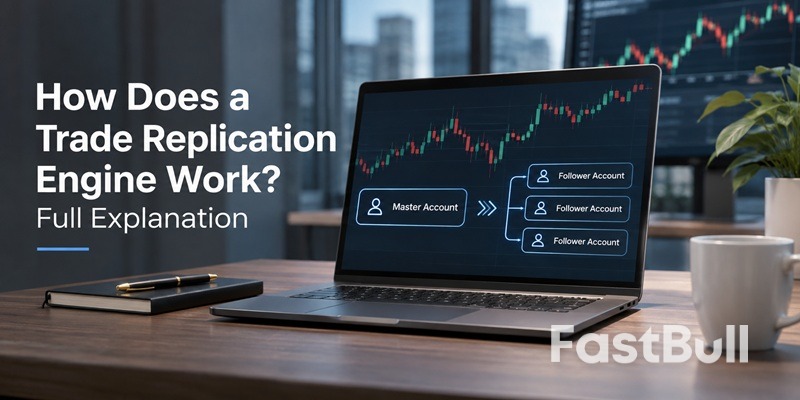
ระบบจำลองการซื้อขายเป็นระบบอัตโนมัติที่ตรวจสอบกิจกรรมการซื้อขายในบัญชีหลัก และจำลองการซื้อขายที่สอดคล้องกันในบัญชีผู้ติดตามที่เชื่อมต่อตั้งแต่หนึ่งบัญชีขึ้นไป
แทนที่จะทำการสั่งซื้อที่เหมือนกันในหลายบัญชีด้วยตนเอง เทรดเดอร์สามารถใช้เครื่องมือจำลองการซื้อขายเพื่อกระจายการดำเนินการซื้อขายโดยอัตโนมัติได้ ขึ้นอยู่กับระบบ การดำเนินการเหล่านี้อาจรวมถึงการเปิดสถานะ การปรับระดับ Stop-loss และ Take-profit การปรับคำสั่งซื้อที่มีอยู่ และการปิดการซื้อขาย
ระบบจำลองการซื้อขายโดยทั่วไปประกอบด้วยองค์ประกอบสามส่วน:
เครื่องมือจำลองการซื้อขายมักใช้ในตลาดฟอเร็กซ์ ตลาดฟิวเจอร์ส และตลาดอื่นๆ ที่มีแพลตฟอร์มการซื้อขายหรือการเชื่อมต่อกับโบรกเกอร์ที่รองรับการดำเนินการคำสั่งซื้อขายอัตโนมัติ
อย่างไรก็ตาม การจำลองแบบไม่ได้รับประกันว่าผลลัพธ์การซื้อขายจะเหมือนกันทุกประการ ความแตกต่างในความเร็วในการดำเนินการ สภาพคล่อง การตั้งค่าบัญชี และราคาของโบรกเกอร์ อาจทำให้เกิดความแตกต่างระหว่างบัญชีหลักและบัญชีรองได้
ระบบจำลองการซื้อขายทำงานโดยการจับภาพเหตุการณ์การซื้อขายจากบัญชีหลัก แปลงเหตุการณ์เหล่านั้นให้เป็นคำสั่งที่สามารถดำเนินการได้ ใช้กฎเฉพาะบัญชี และส่งคำสั่งซื้อขายที่เกี่ยวข้องไปยังบัญชีผู้ติดตาม
โดยทั่วไปแล้วกระบวนการทั้งหมดจะประกอบด้วยห้าขั้นตอน
กระบวนการจำลองข้อมูลจะเริ่มต้นเมื่อบัญชีหลักทำการซื้อขายหรือสร้างเหตุการณ์การซื้อขายอื่นที่ได้รับการสนับสนุน
ระบบจะตรวจสอบบัญชีหลักผ่าน API ของโบรกเกอร์ การผสานรวมกับแพลตฟอร์มการซื้อขาย หรือการเชื่อมต่ออื่นๆ ที่รองรับ ขึ้นอยู่กับสถาปัตยกรรม ระบบอาจได้รับการแจ้งเตือนเหตุการณ์แบบเรียลไทม์ หรือตรวจสอบการเปลี่ยนแปลงเป็นระยะๆ
เมื่อตรวจพบเหตุการณ์การซื้อขายใหม่ ระบบจะบันทึกข้อมูลที่เกี่ยวข้อง เช่น:
ตัวอย่างเช่น หากบัญชีหลักเปิดสถานะซื้อ EUR/USD ขนาด 1 ล็อต ระบบจะระบุเหตุการณ์การซื้อขายและเตรียมข้อมูลสำหรับการจำลอง
After receiving the trading event, the replication engine determines how the trade should be reproduced in each follower account.
The system may need to translate trading symbols, check instrument compatibility, and calculate the appropriate position size.
Common position-sizing methods include:
For example, suppose the master account opens a 1-lot position. A follower account configured with a 0.5 lot multiplier would receive an instruction to open 0.5 lots, subject to broker restrictions and other settings.
This processing stage allows different accounts to follow the same trading strategy without necessarily using identical position sizes.
Before submitting an order, the engine evaluates the trade against the risk management rules configured for each follower account.
These controls help prevent trades from exceeding predefined account limits or violating execution requirements.
Depending on the software, risk management settings may include:
For instance, if a replicated order exceeds a follower account's configured position-size limit, the engine may reject, skip, or adjust the instruction depending on its supported risk rules.
Risk controls reduce certain operational risks but cannot eliminate trading losses or guarantee that replicated positions perform as expected.
Once the trading instructions pass the applicable checks, the replication engine sends orders to the connected follower accounts.
Order transmission generally occurs through broker APIs, trading platform interfaces, or supported execution gateways.
Each follower account receives an instruction based on its own configuration. The receiving broker then processes the order according to current market conditions and account permissions.
Although orders may be transmitted within milliseconds in some systems, execution times vary depending on network latency, infrastructure, broker response times, and market liquidity.
Consequently, follower accounts may receive different execution prices even when they replicate the same master trade.
Submitting an order does not necessarily mean it has been successfully executed. The replication engine must also process the execution response from each follower account.
Possible outcomes include successful execution, partial fills, rejected orders, or execution failures.
Once the results are received, the system records the corresponding order information and updates its view of follower positions.
When supported, the engine also monitors subsequent changes to the master position, including:
Position reconciliation helps the engine identify differences between intended and actual follower positions. However, synchronization capabilities vary between systems, and not every discrepancy can be resolved automatically.
A trade replication engine relies on several technical components to transmit trading instructions and manage execution across connected accounts.
The signal detection component identifies relevant trading events from the master account, while the processing component converts those events into instructions suitable for follower accounts.
Some systems use event-driven processing, responding when a trading platform reports a new event. Others use polling, repeatedly checking the account for trading updates.
Event-driven architectures can reduce detection delays, while polling frequency influences how quickly a system discovers new trades.
Broker API integration enables the replication engine to exchange trading information with supported brokers and trading platforms.
Through these connections, the system can retrieve account information, submit orders, receive execution results, and monitor position changes.
Cross-broker replication may require additional processing because brokers can use different instrument symbols, contract specifications, minimum trade sizes, and execution rules.
Therefore, API compatibility alone does not guarantee that trades can be copied identically between different brokers.
The order execution component converts processed trading instructions into actual orders for follower accounts.
It works alongside the risk management component, which determines whether the instructions meet predefined trading conditions.
A reliable execution system should also track order status, identify failed requests, and avoid unintended duplicate orders when recovering from connection interruptions.
Together, these components determine how accurately and consistently a replication engine can translate master-account activity into follower-account positions.
Trade replication speed depends on how quickly the engine detects trading events, processes instructions, and submits orders to follower accounts. Although some systems can transmit instructions within milliseconds, actual execution times vary across brokers, platforms, and market conditions.
Latency refers to the time delay between a trading event and its corresponding action in a follower account. Slippage occurs when an order executes at a price different from the expected price.
Several factors can influence replication performance:
For example, if the master account buys EUR/USD at 1.08500 but a follower account executes at 1.08505, the follower experiences a five-pipette price difference.
Even small differences can affect trading performance, particularly for strategies that rely on frequent execution or narrow profit targets.
Trade replication can fail because of connectivity problems, broker restrictions, insufficient margin, invalid order parameters, or temporary platform outages.
Common failure scenarios include:
Some replication systems address these problems through execution logging, connection monitoring, controlled retry mechanisms, and position reconciliation.
However, retrying orders without verifying their execution status can introduce duplicate positions. Reliable systems must distinguish between failed orders and orders that were executed but not immediately confirmed.
Replicated trades are not guaranteed to execute at the same price because each follower order is processed independently.
Consider a master account that opens a buy position at 1.10000. By the time the follower order reaches its broker, the available price may have changed to 1.10003.
Different spreads, liquidity conditions, execution methods, and order transmission delays can all contribute to pricing differences.
As a result, trade replication aims to reproduce trading instructions and position changes rather than guarantee identical execution prices or financial outcomes.
A trade replication engine and a trade copier are closely related, but the terms emphasize different aspects of automated trade copying.
A trade replication engine generally refers to the underlying technology that detects trading events, processes instructions, manages account-specific rules, and coordinates order execution.
A trade copier usually refers to a software application or service that traders use to copy positions between accounts. Many trade copiers rely on a replication engine to perform their core operations.
| Feature | Trade Replication Engine | Trade Copier |
|---|---|---|
| Primary Role | Processes and coordinates trade replication | Provides automated trade-copying functionality |
| Main Focus | Signal processing, execution, synchronization, and risk controls | Copying trades between connected accounts |
| Integration | May connect to multiple brokers, APIs, and execution systems | Depends on supported platforms and brokers |
| Customization | May support configurable execution logic and account-specific rules | Typically provides user-facing copying and risk settings |
| Typical Users | Software developers, trading technology providers, and trading operations | Individual traders, account managers, and trading teams |
These categories are not mutually exclusive. A trade copier may include a sophisticated replication engine, while a replication engine may operate as part of a broader trading platform without being marketed as a standalone copier.
Yes. Some trade replication engines support cross-broker copying through compatible APIs or trading platform integrations. However, differences in instrument specifications, trading permissions, execution rules, and contract sizes may require additional configuration.
Yes. A replication engine can distribute trading instructions from one master account to multiple follower accounts. Each follower may use different position-sizing rules, symbol filters, and risk limits, depending on the system's capabilities.
Not exactly. Trade replication describes the technology or process of reproducing trades across accounts. Copy trading generally describes a trading arrangement in which investors follow another trader's activity. Copy trading platforms may use trade replication technology to execute copied trades.
ความเสี่ยงหลักๆ ได้แก่ ความล่าช้าในการดำเนินการ การคลาดเคลื่อนของราคา ความล้มเหลวในการเชื่อมต่อ การกำหนดขนาดตำแหน่งที่ไม่ถูกต้อง และตำแหน่งบัญชีที่ไม่ตรงกัน การจำลองยังทำให้เกิดความเสี่ยงต่อกลยุทธ์การซื้อขายพื้นฐาน ซึ่งหมายความว่าบัญชีผู้ติดตามอาจประสบกับความสูญเสียอย่างมากแม้ว่าเทคโนโลยีจะทำงานได้อย่างถูกต้องก็ตาม
การทำความเข้าใจวิธีการทำงานของระบบจำลองการซื้อขายจะช่วยอธิบายเทคโนโลยีเบื้องหลังการคัดลอกการซื้อขายอัตโนมัติได้ โดยการผสมผสานการตรวจจับสัญญาณ การประมวลผลคำสั่ง การควบคุมความเสี่ยง และการซิงโครไนซ์ตำแหน่ง ระบบเหล่านี้สามารถประสานงานการซื้อขายข้ามบัญชีหลายบัญชีได้ อย่างไรก็ตาม ความแตกต่างในการดำเนินการ ความล้มเหลวทางเทคนิค และความเสี่ยงของตลาด หมายความว่าการซื้อขายที่จำลองขึ้นมานั้นไม่สามารถรับประกันผลลัพธ์ที่เหมือนกันทุกประการได้

728 RM B 7/F GEE LOK IND BLDG NO 34 HUNG TO RD KWUN TONG KLN HONG KONG


ความเสี่ยงของการสูญเสียในการซื้อขายสินทรัพย์ทางการเงิน เช่น หุ้น FX สินค้าโภคภัณฑ์ ฟิวเจอร์ส พันธบัตร ETFs หรือเงินดิจิทัลอาจมีมาก คุณอาจสูญเสียเงินทุนทั้งหมดที่คุณฝากไว้กับโบรกเกอร์ของคุณ ดังนั้น คุณควรพิจารณาอย่างรอบคอบว่าการซื้อขายดังกล่าวเหมาะสมกับคุณหรือไม่ในสถานการณ์และทรัพยากรทางการเงินของคุณ
ไม่ควรตัดสินใจลงทุนโดยไม่ได้ดำเนินการตรวจสอบสถานะอย่างละเอียดถี่ถ้วนด้วยตัวเองหรือปรึกษากับที่ปรึกษาทางการเงินของคุณ เนื้อหาเว็บของเราอาจไม่เหมาะกับคุณเนื่องจากเราไม่ทราบเงื่อนไขทางการเงินและความต้องการในการลงทุนของคุณ ข้อมูลทางการเงินของเราอาจมีความล่าช้าหรือมีความไม่ถูกต้อง ดังนั้นคุณควรรับผิดชอบอย่างเต็มที่ต่อการตัดสินใจซื้อขายและการลงทุนของคุณ บริษัทจะไม่รับผิดชอบต่อการสูญเสียเงินทุนของคุณ
หากไม่ได้รับอนุญาตจากเว็บไซต์ คุณจะไม่สามารถคัดลอกกราฟิก ข้อความ หรือเครื่องหมายการค้าของเว็บไซต์ได้ สิทธิ์ในทรัพย์สินทางปัญญาในเนื้อหาหรือข้อมูลที่รวมอยู่ในเว็บไซต์นี้เป็นของผู้ให้บริการและผู้ค้าแลกเปลี่ยน
ไม่ได้ล็อกอิน
เข้าสู่ระบบเพื่อเข้าถึงฟังก์ชั่นเพิ่มเติม


เข้าสู่ระบบ
ลงทะเบียน