


Loonie pains extend far beyond the Alberta vote
Residents of Alberta are voting on whether to remain part of Canada or set off a path toward breaking away. The official voting day is Monday, but a lot of people cast their ballots last week.
Public opinion polls show strong support for staying in Canada, with a recent Leger survey finding that 70% of Albertans oppose independence. The initial result to be revealed later today will be closely watched globally.
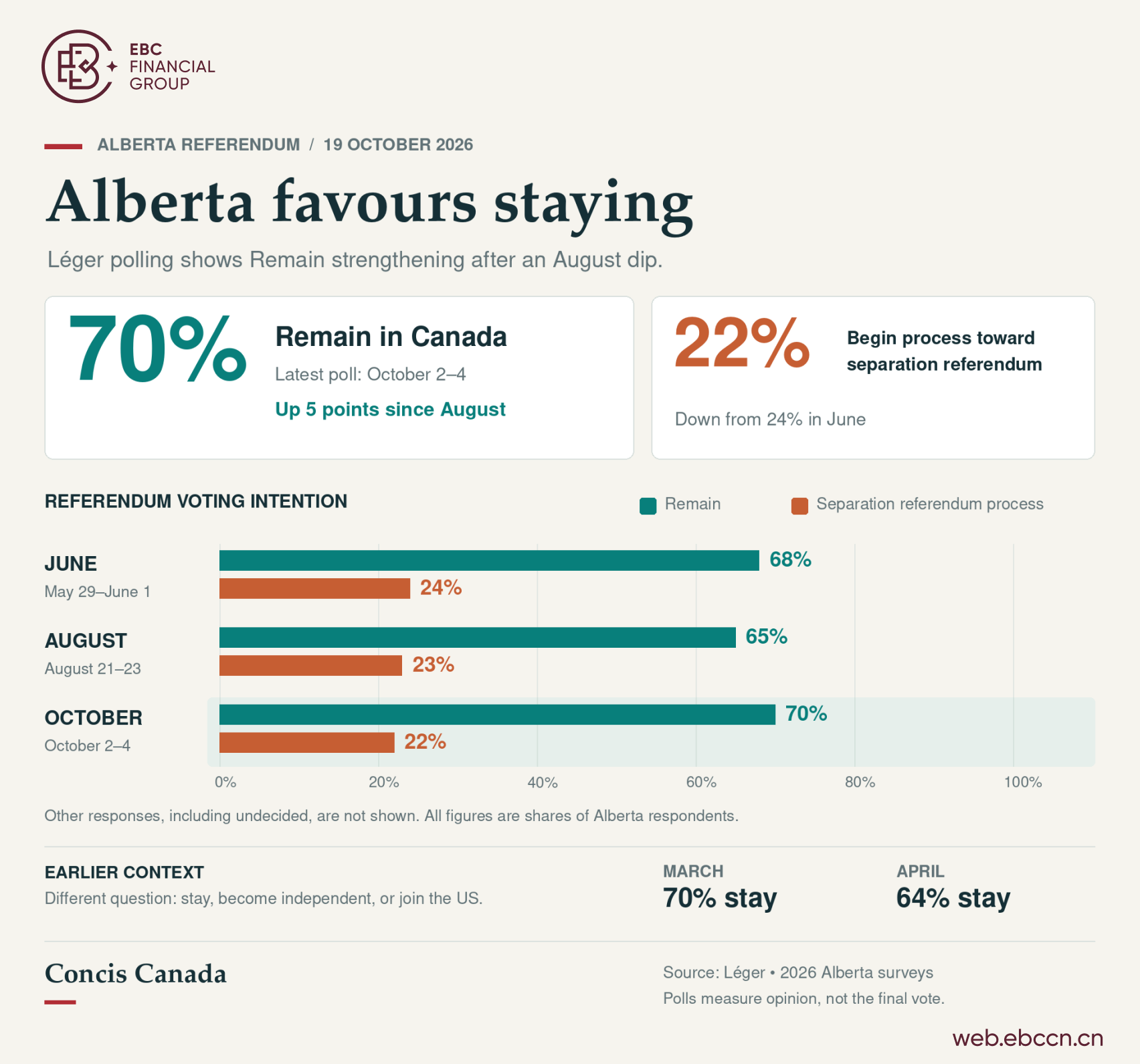
Major political leaders, including PM Mark Carney and Conservative Leader Pierre Poilievre, were using the final days before the vote to make a last push for national unity.
Alberta, home to the world’s 4th largest oil reserves, represents a massive engine for Canada's economy—comprising roughly 15% of national GDP and 31% of its exports.
If the "Remain" side secures a resounding victory, it will remove a significant layer of domestic political risk. That would likely lay the groundwork for a moderate rally in the Canadian dollar.
On the other hand, a surprise outcome would send Brexit-style shock waves across the markets. Sterling plunged immediately by roughly 10% on the night of the referendum.
Importantly, that would not lead to an immediate separation but the legal and constitutional process required to hold a second, binding round of voting. In a nutshell, the bar is set high for secession.
Unfair equalization
The separatists believe that Alberta contributes far more to the country than it receives, and that Ottawa has a disproportionate say in its internal matters, which is justifiable by several indicators.
Albertans were reporting the lowest life satisfaction in the country due to widening financial inequality, shifting economic expectations, and political friction, according to official data earlier this year.
Regulations regarding carbon pricing, emissions caps, and pipeline approvals are widely seen as direct threats to the energy revenue. The federal equalization formula has also roused discontent.
Equalization is a transfer payment programme designed to reduce the differences in revenue-generating capacity among provinces. In fact, the similar mechanisms exist in the US, at both the federal and state levels.
While Carney validated Alberta's long-standing frustrations with Ottawa, he argued the ongoing pipeline projects would unlock new international export markets, and create over 140,000 jobs.
However, industry forecasts indicate that future growth in oil sands production will be driven primarily by automation and increased efficiency, rather than major hiring surges.
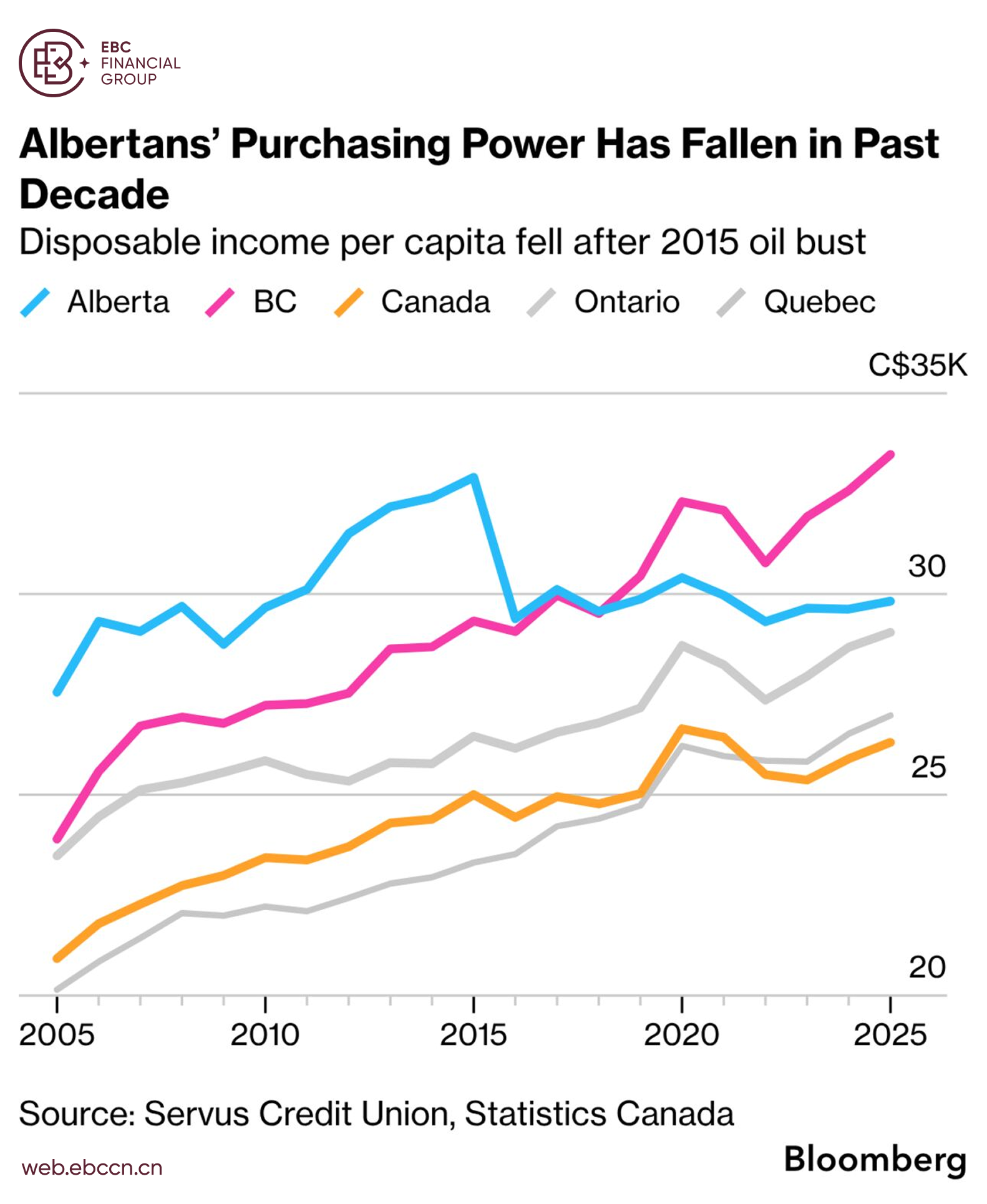
Real disposable income is still 10% below 2014 level despite record oil output. Rather than reinvesting profits into labour-intensive new projects, oil companies are mainly using them to reward shareholders.
Shaky optimism
BOC Governor Tiff Macklem stated that rising oil prices are increasingly spurring growth. Consequently, he anticipates that the central bank will raise its inflation projections during its upcoming forecast update.
He added that although soaring fuel prices drain household and business budgets, they are contributing to exports, incomes, government revenues and investment.
However, three-digit oil prices are structurally unsustainable over the long term, as skyrocketing everyday fuel costs act as a massive tax on consumers and businesses, ultimately stifling demand.
The country’s annual inflation rate climbed to 3.1% in September. Driven by surging gasoline and diesel costs, this increase pushed the consumer prices past the official target ceiling for the first time in 4 months.
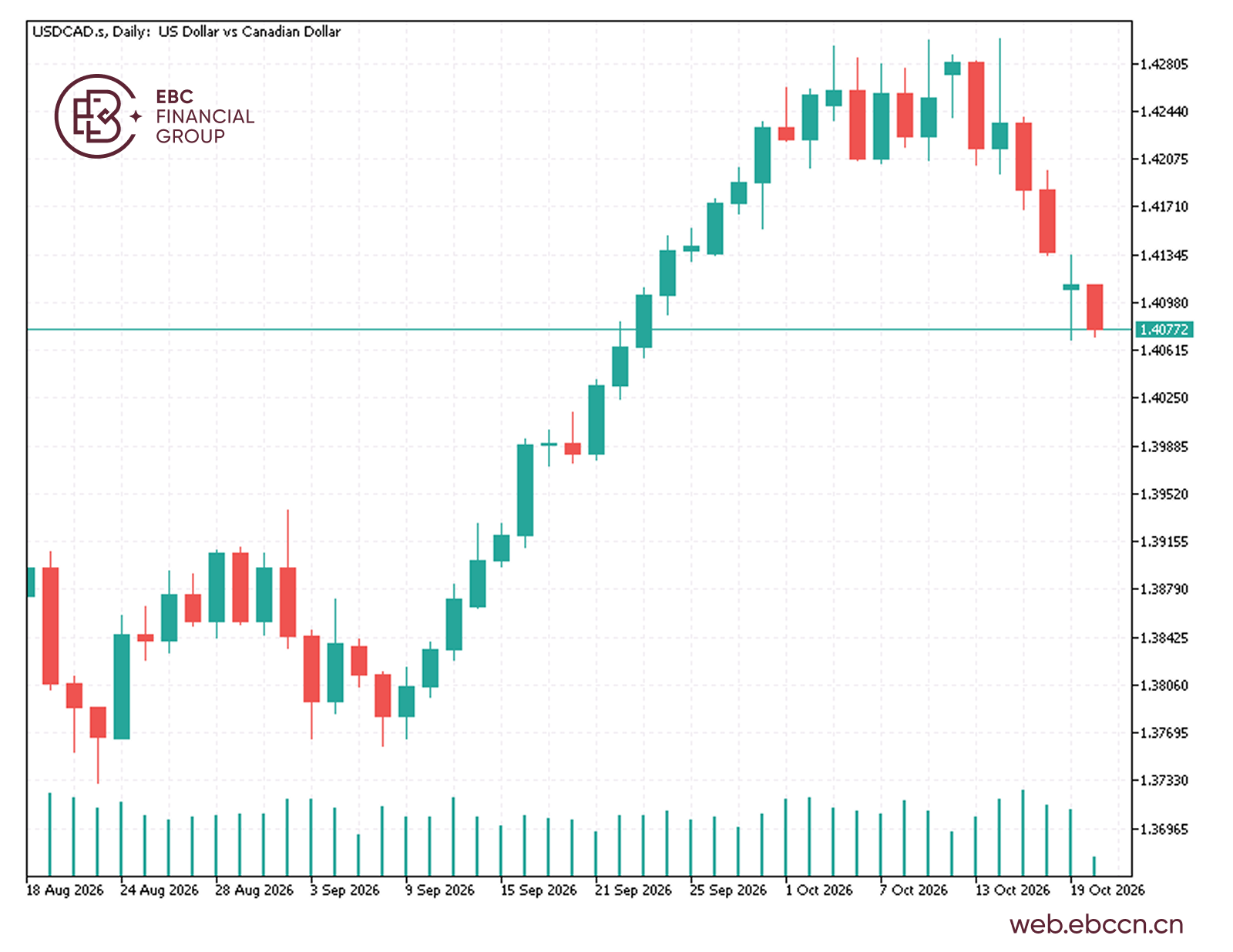
The loonie (USDCAD) dropped to a nearly 18-month low earlier this month despite record trade surplus. But it staged a significant rally from then as AI selloff and fading Fed rate hike bets weigh down the US dollar.
Weak economic indicators, including a cooling labour market, slower growth, and lower inflation compared to the US, could drive the Canadian dollar towards its lows of the year, said Alex Cohen, FX strategist at BofA Securities.
The real effects of the US–Canada trade war are materializing across supply chains, corporate costs, and cross-border trade. With more effects yet to kick in, the currency remains bearish regardless of the Alberta vote result.
Disclaimer: This material is for general information purposes only and is not intended as (and should not be considered to be) financial, investment or other advice on which reliance should be placed. No opinion given in the material constitutes a recommendation by EBC or the author that any particular investment, security, transaction or investment strategy is suitable for any specific person.







著作権 © 2026 FastBull Ltd


リスク警告
FX取引はリスクが高く、すべての投資家に適しているわけではありません。レバレッジを利用するとさらなるリスクと損失が生じます。取引する前に、投資目的、経験レベル、リスク許容度を慎重に検討してください。初期投資の一部または全部を失う可能性があります。余裕のないお金は投資しないでください。FX取引に伴うリスクについてよく理解してください。ご質問がある場合は、独立した財務または税務アドバイザーにご相談ください。あらゆるデータと情報は「現状のまま」提供され、情報提供のみを目的としており、取引や推奨のために提供されるものではありません。過去のパフォーマンスは将来の結果を予測するものではありません。
免責事項
このウェブサイトに含まれるデータはリアルタイムかつ正確ではない可能性があります。このサイトのデータと価格は必ずしも市場や取引所から提供されているわけではなく、マーケットメーカーによって提供されている場合があるため、価格は不正確であり、実際の市場価格とは異なる場合があります。つまり、この価格は市場動向を反映するための参考価格であり、取引目的には不利です。ウェブサイトに含まれるデータの提供者は、お客様の取引活動またはウェブサイトに含まれる情報への依存の結果として被った損失に対して責任を負いません。