


- USDX
- XAUUSD
- XAGUSD
- WTI


行情
分析
用户
快讯
财经日历
学习
数据
- 名称
- 最新值
- 前值












The Bitcoin mining difficulty hit an all-time high of 127.6 trillion this week, but is projected to drop during the next difficulty adjustment on August 9.
Mining difficulty is expected to fall by about 3% to 123.7 trillion in the next adjustment period, and the current average block time is about 10 minutes and 20 seconds, according to CoinWarz.
Data from CryptoQuant shows that the mining difficulty fell in June, with a sharp drop-off at the end of month and the first two weeks of July, when difficulty fell to 116.9 trillion. However, the difficulty level resumed its long-term uptrend in the latter half of July.
Bitcoin mining difficulty, and the network’s hashrate — the total computing power committed to securing the network — is central to miner profitability and maintaining Bitcoin’s high stock-to-flow ratio, which protects BTC’s price from overproduction.
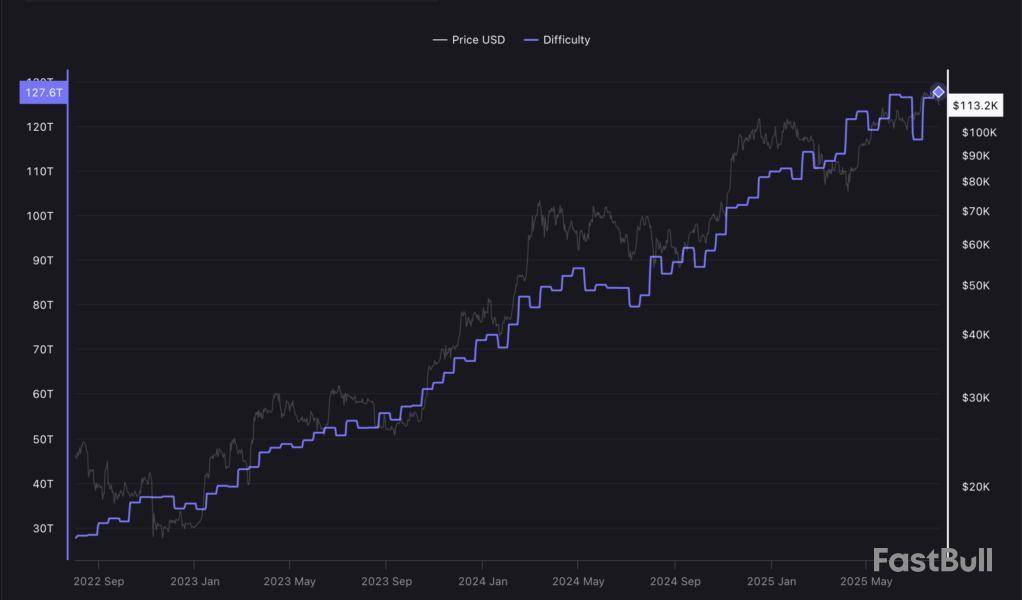
Bitcoin’s difficulty adjustment and the stock-to-flow ratio
Stock-to-flow ratio measures the total available supply of a financial asset or commodity against the newly created supply added by miners or commodity producers.
The higher the ratio, the more resilient the asset or commodity is to price changes caused by overproduction; the lower the ratio, the more the asset or commodity will be impacted by new supply.
This ratio is partially why silver was demonetized by gold. Silver has a lower stock-to-flow ratio than gold. Rising silver prices attract miners and producers to create more supply, which floods the market with new silver and depresses prices.
Bitcoin has a higher stock-to-flow ratio than gold, with about 94% of BTC’s 21 million supply already mined and circulating in the markets. Gold, in comparison, has no hard supply cap and an inflation rate of about 2% per year.
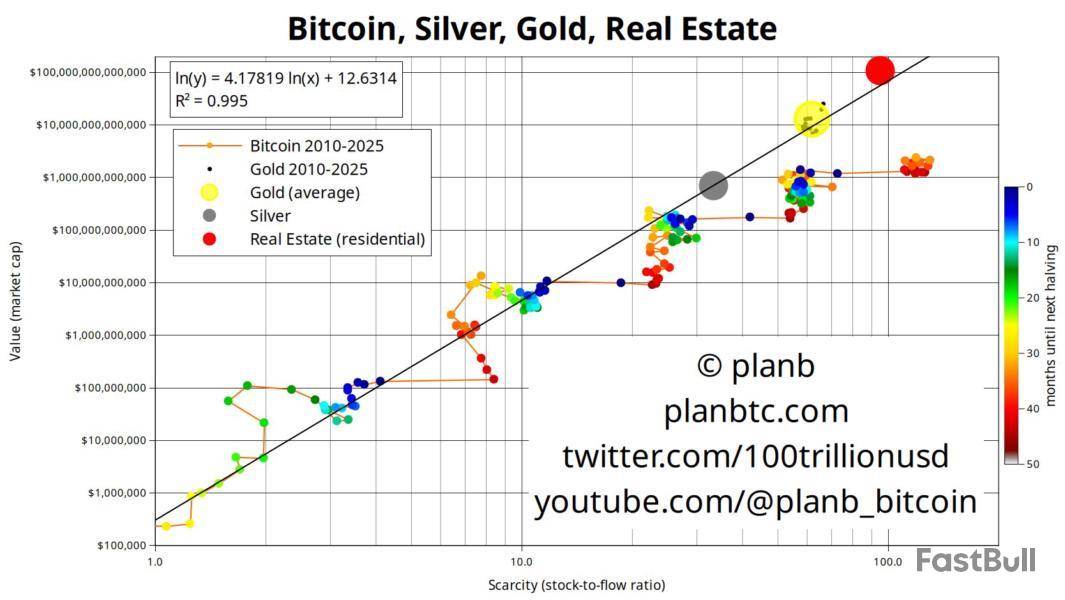
“Gold scarcity, the stock-to-flow ratio, is about 60. Bitcoin’s scarcity is about 120. So, bitcoin is 2x scarcer than gold,” according to PlanB, the creator of the Bitcoin stock-to-flow price analysis model.
The difficulty adjustment makes Bitcoin’s price inelastic to production, which is kept proportional to the total computing power deployed by miners.
Adjusting difficulty prevents overproduction and subsequent price collapses due to new supply being dumped on the market in large quantities over a short period of time.
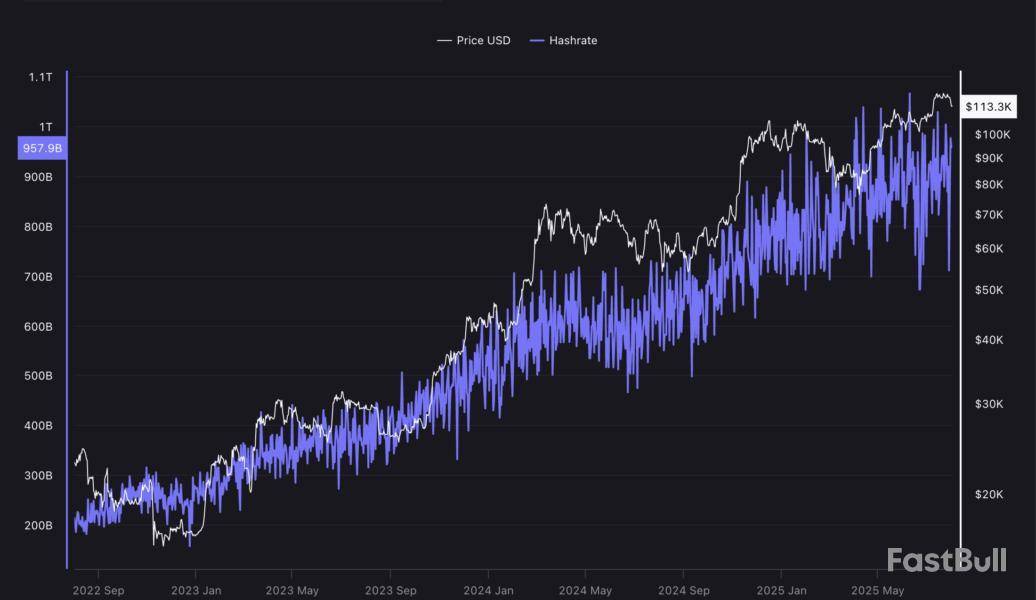
As more computing power is deployed to secure the Bitcoin network, the difficulty rises to match the new computing resources, keeping block production as close to the protocol’s 10-minute target as possible.
Conversely, if computing power drops, the network difficulty adjusts down to ensure new blocks are mined at a steady pace of about 10 minutes.

728 RM B 7/F GEE LOK IND BLDG NO 34 HUNG TO RD KWUN TONG KLN HONG KONG





交易股票、货币、商品、期货、债券、基金等金融工具或加密货币属高风险行为,这些风险包括损失您的部分或全部投资金额,所以交易并非适合所有投资者。
做出任何财务决定时,应该进行自己的尽职调查,运用自己的判断力,并咨询合格的顾问。本网站的内容并非直接针对您,我们也未考虑您的财务状况或需求。本网站所含信息不一定是实时提供的,也不一定是准确的。本站提供的价格可能由做市商而非交易所提供。您做出的任何交易或其他财务决定均应完全由您负责,并且您不得依赖通过网站提供的任何信息。我们不对网站中的任何信息提供任何保证,并且对因使用网站中的任何信息而可能造成的任何交易损失不承担任何责任。
未经本站书面许可,禁止使用、存储、复制、展现、修改、传播或分发本网站所含数据。提供本网站所含数据的供应商及交易所保留其所有知识产权。


