- โบรกเกอร์ HOT
- โบรกเกอร์โกง
- BV ประเมิน NEW
- อันดับ
- หน่วยงานควบคุม
- ข่าว
- การเรียกร้อง
- เอ็กซ์โป HOT
- กิจกรรม
- รางวัล


Extreme market concentration finally backfires
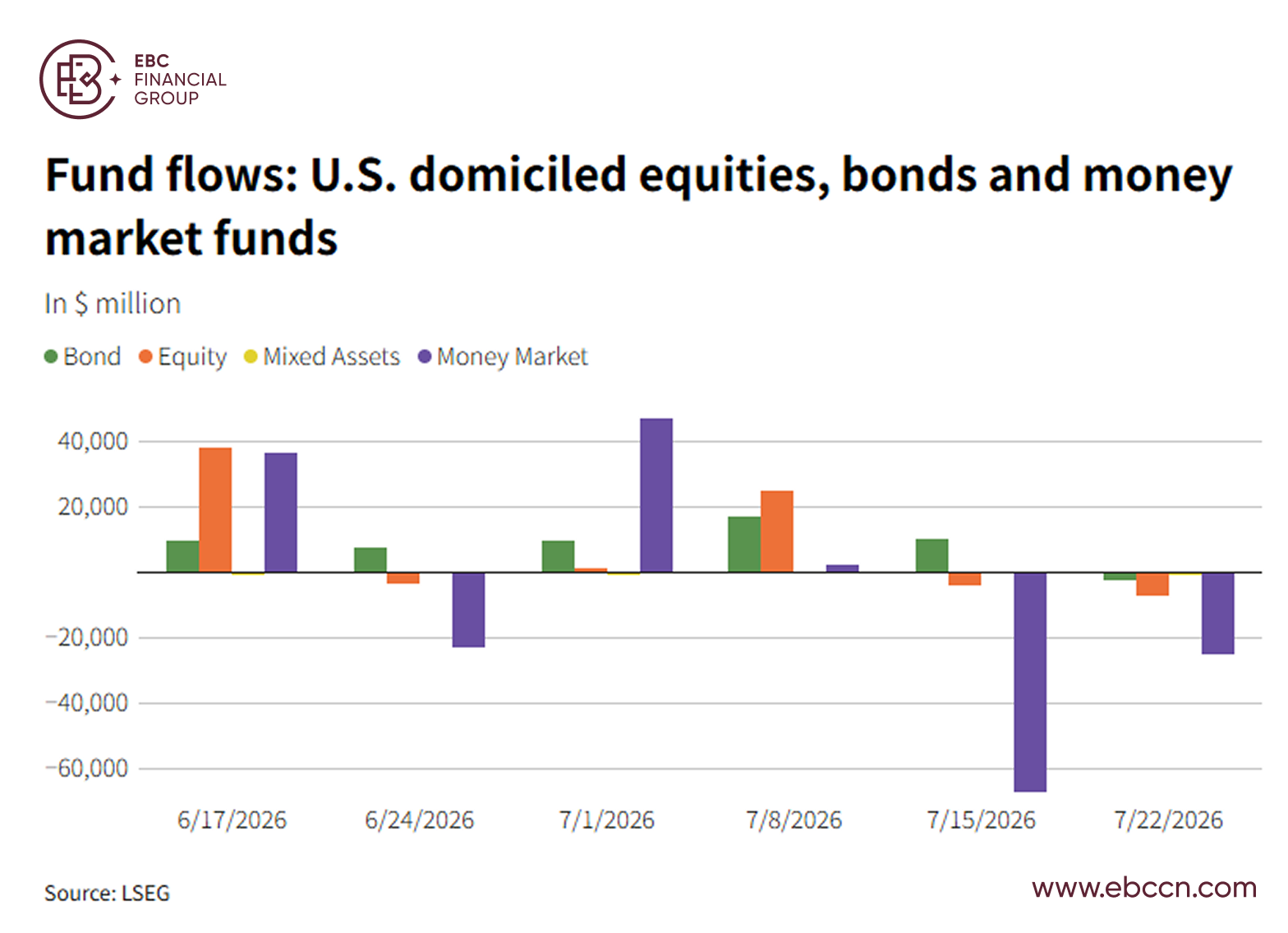
Market caution triggered a second consecutive week of net outflows from US equity funds, as investors braced for much anticipated mega-cap tech earnings and reacted to climbing oil prices.
US growth equity funds recorded outflows of $8.55 billion, the largest in three weeks, while Value funds also saw $1.39 billion in outflows, ending a three-week streak of inflows.
Qualcomm (QCOM.OQ) forecast Q4 profit below estimates and said revenue from Apple products would decline faster than expected. It has been expanding into categories other than smartphones.
Despite booming quarterly earnings on Wednesday, SK Hynix missed overly ambitious investor targets. Long-term agreements ensure steady future demand but can cap short-term profit potential from rising prices.
Investors were disappointed by the Korean company’s lack of a clear plan to boost shareholder returns through AI profits and its reliance on long-term contracts that could cap future memory price gains, according to analysts.
UBS CEO Sergio Ermotti acknowledged geopolitical fissures remain a pressure point for markets, but shrugged off potential growing market fatigue around the AI narrative.
He emphasized that AI and its underlying infrastructure will remain a major market driver, adding that its financial advantages will eventually spread to various industries outside of tech.
Negative FCF
The "Great Rotation" is a structural shift where investors are moving capital out of overbought, mega-cap technology and AI-driven stocks and into defensive sectors, energy, and small-caps.
AI capex fatigue and concerns over data centre returns have led investors to software and IT stocks with tighter margins of safety. Tesla (TSLA.OQ) and Google (GOOGL.OQ) rattled markets after reporting negative FCF.
According to financial records, it is unprecedented for Google since the company's 2004 IPO. This development marks a significant, unprecedented turn in the tech giant's historical performance.
Vaibhav Taneja, Tesla's chief financial officer, said on Wednesday that Tesla was in "a big investment cycle" and its spending would probably increase further over the next three years.
Investors will be looking for signs that the rapid growth in cloud and AI revenue can keep pace with the cash burn. The major concern is whether the AI-related income generation falters while spending persists.
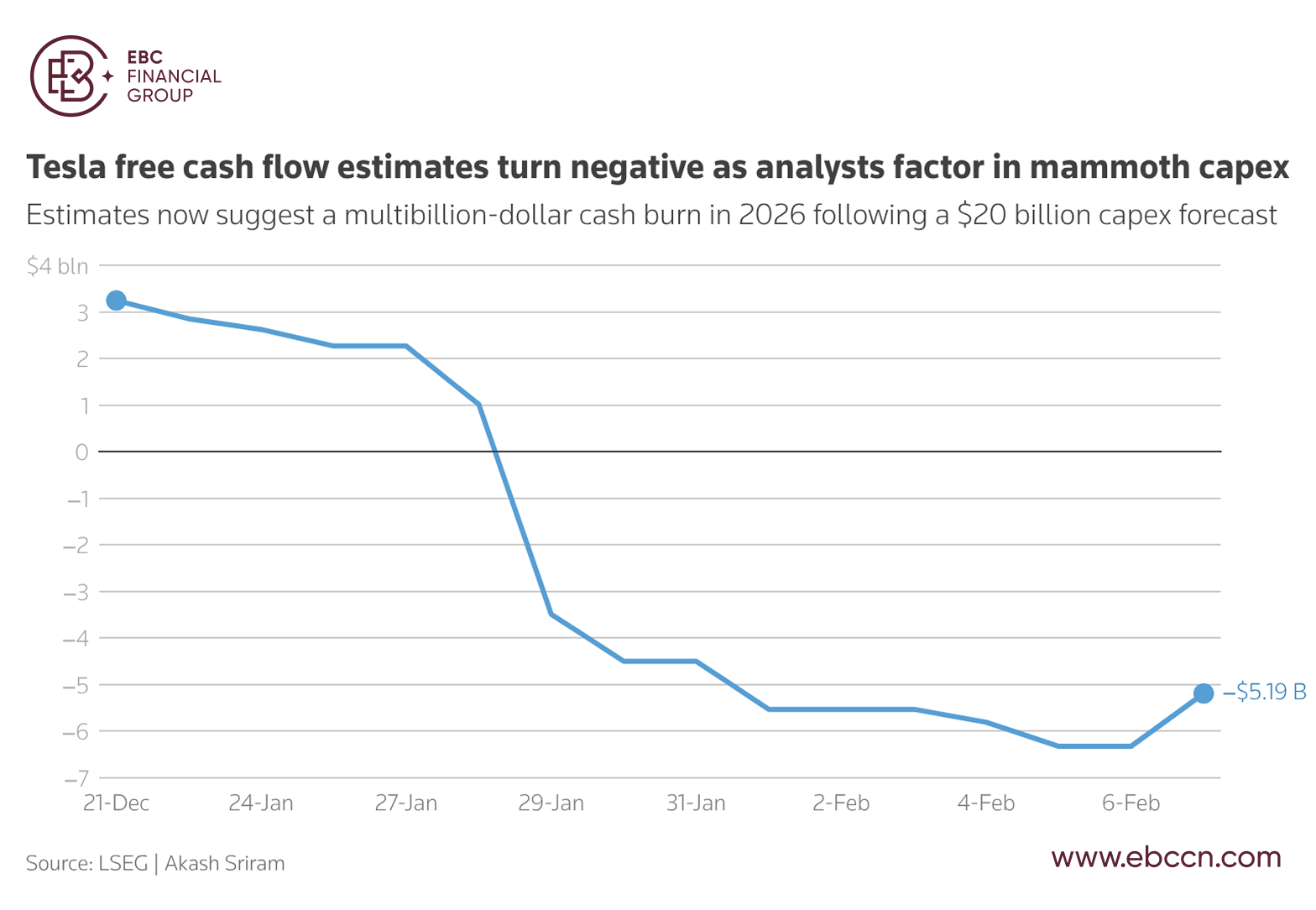
Big Tech’s share buybacks may face cutbacks if capital expenditures remain at historic highs and the financial returns from artificial intelligence initiatives take longer to materialise.
Oracle (ORCL.N) seems particularly vulnerable as it plans to raise $45 billion to $50 billion to fund cloud infrastructure expansion. The capex as a percentage of operating cash flow jumped to 174% for fiscal 2026.
Safe harbour
During the recent late-July tech stock selloff, financials (specifically insurance and banks), healthcare, real estate (REITs), energy, and consumer staples to significantly outperformed.
UBS analysts have noted that Healthcare is leading the charge because it offers a "dual shield"—it benefits from long-term demographic tailwinds while remaining completely insulated from AI-driven volatility.
Last month Charles Schwab and State Street flagged consumer staples and healthcare as their more favoured tactical ideas to survive the potential market downturn.
Treasury yields have climbed to levels not seen since 2007 as the Fed maintained its restrictive monetary policy, exacerbating investor anxiety regarding sticky inflationary pressures, which appears a boon to financial stocks.
Wall Street bank earnings powered ahead with a strong lift from fees for advising on M&A and surging trading revenue. In addition, the long tech IPO pipeline is turbocharging underwriting fees.
Despite that, JPMorgan CEO Jamie Dimon warned that shifting global risk including wars could collide and trigger severe market disruptions. These underlying, "tectonic" pressures may cause significant economic instability.
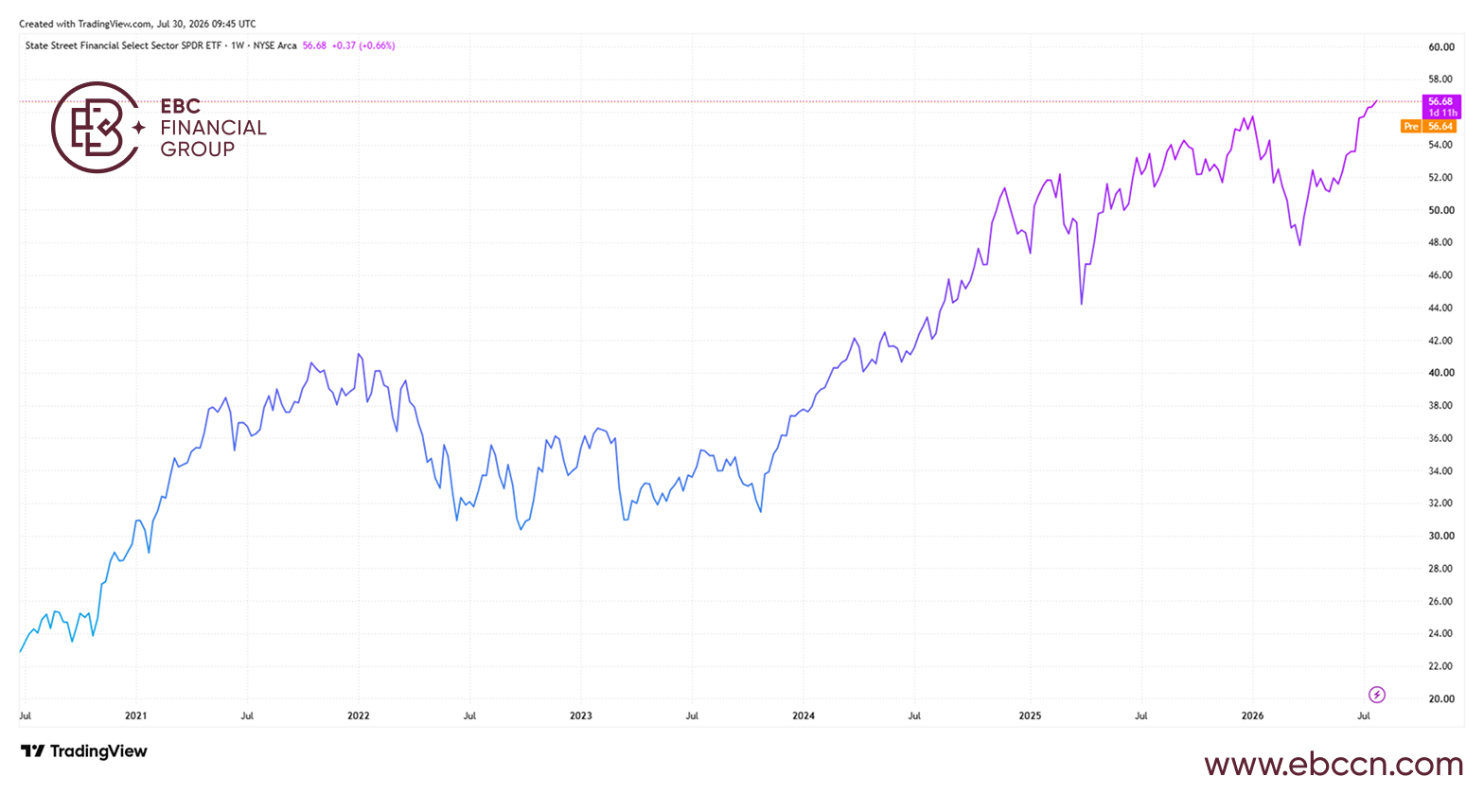
Financial Select Sector SPDR Fund (XLF.P) has just set a fresh all-time peak in July. State Street has upgraded its financial sector outlook from neutral to positive for Q3, bolstering the case for further gains ahead.
Disclaimer: This material is for general information purposes only and is not intended as (and should not be considered to be) financial, investment or other advice on which reliance should be placed. No opinion given in the material constitutes a recommendation by EBC or the author that any particular investment, security, transaction or investment strategy is suitable for any specific person.
ความยอดนิยม




ลิขสิทธิ์ © 2026 FastBull Ltd


คำเตือนความเสี่ยง
การเทรดฟอเร็กซ์มีความเสี่ยงสูงและอาจไม่เหมาะสำหรับนักลงทุนทั้งหมด เลเวอเรจอาจเป็นการเพิ่มความเสี่ยงและการสูญเสีย ก่อนตัดสินใจซื้อขาฟอเร็กซ์ โปรดพิจารณาวัตถุประสงค์การลงทุน ระดับประสบการณ์ และความเสี่ยงที่ยอมรับได้อย่างรอบคอบ คุณอาจสูญเสียเงินลงทุนเริ่มแรกบางส่วนหรือทั้งหมด อย่าลงทุนด้วยเงินที่คุณไม่พร้อมเสีย ทำความเข้าใจความรู้เกี่ยวกับความเสี่ยงที่เกี่ยวข้องกับการเทรดฟอเร็กซ์ หากคุณมีคำถามเพิ่มเติม โปรดขอคำแนะนำกับที่ปรึกษาทางการเงินหรือที่ปรึกษาภาษี การบริการข้อมูลต่างๆ "ตามสภาพจริง"มีวัตถุประสงค์ในการให้ข้อมูล มิใช่เพื่อการเทรดหรือให้คำแนะนำผลงานในอดีตไม่สามารถทำนายผลในอนาคตได้
ข้อจำกัดความรับผิดชอบ
ข้อมูลที่อยู่ในเว็บไซต์นี้อาจไม่ถูกต้องแบบเรียลไทม์ ข้อมูลและราคาในเว็บไซต์นี้ไม่ได้มาจากตลาดหรือการแลกเปลี่ยน อาจมาจากผู้ดูแลสภาพคล่อง ดังนั้น ราคาอาจไม่ถูกต้องและแตกต่างจากตลาดจริงกล่าวคือราคาเป็นเพียงเครื่องบ่งชี้ซึ่งสะท้อนถึงแนวโน้มของลาด และไม่ควรใช้เพื่อการค้าผู้ให้บริการ โบรกเกอร์ที่ให้ข้อมูลในเว็บไซต์นี้จะไม่รับผิดชอบต่อความสูญเสียใด ๆ ที่คุณอาจได้รับอันเป็นผลมาจากแนวทางการเทรดที่ไม่เหมาะสมหรือการพึ่งพาข้อมูลที่มีอยู่ในเว็บไซต์นี้