


The 1964 Nickel: Timeless Value & Historical Significance
Numismatics—the study and collection of coins—has always captured the interest of collectors, historians, and enthusiasts. Among the vast array of coins in American history, the 1964 nickel holds a unique place, not because it contains silver (as is often mistakenly claimed), but because it marks the end of an era in U.S. coinage. In this article, we explore the significance of the 1964 nickel, from its composition and historical context to its enduring value among collectors, while also exploring the fascinating story of silver nickels minted during World War II.
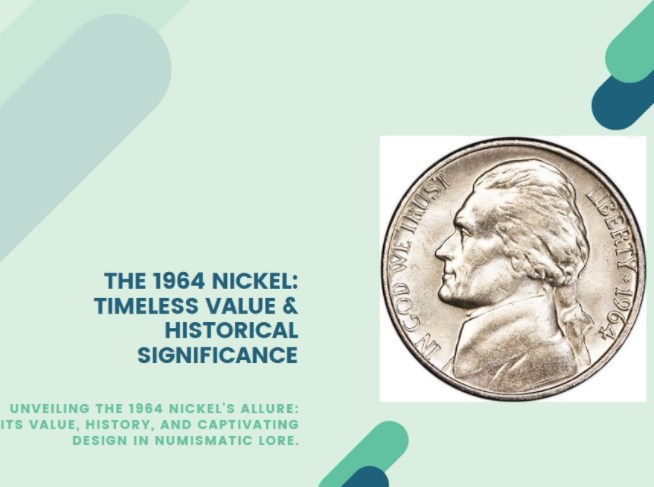
The 1964 Nickel: A Lasting Symbol of American Coinage
The Composition of the 1964 Nickel
Before we delve into the value of the 1964 nickel, it is essential to clarify its composition. Contrary to some myths, the 1964 nickel does not contain silver. Instead, it is made of the traditional copper-nickel alloy, comprising 75% copper and 25% nickel.
However, the year 1964 holds great importance in American coinage because it was the final year that coins were produced with a significant silver content before the U.S. Mint transitioned to base metals due to rising silver costs. While quarters and dimes were still minted with silver in 1964, the nickel had already been using a copper-nickel alloy since 1866.
In 1965, the United States Mint made the pivotal decision to remove silver from circulating coins, effectively changing the composition of many U.S. coins forever, including the dime, quarter, and half dollar.
So, despite what some might say, the 1964 nickel did not contain silver, but it did mark the end of an era where precious metals were used in coinage.
The Silver Nickels of World War II: A Brief History
While the 1964 nickel does not contain silver, the United States did mint silver nickels during World War II as part of a wartime effort to conserve nickel, a metal that was critical for military production. These wartime silver nickels are often of particular interest to collectors due to their unique composition and historical context.
From 1942 to 1945, the U.S. Mint produced nickels that were made of a special alloy containing 35% silver, with the remaining 65% made up of copper and manganese. This was a significant departure from the standard copper-nickel composition used for most of the 20th century.
Why Did the U.S. Mint Change the Nickel's Composition?
During World War II, the United States faced shortages of key metals like nickel, which were crucial for military production, especially for making armor plating and other military materials. To conserve nickel, the U.S. Mint replaced a portion of the metal with silver, a more abundant material at the time. The change to a silver-copper-manganese alloy resulted in "war nickels," which are now a fascinating piece of American numismatic history.
These war-time nickels, often referred to as "silver nickels", were minted with a distinctive large mintmark above the Monticello building on the reverse, indicating their silver content. The mintmark "P" (for Philadelphia) was used from 1942 to 1945, with "D" for Denver and "S" for San Francisco.
Composition of Wartime Silver Nickels (1942-1945)
- 35% Silver
- 56% Copper
- 9% Manganese
These silver nickels are highly prized by collectors, not only for their silver content but also for their historical significance, as they reflect the U.S. Mint’s efforts during the wartime metal shortages.
The Transition to Non-Silver Coinage
The 1964 Coinage Act, signed by President Lyndon B. Johnson, was a crucial turning point in American coinage. As silver prices soared in the 1960s, the U.S. Mint began to face the challenge of rising metal costs, making it financially unfeasible to continue producing coins with silver content. By 1965, silver was removed from the dimes, quarters, and half dollars, and U.S. coins were fully transitioned to base metals.
While the 1964 nickel retained its copper-nickel composition, the change in other coins made it one of the last coins to feature any precious metal (in the form of silver, as seen in dimes and quarters).
For collectors, the 1964 year is remembered not only for the continuation of the copper-nickel alloy but also as a symbol of transition in U.S. monetary history.
Understanding the 1964 Nickel's Value
1. Intrinsic Value: Copper and Nickel
Unlike its silver-containing counterparts, the 1964 nickel’s value is largely determined by the copper and nickel content, which fluctuates with market prices. While its intrinsic value might not match that of silver coins, the nickel's composition still holds relevance for investors who track base metal markets.
Despite this, the real value of the 1964 nickel lies in its historical significance. It serves as a reminder of the last year in U.S. history when coins maintained their classic composition, before shifting to the more modern, less expensive alloys.
2. Numismatic Value: The End of an Era
For collectors, the 1964 nickel holds deep numismatic value as the last coin of its kind before the sweeping changes brought about by the 1965 Coinage Act. The coin’s familiar design—the iconic portrait of Thomas Jefferson on the obverse and the historic Monticello building on the reverse—adds to its timeless appeal.
Moreover, the scarcity of well-preserved 1964 nickels contributes to their desirability. As coinage transitioned to non-silver alloys in 1965, fewer people held onto the 1964 nickels as collectors' items, and many were spent or circulated. Finding these coins in good condition today can be a challenge, further enhancing their value.
3. Rarity and Demand
The rarity of 1964 nickels, especially those in pristine condition, is a major factor in their appeal. While the mintage numbers for 1964 nickels were high, the ongoing use of coins in circulation means that fewer have survived in mint or near-mint condition.
Collectors seeking to build comprehensive sets of U.S. coins often prioritize coins from the early 1960s, making the 1964 nickel a sought-after item. As a result, this coin’s demand continues to rise as more collectors recognize its historical and numismatic value.
The 1964 Nickel in Today's Market
While the 1964 nickel doesn’t hold the same precious metal content as its silver counterparts, its importance to American numismatics is undeniable. As the last of its kind, it serves as a tangible link to the pre-1965 coinage system, offering collectors and investors a glimpse into a time when U.S. currency was more closely tied to metal content.
The coin’s collectibility is enhanced by the continued interest in pre-1965 U.S. coins, as these pieces represent the final coins minted before the U.S. government moved to base metals. As a symbol of change, the 1964 nickel remains a nostalgic and culturally significant coin that is prized by both collectors and investors today.
Preserving and Investing in the 1964 Nickel
For those looking to preserve the value of their 1964 nickels, proper storage is key. Using protective holders and keeping the coins away from moisture, extreme temperatures, and physical damage is essential to maintaining their numismatic value. Grading services like PCGS or NGC can provide expert assessments of a coin’s condition, and coins in mint state or uncirculated condition generally command the highest premiums in the market.
When investing in 1964 nickels, it's important to remember that their value is influenced not only by their metal content but also by their historical significance. As a piece of American numismatic history, the 1964 nickel continues to attract interest from collectors, investors, and historians alike.
Conclusion: The Legacy of the 1964 Nickel
The 1964 nickel stands as a significant marker in American coinage, representing the last year before major changes in U.S. minting practices. Although it does not contain silver, its historical context and place in the transition to modern coinage give it lasting importance among collectors and numismatists. Whether treasured as a piece of American heritage or sought after for its uniqueness, the 1964 nickel holds a special place in the hearts of coin enthusiasts.
As a symbol of change, the 1964 nickel serves as both a reminder of the past and a lasting connection to the era of traditional American coinage.



Hottest







Copyright © 2026 FastBull Ltd


Risk Warning
FX trading is of high risk and may not be suitable for all investors. Leverage will create additional risks and loss. Before trading, please carefully consider your investment objectives, experience level and risk tolerance. You may lose part or all of your initial investment; do not invest money that you cannot afford. Educate yourself about the risks associated with FX trading. If you have any questions, please consult an independent financial or tax advisor. Any data and information are provided "as is" and only for information purpose, not for trading or recommendations. Past performance does not predict future results.
Disclaimer
The data contained in this website may not be real-time and accurate. The data and prices on this site are not necessarily provided by the market or exchange, but may be provided by market makers, so prices may be inaccurate and differ from actual market prices. Namely, this price is indicative price only to reflect market trend, and is unfavorable for trading purpose. The provider of the data contained in the Website shall not be liable for any loss incurred by you as a result of your trading activities or reliance on the information contained in the Website.