


Mitigating Risk: Hedging with Currency Swaps
In the intricate tapestry of global finance, where currencies fluctuate with the ebb and flow of economic forces, the need for effective risk management is paramount. Amid the array of hedging tools, currency swaps emerged as a versatile and powerful instrument for mitigating the impacts of currency volatility. This article embarks on a comprehensive journey into the realm of currency swaps, exploring the nuances of their mechanics, diverse applications, benefits, and the evolving landscape of risk management in the international financial arena.
Understanding Currency Swaps
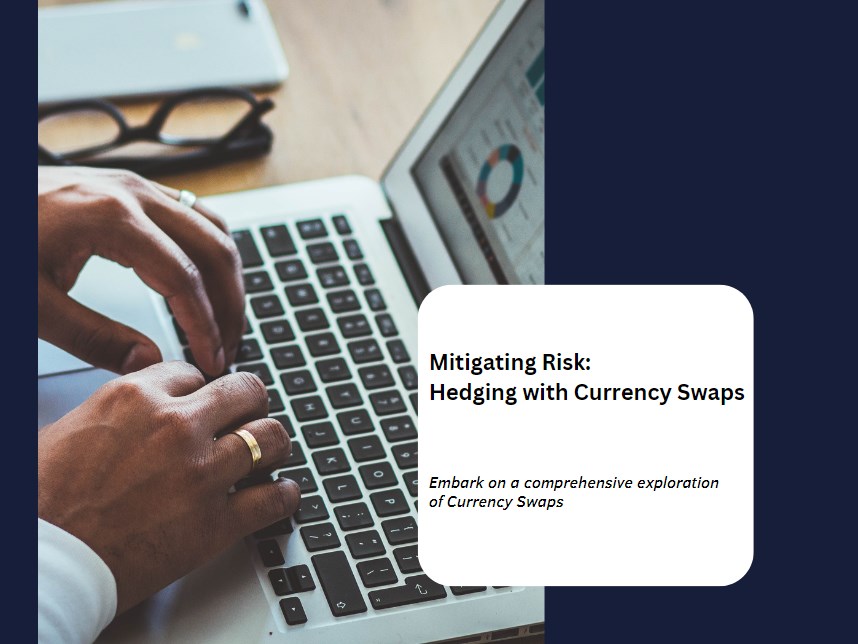
At its essence, a currency swap is a financial arrangement between two parties to exchange cash flows denominated in different currencies. Unlike futures or options, currency swaps involve the actual exchange of currencies, providing a direct and tailored approach to managing exposure to exchange rate fluctuations. This financial instrument enables participants to hedge their currency risk by locking in exchange rates over an agreed-upon period, fostering stability in an otherwise dynamic market.
Mechanics of Currency Swaps
Initiation of the Swap
Currency swaps begin with two parties agreeing, often multinational corporations or financial institutions, to exchange cash flows denominated in distinct currencies.
Agreed-Upon Terms:
The terms of the swap include the notional amount (the principal value), the exchange rates, and the maturity date. These terms are meticulously negotiated to meet the specific needs of both parties.
Cash Flow Exchange
Periodically, the parties exchange cash flows based on the agreed-upon terms. These cash flows may include interest payments and, at the maturity date, the return of the notional amount. The periodic exchange helps participants manage their cash flows effectively.
Risk Mitigation
The primary purpose of a currency swap is risk mitigation. By fixing exchange rates, participants shield themselves from the potential impact of currency fluctuations, ensuring a more predictable financial landscape.
Applications of Currency Swaps
Foreign Exchange Risk Mitigation
Multinational corporations engaging in international trade utilize currency swaps to hedge against foreign exchange risk. By locking in exchange rates, these entities secure stable cash flows, safeguarding profit margins.
Financing Opportunities
Currency swaps present opportunities for entities to access financing in a foreign currency. This can be advantageous when seeking capital in a currency with more favorable interest rates, providing flexibility in capital raising.
Interest Rate Management
Currency swaps can be structured not only to manage currency risk but also to address interest rate risk. Participants can strike a balance between fixed and floating-rate debt, tailoring the swap to their specific risk profile.
Benefits of Currency Swaps
Tailored Solutions
Currency swaps offer unparalleled flexibility. Participants can tailor agreements to meet their unique hedging needs, allowing for a bespoke approach that aligns with the intricacies of their business operations.
Cost Efficiency
In comparison to other hedging instruments, such as options, currency swaps can be cost-effective, especially for long-term hedging needs. The absence of upfront premiums makes them an attractive option for entities looking to manage risk over extended periods.
Risk Diversification
Currency swaps provide a mechanism for diversifying risk. Participants can hedge exposure to multiple currencies simultaneously, creating a more resilient risk management strategy.
Interest Rate Arbitrage
Participants in currency swaps can capitalize on interest rate differentials between currencies. This presents an opportunity for cost savings or enhanced returns, depending on the prevailing interest rate environment.
Challenges and Considerations
Counterparty Risk
Assessing the creditworthiness of counterparties is paramount. A currency swap is only as robust as the reliability of the entities involved. Diligent due diligence is necessary to mitigate the risk of default.
Market Conditions
Currency swaps are not immune to the broader economic environment. Fluctuations in interest rates and exchange rates can impact their effectiveness. Regular monitoring and adjustment are essential to ensure alignment with market conditions.
Regulatory Compliance
The regulatory landscape surrounding currency swaps may vary. Participants must navigate these regulations to ensure compliance, considering factors such as reporting requirements and permissible structures.
Real-World Examples
Toyota's Currency Management
The global automotive giant, Toyota, employs currency swaps to manage its exposure to various currencies. By hedging against foreign exchange risk, Toyota ensures stability in its international operations, contributing to sustained profitability.
Central Banks and Currency Swaps
Central banks worldwide engage in currency swaps as a strategic tool to stabilize their domestic currencies and manage liquidity during periods of economic uncertainty. These initiatives play a crucial role in maintaining stability in the broader financial system.
Also Read: How to Use Hedging Strategy in Forex Trading
Currency Swaps vs. Alternatives
Currency Swaps vs. Forward Contracts
While both currency swaps and forward contracts hedge against currency risk, the former provides more flexibility and can cover more extended periods, making them suitable for long-term hedging needs.
Currency Swaps vs. Options
In contrast to options, which involve paying premiums, currency swaps involve the direct exchange of cash flows. Depending on the scenario, currency swaps may prove to be more cost-effective, especially for participants with long-term hedging objectives.
Case Studies
Managing Global Supply Chains
A multinational company heavily reliant on global supply chains utilizes currency swaps to hedge against fluctuations in the value of the currencies involved. This ensures predictability in costs and protects profit margins.
Government Debt Issuance
A government explores currency swaps as a strategy to diversify its sources of financing. By issuing debt in foreign currencies through swaps, the government aims to benefit from favorable interest rate differentials.
Future Trends and Innovations
Blockchain Integration
The integration of blockchain technology into currency swaps holds the potential to streamline execution and settlement processes. This could enhance efficiency, reduce costs, and provide greater transparency in these transactions.
Evolving Regulatory Landscape
The regulatory environment surrounding currency swaps continues to evolve. Changes in regulations may impact the use of currency swaps, necessitating a proactive approach by participants to stay compliant and adapt to new requirements.
Conclusion
As the global economic landscape continues to evolve, the importance of understanding and harnessing the potential of currency swaps becomes increasingly critical. In navigating the complexities of international finance, currency swaps offer not just a risk management tool but a strategic instrument that can shape the financial resilience of businesses and institutions.
In unwinding the intricacies of currency swaps — their mechanics, applications, benefits, and challenges — this article aspires to equip readers with a comprehensive understanding. Whether a multinational corporation navigating the challenges of global trade or an investor seeking to diversify and protect their portfolio, the journey into the realm of currency swaps unfolds a landscape where risk mitigation becomes an art informed by strategic precision.



Hottest





Copyright © 2026 FastBull Ltd


Risk Warning
FX trading is of high risk and may not be suitable for all investors. Leverage will create additional risks and loss. Before trading, please carefully consider your investment objectives, experience level and risk tolerance. You may lose part or all of your initial investment; do not invest money that you cannot afford. Educate yourself about the risks associated with FX trading. If you have any questions, please consult an independent financial or tax advisor. Any data and information are provided "as is" and only for information purpose, not for trading or recommendations. Past performance does not predict future results.
Disclaimer
The data contained in this website may not be real-time and accurate. The data and prices on this site are not necessarily provided by the market or exchange, but may be provided by market makers, so prices may be inaccurate and differ from actual market prices. Namely, this price is indicative price only to reflect market trend, and is unfavorable for trading purpose. The provider of the data contained in the Website shall not be liable for any loss incurred by you as a result of your trading activities or reliance on the information contained in the Website.