


What Is Prop Trading? Can You Really Make Money or Is It a Scam?
Prop trading has exploded in popularity over the last few years.
Social media is filled with traders showing off funded accounts worth $50,000, $100,000, or even $500,000. Many prop firms advertise that traders can earn thousands of dollars per month without risking large amounts of personal capital.
It sounds almost too good to be true.
So what exactly is proprietary trading? Are prop firms legitimate businesses, or are they simply another way to profit from aspiring traders?
In this guide, we'll explain how prop trading works, how prop firms make money, the risks involved, and the warning signs traders should never ignore.
What Is Prop Trading?
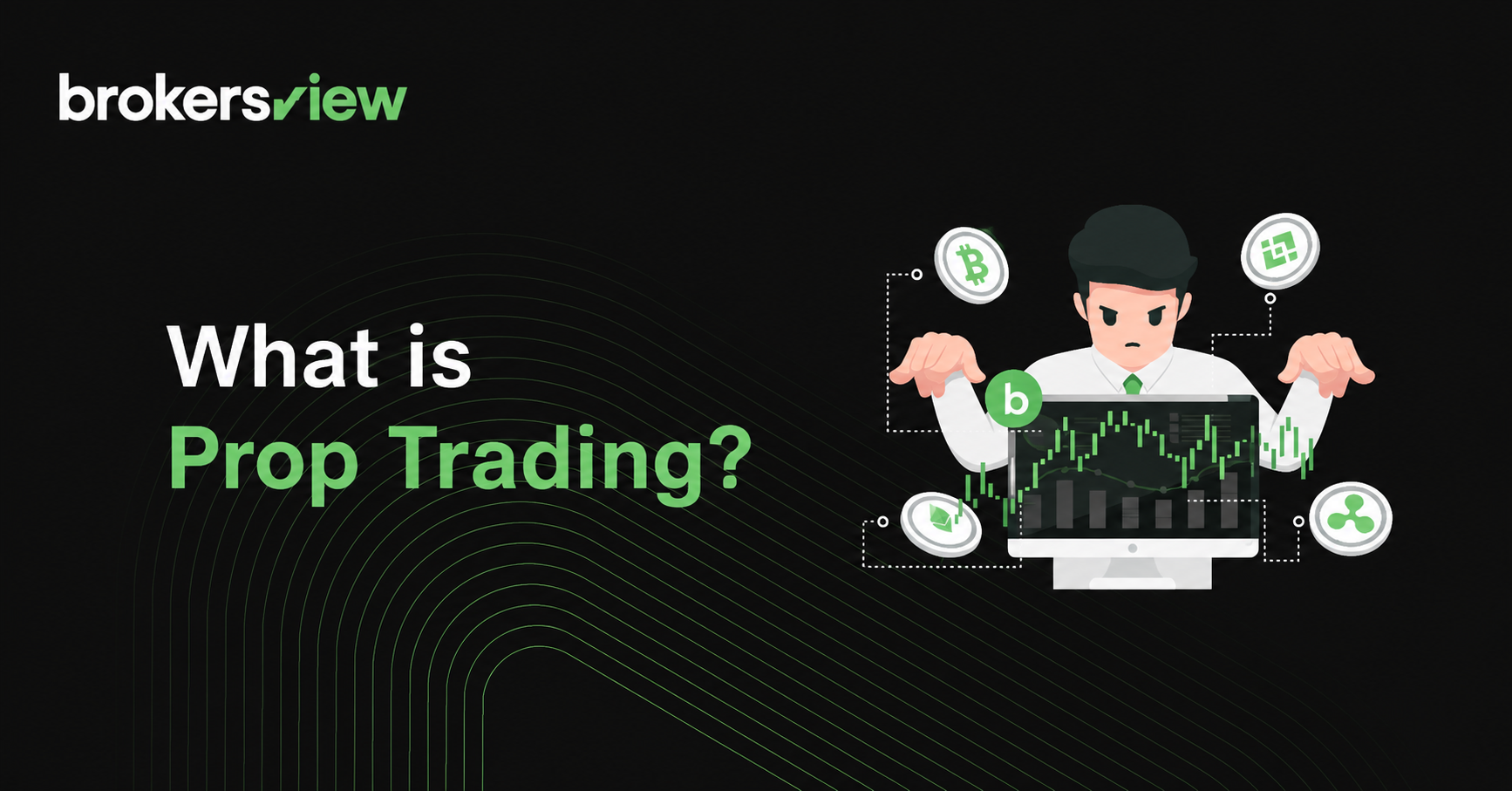
Proprietary trading, commonly known as prop trading, refers to a company providing capital for traders to trade financial markets.
Instead of risking their own money, traders use a firm's capital and receive a percentage of any profits generated.
For example, a trader may be given access to a $100,000 account. If they generate $5,000 in profit and the profit split is 80%, the trader receives $4,000 while the firm keeps $1,000.
Traditionally, proprietary trading firms hired experienced traders and provided real capital. Today's online prop firms operate differently, using challenge-based funding models.
How Modern Prop Firms Work
Most online prop firms follow a three-step process.
Step 1: Purchase a Trading Challenge
Before receiving a funded account, traders must pass an evaluation.
To participate, traders pay an upfront fee that typically ranges from $50 to several hundred dollars depending on account size.
Common challenge sizes include:
- $10,000 funded account
- $25,000 funded account
- $50,000 funded account
- $100,000 funded account
Step 2: Meet Performance Targets
Prop firms usually require traders to achieve a profit target while staying within strict risk limits.
Typical requirements include:
- 8% to 10% profit target
- Maximum drawdown limits
- Daily loss limits
- Minimum trading days
If all conditions are met, the trader qualifies for a funded account.
Step 3: Earn Profit Splits
Once funded, traders receive a share of the profits they generate.
Most firms advertise profit splits ranging from 70% to 90%.
The higher the performance, the more both the trader and the company can earn.
How Do Prop Firms Actually Make Money?
Many beginners assume prop firms generate most of their revenue from successful traders.
In reality, challenge fees are often a major source of income.
Most traders never pass the evaluation stage.
Consider a simple example:
- 1,000 traders purchase a challenge
- Each pays $100
- The firm generates $100,000 in fees
- Only a small percentage successfully qualify
This business model is not necessarily fraudulent, but it explains why challenge fees are such an important part of the industry.
Are Prop Firms Legitimate?
Some are. Some are not.
Like many financial industries, the prop trading sector contains both reputable firms and questionable operators.
A legitimate prop firm should:
- Clearly disclose its rules
- Process payouts consistently
- Provide transparent terms and conditions
- Maintain responsive customer support
- Avoid misleading marketing claims
On the other hand, firms that rely heavily on hype and unrealistic promises should be approached with caution.
Common Prop Trading Scams and Red Flags
1. Unrealistic Marketing Claims
Be skeptical of advertisements that promise:
- Guaranteed profits
- Easy funding
- Consistent monthly income
- Fast financial freedom
No legitimate trading opportunity can guarantee success.
2. Hidden Rules Designed to Fail Traders
Some firms create evaluation conditions that appear reasonable but are extremely difficult to satisfy in practice.
The goal may be to maximize challenge fee revenue rather than identify talented traders.
3. Delayed or Denied Payouts
One of the biggest warning signs is a history of payout disputes.
If a firm regularly refuses withdrawals for vague reasons such as "suspicious trading activity" or "rule violations" without clear evidence, traders should be cautious.
4. Lack of Transparency
Trustworthy firms typically provide information about their company, management team, legal structure, and operating history.
If you cannot determine who runs the business, that's a red flag.
Can You Really Make Money With Prop Firms?
Yes, some traders do.
However, successful prop trading is far more difficult than social media makes it appear.
The majority of traders struggle because they:
- Lack a proven trading strategy
- Overtrade
- Use excessive leverage
- Ignore risk management
- Trade emotionally
Passing a challenge does not guarantee long-term profitability.
The same skills required to pass an evaluation are needed to maintain consistent performance after funding.
Who Should Consider Prop Trading?
Prop trading may be suitable for:
- Experienced traders with a proven track record
- Traders who follow strict risk management rules
- Individuals seeking access to larger capital pools
- Disciplined traders comfortable with evaluation requirements
It may not be suitable for:
- Complete beginners
- People looking for quick money
- Anyone borrowing money to buy challenges
- Traders without a tested strategy
How to Avoid Prop Trading Scams
Research Independent Reviews
Never rely solely on testimonials displayed on a firm's website.
Look for independent reviews, trader communities, and verified payout experiences.
Start Small
If you're considering a prop firm, test its services with a smaller challenge before committing to larger account sizes.
Read the Rules Carefully
Pay close attention to:
- Drawdown calculations
- News trading restrictions
- Consistency requirements
- Payout conditions
Many disputes occur because traders overlook important terms.
Verify Payout History
A firm's reputation often depends on one simple question:
Does it consistently pay successful traders?
Always investigate this before purchasing a challenge.
Frequently Asked Questions
Is prop trading legal?
In most jurisdictions, prop trading is legal. However, regulations vary depending on the country and business model.
Do prop firms provide real money?
Some do, while others operate using simulated accounts and share profits based on performance.
Are all prop firms scams?
No. Many reputable firms operate legitimate businesses. However, traders should still perform due diligence before paying any challenge fees.
Can beginners succeed with prop firms?
While it's possible, most beginners benefit from developing trading skills before attempting funded challenges.
Final Thoughts
Prop trading is neither a guaranteed path to wealth nor an automatic scam.
At its best, the industry provides skilled traders with access to larger capital and profit-sharing opportunities. At its worst, it can attract firms that prioritize marketing over transparency.
The key is to approach every prop firm with the same mindset you would use when evaluating any financial service: verify the facts, understand the risks, and never trust promises that sound too good to be true.
If a prop firm's marketing focuses more on easy money than risk management, that's usually a sign to look elsewhere.


Hottest



Copyright © 2026 FastBull Ltd


Risk Warning
FX trading is of high risk and may not be suitable for all investors. Leverage will create additional risks and loss. Before trading, please carefully consider your investment objectives, experience level and risk tolerance. You may lose part or all of your initial investment; do not invest money that you cannot afford. Educate yourself about the risks associated with FX trading. If you have any questions, please consult an independent financial or tax advisor. Any data and information are provided "as is" and only for information purpose, not for trading or recommendations. Past performance does not predict future results.
Disclaimer
The data contained in this website may not be real-time and accurate. The data and prices on this site are not necessarily provided by the market or exchange, but may be provided by market makers, so prices may be inaccurate and differ from actual market prices. Namely, this price is indicative price only to reflect market trend, and is unfavorable for trading purpose. The provider of the data contained in the Website shall not be liable for any loss incurred by you as a result of your trading activities or reliance on the information contained in the Website.