


Major Forex Pairs: Rates and Performance Analysis
There are over 150 currency pairs available to trade in the global forex market. If you are a beginner, it is a good idea to start with major forex pairs which are more liquid, transparent, and volatile, and thus are generally more predictable and easier to trade, without having to worry about slippage or wide spreads. The purpose of this article is to explain some key things you need to know about major forex pairs.
Understanding Major Forex Pairs
Major forex pairs are usually defined as the currency pairs that are traded most heavily in the forex market. There is no definitive list of major pairs, but the traditional four majors EUR/USD, USD/JPY, GBP/USD, and USD/CHF and the three most-traded commodity currencies against the US dollar AUD/USD, USD/CAD, and NZD/USD, are almost always in the list.

EUR/USD (Euro Dollar): The world’s most-traded currency pair. Due to its high liquidity, forex brokers often offer tight spreads for the pair. Backed by the US Economy and the European Union, the two largest economies in the world, it is less volatile than other currency pairs.
USD/JPY (Dollar Yen): The Japanese yen is seen as a relatively stable and reliable currency in times of economic turmoil because of Japan's low domestic interest rates and deflation. At times of market stress, investors often tend to sell riskier assets and buy safe haven assets such as the yen. An increase in demand naturally drives up its value. Conversely, in times of extreme market turmoil, traders tend to sell the yen and buy riskier assets, which drives down its value.
GBP/USD (Pound Dollar): It’s a popular trading currency pair because it has a number of attractive features, including narrow bid-ask spreads, high volume, and moderate volatility. Furthermore, GBP/USD is one of the oldest currency pairs in the world, and it has been traded for centuries. This gives it a long history of data, which can be used by traders to make informed decisions.
USD/CHF (Dollar Swiss Franc): Characterized by high volatility, low interest rates, and strong economic fundamentals, the pair has an average daily trading volume of about $60 billion. Also, this currency pair tends to follow reliable trading patterns, which makes it easier for traders to predict future price movements.
AUD/USD (Australian Dollar Dollar): The AUD is perceived as a risk-linked currency, which means that its value tends to move in the same direction as riskier assets, such as stocks and commodities. The AUD/USD pair is a very volatile currency pair. This volatility can be a good thing for traders who are looking to profit from short-term price movements.
USD/CAD (Dollar Canadian Dollar): In general, the Canadian dollar is highly correlated with oil and other commodities, and the exchange rate of both the US dollar and the Canadian dollar are determined by the forces of supply and demand in the foreign exchange market, without any government intervention.
NZD/USD (New Zealand Dollar Dollar): The New Zealand dollar is a relatively high-yielding currency, while the US dollar is a relatively low-yielding currency. This means that traders can earn a profit by borrowing NZD and investing it in USD. This is known as a carry trade. As New Zealand is a major exporter of commodities, such as dairy products, meat, and wood, the price of these commodities can have a significant impact on the value of the NZD.
The major currency pairs are traded by a wide range of participants, including banks, hedge funds, and retail traders. Their high liquidity makes them more stable than minor currency pairs, and makes it easier to enter and exit trades. They are characterized by tight spreads and less slippage, making them ideal for traders of all experience levels.
Factors Affecting Exchange Rates
Exchange rates are the basis of all forex trading. By understanding the factors that affect exchange rates and by identifying trends in the market, forex traders can make informed trading decisions and manage their risk. Given below are some key factors that influence exchange rates.
- Interest rates
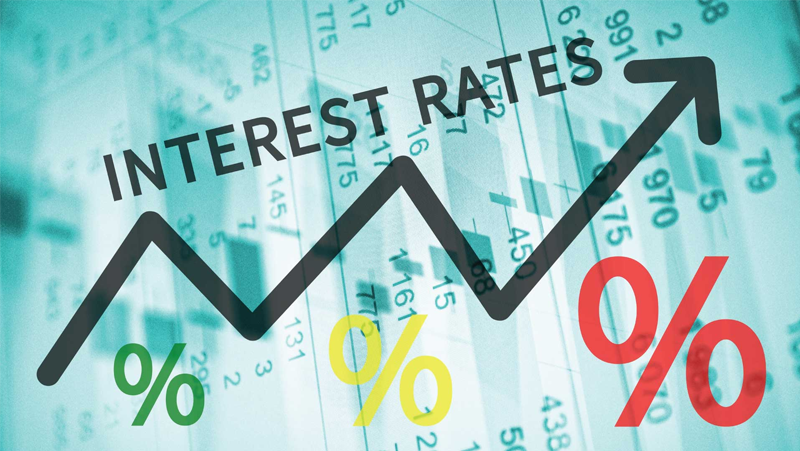
One of the most important factors affecting exchange rates is interest rates set by central banks. When interest rates rise in a country, it attracts foreign investors seeking higher returns, leading to an increased demand for that country's currency. As a result, the value of that currency appreciates relative to others. Conversely, lower interest rates may decrease demand for a currency, potentially leading to depreciation.
- Economic performance
The overall economic performance of a country can significantly affect its exchange rate. Strong economic growth, low inflation, and a robust job market tend to attract foreign investors and drive up the value of a currency. On the other hand, weak economic indicators may lead to a decline in a currency's value.
- Political stability
Political stability also influences exchange rates. Investors prefer countries with stable governments and minimal political uncertainty. A stable political environment promotes investment and enhances confidence in a country's economy, potentially leading to a stronger currency. In contrast, political instability can trigger currency depreciation as investors seek safer alternatives.
- Trade balance
The trade balance between countries directly affects exchange rates. If a country's exports exceed its imports, there is a greater demand for its currency as foreign buyers need to purchase it to pay for goods and services. This increased demand can lead to currency appreciation, while a trade deficit can put downward pressure on a currency's value.
- Government debt
The level of government debt in a country can impact exchange rates. Higher levels of debt may raise concerns about a country's ability to repay its obligations, leading to a depreciation of its currency. Investors may demand higher yields on government bonds, resulting in a decline in the currency's value.

- Speculation and market sentiment
Exchange rates are also influenced by market speculation and investor sentiment. Traders and investors analyze economic indicators, political developments, and market trends to make predictions about currency movements. Positive sentiment can drive up demand for a currency, while negative sentiment can lead to its depreciation.
Exchange rates are influenced by a multitude of factors, ranging from interest rates and economic performance to political stability and trade balances. Understanding these factors can help you navigate the foreign exchange market effectively and make informed decisions. However, it's important to note that exchange rates are also subject to random fluctuations and can be influenced by unexpected events. Keeping a close eye on these factors is crucial for anyone involved in the market.
Tools and Techniques for Performance Analysis
Analyzing the performance of forex pairs is also essential before you start forex trading. Fortunately, there are numerous tools and techniques available to assist in this process.

- Technical analysis
Technical analysis involves studying historical price data and chart patterns to identify potential trends and price movements. Here are some popular tools used in technical analysis include.
Moving Averages: Moving averages smooth out price data, helping to identify trends and potential support or resistance levels.
Fibonacci Retracement: Fibonacci retracement levels are used to identify potential areas of support or resistance based on the Fibonacci sequence.
Relative Strength Index (RSI): The RSI is a momentum oscillator that measures the speed and change of price movements, indicating overbought or oversold conditions.
Bollinger Bands: Bollinger Bands consist of a moving average and standard deviation bands, which help identify potential volatility and price range.
- Fundamental analysis
Fundamental analysis involves evaluating economic indicators, geopolitical events, and other factors that may impact a currency's value. Some key tools and techniques used in fundamental analysis are as follows.
Economic Calendar: An economic calendar provides a schedule of upcoming economic data releases, central bank meetings, and other relevant events that can impact forex pairs.
Interest Rates Analysis: Monitoring and analyzing central bank interest rate decisions and statements can provide insights into a currency's future performance.
News and Market Sentiment: Staying updated with news related to economic developments, political events, and market sentiment can help gauge the potential impact on forex pairs.
- Correlation analysis
Correlation analysis involves studying the relationship between different currency pairs to identify potential patterns and interdependencies. Given below are some tools and techniques for correlation analysis.
Currency Correlation Matrix: A currency correlation matrix shows the correlation coefficients between different currency pairs, helping to identify positive or negative correlations.
Heat Maps: Heat maps visually represent the strength of correlations between currency pairs, making it easier to identify patterns and potential trading opportunities.
Coefficient Calculations: Calculating correlation coefficients using statistical formulas or specialized software can provide quantitative insights into the relationships between currency pairs.
- Sentiment analysis
Sentiment analysis involves evaluating market participants' emotions, opinions, and positioning to gauge potential future price movements. Here are some tools and techniques for sentiment analysis.
Commitment of Traders (COT) Reports: COT reports provide insights into the positioning of different market participants, such as commercial hedgers, large speculators, and small speculators.
Social Media and News Monitoring: Monitoring social media platforms, financial news outlets, and online forums can help gauge retail trader sentiment and potential market biases.
Market Surveys: Some organizations conduct regular market surveys to assess trader sentiment and expectations, providing additional insights into forex pairs' potential performance.
Analyzing forex pairs' performance requires a combination of technical, fundamental, correlation, and sentiment analysis. It is important to remember that no single tool or technique guarantees success, and a holistic approach that combines multiple analysis methods is often the most reliable.





Copyright © 2026 FastBull Ltd


Risk Warning
FX trading is of high risk and may not be suitable for all investors. Leverage will create additional risks and loss. Before trading, please carefully consider your investment objectives, experience level and risk tolerance. You may lose part or all of your initial investment; do not invest money that you cannot afford. Educate yourself about the risks associated with FX trading. If you have any questions, please consult an independent financial or tax advisor. Any data and information are provided "as is" and only for information purpose, not for trading or recommendations. Past performance does not predict future results.
Disclaimer
The data contained in this website may not be real-time and accurate. The data and prices on this site are not necessarily provided by the market or exchange, but may be provided by market makers, so prices may be inaccurate and differ from actual market prices. Namely, this price is indicative price only to reflect market trend, and is unfavorable for trading purpose. The provider of the data contained in the Website shall not be liable for any loss incurred by you as a result of your trading activities or reliance on the information contained in the Website.