


Former SafeMoon CEO Sentenced to Over Eight Years in Prison in Multi-Million Dollar Crypto Fraud Case
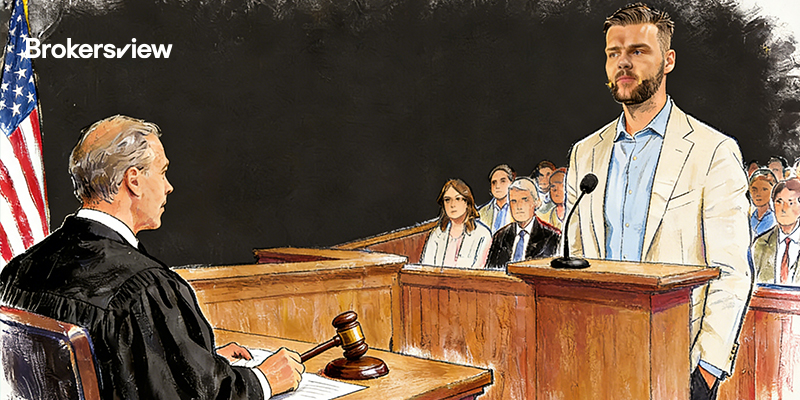
A U.S. federal judge has sentenced former SafeMoon US LLC CEO Braden Karony to 100 months in prison for his role in a multi-million dollar fraud scheme tied to the SafeMoon token, marking one of the most significant criminal penalties yet imposed in a high-profile DeFi-related case.
The sentence was handed down by the U.S. District Court for the Eastern District of New York following a three-week trial that concluded in May 2025. A federal jury found Karony guilty on all counts, including conspiracy to commit securities fraud, wire fraud, and money laundering.
In addition to the prison term, the court ordered Karony to forfeit approximately $7.5 million. A separate restitution determination will be made at a later date. Jurors also authorized the forfeiture of two residential properties linked to the proceeds of the scheme.
Prosecutors argued that Karony and his associates systematically misled investors about the operation of SafeMoon's token tax and liquidity pools. While the project marketed itself as a decentralized finance ecosystem with built-in protections, insiders allegedly retained access to the pools and diverted funds for personal use.
According to the Department of Justice, Karony used investor money to finance an extravagant lifestyle, including the purchase of luxury homes, sports cars, and custom vehicles. U.S. Attorney Joseph Nocella Jr. said Karony defrauded thousands of victims "from all walks of life," while FBI Assistant Director James Barnacle Jr. stated that more than $9 million in digital assets were siphoned from the company.
Prosecutors also alleged that insiders traded SafeMoon tokens for their own benefit, in some cases selling near price peaks while publicly promoting the project to retail investors. These actions, authorities said, directly contradicted public assurances that liquidity pools were locked and inaccessible to executives.
The case unfolded against the backdrop of SafeMoon's financial collapse. The company previously filed for bankruptcy protection in Utah, reporting assets of between $10 million and $50 million, alongside liabilities ranging from $100,000 to $500,000. The filing followed the arrests of senior executives and highlighted the project's deteriorating financial condition.
In announcing the verdict, the DOJ emphasized that the charges arose from what it described as a coordinated effort to exploit investor trust in a decentralized finance product while secretly maintaining centralized control over critical financial mechanisms.
The SafeMoon case has become a cautionary example for regulators and investors alike, illustrating how opaque governance structures and insider access in DeFi projects can create conditions ripe for abuse when oversight is limited.
Hottest


Copyright © 2026 FastBull Ltd


Risk Warning
FX trading is of high risk and may not be suitable for all investors. Leverage will create additional risks and loss. Before trading, please carefully consider your investment objectives, experience level and risk tolerance. You may lose part or all of your initial investment; do not invest money that you cannot afford. Educate yourself about the risks associated with FX trading. If you have any questions, please consult an independent financial or tax advisor. Any data and information are provided "as is" and only for information purpose, not for trading or recommendations. Past performance does not predict future results.
Disclaimer
The data contained in this website may not be real-time and accurate. The data and prices on this site are not necessarily provided by the market or exchange, but may be provided by market makers, so prices may be inaccurate and differ from actual market prices. Namely, this price is indicative price only to reflect market trend, and is unfavorable for trading purpose. The provider of the data contained in the Website shall not be liable for any loss incurred by you as a result of your trading activities or reliance on the information contained in the Website.