- الوسطاء HOT
- الإحتيال
- مراجعة بي في NEW
- القوائم
- الهيئات الرقابية
- الأخبار
- الشكوي
- اكسبو HOT
- الحادث
- الجوائز


Nikkei225 Extends Rebound Above 58,700 as AI Shares Recover and Tokyo Inflation Cools Slightly
Key Takeaways
-Nikkei225 gained 2.12% to above 58,700, supported by improving sentiment towards technology and AI-related shares.
-South Korean and Chinese equities also advanced, extending the regional recovery.
-Tokyo core inflation accelerated to 2.9%, up from 2.6% in October but below the 3.0% expected.
-Traders are watching 58,500 as nearby support, with 59,000 and 59,500-60,000 as key upside levels.

Nikkei225 traded higher on Friday, 27 November, as stronger US stock futures and renewed buying in AI-related shares lifted sentiment ahead of Wall Street's shortened post-Thanksgiving session. Gains were broad across Asia: South Korea's KOSPI jumped 4.23% to 4,910.47, Hong Kong's Hang Seng Index rose 2.05% to 22,685.50, and Mainland China's Shanghai Composite gained 2.95% to 3,576.45.
Renewed dip-buying helped the index recover some of its recent losses, although the rebound followed a sharp technology-led sell-off earlier in November.
Why Traders Are Watching Nikkei225
Recent data have shifted attention towards domestic inflation and the Bank of Japan's next policy decision. Tokyo core consumer prices, which exclude fresh food, rose 2.9% year on year in November, slightly below the 3.0% forecast. Persistent price pressures reinforce expectations of a possible BOJ rate hike in December, although the market impact will depend on how much tightening investors have already priced in.
The Trump administration's proposal for new tariffs on 14 trading partners, including Japan, adds uncertainty for exporters. Depending on the final terms, higher duties could weaken Japanese manufacturers' competitiveness in the US market or squeeze margins if companies absorb part of the cost.
Key factors influencing Nikkei225 include:
-AI and semiconductors: Sustained buying in US technology shares could support Japanese chip-related companies, while renewed valuation concerns could interrupt the recovery.
-BOJ policy: Policymaker commentary will show whether stronger Tokyo inflation raises the likelihood of tightening. The next meeting is scheduled for 17-18 December.
-Japanese inflation: November's nationwide CPI report, due 18 December, will give a broader view of price pressures beyond Tokyo.
-Yen and bond yields: Currency appreciation or higher Japanese yields could offset improving global equity sentiment, particularly for exporters and highly valued growth stocks.
-Trade policy: The proposed tariff rates and any exemptions will help assess the potential earnings impact.
Key Trading Levels
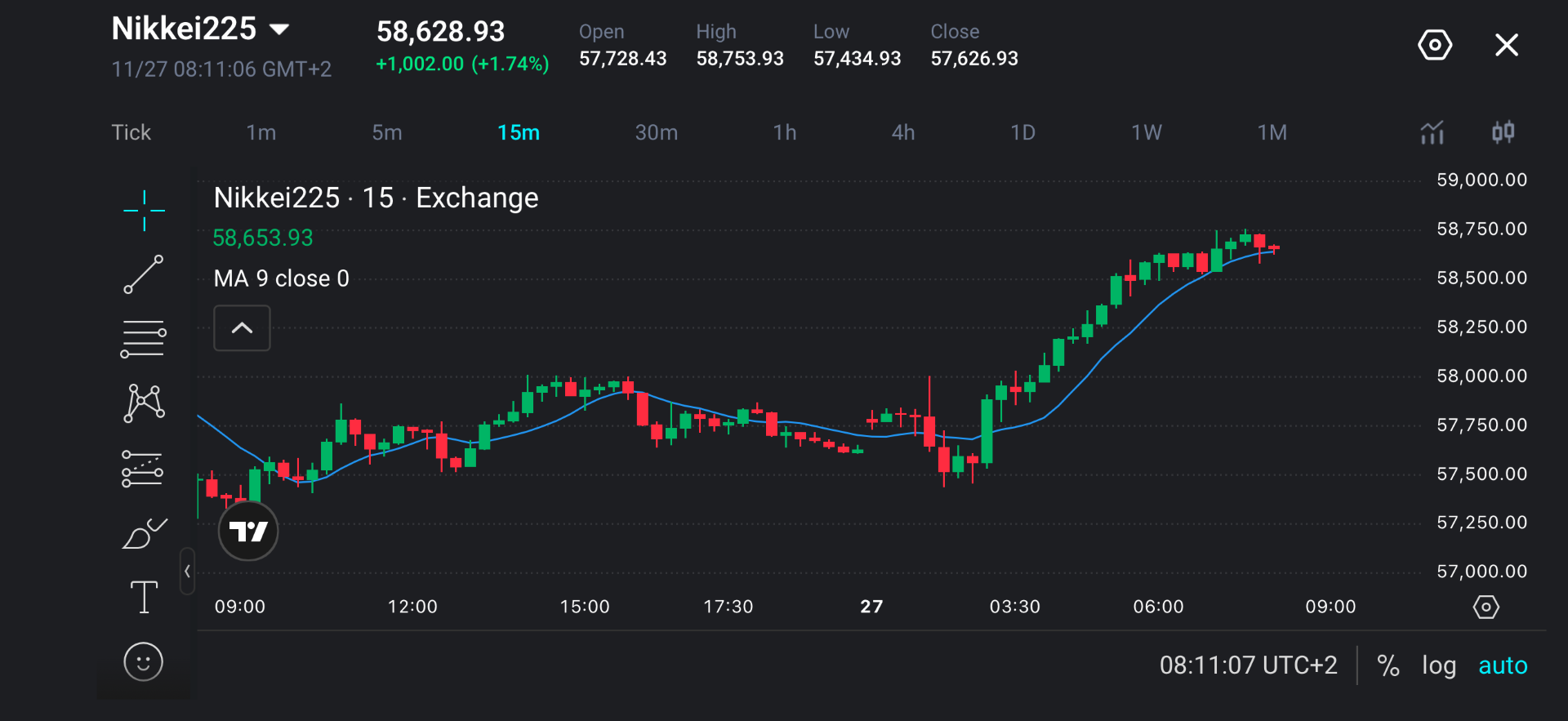
Nikkei225 is trading around 58,700, between the nearby 58,500 and 59,000 reference levels. Price behaviour around this band could show whether the initial advance is developing into consolidation or attracting profit-taking.
A sustained break above 59,000 that holds on a retest, with technology shares remaining firm, would suggest improving momentum and could open the way towards 59,500, followed by the 60,000 psychological level. Gains broadening beyond a small group of index heavyweights would strengthen that view. A pullback towards 58,500 where buyers defend the area and establish a higher intraday low would also show the rebound remains intact.
On the downside, a break below 58,500 followed by a failed recovery attempt could bring 58,000 into focus. Renewed AI-sector selling or a sharp appreciation in the yen could reinforce the pressure, and a sustained move below 58,000 with selling spreading across technology and other major sectors would suggest a deeper decline.
Nikkei225 Prediction: Can the Rebound Hold?
Nikkei225's next move depends on whether AI-related buying outweighs tightening expectations and trade uncertainty.
A recovery could continue if the index holds above 59,000 on a retest, with 59,500 and 60,000 as the next targets. However, stronger monetary tightening expectations or renewed technology weakness could cap gains, shifting focus back to 58,500 support and then 58,000.
For a deeper analysis of Nikkei225's technical levels, BOJ outlook and potential scenarios, read this article.
أهم






حقوق الطبع والنشر © 2026 FastBull Ltd


تحذير من مخاطر عالية
إن تداول الفوركس يحمل درجة عالية من المخاطرة، وقد لا تتناسب مع كل المستثمرين. ويزيد استخدام الرافعة المالية من المخاطر والخسارة بشكل إضافي. قبل التداول نشجعك على التفكير في أهدافك الاستثمارية، ومستوى خبرتك، وقدرتك على تحمل المخاطر. من الممكن أن تخسر كل مبلغ الاستثمار الأولي الخاص بك؛ لذا لا تستثمر أموالًا لا يمكنك تحمل خسارتها. ننصحك بتعليم نفسك حول المخاطر المرتبطة بالتداول في سوق الفوركس. إذا كانت لديك أية أسئلة ، يرجى استشارة مستشار مالي أو ضريبي مستقل، أي بيانات ومعلومات مستمدة كما هي، ووهي بغرض الإطلاع فقط، وليست بهدف التداول أو الحصول على توصيات. كما أن الأداء في الماضي لا يعكس تنبؤات بالنتائج المستقبلية.
إخلاء مسؤولية
قد لا تكون البيانات الواردة في هذا الموقع دقيقة وفي الوقت الحقيقي. كما ليس مصدر البيانات والأسعار المقدمة على هذا الموقع هو من السوق المالي أو سوق البورصة، وإنما يقدمها مستثمرين في أسواق، لذلك قد لا تكون الأسعار دقيقة وقد تختلف عن أسعار السوق الفعلية. لذلك إن هذا السعر إستدلالي فقد ليعكس اتجاهات السوق فقط ، ولا ينبغي إجراء التداول وفقا لهذه البيانات تماما. كما لا يتحمل موقعنا أي مسؤولية تتعرض لها نتيجة أنشطة التداول التي تقوم بها أو نتيجة الاعتماد على البيانات المقدمة في موقعنا.