- الوسطاء HOT
- الإحتيال
- مراجعة بي في NEW
- القوائم
- الهيئات الرقابية
- الأخبار
- الشكوي
- اكسبو HOT
- الحادث
- الجوائز


Brent Crude Climbs Above $114 as US–Iran Tensions Revive
Key Takeaways
-Brent crude trades near $114.58 after advancing from the $113.60-$113.80 area, with price consolidating below the $114.833-$115.00 resistance zone.
-Renewed geopolitical uncertainty in the Middle East has raised fears of potential disruptions to oil production and shipping.
-Traders are watching $114.833-$115.00 as resistance, with $114.20-$114.30 and $114.00 as key support levels.
-The psychological $120 level could attract attention if further escalation supports a sustained rally.

Brent crude edged higher on Friday, 23 October, as concerns over US–Iran tensions and the safety of energy shipments supported buyers.
The move reflects a market trying to judge whether the rally is a temporary reaction to geopolitical fears or the start of lasting supply losses. Traders are now assessing whether buyers can defend current support or whether easing tensions lead to a pullback.
Why Traders Are Watching Brent
Attention is centred on the Strait of Hormuz, which connects major Gulf producers with global markets. Roughly 20 million barrels per day passed through the strait in 2024, equivalent to around 20% of global petroleum liquids consumption, which shows how much a disruption to the route could matter.
Higher crude prices also feed into inflation. More expensive fuel can raise transport and production costs, and a persistent increase could influence inflation expectations and the monetary policy response. A sustained energy rally could therefore complicate the case for lower US interest rates, although higher fuel bills could also weaken household spending and business activity.
Geopolitical uncertainty can lift prices quickly, but holding those gains may require evidence that fewer barrels are actually reaching buyers.
Key factors influencing Brent include:
-US–Iran tensions: Further escalation could intensify concerns over energy security.
-Shipping risks: Delays or confirmed damage could turn fear into real supply losses.
-Inflation and rates: Higher crude could reinforce inflation concerns and complicate the rate outlook.
-US inventories: An unexpected build, especially alongside weaker fuel demand, could weigh on sentiment.
Key Trading Levels
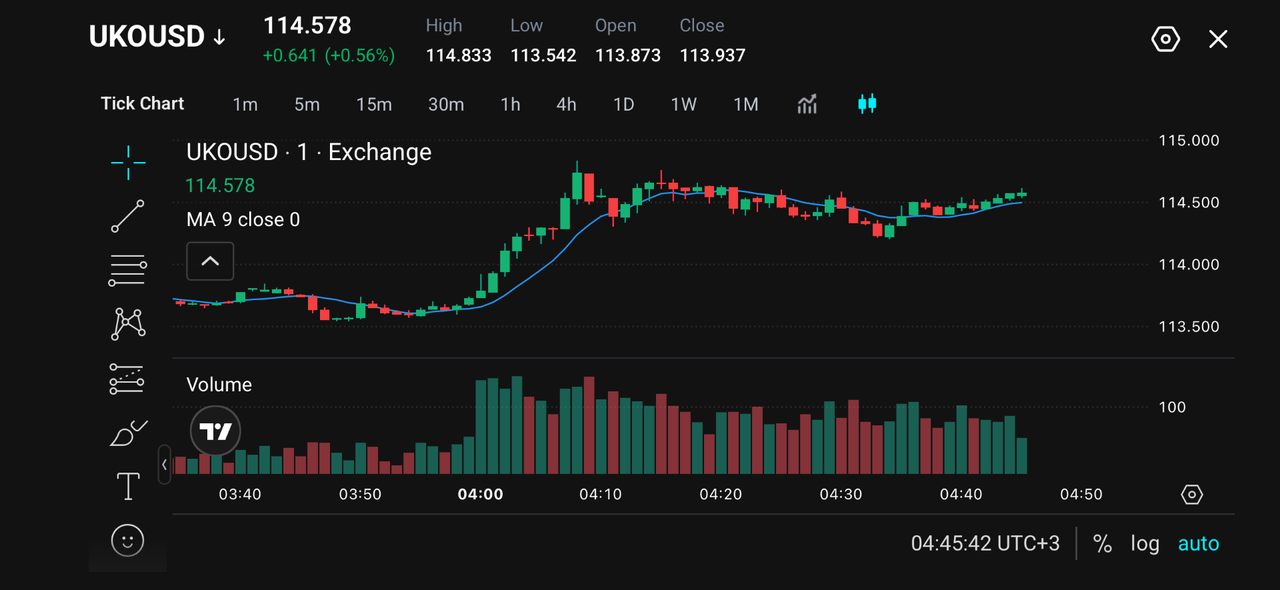
Brent is trading around $114.578, slightly above the nine-period moving average, with a session high of $114.833 and a low of $113.542. Price is holding near the upper part of the visible range, although buyers have yet to establish a fresh breakout.
The $114.833-$115.00 zone is the main short-term resistance, combining the displayed high with the next round-number barrier. Sustained trading above $114.60-$114.70 would bring this zone into closer focus, and a break higher could open the way towards the $120 psychological level if supply concerns intensify.
On the downside, $114.20-$114.30 is the first support, where buyers recently returned. Losing this zone could bring $114.00 into focus, followed by the $113.54-$113.70 base that preceded the rally.
Brent Prediction: Can the Rally Hold?
Brent may extend its advance if US–Iran tensions intensify, shipping delays worsen or confirmed damage reduces oil production and exports. A sustained break above $114.70 followed by a test of $115 would strengthen the bullish case.
However, prices could retreat if negotiations improve, shipping conditions stabilise or supply proves more resilient than feared. A break below $114.20 that fails to reclaim $114.20-$114.30 could shift focus towards $114.00 and $113.54-$113.70. An unexpected rise in US crude inventories could also weigh on sentiment.
The next catalysts are US–Iran developments, evidence of changes in physical oil flows and US inventory data. The EIA normally releases its Weekly Petroleum Status Report on Wednesdays at 10:30 a.m. US Eastern time.
For more information on key trading levels, potential scenarios and technical analysis, read the full article here.






حقوق الطبع والنشر © 2026 FastBull Ltd


تحذير من مخاطر عالية
إن تداول الفوركس يحمل درجة عالية من المخاطرة، وقد لا تتناسب مع كل المستثمرين. ويزيد استخدام الرافعة المالية من المخاطر والخسارة بشكل إضافي. قبل التداول نشجعك على التفكير في أهدافك الاستثمارية، ومستوى خبرتك، وقدرتك على تحمل المخاطر. من الممكن أن تخسر كل مبلغ الاستثمار الأولي الخاص بك؛ لذا لا تستثمر أموالًا لا يمكنك تحمل خسارتها. ننصحك بتعليم نفسك حول المخاطر المرتبطة بالتداول في سوق الفوركس. إذا كانت لديك أية أسئلة ، يرجى استشارة مستشار مالي أو ضريبي مستقل، أي بيانات ومعلومات مستمدة كما هي، ووهي بغرض الإطلاع فقط، وليست بهدف التداول أو الحصول على توصيات. كما أن الأداء في الماضي لا يعكس تنبؤات بالنتائج المستقبلية.
إخلاء مسؤولية
قد لا تكون البيانات الواردة في هذا الموقع دقيقة وفي الوقت الحقيقي. كما ليس مصدر البيانات والأسعار المقدمة على هذا الموقع هو من السوق المالي أو سوق البورصة، وإنما يقدمها مستثمرين في أسواق، لذلك قد لا تكون الأسعار دقيقة وقد تختلف عن أسعار السوق الفعلية. لذلك إن هذا السعر إستدلالي فقد ليعكس اتجاهات السوق فقط ، ولا ينبغي إجراء التداول وفقا لهذه البيانات تماما. كما لا يتحمل موقعنا أي مسؤولية تتعرض لها نتيجة أنشطة التداول التي تقوم بها أو نتيجة الاعتماد على البيانات المقدمة في موقعنا.